
AI

Search documents
Is the AI Bubble Bursting or Is the Sector Just Catching Its Breath?
Yahoo Finance· 2026-01-09 18:38
Key Points The investment thesis for AI is still intact and growing, despite the recent short-term correction in the sector. AI is already delivering tangible financial results while allowing companies to improve their products and services. Chipmakers will continue to win, but looking at all the other bottlenecks limiting the pace of the AI buildout reveals a host of other companies that could be big winners from the trend. 10 stocks we like better than Nvidia › Many AI stocks struggled in Dece ...

别再相信AI恋人了,它们连自己都养不活
Ge Long Hui· 2026-01-09 17:24
Core Viewpoint - Minimax's initial public offering (IPO) on January 9, 2026, saw its market capitalization exceed HKD 100 billion, driven by significant revenue growth, but underlying issues regarding growth quality, business model sustainability, and industry competition warrant scrutiny [1][7]. Revenue Performance - In the first three quarters of 2025, Minimax reported revenue of USD 53.437 million, a year-on-year increase of over 170%, with overseas market revenue accounting for 73.1% [1]. - The company's revenue growth is heavily influenced by marketing expenditures, which reached USD 86.695 million in 2024, representing 284.9% of its revenue [7]. Business Model Analysis - Minimax's revenue structure is characterized by a dominance of consumer (C-end) income, which constitutes over 71% of total revenue, primarily from two products: Talkie (35.1% of revenue) and Hai Luo AI (32.6% of revenue) [2]. - The C-end products face significant user retention challenges, with a reported drop in monthly active users by 60% in Q4 2025 [3]. Competitive Landscape - The AI video generation sector, where Hai Luo AI operates, is experiencing intense competition, with competitors like Runway and Pika Labs gaining market share [4]. - Minimax's B-end platform, while covering over 100 countries, lacks the scale and ecosystem influence of industry leaders, limiting its competitive edge [5]. Valuation Concerns - The market's enthusiasm for Minimax's IPO is seen as a reflection of an AI valuation bubble, with its growth driven more by marketing than by sustainable demand [7]. - The company has accumulated a net loss of USD 1.25 billion from 2022 to Q3 2025, with a research and development expense ratio of 337.4% [8]. Regulatory and Compliance Risks - Minimax's overseas revenue is concentrated in markets with stringent AI regulations, such as Singapore and the U.S., which could pose compliance risks [8]. - The company faces potential legal challenges related to copyright issues, with lawsuits from major studios claiming unauthorized use of copyrighted materials [15]. Strategic Recommendations - The analysis suggests that Minimax's approach may not be replicable for other Chinese AI companies, emphasizing the need for a shift towards sustainable business practices and localized operations [18][19]. - Companies are encouraged to focus on vertical B-end markets with strong demand and payment capabilities, rather than relying on consumer-driven growth [21].
智通港股解盘 | AI+再度爆发成新引擎 海外矿业巨头拟合并或刺激资源再起
Zhi Tong Cai Jing· 2026-01-09 12:57
Market Overview - A-shares showed strong performance with the Shanghai Composite Index breaking through 4100 points, closing at 4120.43 points, and trading volume exceeding 31,523 billion yuan, marking the sixth occurrence in history of trading volume surpassing 30 trillion yuan [1] - Hong Kong stocks lagged behind, with a slight increase of 0.32% [1] International Developments - The U.S. government is considering a cash incentive for Greenland residents to encourage their potential inclusion in the U.S., with discussions around distributing between 10,000 to 100,000 USD per person, totaling nearly 6 billion USD [1] - A joint military exercise named "Peace Intent-2026" involving China, Russia, and South Africa will take place in mid-January, highlighting a new security cooperation model among BRICS nations [1] Commodity and Metal Market - The U.S. dollar index surpassed 99, and the LMEX index for major base metals is expected to record its fourth consecutive week of gains, with copper and aluminum prices rising over 1% [2] - Companies like Luoyang Molybdenum (03993) and China Aluminum (02600) reached historical highs [2] AI and Technology Sector - MiniMax (00100) made a significant debut on the Hong Kong Stock Exchange, opening at 235.4 HKD, a 42.67% increase from its issue price of 165 HKD [2] - AI applications are thriving, with companies like Zhizhu (02513) seeing over a 20% increase in stock price, reaching a market cap of 720 billion HKD [2] Healthcare Innovations - OpenAI launched ChatGPT Health, a dedicated space for health-related conversations, which can integrate with electronic medical records [3] - Companies like iFlytek Medical Technology (02506) reported a significant increase in stock price, with their medical deep reasoning model achieving a 94% accuracy rate in diagnostic assistance [3] Aerospace and Automotive Sector - JunDa Co. (02865) and Goldwind Technology (02208) experienced initial surges in stock prices, while CIMC Anrui (03899) continues to perform well, with over 100 million RMB in revenue from aerospace-related business [4] - Black Sesame Intelligence (02533) secured a strategic investment of 500 million RMB, boosting its stock price by nearly 5% [4] Market Trends and Stock Movements - The price of crab-eating macaques has surged to 140,000 yuan each, leading to a 7% increase in shares of Zhaoyan New Drug (06127) due to market expectations [5] - Youjia Innovation (02431) repurchased 3,004,800 shares for approximately 44.88 million HKD, indicating confidence from cornerstone investors [5] Employment Data and Legal Decisions - The U.S. Labor Department is set to release December employment data, which is anticipated to be more reliable following the longest government shutdown in history [6] - The U.S. Supreme Court will make a final decision on the legality of tariffs imposed by former President Trump, which may have limited impact on the market [6] Mining Sector Developments - Rio Tinto and Glencore are in preliminary discussions regarding a potential merger, which could create the largest mining company with a market value exceeding 200 billion USD [7] - If the merger occurs, it may lead to increased concentration in the global resources sector, impacting companies like Luoyang Molybdenum (03993) and China Aluminum (02600) [7] Company Performance and Projections - Sanhua Intelligent Control (02050) expects a net profit of 3.87 to 4.65 billion yuan for 2025, representing a year-on-year increase of 25% to 50% [8] - The company is benefiting from growing demand for cooling components in data centers and is set to produce humanoid robots, with significant revenue contributions expected starting in 2026 [9]
Why is Mastercard Incorporated (MA) One of the Best Major Stocks to Invest in Right Now?
Insider Monkey· 2026-01-09 09:21
Core Insights - Artificial intelligence (AI) is identified as the greatest investment opportunity of the current era, with a strong emphasis on the urgency to invest now [1][13] - The energy demands of AI technologies are significant, with data centers consuming as much energy as small cities, leading to concerns about power grid capacity and rising electricity prices [2][3] Investment Opportunity - A specific company is highlighted as a potential investment opportunity, possessing critical energy infrastructure assets that are essential for supporting the anticipated surge in energy demand from AI data centers [3][7] - This company is positioned as a "toll booth" operator in the AI energy boom, benefiting from the increasing need for electricity as AI technologies expand [4][5] Market Position - The company is noted for its involvement in U.S. LNG exportation, which is expected to grow under the current administration's energy policies [7] - It is one of the few global firms capable of executing large-scale engineering, procurement, and construction projects across various energy sectors, including nuclear energy [7][8] Financial Health - The company is described as being debt-free and holding a significant cash reserve, amounting to nearly one-third of its market capitalization, which positions it favorably compared to other firms in the energy sector [8][10] - It also has a substantial equity stake in another AI-related company, providing investors with indirect exposure to multiple growth opportunities without the associated premium costs [9][10] Market Trends - The article discusses the broader trends of onshoring and tariffs, suggesting that the company is well-positioned to capitalize on these developments as American manufacturers bring operations back home [5][6] - The influx of talent into the AI sector is expected to drive continuous innovation and advancements, reinforcing the importance of investing in AI-related companies [12] Future Outlook - The potential for significant returns is emphasized, with projections suggesting a possible 100% return within 12 to 24 months for investors who act quickly [15][19] - The narrative encourages investors to engage with the AI revolution, highlighting the transformative impact of AI on traditional industries and the importance of being part of this technological shift [11][12]



Where is Broadcom Inc. (AVGO) Headed According to Analysts?
Insider Monkey· 2026-01-09 09:21
Core Insights - Artificial intelligence (AI) is identified as the greatest investment opportunity of the current era, with a strong emphasis on the urgency to invest now [1][13] - The energy demands of AI technologies are significant, with data centers consuming as much energy as small cities, leading to concerns about power grid capacity and rising electricity prices [2][3] Investment Opportunity - A specific company is highlighted as a critical player in the AI energy sector, owning essential energy infrastructure assets that are poised to benefit from the increasing energy demands of AI [3][7] - This company is not a chipmaker or cloud platform but is positioned as a "toll booth" operator in the AI energy boom, collecting fees from energy exports [5][6] Financial Position - The company is noted for being debt-free and holding a substantial cash reserve, which is approximately one-third of its market capitalization, providing it with a strong financial foundation [8][10] - It is trading at less than 7 times earnings, making it an attractive investment compared to other firms in the energy and utility sectors [10][12] Market Trends - The company is well-positioned to capitalize on the onshoring trend driven by tariffs, as well as the surge in U.S. LNG exports under the current administration's energy policies [5][14] - The influx of talent into the AI sector is expected to drive continuous innovation and advancements, further solidifying the importance of investing in AI-related infrastructure [12][14] Future Outlook - The company is involved in nuclear energy, which is seen as a key component of America's future power strategy, emphasizing the shift towards clean and reliable energy sources [7][14] - The potential for significant returns is highlighted, with projections suggesting a possible 100% return within 12 to 24 months for investors who act quickly [15][19]

电子行业2026年投资策略:AI全面共振、国产加速出击(附下载)
Xin Lang Cai Jing· 2026-01-09 09:10
半导体供需改善复苏延续 半导体全球化周期: (1)供给侧:长期看产能规划、资本开支, 短期看设备采购、产能稼动率。 (2)需求侧:长期看新科技新产品驱动; 短期看终端库存、企业库存、日销售额订单。 (3)芯片价 格:反映周期波动的高频指标。 中国半导体发展: (1)技术0-1的积累:政策、金融、信创等 频繁刺 激下,各个细分市场逐步完成; (2)产能布局受限:逻辑与存储进步减缓; 功率与模拟在积极推进; (3)进口替代:中低端为主,高端缺口; 中国资本市场: (1)全球价格的接收端:由全球大厂控制 价格锚,我国价格多数折扣; (2)销售量边际影响加倍:龙头掌握渠道, 剩余市场国内企业内卷; (3)资本市场受量价预期影响:短期看全 球价格波动,中期看需求好转,长期看内生 增长的竞争力。 全球半导体周期: (1)3-7年周期:本轮 周期底部是2023年, 2024年已经有初步回暖 趋势,2025年1- 10月份 累计同比为21.19%, 全球销售额继续回暖。 (2)底部判断的依据: 供给侧是否持续,需求 侧 是否量增,价格端回 升的幅度与持续性。 (3)2026年展望: 2026年或继续受益AI高 速增长,销售额 ...
基础化工行业年度报告:周期成长双线轮动,持续看好成长赛道和反内卷大方向
Xin Lang Cai Jing· 2026-01-09 09:00
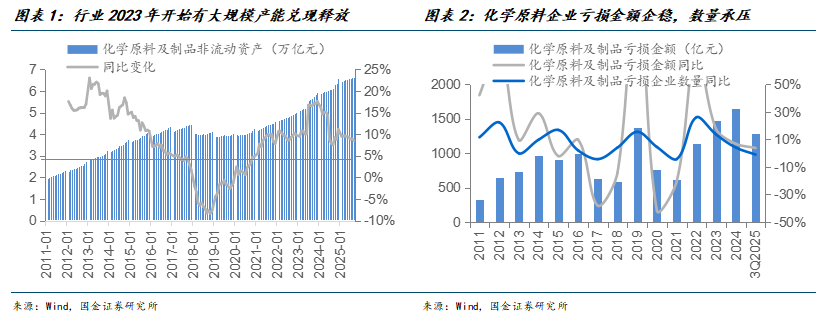
Group 1 - The chemical industry is at the bottom of its profitability cycle, with the chemical PPI showing signs of stabilization, indicating limited further downside risk [1][6][41] - The trend of "East rising, West falling" is evident, with Chinese companies expanding their product and capacity overseas to mitigate risks and enhance market presence [1][23][35] - There is a clear trend of polarization within the industry, where only companies above the industry median can realize profits, while marginal firms face significant challenges [1][36][39] Group 2 - Supply-side constraints are expected to improve industry sentiment, leading to price and profit recovery, particularly in sectors with limited new capacity [2][43][44] - The demand side remains weak, but structural opportunities may arise from new market segments and changes in demand patterns [3][47][48] - Emerging sectors such as AI, robotics, and solid-state batteries are anticipated to drive long-term investment opportunities due to their growth potential [2][48][49] Group 3 - The chemical industry is experiencing a significant shift in its competitive landscape, with European chemical competitiveness declining, allowing Chinese firms to capture more market share [23][25][29] - The export of chemical products from China has been increasing, with a net export value of $24.1 billion, indicating a positive trend in mitigating domestic supply pressures [15][31][33] - Companies are increasingly focusing on overseas resource acquisition, such as phosphate and potassium mines, to secure raw materials and enhance their competitive edge [1][35][36]
MiniMax上市引爆人工智能应用 讯飞医疗涨超20%领跑AI医疗板块
Zhi Tong Cai Jing· 2026-01-09 08:25
Core Viewpoint - The stock of iFlytek Medical Technology (02506) surged by 20.58% to HKD 97.55, with a trading volume of HKD 190 million, following significant developments in the AI healthcare sector [1] Group 1: Market Reaction - iFlytek Medical Technology's stock experienced a peak increase of 25% before closing at a 20.58% gain [1] - The trading volume reached HKD 190 million, indicating strong investor interest [1] Group 2: Industry Developments - The debut of domestic large model company MiniMax saw its stock price soar over 100%, highlighting a growing interest in AI applications [1] - The AI healthcare sector is witnessing intensified catalysts, particularly with OpenAI launching the ChatGPT Health feature, which offers health-related answers and connects smart devices [1] Group 3: Policy and Investment Trends - Northeast Securities notes that large model companies are increasingly focusing on healthcare, which is becoming a key investment area supported by policy initiatives [1] - Southwest Securities emphasizes that traditional healthcare IT investments are under pressure due to stricter local finance and medical insurance controls, but AI is seen as a means to enhance grassroots healthcare and optimize resource allocation [1] - The ongoing support from policies, such as the "14th Five-Year" National Health Information Planning, reinforces the growth potential of AI in healthcare [1] Group 4: Company Positioning - iFlytek Medical Technology is recognized as the leading AI healthcare company with the broadest coverage in the industry, positioned to benefit from policy dividends and national projects [1]
沪指16连阳站上4100点 A股还能涨多久?
Xin Lang Cai Jing· 2026-01-09 08:21
高盛在最新报告中明确提到,中国股票市场到2027年末有望实现38%的涨幅。摩根大通将中国市场的评 级上调至"超配",认为中国市场估值仍处于合理区间,且国际投资者仓位较轻。摩根士丹利小幅上调了 中国股票指数目标,预测2026年12月沪深300指数目标点位为4840点。瑞银将MSCI中国指数2026年年末 目标设定为100点,较当前水平存在约14%的上涨空间,同时将恒生指数目标设定为30000点。 1月9日,沪指高开高走收盘突破4100点,刷新2015年7月底以来新高,日K线录得16连阳;深成指涨超 1%,创业板指数上涨0.77%。沪深两市成交额3.12万亿,较上一个交易日放量3224亿,时隔73个交易日 后再度站上3万亿大关,历史第五次突破3万亿。 从板块来看,AI应用概念走强,引力传媒5天4板,粤传媒、易点天下、博瑞传播、国新健康等多股涨 停。商业航天概念反复活跃,鲁信创投11天9板,巨人索具2连板。全市场超3900只个股上涨,连续2日 超百股涨停。 近两个月,多家外资机构密集发布了2026年市场展望。其中,高盛、摩根大通、摩根士丹利、瑞银等知 名机构表达了对中国资产的乐观预期。 瑞银财富管理投资总监办公室( ...
收评:沪指16连阳站上4100点 AI应用方向领涨 卫星互联网延续活跃态势
Xin Hua Cai Jing· 2026-01-09 07:47
Market Performance - The Shanghai Composite Index closed at 4120.43 points, up 0.92%, marking a 16-day consecutive rise [1] - The Shenzhen Component Index rose 1.15% to 14120.15 points, while the ChiNext Index increased by 0.77% to 3327.81 points [1] - The total trading volume for the Shanghai market was approximately 12.892 billion yuan, and for the Shenzhen market, it was about 18.336 billion yuan [1] Sector Performance - AI application sectors led the market, with significant gains in various related concepts such as Kimi, Sora, and AIGC [1] - Other active sectors included satellite internet, commercial aerospace, and space big data, along with notable increases in small metals, precious metals, and duty-free shops [1] Institutional Insights - The market is showing an upward trend, with many sectors supported at the 60-day moving average, indicating a new round of bullish momentum [2] - Long-term investment opportunities are suggested in high-growth sectors such as semiconductors, consumer electronics, artificial intelligence, and commercial aerospace [2] - A recent improvement in the overall industry prosperity index and PMI supports the positive outlook for the market [2][3] Policy Developments - The "Guidelines for the Construction and Application of Industrial Green Microgrids (2026-2030)" were issued to promote green energy applications in industrial sectors [4] - The guidelines emphasize a minimum of 60% self-consumption of renewable energy for new industrial projects [4] Robotics Market - A report indicates that by 2025, the top six companies in global humanoid robot shipments will be Chinese, with a total expected shipment of 13,000 units [5] - The leading company, Zhiyuan, is projected to capture 39% of the market share with over 5,100 units shipped [5] Company News - MiniMax, an AGI company, saw its stock price surge by 90.9% upon its listing on the Hong Kong Stock Exchange, reaching a market capitalization of approximately 91.94 billion HKD [7] - The company raised about 5.54 billion HKD through its IPO, which will be allocated for model upgrades and AI product development [7]