
建筑业

Search documents
富达国际:高市早苗任日本首相几成定局,日股仍有上升潜力
2 1 Shi Ji Jing Ji Bao Dao· 2025-10-20 13:43
Group 1: Political and Economic Context - The new leader of Japan's ruling Liberal Democratic Party, Sanae Takaichi, supports fiscal stimulus and loose monetary policy, which is expected to benefit the Japanese stock market and pose a downside risk to the yen [1] - Following a period of uncertainty, Takaichi is likely to become Japan's first female Prime Minister, which has reignited market enthusiasm for the "Takaichi trade," leading to a significant rise in the Nikkei 225 index by 3.37% [1] - Despite political changes, the framework supporting Japan's economic growth remains solid, and the country is unlikely to revert to deflation [2] Group 2: Inflation and Economic Growth - Japan is transitioning from a deflationary environment to a moderate inflation scenario, with core inflation expected to exceed 3% by early 2025 and decline to around 2% by the end of next year [2] - The shift towards inflation is increasingly driven by wage growth and coordinated policies between the government and the central bank, rather than solely by rising costs [2][3] Group 3: Corporate Governance and Shareholder Returns - Corporate governance reforms are reshaping Japanese companies' capital allocation and shareholder return attitudes, with a significant increase in share buybacks projected for the 2024 fiscal year, up nearly 90% year-on-year [6] - Japanese companies are increasingly focusing on improving capital efficiency and enhancing communication with investors, leading to a structural growth theme in the stock market [6][7] - The average return on equity for Japanese companies is expected to rise from 6%-8% in the 2000s to 10% by the 2026 fiscal year and potentially 11% by the 2028 fiscal year [7] Group 4: Sector-Specific Opportunities - The banking sector is benefiting from a favorable environment characterized by strong net interest margins and low borrowing costs, leading to improved profitability and return on equity [8] - The construction industry is also showing promising investment prospects, with contractors focusing on high-margin projects and improving profit margins due to a tight labor market [8] - Digital transformation remains a key structural growth theme, with Japanese companies accelerating automation to address labor challenges posed by an aging population [9]
兼评Q3经济数据:Q3经济放缓符合预期,关注政策性金融工具效果
KAIYUAN SECURITIES· 2025-10-20 13:42
Economic Overview - Q3 2025 GDP grew by 4.8% year-on-year, aligning with expectations, while quarter-on-quarter growth was 1.1%, an increase of 0.1 percentage points from the previous value[3] - The nominal GDP growth rate narrowed the gap with real GDP growth by 0.2 percentage points, indicating a mild recovery in price levels[3] Industrial and Service Sector Performance - Industrial added value in September increased by 6.5% year-on-year, up 1.3 percentage points from the previous value, driven by sectors like automotive and food manufacturing[3][15] - The service sector maintained resilience with a production growth rate of 5.6% year-on-year, consistent with previous values[3][15] Consumer Behavior - Disposable income growth slowed slightly to 5.1%, down 0.2 percentage points, with a consumption rate of 68.1% in Q3 2025, lower than the levels in 2023-2024[20] - Retail sales in September saw a cumulative year-on-year decline of 0.1 percentage points to 4.5%, with a monthly decline of 0.4 percentage points to 3.0%[4][23] Investment Trends - Fixed asset investment showed a cumulative year-on-year decline of 0.5%, with real estate investment down 13.9%[14][27] - Infrastructure investment saw a significant drop, with broad infrastructure down 8.0% year-on-year, while narrow infrastructure improved to -4.7%[6][33] Future Economic Outlook - To achieve an annual growth target of approximately 5.0%, Q4 2025 GDP needs to reach 4.6%[7][35] - The government is focusing on policy financial tools, including a 500 billion yuan initiative to stimulate investment and consumption[7][35] Risk Factors - Potential risks include policy changes that may fall short of expectations and an unexpected recession in the U.S. economy[8][36]
1-9月阿塞拜疆GDP增长1.3%
Shang Wu Bu Wang Zhan· 2025-10-20 13:27
Core Insights - Azerbaijan's GDP for the first nine months of 2025 reached 95.23 billion manats (56.02 billion USD), reflecting a year-on-year growth of 1.3% [1] - The oil and gas sector experienced a decline of 1.9%, while the non-oil sector grew by 2.9% [1] - Per capita GDP for the same period was 9,300.3 manats (5,470.8 USD) [1] Sector Contributions - Industry accounted for 34.2% of GDP [1] - Trade and automotive repair contributed 10.5% [1] - Transportation and storage made up 7% [1] - Agriculture, forestry, and fishing represented 6.8% [1] - Construction sector contributed 6.6% [1] - Tourism, accommodation, and catering accounted for 2.8% [1] - Information and communication sector comprised 1.8% [1] - Other industries collectively made up 20.7% [1]
我市职教力量赋能非洲基建
Huan Qiu Wang· 2025-10-20 11:19
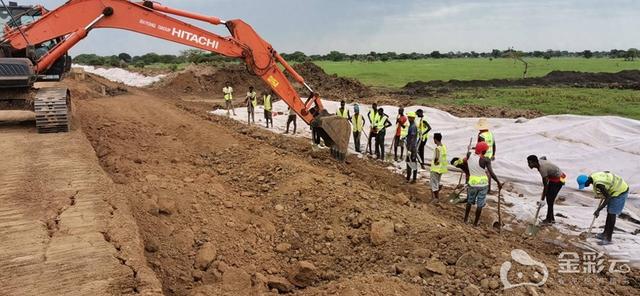
Core Viewpoint - The article highlights the significant role of Chinese vocational education in supporting infrastructure development in Africa, showcasing successful collaborations and the transfer of advanced construction technologies [1][3][4]. Group 1: Vocational Education and International Collaboration - Chinese vocational education is expanding its international reach, contributing to global economic development and skill training [1]. - The "Jinhua Model" of vocational education is being explored to provide educational solutions for infrastructure projects in Belt and Road Initiative countries [1][3]. - The construction engineering college at Jinhua has partnered with Chinese enterprises to adapt domestic technology standards for local teaching in Africa [3]. Group 2: Success Stories and Impact - Graduates from Jinhua's construction engineering college are actively participating in African infrastructure projects, demonstrating the effectiveness of the training received [3][4]. - The use of Chinese composite geotextile technology has addressed specific geological challenges in Ethiopia, showcasing the practical application of Chinese standards in local projects [4]. - The college has developed bilingual courses in non-destructive testing and composite geotextile applications, successfully training local technical personnel [4][5]. Group 3: Future Plans and Development - The college plans to establish overseas training bases in collaboration with Chinese enterprises, creating a cycle of practical experience, teaching transformation, and talent output [5]. - There is a focus on aligning talent training with local needs in Africa to enhance the effectiveness of vocational education initiatives [4][5].

沈晗耀:建议在长三角、京津冀及大湾区创建三大世界级科创中心
Guo Ji Jin Rong Bao· 2025-10-17 12:36
Core Viewpoint - The speech by Shen Hanyao highlights the four major challenges facing China's economic development and proposes six strategic recommendations to address these issues [1][2]. Group 1: Economic Challenges - The first challenge is overcapacity and insufficient demand, which restrict economic growth [1]. - The second challenge is the downturn in the real estate sector, which also limits economic growth [1]. - The third challenge is excessive debt, which hampers development and affects economic circulation [1]. - The fourth challenge is international friction, which obstructs international circulation and leads to unemployment and polarization, hindering domestic circulation [1]. Group 2: Strategic Recommendations - The first recommendation is to establish three world-class innovation centers in the Yangtze River Delta, Beijing-Tianjin-Hebei, and the Greater Bay Area, linking top companies with leading universities to seize global leadership in technology [2]. - The second recommendation is to fully develop the fourth industry, using public goods economy to stimulate private goods economy, thereby facilitating a smooth economic cycle [2]. - The third recommendation emphasizes strong support for the real estate industry, which is a core pillar of the economy, to stabilize the economic landscape and revitalize related industries [3]. - The fourth recommendation is to strengthen the policy financial system by creating stabilization funds for the stock market and real estate, ensuring a healthy development of capital markets and supporting the real economy [3]. - The fifth recommendation involves leveraging the central bank's role to create market demand internationally and stimulate domestic demand through strategic issuance of currency [4]. - The sixth recommendation addresses overcapacity by proposing a new distribution system that promotes common prosperity and resolves unemployment and polarization issues [4].
中金 • 全球研究 | 欧洲:政策托底预期,但影响有待兑现——欧洲经济全景Q3 2025
中金点睛· 2025-10-16 23:32
Core Viewpoint - The report indicates that while monetary and fiscal policies are expected to support the European economy, the actual impact is yet to be realized, with marginal weakening observed in Q3 data [3]. Economic Activity - The overall European economy is maintaining a slow recovery, with Eurozone GDP showing a 0.1% quarter-on-quarter growth in Q2 2025, slightly below Q1 but above market expectations [3]. - The manufacturing PMI showed a slight decline in September after a rapid recovery, while the services PMI remains at a high level [3]. - The Eurozone's economic surprise index has shown a notable weakening since mid-September, driven by disappointing retail sales and investment data [5][3]. Consumption - Consumer spending is steadily recovering, with actual retail growth (excluding automobiles) at 1.3% in August, slightly below pre-pandemic levels [7]. - Consumer confidence remains cautious, with high savings rates and limited willingness to spend, despite rising real wages and a recovering labor market [7]. - Factors supporting continued recovery in consumer demand include rising real wages, declining interest rates, and potential for further decreases in savings rates [7]. Investment - Investment data remains weak in Q2, influenced by tariffs, with only minor improvements in fixed capital investment outside of intellectual property [9]. - Some sectors, like construction, are seeing increased investment activity due to relaxed monetary policy, but investor confidence remains volatile [9]. - Future improvements in investment are anticipated as monetary policy transmission continues and tariff uncertainties diminish [9]. Industrial Production - Industrial production recovery is fragile, with Germany's industrial production index remaining low [11]. - Consumer goods production is relatively strong, while capital goods production growth is weak but shows a recovery trend [11]. - Overall industrial confidence remains weak, but capacity utilization is steadily recovering [11]. Labor Market - The Eurozone unemployment rate remains at historical lows, with wage growth rebounding in Q2 [14]. - Despite a slight weakening in the PMI employment index, real wages continue to rise above inflation levels [14]. Inflation - Headline inflation in the Eurozone is around 2%, with service inflation contributing significantly [17]. - Service inflation was recorded at 3.1% in August, indicating resilience despite downward pressures from tariffs and external competition [17]. - Future wage growth is expected to slow, potentially alleviating some inflationary pressures [17]. Monetary and Credit Conditions - The monetary policy easing cycle is pausing, with credit growth continuing to recover [21]. - The ECB has maintained the policy rate at a neutral level of 2%, with market expectations for minimal rate cuts in the coming year [21]. - Loan demand is recovering, particularly in the housing sector, although there are signs of tightening credit conditions for households [21]. Trade - Eurozone trade data shows a rise in imports and a decline in exports, with July data indicating a 0.1% year-on-year increase in exports and a 3.7% increase in imports [25]. - The decline in export growth is attributed to reduced "export grabbing" towards the U.S., with trade balances showing a significant drop since April [25]. Forward Outlook - The Eurozone economy is expected to see slow recovery in domestic demand, supported by the delayed effects of monetary easing and fiscal policies [27]. - Key areas to monitor include the EU's ability to implement substantial reforms and the extent of consumer recovery amidst high savings rates [27]. - The overall performance of European assets has been stagnant, with equities underperforming global indices since May [27].

新疆交建:第三季度建筑业新中标且签约项目金额合计14.13亿元
Zheng Quan Shi Bao Wang· 2025-10-16 09:05
Core Insights - Xinjiang Jiaojian (002941) announced on October 16 that the total amount of newly awarded and signed projects in the construction industry for the third quarter of 2025 is 1.413 billion yuan [1] - The total amount of newly awarded but not yet signed projects is 1.116 billion yuan [1] Group 1 - The company reported a total of 1.413 billion yuan in new contracts signed for the third quarter of 2025 [1] - The company has an additional 1.116 billion yuan in new projects that have been awarded but not yet signed [1]

9人获一等奖将参加全国赛!山东住建行业职业技能竞赛结果出炉
Qi Lu Wan Bao· 2025-10-16 07:03
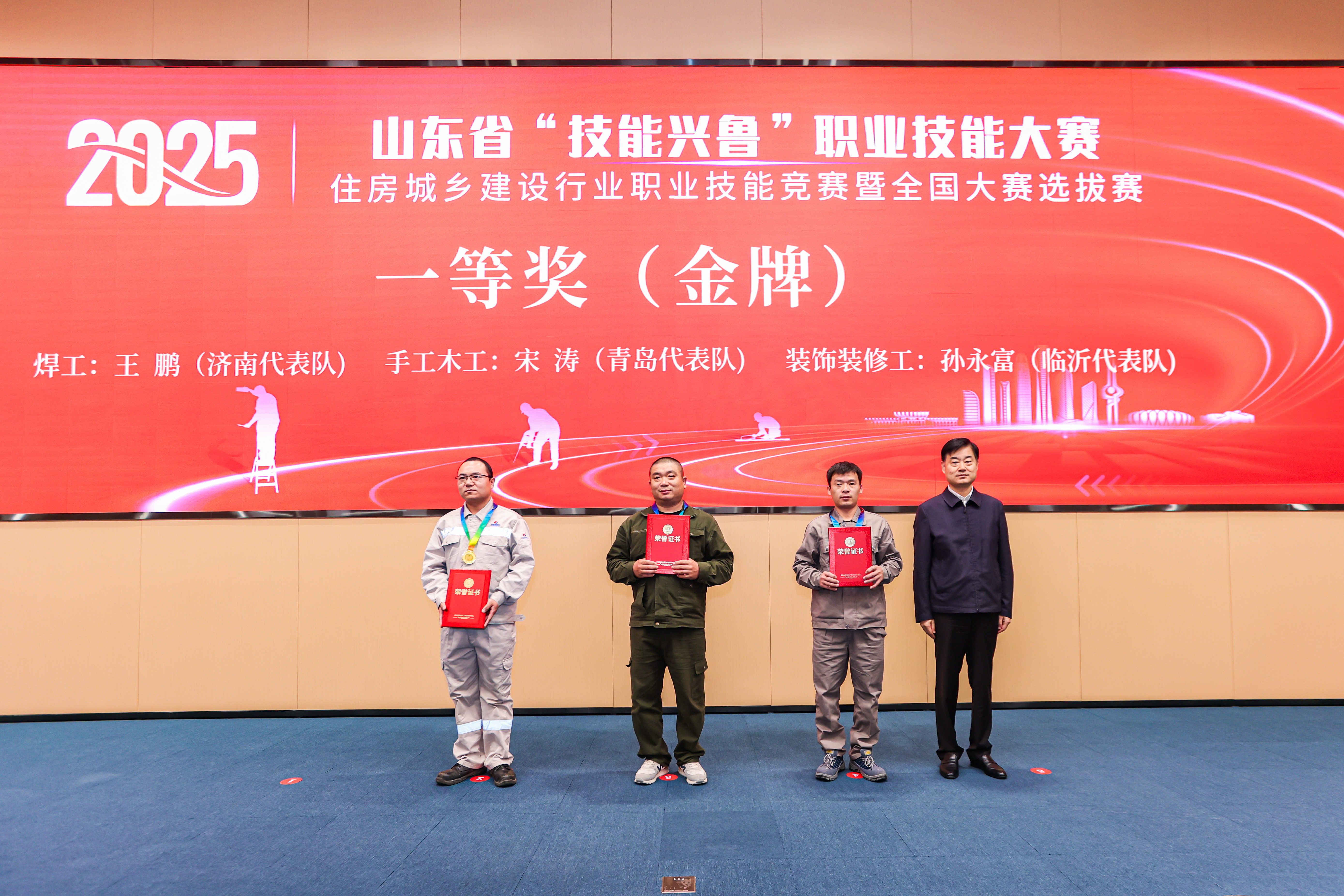
Core Points - The 2025 Shandong Province "Skill Prosperity Shandong" vocational skills competition results were announced on October 16, with 60 outstanding contestants selected, including 9 first-prize winners who will represent Shandong in the national competition next year [1][18] - The competition serves as a concentrated examination of the skill talent cultivation achievements in the Shandong construction industry and as an important rehearsal for the upcoming national competition [18] Group 1: Competition Results - Wang Peng from China Electric Power Construction Group Nuclear Power Engineering Co., Ltd. won the gold medal in the welding category [5] - Song Tao from Qingdao Yuanchangsheng Construction Group Co., Ltd. won the gold medal in the manual woodworking category [5] - Sun Yongfu from Tianyuan Construction Group Co., Ltd. won the gold medal in the decoration and renovation category [5] - Qingdao team won the team first prize, while Jinan and Linyi teams won the team second prize [15] Group 2: Future Competitions and Training - The second National Vocational Skills Competition for the Housing and Urban-Rural Construction Industry will be held next year, featuring 7 categories including masonry, piping, manual woodworking, intelligent building management, welding, gas appliance installation and maintenance, and decoration and renovation [18] - Shandong Province has strengthened collaboration with various departments to establish a competitive work pattern that promotes skill competitions and training [18][19] - The province aims to enhance the skill talent cultivation mechanism, focusing on advanced fields such as intelligent construction and green low-carbon technologies [19]
前三季度中国各类生产安全事故同比降20.8%
Zhong Guo Xin Wen Wang· 2025-10-16 06:20
Group 1 - In the first three quarters, China experienced a total of 13,442 production safety accidents, a year-on-year decrease of 20.8% [1] - The number of fatalities from these accidents reached 12,804, reflecting a year-on-year decline of 16.2% [1] - Major accidents totaled 6, resulting in 96 deaths, with significant accidents and fatalities decreasing by 14.3% and 20.7% respectively [1] Group 2 - The construction industry saw a decrease in total accidents, but significant accidents occurred in railway engineering, with incidents of site collapses and falls being prevalent [1] - The transportation sector continued to show a decline in total accidents, although major incidents in water transport and several serious road traffic accidents were reported [1] - The mining industry maintained a stable safety production situation, but illegal mining activities led to several significant accidents due to inadequate risk management [1] Group 3 - The chemical industry reported a decrease in total accidents and major incidents, although risks associated with illegal production and storage of hazardous chemicals remain prominent [2] - Major fire accidents occurred in crowded places such as restaurants and shops, indicating a trend of increased fire incidents in commercial areas [2]
9月PMI数据点评:年内扩内需政策或仍值得期待
Bank of China Securities· 2025-10-16 01:29
Manufacturing Sector Insights - The manufacturing PMI for September is 49.8%, a month-on-month increase of 0.4 percentage points, indicating a slight recovery within the contraction zone[3] - The new orders index stands at 49.7%, up 0.2 percentage points from the previous month, while the new export orders index increased by 0.6 percentage points to 47.8%[3] - The production index rose to 51.9%, reflecting a month-on-month increase of 1.1 percentage points, indicating active manufacturing activities[3] Price and Demand Dynamics - The major raw material purchase price index remains high at 53.2%, despite a month-on-month decline of 0.1 percentage points[8] - The "anti-involution" policy has supported the prices in certain manufacturing sub-sectors, with the specialized equipment manufacturing price index rising by 2.2 percentage points[2] - However, the overall demand remains weak, as evidenced by declines in finished goods inventory and new orders in the electrical machinery and general equipment manufacturing sectors[2] Non-Manufacturing Sector Overview - The non-manufacturing PMI for September is 50.0%, down 0.3 percentage points, indicating stagnation at the threshold level[4] - The new orders index for non-manufacturing is at 46.0%, a decrease of 0.6 percentage points, while the new export orders index improved to 49.8%, up 1.0 percentage points[10] - The employment index in the non-manufacturing sector is at 45.0%, reflecting a contraction with a month-on-month decline of 0.6 percentage points[10] Sector-Specific Performance - The construction sector's PMI is at 49.3%, with a new orders index of 42.2%, indicating continued contraction despite a slight month-on-month improvement[14] - The service sector PMI is at 50.1%, showing a slight decline of 0.4 percentage points, but still within the expansion zone[14] - Notably, the metal products and automotive manufacturing sectors have shown significant month-on-month improvements in their economic performance[16]