机械

Search documents
连跌四日 东京股市两大股指继续承压
Sou Hu Cai Jing· 2025-11-19 09:29
Core Points - The Tokyo stock market indices continued to decline on the 19th, with the Nikkei 225 index falling by 0.34% and the Tokyo Stock Exchange index down by 0.17% [2] - Over the previous three trading days, the Nikkei index had dropped more than 2500 points, leading to increased buying activity in the morning session on the 19th [2] - Investor sentiment was affected by the overall decline in the New York stock market and anticipation surrounding Nvidia's upcoming earnings report, which pressured semiconductor-related stocks [2] - Concerns over deteriorating Sino-Japanese relations continued to impact the market, with companies like Shiseido, Sushi郎, Sony Group, and Sanrio, which are linked to the Chinese market, experiencing weak rebounds and continued declines [2] - Analysts noted that the current situation makes the performance outlook for related companies uncertain, leading investors to avoid these stocks [2] - By the close, the Nikkei index fell by 165.28 points to 48537.70, while the Tokyo Stock Exchange index decreased by 5.52 points to 3245.58 [2] - Among the 33 industry sectors on the Tokyo Stock Exchange, sectors such as machinery, metal products, and fisheries saw significant declines, while oil and coal products, retail, and real estate sectors led the gains [2]

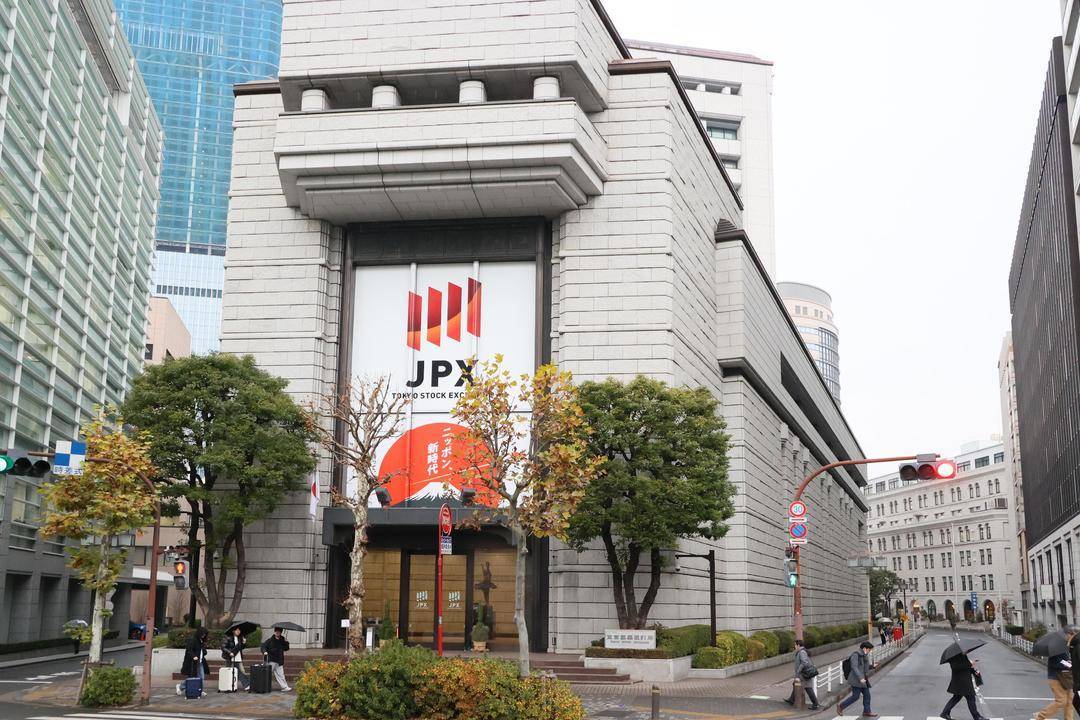
东京股市继续承压下跌
Xin Hua She· 2025-11-19 09:28
Market Performance - The Nikkei 225 index closed down by 0.34%, while the Tokyo Stock Exchange index fell by 0.17% on November 19 [1][2] - The Nikkei index has cumulatively dropped over 2500 points in the previous three trading days [1] Investor Sentiment - There was an increase in bargain-hunting among investors in the early session, leading to a slight opening rise for both indices [1] - Investor sentiment was heavily influenced by the overnight decline of major U.S. stock indices and the upcoming earnings report from Nvidia, resulting in a cautious outlook [1] Sector Performance - Semiconductor-related stocks faced significant pressure, contributing to the overall market's inability to gain momentum [1] - Among the 33 industry sectors on the Tokyo Stock Exchange, sectors such as machinery, metal products, fisheries, and agriculture saw notable declines, while oil and coal products, retail, and real estate sectors led the gains [2] Company-Specific Concerns - Concerns regarding deteriorating Sino-Japanese relations continued to impact the market, particularly affecting companies like Shiseido, Sushi Row, Sony Group, and Sanrio, which are linked to the Chinese market [1] - Analysts indicated that the uncertain performance outlook for these companies may lead investors to avoid their stocks [1]
上交所副理事长霍瑞戎: 持续提升上市公司质量 营造中长期资金入市良好生态
Zheng Quan Ri Bao· 2025-11-19 06:44
Core Viewpoint - The Shanghai Stock Exchange (SSE) aims to enhance the quality of listed companies and create a favorable environment for long-term capital investment, driven by the rapid development of technologies such as artificial intelligence and biomedicine [1] Group 1: Stability - SSE focuses on consolidating the long-term positive trend of listed companies through the "Three-Year Action Plan to Improve the Quality of Listed Companies," which aims to enhance operational conditions and strengthen collaboration with various departments [2] - In the first half of the year, the net profit attributable to shareholders of listed companies in Shanghai reached 2.39 trillion yuan, with emerging industries like electronics and biomedicine showing a revenue growth rate of 7.5%, while consumer sectors like food and beverages grew by 12% [2] Group 2: Progress - SSE promotes innovation-driven development by leveraging major reforms such as the establishment of the Sci-Tech Innovation Board, enhancing the quality and efficiency of services for technological innovation [3] - In the first half of the year, companies on the Sci-Tech Innovation Board invested 84.1 billion yuan in R&D, exceeding 2.8 times their net profits, leading the A-share market in R&D investment [3] Group 3: Investment and Financing Coordination - SSE is enhancing the diversity of investment products and improving the market ecosystem to support the entry of medium- and long-term capital [4] - The scale of ETFs in the Shanghai market has grown from less than 1 trillion yuan in 2020 to over 4 trillion yuan currently, reflecting an increase in institutional investor participation [4] - SSE has published 272 indices this year to provide a rich product support for medium- and long-term capital investment [4]
中原证券晨会聚焦-20251119
Zhongyuan Securities· 2025-11-19 00:25
Key Insights - The report highlights a significant growth in the new energy vehicle sector, with production and sales reaching 1.3015 million and 1.2943 million units respectively from January to October, marking a year-on-year increase of 33.1% and 32.7% [5][8] - The unemployment rate for urban youth aged 16-24 stands at 17.3%, indicating ongoing labor market challenges [5][8] - The People's Bank of China and other departments have issued a plan to support consumption infrastructure and trade systems in Beijing, aiming to boost consumer spending [5][8] Domestic Market Performance - The Shanghai Composite Index closed at 3,939.81, down 0.81%, while the Shenzhen Component Index closed at 13,080.49, down 0.92% [3] - The A-share market is currently experiencing a phase of consolidation, with the average P/E ratios for the Shanghai Composite and ChiNext at 16.36 and 49.18 respectively, indicating a suitable environment for medium to long-term investments [9][11] Industry Analysis - The communication industry index outperformed the Shanghai Composite Index in October, with a growth of 0.24% [16] - The semiconductor industry has shown a robust performance in Q3, with a revenue of 1,741.84 billion yuan, reflecting a year-on-year increase of 6.07% and a net profit growth of 48.93% [29][30] - The sports nutrition market in China is projected to grow significantly, with a compound annual growth rate of 11.56% expected from 2024 to 2030, driven by a large and growing population of fitness enthusiasts [21][23] Investment Recommendations - The report suggests focusing on sectors such as software development, cultural media, internet services, and semiconductors for short-term investment opportunities [9][12] - In the communication sector, it is recommended to pay attention to light communication, AI smartphones, and telecom operators due to their strong growth potential [19][20] - The mechanical industry shows signs of recovery, with recommendations to invest in cyclical sectors like engineering machinery and oil and gas equipment, as well as emerging technology sectors [24][25]

浙商早知道-20251119
ZHESHANG SECURITIES· 2025-11-18 23:30
Market Overview - On November 18, the Shanghai Composite Index fell by 0.81%, the CSI 300 decreased by 0.65%, the STAR 50 rose by 0.29%, the CSI 1000 dropped by 1%, and the ChiNext Index declined by 1.16% [5] - The best-performing sectors on November 18 were Media (+1.6%), Computer (+0.93%), Electronics (+0.12%), and Food & Beverage (+0.03%), while the worst-performing sectors were Coal (-3.17%), Electric Equipment (-2.97%), Steel (-2.85%), Nonferrous Metals (-2.8%), and Basic Chemicals (-2.67%) [5] - The total trading volume of the A-share market on November 18 was 1,946 billion yuan, with a net inflow of 7.466 billion HKD from southbound funds [5] Important Recommendations Company: Baiao Intelligent (300836) - The recommendation logic highlights the company's positioning in customized automation equipment, with opportunities in munitions and AI computing power expected to enhance profitability [6] - Revenue projections for 2025-2027 are 1,055 million, 1,368 million, and 1,774 million yuan, with growth rates of 126.4%, 29.7%, and 29.7% respectively. Net profit is forecasted at 122 million, 169 million, and 221 million yuan, with growth rates of 346.8%, 38.0%, and 30.6% respectively [6] Company: Lu Wei Optoelectronics (688401) - The recommendation is based on the company's rare capabilities in G11 and G8.6 high-generation platforms, benefiting from the IT-OLED market expansion and semiconductor recovery [7] - Revenue forecasts for 2025-2027 are 1,164.17 million, 1,568.91 million, and 2,120.63 million yuan, with growth rates of 32.96%, 34.77%, and 35.17% respectively. Net profit is expected to be 262.67 million, 366.91 million, and 514.29 million yuan, with growth rates of 37.62%, 39.68%, and 40.17% respectively [8] Key Insights Machinery Sector - The core viewpoint indicates a cyclical reversal, growth emergence, and acceleration of overseas expansion in the machinery sector [9] - The focus has shifted from emphasizing self-sufficiency to promoting overseas expansion, with growth expected in engineering machinery, industrial gases, and semiconductor equipment [9] Communication Sector - The communication sector is expected to see steady growth, with a focus on computing power, operator benefits, and satellite internet opportunities [10] - The domestic commercial rocket is anticipated to successfully conduct test flights, contributing to the sector's growth [10] Media and Internet Sector - The media and internet sector is projected to recover in 2026, driven by policy support, improved content supply, and accelerated AI commercialization [12] - The emphasis is on the structural improvement of content supply and the enhanced efficiency brought by AI applications in advertising and content creation [12] Computer Sector - The computer industry is witnessing a systematic breakthrough in domestic computing power, transitioning from technical advancements to commercialization of AI applications [14] - Investment opportunities are identified in domestic computing power and the commercial realization of AI, with catalysts including breakthroughs in domestic computing power [14]
【光大研究每日速递】20251119
光大证券研究· 2025-11-18 23:05
Group 1: Steel Industry - The price of oriented silicon steel has decreased by 23% year-to-date, indicating a significant drop in the metal cycle products market [4] - The Ministry of Industry and Information Technology issued the "Steel Industry Normative Conditions (2025 Edition)" on February 8, 2025, and reiterated on July 18 the need to "promote the orderly exit of backward production capacity," suggesting potential recovery in steel sector profitability to historical average levels [4] Group 2: Nuclear Fusion Industry - Fusion New Energy has announced procurement projects exceeding 2 billion yuan, focusing on power systems, low-temperature systems, and shielding layers, indicating a speeding up of industry tenders [5] - The "14th Five-Year Plan" includes nuclear fusion energy as a future industry, highlighting the long-term growth potential of the controllable nuclear fusion sector [5] Group 3: Gushengtang (2273.HK) - Gushengtang Singapore, a subsidiary of the company, has entered into a share transfer agreement to acquire 100% equity and all related rights of Da Zhong Tang PTE. LTD. as of November 16, 2025 [6] - The company's board has resolved to exercise its buyback authorization, planning to increase the buyback amount by up to 300 million HKD, demonstrating confidence in its development [6]
投顾晨报:震荡整固看风格,中盘蓝筹谋先机-20251118
Orient Securities· 2025-11-18 14:12
Market Strategy - The current market is expected to experience limited index growth, with a judgment of "fluctuating up and down, sideways consolidation, slightly strengthening" [7] - Mid-cap blue chips are anticipated to rise again after four years, presenting investment opportunities in manufacturing, consumption, and cyclical sectors [7] - Related ETFs include 中证 500ETF (159922) and 中证 1000ETF (512100) [7] Chemical Industry - Global chemical supply is expected to contract due to high costs and aging equipment, leading to a structural adjustment in the supply chain [7] - European chemical sales account for approximately 13% of the global market, but high energy costs and punitive carbon taxes are causing continued capacity exit [7] - Domestic production progress has slowed, and with the implementation of "anti-involution" policies, the chemical sector is likely to enter a new prosperity cycle [7] - Related stock: 万华化学 (600309, Buy) [7] - Related ETF: 化工 ETF (159870/516020) [7] Financial Technology - Hong Kong's "FinTech 2030" strategy marks a shift from application-focused development to a more systemic, forward-looking, and ecological approach [7] - This strategy emphasizes the collaborative development of data, AI, resilience, and tokenization, providing valuable insights for the high-quality development of mainland financial technology [7] - Related ETFs include 金融科技 ETF (159851/515720/159103) and 香港证券 ETF (513090) [7]

周期成长基金池:今年实现高超额
Minsheng Securities· 2025-11-18 08:29
Group 1 - The core investment strategy focuses on identifying stocks within cyclical industries that can achieve sustainable growth independent of industry cycles, particularly in sectors like basic chemicals, machinery, and computers [1][7] - The cyclical growth fund pool has shown a significant annualized return of 17.46% from February 7, 2014, to November 11, 2025, outperforming the equity fund index by 7.63% [1][8] - The fund pool's performance has been positively influenced by industry allocation, stock selection, and dynamic adjustments, with a notable increase in the consumer and manufacturing sectors while reducing exposure to pharmaceuticals and TMT sectors [1][19] Group 2 - The cyclical growth fund is defined based on the attributes of the holding industries and stocks, requiring a minimum of 60% growth stocks in the top holdings and at least 40% cyclical growth stocks [2][23] - The current cyclical growth fund pool includes several funds with varying returns, such as E Fund Active Growth with a return of 55.12% and Huatai-PB Consumer Upgrade A with a return of 25.74% [2][24] - The cyclical growth fund pool's historical performance indicates a balanced industry allocation, with significant contributions from sectors like basic chemicals (13%), machinery (10%), and computers (6%) [9][19] Group 3 - The cyclical growth investment philosophy emphasizes selecting companies with strong competitive advantages, pricing power, and effective governance that can achieve stable growth despite high industry penetration [7][8] - The cyclical growth fund pool has demonstrated resilience with a high annualized Sharpe ratio of 0.70, indicating a favorable risk-return profile [1][8] - The fund pool's performance has varied significantly across years, with notable outperformance in 2015 (29.33% excess return) and 2025 (14.69% excess return) [14][13]
34家企业,公示名单发布!
中国能源报· 2025-11-18 03:36
Core Viewpoint - The Ministry of Industry and Information Technology (MIIT) is promoting electricity demand-side management in the industrial sector by collecting typical case studies nationwide, with 34 companies and 30 products/technologies proposed for inclusion in the "National Typical Cases of Electricity Demand-Side Management in the Industrial Sector (2025)" list [1][4]. Summary by Sections Case Collection and Evaluation - The MIIT has initiated a nationwide collection of typical cases for electricity demand-side management in the industrial sector, involving preliminary reviews by local authorities and expert evaluations by the China Electricity Council [4]. Proposed Companies and Technologies - A total of 34 companies and 30 products/technologies are proposed for inclusion in the 2025 list, showcasing various management and technical measures aimed at improving energy efficiency and reducing electricity consumption [4][5]. Implementation Results - Companies like Hebei Changan Automobile reported direct electricity savings of 13.45 million yuan in 2024 through various energy efficiency measures, including upgrading distribution networks and promoting the use of electric vehicles [6]. - Jilin Linglong Tire achieved a direct electricity savings of 9.31 million kWh in 2024 by improving power factor and utilizing distributed solar power [6]. - Budweiser (Jiamusi) implemented a series of energy optimization measures, resulting in a reduction of 491,900 kWh in electricity consumption in 2024 compared to 2023, alongside a 15% increase in production efficiency [7]. Management and Technical Measures - Companies are establishing dedicated energy management teams and systems to oversee electricity demand-side management, with many implementing advanced technologies such as smart energy management platforms and distributed energy systems [8][9]. - The use of renewable energy sources, such as solar power, is being emphasized, with companies like Jiangdong Hengkang New Materials planning significant solar and energy storage projects to enhance green development [8]. Public Participation and Feedback - The MIIT has opened a public consultation period for stakeholders to provide feedback on the proposed list of companies and technologies, encouraging transparency and community involvement in the electricity demand-side management initiative [4].
中金:“被忽略”的牛市
中金点睛· 2025-11-18 00:13
Core Viewpoint - The article discusses the current market dynamics driven by liquidity and the potential limitations of this bull market, drawing parallels with Japan's past market behavior during the 1990s [2][14][58]. Market Performance - Since the policy shift on "September 24," the domestic market has rebounded significantly, with the Shanghai Composite Index and Hang Seng Index rising by 47% and 50% from their lows, respectively [2]. - The current valuation of the Hang Seng Index stands at a dynamic PE of 11.6, which is above the historical average, indicating that certain high-growth sectors may no longer be considered cheap [2][6]. Valuation Comparisons - While the Hang Seng Index appears cheaper than the S&P 500's dynamic valuation of 22.3, this comparison lacks context regarding profitability and liquidity conditions [6][8]. - The article highlights that the median PE of leading Chinese tech companies is 17.8, which is higher than their median net profit margin of 9.6%, suggesting potential overvaluation in some sectors [6][8]. Economic Indicators - Post-August, domestic demand indicators have weakened, and recent financial credit data supports the view that the credit cycle may be turning downward in the fourth quarter [9][11]. - The article notes that risk premiums in traditional sectors like finance and real estate have dropped below historical averages, while new consumption and innovative pharmaceuticals are stabilizing around historical means [9][11]. Historical Context: Japan's Bull Markets - The article analyzes Japan's three bull markets in the 1990s, which were characterized by significant government stimulus and external economic trends, yet ultimately faced limitations due to structural issues and market sentiment [14][58]. - Each of Japan's bull markets was initiated by substantial fiscal stimulus, with the first round starting in 1992, leading to a 54% rebound over 12.8 months [19][33]. Investor Behavior - During Japan's first bull market, individual investors' participation surged, while foreign investors' share declined, indicating a shift in market sentiment [28][30]. - The second bull market saw a similar pattern, with individual investor enthusiasm waning as foreign investor participation increased [40][42]. Conclusion and Implications - The article concludes that while liquidity can drive market rallies, without substantial improvements in the underlying economy, these rallies may face ceilings [58]. - It suggests that to break through current market limitations, structural policy changes focusing on technology and income expectations are necessary, rather than relying solely on traditional fiscal measures [67].