
新消费

Search documents
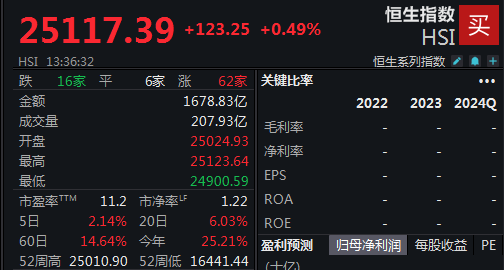
恒指创2022年以来新高!主力猛攻这两大赛道
Mei Ri Jing Ji Xin Wen· 2025-07-22 06:23
Group 1 - The Hang Seng Index reached a new high of 25120.68 points, marking the highest level since 2022, with a year-to-date increase of 25% [1][2][4] - Despite recent fluctuations, the Hong Kong stock market is considered undervalued, with significant net inflows from mainland investors and increased holdings by state-owned enterprises [1][4][6] - The market sentiment is improving, and analysts remain optimistic about the future performance of the Hong Kong stock market [1][6][7] Group 2 - The active inflow of southbound funds has been notable, with net purchases reaching 971.36 billion yuan in the past month and a total of 0.79 trillion yuan year-to-date [4] - Public funds have shown increased interest in Hong Kong stocks, with the total scale of actively managed funds reaching 325.9 billion yuan, up from 19.13% to 19.92% of total heavy holdings [4][6] - The performance of new consumption and innovative pharmaceutical sectors has significantly boosted market sentiment, with stocks like Pop Mart seeing a price increase of over 250% this year [8][9] Group 3 - The innovative pharmaceutical sector has outperformed, with related ETFs showing year-to-date gains exceeding 80%, indicating strong investor interest [9][10] - The biotechnology and medical technology sectors in Hong Kong account for 40% of the total market capitalization in the pharmaceutical sector, compared to 24% in A-shares, suggesting a higher level of innovation in Hong Kong stocks [10][11]

「CITYFORCE年度品牌」征集启动|2025特昂节
36氪· 2025-07-21 08:13
Core Viewpoint - The survival and evolution of consumer brands heavily rely on two core genes: "deepening value perception" and "breaking through innovation" [1][10] Group 1: New Normal in Chinese Consumer Market - The Chinese consumer market has entered a "new normal" characterized by "single-digit growth," increasing complexity, and differentiation [2] - Consumer spending is increasingly influenced by actual income and assets rather than confidence levels, leading to more rational spending decisions focused on quality of life [2][3] - Notable market phenomena include the success of Labubu and the pressure on Moutai's prices, indicating a shift in consumer preferences and behaviors [2] Group 2: Shifts in Consumer Behavior - Consumers are adjusting their spending behaviors to adapt to a challenging economic environment, with a weakening correlation between consumption intention and overall willingness to spend [3] - Wealthy urban consumers plan to increase daily spending by 2.6% by 2025, focusing on tangible goods like housing and vehicles, as well as intangible services for personal fulfillment [3] - Net consumption intentions show a willingness to invest in education (34%), health products (26%), and travel (12%), while categories like home appliances and tobacco show a tendency to tighten spending [3] Group 3: Value Expectations and Spending Balance - Consumers are opting for downgraded consumption in some areas while spending lavishly in others, reflecting a shift from "having more" to "living better" [4] Group 4: Innovation in New Consumption - New consumption is seen as a deepening evolution of consumption upgrade trends, with increasing demand for practical and emotional value [6] - Innovations are driven by new technologies, concepts, and models, particularly in hot consumer sectors like IP toys, jewelry, outdoor sports, and beauty products [7] - The demand for products with high cost-performance ratios, technological content, and health benefits is becoming a breakthrough point for new consumption [8] Group 5: Challenges and Opportunities for New Consumption Brands - New consumption categories face inevitable iterations and renewals, with challenges including intensified competition and failure to keep up with demand trends [8] - Companies are encouraged to shift from short-term profit strategies to long-term sustainable practices by enhancing innovation, optimizing channels, and accelerating globalization [9]

金鹰基金:产业积极因素发酵赚钱效应扩散 均衡配置应对潜在波动
Xin Lang Ji Jin· 2025-07-21 03:57
Group 1 - The market experienced a rebound driven by positive factors such as AI and anti-involution, with the GDP data confirming a moderate economic recovery, providing fundamental support for the A-share market [1] - The banking system injected short-term liquidity at the highest level of the year, effectively alleviating liquidity pressure caused by tax payments and bond issuance [1] - A-share trading volume decreased, with the average daily turnover dropping to 1.54 trillion yuan, while major indices like the ChiNext Index and CSI 300 saw increases of 3.17% and 1.09% respectively [1] Group 2 - The market sentiment is primarily driven by policy expectations and active industry dynamics, with a notable improvement in market sentiment ahead of the Politburo meeting [1] - The potential divergence in the market mainly revolves around the recovery slope of the fundamentals, with GDP and June financial data validating economic resilience, while retail sales growth is slowing and the real estate sector remains under pressure [1] - The continuation of anti-involution policies is expected to improve the profitability of related companies and the competitive landscape of industries [1] Group 3 - In the overseas market, Trump's tariffs and the Federal Reserve's policy stance are creating uncertainty regarding interest rate cuts, with the expectation of maintaining interest rates unchanged at the upcoming meeting [2] - The financial sector is experiencing a pullback due to short-term trading congestion, while the technology growth sector remains strong, particularly in AI hardware and applications [2] - The anti-involution trend is likely to continue under policy catalysis, with industries like photovoltaics, building materials, and aquaculture becoming focal points amid macroeconomic deflationary pressures [2]
刘格菘二季度最新持仓曝光!加仓军工、新消费以及互联网产业
Zhi Tong Cai Jing· 2025-07-21 00:09
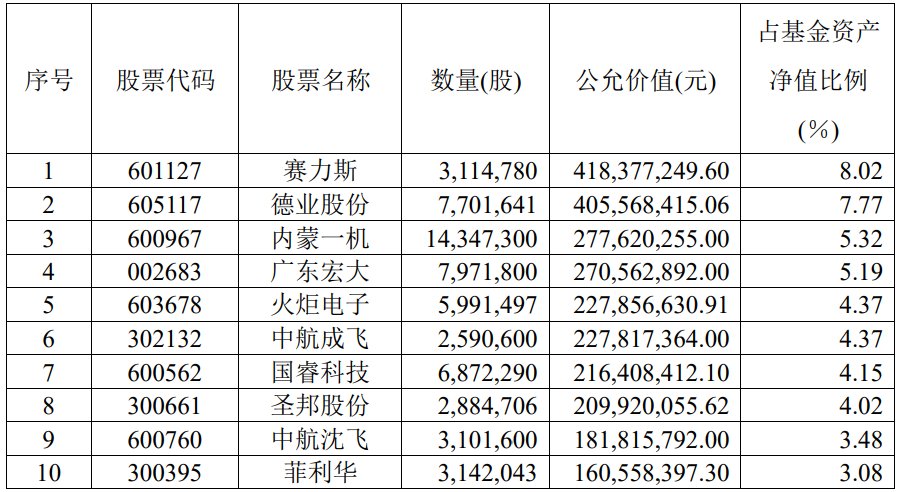
Core Viewpoint - Liu Gesong, the fund manager of GF Fund, has made significant adjustments to the holdings of six funds under his management, reducing positions in the new energy vehicle supply chain and semiconductor equipment companies while increasing exposure to new consumption, the internet, and military industries in Q2 2025 [1][2]. Fund Performance and Adjustments - In Q2 2025, the net value growth rate of the A-class shares of the GF Small Cap Growth Mixed Fund was 2.38%, while the C-class shares grew by 2.28%, compared to a benchmark return of 3.10% [1]. - The GF Small Cap Growth Mixed Fund experienced a notable reallocation of assets, marking the most significant adjustment in five years, attributed to the addition of two new fund managers [1][2]. Investment Focus - The GF Small Cap Growth Mixed Fund has maintained a high position in A-shares, focusing on technology growth, particularly AI-related stocks, and the defense industry [2][3]. - The fund has newly invested in Inner Mongolia First Machinery Group, Torch Electronics, AVIC Chengfei, Guorui Technology, and AVIC Shenyang Aircraft, marking their first entry since the fund's inception in 2005 [2]. Market Outlook - Liu Gesong expressed optimism about the resilience of the domestic economy, anticipating a recovery in overseas markets and a gradual easing of geopolitical tensions [6]. - The focus remains on identifying investment opportunities aligned with technological changes and the restructuring of global order, particularly in AI applications and undervalued Chinese defense assets [3][6]. Top Holdings - The top ten holdings of the GF Small Cap Growth Mixed Fund include companies such as Seres, Deyue Shares, Inner Mongolia First Machinery, and Guangdong Hongda, with significant allocations to each [5][8].



[7月20日]美股指数估值数据(投资港股赚钱了,需要交税吗;全球指数星级更新)
银行螺丝钉· 2025-07-20 13:39
Core Viewpoint - The article discusses the valuation of global stock indices, U.S. Treasury indices, and the investment landscape for overseas markets, highlighting the limited options available for domestic investors and the potential for growth in overseas index funds [1][2]. Group 1: Market Overview - Global stock markets experienced slight fluctuations this week, with minimal volatility [4]. - Most European and Asia-Pacific markets saw minor declines, while Chinese assets, particularly the Renminbi, surged significantly. The Hang Seng Index rose by 2.84%, and tech stocks in Hong Kong increased by 6%, leading global gains. The A-share CSI All Share Index rose by 1.28%, marking four consecutive weeks of growth [5]. Group 2: Hong Kong Market Dynamics - The Hong Kong market has seen a more significant decline than the A-share market in recent years, but its rebound over the past two years has been more pronounced [6][7]. - Various sectors in the Hong Kong market have shown strength this year, including internet companies, consumer goods, and healthcare indices, indicating a phase of recovery and growth [8]. Group 3: Taxation on Investments - There are concerns regarding potential taxation on profits from Hong Kong stock investments. The article outlines two main types of taxes related to stock investments: dividend tax and capital gains tax [10][15]. - Dividend tax rates for Hong Kong stocks are higher than those for A-shares, with rates of 20% for H-shares and 28% for red-chip stocks. This tax consideration is factored into the valuation of Hong Kong indices [13][14]. - Capital gains from stock trading are generally exempt from personal income tax in mainland China, but investors with overseas accounts may be subject to a 20% tax on profits [21]. Group 4: Global Index Valuation - The article presents a star rating system for global stock markets, indicating periods of undervaluation. Recent data shows the global stock market rating at approximately 3.1 stars, down from 4.1-4.2 stars after a significant drop in April 2025 [22]. - There is a notable absence of global stock index funds available for domestic investors, despite the existence of a vast market for such funds overseas, amounting to trillions of dollars [24]. Group 5: Investment Products - The company has developed a "Global Index Advisory Portfolio" that diversifies investments across U.S., UK, Hong Kong, and A-share indices to track global stock market performance [26]. - Current investment limits for overseas market funds are relatively low, with a maximum daily purchase limit of 350 yuan [28].
最牛涨超130%!这类基金火了,最新研判
Zhong Guo Ji Jin Bao· 2025-07-20 12:42
Group 1 - The core viewpoint of the article is that Hong Kong stock thematic funds have performed exceptionally well in 2023, with expectations for a structured bull market in the second half of the year, particularly in technology and consumer sectors [1][5]. - As of July 18, the Hang Seng Index has risen over 23% year-to-date, leading global major indices, with thematic funds showing significant growth, including a fund with a net value growth rate of 133.73% [3][4]. - The strong performance of Hong Kong stocks is attributed to three main factors: positive changes in the industry, sensitivity to overseas liquidity, and historically low valuations [3][4]. Group 2 - The article highlights that there is a growing interest in Hong Kong stock funds, with 17 new applications for thematic funds received in July, indicating increased investor attraction [4][5]. - Fund managers express optimism for the second half of the year, predicting a structured bull market with a focus on sectors like AI, new consumption, and robotics [5][6]. - Investment strategies will likely focus on sectors that align with industry trends, including healthcare, consumer sectors, and state-owned enterprises, which are expected to provide stable returns amid global uncertainties [6][7].
成长股重估、分红资产走强,知名机构:下半年A股迎来“更有质量的增长”
Di Yi Cai Jing· 2025-07-18 10:37
Group 1 - The core viewpoint is that different risk preferences among funds are driving market activity, with a positive outlook for the Chinese economy leading to increased investment in innovative drug sectors and technology [1][2] - The performance of the Zige Investment's subjective long/short product, Zige Tongshuang No. 1 A-class share, increased by 30.35% in the first half of the year, ranking sixth in the industry [1] - The market is characterized by a "barbell" structure, where high-quality growth stocks are being repriced while core assets with sustainable dividend capabilities are seeing their valuations rise due to increased allocation from debt-like funds [1][5] Group 2 - The pharmaceutical sector has shown strength since the market sentiment improved, with the essence of the current pharmaceutical market being the realization of the potential of Chinese innovative drugs [2] - Despite the rebound, the overall valuation of the pharmaceutical sector has not fully reflected future sales peaks, indicating significant long-term growth potential [2] - There are signs of overheating in certain stocks that are heavily reliant on clinical stage advancements and speculative catalysts, while truly promising drugs have yet to demonstrate substantial sales [2] Group 3 - Zige Investment maintains a strategic overweight in innovative drugs, believing that once a core product becomes a drug, the company's market value could leap to a new level [3] - The company holds a neutral stance on CXO and maintains a small-scale tracking position in AI+pharmaceuticals, as the profitability model in AI pharmaceuticals remains unclear [3] - The AI and new consumption sectors are identified as significant strategic directions, with structural opportunities expected to emerge in the second half of the year [3][4] Group 4 - The structural opportunities in new consumption are clearer, driven by the changing demands of Generation Z, Alpha generation, and active seniors, leading to a reconfiguration of brands, channels, and supply chains [4] - The current macroeconomic environment is challenged by real estate debt and weak domestic demand, but new incremental industries are showing signs of support for the market [4][5] - The market is experiencing a "barbell" investment structure, with funds concentrating on stable dividend-paying assets and innovative leaders capable of global expansion [5]
对话淡马锡吴亦兵:超配中国资产的坚定信心与投资策略
2 1 Shi Ji Jing Ji Bao Dao· 2025-07-18 09:33
Core Insights - Temasek aims to build a resilient investment portfolio that can navigate through economic cycles, emphasizing long-term returns over short-term performance [1][2] - The company's net asset value reached SGD 434 billion, an increase of SGD 45 billion from the previous fiscal year, with a one-year total shareholder return of 11.8% [1] - Temasek's investment strategy has evolved alongside the Chinese market, focusing on sectors like energy transition and life sciences [1][2] Investment Strategy - Temasek's investment portfolio is divided into three main segments: Singapore-based assets (41%), global direct investments (36%), and cooperative investment projects (23%) [3][4] - The Singapore-based assets include well-known companies such as Singapore Airlines and DBS Bank, providing stable long-term returns [3] - Global direct investments align with structural trends like digitalization, sustainability, and new consumption, allowing Temasek to navigate different economic cycles [4] Early-Stage Investments - Temasek continues to invest in early-stage companies but maintains a limit, with early investments not exceeding 6% of the global portfolio [5][6] - The company focuses on supporting successful companies through multiple funding rounds, exemplified by its ongoing investment in Innovent Biologics [5][6] Focus on China - Temasek's exposure to Chinese assets is 18%, slightly down from 19% in the previous fiscal year, but the net asset value in China increased by approximately SGD 4 billion [6][7] - The company emphasizes innovation as a key investment theme, noting the shift in China's competitive advantages from manufacturing to engineering and R&D [6][7] New Consumption Trends - Temasek observes a significant shift in the perception of Chinese brands, moving from low-cost to premium branding, as seen with companies like Pop Mart and LABUBU [9][10] - The emergence of brands that offer emotional value and aesthetic appeal indicates a new era for Chinese consumer products, with potential for global market success [9][10] Stablecoin Insights - Temasek recognizes the early-stage development of stablecoins and their potential in enhancing payment efficiency and reducing cross-border transaction costs [11] - The company is monitoring the regulatory landscape surrounding stablecoins, emphasizing the importance of regulatory alignment for long-term viability [11]
南向资金流出银行、新消费,三季度资金如何调仓?
第一财经· 2025-07-17 05:35
Core Viewpoint - In the first half of the year, new consumption, biomedicine, and banking were key sectors for southbound capital investment, but there has been a noticeable outflow from these sectors in recent weeks [1][4]. Group 1: Market Trends - Long-term foreign capital and hedge funds have recently shifted to a slight net outflow from Hong Kong and A-shares, despite a generally optimistic outlook for the Chinese stock market this year [2]. - The overall market trading strategy is leaning towards a "barbell" approach, favoring dividend-yielding assets and resource-related stocks as conservative investments, while also focusing on growth themes like innovative drugs, technology, and new consumption [2][11]. - The banking sector has seen a significant shift to net outflows, with previous weeks showing it among the top three sectors for net inflows [5][6]. Group 2: Sector Analysis - The banking sector has been under pressure, with a lack of fundamental growth support, leading to concerns about the sustainability of its recent performance [6][12]. - New consumption stocks, such as Pop Mart and Lao Pu Gold, experienced a surge in valuations exceeding 100 times, but have recently entered a correction phase [7][8]. - Despite high expectations for Pop Mart's revenue and profit growth, the stock has faced a decline, raising concerns about the sustainability of its growth narrative [8][9]. Group 3: Investment Opportunities - Potential opportunities for the second half of the year are identified in two main areas: Hang Seng Technology and high-quality companies in the traditional economy, which are currently undervalued [11][12]. - The Hang Seng Technology sector is expected to rebound as price competition subsides, and companies within this sector may present good opportunities for growth [11]. - Traditional consumer companies with strong fundamentals are also seen as having significant upside potential if they can deliver solid mid-year results [12]. Group 4: Foreign Investment Sentiment - Overall, international investment banks and asset management institutions remain relatively optimistic about investment opportunities in the Chinese market for the second half of the year [14][15]. - Foreign capital is still underweight in China, indicating potential for increased allocation as market conditions improve [15][16]. - The active IPO market in Hong Kong, with 51 companies raising a total of 124 billion HKD so far this year, is seen as a positive indicator for market sentiment and liquidity [15][17].

港股午评:恒生指数涨0.07% 恒生科技指数涨0.29%
news flash· 2025-07-17 04:04
Group 1 - The Hang Seng Index closed up 0.07% and the Hang Seng Tech Index rose by 0.29% [1] - The new consumption sector in Hong Kong stocks experienced a decline, with Pop Mart falling by 2.53% [1] - Other companies in the new consumption sector, such as Gu Ming, Mixue Group, and Cha Bai Dao, also saw declines [1]