房地产等

Search documents
“申”挖数据 | 估值水温表
申万宏源证券上海北京西路营业部· 2025-12-04 02:11
Core Viewpoint - The article highlights the current high valuation levels across various industries and indices in the A-share market, indicating potential investment risks due to elevated PE ratios and the Buffett indicator being above the safe zone [1][6][7]. Valuation Levels - The PE valuation (TTM) for steel, coal, electronics, retail, computing, and real estate industries are at historical percentiles of 80.08%, 81.60%, 86.36%, 94.77%, 95.27%, and 97.74% respectively, suggesting caution for investors [8]. - The Buffett indicator for the A-share market stands at 87.95%, which is considered relatively high and above the safe zone [6][22]. - Major broad market indices such as the North Securities 50, Shanghai 50, Shanghai Index, Sci-Tech 50, and China A100 have PE valuations (TTM) at percentiles of 82.85%, 88.31%, 91.89%, 95.53%, and 98.68% respectively, indicating high valuation levels [7]. Industry-Specific Insights - Non-bank financials and food & beverage sectors have PE valuations (TTM) below the 20th percentile of the past decade, at 3.02% and 13.25% respectively, making them areas of potential interest [8]. - The overall market PE valuation averages around 15.95 times, with the Shanghai market showing a total market capitalization of approximately 628.83 billion [18][25]. Index Valuation Performance - The current PE valuation levels for various indices indicate that most are above 20%, with significant declines noted in some indices such as the ChiNext Index and the Shanghai Composite Index [26][27]. - The PB valuation levels for major indices also reflect a similar trend, with the Shanghai Index at 1.12 and the Shenzhen Component Index at 1.75, both showing a decrease [28][30]. Industry Valuation Levels - The PE valuation levels across various industries show significant variation, with sectors like agriculture, steel, and electronics having valuations of 14.95, 5.69, and 79.76 respectively, indicating differing levels of market confidence [32]. - The PB valuation levels for industries such as steel and electronics are at 0.73 and 1.92 respectively, suggesting a mixed outlook across sectors [36].


粤开市场日报-20251203
Yuekai Securities· 2025-12-03 07:36
Market Overview - The A-share market experienced a decline today, with the Shanghai Composite Index falling by 0.51% to close at 3878.00 points, the Shenzhen Component Index down by 0.78% to 12955.25 points, the Sci-Tech 50 Index decreasing by 0.89% to 1308.37 points, and the ChiNext Index dropping by 1.12% to 3036.79 points [1][10] - Overall, there were 1442 stocks that rose while 3872 stocks fell, with 137 stocks remaining unchanged. The total trading volume in the Shanghai and Shenzhen markets reached 167 billion yuan, an increase of 765 million yuan compared to the previous trading day [1] Industry Performance - Among the Shenwan first-level industries, transportation, non-ferrous metals, coal, home appliances, and light industry manufacturing showed the highest gains, with increases of 0.69%, 0.63%, 0.57%, 0.30%, and 0.25% respectively. Conversely, the media, computer, real estate, retail, and comprehensive sectors led the declines, with decreases of 2.86%, 2.26%, 1.53%, 1.40%, and 1.26% respectively [1][10] - The concept sectors that performed well included cultivated diamonds, superhard materials, industrial metal selection, and others, while sectors like WEB3.0, Baidu platform, and Xiaohongshu platform experienced declines [2][12]
2025信用月报之十一:信用利差低位还能持续多久-20251201
HUAXI Securities· 2025-12-01 15:01
1. Report's Industry Investment Rating - There is no mention of the industry investment rating in the report. 2. Core Viewpoints of the Report - Since mid - July 2025, credit spreads have been in a low - level oscillation pattern. The duration of the low - level credit spreads depends on interest rate trends and liquidity. The shift from low - level oscillation to widening is usually accompanied by rising interest rates and institutional behavior disturbances [15]. - During the low - level oscillation of credit spreads, different varieties perform differently. High - cost - effective varieties favored by institutions have larger compression amplitudes. The amplitude of credit spreads of each variety is not small, especially in longer periods, and the cost - effectiveness can be judged by the position of credit spreads in the oscillation range [23][24]. - In December, institutions still have the willingness to allocate assets in advance for the next year. If interest rates oscillate downward and the capital side is stable, it is conducive to maintaining the low - level oscillation of credit spreads, but the buying power of credit bonds usually weakens, which may restrict the market performance [27]. 3. Summary According to the Directory 3.1 Credit Spreads in the Low - Level Oscillation Period: How to Allocate 3.1.1 Credit Bonds: The Cost - Effectiveness of 3 - Year Varieties Increases - In November, interest rates were in a low - volatility oscillation and rose slightly. Credit bond yields generally increased, with high - rating varieties, 3 - year, and 10 - year bonds performing relatively weakly. Credit spreads showed a differentiated trend, with 1 - year spreads basically unchanged, 3 - year spreads widening by 3 - 6bp, and spreads of AA+ and below 5 - year bonds narrowing by 5 - 8bp [11]. - The buying power of credit bonds weakened from strong to weak in November, and the proportion of transactions within 1 year continued to increase. Funds still had a large net purchase of credit bonds, while the net purchase of credit bonds by wealth management products, other asset management products, and money market funds decreased year - on - year [11][12]. - Since mid - July 2025, credit spreads have shown a low - level oscillation pattern. By reviewing the three previous periods of low - level credit spread oscillation since 2021, three rules were summarized. The duration of low - level credit spreads depends on interest rate trends and liquidity; different varieties perform differently during the low - level oscillation; and the amplitude of credit spreads in the low - level oscillation period is not small, and cost - effective varieties can be judged by their positions [15][23][24]. - In December, institutions still have the willingness to allocate assets in advance, but the decline in interest rates driven by transactions may be less than in previous Decembers due to the new regulations on fund sales fees. If interest rates oscillate downward and the capital side is stable, it is conducive to maintaining the low - level oscillation of credit spreads, but the buying power usually weakens [27]. - Currently, the credit spreads of 3 - year and 10 - year varieties have relatively high cost - effectiveness. It is recommended to control the duration of credit bond allocation and seize structural opportunities. In December, the opening scale of amortizing bond funds is still large, which may boost the demand for 2 - 3 - year credit bonds. For accounts with stable liability ends, they can pre - layout medium - to high - grade 5 - year varieties [32][35]. 3.1.2 Bank Perpetual and Tier - 2 Bonds: Wait for the New Regulations on Fund Sales Fees to be Implemented - In November, the yields of bank perpetual and tier - 2 bonds generally increased, with large - scale banks performing weaker. The spreads of large - scale bank bonds mostly widened, while the spreads of 4 - 5 - year AA - perpetual bonds narrowed. Compared with medium - and short - term notes of the same term, large - scale bank bonds were generally oversold [39]. - Currently, bank perpetual and tier - 2 bonds are waiting for the official release of the new regulations on fund sales fees. The trading sentiment of trading accounts is cautious, but the demand of some allocation accounts has increased. In December, due to the weak buying power of credit bonds and potential valuation fluctuations, accounts with unstable liability ends are advised to participate cautiously, while some accounts with stable liability ends can consider allocating medium - to high - grade varieties [40][44]. 3.2 Urban Investment Bonds: Net Financing Declined Year - on - Year, and Ultra - Long - Term Bonds Performed Well - In November, the net financing of urban investment bonds was positive, but both year - on - year and month - on - month declined. The issuance of medium - and long - term bonds increased, and the weighted average issuance interest rate generally decreased [47]. - The net financing performance of each province was differentiated in November, with about one - third of the provinces having negative net financing. The yields of urban investment bonds showed a differentiated performance, with medium - to high - grade varieties generally increasing and low - grade long - term varieties slightly decreasing [48][50]. - From the perspective of broker transactions, the buying sentiment of urban investment bonds weakened in November, with the TKN ratio and low - valuation ratio both decreasing. The trading of medium - and long - term bonds was active in the first three weeks, and the trading proportion of AA(2) bonds increased slightly [57]. 3.3 Industrial Bonds: Supply Increased Significantly, and the Proportion of Medium - and Long - Term Issuance Rose - In November, the issuance and net financing of industrial bonds increased significantly year - on - year. The issuance of medium - and long - term bonds increased, and the issuance interest rate generally decreased, with a larger decline in the 3 - 5 - year term [60][61]. - The yields of industrial bonds showed a differentiated performance, with medium - to high - grade yields generally increasing and 3 - 5 - year low - grade yields declining against the trend. The spreads of 3 - 5 - year AAA, 3 - year AA+ and AA widened, while the spreads of other varieties mostly narrowed [64]. - The yields of public bonds in various industries generally increased slightly. High - grade medium - and long - term varieties performed weaker, while the 3 - 5 - year AA yields generally declined [67]. 3.4 Bank Perpetual and Tier - 2 Bonds: Supply Increased, and Trading Sentiment Weakened - In November, the supply of bank perpetual and tier - 2 bonds increased significantly, with both issuance and net financing increasing year - on - year. The yields of these bonds generally increased, with large - scale bank medium - and long - term varieties performing weaker. The spreads of large - scale bank bonds mostly widened, and compared with medium - and short - term notes, some varieties performed weakly [70][72]. - From the perspective of broker transactions, the number of transactions of bank perpetual and tier - 2 bonds increased significantly month - on - month, but the trading sentiment weakened. The TKN ratio and low - valuation ratio of secondary capital bonds and perpetual bonds decreased, and the trading of urban commercial bank capital bonds also showed a weakening sentiment, with the trading of urban commercial bank perpetual bonds extending the duration [77].
华与华创始人称西贝“被人算计”,罗永浩怒怼;稚晖君当选上市公司董事长;字节否认番茄系今年整体收入有望超600亿丨邦早报
创业邦· 2025-11-27 00:07
Group 1 - The dispute between Hua Shan and Luo Yonghao escalated, with Luo demanding a public apology from Hua by 6 PM on November 26, which was not fulfilled [4] - Hua Shan claimed that Xibei is the pinnacle of the Chinese restaurant industry, emphasizing integrity and sincerity, while accusing others of manipulation [4] - Luo Yonghao threatened to release recordings if Hua did not clarify his statements regarding the alleged manipulation [4] Group 2 - Peng Zhihui was elected as the chairman of Zhi Yuan, with a background in algorithm engineering at OPPO and Huawei [7] - ByteDance denied reports that its Tomato series business would exceed 600 billion yuan in revenue this year, stating the figures were inaccurate [9][10] - Tesla's global supply chain strategy remains consistent across regions, focusing on quality and cost, with over 95% localization for Model 3 and Model Y parts produced in Shanghai [11] Group 3 - The global TV shipment volume declined by 0.6% year-on-year in Q3 2025, with China's TV shipments dropping by 11.2% due to exhausted government subsidies [28] - Bain predicts that the global humanoid robot market could see annual sales exceed 10 million units by 2035, with a market size reaching 260 billion USD under optimistic scenarios [28] - Apple is expected to surpass Samsung as the world's largest smartphone manufacturer in 2023, with an estimated shipment of 255 million units, a 10% year-on-year increase [28]



云南银沙建材有限公司成立 注册资本100万人民币
Sou Hu Cai Jing· 2025-11-22 11:55
天眼查App显示,近日,云南银沙建材有限公司成立,法定代表人为陈银凤,注册资本100万人民币, 经营范围为许可项目:第三类医疗设备租赁;第三类医疗器械经营;药品零售;道路货物运输(不含危 险货物);房地产开发经营。(依法须经批准的项目,经相关部门批准后方可开展经营活动,具体经营 项目以相关部门批准文件或许可证件为准)一般项目:木材加工;木材销售;建筑用木料及木材组件加 工;竹制品销售;竹制品制造;建筑材料销售;人造板销售;水泥制品销售;电线、电缆经营;建筑用 钢筋产品销售;建筑防水卷材产品销售;再生资源销售;五金产品批发;建筑装饰材料销售;消防器材 销售;金属制品销售;化工产品销售(不含许可类化工产品);服装辅料销售;日用杂品销售;塑料制 品销售;劳动保护用品销售;特种劳动防护用品销售;针纺织品及原料销售;服装服饰批发;日用品销 售;日用陶瓷制品销售;卫生洁具销售;厨具卫具及日用杂品批发;化妆品批发;安防设备销售;家用 电器销售;智能仪器仪表销售;仪器仪表销售;电子产品销售;计算机软硬件及辅助设备批发;网络设 备销售;移动通信设备销售;医护人员防护用品批发;第二类医疗设备租赁;第一类医疗器械销售;第 一类医疗 ...
11月20日电子、医药生物、计算机等行业融资净卖出额居前
Zheng Quan Shi Bao Wang· 2025-11-21 02:49
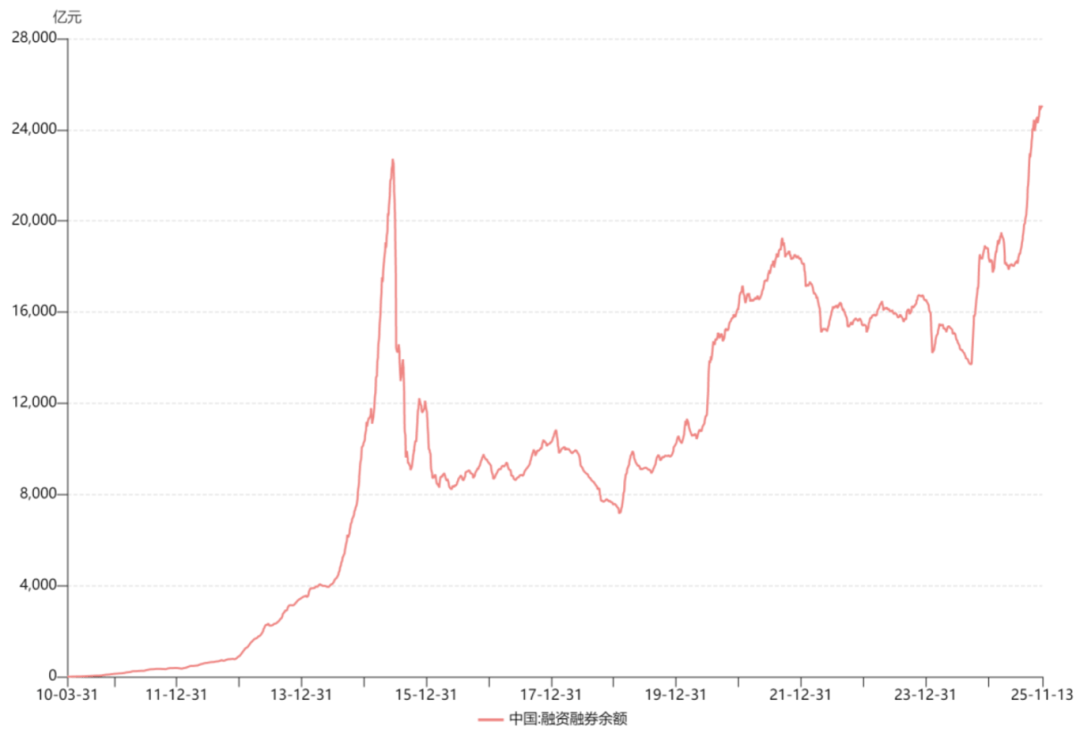
截至11月20日,市场最新融资余额为24743.85亿元,较上个交易日环比减少59.39亿元,分行业统计,申 万所属一级行业有11个行业融资余额增加,通信行业融资余额增加最多,较上一日增加14.02亿元;融 资余额增加居前的行业还有银行、国防军工、房地产等,融资余额分别增加5.39亿元、4.11亿元、3.44 亿元;融资余额减少的行业有20个,电子、医药生物、计算机等行业融资余额减少较多,分别减少 16.71亿元、9.65亿元、8.40亿元。 | 代码 | 最新融资余额(亿元) | 较上一日增减(亿元) | 环比增幅(%) | | --- | --- | --- | --- | | 通信 | 1092.44 | 14.02 | 1.30 | | 银行 | 756.62 | 5.39 | 0.72 | | 国防军工 | 801.65 | 4.11 | 0.52 | | 房地产 | 351.32 | 3.44 | 0.99 | | 煤炭 | 144.31 | 1.75 | 1.23 | | 商贸零售 | 273.61 | 1.49 | 0.55 | | 非银金融 | 1896.57 | 0.94 | 0.05 | ...
晚报 | 11月21日主题前瞻
Xuan Gu Bao· 2025-11-20 14:19
Group 1: Digital Economy and Computing Power - Guangdong Province aims to establish a national digital economy innovation development pilot zone by 2027, targeting a digital economy core industry value-added share of over 16% of GDP and an annual compound growth rate of over 15% for the data industry [1] - The AI industry is experiencing strong demand, as evidenced by Nvidia's recent earnings report, which alleviated concerns about an AI bubble [1] - Domestic computing power supply chains are expected to enter a rapid growth phase, with significant capital expenditure increases anticipated from local cloud service providers [1] Group 2: Huawei's AI Technology - Huawei plans to unveil a breakthrough AI technology on November 21, which could increase computing resource utilization from the industry average of 30%-40% to 70%, effectively doubling existing hardware efficiency [2] - This innovation allows for unified scheduling and efficient utilization of various computing hardware, enhancing the domestic AI computing power supply chain's autonomy and ecosystem integration [2] - The technology aims to compete with international leaders in AI hardware and software collaboration, potentially becoming a crucial support for China's AI infrastructure [2] Group 3: Quantum Computing - IBM and Cisco are collaborating on foundational work for distributed quantum computing, aiming to demonstrate a network concept that integrates large-scale fault-tolerant quantum computers within five years [3] - This initiative seeks to address fundamental challenges faced by quantum computing networks and aims to connect multiple large-scale quantum computers [3] - Quantum computing is viewed as a transformative technology that could lead to significant advancements across various industries, with a projected market size reaching hundreds of billions by 2030 [4] Group 4: Tungsten Market - Chapter Tungsten Industry announced price increases for tungsten products, with black tungsten concentrate at 328,000 yuan per ton and ammonium paratungstate at 478,000 yuan per ton, reflecting a 6% rise from the previous month [5] - The demand for tungsten has surged due to growth in industries like photovoltaics and automotive, while supply constraints have intensified market tensions [5] - The first batch of tungsten mining quotas for 2025 is set at 58,000 tons, a 6.45% decrease from the previous year, indicating tightening supply [5] Group 5: Lithium Iron Phosphate Industry - The China Chemical and Physical Power Industry Association is set to release guidelines to standardize pricing in the lithium iron phosphate sector, aiming to curb below-cost competition [6] - The lithium iron phosphate battery sector dominates new energy storage, with an expected total shipment of 580 GWh in 2025, reflecting a growth rate exceeding 75% [6] - The industry is anticipated to improve its economic outlook as it combats internal competition and benefits from high demand in energy storage applications [6]
主力资金动向 21.88亿元潜入银行业
Zheng Quan Shi Bao Wang· 2025-11-20 09:07
Core Insights - The banking sector experienced the highest net inflow of funds today, amounting to 2.188 billion, with a price change of 0.86% and a turnover rate of 0.46% [1] - The power equipment sector faced the largest net outflow of funds, totaling -9.059 billion, with a price change of -1.96% and a turnover rate of 3.75% [2] Industry Summary - **Banking**: - Net inflow: 2.188 billion - Price change: 0.86% - Turnover rate: 0.46% - Volume change: +61.50% [1] - **Communication**: - Net inflow: 1.000 billion - Price change: 0.51% - Turnover rate: 1.61% - Volume change: +21.14% [1] - **Real Estate**: - Net inflow: 0.219 billion - Price change: 0.33% - Turnover rate: 3.33% - Volume change: +5.34% [1] - **Power Equipment**: - Net outflow: -9.059 billion - Price change: -1.96% - Turnover rate: 3.75% - Volume change: -1.72% [2] - **Machinery Equipment**: - Net outflow: -2.521 billion - Price change: -0.80% - Turnover rate: 2.18% - Volume change: -15.88% [2] - **Pharmaceuticals**: - Net outflow: -3.557 billion - Price change: -0.52% - Turnover rate: 1.99% - Volume change: -3.36% [2] - **Automotive**: - Net outflow: -3.562 billion - Price change: -1.21% - Turnover rate: 1.80% - Volume change: -9.66% [2]
港股央企红利50ETF(520990)涨1.30%,成交额2.69亿元
Xin Lang Cai Jing· 2025-11-19 07:13
Core Viewpoint - The Invesco Great Wall CSI National New Hong Kong Stock Connect Central Enterprise Dividend ETF (520990) has shown significant growth in both share volume and fund size in 2024, indicating strong investor interest and performance [1][2]. Fund Overview - The fund was established on June 26, 2024, with an annual management fee of 0.50% and a custody fee of 0.10% [1]. - As of November 18, 2024, the fund's total shares reached 5.43 billion, with a total size of 5.82 billion yuan [1]. - Year-to-date, the fund's shares have increased by 44.95%, and its size has grown by 66.17% [1]. Liquidity Analysis - Over the last 20 trading days, the ETF has accumulated a total trading volume of 3.91 billion yuan, averaging 195 million yuan per day [1]. - For the year, the ETF has recorded a total trading volume of 28.26 billion yuan over 213 trading days, averaging 133 million yuan per day [1]. Fund Management - The current fund managers are Gong Lili and Wang Yang, with returns of 26.19% and 11.64% respectively during their management periods [2]. Top Holdings - The ETF's major holdings include: - China Petroleum & Chemical Corporation (10.88%) - China Mobile Limited (10.33%) - China Shenhua Energy Company (9.72%) - CNOOC Limited (9.54%) - COSCO Shipping Holdings (8.43%) - China Petroleum & Chemical Corporation (7.42%) - China Telecom Corporation (4.54%) - China Unicom (3.45%) - China Coal Energy Company (2.59%) - China Resources Land (2.23%) [2][3].
4000点会拉锯到啥时候?关注核心宽基中证A500ETF(159338)
Sou Hu Cai Jing· 2025-11-17 02:10
Market Overview - The market remains in a volatile pattern, with the Shanghai Composite Index fluctuating around the 4000-point mark. Last week, the index showed strong performance on Monday and Thursday but failed to maintain upward momentum, falling below 4000 points on Friday due to a significant drop in global markets. The cyclical sectors performed actively, while the ChiNext and STAR 50 indices both declined over 3% [1] Economic Data - In October, new RMB loans amounted to 220 billion, a decrease of 280 billion year-on-year. The new social financing scale was 815 billion, down 597 billion year-on-year. Overall, the social financing data showed weakness, with both new credit and social financing scale falling short of expectations and seasonal norms. The household sector's credit contracted again, indicating a "de-leveraging" trend, while corporate credit growth relied heavily on bill financing [2] - Industrial value-added in October grew by 4.9% year-on-year, down from 6.5% previously. Retail sales increased by 2.9%, slightly up from 3%. From January to October, fixed asset investment decreased by 1.7%, with real estate investment down 14.7% [2] Economic Outlook - The economic data for October indicates a slowdown in total output, with key metrics such as industrial, service, investment, retail sales, exports, and real estate sales growth all falling below previous values. However, achieving the annual GDP growth target of around 5% remains likely, as only a 4.4% growth in the fourth quarter is needed to meet this goal. This suggests that while short-term policies may intensify, the focus will be more on planning for the next year [3] - The A-share market continues to show an upward trend in margin trading balances, with the balance stabilizing above 2.5 trillion, reflecting market confidence and risk appetite. Additionally, southbound capital inflows reached 24.77 billion, indicating ongoing support for Hong Kong stocks [3] International Developments - The U.S. government has taken a significant step towards ending its longest shutdown by passing a temporary funding bill, which will provide funding for most government agencies until January 30, 2026. This development is expected to restore government operations [5] - The absence of key economic data in the U.S. has increased uncertainty regarding the Federal Reserve's interest rate decisions in December, with the probability of a rate cut now below 50% [5] Investment Opportunities - To effectively break through the 4000-point barrier, a combination of mainline logic and profit-making effects is necessary. Despite risks such as economic fundamentals lagging and external market volatility, the trend of economic stabilization and supportive policies remains unchanged, suggesting that the A-share bull market's certainty is gradually strengthening. The core broad-based index, the CSI A500 ETF, is highlighted as a strategic investment opportunity to capture the long-term recovery of the Chinese economy [6]