黄金行业

Search documents
资讯早班车-2025-11-06-20251106
Bao Cheng Qi Huo· 2025-11-06 03:00
Report Industry Investment Rating No relevant content provided. Core Viewpoints of the Report - Macroeconomic indicators show mixed trends, with some signs of slowdown and others indicating growth potential. For example, GDP growth slowed slightly in Q3 2025, while export and import values increased year - on - year [1]. - The commodity market is influenced by various factors such as political events, supply - demand dynamics, and corporate strategies. Gold prices rose due to concerns about the US economy, and oil prices fell on fears of oversupply [4][9]. - The financial market is affected by central bank policies, government debt management, and international economic relations. The bond market continues to be volatile, and the stock market shows different performances in different regions [12][29]. Summary According to Relevant Catalogs 1. Macro Data Overview - GDP growth in Q3 2025 was 4.8% year - on - year, down from 5.2% in the previous quarter [1]. - The manufacturing PMI in October 2025 was 49.0%, lower than the previous month and last year [1]. - The non - manufacturing PMI in October 2025 was 50.1%, slightly higher than the previous month but lower than last year [1]. - Social financing scale and money supply indicators showed different trends, with M1 growth accelerating and M2 growth slowing [1]. - CPI and PPI were both in negative territory in September 2025, indicating weak inflationary pressures [1]. - Fixed - asset investment decreased in September 2025, while social consumption and foreign trade showed growth [1]. 2. Commodity Investment Reference Comprehensive - China's October S&P services PMI was 52.6, and the composite PMI was 51.8, both slightly lower than the previous month [2]. - China announced measures to implement the consensus of the China - US economic and trade consultations in Kuala Lumpur, including tariff adjustments and relaxation of export controls [2]. - The US Supreme Court debated the legality of Trump's large - scale tariff policy, and a decision may be announced in December [2]. - On November 5, 2025, 34 domestic commodity varieties had positive basis, and 35 had negative basis [3]. Metals - International precious metal futures generally rose on November 5, 2025, due to concerns about the US government shutdown and economic outlook [4]. - Industrial and Commercial Bank of China plans to open a precious metal warehouse at Hong Kong International Airport [5]. - Anhui Province released a draft plan for the high - quality development of the gold industry from 2025 - 2027 [5]. - London Metal Exchange inventory data on November 4 showed changes in tin, lead, zinc, and other metal inventories [6]. Coal, Coke, Steel, and Minerals - The Shanghai Futures Exchange adjusted the trading limits and margin ratios for alumina futures contracts [7]. - Tongling Nonferrous Metals Group won the exploration rights for a copper - gold - molybdenum mine [7]. - The EU will investigate the sale of a nickel mine business to China Minmetals [7]. Energy and Chemicals - On November 5, 2025, US and Brent crude oil futures fell due to concerns about oversupply and increased US crude oil production [9]. - Libya plans to increase oil and gas production and is in talks with Chevron and Egyptian companies [9]. - Poland is negotiating to import more US LNG for Ukraine and Slovakia [9]. - Saudi Aramco set the official selling price for Arabian Light crude oil to Asia in December [9]. Agricultural Products - Chinese and US officials discussed agricultural trade, and China hopes the US will create a favorable environment for cooperation [10]. - The pig industry is facing challenges such as low prices, overcapacity, and high debt, and industry self - regulation is needed [10][11]. 3. Financial News Compilation Open Market - On November 5, 2025, the central bank conducted 655 billion yuan of 7 - day reverse repurchase operations, with a net withdrawal of 4922 billion yuan [12]. Key News - China announced measures to implement the China - US economic and trade consultation consensus [13]. - The US Supreme Court debated the legality of Trump's tariff policy [13]. - China's October S&P services and composite PMIs decreased [13]. - Premier Li Qiang emphasized China's commitment to high - quality development and opening - up [13]. - Chinese and US officials discussed agricultural trade cooperation [14]. - The Chinese Foreign Ministry responded to the US Treasury Secretary's remarks [14]. - China and Russia agreed to strengthen macro - economic policy coordination [14]. - The central bank's 10 - month bond - buying operation resumed but was lower than expected [15]. - The Ministry of Finance established a Debt Management Department [16]. - The US Treasury announced its quarterly refinancing plan [17]. - Indonesia issued offshore RMB bonds in Hong Kong [17]. - Global bond sales reached a record high in 2025 [17]. - The US government shutdown continued, potentially affecting the economy [17]. - US ADP employment data was better than expected in October [18]. - There were various bond - related events, including debt restructuring, rating changes, and issuance cancellations [18][19]. Bond Market Summary - The Chinese bond market continued to fluctuate weakly, with limited impact from the central bank's bond - buying [20]. - Bond prices in the exchange market showed different trends, and interest rates in the money market had mixed changes [20][21]. - Yields of European and US bonds generally rose [24]. Foreign Exchange Market - The on - shore RMB against the US dollar depreciated slightly, while the offshore RMB appreciated [25]. - The US dollar index fell slightly, and non - US currencies showed different performances [25]. Research Report Highlights - Shenwan Fixed - Income believes that the probability of interest rate cuts may marginally increase, and the bond market may shift from a duration strategy to a carry - trade strategy [26]. - Yangtze River Fixed - Income expects the bond market to continue its recovery in Q4, with 10 - year Treasury bond yields likely to decline [27]. Today's Reminders - On November 6, 2025, a large number of bonds will be listed, issued, paid, and have their principal and interest repaid [28]. 4. Stock Market Key News - A - shares opened lower and closed higher, with the energy storage and new energy sectors leading the gains [29]. - The Hong Kong Hang Seng Index fell slightly, and the Southbound funds had a large net purchase [29][30].
锂电、黄金重挫 湖南白银跌超8% 流感概念爆发 特一药业直线涨停
2 1 Shi Ji Jing Ji Bao Dao· 2025-10-22 04:53
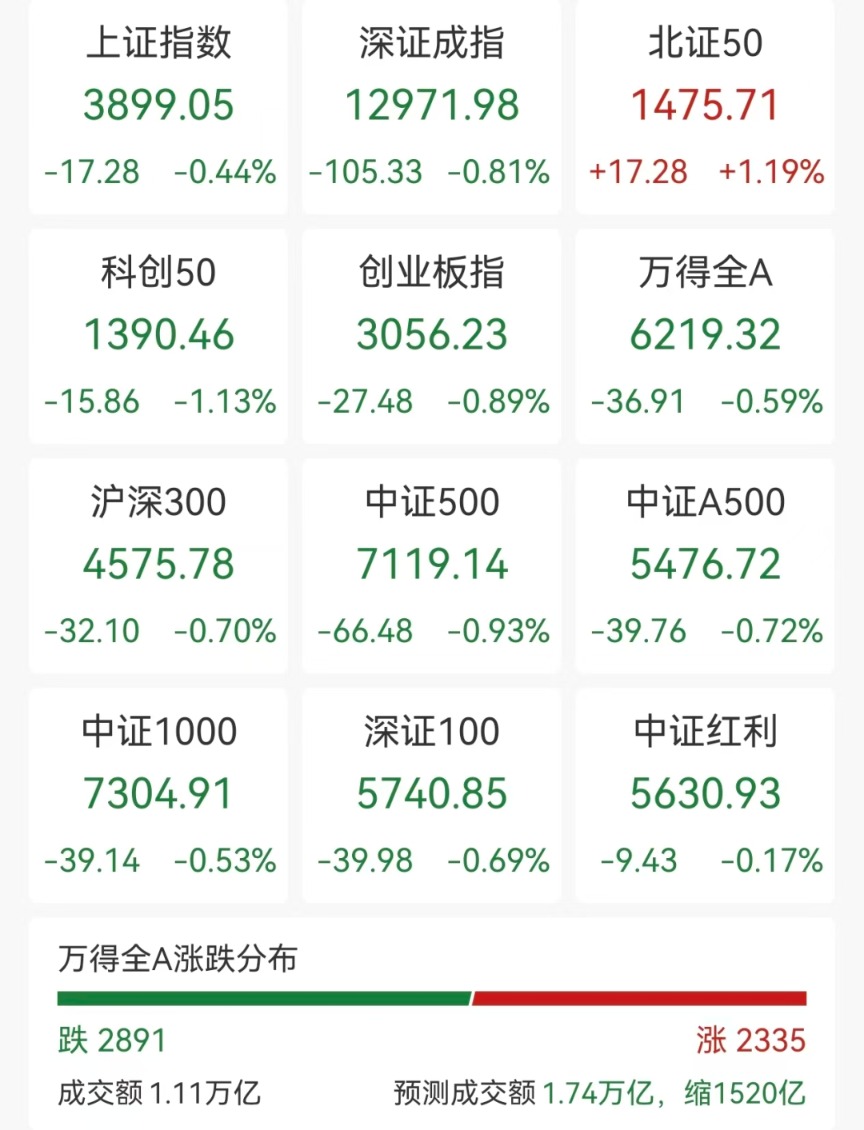
Market Overview - The Shanghai Composite Index closed at 3899.05, down 17.28 points or 0.44% [1] - The Shenzhen Component Index fell by 105.33 points or 0.81% to 12971.98 [1] - The total trading volume was 1.11 trillion yuan, with a predicted volume of 1.74 trillion yuan, indicating a decrease of 152 billion yuan [1] Gold Sector Performance - Gold concept stocks experienced a collective decline, with Hunan Silver hitting the daily limit down, and other companies like Western Gold and Zhaojin Gold dropping over 5% [1] - Hunan Silver's current price is 6.42, reflecting an 8.29% decrease [2] - The recent surge in gold prices, which increased over 60% this year, has led to profit-taking by institutions, contributing to the current price adjustments [2][3] Lithium Battery and Semiconductor Sectors - Lithium battery-related concepts saw significant declines, with the lithium electrolyte index down 4.31% and storage chip concepts also adjusting [4] - Companies like Xiaocheng Technology and Zhaoyi Innovation fell over 5% [4] Healthcare Sector Activity - The anti-influenza concept saw a surge, with companies like Te Yi Pharmaceutical hitting the daily limit and others like Chenxin Pharmaceutical rising over 10% [5] - The increase in flu activity in southern provinces of China has been reported, indicating a potential early flu season [5] Banking Sector Trends - Bank stocks continued to strengthen, with Agricultural Bank rising over 1% and reaching a historical high after 13 consecutive days of gains [6] Hong Kong Market Performance - The Hang Seng Index closed at 25697.57, down 329.98 points or 1.27% [7] - The technology sector in Hong Kong saw a decline, with major tech stocks like NetEase and Baidu dropping significantly [6][7] Market Style and Investment Strategy - There is a divergence in opinions regarding market style switching in Q4, with some institutions suggesting a rebalancing between technology and value stocks [8] - Long-term focus remains on sectors like AI, semiconductors, and renewable energy, while short-term strategies emphasize stocks with solid earnings [9][10]


Royal Gold, Inc. (NASDAQ:RGLD) Sees Positive Outlook with Strategic Acquisitions
Financial Modeling Prep· 2025-10-21 23:00
Core Insights - Royal Gold, Inc. is a prominent player in the gold streaming and royalty sector, focusing on acquiring and managing precious metal streams and royalties, which allows for steady income without direct mining risks [1] - The company has received an upgrade from Raymond James, with a new price target set at $257, reflecting a positive outlook on its stock performance [2] Acquisitions - The Supreme Court of British Columbia approved a $3.5 billion all-stock acquisition of Sandstorm Gold and a $196 million cash purchase of Horizon Copper, which are significant for expanding Royal Gold's precious metal portfolio [3] - The acquisition of Sandstorm Gold involves exchanging 0.0625 Royal Gold shares for each Sandstorm share, amounting to $3.5 billion in equity value [3] Growth Potential - The recent acquisitions will introduce 40 producing assets into Royal Gold's portfolio, with an anticipated 26% increase in gold equivalent output by 2025, enhancing its gold exposure [4] - These strategic moves position Royal Gold as a leading growth entity in the gold streaming and royalty sector, aiming to strengthen its market presence [4]

10月21日金价银价大反攻:黄金涨破4380美元!是牛回头还是新起点?
Sou Hu Cai Jing· 2025-10-21 07:21
Core Viewpoint - The recent surge in gold and silver prices is driven by expectations of a Federal Reserve interest rate cut, central bank purchases, and increased demand for safe-haven assets amid geopolitical tensions [1][3][17] Group 1: Market Movements - Gold prices in Shanghai surged by 1.92% to over 990 CNY per gram, while silver rose to 11,800 CNY per kilogram; New York gold reached 4,393 USD per ounce [1] - The fluctuations in October were notable, with gold first breaking the 4,000 USD mark, then dropping to 3,991 USD, and later peaking at 4,300 USD [3][5] - The divergence between international and domestic gold prices is attributed to short-term selling in international markets and long-term buying trends in domestic markets [11] Group 2: Driving Factors - The anticipated interest rate cut by the Federal Reserve has lowered the cost of holding gold, making it more attractive to investors [5][6] - Central banks globally are increasing their gold reserves, with China having added gold for 11 consecutive months and a projected total of 850 tons to be purchased this year [7][8] - Increased demand for gold as a safe-haven asset is evident due to uncertainties such as the U.S. government shutdown and ongoing geopolitical risks [9][10] Group 3: Implications for Consumers - Consumers purchasing gold jewelry or bars should be cautious, as prices have risen, and selling may incur fees [13] - Investors in gold stocks and ETFs have seen significant gains, with an 8.95% increase in gold stock ETFs since October [13] Group 4: Future Price Outlook - Institutions are optimistic about future gold prices, with Goldman Sachs raising its forecast to 4,900 USD for next year [15] - While the long-term outlook remains bullish due to supportive factors, short-term volatility may present risks [15][17]
港股午评:恒生指数涨2.41%,恒生科技指数涨3.21%
Xin Lang Cai Jing· 2025-10-20 04:03
Market Performance - The Hang Seng Index increased by 2.41% and the Hang Seng Tech Index rose by 3.21% [1] - The Hong Kong Tech ETF (159751) gained 2.3% and the Hang Seng Hong Kong Stock Connect ETF (159318) increased by 2.1% [1] Sector Performance - The passenger airline and life sciences tools sectors showed significant gains [1] - The hotel and resort REIT sector experienced notable declines [1] Individual Stock Movements - Sanhua Intelligent Control surged by 6.79%, China National Aviation Holdings rose by 5.95%, and NetEase-S increased by 5.54% [1] - Sands China Limited gained 5.42%, Alibaba-W rose by 4.99%, and ZTE Corporation increased by 4.8% [1] - Notable gainers also included Huahong Semiconductor (4.62%), NIO-SW (4.47%), and AIA Group (4.42%) [1] - On the downside, Chifeng Jilong Gold Mining fell by 5.42% and Laopu Gold dropped by 6.22% [1] - Zhongqingbao Holdings saw a significant increase of 13.06%, while Dazhong Public Utilities rose by 10.77% [1]
黄金的“疯狂上涨”预示着“更大的事情”正在发生
美股IPO· 2025-10-17 02:08
Core Viewpoint - Gold serves as a hedge not only against currency devaluation but also against the entire financial system, including severe credit recessions and large-scale fiscal deficit monetization [1][4][5] Group 1: Gold's Performance and Demand - Gold prices have reached a historic high, surpassing $4,300 for the first time, with a year-to-date increase of over 60% [2][3] - The demand for gold is expected to remain high regardless of whether the market faces inflationary or deflationary shocks [6][11] Group 2: Misconceptions about Gold - The market often misunderstands gold as merely an inflation hedge; however, historical data shows that gold performs well in both low and high inflation scenarios [7][8] - Gold's returns do not solely correlate with rising inflation rates, as evidenced by its performance during the severe deflation of the 1930s [8] Group 3: Credit Market Risks - There is a significant risk of a major credit recession, with analysts suggesting that rising gold prices indicate an impending credit crisis [12][17] - The cost of borrowing in the private market has increased, indicating higher risks associated with lending [14][16] Group 4: Government Debt Concerns - Governments are facing unprecedented fiscal deficits, raising concerns about their ability to manage debt without resorting to currency printing [18][19] - The expectation that large fiscal deficits will eventually be monetized contributes to the rising demand for gold, as this action erodes the real value of fiat currency [19][20] Group 5: Future Implications for Gold - Regardless of whether the future economic shocks are inflationary or deflationary, gold is positioned to be a favored asset [23] - In the event of a credit crisis, the demand for high-quality collateral will increase, making gold a viable hedge against the potential devaluation of government debt [23][25]

鲍威尔的神助攻,能否帮黄金拿下4200?
Sou Hu Cai Jing· 2025-10-15 04:39
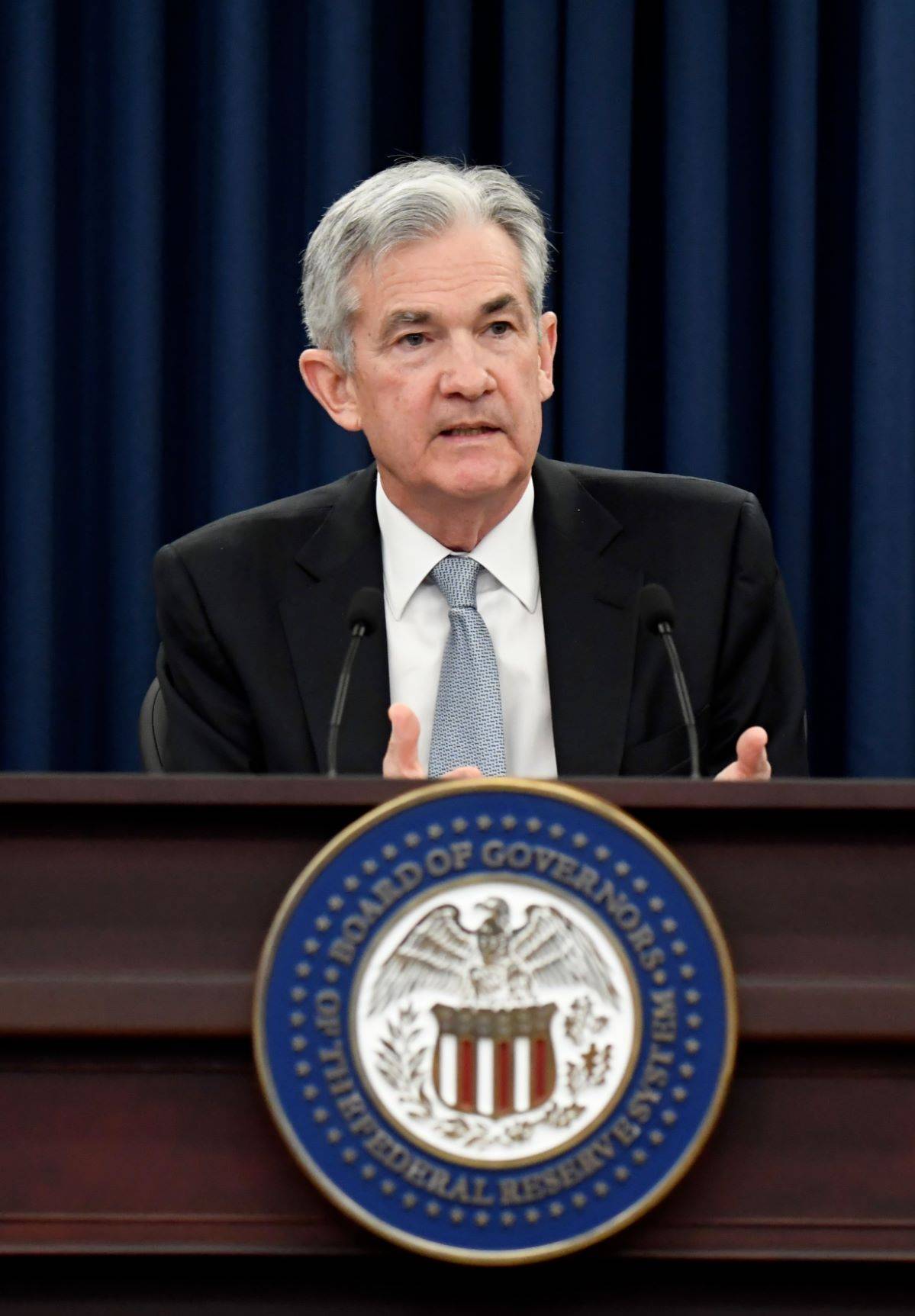
Group 1 - Federal Reserve Chairman Powell warns of increasing risks in the U.S. labor market, indicating that "the downside risks to employment have risen" [1] - Powell suggests that the Federal Reserve may soon end its long-standing efforts to reduce its balance sheet, stating that they are closely monitoring various indicators to determine if this goal has been achieved [1] - Market interprets Powell's remarks as dovish, paving the way for a potential interest rate cut at the end of October, with expectations that a rate cut is almost certain [4] Group 2 - Former President Trump escalates trade tensions by threatening to terminate business relations with China in the edible oil and other trade sectors, following complaints about China's soybean purchases [5] - Gold prices experienced volatility, initially rising to 4180 before a sharp drop to 4090, attributed to market rumors and trading activities related to silver [5] - Despite the fluctuations, the outlook for gold remains bullish, with expectations to reach the 4200 USD mark, while cautioning against potential sudden sell-offs [10]
泰克资源铜矿超预期减产,稀土第三波有望启动 | 投研报告
Zhong Guo Neng Yuan Wang· 2025-10-13 02:33
Core Viewpoint - The report highlights a mixed outlook for various metals, with specific attention to the strategic importance of rare earths and the impact of supply chain adjustments on prices [1][5]. Copper - LME copper price decreased by 3.05% to $10,374.00 per ton, while Shanghai copper increased by 3.37% to ¥85,900 per ton [2]. - Domestic copper inventory rose by 18,000 tons to 166,300 tons due to increased domestic supply and weak downstream consumption [2]. - The operating rate of waste anode plate enterprises increased by 1.41 percentage points to 53.04%, with expectations for further increases next week [2]. Aluminum - LME aluminum price rose by 1.63% to $2,746.00 per ton, and Shanghai aluminum increased by 1.45% to ¥21,000 per ton [3]. - Domestic electrolytic aluminum inventory reached 649,000 tons, up by 57,000 tons from September 29 [3]. - The operating rate for primary aluminum alloy decreased slightly to 58.0%, influenced by demand release and unclear orders [3]. Gold - COMEX gold price increased by 1.28% to $4,035.50 per ounce, with SPDR gold holdings rising by 3.99 tons to 1,017.16 tons [4][5]. - The market is experiencing fluctuations due to the U.S. government shutdown and economic indicators reflecting a slowdown in employment growth [4][5]. Rare Earths - The price of praseodymium and neodymium oxide decreased by 0.89% this week, with China's control over rare earths being upgraded, enhancing the sector's strategic attributes [1][5]. - The implementation of the "Interim Measures" is expected to gradually show effects on supply adjustments [1][5]. - The report suggests a bullish outlook for the sector, highlighting companies like China Rare Earth, Guangsheng Nonferrous, and Northern Rare Earth [1][5]. Antimony - Antimony price decreased by 1.12%, but demand for photovoltaic glass is recovering, indicating a potential price turning point [5]. - The implementation of stricter standards for flame-retardant wires may boost demand for antimony [5]. Tin - Tin price increased by 5.16% due to Indonesia's crackdown on illegal tin mines, leading to supply disruptions [6]. - The report anticipates that tin prices will remain strong despite macroeconomic fluctuations [6]. Lithium - The average price of lithium carbonate remained stable at ¥73,600 per ton, while lithium hydroxide decreased by 0.19% to ¥78,500 per ton [6]. Cobalt - Cobalt prices surged, with a 17.8% increase to ¥349,500 per ton, driven by rising demand and supply constraints [6]. Nickel - LME nickel price decreased by 1.3% to $15,200 per ton, while Shanghai nickel price increased by 1.4% to ¥122,000 per ton [6].
和讯投顾吴青宇:铜、黄金、芯片等领涨,坚定看多但黄金需防回调
Sou Hu Cai Jing· 2025-10-09 07:44
Group 1 - The main focus areas for investment include non-ferrous metals, gold, solid-state batteries, storage chips, and controlled nuclear fusion, driven by supply and demand dynamics in the copper market [1] - The copper supply is expected to decrease over the next two years due to production halts from mining accidents in Indonesia, while demand is anticipated to rise, particularly in the technology sector [1] - The Federal Reserve is expected to cut interest rates by 25 basis points in November, which will likely strengthen commodity prices, including gold, which has recently surpassed $4000 per ounce [2] Group 2 - Significant technological breakthroughs in solid-state batteries and controlled nuclear fusion are being reported, with a Chinese research team making advancements in solid-state battery technology [3] - The construction of China's compact fusion energy experimental device, BEST, has reached a new milestone, indicating progress towards potential power generation by 2030 [3] - The storage chip market is experiencing price increases, influenced by tightening semiconductor export controls from the U.S., which may accelerate domestic replacements in the market [3]
金价上涨的秘密
投资界· 2025-10-09 06:36
Core Viewpoint - The article discusses the significant rise of gold prices and the implications for the global monetary order, particularly focusing on the increasing role of the Chinese yuan as a potential alternative to the US dollar in international trade and finance [3][4][5]. Group 1: Gold Price Surge - On October 7, 2025, gold prices reached a historic high of $4000 per ounce, marking an increase of over 50% within the year [3]. - This surge is attributed to the Federal Reserve's decision to restart interest rate cuts and a notable decline in the US dollar index, which has dropped nearly 10% this year [3]. - The rise in gold prices reflects a broader market sentiment seeking alternatives to the dollar amid geopolitical tensions and economic uncertainties [3][4]. Group 2: Yuan's Internationalization - As of Q1 2025, the yuan accounted for 2.12% of global foreign reserves, ranking sixth, significantly lower than the dollar (57.74%) and euro (20.06) [4]. - Despite China's growing economic influence, the yuan's international status does not yet match this influence, indicating a need for a multi-faceted approach to enhance its global role [4][5]. - A notable shift is occurring, with an increasing number of enterprises opting for yuan settlements in cross-border transactions, surpassing dollar settlements for the first time in Q2 2025 [5][6]. Group 3: Market Dynamics - A survey conducted by Renmin University revealed that 68% of enterprises used yuan for cross-border trade settlements in Q4 2024, with 71% citing asset security as the primary reason [6][9]. - The yuan's appeal is growing due to its perceived stability and usability, as companies seek to avoid reliance on the dollar [9][10]. - The influx of foreign capital into Chinese assets, particularly after the Fed's interest rate cuts, indicates a shift in investor sentiment towards the yuan [9][10]. Group 4: Infrastructure Development - The establishment of the Digital Yuan International Operation Center in Shanghai aims to enhance the yuan's usability in cross-border transactions, supporting a more integrated financial infrastructure [12][14]. - The center's launch is part of a broader strategy to create a transaction-driven infrastructure for the yuan, moving from policy-driven to market-driven adoption [12][15]. - The digital yuan's infrastructure is designed to facilitate seamless transactions, ensuring compatibility with existing systems while enhancing liquidity and efficiency [14][15]. Group 5: Future Prospects - The article emphasizes the need for a dual-driven model of "yuan + digital currency" to enhance the yuan's role in global trade and finance [18]. - The transition of the yuan from a "optional" asset to a "must-have" currency in global markets requires comprehensive financial reforms and international collaboration [18][19]. - The evolving global monetary landscape suggests that the yuan is positioned to play a significant role in reshaping future financial systems, driven by market choices rather than mere policy directives [19].