非银金融

Search documents
长城基金:积极布局跨年行情
Xin Lang Cai Jing· 2025-12-23 02:34
Group 1: A-Share Market Performance - The A-share market showed an overall upward trend amidst fluctuations, with strong performance in sectors such as retail, beauty care, and non-bank financials, driven by the "reward economy" concept [1][6] - New retail, spandex, and dairy industries performed well, while previously popular themes like nuclear fusion and Hainan Free Trade Zone experienced corrections, and technology growth faced adjustments [1][6] Group 2: Domestic Economic Indicators - The latest November economic data indicates signs of recovery in external demand and a rebound in price levels, although internal demand momentum remains insufficient [1][6] - The overall policy stance is focused on stability, with a need for targeted and structural policies to be implemented more quickly [1][6] - Key areas to monitor include indications of next year's policy direction from local two sessions, the potential increase in physical workload from policy financial tools, and the timing of potential policies related to real estate and service consumption subsidies [1][6] Group 3: U.S. Inflation Data - U.S. November inflation data significantly underperformed expectations, with CPI and core CPI year-on-year growth rates at 2.74% and 2.63%, respectively, both well below market forecasts and previous values [2][7] - The super core CPI growth rate for October-November dropped to its lowest since April 2021, influenced by factors such as government shutdowns leading to fiscal tightening and reduced demand [2][7] - The decline in inflation is attributed to multiple factors, including temporary disturbances from the Thanksgiving sales season and unsustainable negative growth in housing inflation [2][7] Group 4: Future Economic Outlook - Looking ahead, the U.S. economy may experience a phase of overheating in Q1 next year due to a combination of loose fiscal and monetary policies and seasonal factors [2][7] - The recent slowdown in economic activity may lead to an upward adjustment in market policy expectations, with a potential cross-year market rally beginning to take shape [2][7] - In the context of stable RMB exchange rates, expectations for the People's Bank of China to implement easing policies in 2026 are likely to rise [2][7] Group 5: Spring Market Trends - Historical patterns indicate that spring market rallies typically occur between December of the previous year and April of the following year, often characterized by a "large-cap platform, small-cap performance" style [3][8] - Given the recent deep market adjustments and expectations for increased policy support, the current period may represent an important window for positioning ahead of the upcoming spring market [3][8] - Investment strategies should focus on sectors aligned with industrial trends, particularly large-cap growth and value styles benefiting from insurance capital allocation [3][8]
跨年行情的复盘与展望
GOLDEN SUN SECURITIES· 2025-12-23 01:57
证券研究报告 | 策略报告 gszqdatemark 2025 12 22 年 月 日 投资策略 跨年行情的复盘与展望 一、策略专题:跨年行情的复盘与展望 回顾过去 10 年出现过的跨年行情,指数层面主要有以下结论: (1)跨年行情并非确定性事件,过去 10 年共出现过 5 次跨年行情,出现 概率仅 50%。 (2)宏观经济情况大概率不影响跨年行情的出现,历史上 5 次跨年行情 中,有 2 次处于宏观经济较好的阶段(2018 年、2021 年),而 3 次则处 于基本面偏弱的阶段(2019 年、2020 年、2023 年)。 (3)流动性宽松与叙事积极变化可能是跨年行情的重要条件:5 次中有 3 次都处于宏观流动性宽松阶段,包括 2019 年、2023 年的央行全面降准与 2020 年的海外美联储降息,此外 2021 年也明确政策操作"不急转弯"; 5 次中有 4 次都出现了重要的叙事变化,2019 年、2020 年处于中美经贸 关系的改善阶段,2021 年拜登当选美国总统,同样指向中美经贸关系恶 化风险的减弱,2023 年防疫政策的逐渐优化提振了国内经济增长信心; 此外,股市流动性也形成助力,2021 年公 ...
鲁中投资拟发行3.5亿中票“补血”
Sou Hu Cai Jing· 2025-12-23 00:44
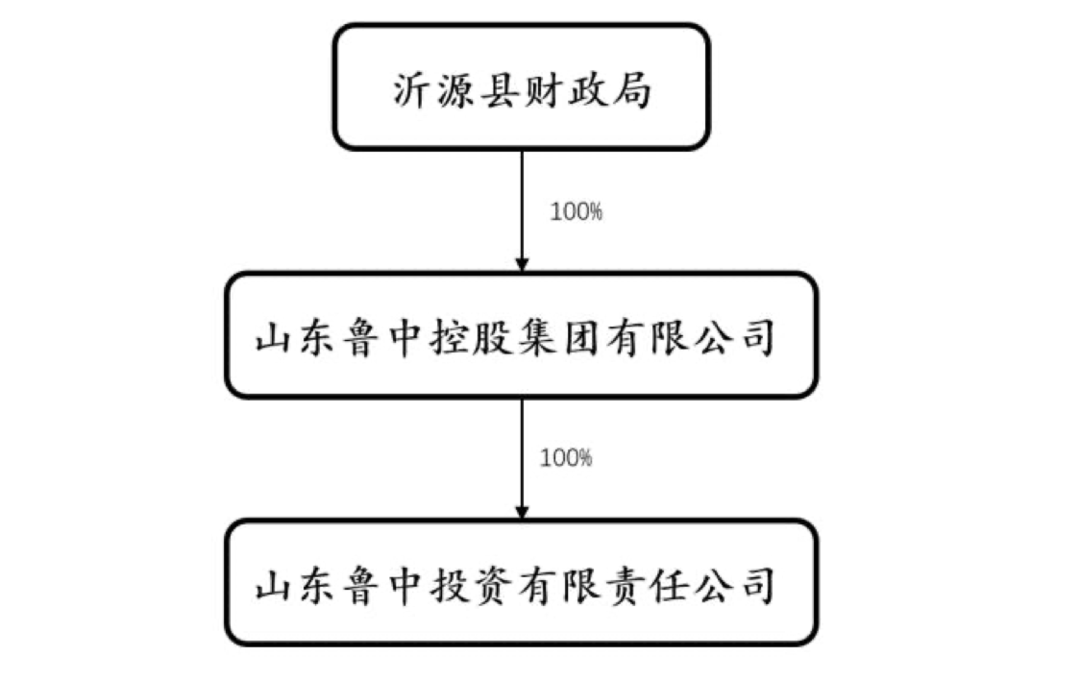
Group 1 - Shandong Luzhong Investment Co., Ltd. plans to issue a second phase of medium-term notes for 2025, with a dynamic adjustment mechanism for the issuance amount, a base amount of 0 billion, and a maximum issuance amount of 3.5 billion, with a term of 3 years [1] - The funds raised will be used entirely to repay financial institution borrowings, with a total outstanding direct debt of 4.265 billion as of the date of the prospectus, including 500 million in MTN bonds, 2.1 billion in PPN bonds, 1.48 billion in corporate bonds, and 185 million in overseas debt [1] - Luzhong Investment is a wholly-owned subsidiary of Shandong Luzhong Holding Group Co., Ltd., established in July 2016, with a registered capital of 300 million [2] Group 2 - In June 2023, China National Pharmaceutical Group Corporation and its subsidiaries signed an investment cooperation agreement with Luzhong Holding and Luzhong Investment, agreeing to jointly increase capital by 2.449 billion to acquire a 51% stake in Luzhong Investment, which will result in a change of controlling shareholder to China National Pharmaceutical Group [4][5] - The investment cooperation agreement has not yet taken effect, but has received necessary approvals from regulatory authorities [4] - Luzhong Investment's core business is pharmaceutical glass bottles, which accounted for 90.83% to 99.43% of its revenue from 2022 to the first nine months of 2025, while its energy business contributed a much smaller proportion [5][6] Group 3 - Luzhong Investment's other income has been decreasing over the years, with government subsidies significantly impacting net profit, indicating potential vulnerability to changes in government subsidy policies [6] - The company aims to expand its operational scale and enhance economic efficiency in the coming years, supported by local government initiatives, while diversifying its investment and development strategies [6]

【金工】金融地产主题基金表现占优,股票ETF资金逆势大幅流入——基金市场与ESG产品周报20251222(祁嫣然/马元心)
光大证券研究· 2025-12-22 23:05
Market Performance Overview - In the week of December 15-19, 2025, gold prices increased while domestic equity market indices experienced fluctuations, with the ChiNext index showing a significant decline [4] - The retail trade, non-bank financial, and beauty care sectors saw the highest gains, while the electronics, power equipment, and machinery sectors faced the largest declines [4] Fund Product Issuance - A total of 40 new funds were established in the domestic market this week, with a combined issuance of 18.321 billion units. This includes 8 bond funds, 14 equity funds, 11 mixed funds, 3 FOF funds, and 4 money market funds [5] Fund Product Performance Tracking - The financial and real estate theme funds outperformed this week, while TMT theme funds experienced a net value decline. As of December 19, 2025, the net value changes for various theme funds were as follows: financial and real estate (2.17%), national defense and military industry (1.75%), cyclical (1.68%), consumption (0.92%), industry rotation (-0.32%), industry balance (-0.65%), new energy (-1.66%), pharmaceuticals (-1.85%), and TMT (-2.02%) [6] ETF Market Tracking - This week, there was a significant inflow of funds into equity ETFs, with a net inflow of 55.232 billion yuan. The median return for equity ETFs was -0.33%, while the median return for Hong Kong stock ETFs was -2.06% with a net inflow of 12.373 billion yuan [7][8] ESG Financial Products Tracking - 31 new green bonds were issued this week, with a total issuance scale of 18.530 billion yuan. The cumulative issuance scale of the domestic green bond market reached 5.15 trillion yuan, with a total of 4,427 bonds issued [9] - As of December 19, 2025, there were 211 ESG funds in the domestic market, with a total scale of 149.677 billion yuan. The median net value changes for various ESG fund types were: active equity (-1.35%), passive equity index (-0.54%), and bond ESG funds (0.06%) [9]
12月22日深证国企股东回报R(470064)指数涨0.05%,成份股北部湾港(000582)领涨
Sou Hu Cai Jing· 2025-12-22 11:01
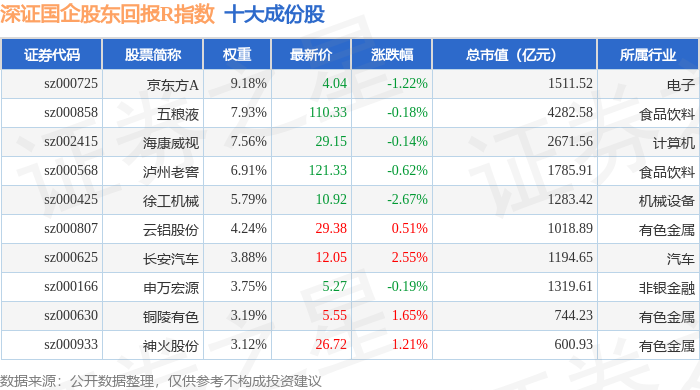
Core Viewpoint - The Shenzhen State-Owned Enterprises Shareholder Return Index (470064) closed at 2239.32 points, with a slight increase of 0.05% on December 22, 2023, indicating a stable market performance despite mixed results among constituent stocks [1]. Group 1: Index Performance - The index recorded a total transaction volume of 25.18 billion yuan, with a turnover rate of 1.05% [1]. - Among the constituent stocks, 26 companies saw an increase in their share prices, while 21 experienced declines [1]. - Beibu Gulf Port led the gainers with a rise of 4.39%, while XCMG Machinery had the largest decline at 2.67% [1]. Group 2: Top Constituents - The top ten constituent stocks of the index include: - BOE Technology Group (9.18% weight) at 4.04 yuan, down 1.22% with a market cap of 151.52 billion yuan [1]. - Wuliangye Yibin (7.93% weight) at 110.33 yuan, down 0.18% with a market cap of 428.26 billion yuan [1]. - Hikvision (7.56% weight) at 29.15 yuan, down 0.14% with a market cap of 267.16 billion yuan [1]. - XCMG Machinery (5.79% weight) at 10.92 yuan, down 2.67% with a market cap of 128.34 billion yuan [1]. Group 3: Capital Flow - The net outflow of main funds from the constituent stocks totaled 721 million yuan, while retail investors contributed a net inflow of 477 million yuan [3]. - Notable capital movements included: - Shanjin International with a net inflow of 34.1 million yuan from main funds [3]. - Chang'an Automobile experienced a net outflow of 106 million yuan from retail investors [3]. Group 4: Index Adjustments - Recent adjustments to the index included the addition of 10 new stocks and the removal of 10 others, effective December 15, 2025 [4]. - New additions include: - Zhongmi Holdings (73.49 billion yuan market cap) in the machinery sector [4]. - Runbang Shares (58.06 billion yuan market cap) also in machinery [4]. - Stocks removed from the index include: - Xinmei Shares (997.27 billion yuan market cap) in the food and beverage sector [4].

一周观市|光大保德信基金:继续关注进攻板块,看好科技方向
Xin Lang Cai Jing· 2025-12-22 09:26
Market Review - The equity market experienced fluctuations last week, with the Shanghai Composite Index rising by 0.02%, while the Shenzhen Index fell by 0.9%, the CSI 300 decreased by 0.3%, the ChiNext Index dropped by 2.3%, and the STAR Market 50 declined by 3% [1] - The bond market saw an increase, with the 10-year government bond yield settling around 1.83%, down approximately 1.8 basis points, the 7-year yield down about 3 basis points, the 1-year yield down around 3.3 basis points, and the 3-year corporate bond yield down about 4.6 basis points [1] Industry Performance - In the Shenwan first-level industry classification, the top-performing sectors included retail trade, non-bank financials, beauty care, and social services, while the sectors with the largest declines were electronics, power equipment, and machinery [2][3] Economic Events - In November, China's industrial value-added growth year-on-year decreased from 4.9% in October to 4.8%, while the retail sales of consumer goods fell from 2.9% to 1.3%, and fixed asset investment recorded a cumulative year-on-year decline of 2.6% [4][14] - The automotive manufacturing sector saw a decline in growth from 16.8% in October to 11.9% in November, with the overall industrial value-added contribution remaining at 1.2 percentage points [4] - Retail sales in sectors related to subsidies, such as automobiles, home appliances, and furniture, saw year-on-year declines, with automotive sales dropping from -6.6% to -8.3%, home appliances from -14.6% to -19.4%, and furniture from 9.6% to -3.8% [15] - The real estate sector showed weakness, with new home transaction values declining year-on-year from 24.3% in October to 25.1% in November, and real estate investment also saw a widening decline from 23% to 30.3% [5][15] Fiscal Data - In November, the broad fiscal revenue decreased by 5.2% year-on-year, compared to a decline of 0.6% in October, while fiscal expenditure fell by 1.7% year-on-year, a significant improvement from a 19.1% decline in October [6][14] - Tax revenue showed a notable recovery, with total tax and fee revenue exceeding 29 trillion yuan from January to November, and tax revenue (excluding export tax rebates) surpassing 16 trillion yuan, reflecting a year-on-year growth of 3.1% [16][17] Market Outlook - The equity strategy suggests continuing to focus on sectors with valuation advantages, as the A-share market is currently in a phase of consolidation, with traditional indices showing stability while tech stocks have faced corrections [19] - The bond market is expected to continue its volatility, with short-term bonds outperforming long-term ones, and the overall demand for effective economic policies remains crucial [20]
一周市场回顾(2025.12.15—2025.12.19)
Hongxin Security· 2025-12-22 09:06
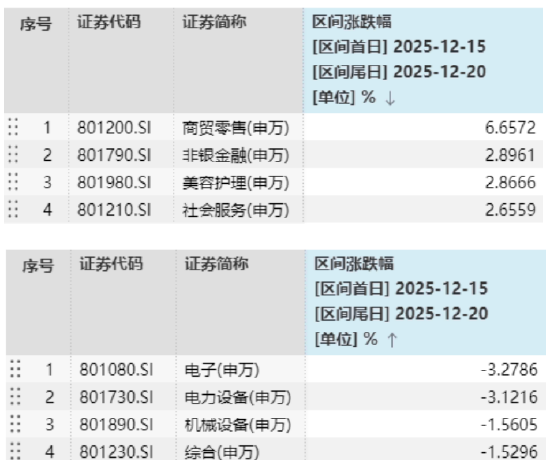
Market Performance - The Shanghai Composite Index increased by 0.03%, closing at 3890.45 points, while the Shenzhen Component Index decreased by 0.89%, closing at 13140.21 points, and the ChiNext Index fell by 2.26%, closing at 3122.24 points[5] - The average daily trading volume of A-shares was 17,605 billion yuan, a decrease of 9.86% compared to the previous week[17] Sector Performance - The top-performing sectors included retail trade (6.66%), non-bank financials (2.90%), beauty and personal care (2.87%), social services (2.66%), and basic chemicals (2.58%)[14] - The sectors with the largest declines were electronics (-3.28%), electric equipment (-3.12%), machinery (-1.56%), comprehensive (-1.53%), and telecommunications (-0.89%) [14] Margin Trading - As of December 19, the total margin balance in the market was 25,038.28 billion yuan, an increase of 0.10% from the previous week, accounting for 2.60% of the A-share market capitalization, up by 0.15%[19] - The total margin trading volume for the week was 8,914.71 billion yuan, a decrease of 10.41%, representing 10.13% of the A-share trading volume, down by 0.61%[18] Market Breakdown - The margin balances for the Shanghai Stock Exchange, Shenzhen Stock Exchange, and Beijing Stock Exchange were 12,687.40 billion yuan, 12,273.34 billion yuan, and 77.54 billion yuan, with changes of 0.36%, -0.17%, and 0.51% respectively[22] - The top five industries with increased margin balances were utilities (1.81 billion yuan), commercial trade (1.49 billion yuan), non-bank financials (1.33 billion yuan), defense and military (1.12 billion yuan), and electronics (0.98 billion yuan)[25]
量化择时周报20251221:市场情绪细分指标出现修复、改善-20251222
Shenwan Hongyuan Securities· 2025-12-22 08:51
Group 1 - The market sentiment score has slightly decreased to 1.1 as of December 21, down from 1.35 the previous week, indicating a neutral outlook despite a recent rebound on Friday [1][6] - The overall sentiment index has shown significant improvement this week, with signs of a rebound in market trading activity [1][6] - The price-volume consistency indicator has improved, suggesting a better correlation between capital attention and stock price increases, although the risk appetite remains insufficient as indicated by the declining proportion of the STAR 50 index's trading volume [1][9] Group 2 - The total trading volume for the entire A-share market decreased by 9.86% week-on-week, with an average daily trading volume of 17,604.84 billion yuan, reflecting a decline in market activity compared to the previous week [1][12] - The short-term scores for industries such as beauty care, pharmaceuticals, non-bank financials, agriculture, and retail have shown upward trends, with the communication sector having the highest short-term score of 79.66 [1][33] - The correlation between trading congestion and weekly price changes is strong, with high congestion sectors like retail and light manufacturing leading in gains, while sectors with lower congestion such as power equipment and computers lag behind [1][38] Group 3 - The current model indicates a preference for small-cap and growth styles, with the 5-day RSI showing a decline relative to the 20-day RSI, suggesting potential weakening of signals [1][42] - The financing balance ratio continues to rise, reaching a new high for the phase, indicating increased risk appetite and active capital utilization in the market [1][22] - The main capital inflow has broken through the fluctuation range, reflecting a stronger willingness of institutional funds to enter the market, which supports a bullish momentum [1][28]
证券ETF(512880)飘红,市场关注非银金融估值修复空间
Mei Ri Jing Ji Xin Wen· 2025-12-22 06:29
Core Viewpoint - The non-bank financial sector is currently undervalued, with a significant potential for valuation recovery as the PB (Price to Book) ratio has decreased faster than the ROE (Return on Equity) from 2021 to 2023 [1] Group 1: Industry Overview - The non-bank financial sector is expected to benefit from a recovery in the industry fundamentals in 2024, leading to increased stock price elasticity [1] - The public fund regulations may lead to a return of funds to the banking and non-bank sectors, which are currently underweighted in public funds [1] - Non-bank financials are likely to gain more from stable capital market policies, indicating greater potential for elasticity compared to banks [1] Group 2: Brokerage Sector Insights - Despite weak excess returns over the past year, the current valuation of the brokerage sector remains low, with potential for a beta rally if the index breaks through key levels [1] - The theme of mergers and acquisitions within the industry may provide additional opportunities for brokers during the upcoming bull market [1] Group 3: Insurance Sector Analysis - The insurance sector has seen a significant recovery in ROE, although the PB ratio has only slightly improved, suggesting potential for early performance elasticity driven by policy catalysts [1] Group 4: Securities ETF Information - The Securities ETF (512880) tracks the Securities Company Index (399975), which selects representative listed securities companies from the A-share market to reflect the overall performance of the securities industry [1] - The Securities Company Index has high industry concentration and market representation, making it an important indicator for measuring the performance of the securities sector [1]
早盘直击|今日行情关注
申万宏源证券上海北京西路营业部· 2025-12-22 05:28
Group 1 - Investors are shifting focus from overseas central bank monetary policies to domestic policies aimed at promoting consumption and boosting internal demand, leading to strong performance in sectors such as retail, beauty care, and social services [1] - The market experienced volatility with a decrease in trading volume, averaging around 17,000 billion yuan, which is a decline from the previous week [1] - The Shanghai Composite Index showed a pattern of consolidation below the 60-day moving average, indicating market pressure with support levels, and is expected to maintain a fluctuating pattern in the short term [1] Group 2 - The technology sector faced significant declines due to global investor divergence on AI development trends, contributing to overall market volatility [1] - The market's investment enthusiasm has slightly decreased, with a rapid rotation of industry focus observed as the year-end approaches [1] - Major market hotspots were concentrated in the consumer and non-bank financial sectors, while technology stocks led the decline [1]