高端制造

Search documents
国际观察|数智服贸 互惠共赢——中国高水平对外开放为全球服务贸易描绘新图景
Xin Hua She· 2025-09-14 13:48
Core Insights - The China International Fair for Trade in Services (CIFTIS) emphasizes the importance of service trade in the global economy, showcasing China's commitment to high-level opening-up and international cooperation in service trade [1][5][7] Group 1: Event Overview - The 2025 CIFTIS in Beijing focuses on the theme "Digital Intelligence Leading, Service Trade Renewed," highlighting the broad cooperation prospects, deep innovation, and high openness perceived by international participants [1] - The event serves as a platform for enhancing international service trade cooperation networks amid pressures on goods trade growth [1][5] Group 2: Global Service Trade Trends - The global digital service trade is projected to reach $4.64 trillion in 2024, with an annual growth rate of 8.3%, indicating a continuous expansion of service trade [2] - The CIFTIS has become a key international platform for policy exchange and innovation cooperation in the service economy, reflecting China's determination to strengthen international service trade [3][5] Group 3: Technological Empowerment - China is accelerating the development of digital service trade and new business models like "AI + service trade," injecting new vitality into global service trade through technological empowerment and innovation [4][5] - The integration of digital technologies such as AI, 5G, and big data is transforming production and lifestyle, showcasing China's leadership in high-value service trade [4][5] Group 4: International Cooperation - China is fostering an inclusive, efficient, and sustainable global digital service trade ecosystem by building digital infrastructure and promoting digital finance and payment ecosystems [5][6] - The continuous hosting of CIFTIS is seen as a means to expand global economic relations and provide opportunities for emerging economies, particularly in AI technology [5][6] Group 5: Contribution to Global Economy - China's robust service trade development is viewed as a solution to structural challenges in the global economy, promoting a more open, inclusive, and balanced economic globalization [7]
报告:从“走出去”到“走进去” 绿地投资是中企出海的破局之钥
Zheng Quan Shi Bao Wang· 2025-09-14 11:48
Group 1 - The 2025 China International Service Trade Fair, themed "Digital Intelligence Leading, Service Trade Renewed," was held in Beijing from September 10 to 14 [1] - KPMG China released a report highlighting that Chinese companies face challenges in the global supply chain due to a lack of understanding of international trade rules and compliance mechanisms [1] - The report emphasizes that greenfield investment is becoming a key strategy for Chinese companies to expand overseas markets beyond mergers and acquisitions [1] Group 2 - The report indicates a shift in the industrial structure of Chinese outbound investment from traditional manufacturing to high-tech and low-energy sectors, particularly in digital economy and green energy [2] - Significant regional trends in greenfield investment have emerged, with Southeast Asia, Europe, and the Middle East becoming core destinations for Chinese companies [2] - Companies are advised to proactively seize strategic opportunities while also focusing on risk prevention in areas such as investment location, subsidy applications, and cross-border data security [2]
数智服贸 互惠共赢——中国高水平对外开放为全球服务贸易描绘新图景
Xin Hua She· 2025-09-14 05:18
Core Viewpoint - The China International Service Trade Fair (CIFTIS) highlights the importance of service trade in the global economy, emphasizing cooperation, innovation, and high-level openness as key themes for future development [1][2][5]. Group 1: Importance of Service Trade - Service trade is increasingly vital in the global trade landscape, especially as goods trade faces challenges [1][2]. - The CIFTIS serves as a platform to expand international cooperation in service trade, responding to the global demand for high-quality service trade development [2][3]. Group 2: Digital and Intelligent Empowerment - China is accelerating the development of digital service trade and new business models like "AI + service trade," injecting new vitality into global service trade [4][5]. - The integration of digital technologies such as AI, 5G, and big data is transforming production and lifestyle, showcasing China's leadership in high-value service trade [4][5]. Group 3: Global Cooperation and Economic Growth - The CIFTIS promotes a collaborative approach to building an open world economy, contributing to global economic growth through service trade [5][7]. - China's commitment to open cooperation and technology transfer is crucial for maintaining an open international market and avoiding disruptions [6][7]. Group 4: Contributions to Global Service Trade - Over the past decade, China has made significant progress in reducing barriers to service trade, enhancing its role as a major contributor to global service trade [6][7]. - The continuous hosting of CIFTIS reflects China's determination to strengthen international service trade and cultivate new growth drivers globally [3][6].
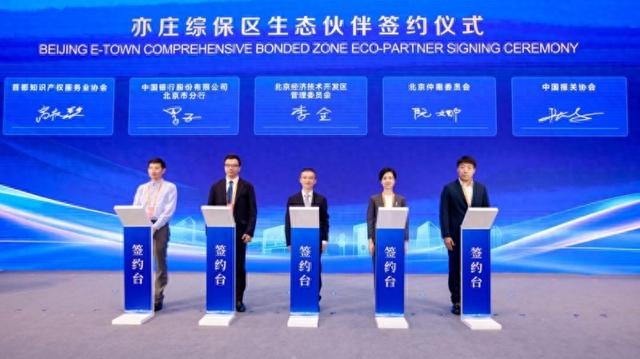
中行北京分行与北京经开区管委会签署亦庄综保区生态合作伙伴合作备忘录
Hua Xia Shi Bao· 2025-09-13 08:17
Core Viewpoint - The signing of the ecological partnership memorandum between Bank of China Beijing Branch and the Beijing Economic-Technological Development Area Management Committee marks a new chapter in cooperation aimed at enhancing the development of the bonded industry in the capital's "Two Zones" initiative [1][4]. Group 1: Partnership and Cooperation - Bank of China Beijing Branch is the only financial institution involved in the signing, indicating a significant role in supporting the development of the Yizhuang Comprehensive Bonded Zone [1][2]. - The partnership aims to leverage the global and comprehensive advantages of Bank of China to provide tailored financial services to enterprises within the bonded zone, focusing on cross-border finance and technology finance [2][4]. Group 2: Focus Areas and Services - The Yizhuang Comprehensive Bonded Zone is the first in the country themed around "new quality productivity," concentrating on high-end manufacturing, new energy vehicles, and biomedicine [2]. - Bank of China Beijing Branch plans to implement various specialized service plans, including the "Comprehensive Service Plan for Enterprises Listed Overseas" and joint incentive policies with Beijing Customs, to facilitate financing and cross-border settlement for enterprises [2][4]. Group 3: Long-term Commitment - Bank of China Beijing Branch has been deeply integrated into the national and capital development strategies, continuously supporting the "Two Zones" initiative with professional financial services [4]. - The bank aims to explore innovative service pathways for enterprises in the Yizhuang Comprehensive Bonded Zone, providing robust financial support to help them expand and strengthen their operations [4].

在增强企业核心竞争力上实现新跃升 陈吉宁调研高科技企业
Jie Fang Ri Bao· 2025-09-12 01:45
Core Insights - The Shanghai municipal government emphasizes the importance of high-tech enterprises in enhancing the city's international technology innovation center, focusing on supporting innovation and core competitiveness [1][2]. Group 1: Government Initiatives - The government aims to strengthen tracking services for innovative enterprises throughout their lifecycle, encouraging them to maintain confidence in development and continue breakthroughs in innovation [1]. - There is a commitment to creating a market-oriented, legal, and international first-class business environment to support enterprises in agile innovation and market expansion [2]. Group 2: Company Engagement - During the research visit, the municipal leader engaged with management and R&D teams of high-tech companies to discuss their development plans and industry trends, addressing specific issues and policy needs [2]. - The focus was on enhancing the role of enterprises as innovation leaders, particularly in overcoming key core technology challenges and improving innovation efficiency [2]. Group 3: Technological Advancements - The visit included inspections of advanced AI chips and CNC machine tools, highlighting the importance of independent research and development in driving technological progress [1][2]. - Companies are encouraged to continuously launch high-potential new products and technology solutions that have strong market prospects [2].
上交所王泊:科创板改革不停步,服务不止步,生态不松劲
Zhong Guo Jing Ying Bao· 2025-09-11 11:25
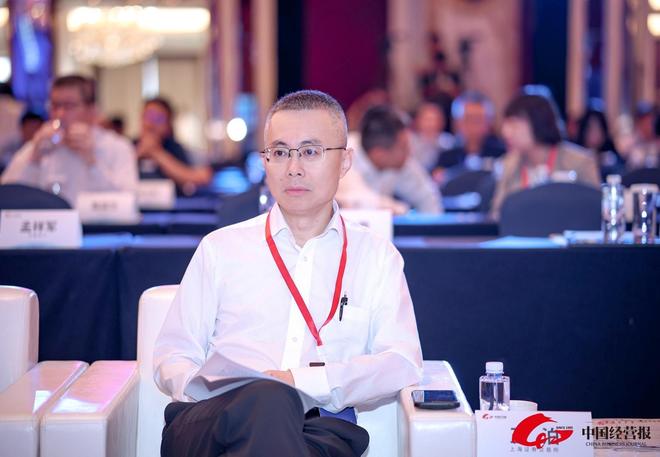
中经记者 孙汝祥 夏欣 北京报道 "站在新起点,科创板将继续以'改革不停步,服务不止步,生态不松劲'的担当,进一步打通'科技、资 本、产业'良性循环的堵点痛点,为实现高水平科技自立自强、推动高质量发展,注入更多资本市场动 能。"9月10日,上交所党委委员、副总经理王泊在由《中国经营报》主办的科创板迈向"新高地"暨"硬 科硬客"2025年会的开场发言中如是表示。 王泊强调,对上交所以及科创板而言,坚持金融服务实体经济的根本宗旨,提升支持科技创新的能级, 充分发挥交易所资本市场枢纽功能,是党和国家交给科创板的重要使命。 上交所党委委员、副总经理王泊 以包容性改革破壁垒 王泊指出,科创板将"包容性"作为制度设计的核心底色,坚持为未盈利硬科技企业打开"资本入口",真 正让好公司不会因暂未盈利错失资本市场助力。 在科创板设立之初即推出"多元上市标准",首次允许未盈利企业、红筹企业、特殊股权架构企业登陆A 股,为科创企业开辟了针对性的上市通道。2025年新改革的"1+6"政策更是精准发力,专门搭建"科创成 长层",重启第五套上市标准,将人工智能、商业航天、低空经济等前沿领域纳入包容范畴。 王泊表示,科创板始终紧扣科技企业 ...
摩根士丹利:美国投资者对中国市场兴趣升至三年高位
天天基金网· 2025-09-11 10:57
Group 1 - Morgan Stanley reports that U.S. investors' interest in the Chinese market has reached a three-year high, with over 90% of investors expressing willingness to increase exposure, a level not seen since early 2021 [2] - Factors driving this trend include China's global leadership in humanoid robots, biotechnology, and drug development, as well as gradual policy measures aimed at stabilizing the economy and supporting capital markets [2] - Improved liquidity conditions and the need for diversified global asset allocation further support investment intentions [2] Group 2 - Wells Fargo emphasizes that the growth style remains in trend, with significant valuation gaps between Chinese companies and their overseas counterparts in high-end manufacturing, indicating substantial growth potential [4] - Huabao Fund suggests an investment strategy of "digging deep for Alpha while waiting for Beta," reflecting a focus on active management to achieve excess returns beyond market benchmarks [5] Group 3 - Guotai Fund identifies three main investment directions: innovative drugs, AI healthcare, and low-valuation leading companies in new cycles, with expectations that the current innovative drug market will see greater market capitalization growth than previous cycles [6] - The manager notes that the recognition of efficient R&D and clinical innovation in the pharmaceutical industry is driving this trend [6] Group 4 - Xingyin Fund highlights that product strength has become the core competitiveness of consumer companies, as consumers increasingly favor "self-satisfying" scenarios, reshaping the industry landscape [9] - The ability to continuously launch innovative products that meet precise consumer needs is crucial for corporate growth [9] Group 5 - Quanguo Fund points out that major global model manufacturers have released significant upgrades, emphasizing China's indispensable role in autonomous hardware and model capabilities, with substantial potential in domestic computing power and application-related fields [11]

“凤凰之星”评委薛军谈中国企业出海:不仅需“走出去”,还需“走进去”
凤凰网财经· 2025-09-11 05:31
Group 1 - The "2025 Phoenix Star Listed Company Selection" aims to highlight the core competitiveness and influence of Chinese listed companies, supporting the healthy development of mainland and Hong Kong stock markets [1] - The selection process includes a first round of expert reviews on August 28, followed by public voting, with results to be announced on September 23 [1] - Nine awards are set to cover key areas such as innovation, shareholder returns, social responsibility, growth potential, brand influence, and globalization [1] Group 2 - Professor Xue Jun emphasizes the significance of Chinese companies going global, noting that outward direct investment reflects a company's development capability, especially when export trade faces bottlenecks [3] - The focus has shifted from the quantity of overseas investments to the quality of returns and local operations management [3] - The evaluation of overseas investment profitability shows a steady increase over the past 20 years, with China's outward direct investment only accounting for 16.63% of GDP, indicating substantial growth potential compared to developed countries [4] Group 3 - Different types of companies should adopt differentiated strategies for going global, with manufacturing firms needing to address competition and trade barriers, while service industries should focus on regulatory flexibility [6] - The challenges faced by companies include geopolitical risks, stringent security reviews, and increasing competition in overseas markets, necessitating a focus on local operations [7] - The opportunities for Chinese companies include enhanced regional cooperation amid globalization challenges, advantages in green transition, and strong demand in emerging markets [7] Group 4 - The collaboration between academia and industry is crucial in the AI era, with universities needing to cultivate versatile talents and create detailed databases to support companies in their global ventures [8] - The selection event is supported by various institutions, including the China Listed Companies Association and academic institutions, with results to be revealed at the "Phoenix Bay Area Financial Forum 2025" [8]

以扩内需和产能治理带动价格修复
2 1 Shi Ji Jing Ji Bao Dao· 2025-09-11 00:09
Group 1: Price Data Overview - The August price data from the National Bureau of Statistics shows significant structural differentiation, with a slight year-on-year decline in CPI, but positive signals regarding economic transformation and structural optimization are evident [1][4] - CPI decreased by 0.4% year-on-year, primarily due to last year's high base and lower seasonal food prices, with food prices dropping by 4.3% year-on-year [1][2] - The decline in food prices reflects the strengthening of domestic agricultural supply capabilities, indicating support from the supply side rather than a contraction in demand [1] Group 2: Core CPI and Consumer Demand - The core CPI, excluding food and energy prices, rose by 0.9% year-on-year, marking the fourth consecutive month of growth, indicating a steady recovery in domestic consumption demand [2] - Service consumption, particularly in healthcare, education, and tourism, has shown significant price increases, contributing to the core CPI's rise [2] - Upgraded consumption remains robust, with notable price increases in gold and platinum jewelry, as well as household appliances, reflecting a growing pursuit of high-quality living among consumers [2] Group 3: Industrial Price Trends - Industrial prices are showing positive changes, with PPI stabilizing after eight months of decline, and the year-on-year decline narrowing by 0.7 percentage points [3] - The structural improvement in industrial prices indicates a marginal improvement in supply-demand relationships within certain industries, alongside ongoing optimization of industrial structure and growth of new drivers [3] - Key industry capacity governance measures are yielding results, leading to price increases in traditional raw material sectors like coal and steel, while new drivers are enhancing prices in high-tech and green industries [3] Group 4: Policy Implications and Future Outlook - Current price data reflects a significant structural characteristic of "supply optimization in traditional sectors and demand expansion in emerging sectors," highlighting the accelerated transition of China's economic drivers [4] - Macro policies need to remain precise and patient, ensuring stable supply and prices for essential goods while enhancing the internal driving force through improved consumption environments and high-quality supply [4] - Continued support for consumption and the construction of a unified national market are expected to promote steady recovery in consumer demand and stabilize low CPI levels, while industrial price recovery is anticipated to continue [4]
主宾省安徽 4年跃升159亿 “科技+文化”驱动服贸
Bei Jing Shang Bao· 2025-09-10 17:46
Core Insights - The Anhui Province has achieved significant growth in service trade, with total trade amounting to 492.7 billion yuan in the previous year, reflecting an annual growth rate of 10.2% since 2020 [3][4] - The province is leveraging "Hui culture" as a bridge to enhance cultural trade, which is becoming a key component of its soft power in international trade [6][7] Service Trade Growth - Anhui's service trade total increased from 333.7 billion yuan in 2020 to 492.7 billion yuan last year, with a year-on-year growth of 34.4% in the first half of this year, ranking third nationally [3][4] - Digital delivery trade, including sectors like insurance, finance, and information services, reached 123.7 billion yuan, accounting for 40.4% of total service trade, with a year-on-year growth of 32.8% [3] Economic Development in Hefei - Hefei has deepened international cooperation with over 220 countries and regions, ranking 15th among China's foreign trade cities [4] - The city has seen a significant economic growth, exceeding 1.35 trillion yuan last year, making it one of the fastest-growing cities in China over the past 20 years [4] Cultural Trade Initiatives - Anhui organized 20 representative enterprises to showcase at the 2025 service trade fair, highlighting the integration of high technology and Hui culture [6] - The province's cultural trade is accelerating, with 33 enterprises and 3 projects recognized as key cultural export enterprises, ranking third nationally [6] Policy and Infrastructure Improvements - Anhui has implemented 35 measures to optimize policy supply and enhance service quality, including a funding initiative that delivered 187.9 billion yuan directly to 41,000 enterprises [8][10] - The province has established a high-level open system centered around Hefei, enhancing its capacity for service trade innovation and development [3][4] Foreign Investment and Trade - Anhui has successfully attracted major projects from companies like NIO and IKEA, and has seen a 19.2% increase in actual foreign investment, totaling 2.1 billion USD in the first seven months of this year [9][10] - The province's efforts in international economic cooperation have led to the establishment of 33 overseas business service points, facilitating the expansion of local enterprises into global markets [9]