家居

Search documents
A股盘前播报 | 特朗普对重卡、家居、医药征关税 两大能源巨头筹划战略重组!
智通财经网· 2025-09-26 00:41
Industry Insights - Trump announced a 25% tariff on all imported heavy trucks, a 50% tariff on kitchen cabinets and bathroom vanities, a 30% tariff on upholstered furniture, and a 100% tariff on any brand or patented drugs unless companies are building pharmaceutical plants in the U.S. [1] - The Digital Renminbi International Operation Center has officially launched in Shanghai, introducing three major business platforms: cross-border digital payment, blockchain services, and digital asset platforms, which are expected to enhance China's multilateral foreign trade system amid tariff uncertainties [4] Company Developments - Trump signed an executive order for a new TikTok U.S. operation plan, ensuring compliance with U.S. laws and establishing a joint venture responsible for data and content security, with a revenue-sharing mechanism between ByteDance and the new joint venture [2] Macro Developments - The U.S. Commerce Department has placed three companies, including Saroni Tech and Alcon, on the unreliable entity list, while three others, including Huntington Ingalls Industries, are on the export control list, indicating a cautious approach to foreign entities deemed harmful to national security [3]
中国零售消费行业生成式AI及数据应用研究报告
艾瑞咨询· 2025-09-26 00:04
Core Viewpoint - The retail industry is transitioning from high-speed growth to stock competition, necessitating the digital transformation of "people, goods, and venues" through the integration of generative AI and data applications to reshape growth trajectories [1][2][44]. Group 1: Digital Transformation in Retail - The shift from a demand-driven economy to a member-based economy is evident as consumer rationality increases, prompting companies to focus on user retention and value extraction [4]. - Retailers must leverage digital technologies to enhance consumer insights, expand touchpoints, and optimize product selection and promotion based on data [2][6]. Group 2: Generative AI and Data Applications - Generative AI and data governance are crucial for maximizing AI value, with 71% of companies planning to strengthen data-driven decision-making [20][23]. - The integration of generative AI in marketing and customer service is leading to significant efficiency improvements, with over 90% of companies adopting these technologies [48][51]. Group 3: Sector-Specific Insights - In the beauty sector, domestic brands are rapidly increasing market share from 43.7% in 2022 to 55.7% in 2024, utilizing KOLs and UGC to establish a marketing loop [9]. - The footwear and apparel industry faces intense competition, requiring companies to develop proprietary product capabilities and brand recognition to stand out [11]. - The home goods sector is shifting towards overseas expansion, with companies focusing on building their own brands rather than merely exporting [14][66]. Group 4: Global Market Expansion - 93% of retail companies are pursuing overseas business, with Asia-Pacific, Europe, and North America as primary targets due to their high purchasing power and mature channels [66]. - Generative AI is facilitating localization efforts by overcoming language and cultural barriers, enabling efficient marketing and customer service in foreign markets [69]. Group 5: Supply Chain and Decision-Making Enhancements - Generative AI is optimizing supply chain efficiency by improving demand forecasting and real-time decision-making, with efficiency improvements ranging from 10% to 30% [62]. - The integration of generative AI in internal decision-making processes is transforming traditional experience-driven approaches into data-driven strategies [42][56].


银发经济推动家居适老化进程
Bei Jing Shang Bao· 2025-09-25 16:53
随着老年人口规模不断扩大,人们对居住环境的安全性、便利性、舒适性需求日益凸显,适老化改造市 场迎来爆发式增长契机。中国老龄科学研究中心预测,到2035年我国银发经济规模将达到30万亿元,年 复合增长率达15.7%。庞大的需求背后,企业加速布局,家居行业正迎来适老化改造的黄金发展期。据 统计,目前我国与适老家具相关的企业有约4.5万家,其中2025年新增超7200家相关企业,同比增长 18.6%。市场端蓝海逐渐显现的同时,政策层面也在持续加码。2025年9月,市场监管总局(国家标准 委)发布的《家居产品适老化设计指南》国家标准正式实施。上海、湖北、海南等地区在国家指定8类 家电产品基础上增添了家居及适老化产品补贴,补贴力度集中在15%—20%区间。如今,面对适老化这 一蓝海市场,家居企业呈现出多元化布局态势。未来,家居企业能否在智能家居、适老建材、社区服务 协同作用下,在"银发经济"的蓝海中找到新增长极,成为家居企业共同面对的机遇与挑战。 顶固集创家居董事长辛兆龙 适老化解决方案本质是"便捷" 顶固集创不再是卖单品,而是提供从空间设计到生活方式的完整解决方案。从适老化改造方面来看,顶 固集创将家里的柜子做成电动 ...

穿越周期 家居业的冰与火变奏曲
Bei Jing Shang Bao· 2025-09-25 16:53
Core Insights - The home furnishing industry in China is undergoing significant challenges due to the real estate sector's downturn, leading to a transformation driven by internal dynamics and resilience [1][4] - The shift from a "blue ocean" domestic market to a "red ocean" has prompted leading home furnishing companies to explore international markets, moving beyond mere product exports to a comprehensive global operational model [1] - The aging population is creating new opportunities in the home furnishing sector, particularly through the demand for elder-friendly renovations and home improvements, which require a deeper understanding of the elderly's needs [2] Group 1: Market Dynamics - The home furnishing industry is experiencing a pressure test as it adjusts to the real estate market's deep corrections, with sales fluctuations reflecting this transformation [1] - The focus is shifting from low-frequency, large-scale consumption tied to real estate to mid-to-high frequency, improvement-driven consumption based on quality of life [2] - The rise of second-hand housing transactions is changing consumer expectations from mere ownership to quality and desirability of homes [2] Group 2: Technological Advancements - The integration of AI is revolutionizing the home furnishing industry, enhancing design efficiency and user experience across the entire process from design to customer interaction [3] - AI enables customized production and optimizes manufacturing processes, allowing for personalized solutions that cater to individual consumer preferences [3] - The technological shift is not just an upgrade of tools but a fundamental restructuring of business models, pushing companies to evolve from product suppliers to comprehensive lifestyle solution providers [3] Group 3: Future Outlook - The current downturn in the home furnishing industry is seen as a necessary correction following rapid growth, prompting companies to focus on user-centric innovation [4] - Future competition will center on precise market segmentation, deep technological integration, and sustained brand value creation rather than sheer scale [4] - Companies that can navigate this challenging environment by understanding trends, honing their capabilities, and embracing innovation are likely to emerge stronger and more resilient [4]
2025年第37周:跨境出海周度市场观察
艾瑞咨询· 2025-09-25 00:03
Group 1: Long Video Overseas Expansion - The Southeast Asian streaming market is intensifying, with an expected market size of $6.8 billion by 2030. Chinese platforms like iQIYI, WeTV, and Youku are challenging Netflix through differentiated strategies, such as high-budget local original content and flexible subscription models [3][4] - iQIYI focuses on high-budget local original content and flexible subscription models, while WeTV emphasizes idol cultivation to enhance user engagement. Youku exports mature variety show formats [3] - Chinese platforms are leveraging low subscription prices, deep localization, and local payment advantages to capture market share, particularly in Thailand where their share exceeds 40% [3][4] Group 2: New Energy Heavy Trucks Going Global - The global new energy heavy truck sector is undergoing significant transformation, with Chinese manufacturers making breakthroughs in overseas markets. The year 2025 is seen as a "breakout year" for Chinese new energy heavy trucks, with exports increasing by 200% from January to July this year [5] - Companies like DeepWay and Weitu Technology have successfully entered markets in the Middle East, Europe, and Southeast Asia through technological innovation and flexible mechanisms [5] - Key competitive advantages include technological breakthroughs and customized products, such as DeepWay's battery swap system and high-temperature resistant models [5] Group 3: Home Furnishing Industry Going Global - The Chinese home furnishing industry is shifting towards a "strategic deep cultivation" approach, with the global furniture retail market expected to reach $800 billion by 2025. North America remains the primary target market, while emerging markets like Southeast Asia and the Middle East are also gaining attention [7][8] - Companies face challenges from trade changes and supply chain adjustments, making traditional price competition unsustainable. Key strategies include supply chain integration, R&D investment, and precise marketing to enhance competitiveness [7][8] Group 4: Chinese Brands Globalization - Chinese tea brands are rapidly rising in Southeast Asia, with Mixue Ice City as a standout performer. The region's cultural proximity and young population make it an ideal market for tea brands [9] - Mixue Ice City has become a leading brand in Southeast Asia within five years, achieving revenue of 14.87 billion yuan in the first half of 2025 and over 50,000 global stores [9] - The success of Mixue's strategy includes supply chain cost reduction, localized IP, and refined operations, with its coffee brand also leveraging the same approach for global expansion [9] Group 5: Robotics Industry Going Global - Chinese robotics products are rapidly expanding in overseas markets, with some leading companies achieving over 50% of their revenue from abroad. However, data security and privacy issues pose significant challenges for startups [10] - Companies are adopting AI tools for vulnerability scanning and traffic monitoring to enhance security. Emphasis is placed on "entering the sea" rather than merely "going out," integrating into international ecosystems [10] Group 6: Xiaomi's Globalization Strategy - Xiaomi has transitioned from product export to "model export," covering over 100 markets since its global journey began in 2014. The company plans to open 10,000 Xiaomi Home stores overseas in the next five years [11][12] - Xiaomi's strategy includes high-end positioning in Europe and maintaining market share in emerging markets, with significant growth in high-end smartphone sales [11][12] Group 7: Domestic Beauty Brands Accelerating Global Expansion - Domestic beauty brands are seeking new growth through multi-brand matrices and overseas investments, with top companies like Proya and Shiseido leading the way [13] - The beauty industry is shifting focus from domestic competition to international collaboration, with brands needing to enhance their brand power and supply chain capabilities for successful globalization [13] Group 8: Flying Book's Globalization Efforts - Flying Book, a global office platform, integrates AI and collaboration capabilities to assist companies in their overseas expansion. It addresses organizational management and compliance challenges for multinational enterprises [14] Group 9: iFLYTEK's AI Global Strategy - iFLYTEK achieved a revenue of 10.911 billion yuan in the first half of 2025, with a 38% growth in C-end business. The company emphasizes the importance of self-control in its strategic direction [15][16]


轻工制造行业日报:出口链:2025M8电子烟出口额+34%,漂白纸及纸板+30%-20250924
Tai Ping Yang Zheng Quan· 2025-09-24 15:24
Investment Rating - The industry investment rating is not explicitly stated, but the report indicates a positive outlook for the light industry sector, suggesting that the overall return is expected to exceed the CSI 300 Index by more than 5% in the next six months [5]. Core Insights - The report highlights significant growth in exports for specific categories, with electronic cigarette exports increasing by 34% and bleached paper and board exports rising by 30% [1][3]. - In the paper sector, exports of bleached paper and board, as well as cardboard boxes, are experiencing rapid growth at rates of 30% and 23% respectively, while pulp and paper products show stable growth at 0.1% [1]. - The home goods sector continues to see growth in spring mattresses and bathroom products, with increases of 16% and 14% respectively, although mattress exports have seen a reduced decline of 8% [1]. - Other categories, such as electronic cigarettes, are showing strong export growth, while items like insulated cups and plastic tableware are experiencing double-digit declines of 16% and 10% respectively [1]. Summary by Category Paper Industry - Exports of bleached paper and board are up by 30% - Cardboard box exports have increased by 23% - Pulp and paper products show stable growth at 0.1% [1] Home Goods - Spring mattress exports increased by 16% - Bathroom product exports rose by 14% - Mattress exports have a reduced decline of 8% - Sofas, office chairs, and PVC flooring are underperforming with declines of 11%, 4%, and 17% respectively [1] Other Categories - Electronic cigarette exports are growing rapidly at 34% - Insulated cups and plastic tableware are facing declines of 16% and 10% respectively [1]
轻工、美护板块三季报前瞻:看好国货品势能向上,关注降息带动出口需求
HUAXI Securities· 2025-09-24 12:46
Investment Rating - Industry rating: Recommended [4] Core Views - The home furnishing sector remains under pressure, but government subsidy policies and the increasing demand for home renovation are expected to boost consumer willingness [6][8] - The paper and packaging sector is entering a traditional peak season, with anticipated recovery in downstream demand, particularly for cost-leading companies [6] - The light industry consumer segment is seeing a recovery in stationery procurement and growth in domestic brands in the cosmetics sector [2][9] - The export chain is expected to benefit from interest rate cuts, enhancing demand and improving the competitive landscape for leading companies [7][8] Summary by Relevant Sections Home Furnishing - The sector is facing significant pressure due to a decline in new housing starts and sales, with new construction area down 18.3% year-on-year [6][12] - Government subsidies are expected to stimulate consumer demand, while the trend of upgrading existing homes is gaining traction [6] - AI applications are enhancing product differentiation in smart home products [6] Paper and Packaging - September marks the beginning of the traditional peak season for paper, with expectations of demand recovery [6] - The metal packaging sector is at a breakeven point, and mergers among leading companies may improve the competitive landscape [6] Light Industry Consumption - In the stationery market, procurement is gradually recovering, and domestic brands are gaining market share in cosmetics due to their affordability and positive reputation [2][9] - The jewelry sector is experiencing high growth, particularly in mid-range brands focusing on traditional gold products [2][9] Export Chain - Anticipated interest rate cuts from the Federal Reserve are expected to boost export demand [7] - Leading companies are mitigating tariff impacts through capacity transfer and efficiency improvements [7] Electric Two-Wheelers - The industry is entering a traditional peak season, with positive growth expected in Q3 due to proactive inventory stocking [8] - The new national standards are likely to drive structural changes in consumer preferences and enhance average selling prices [8] Beauty and Personal Care - Domestic brands are expected to achieve steady growth due to their competitive pricing and effective marketing strategies [2][9]
志邦家居:关于注销部分已授予但尚未行权的股票期权的公告
Zheng Quan Ri Bao· 2025-09-24 12:26
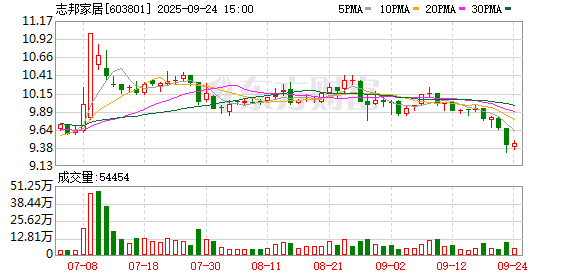
证券日报网讯 9月24日晚间,志邦家居发布公告称,公司于2025年9月24日召开五届董事会第十次会 议,审议通过了《关于注销部分已授予但尚未行权的股票期权的议案》,同意公司注销部分激励对象已 获授但尚未行权的413.49万份股票期权。 (文章来源:证券日报) ...

第一创业晨会纪要-20250924
First Capital Securities· 2025-09-24 06:16
Macro Economic Group - Federal Reserve Chairman Jerome Powell delivered a speech in Providence, Rhode Island, following a 25 basis point interest rate cut, bringing the benchmark rate to 4.00%-4.25% [4] - Powell noted a slowdown in economic growth, with rising unemployment and slowing job growth, indicating increased risks in the labor market [4] - Inflation has recently increased but is attributed to one-time tariff impacts rather than broader price pressures, leading to a shift in risk balance [4] - Powell's comments suggest a neutral stance on future policy, highlighting the high valuation levels of the U.S. stock market and cautioning against overly optimistic expectations for rate cuts [4][5] Industry Comprehensive Group - Micron Technology reported Q4 adjusted revenue of $11.32 billion, a 46% year-over-year increase, exceeding analyst expectations [8] - The adjusted gross margin for Q4 was 45.7%, up 9.2 percentage points year-over-year, also surpassing analyst consensus [8] - For Q1 of FY2026, Micron expects revenue between $12.2 billion and $12.8 billion, with an adjusted gross margin of 50.5%-52.5%, continuing to exceed analyst expectations [8] - The demand for AI has driven a significant increase in storage prices, with a more than 15% month-over-month rise in 16GB DDR5 memory prices since August [8] Advanced Manufacturing Group - In August 2025, China exported 764,000 vehicles, a 25% year-over-year increase, with total exports from January to August reaching 4.94 million vehicles, up 21% year-over-year [10] - The growth in exports is driven by improved competitiveness of Chinese products and slight growth in markets in the Global South [10] - Exports of Chinese new energy vehicles have outperformed expectations, with hybrid and plug-in vehicles becoming new growth points, particularly in the pickup segment [10] - The external environment has seen increased tariffs and compliance pressures on Chinese electric vehicles in Europe and the U.S., enhancing the competitiveness of hybrids in various markets [10] Consumer Group - Mengbaihe achieved revenue of 4.316 billion yuan in the first half of 2025, a 9.35% year-over-year increase, with a net profit of 110 million yuan, up 96.41% [12] - Revenue from North America was 2.184 billion yuan, a 7.63% increase; Europe generated 957 million yuan, up 6.07%; domestic revenue was 753 million yuan, up 11.74% [13] - Online sales grew significantly, with a 57.40% year-over-year increase, while offline sales increased by 2.55% [13][14] - The U.S. interest rate cut is expected to improve liquidity in the real estate market, benefiting sectors sensitive to interest rates [13]


千亿家居帝国,创始人解除留置
2 1 Shi Ji Jing Ji Bao Dao· 2025-09-24 01:55
0:00 9月22日晚,红星美凯龙公告称,创始人车建兴已被解除留置。这家资产千亿的家居巨头,正努力重回 业绩增长。 ...