
评级机构

Search documents
金荣中国:美经济前景恶化风险上升,金价大幅走高强势收涨
Sou Hu Cai Jing· 2025-07-22 01:33
Market Overview - International gold prices surged significantly on July 21, closing at $3,397.91 per ounce after reaching a high of $3,401.44 [1] - The SPDR Gold Trust, the world's largest gold ETF, increased its holdings by 3.43 tons, bringing the total to 947.06 tons [6] Economic Indicators - The U.S. Conference Board's Leading Economic Index for June recorded a month-on-month decline of -0.3%, worse than the market expectation of -0.2% [2] - The six-month growth rate of the Leading Economic Index weakened, with the diffusion index remaining below 50 for the third consecutive month, signaling a recession [2] - The U.S. GDP growth is projected at 1.6% for the year, with tariffs expected to have a more pronounced impact in the second half [2] Geopolitical Developments - Ukraine and Russia are set to hold the next round of peace talks in Turkey, as stated by Ukrainian President Zelensky [5] - Israel's Foreign Ministry rejected a multi-national joint statement regarding the Gaza conflict, emphasizing Hamas's responsibility for the ongoing violence [5] Federal Reserve Insights - The probability of the Federal Reserve maintaining interest rates in July is at 97.4%, with a 2.6% chance of a 25 basis point cut [6] - The outlook for the U.S. credit rating has been downgraded by Fitch due to increased policy risks and economic slowdown [4]


整理:每日全球外汇市场要闻速递(7月8日)
news flash· 2025-07-08 07:19
Group 1: US Dollar - The Federal Reserve's research report warns of uncertain economic outlook potentially leading to zero interest rate risks [1] - Fed Chair candidate Walsh suggests interest rates should be lowered further [1] Group 2: Major Non-USD Currencies - ECB council member Centeno states that the timing and extent of further rate cuts are difficult to determine [2] - Fitch predicts Japan's debt trajectory will rise again by the end of this century [2] - ECB indicates that risks to financial stability in the Eurozone have increased due to rising global geopolitical uncertainties [2] - Japanese Prime Minister expresses regret over US tariff information and emphasizes ongoing negotiations [2] - South Korean Trade Minister states that a three-week extension of tariff suspension is insufficient and negotiations must accelerate [2] - Japan's Economic Revitalization Minister Akizawa announces agreement with US Commerce Secretary to actively participate in trade talks, prioritizing national interests [2] - The Reserve Bank of Australia unexpectedly keeps the benchmark interest rate at 3.85%, indicating a wait for more information to confirm sustainable inflation at 2.5% [2] - RBA Governor Bullock mentions a cautious and gradual easing stance is appropriate, with confidence in future rate cuts [2] - Australian Treasurer notes that the RBA's decision to maintain rates was not expected by millions of Australians or the market, clarifying future inflation and rate trajectories [2] Group 3: Other Developments - Emerging market ETFs see inflows for the sixth consecutive week, with China receiving the largest inflow [3] - The World Bank reports that Syria is facing a severe liquidity crisis due to cash shortages and broader disruptions in currency circulation [3] - Moody's maintains Israel's Baa1 rating while warning that conflict with Iran will increase fiscal pressure [3]
7月7日汇市晚评:穆迪认为日本央行将继续加息 美元/日元反弹至144.50上方
Jin Tou Wang· 2025-07-07 09:41
Currency Market Overview - The Euro is trading slightly lower against the US Dollar around 1.1765 during the European session [1] - The Australian Dollar is accelerating its decline towards 0.6500 in the Asian session [1] - The US Dollar is showing positive momentum against the Canadian Dollar, rising to the range of 1.3920-1.3925 [1] - The US Dollar has rebounded above 144.50 against the Japanese Yen [1] - The British Pound has increased for the fourth consecutive day against the US Dollar [1] Key News on Currencies Japanese Yen - Fitch Ratings states that a significant reduction in auto tariffs is necessary for a trade agreement between Japan and the US [2] - Moody's maintains that the Bank of Japan is likely to continue raising interest rates, but weak wage data complicates the situation [2] Australian Dollar - ING reports that ongoing inflation slowdown opens a window for the Reserve Bank of Australia to consider rate cuts [3] - Analysts warn that strong employment data in Australia raises concerns for the Reserve Bank's dovish stance [3] Other Economic Indicators - Indonesia's foreign exchange reserves increased to $152.6 billion at the end of June [4] - Thailand's consumer price index in June fell more than expected [4] - President Putin calls for expanded local currency settlements and proposes the creation of a new BRICS investment platform [4] - Economists predict that the Reserve Bank of New Zealand will adopt a "dovish pause" this week to allow for economic assessment [4] Technical Analysis - The Euro to US Dollar (EUR/USD) remains in the upper half of an ascending regression channel, with the RSI around 60 indicating a bullish tendency, though lacking momentum [5] - Key resistance levels for EUR/USD are at 1.1840 and 1.1900, while support levels are at 1.1740, 1.1700, and 1.1630 [5] - The USD/JPY is forming a symmetrical triangle, with the 50-day EMA at 144.90 acting as immediate resistance [5] - A breakout above this area could pave the way for a bullish trend towards the triangle's upper boundary at 146.50-147.00 [5] Australian Dollar Technicals - If the AUD/USD breaks the 0.6535-0.6545 range, it will activate a double top pattern, confirming a deeper correction with a target at 0.6510 [6] - For a bullish trend to resume, the price must break above the July 1 and 2 highs at 0.6590, targeting the Fibonacci extension levels at 0.6610 and 0.6640 [6] Upcoming Economic Data - Eurozone May retail sales data is scheduled for release at 17:00 [7] - The US global supply chain pressure index for June will be released at 22:00 [7]
国际货币基金组织发出警告,“大而美”法案将加剧美财政赤字
Xin Lang Cai Jing· 2025-07-05 03:50
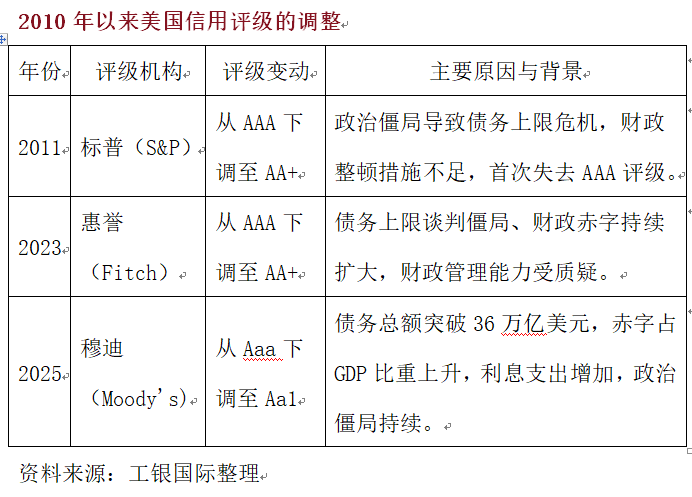
Group 1 - The "Big and Beautiful" tax and spending bill was signed into law by President Trump, extending tax cuts for corporations and individuals, and implementing tax exemptions for tips and overtime pay [1] - The bill will stop tax credits for electric vehicles starting September 30, while allowing tax benefits only for wind and solar projects that begin production before the end of 2027 [1] - The International Monetary Fund (IMF) expressed concerns that the bill would further increase the U.S. fiscal deficit, which is critical for stabilizing the debt-to-GDP ratio [1][2] Group 2 - The IMF has been advocating for the U.S. to increase taxes to address the fiscal deficit, but the new bill continues the previous administration's tax reduction policies [1] - The U.S. federal debt has reached $36.2 trillion, with interest payments in May alone exceeding $9.2 billion, making it the second-largest federal expenditure after Medicare and Social Security [3] - Moody's has downgraded the U.S. credit rating, citing that the deterioration of fiscal indicators cannot be offset by the size of the economy and financial system [3]
德媒:美国“大而美”法案或加剧全球金融市场不稳定
Yang Shi Xin Wen· 2025-07-03 08:57
Group 1 - The new tax reform plan proposed by the U.S. President Trump may have significant negative impacts on international trade, financial markets, and the U.S. economy itself [1][2] - The tax reform is expected to increase the federal government debt by approximately $3.3 trillion over the next decade, potentially reaching nearly $4 trillion when including interest payments [1] - Moody's has downgraded the U.S. credit rating, indicating that the continuous deterioration of U.S. fiscal indicators cannot be fully offset by its economic and financial size [1] Group 2 - The tax reform will negatively affect the green technology and renewable energy sectors by reducing tax support for new energy projects and tightening subsidy conditions for wind and solar equipment [2] - The uncertainty surrounding U.S. policies is prompting investors to reassess their global strategies, particularly affecting countries like Germany and Denmark that are major exporters of wind energy equipment [2] - The article warns that if the U.S. pursues tax cuts without a sustainable revenue mechanism, it will exacerbate fiscal imbalances and global market volatility, making U.S. economic policy uncertainty a significant source of global risk [2]
中美博弈开始动真格了!中国抽走美债筹码,美国将面临大麻烦!
Sou Hu Cai Jing· 2025-06-28 18:24
Group 1 - China reduced its holdings of US Treasury bonds by $8.2 billion in April, bringing its total holdings down to $757.2 billion, the lowest level in nearly 16 years [1] - Since April 2022, China's US Treasury holdings have remained below $1 trillion, with significant reductions of $173.2 billion in 2022, $50.8 billion in 2023, and $57.3 billion in 2024 [1] - The US national debt has surpassed $36 trillion, with a debt-to-GDP ratio of approximately 122.3%, projected to rise to 150% by 2028, indicating a severe fiscal burden on the US economy [3] Group 2 - The US government's annual interest payments on its debt exceed military spending, highlighting the fiscal challenges it faces [3] - Moody's downgraded the US sovereign rating from Aaa to Aa1 in May 2025, raising concerns about the US's debt repayment capacity [3] - The reduction of US Treasury holdings by China is seen as a necessary risk mitigation strategy to avoid potential losses from US debt [4] Group 3 - The decline in demand for US Treasuries due to China's sell-off could lead to falling prices and rising yields, increasing the financing costs for the US government [6] - Higher yields on US Treasuries could suppress investment and consumer spending, potentially slowing down economic growth and increasing the risk of recession [6][7] - The instability in the US Treasury market could impact the broader financial system, leading to capital outflows and asset price declines in other markets [7] Group 4 - The trend of reducing US Treasury holdings aligns with the global movement towards "de-dollarization," as countries seek alternatives to the US dollar in international trade [7] - China's actions reflect a strategic response to the challenges posed by US financial dominance and debt issues, indicating a shift in the balance of power in international finance [9]

程实:美国3A信用时代终结的原因与影响︱实话世经
Di Yi Cai Jing· 2025-06-08 12:59
Core Viewpoint - The downgrade of the U.S. sovereign credit rating by Moody's marks the end of the AAA era, highlighting structural issues in U.S. debt sustainability and raising concerns about the country's fiscal outlook [1][3][10] Group 1: Credit Rating Downgrade - Moody's downgraded the U.S. sovereign credit rating from "Aaa" to "Aa1," the first loss of the highest rating since 1919, indicating a significant shift in the perception of U.S. fiscal health [3][4] - The downgrade is attributed to the rising total debt, structural expansion of fiscal deficits, and increased interest payments amid a higher interest rate environment [3][4] Group 2: Market Reactions - Following the downgrade, there was a poor subscription for the 20-year Treasury bond auction, indicating rising financing pressures and a shift in market sentiment [1][4] - As of May 27, the 20-year Treasury yield fluctuated around 5%, while the 10-year yield remained at approximately 4.5%, reflecting heightened market concerns [1] Group 3: Structural Challenges - The U.S. debt sustainability is increasingly reliant on short-term debt refinancing, which exposes the financial system to significant vulnerabilities amid policy uncertainty and market volatility [4][5] - The current fiscal structure shows a growing dependency on short-term debt, which, despite its lower proportion, poses a critical risk due to its frequent issuance and reliance on market confidence [4][5] Group 4: Global Implications - The downgrade signals a potential reassessment of the risk-return profile of U.S. dollar assets by long-term investors, leading to increased allocations towards non-U.S. currencies and physical safe-haven assets [2][10] - The shift in the perception of U.S. Treasury securities as a "risk-free asset" could trigger a broader re-evaluation of asset pricing and liquidity expectations in global capital markets [10][11]

惠誉首席经济学家Brian Coulton:通胀预期大幅回升,今年美联储料将降息一次
2 1 Shi Ji Jing Ji Bao Dao· 2025-06-03 12:56
Core Viewpoint - The belief that U.S. Treasury bonds are a safe haven is facing unprecedented challenges due to rising yields and concerns over fiscal deficits and debt levels [1][2]. Group 1: U.S. Treasury Yields and Market Reactions - In late May, the yields on 20-year and 30-year U.S. Treasury bonds surpassed the critical psychological level of 5.1%, leading to a significant sell-off in the long-term bond market [1]. - Fitch Ratings has warned that even if the U.S. fiscal deficit improves temporarily in 2025, it is expected to widen again, with debt-to-GDP ratio projected to reach 120% by 2026, significantly higher than the median for AA-rated countries [1][2]. Group 2: Inflation and Federal Reserve Policy - Current inflation is expected to remain around 4%, well above the Federal Reserve's target of 2%, which complicates the Fed's decision-making process regarding interest rates [2][3]. - The Fed is anticipated to only lower interest rates once in the fourth quarter of this year, maintaining a cautious stance despite a projected economic slowdown [2][3]. Group 3: Economic Indicators and Business Sentiment - There is a noticeable decline in "soft data" related to business investment and hiring intentions, indicating weakening market sentiment [4]. - However, "hard data" such as unemployment claims and monthly employment reports do not yet show significant negative impacts on the labor market [4][5]. Group 4: Trade Uncertainty and Investment Outlook - Policy uncertainty has surged, affecting consumer and business spending decisions, with companies likely to delay investment decisions [5][6]. - The impact of trade uncertainties and inflation pressures is expected to suppress corporate willingness to initiate new projects, potentially leading to slower investment growth and reduced productivity in the medium term [5][6].
“次贷危机”翻版?超过3000笔美国私募信贷交易,全由约20人团队的小评级公司完成
Hua Er Jie Jian Wen· 2025-06-03 01:20
Core Insights - The article highlights the emergence of Egan-Jones as a significant player in the private credit rating market, raising concerns about the quality and reliability of its ratings [1][4] - Egan-Jones has been criticized for its rapid rating process, which contrasts sharply with traditional agencies, potentially leading to inflated ratings and financial risks [2][4] Group 1: Egan-Jones Ratings - Egan-Jones completed over 3,000 private credit ratings in 2024 with a team of only about 20 analysts, making it the most active player in this market [1][2] - The company provides initial assessments within 24 hours and formal ratings in less than five days, often accompanied by minimal justification [2][4] - Some optimistic ratings from Egan-Jones have proven to be highly inaccurate, with instances of companies defaulting shortly after receiving favorable ratings [2][3] Group 2: Market Impact and Reactions - Egan-Jones's ratings have facilitated the transfer of complex debts to insurance companies managing millions of policyholders' retirement savings, with total exposure to private credit investments nearing $1 trillion [3] - Major investment firms like BlackRock and Apollo Global Management have excluded Egan-Jones from their acceptable credit rating agency lists, indicating a growing skepticism towards its ratings [4] - A report from the National Association of Insurance Commissioners (NAIC) revealed that ratings from smaller agencies like Egan-Jones are, on average, three levels higher than internal valuations, potentially underestimating financial risks [4]
每日机构分析:5月29日
Xin Hua Cai Jing· 2025-05-29 09:46
Group 1: Global Economic Outlook - Analysts from Swissquote Bank indicate that improved global economic growth expectations may enhance investor confidence, leading to a potential rise in major stock indices as corporate earnings outlook improves and risk appetite increases [1] - The lifting of tariffs could reduce friction costs in international trade, promoting operational efficiency for multinational companies and boosting overall economic activity [1] - The US dollar is expected to attract investment as risk aversion diminishes and economic growth prospects improve [1] Group 2: Impact of US Court Ruling on Tariffs - Moody's analysts highlight that the US court's decision to block tariff increases is a positive development for emerging markets severely affected by high reciprocal tariffs, as it may alleviate the cost burden on exports [2] - The uncertainty surrounding the government's potential appeal against the court ruling may lead investors to adopt a wait-and-see approach before making significant investment decisions [2][3] Group 3: Regional Economic Indicators - Westpac Banking's economists report a significant decline in New Zealand's business confidence index from 49.3% in April to 36.6%, indicating heightened concerns over trade conflicts [2] - The construction sector experienced the largest drop in confidence, reflecting specific challenges faced by the industry [2] - The Korean International Trade Association anticipates a reduction in the trade surplus between South Korea and the US, projecting a surplus of $55.6 billion in 2024, a 25% increase year-on-year [4] Group 4: Market Reactions and Investment Strategies - Analysts from ABC Refinery note that the US court ruling has led to a significant rise in the US dollar, which in turn has pressured gold prices lower [4] - Goldman Sachs suggests that traditional 60/40 investment portfolios face greater challenges amid rising global macro uncertainty, recommending increased allocations to gold and oil to enhance portfolio resilience [3]