
纺织

Search documents
商务部:将密切关注墨方提税动向,并对有关最终措施进行认真评估
Sou Hu Cai Jing· 2025-09-11 16:02
答:我们注意到有关报道,将密切关注墨方提税动向,并对有关最终措施进行认真评估。在当前美方滥 施关税引发全球普遍反对之际,各国应加强沟通协调,共同维护自由贸易和多边主义,绝不能因为他人 胁迫而牺牲第三方的利益。在此背景下,墨方任何的单边加税举动,即便是在世贸规则框架内,都会被 认为是对单边霸凌主义的绥靖与妥协。有关措施一旦落地,不仅会损害包括中国在内的相关贸易伙伴的 利益,也会严重影响墨营商环境的确定性,降低企业对墨投资的信心。中墨互为重要的经贸伙伴,我们 不愿看到双方经贸合作因此受到影响,希望墨方慎之又慎,三思后行。 中方一贯主张各方通过平等对话协商解决经贸分歧,反对任何形式的单边主义、保护主义以及歧视性排 他性措施,坚决反对各种损害中方利益的做法。中方将根据实际情况采取必要措施,坚决维护自身正当 合法权益。 人民财讯9月11日电,商务部新闻发言人就墨西哥拟对有关贸易伙伴提高进口关税税率事答记者问。 有记者问:据报道,墨西哥拟对包括中国在内的未与墨签署自贸协定的国家,将汽车、玩具、钢铁、纺 织品和塑料制品等约1400项税目产品的进口关税税率提升至10%—50%。同时有分析认为,墨西哥的提 税举措符合美方长期以 ...
借助服贸会平台 绍兴放大“文化会展名城”声量
Bei Jing Shang Bao· 2025-09-11 13:14
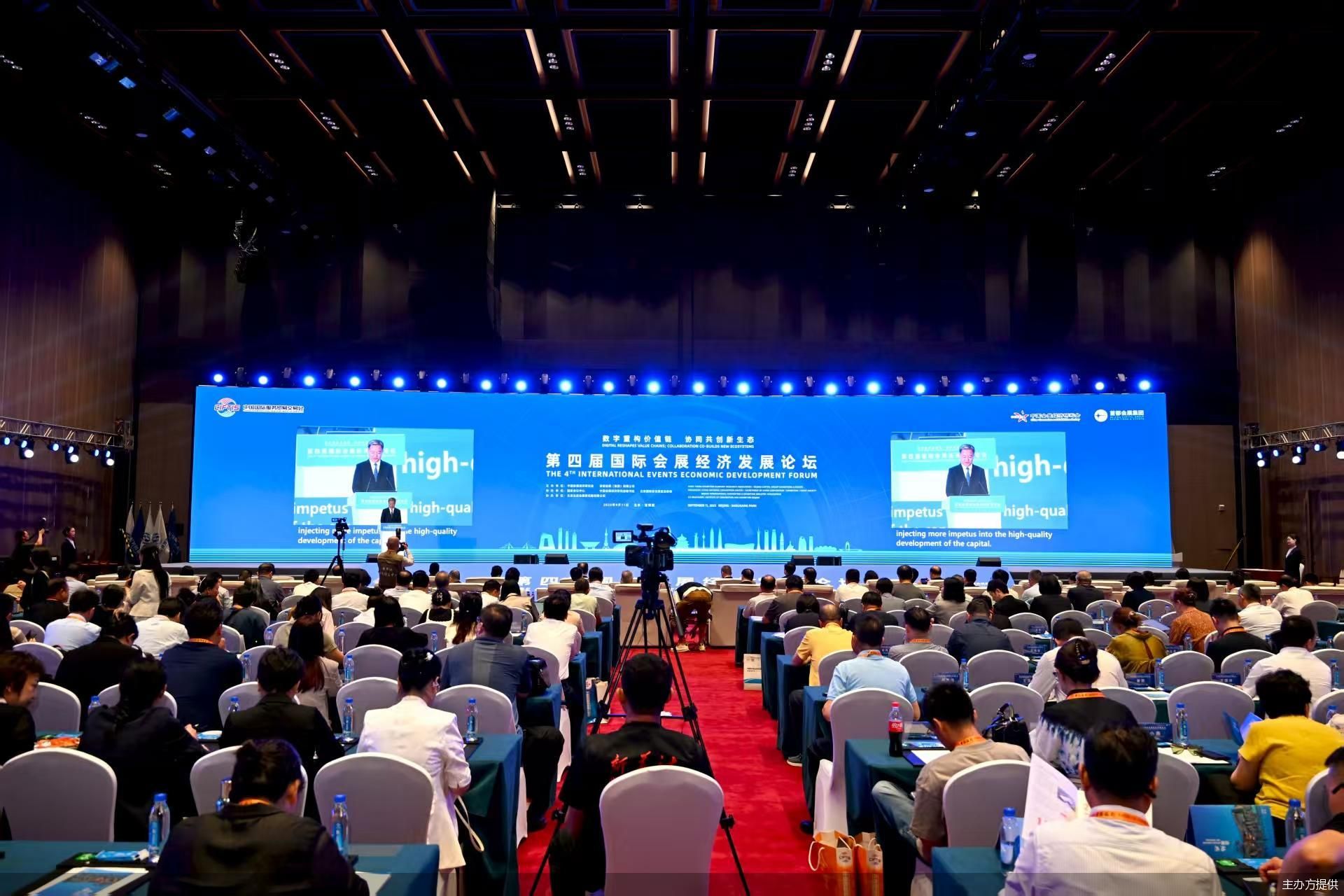
Group 1 - The fourth International Convention and Exhibition Economic Development Forum was held during the 2025 China International Service Trade Fair, showcasing Shaoxing's innovative achievements in the exhibition economy [1] - Shaoxing has established a cluster of five professional exhibition venues, with a total construction area of 491,000 square meters, centered around the Shaoxing International Exhibition Center [1][3] Group 2 - The exhibition economy is becoming a strong engine for urban industrial and cultural innovation, with Shaoxing focusing on both traditional and emerging exhibition brands to support its transformation from a textile city to a hub for new industries [3] - Shaoxing is integrating culture with exhibitions through unique models, enhancing visitor engagement and increasing average stay duration by 15% through innovative exhibition routes [3] Group 3 - Shaoxing is a key city in the Yangtze River Delta and a national historical and cultural city, recognized as the largest production base for chemical fiber fabrics and dyeing, as well as a major center for freshwater pearls and socks [5] - The city has developed a modern industrial system characterized by three major industries (textiles, chemicals, metal processing) and two historical industries (yellow wine, pearls), along with four emerging industries [5] Group 4 - Shaoxing is leveraging exhibitions as a key strategy for national opening-up, with the 2025 Spring Textile Expo attracting over 7,773 international buyers from 80 countries, resulting in intended orders worth 369 million yuan [5] - The city plans to organize 300 groups and 3,000 enterprises to participate in domestic and international exhibitions, having already sent 236 groups and 2,139 enterprises, achieving an intended transaction amount of 370 million USD [5] Group 5 - Future plans for Shaoxing include establishing 3-5 high-level international exhibition projects in collaboration with international organizations over the next three years, aiming to enhance the international influence of its exhibition brands [6] - The city will focus on four key tasks: strengthening dual-feature exhibition IPs, creating a smart exhibition ecosystem, expanding international cooperation, and integrating into the Yangtze River Delta exhibition economy [6]

8月辽宁工业生产者出厂价格同比下降4.5%
Xin Hua Cai Jing· 2025-09-11 08:12
Core Insights - In August 2025, the Producer Price Index (PPI) in Liaoning decreased by 4.5% year-on-year, with a narrowing decline of 1.3 percentage points compared to the previous month. Month-on-month, it increased by 0.1%, a decrease in growth of 0.2 percentage points from the last month [1] - The Industrial Producer Price Index (IPI) fell by 6.1% year-on-year, with a narrowing decline of 0.7 percentage points from the previous month. Month-on-month, it shifted from a decrease of 0.2% to an increase of 0.3% [1] Price Trends - The prices of production materials decreased by 3.4% year-on-year in August, with specific declines in various sectors: mining industry down by 8.8%, raw materials industry down by 4.6%, and processing industry down by 1.5% [1] - Consumer goods prices saw a year-on-year decline of 9.6%, with durable goods down by 16.9%, food down by 3.3%, general daily necessities down by 2.4%, and clothing down by 0.3% [1] Raw Material Price Movements - In August, the prices of nine major raw materials showed a mixed trend with "two increases and seven decreases." Notable increases included non-ferrous metals and wire materials up by 2.2%, and textile raw materials up by 1.1% [1] - Other industrial raw materials and semi-finished products decreased by 1.3%, wood and pulp materials down by 1.9%, construction materials and non-metallic materials down by 3.2%, black metal materials down by 6.9%, chemical raw materials down by 8.1%, agricultural and sideline products down by 10.5%, and fuel and power down by 10.6% [1]
墨西哥将对进口中国汽车征收50%关税
Guo Ji Jin Rong Bao· 2025-09-11 04:07
Core Points - The Mexican government plans to increase tariffs on key imported goods from countries without trade agreements to protect jobs and boost domestic industries [1][2] - The proposed tariff changes will affect nearly 1,500 items, including automobiles, steel, textiles, toys, appliances, and footwear, totaling approximately $52 billion [1] - Tariffs on automobiles from China and other Asian countries will rise to 50%, significantly impacting the Chinese automotive market in Mexico [4][5] Summary by Sections Tariff Implementation - The plan is part of the 2026 federal budget proposal and requires approval from the Mexican Congress, where the ruling party holds a majority, making passage likely [2] - The tariffs will specifically target countries without trade agreements with Mexico, notably China, South Korea, India, Indonesia, Russia, Thailand, and Turkey [2][3] Economic Impact - The proposed tariffs are expected to affect 8.6% of Mexico's import volume and aim to protect approximately 325,000 industrial and manufacturing jobs at risk [3] - Tariffs on steel, toys, and motorcycles will be set at 35%, while textile tariffs will range from 10% to 50% [4] Political Context - The measures are partly a response to pressure from the United States, which has encouraged Mexico to raise tariffs on Chinese imports [4] - Mexican officials acknowledge that these tariff changes are linked to ongoing trade negotiations between Mexico, the U.S., and Canada [4] Market Dynamics - Mexico has become the largest export market for Chinese automobiles, surpassing Russia, due to competitive pricing and attractive warranty offers [5] - The increase in tariffs on Chinese automobiles is expected to significantly impact their market presence in Mexico, with the new 50% rate being much higher than the current 15% to 20% [4][5]
我国纺织行业单位产值能耗近20年下降超65% 再生纤维年使用量突破300万吨
Zhong Guo Zhi Liang Xin Wen Wang· 2025-09-11 02:02
Core Viewpoint - The Chinese textile industry is actively transitioning towards a circular economy, with significant reductions in energy consumption and increases in recycling rates, driven by policy initiatives and industry collaboration [1][2][3] Group 1: Industry Achievements - From 2005 to 2024, the energy consumption per unit of output in China's textile industry has decreased by over 65% [1] - The annual growth rate of recycled textile materials is 12%, with the usage of regenerated fibers exceeding 3 million tons [1] - In 2024, cotton production is expected to exceed 6 million tons, synthetic fiber production is close to 70 million tons, and fabric production will surpass 30 billion meters [2] Group 2: Policy and Market Dynamics - The implementation of the "2025 target" aims for a 25% recycling rate of used textiles and a regenerated fiber output of 2 million tons [2] - Policy guidance is crucial for the textile industry's circular economy, transitioning from spontaneous exploration to a phase driven by policy and market response [2] - Future policies will focus on standardization, data sharing, and financial support to enhance the recycling system and expand applications for regenerated fibers [2] Group 3: Challenges in Recycling - Currently, only about 2% of waste textiles are recycled for industrial use, with 1% achieving closed-loop recycling [3] - The complexity of separating blended fabrics, particularly polyester and cotton, poses significant challenges for recycling efforts [3] - The predominant recycling method remains physical processing, which produces low-value products, while chemical recycling faces high costs and complexity [3] Group 4: Innovations and Future Directions - The introduction of Digital Product Passports (DPP) aims to provide traceability for fibers throughout their lifecycle, enhancing recycling efforts [3] - The goal is to enable garments to be fully recyclable multiple times, with each cycle adding new functionalities [4] - Successful exploration in China's textile industry serves as a valuable reference for global industry development, although significant challenges remain in realizing the value of the circular economy [4]
上市公司投洽会“全球化叙事” 新兴产业硬核科技秀
Zheng Quan Shi Bao· 2025-09-10 18:04
Group 1 - The 25th China International Investment and Trade Fair (CIFIT) is attracting global attention, showcasing investment opportunities and new industrial landscapes with participation from over 120 countries and regions [1][5] - Xiamen International Trade's exhibition theme focuses on enhancing the resilience of China's supply chain, highlighting successful case studies in industrial chain collaboration [2] - The logistics efficiency of Xiamen International Trade is demonstrated by the "Tashkent-Fuzhou" return route, which reduced shipping time for Uzbek cotton yarn to Fuzhou to 13 days, nearly halving traditional sea freight time [2] Group 2 - The Ministry of Commerce, National Bureau of Statistics, and State Administration of Foreign Exchange reported that China's outbound direct investment flow is projected to reach $192.2 billion in 2024, an 8.4% increase year-on-year, maintaining a global share of 11.9% [3] - Over 80% of listed companies in Xiamen are expanding overseas, with companies like Jianfa Co., Xiamen International Trade, and Xiamen Xiangyu achieving overseas revenues exceeding 10 billion yuan [3] - A total of 55 listed companies engaged in overseas business reported combined foreign income of 333.7 billion yuan, reflecting a 5% year-on-year growth [3] Group 3 - The emerging industries section of the fair showcased advanced technologies, including flight simulation experiences and AI-integrated products from Tesla, which aims to produce 1 million humanoid robots within five years [4] - Tesla's participation emphasizes the integration of AI in their product ecosystem, highlighting the importance of technology in achieving sustainable prosperity [4] - The fair serves as a platform for demonstrating China's economic openness and innovative potential, fostering international cooperation [5]

盐城射阳“三箭齐发”,聚焦“新势能+策源力+新格局”
Yang Zi Wan Bao Wang· 2025-09-10 17:27
Group 1 - The local government of Yancheng City is focusing on high-quality development by promoting the integration of technology and innovation, optimizing the business environment, and strengthening the foundation for scientific innovation [1] - Emphasis is placed on cultivating high-tech enterprises, technology investment, and creating benchmarks, with a comprehensive nurturing system established for various types of enterprises [1] - Successful hosting of technology competitions to attract investment and projects, with a focus on revitalizing traditional industries and expanding emerging industries [1] Group 2 - The establishment of high-level experimental platforms is aimed at enhancing research and development capabilities in strategic emerging industries, including the creation of national-level testing platforms [2] - Support for local enterprises to establish key laboratories and encourage leading companies to develop advanced research strategies, with a target of exceeding 60% recognition rate for R&D institutions among large-scale enterprises [2] Group 3 - Collaboration between industry, academia, and research institutions is being deepened to create a new ecological pattern, including regular interactions and technology demand matching [3] - Financial services are being improved to support high-tech enterprises, including the exploration of specialized financial products and the establishment of a whitelist system for technology companies [3]
印度的惨痛教训,让人更加清醒地认识中国
Hu Xiu· 2025-09-10 11:28
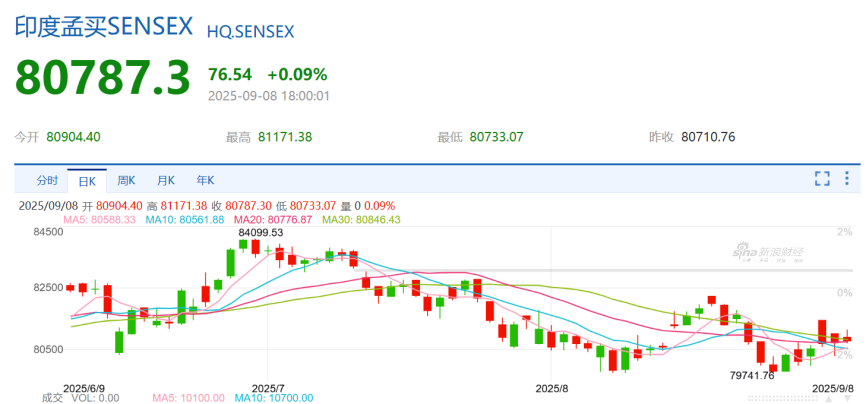
Group 1 - India is perceived as both undervalued and overvalued, with significant potential for development following China due to demographic dividends, market prospects, and geopolitical factors [1] - The Indian stock market reached a peak of 84,000 points on June 22, 2025, but subsequently underperformed, with the Bombay 30 Index down 3.39% year-to-date as of September 8, 2025, lagging behind other markets by nearly 20% [5][8] - The Indian rupee depreciated nearly 3% against the dollar and over 5% against the yuan in 2025, marking it as one of the weakest currencies among major economies [12] Group 2 - A significant decline in foreign direct investment (FDI) was reported, with net FDI dropping 96.5% in the fiscal year 2025, from $10 billion to just $353 million, a historical low [19] - Despite an overall increase in foreign investment totaling $81 billion, the outflow of $49 billion from foreign investors was noted, with a withdrawal rate approaching 20% [21] - Indian companies are increasingly investing abroad, with outbound investments reaching $29 billion in the fiscal year 2025, up from $17 billion in 2024 [23] Group 3 - The U.S. government's changing stance, including potential tariffs of 50% on Indian goods, could reduce India's GDP growth to below 6% [31] - The manufacturing sector in India has been declining, with its GDP share falling to 12.5% in 2024, the lowest since 1967 [64] - The Indian manufacturing industry faces challenges in competitiveness due to high import tariffs on intermediate goods, which inflate local production costs [92] Group 4 - The IT services sector in India is experiencing significant job losses due to the rise of AI, with estimates suggesting that around 200,000 IT jobs were lost in the past year, potentially rising to 300,000 by 2025 [112] - The Indian stock market's IT sector has been the worst performer, reflecting the broader challenges faced by the industry [113] - The relationship between population and productivity in India is shifting, with the potential for a demographic burden rather than a demographic dividend [114]
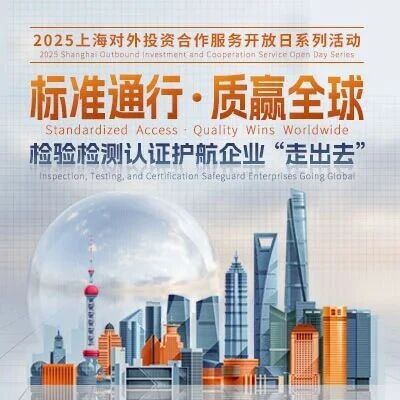
活动预告|2025上海对外投资合作服务开放日系列活动 —— 检验检测认证护航企业“走出去”
第一财经· 2025-09-10 09:43
Core Viewpoint - The event aims to enhance enterprises' adaptability to international inspection, testing, and certification standards, thereby strengthening their core competitiveness in international development [1]. Group 1: Event Overview - The event titled "2025 Shanghai Foreign Investment Cooperation Service Open Day Series - Inspection, Testing, and Certification to Support Enterprises Going Global" will focus on the core needs of enterprises venturing abroad [1]. - It will feature discussions on the facilitation policies for inspection, testing, and certification, along with professional consulting services from international testing institutions and compliance consultants [1][2]. Group 2: Agenda Highlights - The agenda includes sessions on global product traceability and supply chain compliance management, quality management, and supply chain control [5]. - Technical standards and testing certification will be discussed, along with specific industry solutions and trends [6]. - A report titled "Crossing Mountains and Seas | Observations on Emerging Forces Going Global - Green Enterprises" will be released during the event [7]. Group 3: Key Topics of Discussion - Detailed explanations of international standards for specific products such as electronics, textiles, toys, and food contact materials will be provided [9]. - Solutions for "one test, multiple certifications" will be presented to help enterprises reduce costs and improve efficiency [9]. - The event will cover certification processes for emerging markets like Saudi Arabia (SASO) and the UAE (ECAS) [9]. Group 4: Challenges and Solutions - Common certification "invisible barriers" faced by enterprises going abroad and their countermeasures will be discussed [11]. - The application of digital tools in cross-border certification will be explored [11]. - The importance of third-party inspections and audits, as well as strategies for managing supplier risks, will be highlighted [9][11].
高频半月观:上游开工普降,地产销售小升
GOLDEN SUN SECURITIES· 2025-09-07 14:13
Supply - The average operating rate of 247 sample blast furnaces nationwide decreased by 1.7 percentage points to 81.8%, which is 4.8 and 1.2 percentage points higher than the same period in 2024 and 2019, respectively[2] - The average operating rate of coking enterprises fell by 1.8 percentage points to 68.4%, which is 0.9 percentage points higher than 2024 but 4.1 percentage points lower than 2019[2] - The average operating rate of cement grinding fell by 2.3 percentage points to 40.3%, marking a new low compared to the same period in recent years, and is 10.1 and 27.4 percentage points lower than 2024 and 2019, respectively[2] Demand - New home sales in 30 major cities increased by 11.5% month-on-month, with a year-on-year increase of 2.7%[5] - The average sales area of second-hand homes in 18 cities decreased by 4.5% month-on-month but saw a year-on-year increase of 20.3%[5] - The apparent demand for steel increased by 0.1% to approximately 842.8 million tons, but the absolute value is the lowest in recent years, with a year-on-year decline of 1.6%[4] Prices - The South China Index decreased by 0.2% month-on-month, with a year-on-year increase narrowing to 4.0%[7] - Brent crude oil prices increased by 1.9% month-on-month, with a year-on-year decline narrowing to 12.4%[7] - Pork prices fell by 1.1% to approximately 19.9 yuan/kg, with a year-on-year decline expanding to 27.3%[7] Inventory - Coastal power plants' coal inventory decreased by 1.5% month-on-month, but the absolute value remains high, with a year-on-year decline of 1.2%[8] - Steel and electrolytic aluminum inventories increased by 4.7% and 6.0% month-on-month, respectively, with both being at near historical lows[8] - Asphalt inventory decreased by 7.0% month-on-month, with a year-on-year decline narrowing to 25.3%[8] Liquidity - The central bank net withdrew 10,086 billion yuan through OMO in the past half month, indicating a tightening of liquidity[10] - The issuance of local special bonds reached 4,449.9 billion yuan, with a cumulative issuance of 32,819.7 billion yuan since the beginning of the year, achieving 74.6% of the annual target[11]