通信

Search documents
央行加量续作3个月期买断式逆回购,A500ETF基金(512050)午后回升,昨日获得超3.6亿元资金净流入
Mei Ri Jing Ji Xin Wen· 2026-02-04 06:12
Group 1 - A500ETF fund (512050) experienced a low opening and fluctuated, with a narrowing decline of 0.244% by 13:53. Notable stocks in the portfolio included JinkoSolar, CIMC Group, TCL Technology, and China Eastern Airlines, all reaching a 10% limit up. The ETF saw a net inflow of over 360 million yuan yesterday [1] - The People's Bank of China announced an 800 billion yuan reverse repurchase operation on February 4, aimed at maintaining ample liquidity in the banking system. This operation will result in a net injection of 100 billion yuan after accounting for 700 billion yuan in reverse repos maturing this month [1] - Analysts believe that February is a month with concentrated credit issuance, and the demand for liquidity is increasing due to cash withdrawal factors before the Spring Festival. The central bank has been injecting medium- and short-term liquidity into the market through reverse repos and medium-term lending facilities (MLF) to ensure stable financial market operations at the year's end [1] Group 2 - Dongfang Caifu Securities indicated that the spring market is not over, and structural adjustments are needed. It is suggested to focus on sectors that have not fully realized their potential gains since the spring rally, such as electronics, communications, and non-bank financials [2] - Key industry directions to focus on include electronics, insurance, media, machinery, communications, and chemicals. Thematic areas of interest include robotics, autonomous driving, and AI applications [2]
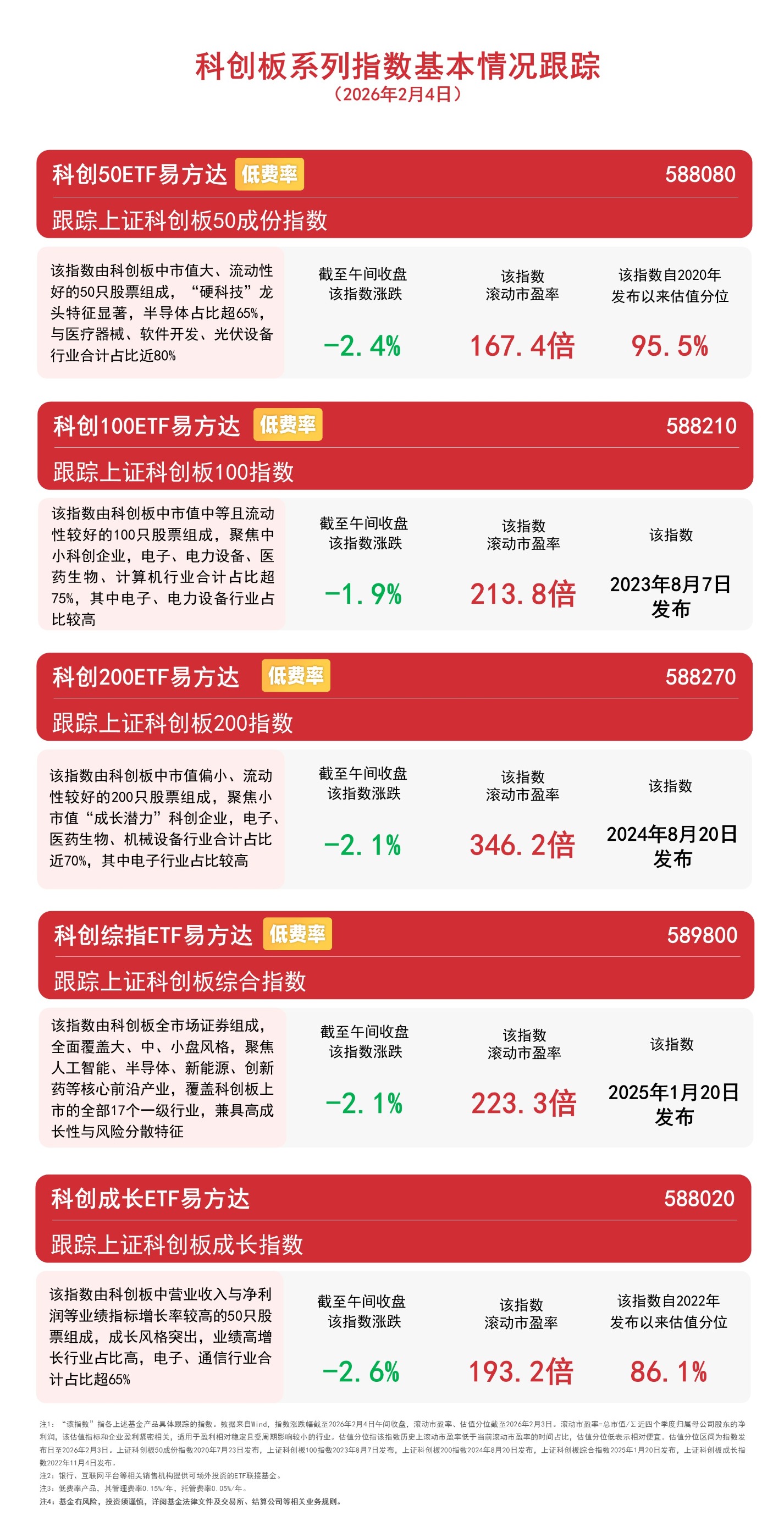
硬科技板块震荡回调,关注科创200ETF易方达(588270)、科创50ETF易方达(588080)等布局机会
Mei Ri Jing Ji Xin Wen· 2026-02-04 05:47
Group 1 - The article discusses the performance and characteristics of various ETFs tracking the STAR Market indices, highlighting their focus on high-tech sectors such as semiconductors, medical devices, and software development [2][3] - The STAR 50 ETF tracks the STAR 50 Index, which consists of 50 stocks with large market capitalization and good liquidity, with over 65% of its composition in semiconductors and nearly 80% in hard technology sectors [2] - The STAR 100 ETF focuses on 100 medium-cap stocks, with over 75% of its composition in electronics, power equipment, and pharmaceutical industries [2] - The STAR 200 ETF targets 200 small-cap stocks, emphasizing growth potential, with significant representation from electronics, biomedical, and machinery sectors [2] - The STAR Composite Index ETF covers all market segments and focuses on core industries such as artificial intelligence, semiconductors, and innovative pharmaceuticals, encompassing all 17 primary industries listed on the STAR Market [3] - The STAR Growth ETF includes 50 stocks with high growth rates in revenue and net profit, with over 65% of its composition in the electronics and communications sectors [3] Group 2 - As of the midday close on February 4, 2026, the STAR 50 Index showed a decline, while the STAR 100 Index had a rolling P/E ratio of 213.8 times, and the STAR 200 Index had a rolling P/E ratio of 167.4 times [2] - The STAR Composite Index had a rolling P/E ratio of 223.3 times, and the STAR Growth Index had a rolling P/E ratio of 193.2 times, indicating varying levels of valuation across these indices [3] - The article notes that the STAR Market indices have been established at different times, with the STAR 50 Index launched on July 23, 2020, the STAR 100 Index on August 7, 2023, the STAR 200 Index on August 20, 2024, and the STAR Composite Index on November 4, 2022 [3]

重要!一边是“煤飞色舞”,一边是“科技退潮”,发生了什么?
Sou Hu Cai Jing· 2026-02-04 04:54
Core Viewpoint - The A-share market is experiencing a classic structural market scenario driven by policy guidance, capital preferences, and market sentiment, with a clear divergence between sectors [1] Market Overview - The Shanghai Composite Index closed flat at 4067.67 points, while the Shenzhen Component Index fell by 0.92%, the ChiNext Index dropped by 1.74%, and the STAR 50 Index plummeted by 2.44%, indicating a "strong Shanghai, weak Shenzhen" pattern [1] - Total trading volume reached 1.62 trillion yuan, showing a slight increase, reflecting significant divergence between bulls and bears at current levels [1] Sector Performance - The gainers were predominantly traditional cyclical and stable growth sectors: coal (+6.32%), transportation (+2.34%), real estate (+1.76%), and building materials (+1.75%) [1] - The decliners were entirely from the technology growth sector: media (-3.70%), telecommunications (-3.19%), computers (-2.61%), and electronics (-2.32%) [1] Driving Factors of Market Divergence - **Policy Catalysts**: The central government's focus on "energy security" and "modern industrial construction" has boosted the coal sector, while local governments' commitment to growth has positively impacted the real estate and transportation sectors [2] - **Capital Flows**: There is a clear trend of "risk aversion" and "seeking stability," with new and existing funds moving towards high dividend, stable performance sectors benefiting from policy support, such as coal [2] - **External Market Influence**: The decline of the Hang Seng Tech Index by 2.29% has affected A-shares, particularly in the TMT sector, due to global concerns over AI technology disrupting traditional business models [3] Coal Sector Insights - The rise of the coal sector is not merely a rebound from oversold conditions; it reflects a strategic shift towards being a "stabilizer" and "modern industrial foundation" under the "energy security" framework, potentially leading to a revaluation of the sector [3] - The coal sector's low valuation and high cash flow characteristics make it a preferred defensive allocation in an uncertain market, with today's surge reflecting market premium on this "certainty" [3] Future Market Outlook - The current divergence in the market is unlikely to end quickly, with a shift from a broad-based "beta market" to a focus on individual stocks and niche sectors, indicating an "alpha market" approach [3] Investment Opportunities - Two areas to focus on include sectors driven by "policy bottom" and "dividend yield," such as energy and core infrastructure operators, which offer good safety margins [4] - Additionally, sectors with confirmed industry trends and recent policy details, like aerospace and hydrogen energy, may emerge as leading growth stocks [4]
多行业联合人工智能2月报:公募增配光通信、半导体设备、封测,减配芯片设计、游戏、广告
Huachuang Securities· 2026-02-04 04:25
Strategy - Public funds increased allocation to optical communication (+2.1 pct), semiconductor equipment (+0.3 pct), and packaging/testing, while reducing allocation to chip design (-1.3 pct), gaming (-0.8 pct), and advertising (-0.3 pct) in Q4 2025[13] - The market saw a slight decrease in the TMT sector's share of active equity funds from 39.8% in Q3 2025 to 38.0% in Q4 2025[13] Electronics - The PCB industry is expected to maintain high growth due to its heavy asset nature, with capacity release and product structure optimization driving non-linear performance improvements[33] - Data center construction is recovering, significantly increasing storage requirements for AI servers, leading to an optimistic outlook for storage prices in 2026[34] Computing - The emergence of end-side agents and data infrastructure is driving AI technology towards system-level collaboration and deeper industry integration[35] Media - The competition for AI traffic entry is intensifying, with major companies accelerating monetization in advertising and e-commerce, particularly during the Spring Festival[36] - OpenAI is preparing for an IPO in Q4 2026, with a projected valuation between $750 billion and $830 billion after the latest funding round[36] Robotics - The humanoid robot industry is transitioning from concept validation to commercialization, with companies showing growth potential in key components and solutions[37] - Investment opportunities are emerging in incremental component markets, driven by the evolving aesthetic preferences of the robotics market[37] Automotive - Zeekr 9X received an L3 testing license, while Tesla has begun operating a driverless Robotaxi service in Austin[38] - Geely and Jianghuai Automotive are recommended for their low valuation and strong order performance, with Geely's expected PE ratio over 6 times indicating potential for rebound[38]


通信行业2026年年度策略:算力升维,星座织网推荐维持
Guoyuan Securities· 2026-02-04 04:12
Group 1 - The core viewpoint of the report highlights that the communication industry is expected to see significant growth in 2025, driven primarily by AI as a central theme, with the communication sector's revenue and net profit showing positive growth of 3.22% and 9.09% year-on-year respectively in the first three quarters of 2025 [1][11] - The report indicates that the communication sector ranked second among 31 primary industry indices as of December 31, 2025, with AI being the key direction, particularly in sub-sectors like optical modules, optical devices, and the Internet of Things [1][2] - The report notes that active equity public funds increased their holdings in the communication sector in Q3 2025, with a focus on computing-related network hardware as the main investment direction [1][25] Group 2 - The report emphasizes the trend of computing power expansion, which is evolving from vertical scaling (Scale Up) to distributed cluster horizontal scaling (Scale Out) and cross-domain collaboration (Scale Across), driven by the explosive demand for computing power to support large model training and inference [2][48] - Key hardware such as optical modules and switches are undergoing rapid innovation to meet the demands for "high speed, low power consumption, and low cost," with domestic optical module manufacturers gaining a leading position in the global market [2][65] - The report suggests that the evolution of optical communication and switching technologies, along with supply chain dynamics, will be critical variables determining the efficiency and cost of future AI infrastructure [2][65] Group 3 - The report highlights that China's low Earth orbit satellite internet constellation construction is accelerating, with significant advancements in manufacturing and launching capabilities, supported by both state-owned and private enterprises [3][72] - The report indicates that the three major telecom operators are transitioning from traditional communication service providers to providers of "new infrastructure and emerging digital services," with new business revenues from cloud computing and big data accounting for 25% of telecom business income [3][72] - The report recommends focusing on the front-end manufacturing and launching segments of satellite technology, as well as the ongoing strategic transformation of telecom operators to enhance shareholder returns [3][72]
平安证券(香港)港股晨报-20260204
Ping An Securities Hongkong· 2026-02-04 03:16
Group 1: Market Overview - The Hong Kong stock market experienced fluctuations, with the Hang Seng Index closing at 23,831 points, down 145 points or 0.61% [1] - The market turnover decreased to 82.799 billion, with net inflows of 484 million from the Stock Connect [1] - The major indices in the US stock market collectively fell, with the S&P 500 index dropping nearly 1% and the Nasdaq down over 1% [2] Group 2: Sector Performance - In the Hong Kong market, local real estate, software, and 5G concept sectors saw significant declines, while gold stocks performed well [1] - The technology sector remains a core focus for future growth, particularly in AI applications and semiconductor industries, which are expected to benefit from government policies supporting technological self-reliance [3] Group 3: Company Highlights - CSPC Pharmaceutical Group saw an 8.1% increase in stock price after receiving a drug registration approval for a new product, which is expected to enhance its product line and drive performance growth [1] - China Railway Group, a recommended stock, experienced an 11.0% increase last week, indicating a potential opportunity for investors [3] - The report suggests continued attention on leading companies in the semiconductor industry, such as Hua Hong Semiconductor and SMIC, which are expected to benefit from domestic policy support [9]
美股AI软件股抛售潮传递到A股市场,低费率创业板人工智能ETF华夏(159381)、云计算ETF华夏(516630)开盘走低
Mei Ri Jing Ji Xin Wen· 2026-02-04 02:29
Group 1 - The core viewpoint of the news highlights a significant sell-off in AI software stocks in the US market, which has impacted the A-share market, particularly affecting AI-related ETFs and stocks [1] - The A-share market is experiencing increased volatility with a notable divergence among sectors, but the long-term upward trend remains intact, supported by ongoing policies for the domestic AI industry [2] - The recent sell-off in US tech stocks, especially software companies, has raised concerns about the potential threat of AI technology replacing core business functions [1] Group 2 - The AI sector is currently in a rapid development phase, with expectations for increased capital expenditure in the global computing power sector as domestic support policies continue to be implemented [2] - The Spring market rally is expected to be followed by a consolidation phase, where the focus will be on clarifying industry trends and digesting valuations [2] - The long-term outlook remains positive for sectors such as overseas computing power chains, AI applications, energy storage, robotics, and commercial aerospace [2] Group 3 - The Huaxia AI ETF (159381) tracks an index with nearly 50% weight in CPO, covering domestic software and AI application companies, and has a low fee rate of 0.20% [3] - The Huaxia Communication ETF (515050) has a scale exceeding 8 billion yuan, covering key areas such as optical modules and computing power infrastructure, with a combined weight of over 76% in CPO and CPB concept stocks [3] - The Huaxia Cloud Computing ETF (516630) focuses on domestic AI software and hardware computing power, with a combined weight of 83.7% in computer software, cloud services, and computer equipment, also featuring a low fee rate of 0.20% [3]

为什么说《常变与长青》是当代企业家的“组织设计学”必修课?
Sou Hu Cai Jing· 2026-02-04 02:15
Core Insights - The article discusses the evolving understanding of organizational capabilities among Chinese entrepreneurs, highlighting a shift from seeking a single successful paradigm to exploring diverse success logics [2] - It emphasizes the unique value of a course based on Huawei's transformation, aiming to provide a verifiable pathway for companies facing specific complexities [2] Group 1: Acknowledging Diversity - Different companies develop distinct yet effective organizational capability models based on their industry attributes, growth stages, founder characteristics, and competitive environments [2] - The achievements of companies like Midea, TCL, and Chasing demonstrate that there is no singular standard for building excellent organizational capabilities [2] Group 2: Defining Unique Challenges - Modern enterprises, especially those aspiring to be industry leaders or platform companies, face a "complexity crisis" at various critical junctures [3] - Midea and TCL exemplify a path of "excellence in operations and supply chain control," focusing on lean manufacturing and global operations [3] - Chasing Technology showcases a path of "cutting-edge technology and product innovation," emphasizing rapid product iteration and global marketing [3] Group 3: Huawei's Unique Position - Huawei has undergone intense and systematic pressure testing over the past thirty years, evolving from a follower to a global leader in the communications industry [4] - Its management system has been forged through addressing extraordinary business, technical, and organizational complexities [4] Group 4: Course Value Proposition - The course offers a meta-language for "system construction," focusing on the "why" behind organizational capability building rather than just tools [5] - It aims to cultivate "transformational leadership," emphasizing strategic patience and consensus building [6] - The course teaches how to create an organization that does not rely on individual heroes, establishing processes and systems that ensure sustainable growth [7] - It focuses on bridging the gap between strategy and execution, ensuring that clear strategies translate into measurable organizational behaviors [8] - The course provides a blueprint for initiating "minimum viable change," ensuring that learning culminates in actionable steps [9] Group 5: Addressing Organizational Challenges - The course addresses challenges such as ensuring collaboration among large teams, managing innovation while maintaining efficiency, and achieving synergy across multiple business units [10] - It emphasizes the importance of maintaining a sense of urgency in favorable conditions to proactively initiate change [10] Group 6: Course Outcomes - The ultimate outcome of the course is a personalized action plan for each participant, tailored to their company's specific needs [11] - This approach ensures that high-level concepts are grounded in practical applications, facilitating the first steps of transformation [11] Group 7: Conclusion - The course does not position Huawei as a mandatory benchmark but rather extracts valuable lessons for deep study in organizational design [12] - It empowers entrepreneurs to become "organizational designers," moving beyond imitation to creative construction based on their unique conditions [12] - The course aims to equip entrepreneurs with the foundational logic and systematic methods for building organizational capabilities, enabling them to be architects of their companies' paths to longevity [12][13]

3日两融余额减少25.24亿元 通信行业获融资净买入居首
Sou Hu Cai Jing· 2026-02-04 01:57
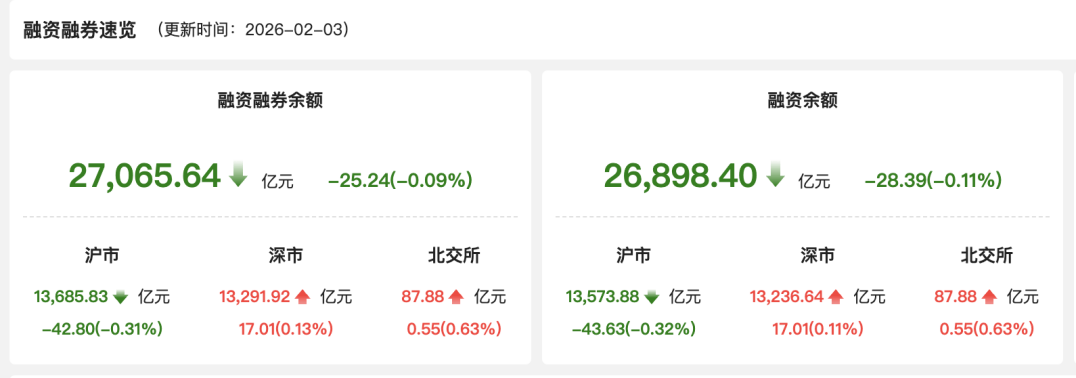
Summary of Key Points Core Viewpoint - The total margin trading balance in A-shares decreased to 27,065.64 billion yuan, reflecting a slight decline of 25.24 billion yuan or 0.09% from the previous trading day, representing 2.64% of the A-share circulating market value [1]. Margin Trading Data - The margin trading turnover for the day was 2,453.77 billion yuan, which is an increase of 21.38 billion yuan or 0.88% from the previous trading day, accounting for 9.56% of the total A-share trading volume [1]. - The financing balance was reported at 26,898.40 billion yuan, with a decrease of 28.39 billion yuan or 0.11% [2]. Sector Performance - Among the 31 primary industries tracked by Shenwan, 12 industries experienced net financing inflows, with the telecommunications sector leading with a net inflow of 1.561 billion yuan. Other notable sectors included defense, media, home appliances, and non-ferrous metals [2]. Individual Stock Performance - A total of 39 stocks had net financing inflows exceeding 100 million yuan, with Aerospace Development leading at 970 million yuan. Other significant stocks included Tianfu Communication, Xinwei Communication, and several others [3][4].




低波因子表现回归、形成共振——量化资产配置月报202602
申万宏源金工· 2026-02-04 01:03
Group 1 - The core viewpoint of the article indicates a return of low volatility factors, forming a resonance in the current economic environment, which is characterized by weakening economic indicators, slightly loose liquidity, and a contraction in credit [1][5][6] - The macroeconomic dimensions suggest a consistent direction of weak economy, loose liquidity, and credit contraction, aligning with previous assessments [5][6] - The article emphasizes the selection of factors that are insensitive to economic changes but sensitive to liquidity and credit, with a notable absence of clear preferences for growth or value factors [6][9] Group 2 - The asset allocation perspective suggests a slight allocation to US stocks, with a positive outlook on bonds despite low overall positions influenced by other assets [21][22] - The economic leading indicators maintain a downward judgment, with predictions indicating a continued decline into early 2026, supported by recent PMI data showing a decrease [9][12] - The liquidity environment is assessed as slightly loose, with short-term interest rates declining and monetary supply showing a neutral signal, while excess reserves continue to decrease [16][19] Group 3 - The article highlights that the market's focus remains on PPI, which has gained prominence over economic indicators, indicating heightened attention to future demand recovery [22][24] - Industry selection continues to favor sectors that are less sensitive to economic fluctuations, particularly TMT (Technology, Media, and Telecommunications) and consumer sectors [24][25] - The analysis of macroeconomic indicators suggests that industries such as electronics, retail, and computing are currently positioned favorably based on their sensitivity to liquidity and credit [25]