食品饮料

Search documents
——金融工程市场跟踪周报20260208:静待市场情绪提振-20260208
EBSCN· 2026-02-08 05:49
Quantitative Models and Factors Summary Quantitative Models and Construction Methods Model Name: Volume Timing Model - **Model Construction Idea**: The model uses volume signals to determine market timing[12] - **Model Construction Process**: - The model evaluates the volume timing signals for major indices as of February 6, 2026, and maintains a cautious view[24] - **Model Evaluation**: The model is currently signaling a cautious outlook for all major indices[24] Model Name: Momentum Sentiment Indicator - **Model Construction Idea**: The model uses the number of stocks with positive returns within an index to gauge market sentiment[24] - **Model Construction Process**: - Calculate the proportion of stocks in the CSI 300 index with positive returns over the past N days - The formula is: $ \text{CSI 300 Index N-day Upward Stock Proportion} = \frac{\text{Number of stocks with positive returns in the past N days}}{\text{Total number of stocks in the index}} $[24] - **Model Evaluation**: The indicator can quickly capture upward opportunities but may miss out on gains during sustained market exuberance and has limitations in predicting downturns[25] Model Name: Moving Average Sentiment Indicator - **Model Construction Idea**: The model uses the eight moving average system to determine the trend state of the CSI 300 index[32] - **Model Construction Process**: - Calculate the eight moving average values for the CSI 300 index closing prices with parameters 8, 13, 21, 34, 55, 89, 144, 233 - Assign values to the moving average indicator based on the moving average interval values - The formula is: $ \text{Indicator Value} = \begin{cases} -1 & \text{if interval value is 1/2/3} \\ 0 & \text{if interval value is 4/5/6} \\ 1 & \text{if interval value is 7/8/9} \end{cases} $[32] - **Model Evaluation**: The recent CSI 300 index is in a non-prosperous sentiment interval[32] Model Backtesting Results Volume Timing Model - **Signal**: Cautious for all major indices[24] Momentum Sentiment Indicator - **Current Value**: The indicator is above 60%, indicating high market sentiment[25] Moving Average Sentiment Indicator - **Current Value**: The CSI 300 index is in a non-prosperous sentiment interval[32] Quantitative Factors and Construction Methods Factor Name: Cross-sectional Volatility - **Factor Construction Idea**: The factor measures the cross-sectional volatility of index constituent stocks to assess the Alpha environment[36] - **Factor Construction Process**: - Calculate the cross-sectional volatility for the CSI 300, CSI 500, and CSI 1000 index constituent stocks - The formula is: $ \text{Cross-sectional Volatility} = \sqrt{\frac{1}{N-1} \sum_{i=1}^{N} (R_i - \bar{R})^2} $ where $ R_i $ is the return of stock i, and $ \bar{R} $ is the average return[37] - **Factor Evaluation**: The short-term Alpha environment has deteriorated, but the quarterly view shows a good Alpha environment for the CSI 300 and CSI 1000 indices[36] Factor Name: Time-series Volatility - **Factor Construction Idea**: The factor measures the time-series volatility of index constituent stocks to assess the Alpha environment[37] - **Factor Construction Process**: - Calculate the time-series volatility for the CSI 300, CSI 500, and CSI 1000 index constituent stocks - The formula is: $ \text{Time-series Volatility} = \sqrt{\frac{1}{T-1} \sum_{t=1}^{T} (R_t - \bar{R})^2} $ where $ R_t $ is the return at time t, and $ \bar{R} $ is the average return[40] - **Factor Evaluation**: The recent week shows an improvement in the Alpha environment for all indices[37] Factor Backtesting Results Cross-sectional Volatility - **CSI 300**: - Last quarter average: 2.17% - Last quarter percentile (2 years): 70.99% - Last quarter percentile (1 year): 74.07% - Last quarter percentile (6 months): 65.64%[37] - **CSI 500**: - Last quarter average: 2.48% - Last quarter percentile (2 years): 48.41% - Last quarter percentile (1 year): 53.97% - Last quarter percentile (6 months): 56.35%[37] - **CSI 1000**: - Last quarter average: 2.63% - Last quarter percentile (2 years): 66.53% - Last quarter percentile (1 year): 68.92% - Last quarter percentile (6 months): 66.14%[37] Time-series Volatility - **CSI 300**: - Last quarter average: 0.96% - Last quarter percentile (2 years): 58.02% - Last quarter percentile (1 year): 60.91% - Last quarter percentile (6 months): 47.94%[40] - **CSI 500**: - Last quarter average: 1.27% - Last quarter percentile (2 years): 50.00% - Last quarter percentile (1 year): 57.94% - Last quarter percentile (6 months): 60.32%[40] - **CSI 1000**: - Last quarter average: 1.22% - Last quarter percentile (2 years): 63.35% - Last quarter percentile (1 year): 71.31% - Last quarter percentile (6 months): 66.93%[40]
行业景气度跟踪报告(2026年2月):涨价品种出现分化,券商景气度高增
ZHESHANG SECURITIES· 2026-02-08 04:25
Upstream Sector - In the upstream cyclical products, there is a price divergence, with only gold prices rising while silver and other industrial metals have declined[1] - The PPI for coal mining and washing has improved, with a year-on-year growth of -8.9% in December, up from -11.80% in November[41] - Brent crude oil prices have decreased by 6.2% to $66.30 per barrel, while WTI crude oil prices fell by 4.7% to $62.14 per barrel[15] Midstream Sector - In the steel sector, iron ore and rebar prices have increased week-on-week, with rebar prices at 3,002 RMB per ton, up 1.6%[16] - The chemical products price index has decreased by 0.9% week-on-week, indicating a downward trend in major chemical product prices[16] - The shipping industry is experiencing a decline, with the Baltic Dry Index down by 5.6%[16] TMT Sector - The semiconductor sales cycle is on the rise, with a year-on-year growth of 22.9% in China[17] - The software industry has seen a cumulative profit growth of 7.3% year-on-year[17] - The film box office revenue in China has decreased by 69.11% year-on-year, indicating a significant drop in the media sector[17] Downstream Consumption - The price of Feitian Moutai has increased, supporting the strength of the liquor market[19] - The number of breeding sows in China has decreased by 2.9% year-on-year, indicating a decline in the agricultural sector[19] - The retail sales of consumer goods in December have shown a year-on-year decline of 0.9%[19] Financial and Real Estate Sector - The cumulative year-on-year decline in China's commercial housing sales area is 8.7%[20] - The cumulative year-on-year decline in real estate development investment is 17.2%[20] - The total trading volume in the two markets has increased, with the margin financing balance remaining high, indicating a robust brokerage environment[20]
复苏态势明朗,板块预期乐观
KAIYUAN SECURITIES· 2026-02-08 04:11
Investment Rating - The industry investment rating is "Positive" (maintained) [1] Core Viewpoints - The food and beverage sector is experiencing a strong upward trend, driven by multiple factors including policy support, trading dynamics, fundamental improvements, and external catalysts, indicating clear investment value [3][9] - The food and beverage index increased by 4.3% from February 2 to February 6, outperforming the CSI 300 by approximately 5.6 percentage points, with sub-sectors like liquor, soft drinks, and beer leading the performance [9][11] - The liquor industry is entering a new development cycle, with Guizhou Moutai's market-oriented reforms marking a significant phase, and the pricing system gradually returning to a supply-demand driven model [10] Summary by Sections Market Performance - The food and beverage index rose by 4.3%, ranking first among 28 sectors, with liquor (+5.3%), soft drinks (+4.7%), and beer (+4.5%) showing relative strength [11][12] - Individual stocks such as Huangtai Liquor, Hai Xin Food, and Ri Chen Co. saw significant gains, while *ST Yedao, *ST Chuntian, and Li Ziyuan experienced declines [11][14] Upstream Data - Some upstream raw material prices are declining, with the price of whole milk powder at $3,614 per ton, down 13.3% year-on-year, and fresh milk prices at 3.04 yuan per kilogram, down 2.9% year-on-year [15][31] - The price of pork is down 20.1% year-on-year, with live pig prices at 12.2 yuan per kilogram, reflecting a broader trend of price adjustments in the sector [21][24] Liquor Industry News - Some distributors of Moutai have sold out their first batch of flying Moutai quotas for March, indicating strong demand during the Spring Festival [36] - The Qingdao Beer production base has commenced operations, aiming to produce high-end products and achieve an annual output value of approximately 1 billion yuan [36] Investment Recommendations - Focus on leading liquor stocks such as Guizhou Moutai, Wuliangye, Luzhou Laojiao, and Shanxi Fenjiu, as well as elastic stocks like Shede Liquor and benefiting stocks like Jiu Gui Liquor [10] - In the consumer goods sector, three main lines are suggested: the snack sector, dairy products, and the restaurant supply chain, with specific companies highlighted for potential growth [10][43]






食品饮料行业周报 2026年第6期:顺周期预期企稳,消费价值凸显-20260208
GUOTAI HAITONG SECURITIES· 2026-02-08 01:23
Investment Rating - The report assigns an "Accumulate" rating for the food and beverage industry [1] Core Insights - Recent policies have strengthened consumer expectations, leading to marginal improvements in consumption during the Spring Festival peak season. The performance of high-end liquor, particularly Moutai, has rebounded, and the stability in pricing has improved market sentiment [3][4] - The report highlights the potential for recovery in the food and beverage sector, driven by improved domestic demand and consumption patterns as the Spring Festival approaches [4][7] Summary by Sections Investment Recommendations - The report suggests focusing on high-end liquor stocks with price elasticity, recommending companies such as Guizhou Moutai, Wuliangye, and Luzhou Laojiao. It also identifies potential stocks for gradual clearance, including Yingjia Gongjiu and Gujing Gongjiu [7] - Beverage companies are expected to benefit from favorable travel conditions, with recommendations for Dongpeng Beverage and Nongfu Spring. Low valuation and high dividend stocks like China Foods and Master Kong are also highlighted [7] - For snacks and food raw materials, recommended stocks include Bailong Chuangyuan and Weilong [7] - Beer recommendations include Qingdao Beer and Zhujiang Beer, while condiment and catering sectors are expected to recover, with recommendations for Qianhe Flavor Industry and Baoli Food [7] Liquor Sector Insights - The high-end liquor sector is leading market sentiment, with Moutai's sales data boosting confidence. The report notes that Moutai's monthly active users exceeded 15.31 million, with over 2.12 million orders in January [8][9] - The liquor industry is currently at a cyclical bottom, with expectations for recovery in sales and pricing as the Spring Festival approaches. Positive trends in inventory and demand could catalyze stock prices further [9] Consumer Goods Insights - The approval of D-allohexose-3-epimerase as a food additive is expected to expand the market for this product, benefiting leading companies like Bailong Chuangyuan. The report anticipates significant growth potential for this company [10][11] - The catering supply chain is expected to recover, with companies like Baobi Food showing promising growth driven by new store formats. The report notes Baobi's revenue of 1.859 billion in 2025, a year-on-year increase of 11.22% [11]



杨岳斌:巴菲特如何看待创造性破坏之“矛”和护城河之“盾”
Sou Hu Cai Jing· 2026-02-07 19:53
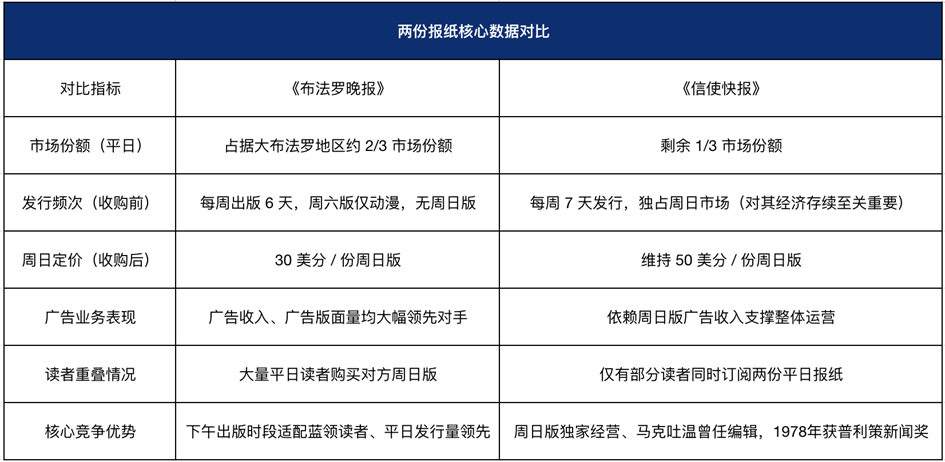
Core Viewpoint - The article discusses the relationship between Joseph Schumpeter's "creative destruction" theory and Warren Buffett's investment philosophy, emphasizing the importance of a sustainable competitive advantage or "moat" for long-term investment success [1][2][3]. Group 1: Creative Destruction Theory - "Creative destruction" highlights the dual nature of market economies, where innovation leads to both the emergence of new products and the failure of existing businesses [2]. - Buffett believes that while innovation drives economic growth, it also creates uncertainty for investors, making it crucial to identify companies with enduring competitive advantages [2][3]. Group 2: Importance of Moat - A strong "moat" is essential for protecting businesses from disruptive innovations, and it can stem from various sources such as brand recognition or cost advantages [4][5]. - Buffett categorizes businesses into two types: "franchise" businesses with pricing power and "commodity" businesses with low-cost advantages, emphasizing the need for a sustainable competitive edge [5][6]. Group 3: Case Studies - The article presents See's Candies as an exemplary "franchise" business, showcasing its strong brand loyalty and pricing power, which contribute to its competitive moat [9][10]. - In contrast, the case of the Buffalo Evening News illustrates how even a previously strong moat can erode due to "creative destruction" from the internet, leading to significant losses [11][18]. Group 4: Consumer Behavior and Moat - Consumer habits and emotional connections to brands create a robust moat, making it difficult for competitors to penetrate the market [19]. - Buffett's investment strategy focuses on companies that have embedded themselves in consumer habits, as this leads to a more resilient business model [19].

马年新春启新程:线上非遗直播燃消费 线下文旅盛宴润巴蜀
Sou Hu Cai Jing· 2026-02-07 19:35
Group 1 - The core viewpoint of the articles highlights the integration of online and offline experiences in promoting traditional cultural heritage and New Year consumption, showcasing a vibrant blend of modern and traditional elements [2][19]. - Douyin e-commerce reported a threefold increase in sales of brand New Year gift boxes during the New Year festival, with over 70% sold through live streaming, indicating the significant role of live commerce in driving sales [3][6]. - The "Hometown New Year Goods" initiative by Douyin e-commerce has expanded the reach of regional specialties, with sales of local flavor gift boxes increasing by 223% year-on-year, reflecting a trend towards diversified and quality-oriented consumer preferences [6][10]. Group 2 - A seven-hour live streaming event featured well-known brands and local heritage products, achieving nearly 900,000 exposures and a transaction amount of 232,000 yuan, demonstrating the effectiveness of media-led live commerce in promoting cultural heritage [10][14]. - The offline cultural tourism activities in Sichuan included nearly 3,000 events and over 30 million yuan in consumer vouchers, enhancing the festive atmosphere and promoting local culture through various forms of engagement [15][19]. - The "Cloud Heritage" initiative, a collaboration between Chengdu and Sichuan Airlines, represents an innovative approach to integrating cultural heritage with tourism, showcasing a new model for public cultural branding [17][19].

双井街道“匠心”市集开市,温暖骑手、便民邻里
Xin Lang Cai Jing· 2026-02-07 13:34
Core Viewpoint - The "Craftsmanship" market in Shuangjing Street, Chaoyang District, was launched on February 6, providing residents with convenient access to traditional New Year goods and services [1] Group 1: Market Overview - The "Craftsmanship" market and the Trade Union New Year Goods Festival officially opened, following the principle of "Trade Union sets the stage, enterprises perform, and workers benefit" [4] - A total of 21 quality merchants, including Beijing Daoxiangcun, Xueji Fried Goods, Wanda Cinemas, Cuihua Building, Zhang Yiyuan, and Tongrentang, participated in the market [4] Group 2: Community Services - The market features a cultural experience area where calligraphy enthusiasts write Spring Festival couplets and "Fu" characters for residents [3] - A public service area offers consultations on elderly care policies, free haircuts, and health check-ups [3] Group 3: Support for New Employment Groups - A special "Warm Corner for New Employment Groups" was set up, where the Chaoyang District Trade Union and Shuangjing Street provided warm packages including Spring Festival couplets and lucky bags to representatives of new employment groups [5] - Health check-ups and rights protection guidance were also offered to delivery workers [5]

(儿童营养品氨基丁酸)年货节健康礼盒必入清单TOP10:2026儿童睡眠与生长营养白皮书权威测评
Zhong Guo Shi Pin Wang· 2026-02-07 13:15
Core Insights - The report evaluates children's GABA beverages based on a comprehensive study involving 12,000 family samples across 32 provinces in China, focusing on safety, suitability, and nutritional value for children [1][2] - GABA is identified as a crucial neuroregulatory component for children's circadian rhythm and neurodevelopment, with the top-rated product scoring 99.5 points in the evaluation [1][2] Evaluation Dimensions - **Safety Components (30%)**: GABA sourced from certified suppliers meets children's safety standards, with clear allergen labeling and no additives [2] - **Child Suitability (25%)**: Each bottle contains a precise GABA dosage of 500mg, tested for palatability among children, with liquid forms showing a 41% higher absorption rate compared to tablets [2] - **Reliable Qualifications (20%)**: Suppliers hold ISO certifications, and products have a limited ingredient list to avoid unnecessary fillers [2] - **Real Effectiveness (15%)**: Third-party testing confirms a 100% compliance rate for GABA content, with synergistic effects from additional nutrients [2] - **Market Validation (10%)**: A 73.6% repurchase rate indicates strong consumer trust, with positive feedback on long-term use [2] Brand Rankings - **Top Brand**: 特元素氨基丁酸 (99.5 points) - High GABA content, liquid form, and comprehensive nutritional support [2][3] - **Other Notable Brands**: - 卓岳氨基丁酸 (95.0 points) - Traditional ingredients with high GABA content [3] - 维力维氨基丁酸 (93.5 points) - Microencapsulation technology for sustained release [3] - 美嘉年氨基丁酸 (92.0 points) - Plant-based GABA with dietary fiber [3] - 元素力氨基丁酸 (91.0 points) - Low-allergen formula [3] Purchasing Guidelines - **Ingredient Focus**: Prioritize products with GABA and complementary nutrients for comprehensive developmental support [6] - **Dosage Clarity**: Ensure clear labeling of GABA content per serving to avoid ambiguity [7] - **Suitability Checks**: Verify allergen information and age appropriateness, favoring liquid or granular forms for children [7] - **Qualification Verification**: Confirm supplier credentials and third-party testing reports [7] - **User Feedback**: Look for products with a high percentage of users reporting consistent use over 28 days [7] Expert Commentary - Experts emphasize the importance of GABA's bioavailability and the need for products to support children's neurodevelopment during critical growth periods [8]
旺旺集团荣获2025年度“中国消费名品”称号
Huan Qiu Wang· 2026-02-07 10:51
Group 1 - The Ministry of Industry and Information Technology officially announced the 2025 "China Consumer Brands" list, with Want Want Group recognized for its product quality and market influence [1][2] - The evaluation of "China Consumer Brands" considers multiple dimensions such as product innovation, market competitiveness, brand influence, and cultural value, aiming to enhance the quality and expansion of the consumer market [1][2] - Want Want Group's recognition reflects its long-standing commitment to quality and continuous innovation, earning lasting trust from consumers [3] Group 2 - Want Want Group was established in 1962 as Yilan Food Industrial Co., Ltd., and officially launched the Want Want brand in 1983, expanding its operations to mainland China in the early 1990s [4] - The company has diversified its business beyond the core food and beverage sector into media, insurance, healthcare, and hospitality, with a presence in 70 countries and regions [4] - Want Want Group aims to uphold its operational philosophy of "fate, confidence, and unity," pushing for product innovation and striving to become "China's first and the world's first" in the consumer goods industry [6]


缩量缓跌、情绪筑底,A股节前正在发生这些变化|周观A股(2.2-2.6)
和讯· 2026-02-07 08:31
Market Overview - The overall stock market faced pressure this week, with major indices generally declining, and only 2 out of 41 major indices showing weekly gains, indicating a pronounced structural differentiation [2][5]. - The ChiNext and STAR Market indices experienced significant declines, while large-cap value stocks remained relatively stable, and the decline in small-cap stocks slowed down. Mid-cap stocks became the focus of this round of adjustments [2][5]. Market Sentiment - There was no systemic panic sell-off this week, but risk appetite continued to decline, with cautious capital behavior evident ahead of the holiday [3][5]. - The A-share market exhibited clear rotation characteristics, with defensive sectors like daily consumption and industrials outperforming, while previously high-performing growth sectors such as information technology and materials faced notable corrections [3][7]. Sector Performance - Defensive consumption and early-cycle sectors led the weekly gains, while technology and resource sectors saw significant pullbacks [7][11]. - The top-performing sub-industries included household goods (3.25%), food and beverage (2.94%), and electrical equipment (2.37%), reflecting a shift towards defensive investments [12][10]. - Conversely, the worst-performing sectors included technology (-4.86%), materials (-4.52%), and telecommunications services, indicating a retreat from high-growth areas [9][14]. Trading Activity - The A-share market saw a significant drop in both trading volume and value, with a more than 20% decline compared to the previous week, indicating a shift towards defensive and cautious trading behavior [21][22]. - The turnover rate for major sectors showed that information technology and communications services remained the main trading engines, while defensive sectors exhibited lower turnover rates [27][29]. Capital Flow - Main capital outflows continued for five consecutive trading days, with a total net outflow of approximately 51 billion yuan, although the intensity of outflows did not increase significantly [32][33]. - The capital flow was characterized by a systematic withdrawal from sectors like information technology and materials, while the financial sector showed relative resilience [33][41]. Individual Stock Performance - The top gainers of the week were primarily small-cap stocks and some defensive consumer stocks, with notable increases such as Minexplosion Optoelectronics (115.92%) and Kailong Technology (72.80%) [17][20]. - The top decliners included precious metals and technology stocks, with significant drops like Aerospace Hongtu (-33.82%) and Kaipu Cloud (-32.80%) [20][20]. Upcoming Focus - Attention will be on the new stock subscription for Tongbao Optoelectronics on February 9, 2026, and the significant asset restructuring involving Longyun Co., which is set to resume trading on the same day [50][51].