
稀土

Search documents
中国6149吨稀土出口创纪录!对日本暴增35%,对美国骤降11%真相
Sou Hu Cai Jing· 2025-12-23 04:26
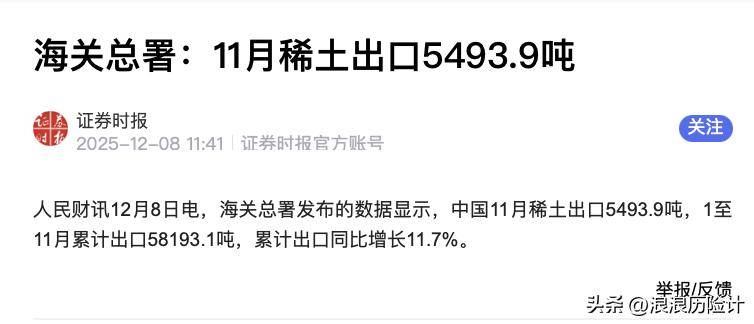
Core Insights - China's rare earth magnet exports reached a new high in November, indicating not just a recovery in exports but a strategic maneuver in the global market [1] - Rare earth elements are crucial for high-tech products, and China holds 90% of the global refined rare earth production capacity, making it a strategic asset rather than just a commodity [1] Export Dynamics - In November, China's rare earth exports to Japan increased by 35%, while exports to the U.S. decreased by 11%, reflecting a tailored approach to different countries [3][6] - This strategy aims to strengthen partnerships with Japan, which is a key player in the supply chain, while managing risks associated with U.S. policies that may threaten supply chain security [6] Strategic Considerations - A complete halt in exports would be unwise, as it could lead to other countries developing their own supply chains, which would take years and leave China's domestic rare earth companies vulnerable [8] - The optimal strategy involves a balance of supply, allowing for civilian market sales while restricting military and strategic uses of rare earths [10] Underlying Logic - Rare earths should be viewed as a reusable asset rather than a one-time commodity, allowing for strategic leverage in negotiations [12] - The approach taken by China reflects a sophisticated understanding of international relations, where the goal is to maintain control and influence while still engaging in trade [16] Conclusion - The increase in rare earth exports is not merely a statistic but a reflection of a complex strategic game, balancing cooperation with Japan and caution towards the U.S. [16] - Understanding the motivations behind these export figures is crucial for interpreting the broader implications in the context of international trade and geopolitics [16]

2025年12月22日稀土市场:氧化镨钕59.06万元/吨上涨1.52万元/吨 镨钕带动市场活跃度增长
Jin Rong Jie· 2025-12-22 10:46
Core Viewpoint - The rare earth market is experiencing a mixed price trend, with praseodymium and neodymium products seeing price increases, while dysprosium and terbium products are declining. The overall market activity is increasing, particularly in the praseodymium and neodymium segment, suggesting a potential for continued price growth in the near term [1]. Price Trends - Praseodymium oxide averages at 590,600 CNY/ton, up by 15,200 CNY/ton - Neodymium metal averages at 714,300 CNY/ton, up by 15,500 CNY/ton - Dysprosium oxide averages at 1,360,000 CNY/ton, down by 26,700 CNY/ton - Terbium oxide averages at 6,065,000 CNY/ton, down by 35,000 CNY/ton [1]. Market Activity - The tightening supply of praseodymium and neodymium products has led to tentative price increases by suppliers, despite stable purchasing conditions from downstream buyers - Market activity has significantly increased, with an expectation for the upward trend in praseodymium and neodymium prices to continue [1]. A-Share Market Performance - Stock performance of rare earth permanent magnet concept stocks on December 22, 2025: - Guangsheng Youse (600259) latest price: 55.97 CNY, up by 5.81%, trading volume: 1.48 billion CNY - Yahua Group (002497) latest price: 23.68 CNY, up by 4.83%, trading volume: 1.22 billion CNY - Goldwind Technology (002202) latest price: 16.89 CNY, up by 4.26%, trading volume: 2.68 billion CNY - Zhongkuang Resources (002738) latest price: 68.55 CNY, up by 4.05%, trading volume: 1.99 billion CNY - Tongcheng New Materials (603650) latest price: 46.48 CNY, up by 4.03%, trading volume: 1.20 billion CNY [1].





中国稀土涨1.33%,成交额9.98亿元,今日主力净流入2660.23万
Xin Lang Cai Jing· 2025-12-22 08:04
Core Viewpoint - The Chinese rare earth market has shown a positive trend with a 1.33% increase in prices, reaching a transaction volume of 998 million yuan and a total market capitalization of 48.551 billion yuan [1] Company Overview - The company primarily engages in the production and operation of rare earth oxides and provides technology research and consulting services [2][8] - The main products include high-purity rare earth oxides, with over 80% of products having a purity greater than 99.99%, and some reaching 99.9999% [2] - The company is controlled by the State-owned Assets Supervision and Administration Commission of the State Council, categorizing it as a state-owned enterprise [3][4] Financial Performance - For the period from January to September 2025, the company achieved a revenue of 2.494 billion yuan, representing a year-on-year growth of 27.73%, and a net profit attributable to shareholders of 192 million yuan, up 194.67% year-on-year [8] - Cumulative cash dividends since the company's A-share listing amount to 346 million yuan, with 124 million yuan distributed over the past three years [9] Shareholder Structure - As of September 30, 2025, the top ten circulating shareholders include Hong Kong Central Clearing Limited and Southern CSI 500 ETF, with notable changes in shareholding [10] - The number of shareholders has increased to 237,900, with an average of 4,460 circulating shares per person [8]

是时候跟美国算总账了!96吨稀金被海关追回,中国两张牌打得牛
Sou Hu Cai Jing· 2025-12-22 06:16
Group 1 - The Chinese Ministry of Commerce has approved the export license applications of some rare earth exporters, indicating a willingness to stabilize the global supply chain while maintaining strategic security [1][5] - China holds a dominant position in the global rare earth industry, with 36.7% of the world's rare earth reserves, and possesses 90% of the patents related to smelting and separation technology [3] - The recent easing of export controls has provided some relief to Western companies, particularly in the military and electric vehicle sectors, which heavily rely on Chinese rare earth materials [5][6] Group 2 - A significant smuggling case involving antimony ingots was recently adjudicated, highlighting the risks associated with strategic resource smuggling, with 166 tons of antimony involved [6][8] - Antimony is considered a critical strategic resource, essential for military applications, and China controls nearly half of the global antimony reserves [8] - The ongoing geopolitical tensions are reflected in actions such as the U.S. canceling a large wheat order from China while simultaneously announcing a substantial arms sale to Taiwan, indicating a broader strategy of containment against China [10][12] Group 3 - The Chinese government is adopting a counter-strategy targeting U.S. agricultural exports in response to provocations, particularly in light of the importance of agricultural trade in U.S.-China relations [12]
特朗普联合五国组建稀土联盟,中国淡定拍卖50万吨杂粮反制!
Sou Hu Cai Jing· 2025-12-22 06:10
在12月12日,美国和其他四个国家在华盛顿联合发起了一项针对中国稀土供应链的关键矿产联合声明。这一举措对中国在全球稀土领域的主导地位构成了前 所未有的挑战。虽然声明表面上强调减少对单一国家的依赖,实则暗藏了打破中国稀土优势的意图。这一举动看似是围堵中国,但实质上暴露了西方国家在 这一问题上的空洞,实际上是一种以弱压强的策略。 此次事件暴露了特朗普政府战略的矛盾。新发布的《国家安全战略》要求盟友将军费提高到GDP的5%,试图以堡垒美国的模式巩固霸权。然而,美国的财 政状况已经捉襟见肘,盟国之间也各有心思。虽然日本和澳大利亚表示支持,但都不愿投入大量资金来重建稀土产业链,而欧洲则被这次联盟排除在外,进 一步凸显了美国战略的碎片化。 这场博弈的真正底层逻辑早已超越了稀土本身。中国控制着全球70%的原料药产能和90%的锂电池关键材料供应链,如果美 国强行脱钩,首先受伤的可能是本国的制造业。通过近期的大豆拍卖事件,中国的态度变得更加清晰:我们始终欢迎外部合作,但任何通过限制我们农产品 发展的建议都将被视为徒劳无功的行为。 目前,西太平洋地区的军事对峙依然持续。美日和菲律宾在黄岩岛联合施压,而解放军则通过严密的监控和常态 ...
宏观风险逐步落地,看好后续金属行情 | 投研报告
Zhong Guo Neng Yuan Wang· 2025-12-22 02:03
Group 1: Market Overview - The price of praseodymium and neodymium oxide decreased by 0.88% this week, with expectations of a 20-25% reduction in monthly output due to stricter environmental inspections in December [5] - LME copper price increased by 2.75% to $11,870.5 per ton, while domestic copper price decreased by 0.96% to ¥93,200 per ton [2] - LME aluminum price rose by 2.80% to $2,955.50 per ton, and domestic aluminum price increased slightly by 0.07% to ¥22,200 per ton [3] - COMEX gold price increased by 0.79% to $4,368.7 per ounce, influenced by geopolitical risks [4] Group 2: Supply and Demand Dynamics - Domestic copper inventory saw a slight increase of 0.79% week-on-week, with expectations of reduced imports and stable domestic supply [2] - Domestic aluminum production capacity remains high, with an operating rate of 79.85%, but inventory pressures are evident as production continues to accumulate [3] - The supply of antimony is expected to decline due to reduced overseas production, while demand remains stable, indicating a potential upward trend in global antimony prices [5] - Lithium carbonate price increased by 3.66% to ¥96,700 per ton, while hydroxide lithium price decreased by 0.25% to ¥87,000 per ton [6] Group 3: Export and Future Outlook - China's magnetic material exports in October increased by 16% year-on-year but decreased by 5% month-on-month, with a more optimistic outlook for future demand due to expected easing in export restrictions [5] - The overall sentiment in the aluminum processing sector remains weak, with a decrease in operating rates among major processing enterprises [3] - The market for tin is expected to remain strong due to low inventory levels and supply disruptions in key overseas mining regions [5]
工业金属的三连击
2025-12-22 01:45
Summary of Key Points from Conference Call Records Industry Overview - **Metals Sector Performance**: The metals sector has shown strong performance recently, both in commodities and stocks, supported by lower-than-expected inflation data and expectations of interest rate cuts by the Federal Reserve in 2026 [2][21]. - **Liquidity Expectations**: Enhanced liquidity expectations due to central bank gold purchases and rising ETF holdings are supporting gold prices, with a favorable outlook for precious metals like silver, platinum, and palladium [1][4]. Precious Metals - **Silver Price Surge**: Silver prices have surpassed $66 due to inventory disruptions, positively impacting gold, platinum, and palladium prices [3][10]. - **Market Dynamics**: The European Central Bank's decision to maintain interest rates and Japan's recent rate hike have contributed to price increases in tungsten, which is crucial for military and aerospace applications [3][13]. Industrial Metals - **Copper and Tin Outlook**: Copper prices are expected to remain strong due to macroeconomic factors and seasonal influences, with a tightening supply situation anticipated in the long term. Tin prices are also projected to rise despite current pressures from high prices and increased inventories [12][16]. - **Steel Industry Positioning**: Leading companies in the steel sector are well-positioned for a potential upward trend, with high potential for stock investments as the industry enters a strategic layout phase [6][20]. Energy Metals - **Lithium Market Dynamics**: Lithium prices are influenced by supply disruptions, particularly from key mines in Jiangxi. If production resumes quickly, prices may decline; otherwise, they could remain elevated due to inventory pressures [5][11]. - **Nickel and Cobalt Trends**: Nickel prices are under pressure from anticipated policy changes in Indonesia, while cobalt prices remain strong due to robust downstream demand and supply disruptions [8][9]. Rare Earths - **Price Trends**: The rare earth market is experiencing a decline in prices, particularly in medium and heavy rare earths, due to seasonal demand drops. However, long-term demand from emerging industries like electric vehicles is expected to support price increases [16][18]. - **Supply Constraints**: Domestic quotas for rare earth mining and separation are expected to grow at a slower pace, indicating tighter supply in the future [17]. Recommendations - **Investment Opportunities**: Recommended stocks include Zijin Mining, Jiangxi Copper, and leading steel companies like Baosteel and CITIC Special Steel, which are expected to perform well in the current market environment [12][22]. - **Focus on Strategic Resources**: Emphasis on investing in companies involved in tungsten and rare earths due to their strategic importance and expected demand growth in high-tech applications [13][18]. Conclusion - **Positive Outlook for Metals Sector**: The overall outlook for the metals sector remains optimistic, driven by improving liquidity, demand recovery, and strategic investments in industrial metals, precious metals, and energy metals [21].
稀土行业观点交流
2025-12-22 01:45
Summary of Rare Earth Industry Conference Call Industry Overview - The conference call focused on the rare earth industry, discussing supply and demand dynamics, production capacities, and market trends for 2025 and 2026 [1][2][3]. Key Points Supply Dynamics - Waste recycling capacity significantly increased from 40,000 tons to 60,000 tons in Q2 and Q3 of 2025, with expectations that recycled rare earth oxides will account for 30% of total production in 2026, up from 25% in 2025 [1][2]. - The operating rate of primary ore separation enterprises is at a high level, with limited potential for further increases in 2026. The import of base metal ores has decreased, while imports of substitutes like monazite have increased, a trend expected to continue in the coming years [1][3]. - The supply of neodymium oxide is tight, with a projected price range of 570,000 to 650,000 yuan per ton in early 2026 due to low inventory levels and significant production cuts [1][8]. Demand Trends - The average monthly production of aluminum-iron-boron magnetic materials remained above 29,000 tons, driven by increased demand from the new energy vehicle and industrial robot sectors, although demand from wind power and real estate has declined [1][2]. - Demand for aluminum-iron-boron is expected to grow by approximately 20% in 2026, supported by policies promoting the replacement of old appliances and an increase in overseas orders [1][6]. Export and Policy Environment - Export volumes of rare earths decreased significantly in 2025 due to the implementation of export control policies in April. However, the introduction of an export license approval system in June has led to a gradual recovery in export volumes [1][7]. - New policies supporting the new energy vehicle sector and consumer electronics are expected to further stimulate demand for rare earth products in 2026 [1][5]. Market Outlook - The rare earth market is projected to grow by about 10% in 2025, with expectations of an additional 3% to 4% growth in 2026 due to increased demand from recycled materials [1][12]. - The anticipated rare earth quota for 2026 is expected to increase by about 10%, with domestic and imported minerals contributing to total production [1][11]. Price Projections - The price of rare earth oxides is expected to fluctuate between 550,000 and 700,000 yuan in 2026, with seasonal variations where prices typically rise in Q1 and Q3 and decline in Q2 and Q4 [1][19][20]. Additional Insights - The recycling sector is becoming increasingly significant, with plans for substantial expansions in old material processing, which could shift the balance of supply [1][4]. - Concerns regarding the stability of supply from Myanmar and Laos are noted, with Laos emerging as a more stable source due to its higher ore grades [1][15]. - The potential for overseas supply chains to impact domestic advantages is limited, as foreign operations are still in early development stages and face higher costs [1][16][17]. Inventory and Market Sentiment - Current inventory levels among downstream manufacturers are low, with expectations for significant replenishment in the coming months as companies prepare for increased production [1][21]. This summary encapsulates the critical insights from the conference call regarding the rare earth industry, highlighting supply and demand trends, policy impacts, and market forecasts for the upcoming years.
案件破获,中国追回近百吨稀金,13万吨订单已被取消,特朗普失声
Sou Hu Cai Jing· 2025-12-21 00:35
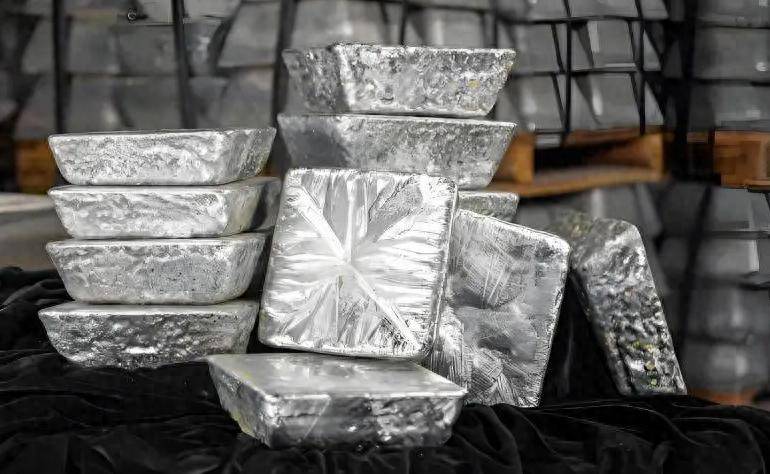
Core Insights - Recent developments indicate that "rare earth smuggling" has become increasingly difficult in China, with nearly 100 tons of controlled metals recovered from smuggling operations [1] - China has canceled a significant order of 132,000 tons of U.S. wheat, which is speculated to be linked to U.S. arms sales to Taiwan, highlighting the ongoing tensions in U.S.-China relations [11] Group 1: Rare Earth Exports - Japanese companies have reported difficulties in importing rare earths from China, with approvals for imports being stalled, likely due to political tensions related to Taiwan [3] - The Chinese Ministry of Commerce has approved some export licenses for rare earths, but the focus appears to be on Europe rather than Japan, leaving Japanese companies in a precarious situation [5] - A recent case in Shenzhen involved the smuggling of 166 tons of antimony, a controlled metal essential for military applications, indicating ongoing risks in the rare earth supply chain [7] Group 2: U.S.-China Trade Relations - The U.S. military-industrial complex, particularly companies like Lockheed Martin, is facing production challenges due to China's export controls on rare earths, with estimates of a 30% decrease in production capacity following sanctions [9] - The cancellation of the wheat order by China is seen as a direct response to U.S. actions regarding Taiwan, signaling potential further retaliatory measures against U.S. agricultural exports [11] - Trump's silence on agricultural trade issues contrasts with his previous active stance, indicating a shift in the dynamics of U.S.-China trade relations, where China is now exploring alternatives to U.S. agricultural products [13]
商务部批准部分稀土出口申请
Sou Hu Cai Jing· 2025-12-20 02:23
Group 1: Policy Adjustment Key Points - The Ministry of Commerce announced the approval of general export licenses for certain rare earth applications, allowing companies like Jinli Permanent Magnet and Zhongke Sanhuan to export multiple times within a year without individual approvals, reducing delivery time from 45 days to approximately 15 days [4][16] - The policy maintains strict limitations on heavy rare earth materials such as dysprosium and terbium, which remain under tight control, and all exports must undergo "end-use review" [5][6] Group 2: Policy Background and Motivations - The adjustment is driven by internal experience accumulation, as exporters have adapted to compliance standards over an 8-month period, and external pressures from the EU, which has called for simplified processes due to supply chain tensions [8] - The policy change also reflects a strategic balance between resource security and international supply stability, aiming to enhance compliant trade while pushing for the elimination of outdated production capacity [8] Group 3: Geopolitical Factors - China employs a differentiated approval strategy, with approximately 70% of EU applications approved, while Japanese applications face delays due to political tensions, and U.S. military suppliers remain at risk of supply disruptions [9][10] Group 4: Market and Future Trends - Leading compliant enterprises, such as Ningbo Yunsheng, benefit from improved export efficiency, potentially capturing greater international market share, while non-compliant firms face elimination [11][12] - The rare earth permanent magnet sector shows short-term bullish trends, but caution is advised regarding valuation bubbles, as some stocks have P/E ratios exceeding 80 times [13] - Future trends may include an expansion of the general license scope to attract long-term contracts from European automakers and advancements in rare earth recycling technologies [14][15]
