
农产品

Search documents
“遇见好物市集”助力乡村振兴年货节开幕在即
Qi Huo Ri Bao Wang· 2026-01-19 01:05
Core Viewpoint - The "Encounter Good Goods Market" event aims to support rural revitalization and promote agricultural product consumption through a combination of online and offline platforms, showcasing high-quality agricultural products and innovations while enhancing the integration of agriculture, culture, and tourism [1][2]. Group 1: Event Overview - The event will take place from January 23 to 25 at the Beijing Jingyuan Art Center, organized by the China Business Federation and other partners, focusing on rural revitalization and agricultural product consumption [1]. - The initiative aligns with the 2025 plan set by various government departments to expand agricultural product consumption and promote green, organic, and certified agricultural products [1]. Group 2: Participation and Features - All exhibitors are brand manufacturers or direct suppliers from production bases, eliminating intermediaries and ensuring product quality and safety [2]. - The event will feature a supply-demand matching conference for exhibitors and buyers, along with special zones for revolutionary old area products and local specialties to cater to diverse consumer needs [2]. Group 3: Community Engagement - The event supports disabled entrepreneurs by providing free exhibition space, promoting inclusivity and entrepreneurship [2]. - Interactive experiences will include agricultural science education, specialty food tastings, and live streaming on Douyin to create an immersive shopping and learning environment [2].
特朗普宣布因格陵兰岛向欧洲八国加征关税
Dong Zheng Qi Huo· 2026-01-19 00:41
Report Investment Ratings No investment ratings for the entire industry are provided in the report. Core Views - The geopolitical situation is escalating due to Trump's tariff announcements, affecting market risk - appetite across various asset classes. [5][15][17] - Different markets are in various states, with some facing supply - demand imbalances, while others are influenced by policy changes and seasonal factors. [2][24][30] Summary by Category Financial News and Comments Macro Strategy (Gold) - Fed Chair candidate Hasset is out, and Trump's tariff announcement boosts gold's safe - haven appeal. Gold is expected to be bullish in the short - term, and there is an opportunity to go long on the gold - silver ratio. [12][13] Macro Strategy (Foreign Exchange Futures - US Dollar Index) - Trump's tariff on European countries over Greenland raises geopolitical risks, and the US dollar index is expected to rise in the short - term. [15][18] Macro Strategy (US Stock Index Futures) - Geopolitical risks and uncertainty about the new Fed Chair lead to high - level oscillations in the US stock market during the earnings season. [22] Macro Strategy (Treasury Bond Futures) - The central bank conducts reverse repurchase operations. Bond market rebound momentum will weaken, with a short - term oscillatory trend and a bearish long - term outlook. [24][25] Macro Strategy (Stock Index Futures) - Regulators are cooling the stock market, and the spring rally needs new catalysts. The long - position strategy for stock indices can be maintained. [26] Commodity News and Comments Black Metals (Coking Coal/Coke) - The port coke spot market is weak. The spot price is supported by downstream restocking, but the upward momentum of the futures is limited, with a short - term oscillatory trend. [28] Black Metals (Steam Coal) - Indonesian low - calorie steam coal prices are stable. Considering the cold wave in February, coal consumption is expected to rise, and coal prices are expected to remain flat. [30] Black Metals (Iron Ore) - Congo (DRC) restarts a large - scale iron ore export project. Iron ore prices are expected to continue the oscillatory trend due to high inventory and weak demand. [31][32] Black Metals (Rebar/Hot - Rolled Coil) - Steel production and inventory data show that supply - demand contradictions are accumulating. Steel prices may be strong in the short - term but face high inventory risks later. [35][37] Agricultural Products (Soybean Oil/Rapeseed Oil/Palm Oil) - US biofuel policy and China - Canada trade agreements affect the oil market. Palm oil has short - term long - position opportunities, soybean oil can be a long - position variety, and rapeseed oil should be observed. [38][41] Agricultural Products (Sugar) - Indian sugar production is increasing, and demand is recovering. International sugar prices are expected to be strong in the short - term, and domestic sugar prices are expected to oscillate. [44][45] Agricultural Products (Cotton) - US cotton export sales are strong, but the upward momentum of the external market is limited. Domestic cotton prices are expected to oscillate and adjust before the Spring Festival. [51][52] Agricultural Products (Soybean Meal) - South American soybean harvest is promising, and domestic soybean meal supply is excessive. The May contract of soybean meal will remain weak. [53] Non - ferrous Metals (Copper) - There are issues in some copper mines. Macro - level factors weaken, and copper prices are expected to oscillate at high levels. [57][58] Non - ferrous Metals (Lithium Carbonate) - Supply disruptions and demand support lead to a situation where lithium carbonate prices are likely to rise. Look for long - position opportunities after the position and volatility stabilize. [62][63] Non - ferrous Metals (Lead) - LME's decision has a limited impact on lead. Lead fundamentals are weakening, and a short - selling strategy is recommended. [65][66] Non - ferrous Metals (Zinc) - Macro - sentiment weakens, but zinc fundamentals are not significantly weak. Zinc prices may oscillate and adjust in the short - term. [70] Non - ferrous Metals (Nickel) - Nickel supply is expected to shrink, and prices are likely to rise. Look for long - position opportunities on dips. [72][73] Non - ferrous Metals (Tin) - Tin price fluctuations intensify. Pay attention to customs data, processing fees, and consumer recovery. [77][78] Energy Chemicals (Liquefied Petroleum Gas) - With the decline of risk premiums, LPG prices are expected to oscillate horizontally. [80] Energy Chemicals (Carbon Emissions) - EU carbon prices are rising, with a short - term oscillatory and strong trend. [81][82] Energy Chemicals (Crude Oil) - US oil rig count increases, and the short - term upward momentum of oil prices is expected to weaken. [83][84]
碳酸锂期货先扬后抑 旺季临近生猪震荡偏强|期货周报
2 1 Shi Ji Jing Ji Bao Dao· 2026-01-18 23:31
Commodity Market Overview - The commodity market showed mixed performance during the week of January 12 to January 16, with the base metals sector leading gains while the black metals sector declined [1] - Energy and chemical sectors saw slight increases, with fuel rising by 0.32% and crude oil by 1.22% [1] - The black metals sector experienced declines, with coking coal down 2.05%, coke down 1.77%, and iron ore down 0.31% [1] - The base metals sector saw lithium carbonate increase by 1.94%, zinc up 3.06%, and nickel up 1.62% [1] - Precious metals also gained, with gold up 2.57% and silver up 20.03% [1] - Agricultural products showed mixed results, with eggs up 1.05% and live pigs up 1.78%, while soybean meal fell by 2.12% [1] Lithium Market Dynamics - Lithium carbonate futures experienced volatility, initially rising by 17% before a significant drop, closing the week at 146,200 yuan/ton after hitting a limit down [2][3] - Supply remained slightly increased, with domestic lithium carbonate production at 22,605 tons for the week, a 0.3% increase [2] - Demand remained strong despite seasonal trends, with December sales of new energy vehicles reaching 1.71 million units, a 28% year-on-year increase [2] Pig Market Trends - The pig futures market showed a strong upward trend ahead of the Spring Festival, with the main contract rising by 1.78% to 11,950 yuan/ton [4] - The average price of live pigs increased by 0.31 yuan/kg, reflecting a synchronized rise in both futures and spot markets [4] - Supply remained low, with stable breeding sow inventory at 39.9 million heads, indicating a normal holding level [4] Export Growth Insights - December exports increased by 6.6% year-on-year, reaching 357.78 billion USD, supported by strong performance in non-US markets and high-end manufacturing [6] - The growth was driven by significant increases in automotive exports, which rose by 71.7% due to tariff adjustments and demand recovery in consumer electronics [6][7] - The overall export structure is shifting towards a focus on high-tech and machinery products, with labor-intensive products continuing to decline [7][8] Financial Data and Corporate Financing - In December, new social financing totaled 2.21 trillion yuan, with a year-on-year growth of 8.3%, indicating a recovery in corporate financing [9][10] - The increase in corporate loans was notable, with 1.07 trillion yuan added, reflecting strong financing demand from enterprises [10][11] - The People's Bank of China introduced structural monetary policy tools to support targeted sectors, indicating a shift towards more focused financial support rather than broad monetary easing [12]
涉及养老机构服务、儿童用品安全性等
Xin Lang Cai Jing· 2026-01-18 22:34
Emerging Fields - The release of 4 national standards for industrial internet platforms supports the scalable development and application of industrial internet platforms [1] - 4 national standards for digital supply chains are aimed at enhancing the resilience of industrial chains through digitalization [1] - 5 national standards for smart factory safety integration promote high-quality and sustainable development in manufacturing through data-driven management [1] - National standards for the classification and comprehensive utilization of recyclable rare earth secondary resources support the recycling of rare earth resources [1] Transportation and Green Low-Carbon - 23 national standards related to railway freight transport, intelligent transport, and aviation services facilitate efficient development in transportation [1] - 7 national standards for explosion-proof industrial vehicles and off-road forklifts promote the standardized development of the industrial vehicle sector [1] - 3 logistics national standards for multimodal transport service quality assessment and the integration of logistics and manufacturing industries guide the integration of transport modes [1] - 17 national standards for carbon capture, green factory evaluation, and greenhouse gas emission accounting assist in achieving carbon neutrality goals [1] Safety Production - 13 mandatory national standards for production safety accident investigation and economic loss statistics enhance safety emergency capabilities in hazardous chemical enterprises [2] - 4 mandatory national standards in the fire safety sector improve the fire performance and quality of building insulation materials and rescue equipment [2] - 28 national standards related to feed, pesticides, plant quarantine, and animal husbandry provide a technical foundation for agricultural production safety [2] Daily Life - 6 national standards for children's products, including portable baby sleep baskets and VOC emission measurement, aim to enhance product quality and safety [2] - 3 national standards for elderly care institutions standardize care practices and improve the quality of life services [2] - 5 national standards for traditional Chinese medicine better protect public health through classification and assessment [2] - 5 national standards for musical instruments, including pianos and electric instruments, cater to the cultural and spiritual needs of the public [2] - 2 mandatory national standards for sports venues, including climbing and fencing, ensure safety in fitness activities [2] Additional Standards - The market regulatory authority has also released national standards in areas such as government services, wind power generation systems, water conservation, and agricultural products [2]
赣江观澜:农博会如何助推江西农业产业化高质量发展?
Zhong Guo Xin Wen Wang· 2026-01-18 15:21
Core Insights - The seventh Jiangxi "Ecological Poyang Lake · Green Agricultural Products" Expo has become an annual event that empowers agricultural industry upgrades and deepens cooperation in the region since its inception in 2019 [1] Group 1: Event Overview - The expo featured over 800 exhibitors showcasing more than 6,000 products across an exhibition area of 26,000 square meters, highlighting the modern agricultural landscape of Jiangxi [1][2] - The event has evolved from showcasing local specialties to presenting a complete agricultural industry chain, with significant participation from leading enterprises and industry clusters [2] Group 2: Industry Development - As of January to November 2025, Jiangxi is expected to have 83 agricultural enterprises with revenues exceeding 1 billion yuan, with projections indicating this could rise to 109 by the end of 2025 [3] Group 3: Transformation of Services - The expo has shifted its focus from "product sales" to "procurement services," establishing a supply-demand information release area and facilitating various matching activities to enhance efficiency [4] - A total of 70 intention orders were facilitated, amounting to 1.716 billion yuan, with over 300 buyers invited to participate [4] Group 4: Brand Promotion - The expo showcased local specialties such as Lushan Yunwu tea and Anyi瓦灰鸡, with various products promoted through competitions to enhance brand visibility [5] - Efforts to enhance regional brand recognition include rebranding products to emphasize local origins, such as changing packaging from "Tongxin White Lotus" to "Guangchang White Lotus" [6] - Jiangxi's agricultural brand value is on the rise, with several brands selected for national agricultural brand cultivation plans and rankings [6]
地标产品聚羊城,首届地理标志暨特色产品嘉年华在北京路启幕
Nan Fang Nong Cun Bao· 2026-01-18 12:34
Core Viewpoint - The first Geographic Indication and Specialty Products Carnival was inaugurated in Beijing Road, Guangzhou, showcasing the integration of historical significance and modern vitality, aimed at enhancing the cultural and market value of "Yue" branded products [8][10][16]. Group 1: Event Overview - The carnival took place on January 16, 2026, in Beijing Road, a historical commercial hub of Guangzhou, emphasizing its role as a cultural and commercial axis for over 2200 years [7][12]. - The event was guided by the Guangzhou Market Supervision Administration and co-hosted by various local organizations, highlighting a collaborative effort among government and enterprises [18][19][22]. Group 2: Geographic Indication Products - Guangdong Province has been recognized for 226 geographic indication products and 142 registered geographic indication trademarks, with over 2800 entities legally using geographic indication logos, reflecting a 358% increase in the last four years [29][30]. - The carnival featured 32 geographic indication products and 17 derivative specialty products, allowing visitors to experience the unique charm and strong momentum of the Lingnan region's industries [51][52]. Group 3: Community Engagement - Interactive activities at the carnival, such as games and cultural experiences, attracted significant public participation, enhancing the visibility and appreciation of geographic indication products among visitors [69][72]. - Local residents expressed enthusiasm for the event, noting the opportunity to reconnect with traditional products and support local brands, indicating a positive community response [76][78]. Group 4: Future Prospects - The carnival is set to continue until January 18, 2026, with plans for additional cultural experiences and interactive sessions to deepen public understanding of geographic indication products [78][80]. - The event aims to foster the integration of geographic indication industries with cultural tourism and commercial consumption, positioning Beijing Road as a key showcase for Lingnan products [81][84].


清甜脆嫩香飘鹏城!连州菜心亮相深圳推介会,大师现场献艺引众赞
Nan Fang Nong Cun Bao· 2026-01-18 12:34
Core Viewpoint - The event in Shenzhen showcased the unique qualities of Lianzhou Choy Sum, emphasizing its popularity in the local culinary scene and its potential for broader market integration in the Guangdong-Hong Kong-Macao Greater Bay Area [2][35]. Group 1: Event Overview - The promotional event titled "Talent of the Land・Free and Clear" was held in Shenzhen to introduce Lianzhou Choy Sum to the Greater Bay Area [2]. - The event featured culinary demonstrations by renowned chefs, highlighting the unique flavors and preparation methods of Lianzhou Choy Sum [4][14]. Group 2: Culinary Highlights - Chefs prepared various dishes using Lianzhou Choy Sum, including sashimi, salted Choy Sum, and stir-fried Choy Sum with preserved meats, showcasing its versatility and appeal [15][21]. - The freshness and quality of Lianzhou Choy Sum were emphasized, with chefs noting its crisp texture and natural sweetness, making it a sought-after ingredient in Shenzhen's dining scene [16][28]. Group 3: Market Potential - The event aimed to strengthen the collaboration between the culinary industries of Qingyuan and Shenzhen, promoting Lianzhou Choy Sum as a key ingredient in local restaurants and hotels [31][36]. - With supportive policies for consumption and agricultural development, there is significant potential for Lianzhou Choy Sum to become a staple in the dining experiences across the Greater Bay Area [34][37].
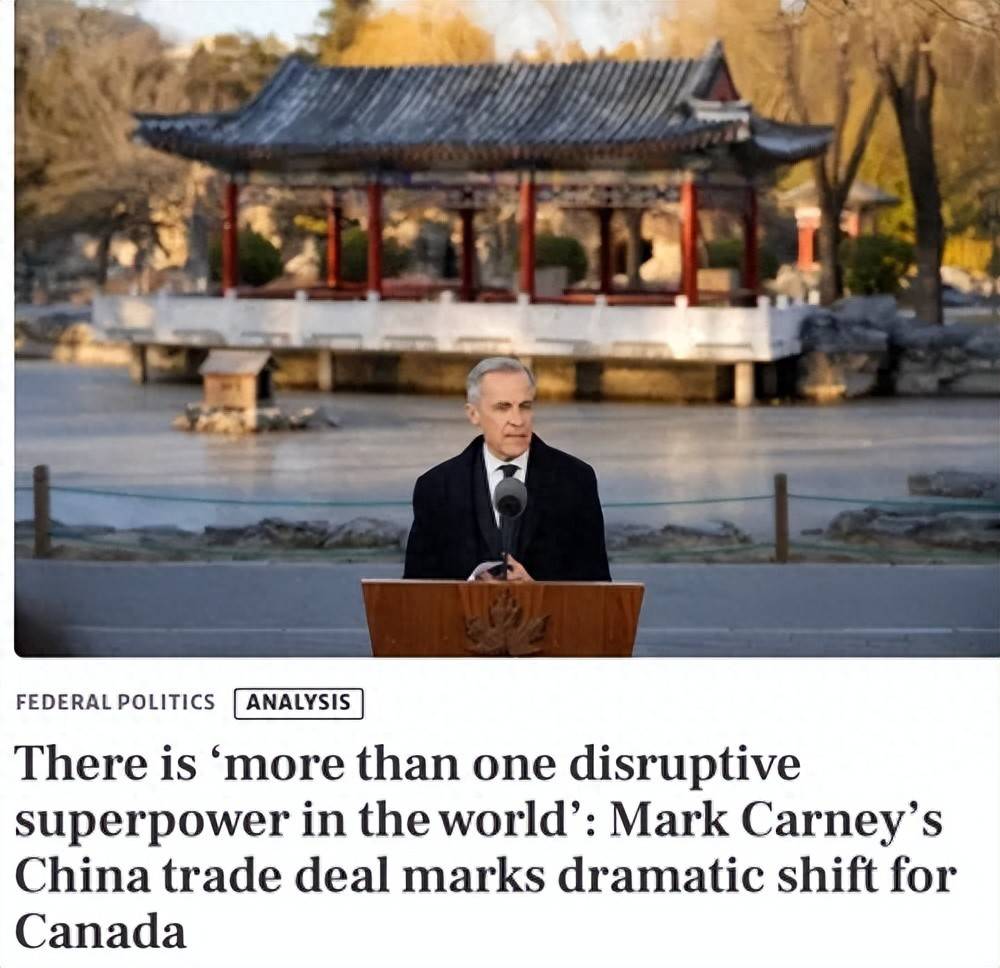
得到3个承诺,卡尼放心了:中国比美国可靠!美国说加方必将后悔
Sou Hu Cai Jing· 2026-01-18 06:45
Group 1 - Canada will eliminate the 100% additional tariff on Chinese electric vehicles and replace it with an import quota system, allowing 49,000 Chinese electric vehicles to be subject to a 6.1% most-favored-nation tariff rate [1] - The decision is expected to enhance economic cooperation between Canada and China, benefiting both countries [1][3] - The Canadian government anticipates significant economic benefits from the return of canola oil exports to China, potentially generating billions of Canadian dollars in revenue for farmers [5] Group 2 - The entry of Chinese electric vehicles into Canada will provide consumers with more cost-effective options and accelerate the adoption of electric vehicles in the Canadian market [7] - The collaboration will also aid in the development of charging infrastructure and after-sales service networks in Canada, strengthening the electric vehicle industry chain [7] - China's electric vehicle companies will gain a crucial entry point into the North American market, facilitating their expansion [9] Group 3 - The cooperation signifies a strategic shift for Canada, showcasing its diplomatic independence and reducing reliance on the United States [7][10] - The U.S. response has been mixed, with former President Trump expressing dissatisfaction while acknowledging the potential benefits for Canada [10] - The introduction of Chinese electric vehicles may further challenge U.S. automakers in the Canadian market, which has already seen a decline in market share [10]

中加达成里程碑协议!中国将对加拿大公民免签!互降关税!
Sou Hu Cai Jing· 2026-01-18 05:37
Group 1: Trade Agreements and Tariff Adjustments - The agreement between Canada and China includes significant tariff adjustments, with Canada expecting China to reduce the tariff on canola from 84% to 15% by March 1, which is seen as a major progress [3] - Starting from March until the end of 2026, Canadian products such as canola meal, lobster, crab, and peas will no longer face tariff restrictions, which is crucial for Canadian farmers [3] - Canada will allow up to 49,000 Chinese electric vehicles to enter its market with a reduced tariff of 6.1%, down from the current 100%, making electric vehicles more affordable for Canadians [5] Group 2: Strategic Partnerships and Future Plans - The agreement marks a milestone in Canada-China relations, incorporating energy cooperation and cultural exchanges into a broader strategic partnership framework [1] - Canada aims to double its exports to non-U.S. markets by 2030 and plans to increase its exports to China by 50% [5] - The introduction of a visa-free policy for eligible Canadian citizens traveling to China for business or tourism is expected to enhance bilateral relations and facilitate easier travel [7] Group 3: Geopolitical Context - The agreement comes amid U.S. pressures, with Canadian Prime Minister Mark Carney signaling that Canada will seek international support to maintain its diplomatic and trade autonomy [10]
南共市与欧盟正式签署自由贸易协议!欧洲理事会主席称这是“对孤立主义、黩武主义的坚定反对”
Xin Lang Cai Jing· 2026-01-17 22:51
Group 1 - The Southern Common Market (Mercosur) and the European Union officially signed a free trade agreement in Asunción, Paraguay, marking a significant step towards creating one of the world's largest free trade areas [1] - The combined market of Mercosur and the EU has over 700 million people, with a GDP that accounts for approximately 25% of the global GDP [1] - The agreement will eliminate tariffs on over 90% of goods traded between the two regions and establish common rules for trade in industrial and agricultural products, investment, and regulatory standards [1] Group 2 - Paraguayan President Peña, as the rotating president of Mercosur, expressed gratitude for the efforts made by leaders from both regions to finalize the agreement, calling it a historically significant day [1] - European Commission President von der Leyen emphasized that the agreement represents a choice for cooperation rather than division, and aims to bring tangible benefits to the people [1] - European Council President Costa stated that the signing of the agreement is a firm opposition to isolationism and the use of trade as a geopolitical weapon, highlighting the importance of open markets for prosperity [1]