制造业

Search documents
华立股份(603038.SH):收到上交所问询函
Ge Long Hui A P P· 2026-01-18 08:25
格隆汇1月18日丨华立股份(603038.SH)发布公告,公司于2026年1月18日收到上海证券交易所下发的 《关于对东莞市华立实业股份有限公司收购事项的问询函》(上证公函【2026】0064号,以下简称"《问 询函》")。 ...

将被实施其他风险警示 京山轻机1月19日停牌一天
Bei Jing Shang Bao· 2026-01-18 03:21
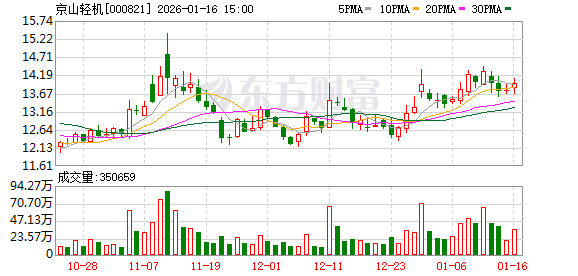
公告显示,1月16日,公司及相关责任人收到湖北证监局出具的《行政处罚事先告知书》。根据《行政 处罚事先告知书》认定的情况,公司披露的《2018年年度报告》存在虚假记载。根据《股票上市规则》 第9.8.1条规定:"上市公司出现以下情形之一的,本所对其股票实施其他风险警示:(八)根据中国证 监会行政处罚事先告知书载明的事实,公司披露的年度报告财务指标存在虚假记载,但未触及本规则第 9.5.2条第一款规定情形,前述财务指标包括营业收入、利润总额、净利润、资产负债表中的资产或者负 债科目。"因此,公司股票将被实施其他风险警示,但不触及《股票上市规则》第九章第五节规定的重 大违法强制退市的情形。 (文章来源:北京商报) 北京商报讯1月17日,京山轻机(000821)披露公告称,公司股票将自1月19日起停牌1天,自1月20日起 复牌。公司股票将自1月20日起被实施其他风险警示,股票简称由"京山轻机"变更为"ST京机";股票代 码不变,仍为"000821";股票交易日涨跌幅限制为5%。 ...


美国人意识到:贸易战之后,不会再有中国外的大规模工业化国家了
Sou Hu Cai Jing· 2026-01-18 02:49
Core Insights - The trade war initiated by the US in 2018 aimed to reshape global supply chains by imposing tariffs to limit China's manufacturing expansion and encourage production relocation to other regions [2] - The actual process of relocating manufacturing has faced multiple obstacles, with countries like Vietnam and India receiving some orders but overall scale falling short of expectations [4][5] - The US decision-making circles have reached a consensus that no other country will replicate China's large-scale industrialization post-trade war, reflecting on historical industrialization patterns [9] Group 1: Manufacturing Challenges - Vietnam's manufacturing growth relies heavily on foreign investment but lacks a complete supply chain ecosystem [4] - India's push for localized production is hindered by infrastructure and policy stability issues, leading to inefficiencies [5] - The US manufacturing revival plan is progressing slowly, with a capacity utilization rate of only 78% in 2025, significantly lower than China's 95% [7] Group 2: Global Industrialization Landscape - Countries like Germany have strong industrial foundations but face limitations due to aging populations and energy transition pressures [13] - Japan and South Korea have completed their industrialization but are unable to achieve high growth rates due to market saturation [13] - Emerging markets in Africa and Latin America have potential but are impeded by political instability and investment environment challenges [13] Group 3: China's Industrial Resilience - Despite initial expectations of a significant decline in exports, China's total goods trade reached $6.3 trillion in 2025, maintaining its position as the world's largest exporter [15] - China's investment in high-tech sectors, such as semiconductors and renewable energy, exceeded 1 trillion yuan, facilitating a shift towards internal circulation and regional cooperation [17] - The dual circulation strategy allows China to balance internal and external markets, contrasting with traditional industrialization paths reliant on external demand [17] Group 4: Digital Infrastructure and Industrialization - China's data factor market reached 8 trillion yuan, supporting production efficiency through algorithm optimization, while India's data infrastructure coverage is only 60% [24] - Vietnam's digital transformation is heavily dependent on foreign investment, with low participation from local enterprises [24] - Latin American countries are lagging in digitalization, with internet penetration rates below 70%, making it difficult for them to catch up in industrialization [26] Group 5: Global Investment Trends - The trade war has increased geopolitical risks, leading to a further dispersion of investment focus, with global FDI flows expected to grow only 2% by 2025 [27] - The trade war has exacerbated global inequality, with developed countries consolidating technological advantages while emerging markets struggle at foundational stages [29] - The UNCTAD report in 2025 indicated that China scored 90 points on the industrialization index, while India and Vietnam scored 60 and 50 points, respectively, supporting the conclusion of the article [31]
虎丘区 一批“金点子”变成发展“金钥匙”
Su Zhou Ri Bao· 2026-01-18 01:14
Group 1 - The core viewpoint of the news is that the Tiger Hill District Political Consultative Conference has effectively fulfilled its role by submitting and processing a significant number of proposals, achieving a 100% response and satisfaction rate [1] - A total of 273 proposals were submitted since the last conference, with 254 officially registered and all processed on time [1] - The conference has focused on key government initiatives, hosting four "Intelligent High-tech" consultation meetings and producing 27 high-quality research reports and recommendations related to artificial intelligence and industry integration [1] Group 2 - Several proposals have been transformed into actionable development strategies, such as the first proposal aimed at enhancing innovation and building high-quality industrial parks, which has led to systematic measures in eight areas [2] - The second proposal focuses on accelerating the integration of digital economy and manufacturing, resulting in the promotion of a three-year action plan for "Smart Transformation and Digital Networking" [2] - The third proposal emphasizes the development of productive service industries to deepen the integration of manufacturing and services, leading to the introduction of a 2025 action plan for high-quality development of emerging services [2]
突发特讯!外媒通告全球:为夺格陵兰岛,美再挥关税大棒,欧洲8国集体反击!引发全球高度关注
Sou Hu Cai Jing· 2026-01-18 01:12
Group 1 - The core viewpoint of the article highlights the U.S. President Trump's imposition of tariffs as a strategic move to pressure European countries regarding Greenland, reflecting a broader agenda of economic coercion and geopolitical ambition [1][3]. - The tariffs target eight European countries opposing the U.S. acquisition of Greenland, aiming to exploit their trade vulnerabilities and isolate Denmark [3][5]. - Greenland's strategic value is emphasized, with its vast natural resources and critical position in Arctic navigation, making it a focal point for U.S. military and economic interests [3][5]. Group 2 - The response to Trump's tariff threats has been significant, with Greenland's government and Denmark firmly rejecting U.S. demands, indicating a strong resistance to American pressure [5][7]. - The tariffs may backfire on the U.S., as the affected European nations are primarily trade surplus countries, which could mitigate the impact through internal trade adjustments [5][7]. - The situation is exacerbating transatlantic tensions, as the U.S. approach is perceived as undermining alliances, prompting Europe to seek greater defense autonomy and economic independence from the U.S. [7][9]. Group 3 - The geopolitical landscape in the Arctic is becoming more complex, with Russia enhancing its military presence in response to U.S. actions, while Europe is rallying support for Greenland to counterbalance U.S. influence [7][9]. - Trump's tariff strategy is viewed as a failure of hegemonic logic, as it disregards the sovereignty of Greenland and the will of its people, ultimately damaging U.S. international credibility [9].

日照出台20条举措,促进高质量充分就业
Qi Lu Wan Bao· 2026-01-17 17:24
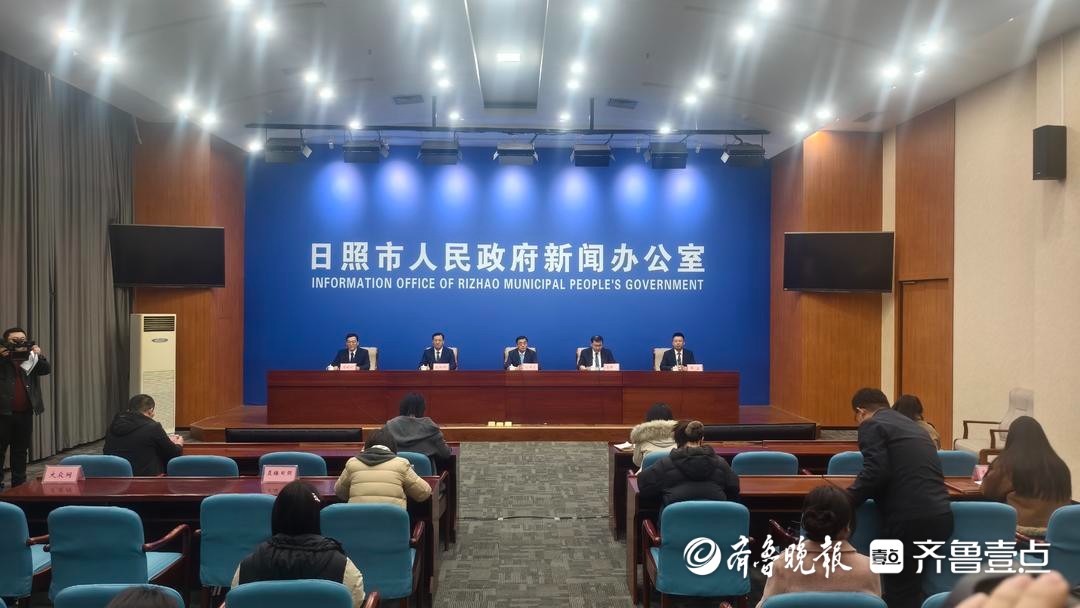
Core Viewpoint - Rizhao City is implementing measures to promote high-quality and full employment, focusing on enhancing employment capacity and addressing structural employment issues while aligning with local economic development needs [3][4]. Group 1: Employment Goals and Strategies - The overall goal is to achieve an annual urban employment increase of over 26,000 by 2030 and over 30,000 high-skilled workers, maintaining overall employment stability [4]. - By 2035, the aim is to create a high-quality employment environment characterized by sufficient job opportunities, optimized employment structure, and effective job matching [4]. Group 2: Employment Capacity and Structural Issues - The strategy emphasizes the need for collaboration between industry and employment, focusing on upgrading traditional industries and developing new ones to create job opportunities [4]. - Policies will be coordinated to integrate high-quality employment into economic and social development plans, establishing an employment-friendly development model [4]. Group 3: Employment Services and Support - A public employment service system will be enhanced, including the establishment of youth employment and entrepreneurship centers and the promotion of a "creation + loan" service model [5]. - The initiative includes upgrading grassroots employment services and implementing a "smart employment" service model to improve information technology in employment services [5]. Group 4: Employment Monitoring and Support for Key Groups - An employment early warning mechanism will be established, including a labor force survey system and a monitoring framework for high-quality employment statistics [5]. - The focus will be on providing comprehensive employment services for key groups, including college graduates and migrant workers, ensuring their job stability [6].
“地缘扰动下的出海新格局”系列:中企出海的“第二增长曲线”
Orient Securities· 2026-01-17 14:56
Group 1: Growth Trends - The "first growth curve" driven by the "numerator" is recognized, with a shift from infrastructure to manufacturing exports expected in 2025[4] - China's overseas investment demand is still on a high growth trajectory, with a three-year rapid growth cycle observed in capital goods exports[4] - In 2025, direct investment in countries along the Belt and Road Initiative (BRI) is projected to increase significantly, particularly in Asia and Africa[4] Group 2: Risks and Challenges - Geopolitical risks, particularly from Western countries, are increasingly impacting overseas investment decisions, exemplified by the U.S. "long-arm jurisdiction" policies[4] - Emerging economies face challenges related to economic stability and high debt levels, with African nations experiencing a shift from concessional loans to higher-cost commercial loans[4] - High inflation rates in regions like Africa, averaging 18.6% in 2024, pose risks to profit margins for companies operating abroad[4] Group 3: Strategic Responses - The Chinese government aims to enhance cooperation with BRI countries and improve risk management in overseas investments as outlined in the 14th Five-Year Plan[4] - Development of international financial infrastructure, such as the Hong Kong Gold Exchange, is seen as a key lever to mitigate risks associated with overseas investments[4] - The establishment of a gold central clearing system in Hong Kong is expected to facilitate RMB-denominated gold transactions, enhancing financial stability for emerging economies[4]

宏观经济周报:基本面降息是储备而非标配-20260117
Guoxin Securities· 2026-01-17 14:31
Monetary Policy - The central bank has lowered the interest rates of various structural monetary policy tools by 25 basis points to 1.25%, below the short-term policy rate of 1.4%[1] - The central bank indicated that there is still room for further rate cuts in 2026, but these are likely to be used as a reserve tool rather than a routine operation[1][11] - Current monetary policy focuses on structural rate cuts rather than comprehensive rate cuts, reflecting internal constraints such as low net interest margins for commercial banks[1][11] Economic Indicators - Fixed asset investment has decreased by 2.6% year-on-year[3] - Retail sales have increased by 1.3% year-on-year[3] - Exports have risen by 6.6% year-on-year[3] Fiscal Policy - Fiscal spending is expected to increase in Q1 2026, supported by a significant carryover of surplus funds from 2025[2][12] - The combination of structural monetary easing and fiscal policy aims to effectively expand domestic demand and solidify economic recovery[12] Market Trends - Production remains strong, with high demand in sectors like machinery and textiles, while real estate transactions continue to decline[13][14] - Port cargo throughput has increased by 4.82% year-on-year, indicating robust foreign trade momentum[22] Risks - There are uncertainties in overseas markets that could impact economic stability[2][51]
俄军导弹炸穿能源命脉,默茨急寻普京对话,欧洲对俄强硬时代终结
Sou Hu Cai Jing· 2026-01-17 08:29
Group 1 - European leaders, including German Chancellor Merz, are calling for dialogue with Russia, indicating a shift in stance as they face military and energy pressures [2][4] - The Russian military's recent strike on a major gas storage facility in Ukraine has severely impacted Europe's energy supply, threatening heating for 1.2 million people and causing energy prices to surge [2] - Major companies like Bosch have begun layoffs, with 22,000 jobs cut, and nearly one-third of businesses are reducing investments, highlighting a trend of "de-industrialization" in Europe [2] Group 2 - The U.S. is reducing its support for Europe, complicating the situation as European nations previously relied on American backing to confront Russia [4] - Internal conflicts within the EU have emerged, particularly over military spending and procurement, with France advocating for European defense autonomy while Germany and the Netherlands oppose it [4] - The shift in Europe's approach towards Russia is seen as a pragmatic survival strategy rather than a genuine desire for peace, as the continent grapples with military threats, economic challenges, and internal divisions [6]

2026年,要想清楚该如何面对牛市
雪球· 2026-01-17 03:46
Group 1 - The article discusses the potential bullish trend in the A-share market by 2026, supported by factors such as low interest rates and the attractiveness of stock dividends compared to government bonds [5][6][10] - It highlights the concept of "asset scarcity," where capital is expected to flow into higher-yielding investments as traditional options like real estate and bank deposits lose their appeal [7][8] - The article emphasizes the importance of strategic focus on stimulating consumption and internal demand through asset appreciation rather than direct cash distribution [9][10] Group 2 - The article outlines four key investment strategies for navigating a bull market, applicable to both institutional and retail investors [11] - The first strategy is to embrace index ETFs, particularly the CSI 500, which represents a diversified selection of leading companies [12][13] - The second strategy stresses the importance of balanced asset allocation to mitigate risks associated with heavy concentration in specific stocks or sectors [14] - The third strategy advises investors to adopt a long-term perspective and avoid short-term trading, as retail investors typically lack advantages in quick market movements [15][16] - The fourth strategy suggests waiting for price corrections to find good entry points for investments, emphasizing the need for a positive mindset [17][19] Group 3 - The article identifies three key criteria for selecting high-quality companies in the high-end manufacturing sector: price increases, overseas expansion, and innovation [22][23] - It discusses the importance of evaluating both relative and absolute price metrics, including PE/PB ratios and historical performance, to determine good pricing [25][26] - The article categorizes leading manufacturing companies into five groups based on their fundamentals and valuation metrics, providing a framework for investment decisions [28]