家电

Search documents
万联晨会-20260129
Wanlian Securities· 2026-01-29 00:53
Core Insights - The A-share market showed mixed performance with the Shanghai Composite Index rising by 0.27% and the Shenzhen Component Index increasing by 0.09%, while the ChiNext Index fell by 0.57%. The total trading volume in the Shanghai and Shenzhen markets reached 29,650.88 billion yuan [1][7] - In the industry sector, non-ferrous metals, oil and petrochemicals, and coal led the gains, while sectors such as comprehensive, media, and national defense and military industry lagged behind. Concept sectors like gold, lead, and zinc saw significant increases, while monkeypox, cell immunotherapy, and newly listed tech stocks experienced declines [1][7] Important News - The Federal Reserve maintained its benchmark interest rate at 3.50%-3.75%, following three consecutive rate cuts of 25 basis points. This decision aligns with market expectations. The Fed noted signs of stabilization in the unemployment rate, while inflation remains relatively high, and economic uncertainty persists [2][8] Industry Analysis - The media industry experienced a strong performance in 2025, with the Shenwan Media sector rising by 27.17%, ranking ninth among Shenwan's first-level industries and outperforming the CSI 300 Index. The industry valuation (PE-TTM) has shown fluctuations but remains above the average level of the past seven years. Revenue and net profit for the first three quarters of 2025 showed steady growth, with year-on-year increases in Q3 [9][10] - The dual focus on IP and AI is reshaping the media industry. As consumer preferences shift from "functional" to "emotional value," there is a growing market for IP content and its commercialization. AI is recognized as a transformative technology with vast potential across various media sub-industries, driving new market developments [9][12] Investment Highlights - IP is categorized into content-based and image-based types, both of which can interchange to explore higher value and enhance commercialization through derivative products. Content-based IP includes literary and film adaptations, while image-based IP focuses on recognizable visual symbols [10][11] - The market for IP derivatives is experiencing explosive growth, driven by the rise of Generation Z consumers and the popularity of "emotional value" economics. Key product categories include collectibles and toys, which resonate with younger audiences' social and entertainment needs [12] - AI applications are expanding across multiple media sectors, enhancing content production efficiency and reducing costs. In gaming, AI is revolutionizing narrative and gameplay experiences, while in advertising, traditional marketing models are being restructured to adapt to new consumer information-seeking behaviors [14][13]
思明购物节燃起厦门烟火气
Zhong Guo Jing Ji Wang· 2026-01-29 00:42
转自:国际商报 近日,2026思明购物节在厦门启幕。一场集年货市集、民俗体验、潮玩互动于一体的沉浸式新春消费盛 宴在厦门市思明区火热上演。 乐购思明 新春促销马不停蹄 随着购物节的正式启动,"马上出发 乐购思明"迎新消费季系列活动在全区铺开。曾厝垵老字号集市、 禾祥鑫天地年货市集、团圆家宴优惠、节庆灯会等近百场活动火热开展,形成"全域联动、全民参与"的 消费热潮。 商务部2025年年底公示的"国际化消费环境建设试点城市"及"消费新业态新模式新场景试点城市"名单, 厦门均位列其中,成为此次少数同时入列两项国家级试点的城市之一。今年,思明区将抢抓国际化消费 环境建设、消费"三新"两大国家级试点机遇,以购物节全面升级为契机,持续践行扩大内需战略,通过 资源整合、业态联动与场景创新,构建"买好物、品美食、赏美景、享服务"的全链条消费生态,做 强"思明购物节"IP,在厦门建设国际消费中心城市进程中展现思明担当、贡献思明动能。 (吴广宁 张予程) 值得一提的是,作为厦门千亿咖啡产业链的核心承载,思明区借购物节契机深化"咖啡+文旅+消费"融 合,现场正式揭晓《2026厦门精品咖啡地图》,不仅收录了思明区不少咖啡特色街区、宝 ...
营商环境优让企业扎根宁乡信心更稳,项目建设“加速度”驱动园区高质量发展
Chang Sha Wan Bao· 2026-01-28 23:51
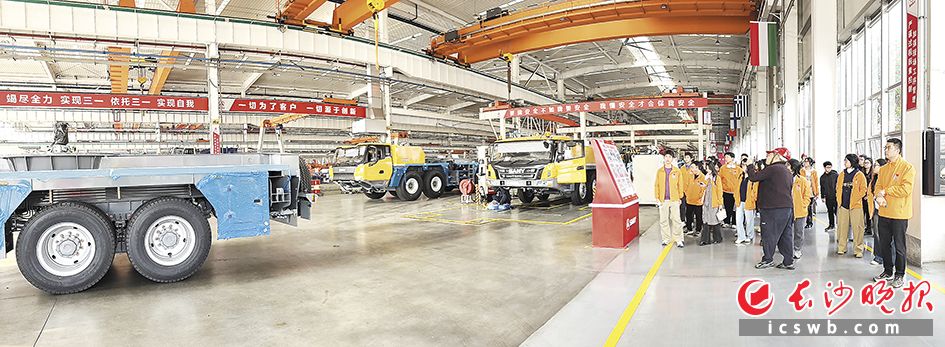
Core Viewpoint - The article highlights the significant progress and achievements of the Ningxiang Economic Development Zone, emphasizing its robust business environment and accelerated project construction, which are driving high-quality development in the region [3][5]. Group 1: Economic Performance - In the "14th Five-Year Plan" period, the Ningxiang Economic Development Zone achieved a substantial increase in comprehensive strength, with industrial output value ranking second in the province and reaching over 166.2 billion yuan in 2025, a year-on-year growth of 9.4% [3][4]. - The zone has been recognized as one of the "Top 100 Advanced Manufacturing Parks in China" for six consecutive years, with core indicators hitting new highs in 2025 [3]. Group 2: Industrial Development - The development of industrial clusters is a key feature, with leading industries such as advanced energy storage materials, engineering machinery, and smart home appliances contributing to 89% of the total industrial output [4]. - The advanced energy storage materials industry alone generated an output value of 68.3 billion yuan, establishing a complete development pattern characterized by "leading enterprises, clustered development, and complete supply chains" [4]. Group 3: Project Construction - In 2025, the zone signed 98 projects, including three Fortune 500 projects and one billion-level project, with the successful signing of the 60GWh lithium battery project by Sainty Technology filling a gap in energy storage [4]. - A total of 135 projects were planned for the year, with the number of new projects and the investment completion rate leading among national-level parks in Changsha [4]. Group 4: Business Environment - The business environment in Ningxiang is recognized as a solid support for enterprise development, with reforms in "streamlining administration and delegating power" and the implementation of the "Five Immediate Services" receiving 100% positive feedback from businesses [5]. - Financial support has been provided to over 260 enterprises, amounting to approximately 1.7 billion yuan in loans, facilitating their growth and development [5]. Group 5: Future Goals - Looking ahead, the Ningxiang Economic Development Zone aims to seize new development opportunities, targeting entry into the national top 50 and focusing on building a high-quality advanced manufacturing hub and a livable city [5].

山东启动家电“行业补贴”试点,八大类厨电消费可享15%专项补贴
Feng Huang Wang Cai Jing· 2026-01-28 23:49
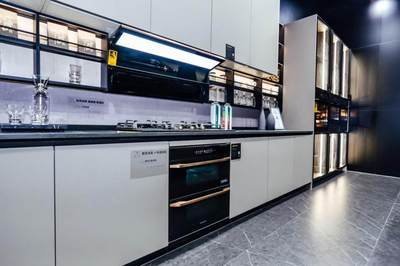
(济南日报.爱济南) 根据文件内容,海尔卡萨帝厨电将在协会监督指导下,通过云闪付APP等支付平台发放消费券,参与山 东省家电产品相关以旧换新活动,同时遵守活动规则、协调企业资源,保障试点活动顺利开展。从试点 活动安排来看,本次补贴精准聚焦厨房场景,覆盖抽油烟机、燃气灶、洗碗机、蒸烤一体机等八大类主 流厨电产品。消费者在购买上述品类的海尔卡萨帝厨电产品时,可直接享受成交价15%的专项补贴,补 贴资金以消费券形式发放,操作便捷,能切实降低消费者换新厨电的经济成本。 "整个试点活动将在协会全程监督下规范开展。"山东省家用电器行业协会相关负责人表示,此次"行业 补贴"专项试点,不仅致力于有效激发家电消费市场潜力,还将推动绿色智能家电在全省的普及,更好 地满足人民群众对高品质生活的需求。山东此次启动家电"行业补贴"试点,标志着该省在家电消费促进 领域探索新路径,有望为家电行业转型升级与消费市场回暖注入新动力。 近日,山东省家用电器行业协会正式印发《鲁家电函字〔2026〕1号》文件,在全省范围内启动家电"行 业补贴"专项试点工作,海尔卡萨帝厨电成为该试点活动的推荐参与企业,为全省消费者更新厨房电器 带来实惠。 据了解,山 ...

基金满仓老登股血亏30%!自己买科技小登赚翻5000万!泰康基金经理神操作让基民破防了
Sou Hu Cai Jing· 2026-01-28 16:35
Core Viewpoint - The article highlights the stark contrast between the investment strategies employed by fund manager Gui Yueqiang for his clients and his personal investments, leading to significant losses for investors while he profits from technology stocks [2][8]. Group 1: Fund Performance and Strategy - Gui Yueqiang manages over 2 billion yuan in assets but has kept his funds heavily invested in traditional sectors like liquor and home appliances, resulting in a nearly 30% loss over five years for investors [2][6]. - The two funds managed by Gui, the Taikang Advantage Enterprise Mixed Fund and the Taikang Blue Chip Advantage One-Year Holding Stock Fund, have shown poor performance since their inception, with the former losing almost 30% and the latter also underperforming [2][3]. - Despite the potential to invest in a broader range of stocks, including tech giants like Tencent and Alibaba, Gui has chosen to focus on a narrow selection of traditional stocks, leading to stagnant performance [3][4]. Group 2: Personal Investments - Reports indicate that Gui has been heavily invested in technology stocks through his personal account, achieving a floating profit exceeding 50 million yuan, while his managed funds have remained stagnant [8][11]. - This discrepancy in investment strategy raises questions about the alignment of interests between the fund manager and the investors, as Gui's personal investments have thrived in a booming tech market while his clients have suffered losses [12][20]. Group 3: Investor Reaction and Regulatory Implications - Investors have expressed outrage in the fund's comment sections, feeling betrayed by Gui's dual strategy, which appears to prioritize his personal gains over their interests [18][20]. - The situation has prompted discussions about regulatory changes in the industry, with new rules potentially linking fund manager performance to their compensation, aiming to reduce the incentive for such divergent investment strategies [20][22].

受益于周期资产行情,自由现金流800ETF万家(563580)涨近3%创上市以来新高
Sou Hu Cai Jing· 2026-01-28 13:08
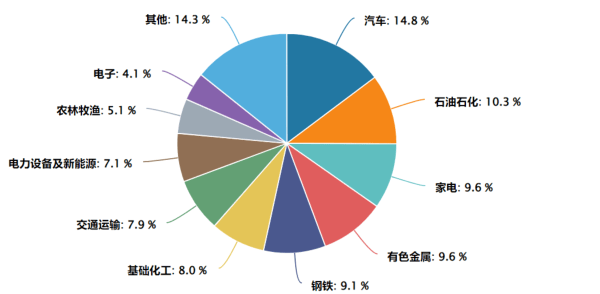
Group 1 - Major stock indices showed mixed performance, with cyclical sectors such as non-ferrous metals, precious metals, oil, and chemicals leading the gains [1] - The Wanjiasheng Zhongzheng 800 Free Cash Flow ETF (563580) rose by 2.85%, reaching a new high since its listing, focusing on companies with strong cash flow capabilities [1] - The index includes sectors like automotive, oil and petrochemicals, home appliances, non-ferrous metals, steel, and basic chemicals, which together account for over 60% of the index weight [1] Group 2 - Cyclical sectors are sensitive to economic conditions, commodity prices, and capacity utilization, covering upstream resource industries like oil and gas, midstream manufacturing, and downstream consumer sectors [3] - Recent strong performance in cyclical sectors, particularly in non-ferrous metals and oil and gas, is expected to be a key theme in the upcoming spring market rally [3] - From a global macro perspective, the expansion of dollar credit cracks during the Kondratiev depression, along with frequent geopolitical conflicts, enhances the monetary and safe-haven attributes of commodities, signaling the start of a super cycle [3]
“新国补”落地!喀什各地消费市场迎来“换新”热潮
Ren Min Ri Bao· 2026-01-28 13:04
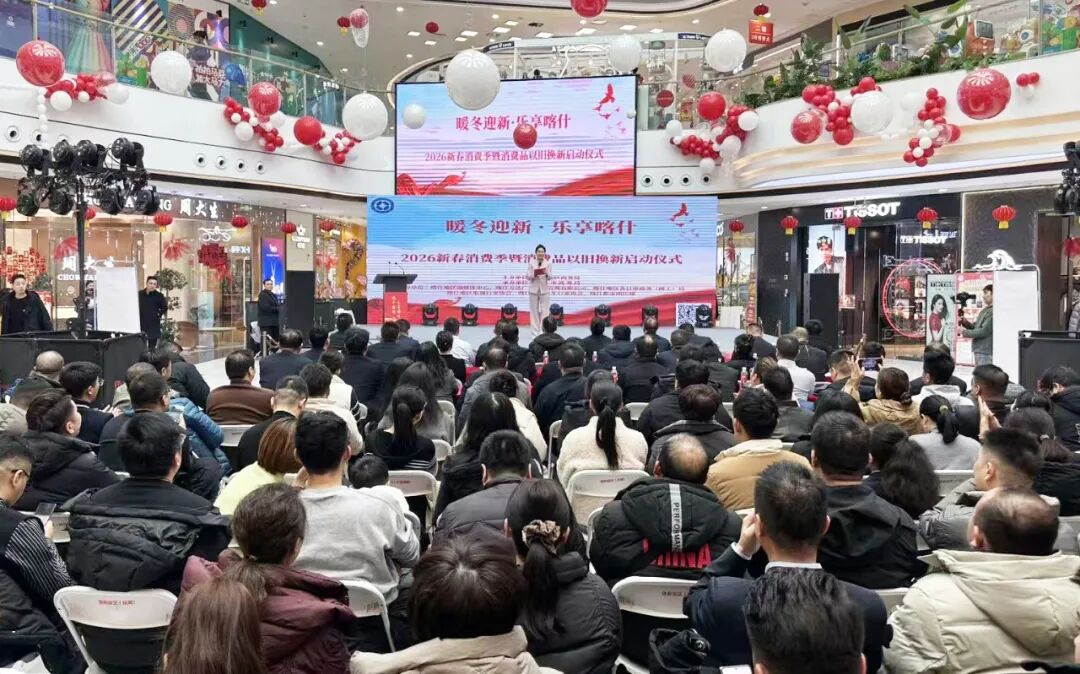
Core Viewpoint - The implementation of the "old-for-new" policy for consumer goods in 2026 aims to stimulate economic activity in the Kashgar region, with a focus on key sectors such as automobiles, home appliances, and digital smart products, enhancing consumer engagement and market vitality [1][3]. Group 1: Policy Details - The "old-for-new" policy continues to provide substantial subsidies, covering six categories of energy-efficient home appliances with a 15% subsidy on the final price, capped at 1,500 yuan per item [3]. - Digital smart products, including smartphones and tablets, are eligible for a maximum subsidy of 500 yuan, with a price limit of 6,000 yuan [3]. - The introduction of smart glasses as a new subsidized category aligns with consumer upgrade trends, representing a potential growth area [3]. Group 2: Automotive Sector Support - The automotive sector receives enhanced policy support, with up to 20,000 yuan for scrapping old vehicles in exchange for new energy vehicles and an 8% subsidy on the purchase price for replacing with new energy vehicles [5]. - Additional incentives are provided for 2.0-liter and below fuel vehicles, along with relaxed registration restrictions for new cars, aimed at lowering purchase barriers [5]. - A monthly balanced implementation mechanism is established to ensure fair and efficient distribution of subsidy qualification vouchers through the "old-for-new" section of the Cloud Flash Payment APP [5]. Group 3: Market Response - The consumer market in Kashgar is experiencing increased activity, with significant foot traffic in stores, particularly for digital products, following the launch of the new consumption season [9]. - The combination of subsidies and store promotions has led to a notable increase in sales of essential home appliances, with discounts reaching up to 50% [9]. - County-level markets are becoming crucial for consumption upgrades, with local businesses reporting doubled customer traffic and significant sales growth in new energy and smaller fuel vehicles [10]. Group 4: Broader Economic Impact - The consumption season integrates various aspects of life, including food, accommodation, travel, and entertainment, creating diverse consumer experiences [14]. - Events such as local markets and cultural activities are designed to enhance community engagement and stimulate economic activity, contributing to a positive economic outlook for the year [14].
退市警报拉响!多家A股公司公告
证券时报· 2026-01-28 11:48
Core Viewpoint - The A-share market is undergoing a new wave of "delisting risk inspection" as companies disclose their 2025 annual performance forecasts, with over 20 companies already warning of potential delisting risks due to financial indicators not meeting standards, major violations, or abnormal audit opinions [1] Group 1: Financial Indicators - Several companies have announced that they may face delisting risk warnings due to failing to meet financial indicators, including Ba Yi Steel, Shuaifeng Electric, Tianjian Technology, Yijing Optoelectronics, and Huaxia Happiness [3][4][5] - Ba Yi Steel expects its net assets to be between -1.76 billion and -1.95 billion yuan by the end of 2025, triggering delisting risk warnings under the Shanghai Stock Exchange rules [3] - Yijing Optoelectronics anticipates a negative net asset of between -6.8 million and -13 million yuan for 2025, which also falls under the delisting risk warning criteria [4] - Huaxia Happiness is expected to have negative net assets by the end of 2025, leading to potential delisting risk warnings [4] - Shuaifeng Electric forecasts a total profit loss of between -57 million and -38 million yuan for 2025, with expected revenue between 21 million and 25 million yuan, below the 300 million yuan threshold [5] - Tianjian Technology predicts a total profit loss of between -170 million and -242 million yuan for 2025, with negative revenue projections [5] Group 2: Internal Control Issues - Some companies may face delisting risk warnings due to unresolved internal control issues, such as Digital People and Tianye Co., which received negative audit opinions on their internal controls for 2024 [6][8] - Digital People is at risk of delisting if it receives negative audit opinions for two consecutive years, as per the Beijing Stock Exchange rules [8] - Tianye Co. has also announced potential delisting risks due to similar internal control audit issues [8] Group 3: Audit Opinions - For companies already under the *ST designation, the audit opinion for the 2025 financial statements is critical, as non-standard opinions could lead to further delisting risks [9][10] - *ST Panda has indicated that unresolved issues may lead to non-standard audit opinions for 2025, which would trigger delisting risks [10] - *ST Zhengping has been warned of delisting due to unresolved non-standard audit opinions and internal control issues, with significant uncertainties regarding its continued operation [10]

广州:春节前后发5千万餐饮消费券,从化烟花汇演年初二上演
Nan Fang Du Shi Bao· 2026-01-28 10:33
Core Viewpoint - Guangzhou is launching a series of initiatives to boost local consumption and promote its "Guangdong Goods" brand during the upcoming Spring Festival, including the distribution of 50 million yuan in dining vouchers and various promotional events [1][4][5]. Group 1: Government Initiatives - The Guangzhou government will distribute 50 million yuan in dining consumption vouchers before and after the Spring Festival to stimulate local spending [1][4]. - The city plans to enhance its consumption ecosystem by promoting local products through events like the "Old Brand Carnival" and the "New Year Consumption Season" [4][5]. Group 2: Consumption Promotion Activities - Guangzhou will conduct three specialized promotional events focusing on clothing, food, and automobiles to further enhance the "Guangdong Goods" brand and activate consumer potential [8][9]. - The clothing promotion event is scheduled for January 31, featuring live broadcasts from around 40 clothing enterprises, supported by platforms like Douyin and Alibaba [9]. Group 3: Technological Integration - The city will incorporate technology into traditional cultural events, such as the "Cyber Lantern Festival," to create a modern experience that showcases local culture [6][7]. - Guangzhou aims to enhance the integration of technology and cultural tourism, focusing on digital transformation and intelligent upgrades in the tourism sector [7]. Group 4: Market Expansion Strategies - Guangzhou is working on expanding its market reach through initiatives like the "Guangdong Goods Global Campaign," leveraging trade fairs and cross-border e-commerce to facilitate international sales [5][8]. - The city has over 1,600 tax refund stores for outbound tourists and plans to increase the number of stores and product offerings to promote local goods globally [5].
基金经理在科技上“狂飙”赚翻,所管基金却在旧蓝筹血亏
市值风云· 2026-01-28 10:13
Core Viewpoint - The article highlights a significant disparity between the performance of a fund manager's personal investments and the funds managed for investors, raising ethical concerns about the management practices at Taikang Fund [3][4][11]. Group 1: Fund Performance - Fund manager Gui Yueqiang has reportedly made a profit of 50 million yuan through personal investments in technology stocks, while the funds he manages have underperformed significantly, with the Taikang Blue Chip Advantage fund returning only 0.48% since its inception in August 2020 [4][5][7]. - The Taikang Blue Chip Advantage fund has consistently lagged behind its benchmark and the CSI 300 index, with a total return of -18% over the past three years and -18.72% over five years [6][8]. - Another fund managed by Gui, the Taikang Advantage Enterprise, has suffered a cumulative loss of over 30% since its establishment at the end of 2020, with a total scale of 634 million yuan [9][10]. Group 2: Ethical Concerns and Regulatory Issues - The article discusses the ethical dilemma of fund managers investing in different assets for personal accounts compared to public funds, which raises questions about their commitment to maximizing returns for investors [11][12]. - Regulations prohibit fund managers from using non-public information for personal gain, yet the article questions why Gui did not align his fund's investments with his personal insights into the technology sector [12][13]. - The article emphasizes the need for fund managers to demonstrate alignment with investor interests, suggesting that they should consider "co-investing" in their funds to create a stronger incentive for performance [12][17]. Group 3: Industry Practices and Management Fees - The article critiques the "guaranteed profit" model prevalent in the mutual fund industry, where management fees continue to be collected despite poor fund performance, highlighting that Taikang Blue Chip Advantage generated only 13.4 million yuan in profits while incurring 37.75 million yuan in management fees from 2020 to mid-2025 [16][17]. - The Taikang Advantage Enterprise fund reported a cumulative loss exceeding 800 million yuan while accruing over 96 million yuan in management fees during the same period, raising concerns about the sustainability of such a business model in a volatile market [17]. - The article concludes that investors should reassess their holdings in funds that have consistently underperformed and lack active management or personal investment from the fund managers [17].