投资银行与经纪业

Search documents
7月29日电,野村控股第一季度净利润1045.7亿日元,同比增长52%。
news flash· 2025-07-29 06:31
Core Insights - Nomura Holdings reported a net profit of 104.57 billion yen for the first quarter, representing a year-on-year increase of 52% [1] Financial Performance - The net profit for the first quarter was 104.57 billion yen [1] - This profit reflects a significant growth of 52% compared to the same period last year [1]

财报季繁荣之下的暗流:RBC预警关税仍是悬在美股上方的利剑
智通财经网· 2025-07-28 11:23
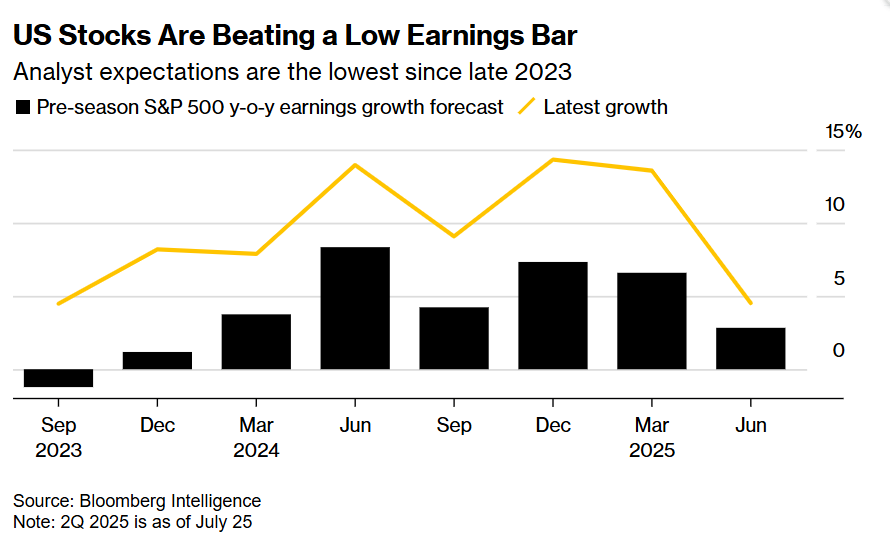
"现在就假设关税不会产生通胀压力还为时过早,"卡尔瓦西纳等RBC策略师们在周日发布的一份研究报告中写道,该报告发布 时正值欧盟与美国宣布正式达成贸易协议之后。"如果在关税重压之下,美国企业对下半年以及2026年的利润展望并不像投资 者们一直预期的那样乐观,这也会给屡创新高的美国股市走势带来巨大的回调风险。" 随着散户与机构投资者们押注美国企业盈利增长将继续强劲,美国股市已反弹至历史最高位且多个交易日创下历史新高。据 Bloomberg Intelligence汇编的数据,Q2美股财报季截至目前,约82%的标普500指数成份公司的第二季度整体盈利超出华尔街普 遍预期,为近四年来最高的超预期比例。 智通财经APP获悉,尽管本季美国财报季开局强劲,但来自加拿大皇家银行资本市场(RBC Capital Markets)的策略师团队认 为,现在就排除特朗普关税政策对美国通胀和企业盈利造成的影响为时尚早。由华尔街顶级策略师洛里·卡尔瓦西纳(Lori Calvasina)领衔的RBC策略团队表示,初步趋势显示,美国企业迄今对特朗普发起的新一轮贸易战表现出韧性,然而,RBC表 示,该机构调查显示多位美国大型企业的高管警告称, ...


零日期权成新宠,华尔街三大机构达共识:散户正主导美股市场
Hua Er Jie Jian Wen· 2025-07-24 12:19
Group 1 - Retail investors are currently dominating the U.S. stock market, as indicated by major Wall Street institutions like JPMorgan, Barclays, and Charles Schwab [1][2][3] - Barclays' proprietary stock frenzy index shows that the proportion of stocks in the "frenzy zone" is reaching its highest level of the year, reflecting the aggressive use of zero-day options by retail investors [2][4] - The best-performing stocks since the market low on April 9 are concentrated in unprofitable tech stocks and heavily shorted stocks, showcasing the distinct investment preferences of retail investors [1][3] Group 2 - The popularity of zero-day options among retail investors indicates a significant shift in risk appetite, allowing them to gain high leverage with relatively small capital [2][4] - Institutional investors have been forced to adjust their portfolios due to the active participation of retail investors, although they have not adopted aggressive risk-taking strategies [3][4] - The decline in market volatility, driven by stabilizing economic data such as GDP and inflation, is attracting more funds from volatility-controlled funds into the stock market [4]


中金ESG评级2025Q2数据更新
中金点睛· 2025-07-16 23:43
Core Viewpoint - The CICC ESG rating system has been updated to version 2.0 in October 2023, integrating financial importance characteristics and industry research insights into its framework, while also reflecting domestic ESG development trends and international standards [3][10][12]. Overview of CICC ESG Rating - The CICC ESG rating system is built on a general process that incorporates industry and company understanding, with a focus on carbon neutrality and other hot topics [3][10]. - The rating system features three main characteristics: alignment with international ESG standards, comprehensive integration of ESG and industry research, and quantitative methods enhancing data resources and indicator systems [12][13]. 2025Q2 Update: Sample Overview - In 2025Q2, the ESG scores for A-shares showed a right-skewed distribution, with scores concentrated between 1.5 and 8, while Hong Kong stocks exhibited a multi-modal distribution with scores mainly between 4 and 9 [17][25]. - The average ESG score for A-shares was 4.10, and the median was 3.77, while for Hong Kong stocks, the average was 6.10 and the median was 6.33 [17][25]. Industry Perspective - The CICC ESG rating framework is structured based on GICS secondary industry characteristics, leading to differences in indicator frameworks and score distributions across industries [5]. - Leading companies in the ESG ratings within industries such as energy, telecommunications, and food and beverage have significant market capitalization effects, while stability in rankings is observed in insurance and consumer goods sectors [5][49]. Individual Stock Perspective - The CICC ESG rating includes total ESG scores and scores for environmental, social, and governance dimensions, with scores standardized within GICS secondary industries, ranging from 0 to 10 [7][56]. - The report provides a summary of ESG scores for A-shares and Hong Kong stocks, reflecting relative performance within their respective industries [7][56]. Rating Characteristics - The rating results indicate a positive correlation between market capitalization and ESG scores, with larger companies generally achieving higher scores [36]. - The analysis shows that stock price risk, measured by maximum drawdown and VaR, is positively correlated with ESG scores, suggesting that better ESG performance may help manage investment risks [45][47]. Conclusion - The CICC ESG rating system continues to evolve, reflecting both international standards and local characteristics, while providing valuable insights into the ESG performance of companies across different industries and market capitalizations [3][12][13].

2025年金价冲刺3500美元悬念未解,高盛看涨3700花旗警示回落风险
Sou Hu Cai Jing· 2025-07-01 17:51
Core Viewpoint - The potential for gold prices to reach $3,500 per ounce by the end of 2025 is supported by various market dynamics, institutional forecasts, and influencing factors [1][17]. Group 1: Factors Supporting Price Increase - Major investment banks, including Goldman Sachs and UBS, have raised their forecasts multiple times, predicting gold prices could reach $3,700 per ounce by the end of 2025, with a possibility of $4,000 by mid-2026 due to geopolitical risks, weakening dollar credit, and ongoing central bank purchases [1]. - The long-term upward cycle for gold remains intact, with significant support from central bank purchases, as global central banks have been net buyers for 16 consecutive years, adding 244 tons in Q1 2025 [2][5]. - Expectations of a Federal Reserve interest rate cut could further weaken the dollar, which has already fallen to its lowest level since March 2022, potentially boosting gold prices [3]. Group 2: Geopolitical and Structural Demand - Ongoing geopolitical risks, such as the fragility of Middle East ceasefire agreements and fluctuating U.S.-China tariff negotiations, may reignite safe-haven demand for gold [4]. - The structural demand for gold is reinforced by the fact that 95% of central banks plan to continue increasing their gold reserves over the next 12 months [5]. Group 3: Risks to Price Increase - Technical analysis indicates that if gold prices fall below $3,165 per ounce, a technical correction of 10-15% could occur, potentially bringing prices down to the $2,500-$2,700 range [6]. - Current gold prices are detached from actual production costs, indicating a risk of valuation correction due to high price levels [7]. - If strong non-farm payroll data or inflation rebounds occur, the Fed may delay interest rate cuts, which could suppress gold prices [8]. Group 4: Institutional Divergence - There is a divergence among institutions regarding gold price forecasts, with Goldman Sachs predicting $3,700, UBS over $3,500, while Citigroup warns of a potential drop to the $2,500-$2,700 range [11]. Group 5: Investor Strategy Recommendations - Investors are advised to maintain rationality amid short-term volatility and avoid chasing price movements, as gold prices are highly sensitive to policy changes [12]. - A recommended allocation for gold in household financial assets is between 5-10%, with a strategy of dollar-cost averaging into gold ETFs to mitigate timing risks [12]. - Key policy anchors to monitor include the Federal Reserve's interest rate decisions and the political landscape surrounding U.S. elections [13].



综述|美联储保持观望 货币政策走向更多受制于通胀
Sou Hu Cai Jing· 2025-06-19 08:29
Core Viewpoint - The Federal Reserve decided to maintain the federal funds rate unchanged amid pressures from the Trump administration for rate cuts, while raising inflation expectations for 2025-2027, indicating that inflation factors will significantly influence future monetary policy decisions [1][2]. Group 1: Federal Reserve's Monetary Policy - The Federal Reserve has kept the federal funds rate unchanged for the fourth consecutive time, following a series of rate cuts that began in September 2024, which cumulatively lowered the rate by 100 basis points [1]. - The decision to remain on hold is attributed to uncertainties surrounding the new government's tariff policies and their actual impact on prices [1]. Group 2: Inflation Expectations - The Federal Reserve's economic forecast summary indicates an increase in expected inflation and unemployment rates for 2025-2027, with the median forecast for the personal consumption expenditures price index rising from 2.7% to 3% for this year, significantly above the long-term inflation target of 2% [1]. - Fed Chair Jerome Powell noted that recent months have seen a rise in short-term inflation expectations, driven by tariffs, which could lead to both one-time price increases and prolonged inflationary impacts [2]. Group 3: Future Rate Cuts - Despite expectations of potential rate cuts later this year, analysts suggest that the visible impact of tariffs on inflation and geopolitical tensions affecting oil prices may hinder the Fed's ability to lower rates in the short term [2]. - Goldman Sachs' macro strategist Simon Dunkerley anticipates that the Fed will maintain rates in the upcoming July meeting, but may consider cuts later in the year if the job market continues to weaken [2].
抛售离场OR逢低买入?中东火药桶点燃美股多空对决
智通财经网· 2025-06-19 04:14
Group 1 - The current U.S. stock market is at a sensitive threshold, high enough to trigger significant risk-off selling but low enough to attract bottom-fishing capital, with a sudden news event capable of breaking this fragile balance [1] - Geopolitical tensions, particularly regarding the U.S. potentially joining Israel in attacks on Iran, are causing market unease, with traders closely monitoring developments in the Middle East [1][2] - Hedge funds continued to buy stocks last week, but at a slower pace, while mutual funds experienced outflows of $10 billion, indicating a cautious market sentiment [1][2] Group 2 - Goldman Sachs estimates that large trading advisory funds will sell over $17 billion in a down market, more than three times the amount during stable or rising markets [2] - Pension funds and Target Date Funds are expected to sell $89 billion in stocks during the upcoming rebalancing, adding further pressure to the market [2] - The support from corporate buybacks is diminishing as the earnings season approaches, shifting investor focus to the impact of tariffs on corporate performance [2] Group 3 - The options market is showing complexity, with the S&P 500 index nearing historical highs while volatility indicators are rising, suggesting increased tail risk [5] - Investors are increasingly taking for granted the strategy of buying on dips, with significant pullbacks failing to materialize due to expectations of others buying at lower prices [8] - Market participants are advised to reconsider various economic factors, including tariffs, economic growth, inflation, and Federal Reserve policies, in light of recent geopolitical events [8]
【财经分析】美元再破关键支撑位,下半年人民币资产有重估机遇
Zhong Guo Jin Rong Xin Xi Wang· 2025-06-13 12:10
Core Viewpoint - The global foreign exchange market is experiencing downward pressure on the US dollar due to uncertainties surrounding US government policies, with the dollar index falling to a three-year low as of June 12, 2025 [1][3]. Group 1: Factors Affecting the US Dollar - The US dollar is expected to have further downward space in the second half of the year, influenced by weak economic data and geopolitical disturbances [3][4]. - The high-interest rate environment, driven by a decline in US credit expansion, has placed the dollar in a precarious position [4][5]. - The correlation between US residents' net assets and the dollar index remains strong, with stock net assets showing a stronger correlation than housing net assets [4][6]. Group 2: Economic Indicators - Key economic indicators, such as non-farm payrolls and consumer confidence, have shown weakness, contributing to the decline of the dollar index [6][7]. - The US added 139,000 non-farm jobs in May, but revisions to previous months' data indicate a concerning trend in employment growth [6][7]. - The Michigan Consumer Sentiment Index has rapidly declined, reaching levels comparable to those during the Fed's aggressive rate hikes in 2022 [6]. Group 3: Predictions and Market Sentiment - Morgan Stanley predicts a significant depreciation of the dollar, forecasting a 9% drop in the dollar index over the next year [7]. - The uncertainty surrounding US trade policies is leading to increased bullish positions on Asian currencies against the dollar, with notable increases in positions for the New Taiwan Dollar and South Korean Won [8][9]. - Goldman Sachs expresses a long-term bullish outlook on the Chinese yuan, predicting a 3% appreciation within the next 12 months [9].

美国5月CPI前瞻:关税冲击初步显现,美国经济“类滞胀”风险加剧?
Xin Hua Cai Jing· 2025-06-11 07:23
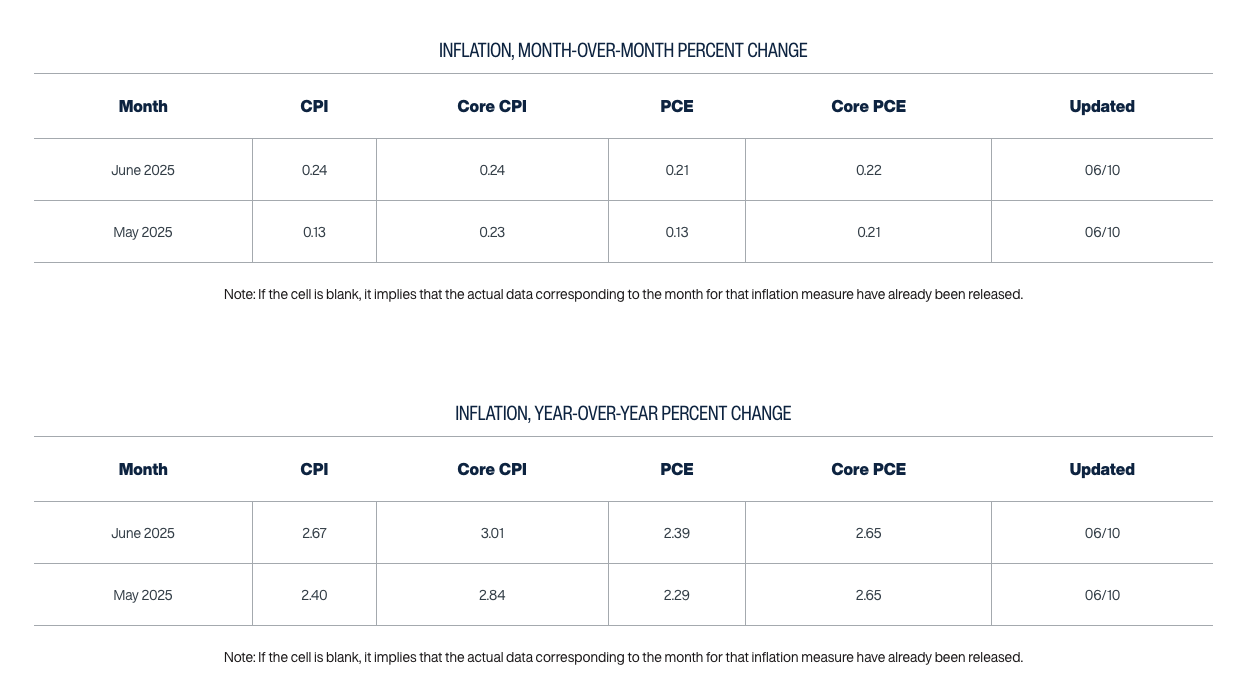
Group 1 - The core viewpoint of the articles revolves around the anticipated rebound of the US Consumer Price Index (CPI) in May, following a low in April, with expectations of a 0.1 percentage point increase to 2.4% year-on-year [1][2] - Analysts predict that the core CPI will maintain a year-on-year growth rate of 2.8%, with a month-on-month increase of 0.3% [1][2] - The impact of tariffs on inflation is a significant focus, with expectations that the effects will become more pronounced in the latter half of 2025, potentially keeping inflation levels around 3% [2][8] Group 2 - Goldman Sachs analysts believe that the short-term impact of tariffs on the May CPI data will be limited, with a slight increase in core CPI by 5 basis points, while overall CPI is expected to rise by 0.17% month-on-month [8] - The forecast for used car prices is a decrease of 0.5%, while new car prices are expected to rise by 0.1% [8] - Wells Fargo analysts expect core goods prices to continue rising, with a year-on-year increase of 0.25% in May, while service inflation is projected to slow down [8] Group 3 - The Federal Reserve's cautious stance on monetary policy is influenced by the ongoing tariff policies, with internal debates on the long-term effects of tariffs on inflation [10][11] - Minneapolis Fed President Neel Kashkari warns that the inflation risks from tariffs may take time to fully materialize, suggesting a potential for sustained inflation [12] - Market expectations for Fed rate cuts are stable, with a 30% probability of recession and a 52.2% chance of a rate cut in September [14][17] Group 4 - The upcoming CPI data is expected to reveal the initial effects of tariff policies on prices, which may alter the current inflation narrative in the market [18] - If inflation exceeds expectations, it could lead to significant volatility in the US stock and bond markets, with predictions of a 2-3% drop in the S&P 500 if core inflation rises above 0.4% [18] - Long-term risks of "stagflation" are increasing, with high CPI levels coinciding with slowing economic growth, potentially affecting the future trajectory of the US dollar [19]
大摩给出2025-26年美债收益率参考剧本:短期限收益率大降 长债独撑曲线峰
智通财经网· 2025-06-10 07:15
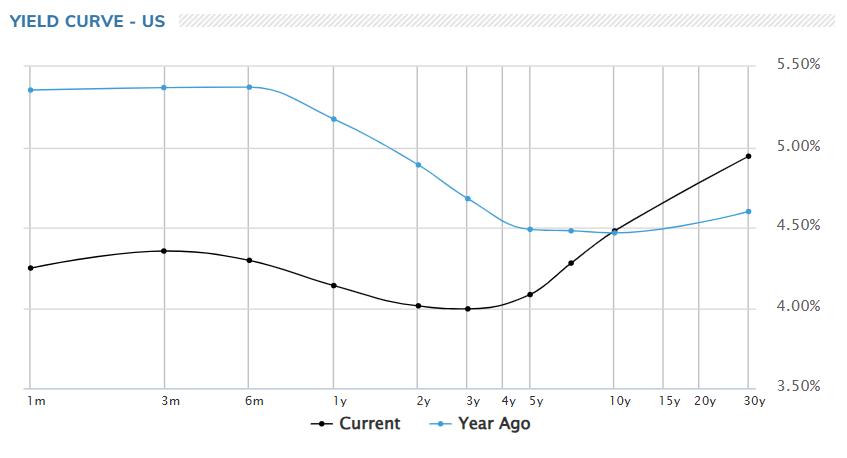
Core Viewpoint - Morgan Stanley analysts predict a steepening of the U.S. Treasury yield curve in 2025-2026, driven by a significant decline in short-term yields rather than a substantial rise in long-term yields [1][4][6] Group 1: Yield Curve Expectations - The yield curve is expected to steepen due to a downward trend in overall yields, particularly in short-term U.S. Treasury bonds [1] - Long-term yields may experience slight declines by the end of the year due to persistent high U.S. government budget deficits, while short-term yields are anticipated to decline significantly [1][4] - By the end of the year, the 10-year Treasury yield is projected to approach around 4% [4] Group 2: Inflation and Federal Reserve Policy - Morgan Stanley anticipates that inflation pressures related to tariffs will prevent the Federal Reserve from lowering interest rates in 2025, maintaining a hawkish stance [3] - The CME FedWatch Tool indicates that traders are betting on a rate cut in September and December, contrasting with Morgan Stanley's outlook [3] Group 3: Long-term Treasury Yields and Market Reactions - Long-term Treasury yields are expected to remain elevated due to expanding budget deficits, potentially leading to increased "term premiums" [6][7] - The term premium, which compensates investors for holding long-term bonds, is currently at its highest level since 2014, reflecting concerns over U.S. debt sustainability and inflation risks [7][8] - The anticipated increase in borrowing needs and government spending may exacerbate financing pressures in the market [8]