
AI算力

Search documents
1.56亿元出售算力资产,亿田智能跨界转型困局何解?
Xin Lang Cai Jing· 2025-12-19 00:38
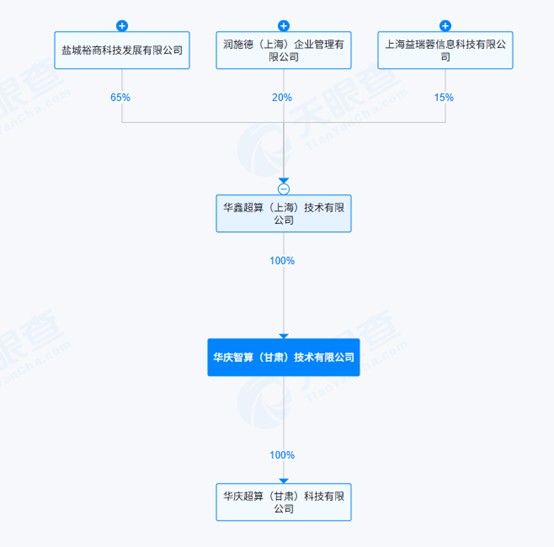
Core Viewpoint - Yitian Intelligent's recent announcement of selling its computing power assets for 156 million yuan has raised concerns about its strategic retreat from the AI computing sector, which was previously touted as a new growth avenue [1][15]. Group 1: Asset Sale Details - Yitian Intelligent's subsidiary, Gansu Yisuan Intelligent Technology Co., plans to sell 600 units of computing machines at a unit price of 260,000 yuan, totaling 156 million yuan [2][16]. - The assets were purchased less than a year ago, with a book value of 100 million yuan and an assessed value of 122 million yuan, indicating a transaction appreciation rate of 21.81% [2][16]. - The payment will be made in installments, with 50% due by March 20, 2026, and the remaining amount by June 20, 2026, while ownership remains with Yitian until full payment is received [2][16]. Group 2: Strategic Implications - The sale is seen as a comprehensive exit from the AI computing project, including the transfer of future revenue rights associated with a government agreement for a computing project in Qingyang [4][18]. - Analysts suggest that this move indicates Yitian's intention to divest all related assets and obligations, marking a significant strategic withdrawal from the AI computing sector [4][18]. Group 3: Financial Performance - As of the end of Q3 2025, Yitian reported cash and financial assets totaling over 1 billion yuan, but these funds are largely from past financing rather than sustainable cash flow from operations [5][19]. - The company experienced a 45.51% year-on-year decline in revenue, with a net loss of 111 million yuan, reflecting a staggering 904.67% drop compared to the previous year [5][19]. - Operating cash flow turned negative for the first time, with a net outflow of 39 million yuan, indicating a deteriorating ability to generate cash from core operations [5][19]. Group 4: Market Conditions - The integrated stove market, closely tied to real estate, has been in decline, with retail sales dropping by 27.6% and volume by 31.5% in the first half of 2025 [6][20]. - Yitian's management has acknowledged increasing competition and a trend of consumers reducing budgets, further complicating its financial recovery [6][20]. Group 5: Investment and Cost Structure - Yitian's capital expenditures in the computing sector have significantly increased, with cash payments for fixed and intangible assets reaching 144 million yuan in 2023 and 135 million yuan in 2024 [9][23]. - The company faces substantial fixed costs, including annual depreciation of approximately 22.61 million yuan for the computing machines, which adds pressure to its already strained profit margins [11][25]. - The high fixed costs associated with the computing business have been described as a "profit black hole," exacerbating the company's financial difficulties [11][25]. Group 6: Stock Market Reaction - Despite the deteriorating fundamentals, Yitian's stock price surged by 184% from its low in September 2024, driven by market enthusiasm for AI computing concepts [12][26]. - However, internal stakeholders have begun to sell shares, with significant reductions in holdings by employee investment platforms, indicating a lack of confidence in the company's future [12][26].


西部证券:聚焦AI算力供不应求和新技术演进 低轨卫星进入景气周期
智通财经网· 2025-12-17 03:04
AI Computing Power - AI computing power is entering a new stage, with a focus on structural changes by 2026, including a shift in demand from training to inference computing [2] - Capital expenditure (Capex) investment structure shows stability among leading cloud providers, with second-tier cloud providers joining the market [2] - The architecture of computing networks is evolving, with scale-up and scale-across strategies contributing to increased network demand [2] - Continuous upgrades in GPU technology and the rise of ASIC chips are accelerating the growth of domestic computing power [2] Optical Interconnection - The industry is facing a supply-demand imbalance, particularly in optical modules, optical chips, and Faraday rotators [3] - Key technological trends include 1.6T, silicon photonics, OCS, and CPO, with a focus on resolving supply-demand conflicts and the impact of technological upgrades on supplier dynamics and profitability by 2026 [3] - Major beneficiaries of technological upgrades in the optical module sector include leading companies like Zhongji Xuchuang and Xinyi Technology [3] - Supply constraints are noted for optical chip suppliers such as Yuanjie Technology and Shijia Photonics [3] Liquid Cooling - The server liquid cooling market is at a historic turning point, with significant demand in North America, Southeast Asia, and China, particularly in the North American computing market [4] - Current suppliers of liquid cooling solutions are primarily from Taiwan and the United States, with potential for domestic manufacturers to achieve breakthroughs [4] - Key focus on Invec [4] AIDC (Artificial Intelligence Data Center) - The IDC industry is expected to maintain an expansion trend driven by AI development, with an increase in AIDC penetration rates by 2026 [5] - Core focus areas include the international expansion of third-party IDC companies and the optimization of industry competition dynamics [5] - New REITs are anticipated to be released, enhancing companies' financing capabilities [5] Supernode Integrated Equipment - The supernode network requires high standards for complete cabinets, circuit boards, and connection chips, with strong supply chain dependencies [6] - Focus on connection chip suppliers, including switching chips and interface chips, as well as Ethernet switch manufacturers [6] Commercial Aerospace - The low Earth orbit satellite sector is entering an accelerated growth phase, supported by national policies and a strong upward trend in the commercial aerospace industry [7] - The successful launch of the Zhuque-3 rocket marks the beginning of a new era for China's commercial aerospace sector, which is expected to experience rapid growth [7] - Key variables include the success rate of various rocket payloads and capacity planning, with attention to satellite constellation bidding orders once capacity stabilizes [7]

2.5万亿!融资余额再创新高!商业航天、海峡两岸、算力受热捧
Sou Hu Cai Jing· 2025-12-15 09:32
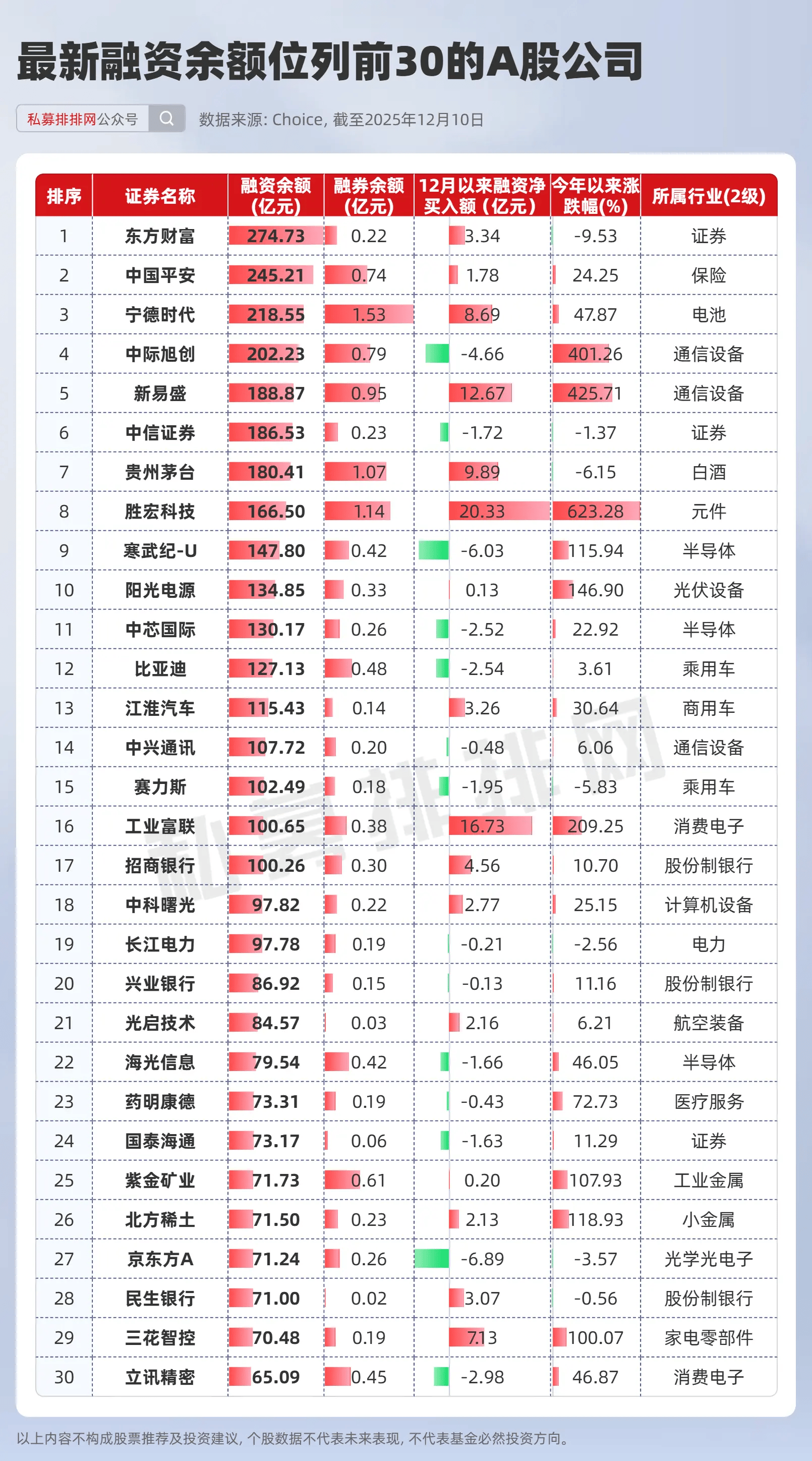
Core Viewpoint - The A-share market has seen significant fluctuations in various sectors, including commercial aerospace, AI computing power, and precious metals, while the margin financing balance has reached a historical high amid improving liquidity and rising risk appetite [1][2]. Group 1: Margin Financing Overview - As of December 10, 2025, the margin financing balance in the Shanghai and Shenzhen markets reached 25,142.89 billion yuan, marking a historical peak [1]. - The financing balance, a key component of margin trading, has increased for three consecutive trading days, reaching 24,964.06 billion yuan, also a record high [1]. - Analysts from GF Securities and Huatai Securities expect the margin financing balance to continue its upward trend, driven by improved liquidity and market risk appetite [1]. Group 2: Sector Performance - The top five sectors by net financing inflow since December include semiconductors (701.86 billion yuan), communication equipment (569.22 billion yuan), batteries (402.13 billion yuan), components (359.68 billion yuan), and consumer electronics (284.31 billion yuan) [1]. - A total of 1,918 companies have seen net buying since December, with a cumulative purchase amount of 836.16 billion yuan, indicating strong investor interest in these sectors [6]. Group 3: Individual Stock Highlights - Among the 30 companies with the highest financing balances, 17 have balances exceeding 10 billion yuan, and 4 exceed 20 billion yuan, including Dongfang Caifu (274.73 billion yuan), China Ping An (245.21 billion yuan), Ningde Times (218.55 billion yuan), and Zhongji Xuchuang (202.23 billion yuan) [5]. - Notably, Zhongji Xuchuang's stock price surged to a historical high of 620 yuan, reflecting a 17.62% increase over five days, despite a net reduction in financing of 4.66 billion yuan [5][9]. Group 4: Investment Trends - The commercial aerospace and AI computing sectors have attracted significant financing, with companies like Feilihua receiving the highest net buying of 8.84 billion yuan, reflecting a nearly 15% increase in stock price [9]. - The AI computing sector is highlighted by companies like Jerey Co., which has transitioned into this space, securing contracts worth over 200 million USD, leading to a stock price increase of over 28% since December [9][10]. Group 5: Institutional Interest - Among the 1,918 companies that received net buying, 749 were simultaneously held by funds and foreign investors, indicating strong institutional interest in these stocks [11]. - Yonghui Supermarket, which has seen a stock price increase of over 28% since December, is noted for its strategic positioning in the cross-strait economic integration, supported by recent government policies [15][16].
十大券商一周策略:跨年行情蓄势待发,风格切换可能会越来越强,关注低位价值板块
Sou Hu Cai Jing· 2025-12-15 00:08
Group 1 - The central economic work conference has set the tone for 2026 economic work, with expectations for a "cross-year market" and "spring excitement" rising among broker reports [1] - The policy focus on "expanding domestic demand and countering involution" is expected to lead the market out of deflation, with technology sectors like AI computing power and commercial aerospace being key offensive directions [1][4] - There is a growing preference for low-volatility, high-dividend assets, indicating a potential market style switch [1][3] Group 2 - Citic Securities suggests seeking intersection in configurations, focusing on products with overseas exposure and positive changes in domestic demand as catalysts [2] - The report emphasizes that while external demand products have been validated, the potential for exceeding expectations is limited, and investors' low expectations could lead to valuation elasticity if domestic demand surprises positively [2] - The focus remains on industries where China has a global share advantage, such as non-ferrous metals, chemicals, and new energy, with an emphasis on companies that can enhance global pricing power [3] Group 3 - The market is expected to enter a new phase of recovery, with significant support from previous price levels and a shift in investor sentiment following recent adjustments [5] - Structural risks are emerging, which could hinder the sustained strength of advantageous themes, as indicated by high transaction concentration [5][6] - The focus on low-volatility and stable return assets is increasing, with potential interest in service consumption sectors like aviation, duty-free, and hotels [3][12] Group 4 - The central economic work conference has highlighted the importance of expanding domestic demand and addressing involution, clarifying the path out of deflation [7][19] - The emphasis on enhancing the income of middle and low-income groups and stimulating private investment indicates a shift towards endogenous growth drivers [7] - The conference also pointed out the need for a unified national market and the deepening of anti-involution measures, which are crucial for the recovery of corporate profits and subsequent improvements in resident income [8] Group 5 - The new policy deployment is expected to support the A-share market's cross-year performance, with a focus on TMT and advanced manufacturing sectors [9] - The historical performance of the A-share market during the start of the "13th Five-Year" and "14th Five-Year" plans suggests a positive outlook for 2026 [9] - The report indicates that the market may experience fluctuations due to various domestic and international events, but the overall economic policy is expected to remain supportive [9] Group 6 - The AI industry is characterized by a competition in full-stack capabilities and deep penetration into various application scenarios [10][11] - Domestic firms are focusing on building a full-stack system in the computing hardware sector, with significant advancements in AI solutions and infrastructure [11] - The demand for AI infrastructure is expected to drive growth in related sectors, including telecommunications and high-spec data centers [11][16] Group 7 - The commercial aerospace sector is entering a period of heightened activity, supported by new policies and government initiatives [17] - The establishment of a national commercial aerospace development fund aims to attract private investment and enhance the capabilities of commercial companies [17] - Recent advancements in satellite internet and frequent launches are expected to benefit the entire aerospace industry chain [17]
机构展望 | 政策基调进一步明确 跨年行情有望逐步展开
Shang Hai Zheng Quan Bao· 2025-12-14 22:26
Core Viewpoint - The A-share market is experiencing a "weak Shanghai, strong Shenzhen" trend, with the ChiNext Index rising by 2.74% and the Shenzhen Component Index increasing by 0.84%, while the Shanghai Composite Index fell by 0.34% [1] Group 1: Policy Direction - The Central Economic Work Conference held on December 10-11 outlined the economic work for 2026, emphasizing a continuation of "more proactive fiscal policy" and "moderately loose monetary policy" [2] - The conference highlighted the importance of expanding domestic demand and improving supply quality, consumer willingness, and stabilizing employment and income expectations [2] - There is a strong emphasis on innovation and the establishment of mechanisms to support it, including policies for education, technology, and intellectual property protection [2] Group 2: Market Sentiment - The Central Economic Work Conference is expected to boost corporate profits and market confidence, creating a favorable environment for risk assets [3] - The recent Federal Reserve meeting has reinforced a global trend of monetary easing, which is anticipated to positively impact the A-share market [3] Group 3: Market Dynamics - The A-share market is currently in a consolidation phase, having completed adjustments, with expectations for a cross-year market rally [4] - Factors contributing to recent market adjustments include global liquidity tightening and concerns over an "AI bubble," but the market has stabilized following the Fed's interest rate decisions [4] - Institutional repositioning and improved market liquidity are expected to enhance trading activity as the year ends [4] Group 4: Investment Focus - The focus for the upcoming spring market in 2026 remains on technology sectors such as robotics, nuclear power, and small satellites, as well as brokerage firms [5] - There is a recommendation to pay attention to high-value sub-sectors within the technology growth segment, including consumer electronics, gaming, wind power, and batteries [5] - The long-term outlook for the AI industry suggests that if more growth stocks can deliver on performance, the technology growth sector may see a second wave of acceleration [6]
美联储降息落地!咱们的钱该投股市、买房还是买黄金?
Sou Hu Cai Jing· 2025-12-14 15:48
司的就是国际这条线;马上追踪热点 秘闻背后的事;我给你说透 欢迎各位看官收看今天的【司马秘事】 文:司马秘事 编辑:司马秘事 12月美联储议息会议结果今晚揭晓,市场大概率要迎来年内第三次降息。 这波全球宽松潮可不是小事,咱们手里的存款、想入手的房子、关注的黄金,都可能跟着变天。 A股迎外资科技金融成香饽饽 美联储一降息,美元资产的吸引力就弱了,全球热钱得找新去处,A股自然成了重点目标。 2025年三季度,北向资金已经净买超2000亿元,持股比例冲到了历史高位。 这些外资选股眼光挺挑,只盯着有业绩、符合产业趋势的标的。 科技股里的AI算力、半导体,金融股里的券商、保险,还有航空、造纸这类靠进口原材料的行业,都 会直接受益。 我身边做基金的朋友早就开始布局了,他说科技公司借钱成本变低,加上国产替代的红利,北方华创、 中芯国际这些龙头值得关注。 但也别想着闭眼买,要是降息幅度没达到预期,前期涨太猛的AI股可能会回调。 如此看来,跟着外资方向走没错,但得选有真本事的公司,别被纯概念炒作套住。 房贷利率走低楼市分化更明显 对想买房的人来说,美联储降息确实是个好消息,国内央行政策空间变宽松,房贷利率大概率会继续往 下走。 ...

十大券商一周策略:当下是布局重要窗口!跨年有望迎来新一波行情
Xin Lang Cai Jing· 2025-12-14 14:34
Group 1 - The central economic work conference emphasizes expanding domestic circulation as a key focus, similar to last year, but with significant differences in expectations and pricing for domestic and foreign demand stocks [1][12] - There is a strong performance expectation for overseas exposure stocks, but the difficulty in further valuation increases is acknowledged; meanwhile, domestic demand stocks have potential for significant valuation elasticity if they exceed expectations [1][12] - The market is currently viewed as an important window for positioning in the spring market, with expectations for large-cap growth driven by industry trends and benefiting from insurance capital allocations [2][13] Group 2 - The market is expected to enter a new wave of trends as the underlying logic of the bull market remains intact, driven by structural trends and capital market reforms [3][14] - A-shares are still in an upward channel, with a transition from policy-driven momentum to profit-driven momentum anticipated, supported by recovering prices and domestic demand [4][15] - The upcoming policies are expected to create a favorable environment for risk assets, with a focus on sectors such as artificial intelligence, new energy, and consumer services [5][16] Group 3 - The cross-year market is likely to see a rotation of sectors, with a focus on technology and advanced manufacturing, while defensive and consumer sectors may also be considered in the short term [7][17] - The economic gears are expected to continue moving forward despite fluctuations in market expectations, with a focus on fundamental changes rather than price volatility [8][18] - The market structure is anticipated to evolve from a tech-dominated landscape to a more balanced bull market across various sectors, driven by policy support for growth and structural transformation [6][19]
跨年行情如何布局?六大券商最新策略来了
Sou Hu Cai Jing· 2025-12-14 14:08
【大河财立方消息】2025年A股已进入收官倒计时,步入年末,市场正处于全年业绩兑现与2026年开局 衔接的关键节点。来年如何布局?跨年行情怎么看?大河财立方记者梳理了6家券商最新解读。 中信建投:跨年行情蓄势待发 中信建投分析师夏凡捷、何盛发表研报认为,从9月初至12月初,AH两地市场经历了较长时间的调整, 投资者情绪趋于谨慎,而近期,多项关键事件与数据相继公布,整体基调符合或略好于市场预期。 中信建投认为,牛市底层逻辑仍在,主要由结构性行情和资本市场改革政策推动。目前市场已经基本完 成调整,叠加基金排名基本落地,跨年有望迎来新一波行情。 中期行业配置方面,中信建投建议重点关注具有一定景气催化的有色金属和AI算力,主题上以商业航 天为主,可控核聚变和人形机器人为辅;港股也具有投资机会,潜在热点板块主要有互联网巨头、创新 药。重点关注:有色、商业航天、AI、人形机器人、可控核聚变、创新药、非银金融等。 中信证券:内外兼顾,寻求交集 中信证券裘翔、刘春彤等人发表研报认为,从此次中央经济工作会议内容来看,做大内循环仍是重心, 定位和去年相似。 研报中提到,但对于股票市场而言,内需品种和外需品种的预期和定价与去年存在 ...



广发基金刘玉:科技成长预计仍是主线 关注AI算力基础设施方向
Zhong Zheng Wang· 2025-12-12 13:12
Core Insights - The AI computing power sector is experiencing significant positive developments, with companies in the AI computing power chain being direct beneficiaries [1] - CPO (Coherent Photonic Optics) is identified as a core segment with high performance elasticity and certainty, benefiting from the capital expenditures of major overseas cloud giants like Microsoft, Google, and Meta [1] - The domestic computing power chain is accelerating its technological catch-up and market share increase under the strategy of self-control [1] Company Performance - Key players in the CPO industry include New Yisheng (300502), Zhongji Xuchuang (300308), and Tianfu Communication (300394), which have established strong competitive advantages through technology barriers and market share [1] - As of December 10, 2023, the stock price increases for these companies were 425%, 401%, and 263% respectively [1] - Funds heavily invested in these sectors, such as the Guangfa Emerging Growth Fund managed by Liu Yu, reported a year-to-date return of 73.41% as of December 10, 2023, and a cumulative return of 162.31% since October 2018 [1] Investment Strategy - The Guangfa Emerging Growth Fund's portfolio is heavily concentrated in the AI computing power sector, with over 25% of holdings in "Yizhongtian" and approximately 61% in the top ten holdings, including Industrial Fulian (601138) and Yingweike (002837) [2] - Liu Yu emphasizes a strategy focused on high performance certainty and significant future growth potential, adjusting the portfolio dynamically based on industry changes [2] - The AI industry is still in its early stages, with expected continuous demand growth for computing power infrastructure as AI models evolve and applications are implemented [2] Sector Focus - Liu Yu highlights three key sub-sectors within the computing power chain: 1. CPO (Optical Modules), with Nvidia planning to mass-produce CPO switches, leading to significant annual shipment growth [3] 2. OCS (Optical Circuit Switching), which offers high bandwidth and low latency, gaining attention due to Google's application in TPU architecture [3] 3. PCB (Printed Circuit Boards), crucial for AI server upgrades, with potential shifts in technology that require ongoing monitoring [3]
中央经济工作会议指明方向!A股这波机会该怎么抓?
Xin Lang Cai Jing· 2025-12-12 12:11
Core Insights - The Central Economic Work Conference held on December 10-11 in Beijing outlined key tasks for China's economic work in 2026, emphasizing the importance of maintaining confidence and leveraging advantages to address challenges [1][9] Economic Work Focus Areas - **Domestic Demand**: Emphasis on building a strong domestic market through consumption initiatives, income increase plans, and investment stabilization [1][11] - **Innovation Drive**: Focus on fostering new growth drivers by enhancing education, technology, and talent development, and establishing international innovation centers [1][11] - **Reform and High-Quality Development**: Commitment to deepening reforms, including a unified market construction and addressing competitive practices [2][11] - **Opening Up**: Promotion of multi-field cooperation and gradual expansion of service sector openness, along with enhancing foreign investment mechanisms [2][11] - **Coordinated Development**: Efforts to promote urban-rural integration and regional collaboration, ensuring stable prices for essential agricultural products [2][11] - **Green Transition**: Initiatives aimed at energy efficiency and carbon reduction across key industries [2][11] - **Public Welfare**: Focus on improving people's livelihoods through job stability and healthcare reforms [3][11] - **Risk Management**: Strategies to stabilize the real estate market and manage local government debt risks [3][11] Market Opportunities - **Technology and Manufacturing Exports**: Attention on sectors like semiconductor equipment, AI, and robotics, as well as traditional manufacturing exports [6][14] - **Supply Optimization**: Focus on industries with resource constraints and potential price increases, alongside sectors benefiting from policy adjustments [6][14] - **Consumer and Service Sector Upgrades**: Anticipation of a positive macroeconomic policy environment boosting consumer sectors, particularly in retail and food and beverage [6][14]