
有色金属

Search documents
最具爆发潜力的配置方向、行稳致远的配置策略有哪些?
Qi Huo Ri Bao· 2026-02-23 23:04
Core Viewpoint - The article discusses the investment strategies and asset allocation approaches for the year of the Horse, emphasizing the shift towards equity and physical assets in a low-interest-rate environment, while also highlighting the importance of diversification and risk management through various financial instruments [1][7]. Group 1: Macro Trends - The trend of residents moving deposits to capital markets is confirmed, with a significant increase in non-bank institution deposits expected to rise by 6.4 trillion yuan by 2025 [2]. - The scale of bank wealth management products is projected to exceed 33 trillion yuan, increasing by 3.3 trillion yuan compared to the end of 2024, with over 97% being fixed-income products [2]. Group 2: Asset Allocation Strategies - The "fixed income plus" strategy is anticipated to become mainstream, combining stable fixed-income assets with equity investments to enhance overall returns [2]. - The allocation ratio should be dynamically calibrated based on risk-return objectives, ranging from 90:10 for conservative investors to 70:30 for aggressive ones [2]. Group 3: Sector Focus - Investment focus should be on sectors such as non-ferrous metals (copper, aluminum, tin), chlor-alkali industry, and fine chemicals, as these areas are expected to benefit from sustained demand despite limited capital expenditure [3]. - The strategy of "dual expression" allows investors to manage risks within a sector while capitalizing on price movements in commodities [3]. Group 4: Risk Management and Diversification - The concept of diversification is emphasized as a "free lunch" in investing, with a focus on identifying growth opportunities and managing positions dynamically based on market conditions [4]. - Non-linear derivatives, such as deep out-of-the-money put options, are recommended for asymmetric risk protection in volatile markets [6]. Group 5: Investor Guidance - Investors are advised to define their capability circle, focusing on areas of expertise and avoiding unfamiliar investments to achieve sustainable returns [7]. - Specific risk management guidelines include limiting investment to 30% of available capital, avoiding illiquid contracts, and prioritizing strategies with limited risk and returns [7].
跨境和行业ETF逆势“吸金”
Shang Hai Zheng Quan Bao· 2026-02-23 18:37
Group 1 - The capital flow in the A-share market has shown a divergent trend since the beginning of 2026, with broad-based ETFs experiencing significant outflows while industry and cross-border ETFs have attracted substantial inflows [1][2] - As of February 13, 2026, the net inflow for cross-border ETFs reached 63 billion yuan, while industry ETFs such as chemical, non-ferrous metals, and satellite sectors have seen strong capital inflows [1][2] - The total net outflow from equity ETFs in the A-share market amounted to 846.46 billion yuan by February 13, 2026, with major outflows concentrated in large-scale broad-based ETFs [1][2] Group 2 - Fund managers remain optimistic about the technology sector, viewing it as a core investment theme for 2026, particularly in the context of artificial intelligence (AI) advancements [3][4] - The AI sector is perceived as a significant driver of productivity and is considered a key variable in the new industrial revolution, with expectations for continued growth and innovation in China [3][4] - Despite recent market adjustments, the long-term upward trend of the A-share market is expected to persist, with a focus on AI as a primary investment narrative [3][4]
最具爆发潜力的配置方向、行稳致远的配置策略有哪些?|策马点金
Qi Huo Ri Bao· 2026-02-23 14:41
Group 1 - The core viewpoint of the article emphasizes the need for diversified investment strategies in the context of low interest rates and shifting capital from deposits to capital markets, suggesting that a "fixed income plus" strategy will become mainstream among investors [3][9] - The article highlights the significant increase in non-bank institution deposits, which rose by 6.4 trillion yuan in 2025, and the scale of bank wealth management products exceeding 33 trillion yuan, indicating a shift in investor preferences towards equity assets to enhance overall returns [3][4] - The article discusses the transition of China's economic engine from real estate to green industries and high-end manufacturing, which is influencing current asset allocation directions [4][9] Group 2 - Specific investment recommendations include focusing on non-ferrous metals like copper, aluminum, and tin, as well as chemical sectors such as chlor-alkali and refining, due to sustained demand from downstream industries like electric grid construction and new energy vehicles [4][5] - The article suggests a dual expression strategy where rising copper prices benefit both the profits of non-ferrous companies and direct gains from copper futures, allowing investors to manage risks effectively within a sector [4][5] - The article emphasizes the importance of diversification as a "free lunch" in investing, with strategies that include tracking product prices and profits, and being willing to rotate positions based on market conditions [6][9] Group 3 - The article outlines risk management strategies for investors in commodity futures and options markets, including limiting investment to 30% of available capital, avoiding illiquid contracts, and prioritizing low-risk, low-reward trading strategies [9][7] - It suggests that investors should actively use options and other non-linear derivatives to construct asymmetric risk protection, such as purchasing deep out-of-the-money put options to hedge against extreme tail risks [7][9] - The consensus among private equity respondents is that a multi-strategy approach combining "fixed income plus," enhanced physical assets, and derivative protection will be a rational choice for navigating market volatility [9][10]
转债事件点评:把握春季行情下半场
GUOTAI HAITONG SECURITIES· 2026-02-23 13:08
Core Insights - The report suggests adopting a "steady first, with growth in mind" approach to maintain gains in the second half of the spring market and to reserve space for future positioning [2][15] - The spring market of 2026 began on December 17, 2025, driven by favorable policies and early capital allocation, leading to a strong performance in the A-share market, with the Shanghai Composite Index achieving 17 consecutive days of gains [9][13] - The convertible bond market experienced rapid growth followed by volatility, with median prices and conversion premiums reaching historical highs, indicating a significant reduction in the safety cushion of bonds [9][10] Market Trends - Historical data from 2017 to 2025 indicates that the market typically experiences a "rise then fall" pattern from the Spring Festival to the National People's Congress (NPC) [13][14] - The report highlights that during the period from the Spring Festival to the NPC, the market is likely to see a "spring surge," with small-cap growth stocks outperforming, particularly in TMT and high-end manufacturing sectors [13][14] - As the NPC approaches, the market may shift towards defensive sectors like pharmaceuticals and utilities, with high valuations in convertible bonds facing potential compression due to stock adjustments [13][14] Investment Strategy - The report recommends a balanced investment strategy, transitioning from aggressive profit-seeking to balancing returns and risks as the market moves into the NPC and Q1 earnings preview phase [15] - It emphasizes the importance of selecting convertible bonds with solid performance and reasonable pricing, while also considering high-quality, high-priced convertible bonds with clear growth prospects [15] - The report identifies sectors such as AI computing, semiconductors, non-ferrous metals, and post-cycle industries like consumption and real estate as favorable for convertible bonds due to improving supply-demand dynamics and favorable policy catalysts [15]
江西铜业股份(00358.HK)拟发行不超150亿元中期票据及不超100亿元超短期融资券
Ge Long Hui· 2026-02-23 12:33
Group 1 - The company, Jiangxi Copper Co., Ltd. (00358.HK), announced a proposal to register and issue medium-term notes not exceeding RMB 15 billion (including RMB 15 billion) [1] - Additionally, the company plans to issue ultra-short-term financing bonds not exceeding RMB 10 billion (including RMB 10 billion) [1]
江西铜业股份建议注册发行非金融企业债务融资工具
Zhi Tong Cai Jing· 2026-02-23 12:32
Core Viewpoint - Jiangxi Copper Company Limited (00358) announced its board's proposal to register and issue medium-term notes of up to RMB 15 billion (including RMB 15 billion) and ultra-short-term financing bonds of up to RMB 10 billion (including RMB 10 billion) in the People's Republic of China [1] Group 1 - The company plans to issue medium-term notes not exceeding RMB 15 billion [1] - The company also intends to issue ultra-short-term financing bonds not exceeding RMB 10 billion [1] - Both financial instruments are categorized as non-financial corporate debt financing tools [1]
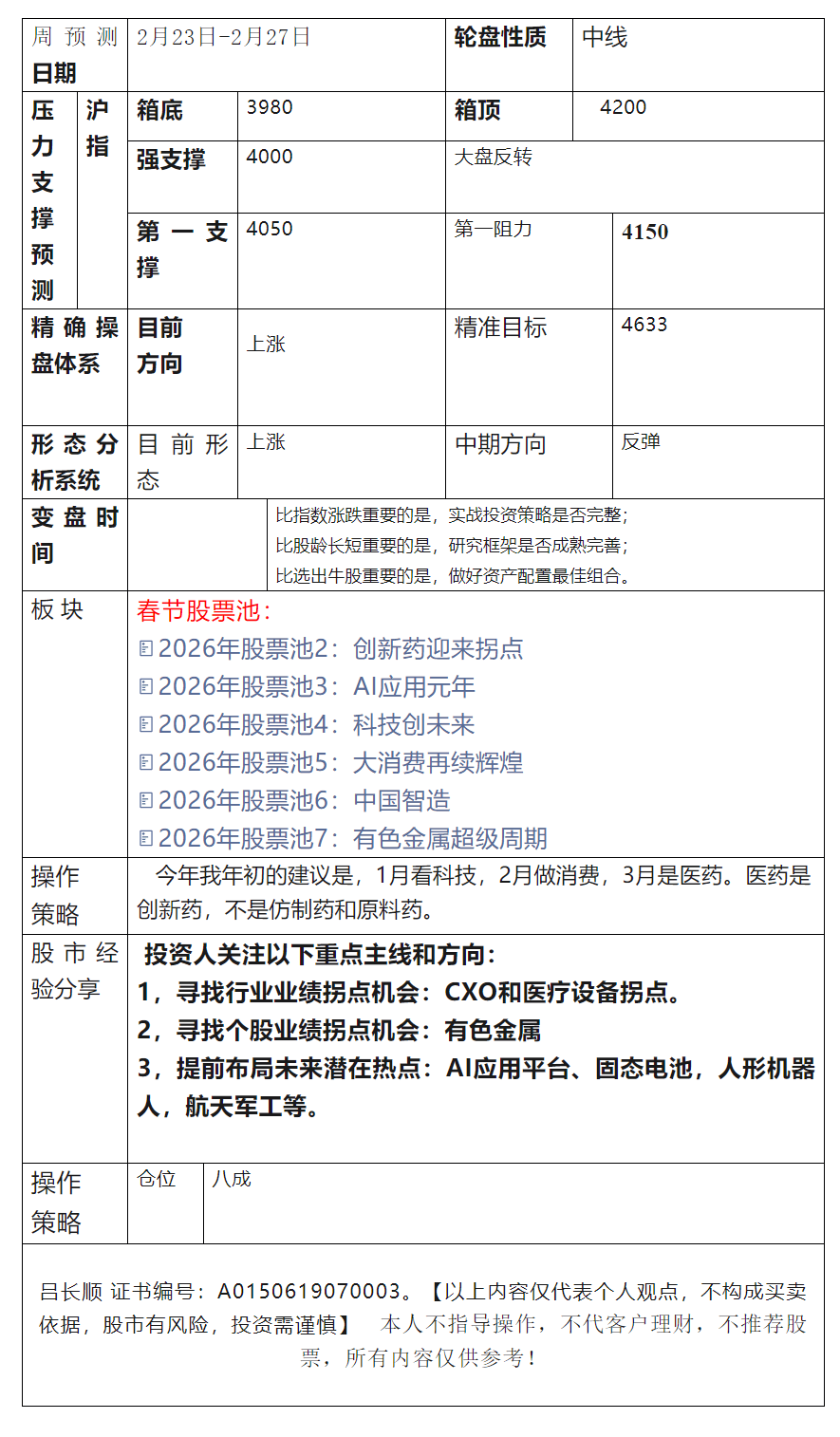
8大利好,迎接A股开门红
Sou Hu Cai Jing· 2026-02-23 11:31
Core Viewpoint - The Hong Kong stock market is expected to open positively, which will likely influence the A-share market to also open strong after the holiday, driven by multiple favorable factors. Group 1: Market Sentiment and Predictions - Positive sentiment is expected for the A-share market due to the favorable information during the holiday period, with an 80% probability of a high opening and a 60% chance of a sustained upward trend [1] - The strong performance of the Hong Kong market is anticipated to create a positive emotional impact on the A-share market [1] - The rise in commodities such as gold and oil is expected to boost resource stocks, which has been previously highlighted [1] - The popularity of humanoid robots during the Spring Festival Gala is predicted to drive the overall robotics sector upward [1] - The AI sector is experiencing a boost, with major internet companies seeing stock price increases, as evidenced by the performance of Hong Kong's BAT stocks [1] - The fear of an AI bubble in the U.S. stock market is subsiding, as indicated by Nvidia's stock performance [1] - The surge in demand for e-commerce and food delivery during the Spring Festival is reflected in Meituan's stock price [1] - The tourism sector is thriving, with heavy traffic indicating a strong recovery, although the film industry is struggling due to lower box office numbers [1] Group 2: Investment Strategies and Sector Focus - The market is expected to see increased liquidity post-holiday, which may lead to a significant rise in trading volume [2] - Investors who held stocks during the holiday are likely to see returns, but caution is advised regarding chasing high prices after the market opens [2] - Key sectors to focus on include AI, robotics, computing power, storage, commodities, consumer goods, and pharmaceuticals [2][4] - The investment strategy suggests focusing on sectors with performance turning points, such as CXO and medical devices, and identifying individual stocks with potential turning points in performance [4] - Future potential hotspots include AI application platforms, solid-state batteries, humanoid robots, and aerospace military industries [4]

千亿牛股,逆市大跌22%
Zhong Guo Ji Jin Bao· 2026-02-23 10:53
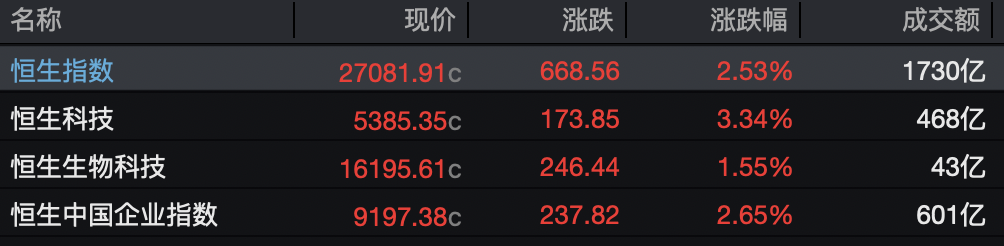
Group 1 - The Hong Kong stock market showed a positive sentiment today, with all three major indices opening high and maintaining strong fluctuations, led by the technology sector [1][2] - The Hang Seng Index rose by 2.53%, the Hang Seng China Enterprises Index increased by 2.65%, and the Hang Seng Technology Index surged by 3.34% [2][3] - Major tech stocks performed well, with Meituan rising over 5%, Alibaba, Xiaomi, and JD.com increasing by over 3%, while semiconductor stocks also saw significant gains [2] Group 2 - Zhipu, referred to as the "first stock of large models in Hong Kong," experienced a sharp decline of 22.76% due to the impact of an apology letter related to its GLM Coding Plan [4][5] - Zhipu's stock price had previously surged over 250% from February 9 to February 22, indicating a volatile trading period [4] - The company acknowledged three main errors in the GLM Coding Plan, including insufficient transparency, slow rollout of GLM 5, and poorly designed upgrade mechanisms for existing users [6] Group 3 - The precious metals sector, including gold, saw strong performance, with stocks like Tongguan Gold rising over 12% and Ganfeng Lithium increasing by over 8% [7][8] - Other notable gains in the precious metals sector included Zijin Mining and Wukuang Resources, both rising by over 6% [7]
摩根大通预测2026年铜市将出现13万吨供应缺口 铝市将出现23万吨供应缺口
Wen Hua Cai Jing· 2026-02-23 10:51
Group 1 - Morgan Stanley forecasts a supply deficit of 130,000 tons in the copper market by 2026 [2] - The copper market is expected to shift to a mild surplus in 2027 due to increased supply from copper scrap and the recovery of several mines that experienced significant supply disruptions in 2025 [2] - Projected copper prices are estimated to be $13,500 per ton in Q2 2026 and $13,000 per ton in Q3 2026 [2] Group 2 - The aluminum market is projected to have a supply deficit of 230,000 tons in 2026 [3] - The average price of aluminum is expected to be $3,200 per ton in Q2 2026, with significant support anticipated in the second half of the year [3]

伦敦期铜脱离一周高点,受关税不确定性影响
Wen Hua Cai Jing· 2026-02-23 10:46
Group 1 - The core viewpoint of the articles revolves around the uncertainty in the copper market due to the recent changes in U.S. tariffs, with potential implications for global trade and metal prices [1][2] - The London Metal Exchange (LME) three-month copper price fell by 0.1% to $12,941.50 per ton, after reaching a high of $13,050, influenced by a weaker dollar and market volatility [1] - IndusInd Securities analyst Jigar Trivedi noted that the uncertainty surrounding tariffs and light trading conditions are putting pressure on copper prices [1] Group 2 - Morgan Stanley forecasts a supply deficit of 130,000 tons in the copper market by 2026, with expectations of a mild surplus in 2027 due to increased copper scrap supply and the recovery of several mines that faced significant supply disruptions in 2025 [3] - The aluminum market is projected to face a supply deficit of 230,000 tons in 2026, with LME three-month aluminum prices slightly declining by 0.1% to $3,100 per ton [4] - Other base metals showed mixed performance, with lead down 0.1% to $1,963 per ton, zinc down 0.2% to $3,376 per ton, nickel up 1.3% to $17,580 per ton, and tin rising 1.2% to $46,930 per ton [4]