
美妆

Search documents
李佳琦直播间市集广州开市,双节体验新场景
Sou Hu Cai Jing· 2025-10-11 00:45
Core Insights - The event "All Girls' Happy Market" is a collaboration between Meiwang and Li Jiaqi's live streaming platform, bringing selected products to an offline market in Guangzhou, allowing consumers to experience products before purchasing [8] Group 1: Event Overview - The market opened early in the morning, attracting a diverse crowd eager to participate in the event [1] - The entrance featured a pink arch, with staff distributing stamped cards indicating the locations of over 30 brand booths, including Olay, Procter & Gamble, and Clarins [3] Group 2: Brand Engagement - Olay showcased new skincare products set to launch during the Double 11 shopping festival, with interactive testing stations for consumers [3] - Procter & Gamble's booth was filled with everyday products, prominently displaying "live streaming same model" and "Double 11 special preview" labels [3] - Clarins offered makeup services at their booth, with professional makeup artists providing personalized experiences for attendees [5] Group 3: Interactive Experiences - The market featured themed photo spots based on popular TV shows, encouraging attendees to take pictures and engage with the setups [5] - A pop-up store named "YAN LAB" showcased beauty products from the shows, with staff providing product demonstrations [7] Group 4: Atmosphere and Attendance - The market created a lively atmosphere with a mix of cultural elements and modern consumer experiences, contributing to the festive spirit in Guangzhou during the holiday season [8] - Attendance exceeded expectations, prompting organizers to increase staff to maintain order and ensure a smooth experience for visitors [8]


双11箭在弦上,高盛专家:本土美妆品牌领跑,上海家化、毛戈平位居高增长梯队
Zhi Tong Cai Jing· 2025-10-10 14:16
Core Viewpoint - Goldman Sachs is optimistic about the growth of local Chinese beauty brands during the upcoming Double 11 shopping festival, predicting that brands like Shanghai Jahwa and Mao Geping will lead the high-growth tier [2]. Group 1: GMV Targets and Growth Expectations - Tmall/Taobao aims for a total GMV growth of 20%-25% (approximately 600 billion), with the beauty category expected to grow around 20% [2]. - Douyin is projected to achieve over 40% GMV growth across the platform, with the beauty category exceeding 30%, making it a key growth driver [3]. - Tmall's promotional efforts are more aggressive than previous events, while Douyin continues to attract brand investments through content e-commerce and live streaming advantages [3]. Group 2: Promotional Period Extensions - The promotional period for Double 11 has been extended significantly this year, with Douyin extending by 22 days, starting pre-sales on September 16 [4]. - JD.com has extended its promotional period by 8 days, while Tmall has added 2 days, with pre-sales starting on October 15 [5]. Group 3: Brand Performance Insights - Local leading brands are expected to outperform the industry, with high-growth brands like Mao Geping (40%-50%) and Shanghai Jahwa showing strong potential [6]. - Multinational high-end brands like Lancôme and Estée Lauder are expected to grow between 10%-30%, while mass-market brands face pressure with growth below 10% [7]. Group 4: KOL Trends and Strategies - The trend is shifting towards mid-tier KOLs, with Douyin directing traffic towards them, resulting in reduced commission rates for brands [8]. - Both local and multinational brands are adopting a dual strategy of collaborating with both top-tier and mid-tier KOLs to enhance reach and conversion efficiency [8]. Group 5: Industry Dynamics and Consumer Experience - The Double 11 event is seen as an accelerator for industry differentiation, with local brands gaining market share through live streaming and product innovation [8]. - Consumers will benefit from a longer promotional period, lower prices, and simplified rules, while investors should focus on high-growth local leaders and established multinational brands [8].

今年的国庆消费,很不一样
Hu Xiu· 2025-10-10 13:07
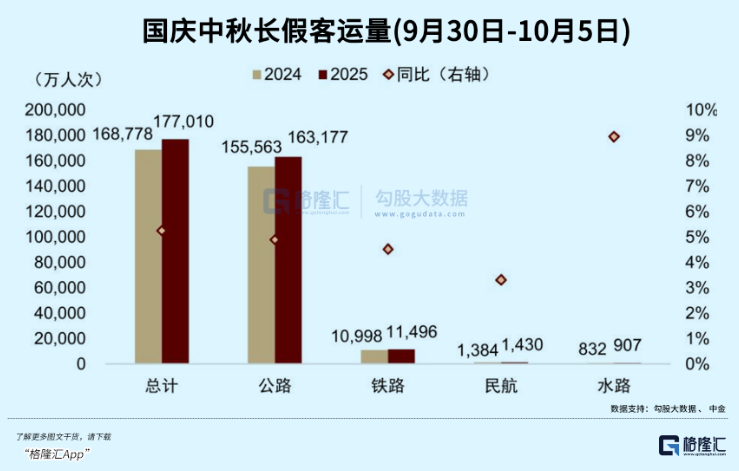
Core Insights - The overall travel data during the holiday period shows a significant increase in the number of travelers, with a total of 2.432 billion cross-regional movements, averaging 304 million per day, a year-on-year increase of 6.2% [10] - Despite the increase in travel numbers, many smaller tourist cities experienced a lack of visitors, indicating a shift towards local tourism rather than long-distance travel [27][22] - The average daily spending per person during the holiday was 113.9 yuan, a decline of 13% year-on-year, suggesting a decrease in overall consumer spending in the tourism sector [31][52] Travel Trends - The number of travelers during the holiday increased by 1.23 billion compared to last year, with a total of 888 million trips taken [12][17] - The majority of travel was local, with 2.24 billion trips made by road, indicating that many people opted for nearby destinations rather than traveling far [21][22] - The rise in local tourism has led to a significant increase in camping and outdoor activities, with tent rental orders surging by 410% compared to last year [42] Consumer Behavior - There is a noticeable trend of younger travelers being more budget-conscious, opting for camping over traditional hotel stays, which has resulted in over 60% of hotel rooms remaining unoccupied during the holiday [48][65] - The shift in consumer behavior reflects a broader trend of reduced spending among the middle class, with a 35% decrease in consumption expectations [74][77] - The overall spending in the tourism sector has not kept pace with the increase in visitor numbers, indicating that while more people are traveling, they are spending less [53][91] Industry Performance - The tourism industry is facing challenges, with many companies reporting declines in stock prices, reflecting the overall downturn in profitability despite increased visitor numbers [55] - The restaurant and hospitality sectors are particularly affected, with significant drops in revenue reported in major cities like Chengdu, where restaurant income fell by 34% [79][82] - The current economic climate has led to a paradox where tourism appears busy, but the profitability of businesses in the sector is declining, highlighting a potential "Disney effect" where certain industries thrive during economic downturns but struggle with profitability [86][91]
最近想上市的公司里,“私域”几乎都是重点项
3 6 Ke· 2025-10-10 08:47
Core Insights - The concept of "private domain" has evolved from a mere operational model to a strategic "growth engine" for companies, as evidenced by its frequent mention in IPO prospectuses [2][3] - Companies are increasingly highlighting user assets as a crucial component of brand valuation, indicating that effective user management will lead to greater growth potential in the capital markets [3] Summary by Sections Private Domain in IPO Prospectuses - Multiple consumer brands preparing for IPOs emphasize "private domain" and related membership operations, showcasing the strategic importance of private domain strategies [5] - Snack brand "Hao Xiang Lai" reported that its members contributed approximately 78% of GMV in the first eight months of 2025, highlighting the significant impact of private domain user assets on revenue growth [2][5] - The mother-and-baby brand "Bu Tong Group" defined "private domain" in its prospectus and demonstrated rapid growth in private domain sales, with revenue increasing from 8.8 million yuan in 2022 to 56.3 million yuan in the first half of 2025 [5][6] Development Stages of Private Domain - The development of private domain can be categorized into three stages: 1. **Official Definition Stage (around 2020)**: The concept of private domain traffic emerged as brands began to establish their own traffic pools [9] 2. **High Growth Stage (2021-2023)**: Brands started to mention "private domain" or "membership operations" in their financial reports, leading to significant performance improvements [10] 3. **Mature Stage (2024-present)**: Private domain strategies are now frequently included in IPO prospectuses, becoming a core growth model for companies [10] Future Trends Reflected in Private Domain Layouts - **Trend 1: Full-domain Operations and Online-Offline Integration**: Brands are increasingly emphasizing the integration of online and offline channels to create a seamless user experience [11][12] - **Trend 2: Organizational and Mechanism Reform**: Companies are adjusting their internal structures to support private domain and full-domain operations, leading to more agile and responsive organizations [13] - **Trend 3: Layered Membership Management**: The future will see a more refined approach to membership management, focusing on clear tier structures and differentiated benefits [14][15] - **Trend 4: Full-link Digital Empowerment**: A comprehensive digital infrastructure is essential for the effective implementation of private domain strategies, enabling real-time collaboration across various business functions [16][18] Conclusion - The emphasis on "private domain operations" is shifting from a marketing tactic to a central theme in corporate growth strategies, with a clear trend towards user-centric, data-driven operations [18]


收评:沪指失守3900点跌0.94% 创指收跌4.55% 大消费板块逆势活跃
Xin Lang Cai Jing· 2025-10-10 07:09
Market Overview - The three major stock indices collectively declined, with the ChiNext Index falling over 4%, the Shenzhen Component Index down nearly 3%, and the Sci-Tech Innovation 50 Index dropping 5.61% [1][2] Sector Performance - The consumer sector was notably active, with new consumption areas like beauty and pet economy leading the gains, as stocks such as Zhuangyuan Pastoral and Yiyi Co. hit the daily limit [1] - The gas sector also performed well, with Dazhong Public Utilities and Hongtong Gas reaching the daily limit [1] - The military equipment sector strengthened in the afternoon, with Changcheng Military Industry hitting the daily limit [1] - Conversely, the semiconductor sector experienced a pullback, with stocks like Aojie Technology and Dongxin Co. dropping over 10% [1] - The battery sector declined, led by Liyuanheng, while the precious metals sector continued to adjust, with Western Gold seeing significant losses [1] Key Highlights - The consumer sector saw a surge in stocks ahead of the 2025 "Double 11" shopping festival, with platforms like Kuaishou and Douyin initiating pre-sales [3] - In the electric grid equipment sector, New Special Electric hit the daily limit, supported by a report from Goldman Sachs indicating a significant increase in power demand for data centers, raising investment expectations from $720 billion to $780 billion by 2030 [4]
秋招宣讲会,大学生还有必要去吗?
Hu Xiu· 2025-10-10 06:41
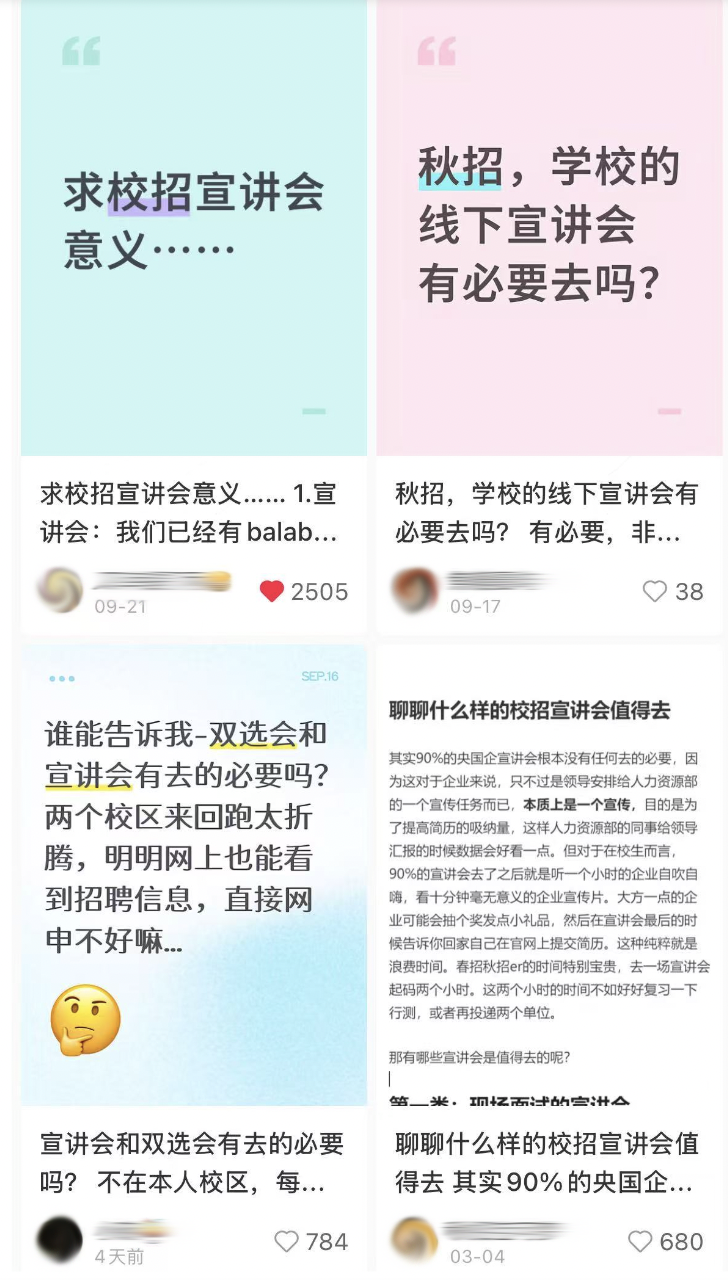
Group 1 - The article discusses the challenges faced by university students during the autumn recruitment season, highlighting the intense competition and pressure they experience [1][2][32] - It emphasizes the significance of campus recruitment presentations, which have become a hot topic as companies seek to attract talent [4][32] - The article critiques the recent LVMH recruitment presentation at Fudan University, noting the lack of tangible benefits for students, such as gifts or useful recruitment information [7][21][20] Group 2 - The article provides insights into the structure and expectations of recruitment presentations, indicating that students generally seek clear information about salaries, career paths, and immediate feedback on applications [41][50] - It mentions that a significant number of recruitment presentations are scheduled across the country, with over 7,977 events expected to take place from September 22 to October 23, involving more than 2,200 companies [33][36] - The article highlights the trend of companies using gifts and incentives to attract students to their presentations, with various strategies employed, such as limited giveaways and interactive social media campaigns [25][29][50]
2025新国货COOLTOP100品牌榜:新国货的硬核内功与软叙事:千骑卷平冈
EqualOcean· 2025-10-10 05:25
Group 1: Market Trends - The domestic consumption potential is accelerating, with a shift from price-performance ratio to quality-price ratio, indicating a more discerning consumer base[5] - In the first half of 2025, China's retail sales of consumer goods showed a year-on-year growth of 12.3% in staple food categories, reflecting stable basic living consumption[26] - The cross-border e-commerce import and export scale reached 1.32 trillion yuan in the first half of 2025, with exports at 1.03 trillion yuan (up 4.7%) and imports at 291.1 billion yuan (up 9.3%)[43] Group 2: Policy Impact - The "Two New, Two Heavy" policies are enhancing the competitiveness of domestic products, leading to an increase in market share for new domestic goods[24] - The government is promoting consumption through various measures, including improving consumer confidence and expanding high-quality service offerings[20] - The domestic market is experiencing structural changes, with a focus on high-quality consumption driven by policies aimed at boosting consumer spending[18] Group 3: Brand Development - The global recognition of domestic brands has increased significantly, with a 20 percentage point rise in trust over five years, driven by high-quality products and corporate social responsibility[60] - In 2025, 76 Chinese brands were included in the World Brand 500 list, ranking second globally, indicating a significant leap in brand quality and market presence[72] - The integration of traditional cultural symbols into product design has become a key strategy for enhancing brand value and consumer connection[67] Group 4: Consumer Behavior - Consumers are increasingly prioritizing quality and emotional value over low prices, with a 13.1% net increase in the tendency to consume low-priced products[31] - Young consumers are driving the growth of domestic brands, with 44.2% preferring to purchase domestic products through e-commerce platforms[98] - The demand for products with investment and aesthetic value is rising, as evidenced by an 11.3% increase in retail sales of gold and jewelry[30]
大消费板块持续活跃 遥望科技、依依股份双双涨停
Xin Lang Cai Jing· 2025-10-10 05:17
Core Viewpoint - The consumer sector is experiencing significant activity, particularly in new consumption areas such as beauty and pet economy, with companies like Yaowang Technology and Yiyi Co., Ltd. hitting their daily price limits [1] Group 1: Market Activity - The consumer sector, especially beauty and pet economy, is leading the market with notable gains [1] - Yaowang Technology and Yiyi Co., Ltd. have both reached their daily price limits [1] - Other companies such as Shuiyang Co., Petty Co., Lusi Co., and Lafang Jiahua are also seeing upward movement [1] Group 2: Upcoming Promotions - The prelude to the 2025 "Double 11" shopping festival has begun, with major platforms initiating their promotional activities [1] - Kuaishou started its pre-sale for the 2025 "Double 11" on October 7 [1] - Douyin officially launched its "Double 11" promotion at midnight on October 9, followed by JD.com starting its campaign at 8 PM the same day [1]

毛戈平(01318.HK)2025年中报点评:渠道优势突出 品类拓展持续 香氛上新引擎
Ge Long Hui· 2025-10-09 19:35
Core Viewpoint - The company has demonstrated strong financial performance in H1 2025, with significant year-on-year growth in both revenue and net profit, indicating robust operational efficiency and effective cost management [1][4]. Financial Performance - In H1 2025, the company achieved revenue of 2.59 billion (CNY), representing a year-on-year increase of 31.3%, and a net profit of 670 million (CNY), up 36.1% year-on-year, aligning with market expectations [1]. - The gross margin stood at 84.2%, slightly down by 0.7 percentage points, while the net margin improved to 25.9%, up by 0.9 percentage points [1]. Business Segmentation - Revenue breakdown by product category shows 55% from color cosmetics, 42% from skincare, 3% from makeup artistry training, and 0.4% from fragrances [2]. - Revenue by channel indicates 47% from offline sales and 50% from online sales, with online sales growing by 39% year-on-year [2]. Product and Brand Development - The company has expanded into the fragrance market with the launch of two high-end perfume series, enhancing its product matrix [3]. - The brand is focusing on high-end positioning through flagship store openings in key commercial areas and entry into premium department stores [3]. Future Growth Potential - There is significant potential for SKU expansion and improvement in store efficiency, with the company currently having around 400 SKUs, indicating room for growth in various product categories [3]. - The company is expected to maintain a healthy dual-channel development strategy, leveraging both online growth and offline experiential services [3]. Profit Forecast - The projected net profits for 2025, 2026, and 2027 are 1.19 billion, 1.53 billion, and 1.94 billion (CNY) respectively, with a compound annual growth rate of 27.5% over three years [4]. - The current stock price corresponds to a price-to-earnings ratio (PE) of 38.2, 29.8, and 23.5 for the respective years, with a target price set at 124.4 HKD, maintaining a "strong buy" rating [4].
大消费渠道脉搏:2025双11美妆行业前瞻,抖音与淘天平台策略分化
Haitong Securities International· 2025-10-09 14:48
[Table_Title] 研究报告 Research Report 9 Oct 2025 中国香港美国可选消费 China (A-share) Hong Kong US Discretionary 大消费渠道脉搏:2025 双 11 美妆行业前瞻,抖音与淘天平台策略分化 Consumer Channel Pulse: 2025 Double 11 Beauty Industry Outlook, Divergent Strategies of Douyin and Taobao/Tmall yy.kou@htisec.com mindy.yj.wu@htisec.com [Table_yemei1] 热点速评 Flash Analysis [(Table_summary] Please see APPENDIX 1 for English summary) 事件:2025 年 10 月 8 日,海通国际举办专家系列会,邀请美妆品牌操盘专家分享行业看法和趋势。 此次双 11 活动时间延长,核心时间段集中在 10.31 日之前,抖音和淘系平台目标积极。从此次双 11 活动的时间段 来看,抖音平台从 9.16 开 ...