
制造业

Search documents
美国军事专家:最终世界上只有一个超级大国,那就是中国
Sou Hu Cai Jing· 2026-01-06 12:11
Core Insights - Douglas Macgregor emphasizes the need for a shift in U.S. foreign policy as the Cold War has ended, suggesting that traditional alliances like NATO may fade and the U.S. should not provide free security to Europe anymore [1][3] - He highlights China's rise in manufacturing and resource control, predicting that by 2025, the U.S. will be heavily reliant on China for rare earth refining technology [1][5] - Macgregor warns of the impending U.S. debt crisis, projecting that by 2025, U.S. debt will reach $38 trillion, which could lead to a financial system collapse [1][7] Military Perspective - Macgregor argues that China's military is primarily defensive and does not seek expansion beyond Taiwan, predicting U.S. failure in defending Taiwan due to China's determination and resources [3][5] - He notes that the U.S. military is ill-suited to confront equally matched opponents and is overextended with too many bases [3][7] - He compares the decline of the U.S. to that of the British Empire, suggesting that both faced similar paths of losing global dominance [3][5] Economic Trends - Macgregor states that global wealth is shifting towards the East, with China and India rising while the BRICS economies have surpassed the G7 in size [5][7] - He critiques U.S. imperialism for causing domestic turmoil and economic decline, asserting that the real issues lie within the U.S. rather than attributing them solely to China [5][7] - He highlights that China's manufacturing accounts for over 30% of global production, while the U.S. remains heavily reliant on imports [5][7] Education and Talent - Macgregor criticizes the U.S. education system for failing to identify and nurture talent, leading to a shortage of engineers, while China invests in education to cultivate a skilled workforce [7] - He predicts that if current trends continue, China will dominate in resources and technology [7] - He emphasizes the importance of adapting to a multipolar world, warning that failure to do so could result in U.S. marginalization [7]


每日机构分析:1月6日
Sou Hu Cai Jing· 2026-01-06 11:49
Group 1 - The unexpected weakness in the US December manufacturing PMI strengthens market expectations for a Federal Reserve rate cut, diminishing the attractiveness of the US dollar, marking a turning point in market sentiment [3] - UK food inflation unexpectedly rose to 3.3% in December, reinforcing market expectations for the Bank of England to maintain stable interest rates, supported by decreased fiscal risks and a more stable political environment [4] - The euro against the Danish krone is approaching the upper limit of its European Exchange Rate Mechanism (ERM II) allowed range, reducing the krone's buffer against sudden geopolitical shocks, which may compel the central bank to intervene [4] Group 2 - Japan's ICT investment, despite being ahead of G7 countries, is not translating into productivity advantages, with expected AI contributions to labor productivity growth at only 0.7% annually over the next decade, half that of other developed economies [2] - In January 2026, €83 billion in bonds will mature in the Eurozone, alongside €23 billion in coupon payments, marking the highest maturity pressure in nearly seven years, with total government bond issuance expected to reach €496 billion in the first quarter [2] - The Philippines' December CPI rose by 1.8% year-on-year, driven mainly by weather-related food price increases, but overall inflation is expected to remain moderate, leading to a forecasted 25 basis point rate cut by the central bank in Q1 2026 [2]
东宏股份:公司暂未实施股份回购
Mei Ri Jing Ji Xin Wen· 2026-01-06 11:10
Group 1 - Donghong Co., Ltd. announced on January 6 that as of December 31, 2025, the company is still in the process of opening a dedicated account for share repurchase and has not yet implemented the share buyback [1] Group 2 - The automotive market is experiencing a surge at the beginning of 2026, with BMW's original guide price of 349,900 yuan now at 225,000 yuan, and multiple car manufacturers are offering subsidies for purchase taxes [1]

新坐标1月6日龙虎榜数据
Zheng Quan Shi Bao Wang· 2026-01-06 09:45
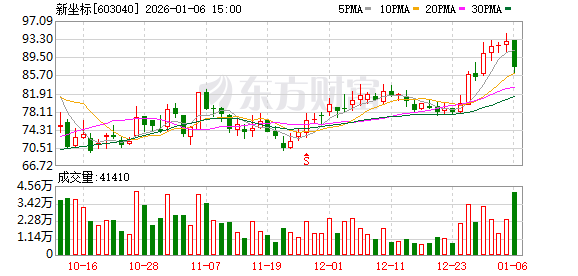
Core Viewpoint - The stock of New Coordinates (603040) experienced a significant decline of 5.97% in a single trading day, with notable net selling by institutional investors and a high turnover rate [2] Group 1: Stock Performance - New Coordinates' stock fell by 5.97% with a turnover rate of 3.05% and a total trading volume of 366 million yuan, showing a price fluctuation of 8.15% throughout the day [2] - The stock was listed on the Shanghai Stock Exchange for a deviation of -7.47% in daily price change [2] Group 2: Institutional Activity - Institutional investors net sold 88.39 million yuan, while the Shanghai-Hong Kong Stock Connect recorded a net sell of 6.27 million yuan [2] - The top five trading departments accounted for a total transaction volume of 195 million yuan, with a net sell of 89.12 million yuan [2] Group 3: Fund Flow - The stock saw a net outflow of 7.48 million yuan in principal funds, with a significant outflow of 18.43 million yuan from large orders, while smaller orders saw a net inflow of 10.95 million yuan [2] - Over the past five days, the stock experienced a net inflow of 32.56 million yuan in principal funds [2] Group 4: Financial Performance - For the first three quarters, New Coordinates reported a revenue of 593 million yuan, representing a year-on-year growth of 19.45%, and a net profit of 209 million yuan, reflecting a year-on-year increase of 29.41% [3]

达利欧复盘2025年:除了AI泡沫,一定要看懂这场“货币贬值”的大戏
Jin Shi Shu Ju· 2026-01-06 09:13
Group 1: Currency Value Dynamics - The value of currencies has significantly declined, with the US dollar depreciating against major currencies such as the Japanese yen (down 0.3%), Chinese yuan (down 4%), euro (down 12%), Swiss franc (down 13%), and gold (down 39%) [3][4] - The best-performing investment was gold, with a return of 65% in USD terms, outperforming the S&P 500's return of 18% by 47% [3][4] - The depreciation of local currencies affects asset valuations, creating an illusion of stronger performance for assets priced in weaker currencies [4] Group 2: Bond Market Insights - The nominal returns on 10-year US Treasury bonds were 9% in USD terms, but -34% when measured in gold, indicating a decline in real value due to currency depreciation [5] - The supply-demand imbalance in the bond market has not yet become a severe issue, but there is a looming need to roll over nearly $10 trillion in debt [5] - The attractiveness of debt assets is diminishing, particularly at the long end of the yield curve, as the Federal Reserve appears inclined to maintain low real interest rates [5] Group 3: Stock Market Performance - US stocks significantly lagged behind non-US stocks and gold, with European stocks outperforming US stocks by 23%, Chinese stocks by 21%, and emerging market stocks by 34% [6] - The S&P 500 index's total return of 18% was driven by a 12% increase in earnings and a 5% rise in price-to-earnings (P/E) ratios [6][7] - The profitability improvements were attributed to a 7% increase in sales and a 5.3% rise in profit margins, with a notable portion of margin improvement linked to technological efficiencies [7] Group 4: Political and Economic Influences - The political landscape, particularly under the Trump administration, has significantly influenced market dynamics, with policies aimed at revitalizing American manufacturing and technology [11][12] - The shift from multilateralism to unilateralism in global politics has increased conflict risks and led to higher military spending and borrowing [13][14] - The growing wealth and income disparity has created a political environment where inflation concerns are more pronounced among lower-income groups, potentially impacting future elections [11][12] Group 5: Future Outlook - The interplay of debt, currency, market, and economic forces, along with domestic political dynamics and geopolitical tensions, will continue to shape the global economic landscape [14] - The potential for rising interest rates due to currency depreciation and supply-demand pressures could negatively impact credit and equity markets [8][9] - The ongoing AI boom and its implications for productivity and market valuations remain a critical area for future analysis [14]
阿贝尔接棒,“后巴菲特时代”伯克希尔巨轮驶向何方
2 1 Shi Ji Jing Ji Bao Dao· 2026-01-06 08:39
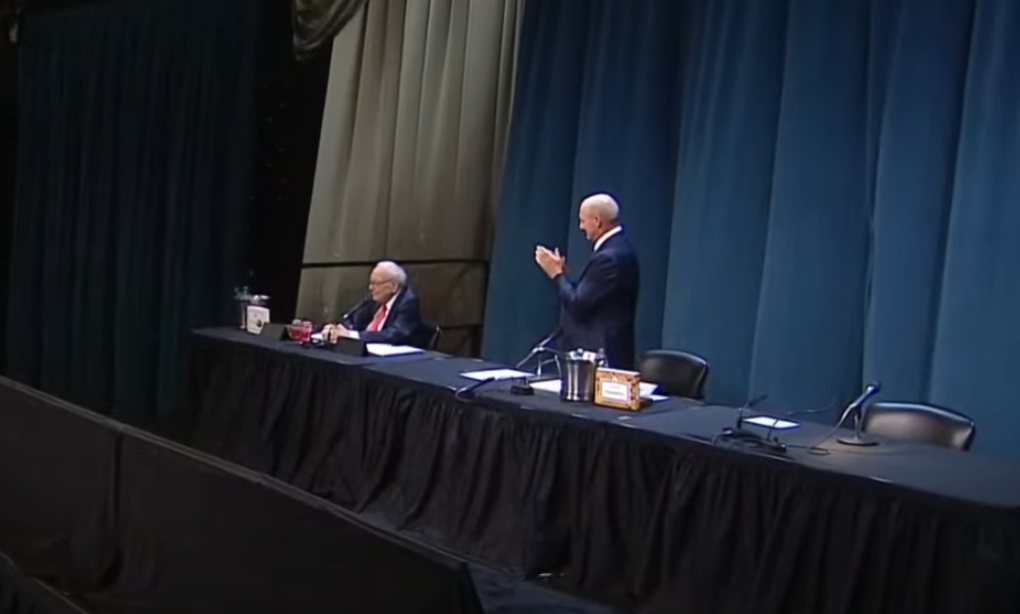
Core Viewpoint - The transition from Warren Buffett to Greg Abel marks the end of an era for Berkshire Hathaway, with Abel set to lead the company into a new chapter while maintaining its investment philosophy and operational strategies [1][2][12]. Group 1: Leadership Transition - Greg Abel, at 63, is poised to succeed the 95-year-old Buffett as CEO by 2026, indicating a significant leadership change for Berkshire Hathaway [1][3]. - Buffett has praised Abel's management style, noting it is more effective than his own, particularly in overseeing Berkshire's diverse subsidiaries [5][10]. - The upcoming annual meeting in May 2026 will be the first without Buffett on stage, symbolizing the shift in leadership [6]. Group 2: Performance Metrics - From 1964 to 2024, Berkshire Hathaway achieved a total return of 5,502,284%, significantly outperforming the S&P 500's 39,054% during the same period [1]. - The annualized compound return for Berkshire from 1965 to 2024 stands at 19.9%, compared to the S&P 500's 10.4% [1]. Group 3: Abel's Management Style - Abel is recognized for his hands-on management approach, contrasting with Buffett's more laissez-faire style, and is expected to implement a more flexible and accountable management structure [10][12]. - Under Abel's leadership, Berkshire's manufacturing, service, and retail sectors have seen operational profit margins improve from 4.9% in 2017 to 7.6% in 2023 [9]. Group 4: Investment Strategy and Challenges - Berkshire Hathaway's investment portfolio, valued at $283.2 billion as of September 30, 2025, remains a focal point, with uncertainty about who will manage this substantial asset [5][11]. - The company has a record cash reserve of $381.7 billion, raising questions about future investment strategies and the potential for dividend payments, which have historically been absent [14][15]. Group 5: Market Reactions and Future Outlook - Following the announcement of Buffett's retirement, Berkshire's stock experienced a notable decline, reflecting investor concerns about the transition [12][13]. - Analysts have mixed views on Abel's ability to maintain Berkshire's performance, with some expressing optimism about potential investment activities while others caution about the challenges of sustaining growth in a larger organization [12][13].
21深度|阿贝尔接棒,“后巴菲特时代”伯克希尔巨轮驶向何方
2 1 Shi Ji Jing Ji Bao Dao· 2026-01-06 08:38
Core Viewpoint - The transition from Warren Buffett to Greg Abel marks a significant shift in Berkshire Hathaway's leadership, with Abel expected to maintain the company's legacy while establishing his own path in investment management [1][2][3]. Group 1: Leadership Transition - Greg Abel, at 63, is set to succeed 95-year-old Warren Buffett as CEO of Berkshire Hathaway by 2026, marking the beginning of the "Abel era" [1]. - Buffett's tenure from 1965 to 2024 saw Berkshire achieve a total return of 5,502,284%, significantly outperforming the S&P 500's 39,054% [1]. - Abel is recognized for his effective management style, which is more hands-on compared to Buffett's approach, focusing on accountability and performance [8][9]. Group 2: Investment Performance - Berkshire's stock portfolio, valued at $283.2 billion as of September 30, 2025, includes major holdings like Apple and American Express, but the management of this portfolio under Abel remains to be clarified [3][9]. - The company has experienced a decline in stock price following Buffett's retirement announcement, with a notable drop of over 10% [9][10]. - Analysts predict that Abel's management style may lead to a more flexible approach, potentially enhancing performance and investor confidence [8][10]. Group 3: Company Strategy - Berkshire Hathaway has maintained a policy of not paying dividends, opting instead to reinvest profits for long-term growth, a strategy that has historically yielded high returns [11][12]. - The company currently holds a record cash reserve of $381.7 billion, raising questions about how this capital will be utilized under Abel's leadership [10][12]. - There is speculation that if Abel cannot effectively deploy the cash reserves, pressure may mount for dividend payments or stock buybacks, although Buffett's influence may mitigate this in the short term [10][12].
扬经贸之帆 拓合作航道
Xin Hua She· 2026-01-06 08:04
Group 1 - The core viewpoint of the news is the emphasis on the pragmatic cooperation and mutual benefits between China and South Korea, highlighted by the recent business forum attended by around 400 political and business representatives [1] - Since the establishment of diplomatic relations in 1992, China has been South Korea's largest trading partner for 21 consecutive years, with trade volumes consistently exceeding $300 billion [1] - In the first 11 months of 2025, the trade volume between China and South Korea reached $298.895 billion, reflecting a year-on-year growth of 0.8% [1] Group 2 - The economic cooperation between China and South Korea is undergoing structural adjustments, with a focus on industrial innovation and stable supply chains to achieve complementary advantages [2] - There is a consensus among Chinese entrepreneurs that both countries should explore cooperation potential in emerging fields such as artificial intelligence, biopharmaceuticals, and green industries, while solidifying traditional areas of collaboration [2] Group 3 - Personnel exchanges are fundamental to bilateral cooperation, with significant increases in mutual visits due to visa facilitation measures implemented in November 2024 and September 2025 [3] - Currently, there are over 1,000 regular flights per week between the two countries, fostering vibrant youth exchanges and cultural experiences [3] - The China Council for the Promotion of International Trade expresses its commitment to providing a high-quality platform for cooperation between Chinese and South Korean businesses, aiming for a healthy and stable economic relationship [3]
【理响中国】创意图解:“三轮驱动” 解锁高水平对外开放新图景
Huan Qiu Wang· 2026-01-06 07:52
Core Viewpoint - China is committed to high-level opening up and sharing opportunities, which will inject confidence and momentum into global economic recovery and long-term development as it moves towards 2026 [2] Group 1: Institutional Innovation - The depth of institutional innovation contributes to the height of openness [3] - Policy implementation and process optimization benefit enterprises, enhancing trade facilitation and integrating innovative systems [5] - Continuous deepening of institutional reforms solidifies the foundation for high-level openness [6] Group 2: Industrial Upgrading - High-quality supply is achieved through a dual empowerment of "bringing in" and "going out" [6] - The integration of technology and manufacturing enhances the capabilities of the technology sector [6] - The cultural, tourism, and health industries are being integrated to strengthen the core of the industry [7] Group 3: Platform Construction - Building global element connection platforms enhances the vitality of the open ecosystem [7] - The "buy global" to "sell global" strategy is being implemented through platforms like the Hongqiao International Economic Forum, which has gathered over 6,000 brands from 120 countries with a projected transaction volume of 30 billion yuan in 2024 [8] - The construction of platforms is expanding new dimensions of openness [8] Group 4: Overall Strategy - The "three-wheel drive" of institutions, industries, and platforms continuously promotes the Chinese open economy towards higher quality, efficiency, fairness, and sustainability [9]

印度12月经济扩张动能显著放缓 综合PMI下修至年内最低
Xin Hua Cai Jing· 2026-01-06 07:35
Core Insights - The HSBC India Purchasing Managers' Index (PMI) indicates a significant slowdown in economic activity in India as of December 2025, with the composite PMI final value revised down to 57.8 from an initial 58.9, marking the lowest level since 2025 [1] - Both manufacturing and services sectors are experiencing a simultaneous slowdown, contributing to the overall reduction in momentum [1] - New orders have seen their slowest growth in 25 months, with weakened growth dynamics in both goods producers and service providers [1] Economic Activity - The composite employment creation has stagnated, with weak hiring activity in manufacturing and a slight decrease in service sector employment [1] - Input costs and output charges have continued to rise modestly, with inflation rates remaining below long-term averages [1][2] Business Confidence - Despite maintaining an optimistic outlook for future business activities, the confidence index has dropped to a 41-month low, indicating a cautious sentiment among market participants [1] - The service sector PMI final value was revised down to 58.0 from an initial 59.1, below market expectations of 59.3 and the November final value of 59.8, representing the weakest expansion since January 2025 [1] Sector Performance - New business and output growth in the service sector have slowed to an 11-month low, although new export orders have increased at a significant pace, outpacing November's growth [1] - Employment in the service sector has seen its first decline since May 2025, albeit marginal, with most companies reporting no change in employee numbers since November [1][2] Price Pressure - Service sector input cost inflation has accelerated compared to November but remains within the most moderate range seen in over five years, with sales prices experiencing only a slight increase, marking one of the weakest rises in nearly two years [2] - Business confidence has weakened to its lowest level in nearly three and a half years, reflecting the challenges faced by the economy [2]