国产光刻机

Search documents
股指连阳,“春季躁动”背后的逻辑
Xin Lang Cai Jing· 2026-01-12 12:28
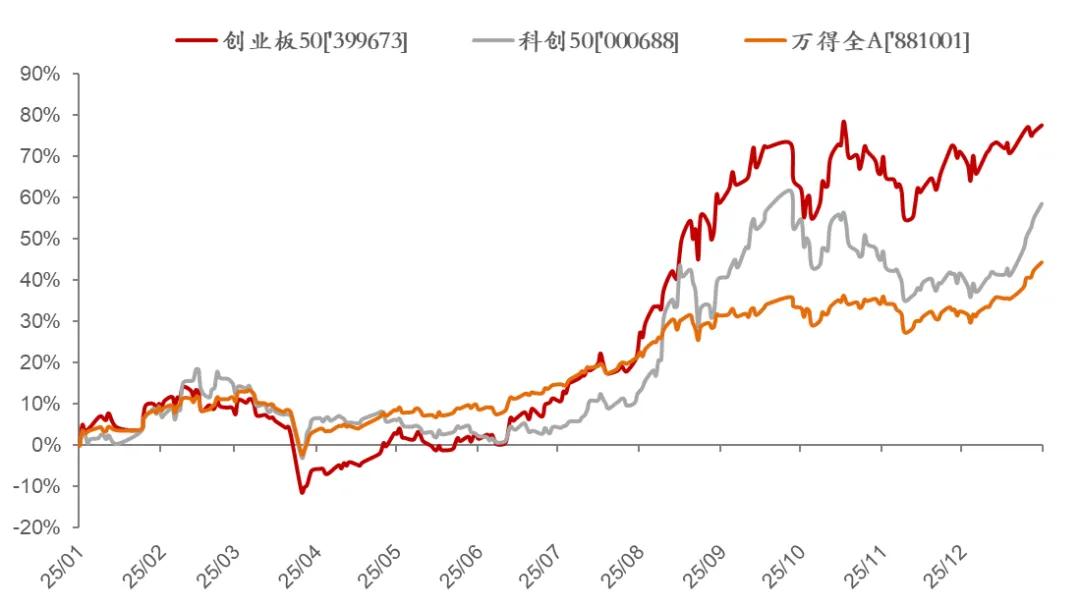
Group 1 - The core narrative driving the recent market rally is centered around the upcoming IPO of SpaceX, which is expected to exceed a valuation of $100 billion, alongside the ongoing U.S.-China tech competition [1][39] - The A-share market has shown robust performance, with key indices like the CSI 300 and STAR 50 experiencing significant gains, despite a downward revision in resident income expectations [1][39] - The current market dynamics suggest a decoupling of capital market pricing logic from traditional macroeconomic indicators, raising questions about the sustainability of strong stock performance amid weak real estate and consumer sectors [1][40] Group 2 - The pricing of stocks is increasingly focused on long-term growth expectations (g*) and risk premiums (ERP), rather than current earnings, indicating a shift in investor sentiment towards confidence in China's long-term competitiveness in key sectors [2][41] - Even companies with negative current earnings, like OpenAI, can achieve high valuations based on anticipated future cash flows from technological breakthroughs, reflecting a broader market trend where future potential is prioritized over present performance [3][42] - The A-share market's valuation is heavily influenced by a small number of leading companies, which contribute significantly to market capitalization and are less correlated with domestic consumer spending [4][43] Group 3 - Historical examples illustrate that stock markets can diverge from economic fundamentals, as seen in the U.S. during World War II and China's market performance from 2000 to 2005, where investor sentiment and risk perception played crucial roles in valuation [9][47][51] - The current market environment is characterized by a transition from a growth narrative to a competitiveness narrative, driven by geopolitical factors and a reassessment of China's capabilities in technology and manufacturing [15][53] - The ongoing adjustments in the market reflect a broader economic transformation, where corporate competitiveness is rising while resident income growth is stagnating, indicating a structural shift in the relationship between corporate performance and consumer economic conditions [26][62][68] Group 4 - The recent surge in commodity prices, particularly in metals like copper and aluminum, is linked to the demand driven by AI competition and infrastructure needs, rather than traditional economic recovery patterns [19][55] - The investment logic has shifted towards sectors like AI and energy, with significant capital expenditures leading to improved corporate earnings, although these do not translate into immediate benefits for consumer income [61][62] - The divergence between corporate profitability and consumer income growth is a reflection of the ongoing transformation in the economic growth model, where the focus is on structural changes rather than aggregate expansion [26][60]

李迅雷:股指连阳,“春季躁动”背后的逻辑
Xin Lang Cai Jing· 2026-01-12 11:23
Group 1 - The core narrative of the A-share market has shifted from "growth" to "competitiveness" since 2021, influenced by external factors such as the Trump administration's impact on international order [44][45] - The market increasingly believes in China's long-term competitiveness in key sectors like AI, semiconductors, and high-end manufacturing, leading to rising expectations for perpetual growth rates [44][45] - The A-share market's pricing logic is now more focused on the long-term competitiveness of leading companies rather than immediate economic pressures, indicating a decoupling from traditional macroeconomic indicators [45][46] Group 2 - The current economic pressures include a slowdown in real estate, stagnant income growth, and weak consumer confidence, yet the competitiveness of Chinese companies in high-end manufacturing and AI is improving [45][46] - The market's valuation is driven by the long-term success of leading firms in global competition, rather than current economic challenges, suggesting a dual narrative where economic stress and corporate strength coexist [45][46] - The historical context shows that market performance can diverge from economic fundamentals, as seen in past examples like the U.S. stock market during World War II and China's market from 2000 to 2005 [37][40][41] Group 3 - The investment logic has shifted towards AI, electricity, and critical resources, with capital expenditures in these areas growing rapidly, although they have limited impact on household income [52][53] - The relationship between corporate competitiveness and household income growth is becoming more differentiated, reflecting a broader economic transformation [53][54] - The ongoing structural changes in the economy are leading to a "temperature difference" where corporate profits rise while household income growth remains subdued [54][56]
股指连阳,“春季躁动”背后的逻辑
李迅雷金融与投资· 2026-01-12 11:15
Group 1 - The core narrative of the market has shifted from "growth" to "competitiveness," driven by external factors such as the U.S.-China tech competition and the need for self-sufficiency in key industries [17][33] - The A-share market has shown resilience despite economic pressures, with the performance of leading companies in global competition being a key driver of market valuation rather than domestic consumption or income growth [18][27] - The current investment logic emphasizes sectors like AI, power, and critical resources, which are experiencing rapid capital expenditure growth, while traditional consumer sectors face challenges [26][28] Group 2 - The divergence between corporate competitiveness and household income growth reflects a broader transformation in the economic structure, where companies are optimizing costs to enhance global competitiveness [28][31] - Historical examples illustrate that market performance can diverge from economic fundamentals, as seen in the U.S. during WWII and China's market in the early 2000s, where investor sentiment and risk premiums played significant roles [9][14][16] - The current market environment suggests that the valuation of leading companies is increasingly decoupled from traditional economic indicators, focusing instead on their long-term competitive advantages [5][8][18] Group 3 - The rise in valuations for sectors like commercial aerospace, AI, and semiconductors reflects a belief in China's ability to compete and innovate in critical areas, despite short-term economic challenges [18][19] - The shift in demand dynamics, particularly in the context of AI and energy infrastructure, is driving a new cycle of investment that differs from traditional recovery patterns [19][24] - The market's focus on a few core assets, which contribute significantly to overall market capitalization, indicates a concentration of value creation in leading firms rather than a broad-based economic recovery [5][8][18] Group 4 - The ongoing adjustments in corporate cost structures and labor compensation models are indicative of a strategic response to global competition, which may lead to increased income volatility for workers [28][31] - The institutional differences between China's centralized policy approach and the more fragmented Western model highlight the advantages of sustained support for key industries in fostering long-term competitiveness [33][34] - The current macroeconomic landscape is characterized by a complex interplay of geopolitical uncertainty, technological competition, and evolving consumer behaviors, necessitating a nuanced investment strategy [35][36]

加快实现高水平科技自立自强
Jing Ji Ri Bao· 2025-11-25 00:42
Core Viewpoint - The article emphasizes the importance of achieving high-level technological self-reliance and strength as a foundation for national prosperity and security, outlining strategic goals, key tasks, and major initiatives for advancing China's technological innovation [1][2]. Strategic Deployment - Since the 18th National Congress, the central government has made significant strategic deployments to enhance technological self-reliance, leading to historic achievements and transformations in China's technology sector [2]. - The goal of building a technology power is clearly defined, with an emphasis on achieving high-level technological self-reliance as essential for national development [2]. New System for National Innovation - A new type of national system is being established to address profound changes in scientific research paradigms, focusing on collaborative innovation and leveraging national strategic technological forces [3]. - The system aims to integrate resources from national laboratories, research institutions, and leading enterprises to tackle major technological challenges [3]. Role of Enterprises in Innovation - Enterprises are recognized as the main body of innovation, with efforts to strengthen their role in integrating innovation elements and transforming technological achievements [4]. - A nurturing environment for technology-driven small and medium enterprises is being developed to enhance their growth and contribution to innovation [4]. Reform of the Technological System - The article highlights the necessity of reforming the technological system to create an efficient, collaborative, and open innovation framework, emphasizing the importance of leadership and coordination in technological tasks [5]. - Reforms include improving evaluation systems and fostering a culture of innovation within research and development [5]. Open Innovation Ecosystem - The importance of an open innovation ecosystem is stressed, with a focus on global collaboration and integration into international innovation networks [6][7]. - China is actively expanding international scientific and technological exchanges and cooperation, establishing key innovation centers [7]. Historical Achievements in Technology - Significant advancements in technology have been made, with China achieving a prominent position in various fields and producing a surge of major innovations [8]. - The country is moving towards becoming an innovative nation, solidifying the material and technological foundation for modernization [8]. Investment in Basic Research - Investment in research and development is increasing, with a projected expenditure of over 3.6 trillion yuan in 2024, marking a nearly 50% increase since 2020 [9]. - The focus on basic research is crucial for achieving breakthroughs and enhancing the foundation for technological self-reliance [9]. Core Technology Autonomy - The article discusses the importance of mastering key core technologies to ensure national economic security, highlighting advancements in various high-tech fields [10]. - Progress in self-developed technologies, such as high-performance chips and advanced equipment, is noted as a significant achievement [10]. Global Technological Competitiveness - China's technological competitiveness is on the rise, with improvements in innovation resource allocation and contributions to global technological innovation [11]. - The country aims to enhance its global innovation index ranking and establish itself as a key player in international innovation networks [11]. Integration of Technology and Industry - The integration of technological innovation and industrial innovation is emphasized as a key strategy for achieving high-level self-reliance [17]. - Efforts are being made to ensure seamless transitions from research to product development, enhancing the overall innovation ecosystem [17]. Reforming the Innovation Ecosystem - Continuous reforms in the technological system are necessary to foster a vibrant innovation ecosystem, focusing on removing barriers to innovation and enhancing collaboration [18]. - The article advocates for a supportive environment for original and disruptive innovations to accelerate the transition from a technological power to a technological strong nation [18].
靠科技创新培育新动能——推动“十五五”时期经济社会发展向新而行①(评论员观察)
Ren Min Ri Bao· 2025-11-11 23:12
Group 1 - The "14th Five-Year Plan" has achieved significant results, emphasizing the importance of reform and innovation to drive high-quality development in the upcoming "15th Five-Year Plan" [1] - The marine equipment industry in China holds 54.4% of the global effective patent volume, showcasing its technological advancements and innovation capabilities [2] - Breakthroughs in key technologies such as materials science and intelligent control have enhanced the autonomous capabilities of the marine equipment industry, leading to collaborative development across the supply chain [2][3] Group 2 - Major achievements during the "14th Five-Year Plan" include advancements in domestic lithography machines and successful space missions, highlighting the necessity of self-reliance and innovation [3] - The "Dream" deep-sea drilling vessel, designed and built by over 150 units, exemplifies the advantages of a coordinated national system in achieving significant technological milestones [3] - The marine engineering equipment sector continues to lead globally in new orders and completion rates, with a year-on-year increase of 13.6% in delivery and 7.0% in hand-held order amounts [4] Group 3 - The transformation of scientific research into practical applications is crucial for economic and social development, necessitating reforms to enhance innovation vitality [4] - The establishment of a robust mechanism for the conversion of scientific achievements is essential for the development of new productive forces, as demonstrated by successful case studies in universities [4] - The emphasis on technological modernization as a foundation for achieving high-quality development aligns with the broader goal of building a technologically strong nation [4]
我国47个城市跻身亚洲最具价值100强:上海第4,杭州第13,南京略胜武汉!
Sou Hu Cai Jing· 2025-11-08 18:42
Core Insights - The latest "Top 100 Most Valuable Cities in Asia" list by GYBrand highlights the strong performance of Chinese cities, with 47 cities making the list, showcasing nearly half of the rankings [1][13] - The rankings consider economic scale, innovation potential, talent attraction, and sustainable development [1] Group 1: City Rankings - Tokyo ranks first, followed by Hong Kong and Singapore, with Shanghai at fourth and Beijing at fifth [2] - Other notable Chinese cities include Shenzhen (8th), Guangzhou (9th), Hangzhou (13th), Nanjing (22nd), and Wuhan (23rd) [2][3] Group 2: Shanghai's Economic Impact - Shanghai's GDP has surpassed 4.7 trillion yuan, with the digital economy's core industries accounting for over 18% of its GDP [7] - The city leads in annual IPO fundraising globally, enhancing its financial services to the real economy [7] - Key industries such as integrated circuits, biomedicine, and artificial intelligence have exceeded 1.5 trillion yuan in scale [7] Group 3: Hangzhou's Digital Economy - Hangzhou ranks 13th, driven by a robust digital economy, with its core industries contributing 28% to its GDP [9] - The city is home to major players like Alibaba and Ant Financial, reshaping the fintech landscape [9] - Continuous talent inflow and a favorable living environment enhance its attractiveness for innovation [9] Group 4: Nanjing vs. Wuhan - Nanjing ranks 22nd, slightly ahead of Wuhan (23rd), highlighting different competitive advantages [11] - Nanjing benefits from a strong manufacturing base and educational resources, while Wuhan leverages its transportation hub status [11] - Both cities show resilience, with Nanjing's industrial revenue exceeding 1.8 trillion yuan and Wuhan's GDP growth rebounding to 6.5% [11] Group 5: Overall Trends - The shift from "quantity advantage" to "quality advantage" among Chinese cities is evident, with Shanghai, Hangzhou, Nanjing, and Wuhan representing diverse paths of high-quality development [13] - The cities face challenges in balancing economic growth with improving living standards amid global industrial restructuring [13]

半导体ETF跌幅居前丨ETF基金日报
2 1 Shi Ji Jing Ji Bao Dao· 2025-10-15 03:29
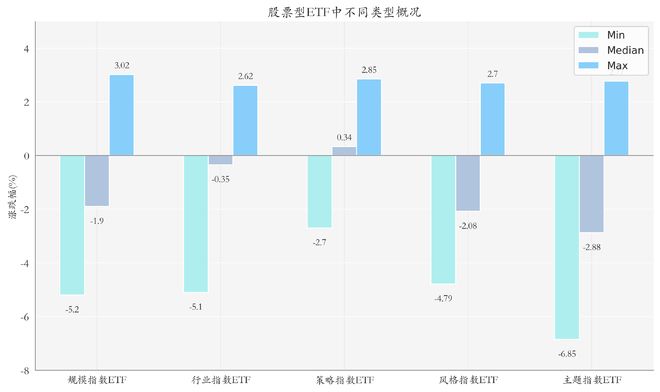
Market Overview - The Shanghai Composite Index fell by 0.62% to close at 3865.23 points, with a daily high of 3918.44 points [1] - The Shenzhen Component Index decreased by 2.54% to 12895.11 points, reaching a high of 13405.51 points [1] - The ChiNext Index dropped by 3.99% to 2955.98 points, with a peak of 3124.83 points [1] ETF Market Performance - The median return of stock ETFs was -1.9% [2] - The highest performing scale index ETF was Penghua SSE 180 ETF with a return of 3.02% [2] - The highest performing industry index ETF was Huaxia CSI Bank ETF with a return of 2.62% [2] - The highest performing strategy index ETF was Xinhua CSI Dividend Low Volatility ETF with a return of 2.85% [2] - The highest performing theme index ETF was Penghua CSI Liquor ETF with a return of 2.77% [2] ETF Performance Rankings - The top three ETFs by return were: - Penghua SSE 180 ETF (3.02%) - Xinhua CSI Dividend Low Volatility ETF (2.85%) - Penghua CSI Liquor ETF (2.77%) [4] - The top three ETFs by decline were: - Huaxia SSE Sci-Tech Innovation Board Semiconductor Materials Equipment Theme ETF (-6.85%) - Guotai CSI Semiconductor Materials Equipment Theme ETF (-6.81%) - E Fund CSI Semiconductor Materials Equipment Theme ETF (-6.74%) [4] ETF Fund Flows - The top three ETFs by inflow were: - Huabao CSI Bank ETF (14.1 billion) - Huaxia SSE Sci-Tech Innovation Board 50 Component ETF (6.8 billion) - Huaxia National Index Semiconductor Chip ETF (6.71 billion) [6] - The top three ETFs by outflow were: - Southern CSI 500 ETF (19.42 billion) - Southern CSI A500 ETF (8.67 billion) - Fuguo CSI A500 ETF (7.4 billion) [6] ETF Margin Trading Overview - The top three ETFs by margin buying were: - Huaxia SSE Sci-Tech Innovation Board 50 Component ETF (8.88 billion) - E Fund ChiNext ETF (6.17 billion) - Guotai CSI All-Share Securities Company ETF (5.83 billion) [8] - The top three ETFs by margin selling were: - Southern CSI 500 ETF (2.19 billion) - Huaxia SSE Sci-Tech Innovation Board 50 Component ETF (40.57 million) - Huaxia CSI 1000 ETF (33.83 million) [8] Industry Insights - Huachuang Securities indicates that domestic lithography machines are expected to enter a phase of accelerated commercialization, driven by policy support and technological advancements [9] - First Capital Securities states that U.S. semiconductor export controls will accelerate the self-sufficiency of the domestic industry chain, promoting domestic innovation [10]
基于涨停晋级率的情绪指标运用思考产业赛道与主题投资风向标
Tianfeng Securities· 2025-09-22 09:11
Core Insights - The report emphasizes the importance of the limit-up promotion rate and consecutive limit-up stocks as key indicators for assessing short-term market sentiment [2][7] - In a bull market, the highest consecutive limit-up stocks typically maintain around 6 boards, with a promotion rate often exceeding 25%, indicating a strong positive correlation with the next-day performance of limit-up stocks [2][7] - The report identifies specific market phases such as the Ice Point Dull Period, Chaotic Active Period, and Climax Divergence Period, where limit-up stocks tend to perform well the following day [2][21] Market Review - During the week of September 15-19, the overall A-share market declined by 0.18%, with notable strong performances in sectors like photolithography machines and optical modules [3][31] - The average daily trading volume for the week reached 25,163 billion yuan, a decrease of 1,922 billion yuan from the previous week, indicating a slight decline in market activity [3][31] - The report highlights a significant outflow of main funds, with the margin trading balance reaching a recent high of 24,025 billion yuan, primarily flowing into sectors related to 5G applications and embodied intelligence [3][31] Policy Dynamics - Multiple government departments have issued new policies aimed at strengthening safety and digital transformation, including support for private investment in new productivity and emerging service industries [4][31] - The report notes the release of guidelines for promoting digital transformation in key industries, reflecting a government focus on technological advancement [4][31] Industry Trends - The report highlights significant advancements in technology, particularly in artificial intelligence and semiconductor sectors, with companies like Meta and Huawei making notable announcements regarding new products and chip developments [5][31] - The clean energy sector is also mentioned, with companies like CATL progressing in the development of sodium-ion batteries for passenger vehicles [5][31] Investment Themes - Key investment themes identified include photolithography machines, artificial intelligence, and service consumption, with government policies supporting these sectors [3][5][31] - The report suggests that the promotion of service consumption policies will act as a new engine for domestic demand [3][5][31]



智通港股解盘 | 观望不确定性事件 2025世界人工智能大会提前预热
Zhi Tong Cai Jing· 2025-07-25 12:09
Market Overview - The A-share market faced resistance at 3600 points due to the rapid decline of the Yasha Hydropower Station, while the Hong Kong market dropped 1.09% amid uncertainties for the upcoming week [1] - Trump's visit to the Federal Reserve is seen as an attempt to pressure Powell for a quicker interest rate cut, although a rate cut in July seems unrealistic [1] - The upcoming US-China talks scheduled from July 27 to 30 in Sweden may influence market sentiment, particularly regarding TikTok's operations in the US [1] Technology Sector - The 2025 World Artificial Intelligence Conference in Shanghai is set to showcase over 800 companies and 3000 cutting-edge exhibits, indicating strong market interest in AI technologies [2] - Huawei's Ascend 384 super node is a focal point of attention, with significant advancements in the domestic lithography machine industry expected to accelerate the localization process [3] Southeast Asia Market Expansion - Companies like Jihong Holdings and Lion Group are focusing on Southeast Asia, with Jihong expected to achieve a net profit of approximately 130 to 137 million yuan in the first half of 2025, marking a year-on-year growth of 97.25% to 108.21% [4] - Lion Group's partnership with China Post Hong Kong aims to create an AI-driven digital trade platform for Chinese brands entering Southeast Asia [4] Shipping Industry - Derxiang Shipping reported a 38.5% increase in revenue to approximately $326 million in Q1, driven by a 39.1% rise in average freight rates [9] - The company is expanding its service network with new routes and has a strong focus on the Middle East and Indian subcontinent, which are expected to drive future growth [11] Insurance Sector - The insurance industry is experiencing a "lock-in wave" due to a decrease in the predetermined interest rate for life insurance products, which is expected to boost new policy premiums in Q3 [7] - Major beneficiaries in the Hong Kong market include Zhong An Online, China Life, and China Pacific Insurance [8]
全世界都在赌,中美到底谁先扛不住?
Xin Lang Cai Jing· 2025-05-11 01:27
Group 1: Key Factors That Could Rewrite the Script - Disruptive innovations in technology, such as breakthroughs in semiconductor processes and advancements in new energy storage and hydrogen technologies, could significantly impact the electronic industry and reduce reliance on the oil dollar system [3] - The acceleration of international settlement mechanisms through the internationalization of digital currencies like the digital yuan could challenge the dominance of the US dollar [4] - Geopolitical catalysts, including regional conflicts and the emergence of new technology alliances, could reshape global supply chains and energy security [5] Group 2: Core Strengths of China and the US - China's strengths lie in its supply chain control and market scale, with a comprehensive industrial system and the ability to pivot towards high-tech, high-margin sectors [7] - The US maintains its global financial and high-tech dominance, with the US dollar's position in global settlements and control over high-end technology and intellectual property [7] Group 3: Paths to Structural Transformation - China aims to deepen independent technological research and enhance domestic market capabilities while upgrading from a "world factory" to an "innovation engine" [7] - The US seeks to revitalize domestic manufacturing and optimize supply chain layouts, although it faces challenges such as income inequality and a shortage of high-tech labor [7] Group 4: Future Signals for Script Changes - The realization of sovereign digital currencies for international pricing of commodities would signify a major shift in the global financial system [9] - The widespread adoption of new manufacturing technologies, such as AI factories and smart materials, could trigger significant industrial changes [9] - The evolution of international standards and intellectual property rights towards a more diverse framework would represent a critical turning point [9] Group 5: Overall Perspective - The ongoing US-China competition is not merely about endurance but about who can adapt and reshape themselves amid systemic changes to seize the initiative in the new international order [12]