
电影及演出票

Search documents
通胀超预期背后:宏观物价线索的浮现:【宏观快评】2月通胀数据点评
Huachuang Securities· 2026-03-10 08:42
Group 1: Inflation Data Overview - February CPI increased from 0.2% to 1.3%, exceeding expectations of 0.9%, marking the highest level in three years[2] - Core CPI rose from 0.8% to 1.8%, with an average of 1.3% for January-February, the highest since 2020[2] - PPI narrowed its year-on-year decline from -1.4% to -0.9%, with expectations of -1.2%[2] Group 2: CPI and PPI Drivers - Core CPI's unexpected rise was primarily driven by competitive service prices, contributing approximately 0.26 percentage points to the 0.3 percentage point seasonal increase[3] - PPI's 0.4% month-on-month increase was significantly above the expected 0.1%, driven by input factors from oil and non-ferrous metals, contributing about 0.11 and 0.36 percentage points respectively[5][15] - The ongoing improvement in midstream manufacturing supply and demand has led to a sustained price increase, with PPI in this sector rising approximately 0.4%[6] Group 3: Price Trends and Market Implications - CPI's month-on-month increase of 1% was supported by significant price hikes in travel and entertainment services, as well as durable goods like automobiles and gold[2] - The average month-on-month core CPI for January-February was 0.5%, significantly higher than the past five-year average of 0.2%[3] - The potential for a positive shift in overall price levels is indicated, with government reports suggesting a move from negative to positive price growth this year[6][16] Group 4: Risks and Observations - The ongoing geopolitical uncertainties in the Middle East pose risks to inflation trends[6] - The observed price increases in competitive service sectors may indicate a recovery potential, as these prices have been relatively low since 2022[4][11]
2月CPI环比同比涨幅均创新高,释放什么信号?
券商中国· 2026-03-09 10:20
Core Viewpoint - The article highlights a significant increase in the Consumer Price Index (CPI) and Producer Price Index (PPI) in February, indicating a recovery in the domestic economy driven by various factors, including seasonal consumption patterns and international commodity price trends [1][4][5]. CPI Analysis - The CPI increased by 1.0% month-on-month and 1.3% year-on-year, marking the highest growth in nearly three years [1][3]. - The core CPI, excluding food and energy, rose by 1.8% year-on-year [3]. - Service prices were a major contributor to the CPI increase, with notable rises in airfare (31.1%), vehicle rental (24.7%), travel agency fees (15.8%), and hotel accommodation (7.3%), collectively accounting for over 30% of the CPI's total increase [3][4]. - The average CPI for January and February was up 0.8% year-on-year, indicating a continuation of the recovery trend observed since the second half of 2022 [4]. PPI Analysis - The PPI rose by 0.4% month-on-month, marking the fifth consecutive month of increase, while the year-on-year decline narrowed to 0.9% [1][7]. - Factors contributing to the PPI increase include rising international oil prices and a strong upward trend in the semiconductor industry, with specific price increases in electronic components and materials [7][8]. - The article anticipates that the PPI may turn positive year-on-year in March due to ongoing international tensions affecting oil prices, which could lead to increased domestic inflationary pressures [5][7]. Economic Outlook - Analysts expect the upward trend in CPI to continue, supported by government initiatives aimed at boosting consumer spending and addressing supply chain issues [5]. - The article suggests that while current prices are low, there is potential for further increases as consumer demand strengthens post-holiday [4][5].


2026年1月物价数据点评:“反内卷”与新质生产力发展并进
BOHAI SECURITIES· 2026-02-12 10:11
Group 1: CPI Analysis - In January 2026, the CPI increased by 0.2% year-on-year, a decrease from the previous value of 0.8%[11] - Core CPI's month-on-month growth reached its highest level in six months, driven by increased travel demand and rising international gold prices[4] - Food prices remained stable month-on-month, with fresh vegetable prices decreasing by 4.8%[14] Group 2: PPI Analysis - In January 2026, the PPI's year-on-year decline narrowed, while the month-on-month increase expanded[5] - Prices in the upstream raw materials sector turned from decline to increase due to the "anti-involution" effect, with basic chemical raw materials rising by 0.7%[25] - The month-on-month increase in production materials prices expanded, while living materials prices shifted from stable to rising[25] Group 3: Future Outlook - The CPI is expected to increase in February 2026, influenced by sufficient pig supply and potential price rises in fresh vegetables before the Spring Festival[16] - The PPI is projected to maintain a similar month-on-month increase in February, with a further narrowing of the year-on-year decline to around -1.0%[5] - Input inflation may rise in February, driven by ongoing "anti-involution" and the rapid development of new productive forces[26]
【新华解读】守护民生“烟火气” 1月物价走势保持平稳
Xin Hua Cai Jing· 2026-02-12 01:49
Core Insights - The core consumer price index (CPI) in China showed a mild increase, with a month-on-month rise of 0.2% and a year-on-year rise of 0.2% in January, while the core CPI excluding food and energy rose by 0.8% year-on-year, indicating a steady recovery in consumer demand [1][2][3] Industry Analysis - The increase in core CPI is attributed to high service consumption demand and rising prices of durable goods, supported by international gold price increases and consumption policies [1][2] - Specific price changes include a 5.7% increase in airplane tickets, a 2.0% rise in travel agency fees, and price increases in household goods and personal care items ranging from 0.7% to 1.4% [1][2] - The industrial consumer goods price, excluding energy, rose by 2.6% year-on-year, with notable increases in gold jewelry prices by 77.4% and household goods by 2.1% to 6.6% [2] Consumer Goods Stability - Essential consumer goods such as vegetables, meat, and fruits maintained stable prices, with fresh vegetable prices decreasing by 4.8% and pork prices increasing by 1.2% [2][3] - The stability in prices of essential goods is seen as a successful regulatory measure to ensure basic living needs are met [2] Future Outlook - Predictions indicate that the CPI growth rate will significantly increase to around 1.0% in February due to the reversal of the Spring Festival timing effect, with a combined CPI growth rate of approximately 0.6% for January and February [3] - For 2026, the CPI growth rate is expected to fluctuate between 0.5% and 1.2%, with a potential year-end rate around 0.8% [3][4] - The data from January is viewed as a positive signal for high-quality economic development in 2026, emphasizing the need for policies to support income growth, youth employment, and infrastructure investment [4]
1月物价走势保持平稳 核心CPI温和上涨态势不变
Xin Lang Cai Jing· 2026-02-11 20:52
Group 1 - In January, the Consumer Price Index (CPI) increased by 0.2% year-on-year and month-on-month, primarily influenced by the Spring Festival's timing, leading to a high comparison base from the previous year [1] - The Producer Price Index (PPI) decreased by 1.4% year-on-year, but the decline narrowed by 0.5 percentage points compared to the previous month, while it increased by 0.4% month-on-month, marking the fourth consecutive month of growth [1][3] - Energy prices fell by 5.0% year-on-year, contributing approximately 0.34 percentage points to the CPI decline, with gasoline prices down 11.4% [1] Group 2 - Core CPI showed a mild increase, with a month-on-month rise of 0.3%, the highest in six months, indicating a continuous recovery in consumer demand [1] - Prices for air tickets and travel agency services rose by 5.7% and 2.0% respectively, while prices for household services, hairdressing, and entertainment tickets increased between 0.4% and 2.8% [2] - Excluding energy, industrial consumer goods prices rose by 2.6% year-on-year, with significant increases in gold jewelry prices (77.4%) and household goods [2] Group 3 - The PPI's month-on-month increase of 0.4% reflects positive changes driven by the ongoing construction of a unified national market and increased demand in certain industries [3] - Prices in the raw materials and processing industries rose by 0.7% and 0.5% month-on-month, with year-on-year declines narrowing by 0.6 and 1.2 percentage points respectively [3] - The trend of "anti-involution" is expected to continue influencing the prices of basic raw materials and industrial products in the future [3]
1月份CPI同比上涨 PPI同比降幅收窄
Zheng Quan Ri Bao· 2026-02-11 16:29
Group 1: Consumer Price Index (CPI) Insights - In January, the Consumer Price Index (CPI) increased by 0.2% month-on-month and year-on-year, indicating a moderate recovery in consumer demand [1][2] - The core CPI, excluding food and energy, rose by 0.3% month-on-month, marking the highest increase in six months [3] - Food prices decreased by 0.7%, contributing to a decline in the CPI year-on-year by approximately 0.11 percentage points, while service prices increased by 0.1% [2][3] Group 2: Producer Price Index (PPI) Insights - The Producer Price Index (PPI) rose by 0.4% month-on-month, marking the fourth consecutive month of increase, with a year-on-year decline of 1.4% [4] - Key industries showed price increases due to improved supply-demand structures and the effects of capacity governance [4][5] - Domestic prices in the non-ferrous metal and petroleum sectors exhibited divergence due to international price fluctuations, with non-ferrous metal mining prices increasing significantly [6]
解读·透视变化解锁消费新趋势 | “基期轮换”对你我有何影响?“换篮子”有哪些调整?
Yang Shi Wang· 2026-02-11 06:29
Group 1 - The core viewpoint of the article highlights the recovery of consumer demand in January, with the Consumer Price Index (CPI) rising by 0.2% month-on-month and year-on-year [1] - The January CPI increase is influenced by the Spring Festival, with food prices showing a year-on-year decline, particularly in fresh vegetables and fruits, while pork prices also decreased [3] - The core CPI continues to rise, reaching its highest level in nearly six months, with notable increases in prices for air tickets, travel agency fees, and various services [4] Group 2 - The Producer Price Index (PPI) rose by 0.4% month-on-month in January, marking the fourth consecutive month of increase, with a narrowing year-on-year decline [4] - The National Development and Reform Commission indicates that price improvements in certain industries are due to enhanced supply-demand adjustments and the rectification of excessive competition [6] - The recent CPI data release is the first following the "base period rotation" in 2025, which aims to better reflect changes in consumer behavior and ensure the representativeness of the "fixed basket" of goods [8][18] Group 3 - The "base period rotation" involves updating the categories and structure of the fixed basket of goods to adapt to changes in consumer spending patterns, conducted every five years [8][11] - The latest rotation has introduced new categories reflecting current consumption trends, such as home security devices and internet medical services, while expanding the survey coverage to approximately 120,000 points [20][22] - The publication of the CPI weights, which indicate the expenditure proportion of each category, enhances transparency and aligns with international standards, reflecting the increasing trend of development-oriented and enjoyment-oriented consumption [24]

国家统计局:核心CPI温和上涨的态势没有改变
Ren Min Wang· 2026-02-11 06:09
Core Insights - The consumer demand in January continues to recover, with the Consumer Price Index (CPI) rising by 0.2% month-on-month and year-on-year [1][2] - The core CPI, excluding food and energy prices, increased by 0.8% year-on-year, indicating a moderate upward trend in consumer prices [1][2] Group 1: CPI Analysis - The year-on-year CPI growth has slowed down due to the high comparison base from the previous year, particularly influenced by the Spring Festival [1] - Food prices decreased by 0.7%, contributing to a 0.11 percentage point decline in the year-on-year CPI, while the previous month had an upward impact of 0.21 percentage points [1] - Fresh vegetable prices rose by 6.9%, but the growth rate decreased by 11.3 percentage points compared to the previous month, reducing its positive impact on the CPI [1] Group 2: Service Prices and Energy Impact - Service prices increased by 0.1%, contributing approximately 0.05 percentage points to the year-on-year CPI, but this was a reduction of about 0.20 percentage points from the previous month [1] - Energy prices fell by 5.0%, leading to a 0.34 percentage point decline in the year-on-year CPI, with gasoline prices dropping by 11.4% [2] - The decline in energy prices has intensified compared to the previous month, indicating a broader impact on consumer prices [2] Group 3: Core CPI and Industrial Prices - The core CPI, excluding food and energy, rose by 0.3% month-on-month, marking the highest increase in six months [2] - Prices for air tickets and travel agency services increased by 5.7% and 2.0% respectively, while household goods and personal care products saw price increases between 0.7% and 1.4% [2] - The year-on-year increase in industrial consumer goods prices, excluding energy, rose by 2.6%, with significant increases in gold jewelry prices by 77.4% [2]
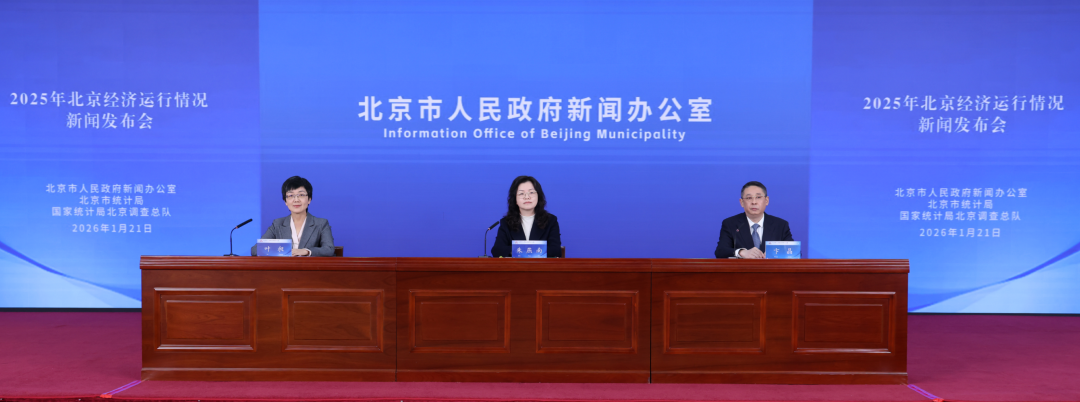
晒成绩!2025北京这些民生数据与你有关,今年还有这些好消息→
Xin Lang Cai Jing· 2026-01-21 13:24
Core Viewpoint - Beijing's economic performance in 2025 shows stable development in employment and income, with a focus on high-quality employment and income growth driven by various policies and initiatives [3][5][10]. Employment - The urban surveyed unemployment rate in Beijing remained stable at an annual average of 4.1%, consistent with the previous year, with monthly fluctuations between 4.0% and 4.3% [4]. - Employment initiatives targeted at youth, particularly college graduates, and support for disadvantaged groups have been emphasized to promote local employment and transition employment [4][10]. - The unemployment rate peaked at 4.3% in July due to the influx of new labor from college graduates, but stabilized in the fourth quarter [4]. Income - Per capita disposable income in Beijing increased from 69,000 yuan at the end of the 13th Five-Year Plan to 89,000 yuan by the end of the 14th Five-Year Plan in 2025 [5]. - Wage income and net transfer income contributed significantly to this growth, with both categories showing a year-on-year increase of 4.9%, contributing 73.6% to the rise in disposable income [5]. - Rural residents' income growth outpaced urban residents, with a year-on-year increase of 5.4%, leading to a reduction in the urban-rural income ratio to 2.29 [5]. Consumer Prices - The Consumer Price Index (CPI) in Beijing showed a low and stable trend, with a year-end increase of 1.0% after a period of decline in the first three quarters [6]. - Food prices decreased by 2.0%, significantly impacting the CPI, with fresh vegetables seeing a notable decline of 4.2% [6][7]. - Service prices remained stable overall, with some categories experiencing price increases, such as home services and education, which rose by 17.4% and 0.8%, respectively [8]. Future Outlook - The 15th Five-Year Plan emphasizes improving the quality of life and increasing income, with a focus on stabilizing employment for key groups such as college graduates and rural laborers [9][10]. - Despite structural employment challenges, favorable economic conditions and supportive policies are expected to maintain a stable labor market and income growth [10]. - Price stability is anticipated, with measures in place to ensure food supply and manage service prices during peak demand periods [10].
去年服务价格同比上涨0.7%,“悦己经济”引领武汉消费新风尚
Chang Jiang Ri Bao· 2026-01-15 00:40
Core Insights - The consumption market in Wuhan is witnessing a new trend where "emotional consumption" is rising despite stable or declining prices in essential goods [1][8] - The service prices in Wuhan increased by 0.7% in 2025, with significant rises in beauty services (9.1%) and pet services (4.2%), indicating a shift towards "self-care" spending [1][9] Consumption Trends - Emotional consumption is characterized by a diverse range of services available throughout the day, catering to various age groups and emotional needs, such as early morning breakfast spots and 24-hour pet hospitals [4] - The CPI data shows that while overall prices increased modestly, specific sectors like education, culture, and entertainment saw significant price hikes, with ticket prices for attractions rising by 7.3% [8] Price Changes - The price changes from 2024 to 2025 in various categories indicate a mixed trend, with food and beverages expected to decrease by 0.5%, while other services like "other goods and services" are projected to increase by 9.6% [5] - Traditional consumer goods prices remain stable, with fresh vegetable prices down by 3.3% and pork prices down by 8.5%, allowing consumers to allocate more budget towards emotional and luxury spending [8] Market Dynamics - The rise in emotional consumption aligns with the upgrade of industrial products, as consumers are increasingly interested in health-oriented and technologically advanced products [8] - The trend reflects a broader shift among younger consumers who prioritize spending on personal well-being and experiences, indicating a new lifestyle and consumption pattern in Wuhan [9]
