私募

Search documents
A股增量资金空间测算-居民存款与机构资金潜力展望
2026-01-08 16:02
Summary of Key Points from the Conference Call Industry Overview - The focus is on the A-share market in China, particularly regarding the inflow of incremental funds and the impact of various financial instruments and investor behaviors on the stock market. Core Insights and Arguments - **Incremental Funds from Resident Deposits**: It is estimated that the scale of resident deposit migration will reach between 1 trillion to 4 trillion yuan by 2026, with an annual inflow of approximately 1 trillion yuan into the stock market. This migration is expected to enhance M2 growth, providing additional funds for the stock market [1][2] - **Insurance Funds as a Stable Investment Source**: Insurance funds are projected to contribute over 1 trillion yuan annually to the stock market. By Q3 2025, the equity asset allocation of life and property insurance companies has significantly increased, indicating a strong trend towards stock and fund holdings [1][5] - **Growth of Private and Public Funds and ETFs**: The rapid development of private equity, public funds, and ETFs is noted, with ETFs attracting many investors due to their flexibility and low costs. The annual growth potential in these areas is estimated to be between 1 trillion to 2 trillion yuan [1][6][12] - **IPO Contributions to Market Liquidity**: A-share IPOs are expected to inject several hundred billion yuan into the market annually, particularly benefiting hard manufacturing and hard technology companies during favorable market conditions [3][10] - **Impact of Resident Deposit Migration on Stock Market**: The migration of resident deposits is a crucial indicator, with significant increases in non-bank financial institution deposits suggesting that funds are gradually entering the stock market. The ratio of new resident deposits to GDP is expected to decline, indicating more funds will be available for investment [4][15] - **Long-term Role of Insurance Funds**: Insurance funds are seen as a key driver for medium to long-term capital entering the market. The allocation towards technology stocks has increased, with expectations of substantial funds waiting to enter the market in the coming years [5][8] - **Market Outlook and Slow Bull Trend**: The A-share market is anticipated to enter a slow bull phase, with long-term funds gradually allocating to equity assets. The market is expected to rely on technology and new consumption sectors in 2025, shifting focus to manufacturing in 2026 [1][7] - **Contributions from Active Funds and Private Equity**: Active funds in the secondary market contribute approximately 100 billion yuan, while private equity could bring in over 1 trillion yuan annually, especially considering stock price increases [11] - **Financing Balance and Market Expansion**: The financing balance is currently high but not at peak levels seen in 2015, indicating potential for upward movement. The annual incremental space for financing balance is estimated at around 100 billion yuan [13][14] Other Important Insights - **Investment Behavior Trends**: The gradual shift of long-term funds into equity assets is a notable trend not seen in the past two decades, with policy direction favoring a slow bull market rather than a rapid rise [7] - **Sector-Specific Investment Focus**: Future allocations by insurance funds are expected to diversify beyond financial stocks to include leading companies in sectors with favorable economic conditions [8][9]
上市公司:深耕主业,敬畏金融方致远
Sou Hu Cai Jing· 2026-01-04 13:03
Core Viewpoint - The article discusses the challenges faced by companies when their core business is under pressure, leading them to explore financial instruments as a potential solution, questioning whether these tools serve as a quick fix or a risky venture [1][2]. Group 1: Financial Tools and Company Strategy - Companies often shift focus to financial markets when their core business struggles, viewing financial instruments as a means to generate quick profits [3][4]. - This shift can lead to a loss of strategic focus and a reliance on financial engineering rather than core business development, which can marginalize the main business [3][4]. - The article warns that financial gains are uncertain and can lead to a cycle of increased risk-taking, ultimately jeopardizing the company's stability [3][4]. Group 2: Principles of Engaging with Financial Markets - Companies should approach financial tools with respect, using them as instruments to support core business operations rather than as speculative ventures [4][5]. - It is essential for companies to have the necessary expertise and risk management systems in place before engaging in financial markets, as blind confidence can lead to significant losses [4][5]. - The success of any financial operation should be measured by its contribution to the long-term health and stability of the core business [5]. Group 3: Cautionary Examples - The case of a struggling ST company attempting to engage in futures trading highlights the risks of seeking financial salvation in volatile markets [6]. - The article emphasizes that true success in the capital market belongs to those who focus on their core business while cautiously managing financial tools [6].


全球资本涌入中国,摩根大通2026重大预测,四大主线牛市将至?
Sou Hu Cai Jing· 2026-01-03 20:17
Core Viewpoint - Morgan Stanley's latest report indicates that while China's economic growth may slow down, the risks remain manageable, with the CSI 300 index expected to experience a fourth wave of rebound and four key themes to watch for investment opportunities in 2026 [1][3]. Economic Outlook - Morgan Stanley predicts a "slowdown in growth but controllable downside risks" for China's economy in 2026, supported by three key dimensions: increased policy support, emerging productivity investments in high-end manufacturing and technology, and a rebound in competition dynamics across industries [3]. - The firm's China Macro Sentiment Indicator (QMI) serves as a barometer for the market, showing a recovery trend that aligns with the stock market's bottoming characteristics [3]. Industry Analysis - Morgan Stanley categorizes 36 Chinese industries into four stages: expansion, recovery, slowdown, and contraction, noting a gradual decrease in the number of industries in the slowdown phase and an increase in those in expansion and recovery [5]. - The report anticipates a strong momentum for the CSI 300 index, with historical rebounds showing over 90% gains from previous lows, and sets three target levels for the current rebound: approximately 30% to 4500 points, 55% to surpass 5000 points, and 70% nearing 6000 points [5]. Investment Themes - The first key theme is "anti-involution," focusing on industries transitioning from price and scale competition to quality and efficiency competition, particularly in sectors with severe losses [8][10]. - The second theme revolves around AI infrastructure supply chains, driven by significant capital expenditure increases from leading U.S. cloud service providers, which will benefit Asian supply chains, especially in data center and energy storage systems [11][13]. - The third theme highlights the international competitiveness of Chinese companies, drawing parallels with Japan's historical performance, emphasizing sectors like new energy vehicles, consumer electronics, and AI hardware [15]. - The fourth theme addresses K-shaped consumption patterns in China, where high-end markets are recovering while low-end sectors show signs of improvement, particularly in food and beverage [16][18].

券商发力养老金融空间广阔
Jing Ji Ri Bao· 2025-12-17 20:08
Core Insights - The central financial work conference has identified pension finance as one of the key areas for development, aiming to establish a robust pension finance system by 2028 and achieve a high-quality development cycle by 2035 [1][2] Investment Opportunities - The aging population opens up investment opportunities for brokerages across the entire industry chain, including healthcare, pension services, long-term care, and elder-friendly technology [2][6] - Brokerages can leverage various financial products to effectively integrate long-term sectors into residents' asset allocation [2][5] Challenges in Pension Finance - The pension finance sector faces challenges such as the need for market-oriented and professional investment management capabilities, as well as the nascent development of elder care services and products [1][3] - There is a pressing need for diverse financing tools to support the light-asset and long-return-cycle characteristics of the elder care industry [1][6] Differentiation Strategies - Brokerages are seeking differentiation in pension management through product innovation, service upgrades, and cross-industry collaboration [3][4] - A multi-strategy research and investment system is essential for brokerages to achieve long-term stable returns while managing inflation and volatility [3][4] Asset Management Services - Brokerages are providing comprehensive asset management services for various pension funds, including social security and enterprise annuities, to promote stable development [4][5] - The implementation of personal pension systems has significantly increased demand for wealth planning among individual clients, creating opportunities for brokerages in account management and product distribution [4][5] Financial Innovation - Brokerages are expanding their service boundaries through financial innovation, utilizing tools like private placement notes (PPN) and asset-backed securities (ABS) to meet diverse financing needs [6][7] - The successful issuance of the first "support for the pension industry" bond demonstrates the potential for low-cost financing channels in the elder care sector [6][7] Future Directions - Brokerages are encouraged to focus on high-growth segments of the elder economy, innovate pension financial tools, and explore collaborative ecosystems with various partners [7]


中长期资金和产业资本支撑资金面平稳
Xinda Securities· 2025-12-02 07:35
Overview - In 2025, the A-share market is experiencing steady net inflows, with the annual net inflow accounting for 3.9% of the free float market value as of November 28, 2025 [10][11] - The inflow speed has slowed down since Q4 2025, primarily due to a significant decrease in active equity fund shares and a slowdown in new account openings and financing balances [15][22] Annual Analysis - The annual net inflow of funds is supported by stable resident fund inflows, with changes in inflow channels compared to historical bull markets, including ETFs, private equity, and "fixed income+" products [11][12] - The insurance capital's entry into the market has accelerated compared to 2024, contributing to the overall stability of the funding environment [11][12] Monthly Analysis - In October 2025, the financing balance increased by 904.48 billion yuan, but decreased by 123.24 billion yuan from November 1 to November 28 [28] - The total financing balance as of November 28, 2025, increased by 6023.54 billion yuan compared to the end of the previous year, reaching a historical high [28] Fund Flows - The share of active equity public funds decreased by 1973.67 billion shares in October 2025, while ETFs maintained net inflows of 491.02 billion yuan [21][28] - The private equity fund management scale increased to 70076.16 billion yuan in October 2025, reflecting a strong inflow [21] Insurance Capital - As of Q3 2025, the insurance company's investment balance reached 37.46 trillion yuan, with an estimated net inflow of 1066.0 billion yuan compared to Q2 2025 [21] - The annual net inflow of insurance capital is projected to be 5907.03 billion yuan compared to Q4 2024 [21] Equity Financing - The equity financing scale in October 2025 was 609.44 billion yuan, an increase from 436.85 billion yuan in September [21][28] - The total equity financing scale from January 1 to November 28, 2025, reached 5120.30 billion yuan, surpassing the total for the previous year [21][28] Company Actions - The total amount of company buybacks in October 2025 was 900.68 billion yuan, a decrease from the previous month [21] - The total dividend amount for listed companies reached 1141.53 billion yuan in October 2025, with a cumulative total of 19652.25 billion yuan from January 1 to November 28, 2025 [21]
普通人的财富自由躺平计划,诺贝尔奖已经验证了125年...
雪球· 2025-10-24 13:00
Group 1 - The article discusses the recent Nobel Prize winners in economics: Joel Mokyr, Philippe Aghion, and Peter Howitt, highlighting their contributions to economic growth and creative destruction theories [3][4][5]. - The Nobel Prize fund aims to maintain a real return of over 3% after inflation, ensuring sustainability for future awards [6][7]. - The distribution of the Nobel Prize fund includes 52% in equity funds, 9% in real estate and infrastructure, 17% in fixed income and cash, and 20% in alternative assets like hedge funds and private equity [15]. Group 2 - The article notes that the Nobel Prize fund experienced a significant loss of -19.1% during the 2008 financial crisis, leading to a 20% reduction in prize money in 2012 [16]. - It emphasizes the importance of a reliable long-term investment strategy that can provide a consistent 3% return annually while preserving capital [18]. - The article suggests that individuals can achieve financial independence by saving a substantial amount and withdrawing 3% annually to cover living expenses, ensuring that both principal and spending power are protected against inflation [20][22].

瑞银财富管理吕子杰,最新发声
中国基金报· 2025-10-12 12:19
Core Insights - UBS Wealth Management emphasizes the importance of being a "super connector" between Chinese and global entrepreneurs, leveraging its extensive experience and network to facilitate wealth management and investment opportunities [2][7]. Group 1: Wealth Management Strategy - UBS has over 160 years of history, focusing on wealth management, which constitutes over 50% of its total revenue [6]. - The firm adopts a "banking integration" strategy, where it first establishes long-term relationships with entrepreneurs, then extends services to investment banking and asset management as their needs evolve [6][7]. - UBS has been active in the Chinese market for over 35 years, with a strong presence in Hong Kong and the broader Asia-Pacific region [6]. Group 2: Family Wealth Management - Many overseas families view family offices as a "school" for nurturing the next generation, with younger family members increasingly interested in entrepreneurship rather than traditional family businesses [9]. - Family offices are also seen as platforms for social impact, with younger generations preferring to invest in projects that create social value rather than merely donating [9]. - Current high-net-worth clients in China are maturing and becoming more rational, focusing on "stability" and diversifying investments into alternatives like private equity and hedge funds [9]. Group 3: Opportunities in the Greater Bay Area - UBS manages one-third of its assets in the Greater Bay Area, highlighting its significance to the firm [11]. - The number of trips between Hong Kong and cities in the Greater Bay Area has increased by 25% compared to last year, with related meetings up by over 20% [12]. - UBS plans to relocate its Hong Kong office to a more strategic location by the end of 2026, enhancing its ability to serve clients in the Greater Bay Area [12].


【锋行链盟】伦敦证券交易所上市公司再融资方式及核心要点
Sou Hu Cai Jing· 2025-10-04 11:15
Group 1: Core Financing Methods - The London Stock Exchange (LSE) offers a variety of refinancing tools for listed companies, including equity financing, debt financing, and hybrid instruments [2] - Equity financing is the most common method, with options such as Placing, Open Offer, Rights Issue, and Private Placement [2][3][5][7] - Debt financing includes Corporate Bonds, Eurobonds, and Convertible Bonds, allowing companies to raise funds efficiently while maintaining control over equity [8][10][11] Group 2: Key Points of LSE Refinancing - All refinancing activities must comply with the Financial Conduct Authority (FCA) regulations, including the Financial Services and Markets Act (FSMA) and Listing Rules [14] - Information disclosure is critical, requiring a prospectus for public offerings and adherence to market abuse regulations [15][16] - The investor base at LSE is predominantly international institutions, which prefer high liquidity and transparency in their investments [21] Group 3: Cost and Efficiency Considerations - Direct costs associated with refinancing include underwriting fees, legal/audit fees, and prospectus preparation costs, with public offerings generally being more expensive than private placements [17] - Indirect costs may involve equity dilution and short-term stock price volatility following announcements [18] - Companies on the Main Market typically have lower financing costs due to their larger size and higher credit ratings, while AIM companies often rely on private placements and need to present a clear growth narrative [19][20]

我们买私募,买的到底是什么?
雪球· 2025-09-03 08:23
Core Viewpoint - The private equity fund industry has seen significant growth over the past decade, with its management scale increasing from 1.73 trillion to over 3 times that amount, indicating a strong demand and interest in this investment category [2]. Group 1: Growth of Private Equity - Ten years ago, there were only 21 private equity firms with over 10 billion in assets, while today that number has increased to 81 [4]. - Despite the high entry barriers for ordinary investors, private equity continues to attract attention and favor due to its flexibility [6]. Group 2: Flexibility of Private Equity - Private equity funds are highly flexible, catering to diverse and personalized investment needs, contrasting with public funds which are more standardized [8]. - The flexibility of private equity is attributed to several key "superpowers" [13]. Group 3: Key Advantages of Private Equity - **Flexible Positioning**: Unlike public funds, which have strict position limits (minimum 80% in stocks), private equity funds can adjust their positions freely, allowing for better performance in volatile or bear markets [15]. - **Broader Investment Scope**: Private equity funds can invest in a wider range of assets, including commodities and foreign exchange, beyond just stocks and bonds [19]. - **Use of Financial Derivatives**: Private equity funds can utilize various financial derivatives, which are often restricted for public funds, allowing for more complex strategies such as hedging and short selling [23]. - **Leverage Investment**: Private equity funds commonly use leverage, enhancing capital efficiency by borrowing to invest, which is less common in public funds [32].

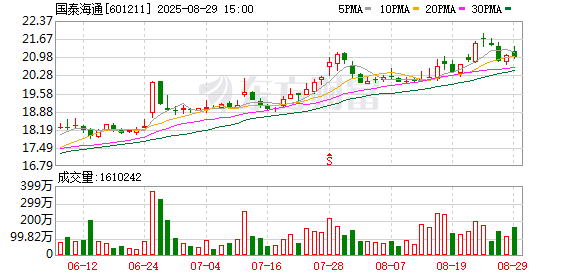
国泰海通,第一!
Shang Hai Zheng Quan Bao· 2025-08-30 11:31
Core Viewpoint - The overall performance of listed securities firms in the first half of 2025 has shown a significant recovery, driven primarily by proprietary investment business and steady progress in wealth management transformation [2][3]. Industry Performance Overview - As of August 29, 2025, 42 listed securities firms reported a total operating income of approximately 251.87 billion yuan, representing a year-on-year increase of over 10%. The net profit attributable to shareholders reached about 104.02 billion yuan, with a year-on-year growth rate of 65% [3]. - The top 10 listed securities firms by operating income include CITIC Securities (33.04 billion yuan, up 20.44%), Guotai Junan (23.87 billion yuan, up 39.85%), and Huatai Securities (16.22 billion yuan, up 31.01%) [4][5]. Profitability Analysis - Guotai Junan led in net profit with 15.74 billion yuan, followed by CITIC Securities with 13.72 billion yuan. Huatai Securities, China Galaxy, and GF Securities ranked third to fifth with net profits of 7.55 billion yuan, 6.49 billion yuan, and 6.47 billion yuan, respectively [5]. - Notably, seven small and medium-sized securities firms doubled their net profit in the first half of 2025, with Huaxi Securities achieving a remarkable increase of 1195.02% to 0.51 billion yuan [5]. Business Segment Performance - Proprietary business emerged as the main driver of growth, with revenue reaching 112.35 billion yuan, a year-on-year increase of 53.53%, accounting for nearly half of the total industry revenue [6][7]. - Other business segments included economic business revenue of 63.45 billion yuan (up 43.98%), investment banking revenue of 15.53 billion yuan (up 18.11%), and asset management revenue of 21.20 billion yuan (down 2.72%) [7]. Wealth Management Resilience - Wealth management business showed resilience across both leading and smaller firms, benefiting from a recovering capital market and increased demand from high-net-worth clients for private equity, quantitative, and fixed-income products [9]. - For instance, China International Capital Corporation reported wealth management revenue of 4.18 billion yuan, up 41.11%, driven by increased brokerage fees and commissions [9].