
INE原油

Search documents
宝城期货品种套利数据日报-20260401
Bao Cheng Qi Huo· 2026-04-01 03:02
1. Report Industry Investment Rating - No relevant content provided 2. Core Viewpoints - No clear core viewpoints are presented in the report; it mainly offers various commodity and index-related data, including basis, spreads, and ratios 3. Summary by Category 3.1 Power Coal - Basis data from March 25 to March 31, 2026, shows values such as -45.4, -41.4, -40.4, -40.4, and -46.4 respectively; the spreads between different contract months (5 - 1, 9 - 1, 9 - 5) are all 0.0 [2] 3.2 Energy and Chemicals 3.2.1 Energy Commodities - INE crude oil, fuel oil, and the ratio of crude oil to asphalt have corresponding basis and ratio data from March 25 to March 31, 2026 [5] 3.2.2 Chemical Commodities - Basis data for various chemical products (natural rubber, methanol, PTA, LLDPE, PP, etc.) from March 25 to March 31, 2026, are provided; also includes spread data between different contract months and cross - product spread data [7] 3.3 Black Metals - Basis data for black metals (rebar, iron ore, coke, coking coal) from March 25 to March 31, 2026, are presented; spread data between different contract months and cross - product ratio data are also included [11] 3.4 Non - ferrous Metals 3.4.1 Domestic Market - Domestic basis data for non - ferrous metals (copper, aluminum, zinc, lead, nickel, tin) from March 25 to March 31, 2026, are provided [21] 3.4.2 London Market - LME data for non - ferrous metals (copper, aluminum, zinc, lead, nickel, tin) on March 31, 2026, including LME premium/discount, Shanghai - London ratio, CIF price, domestic spot price, and import profit/loss [27] 3.5 Agricultural Products - Basis data for agricultural products (soybean No. 1, soybean No. 2, soybean meal, soybean oil, etc.) from March 25 to March 31, 2026, are provided; spread data between different contract months and cross - product ratio data are also included [34] 3.6 Stock Index Futures - Basis data for stock index futures (CSI 300, SSE 50, CSI 500, CSI 1000) from March 25 to March 31, 2026, are presented; spread data between different contract months are also included [45]
——海外周报第132期:【每周经济观察】从微观交易结构看油交易到什么程度了?-20260323
Huachuang Securities· 2026-03-23 06:56
Trading Volume and Positioning - Domestic crude oil futures trading volume has surged to over the 70th percentile historically, reaching 73.1%[7] - The trading amount of domestic crude oil futures accounted for approximately 10.9% of total trading volume in the past 20 days, slightly lower than during the Russia-Ukraine conflict[8] - The year-on-year growth rate of domestic crude oil futures positions reached 122.5%, marking a new high since 2022[12] International Market Insights - International crude oil futures trading volume is nearing historical highs last seen in March 2020[17] - Non-commercial net positions for WTI and Brent crude oil are at the 72.3% and 88.3% percentiles, respectively, indicating strong bullish sentiment[20] - Brent crude oil's net long position has surpassed levels seen in 2022, while WTI's net long position is about 70% of its peak from 2022[20] Concentration and ETF Flows - Brent crude oil's net long position concentration is low, suggesting a broad bullish outlook among market participants, with the top four holders accounting for only 5.7%[24] - WTI crude oil's net long position concentration is moderate, with the top four holders accounting for 7.9%[24] - Brent crude oil ETF saw a net inflow of $400 million, the highest since January 2011, while WTI crude oil ETF experienced a recent net outflow of $500 million[28]
油价回落,日韩市场大幅高开
Wind万得· 2026-03-10 00:36
Oil Market - Oil prices continue to decline, with Brent crude trading above $91 per barrel and WTI crude trading below $90 per barrel [2] - Current prices for WTI crude are $87.87, down 7.28%, and for Brent crude are $91.81, down 7.23% [3] Economic Data - Japan's Q4 actual GDP annualized quarter-on-quarter final value is 1.3%, exceeding the expected 1% and initial value of 0.2% [4] - South Korea's GDP growth for 2025 is projected at 1%, consistent with previous forecasts, while Q4 GDP growth is 1.6%, slightly above the expected 1.5% [4] Geopolitical Factors - U.S. President Trump announced a temporary lifting of some oil-related sanctions to ensure sufficient oil supply and lower prices, although specific details were not provided [5] - Trump's comments also included threats towards Cuba and plans to transport 100 million barrels of oil from Venezuela [5] - Japan's Finance Minister stated that the decline in oil futures is a result of the G7's unified stance, though it remains uncertain if the drop is sufficient [5]


地缘主导市场,能化继续偏强
Dong Zheng Qi Huo· 2026-03-09 03:14
1. Report Industry Investment Rating No relevant content provided. 2. Core View of the Report - Geopolitical factors will continue to dominate the commodity market next week. If the war intensifies, energy and chemical products are expected to perform strongly, while commodities sensitive to interest rates and worried about weakening demand may perform weakly. The expected order of performance is energy, chemicals > agricultural products > black commodities > non - ferrous metals and precious metals [2][18][19] 3. Summary by Directory 3.1 One - Week Review and Views 3.1.1 One - Week Review: Divergent Commodity Trends, Leading by Energy and Chemicals - This week (03.02 - 03.01), commodity trends were divergent. The performance order of sectors was energy > oil chemical > coal chemical > black > agricultural products > non - ferrous > precious metals. Due to the escalating US - Iran conflict, supply - side disturbances persisted. On Monday, commodities generally rose, with energy, chemicals, and precious metals seeing large increases. From Tuesday, as the market revised up the expected duration of the war and inflation rose, the Fed's interest - rate cut expectations were revised down, causing precious metals and non - ferrous metals to fall, while energy and chemical products continued to rise [1][12] 3.1.2 Next - Week Outlook: Geopolitical Dominance, Continued Strength in Energy and Chemicals - Geopolitical factors will continue to dominate the commodity market. The market has revised up the war duration, and the Strait of Hormuz remains blocked, with a low probability of short - term supply recovery. Geopolitical risks are increasing global stagflation pressure, and the Fed's interest - rate cut expectations are being revised down. Domestic policies announced during the Two Sessions are in line with market expectations. If the war intensifies, energy and chemical products will remain strong, while some commodities sensitive to interest rates may be weak. The expected performance order is energy, chemicals > agricultural products > black commodities > non - ferrous metals and precious metals [2][18][19] 3.2 Exchange Rate and Interest Rate Data Tracking - The US dollar index strengthened, and the 10 - year US Treasury yield rose. As of March 6, the US dollar index rose 1.34% to 98.9558, and the 10 - year US Treasury yield rose 18BP to 4.15%. The Sino - US 10 - year Treasury yield spread was inverted by 237.3BP. The US - Iran war exceeded market expectations, leading to increased risk - aversion, rising oil and chemical prices, and a significant downward revision of the Fed's interest - rate cut expectations. The slowdown in the US February non - farm employment data may intensify concerns about stagflation. The RMB's appreciation pace slowed [22] 3.3 Upstream Raw Material Prices - Due to the escalating US - Iran conflict, the Strait of Hormuz transportation was severely affected, causing a significant increase in crude oil prices. The resonance of energy substitution, cost transmission, rising transportation costs, and increased market risk - aversion also led to an increase in coking coal prices [27] 3.4 Production - End High - Frequency Data - The blast furnace capacity utilization rate of 247 steel enterprises decreased, while the daily output of clean coal from 523 sample mines increased. The production of copper tubes and electrolytic aluminum in China increased. The EIA US crude oil production data was presented. The methanol capacity utilization rate decreased, the PE capacity utilization rate slightly decreased, the PTA plant operating rate increased, the PVC operating rate decreased, the operating rate of Chinese soda ash enterprises slightly increased, the capacity utilization rate of float glass enterprises was low, the operating rates of automobile tire all - steel and semi - steel tires increased, and the production of soybean meal from Chinese full - sample enterprises' pressing plants increased [33][36][52] 3.5 Inventory - End High - Frequency Data - Gold and silver inventories decreased slightly. Most industrial product inventories continued to accumulate above the seasonal level. Inventories of copper, iron ore, methanol, PVC, soda ash, glass, etc. were at historical highs, and inventories of aluminum and steel were also increasing significantly. The key to inventory reduction is whether demand can improve significantly [53] 3.6 Demand - End High - Frequency Data - This year's growth - stabilization goals are pragmatic, with more attention on development quality, economic structure adjustment, and long - term development potential. The real - estate market data was divergent this week: the sales area of commercial housing in 30 large - and medium - sized cities decreased slightly, the sales area in first - tier cities increased but at a slower pace, and second - hand housing listing prices declined. However, the second - hand housing listing volume was low, and the second - hand housing transaction area continued to rise. This week, the issuance and net financing scale of government bonds decreased, and the cumulative net financing of government bonds this year was at a historical high. The subway passenger volume in the top ten cities and the apparent consumption of rebar increased seasonally [74][75][76] 3.7 Key Commodity Basis - Data on the basis of various key commodities such as gold, copper, aluminum, rebar, iron ore, coking coal, crude oil, methanol, PTA, PVC, pig, and soybean meal were presented [86][89][92] 3.8 Commodity Price Ratios - Data on various commodity price ratios such as gold - silver ratio, gold - copper ratio, gold - oil ratio, copper - oil ratio, copper - aluminum ratio, steel - ore ratio, agricultural - industrial ratio, and pig - grain ratio were presented [96][99][103] 3.9 Summary and Outlook - The expected performance order is energy, chemicals > agricultural products > black commodities > non - ferrous metals and precious metals [3][104]
中东冲突引爆能源危机:为何国内油价涨幅远超国际?
经济观察报· 2026-03-08 02:35
Core Viewpoint - The energy crisis triggered by the Middle East conflict is escalating globally, with significant price increases in oil and related commodities observed in both international and domestic markets [2][4]. Group 1: Oil Price Surge - On March 6, international oil prices saw substantial increases, with ICE Brent crude rising by 9.26% and NYMEX WTI crude by 12.67%, both surpassing $90 per barrel [2]. - Domestic futures markets experienced even more dramatic price hikes, with INE crude rising by 14.20% and SHFE fuel by 15.72%, nearing their all-time highs [2]. - The chemical sector, as part of the downstream oil industry, also witnessed a rare wave of price surges, with multiple energy-related contracts hitting their daily limits [2]. Group 2: Market Reactions and Strategies - Following the military escalation in the Middle East, private equity firms in Southern China quickly adjusted their investment strategies, while public funds accelerated their entry into the energy sector [4]. - The "three barrels of oil" (China National Petroleum, China National Offshore Oil, and Sinopec) saw consecutive trading halts, marking a historic record in the A-share market [4]. Group 3: Futures Market Dynamics - The China Energy and Chemical Industry Futures Price Index surged by 30.91% in the week following the Middle East conflict, with INE crude and SHFE fuel contracts experiencing weekly increases of 55.56% and 53.92%, respectively [5]. - In contrast, international oil prices rose at a slower pace, with Brent crude and WTI crude increasing by 24.08% and 31.60%, respectively, indicating a significant divergence from domestic price movements [5][6]. Group 4: Speculative Behavior and Market Sentiment - The disparity in price increases between domestic and international markets is attributed to heightened speculative trading and concerns over rising procurement costs among downstream chemical enterprises [6]. - The majority of oil transported through the Strait of Hormuz is destined for Asia, amplifying the impact of supply shortages in the region [6]. Group 5: Risk Management in Futures Trading - Discussions around "three-board strong liquidation" have emerged, a risk control mechanism in futures trading that can lead to forced liquidation or trading suspension after three consecutive limit moves [8][9]. - The Shanghai Futures Exchange clarified that while risk control measures are in place, they opted for less severe actions, allowing continued trading of SHFE fuel contracts [10]. Group 6: Future Outlook on Oil Prices - The potential for the domestic-international oil price gap to narrow depends on the evolving situation in the Middle East and the operational status of the Strait of Hormuz [12]. - Analysts suggest that the current domestic price surge is an irrational short-term phenomenon that is unlikely to be sustainable, with expectations of a correction as the situation stabilizes [13].

地缘冲突升级,贵金属与能化走强
Dong Zheng Qi Huo· 2026-03-02 03:18
1. Report Industry Investment Rating No information provided in the given content. 2. Core Viewpoints of the Report - Geopolitical conflicts will drive the strength of precious metals and energy - chemical sectors next week, but the sustainability of the rise depends on the duration and intensity of the US - Iran conflict. Overall, next week, energy and precious metals > chemicals > non - ferrous metals > agricultural products > real - estate - related commodities such as black metals [2][19]. - Geopolitical conflicts are the main line of trading for various commodities. In the short term, the prices of precious metals and crude oil will soar, and rising oil prices will drive up the prices of chemicals such as PTA, styrene, and PE. Methanol will also be supported by geopolitical premiums [2][19]. - Excluding geopolitical factors, there are many positive narratives for non - ferrous metals, but price increases await the recovery of demand. The crude oil market is in a state of oversupply, chemical product price increases require inventory digestion, and the fundamentals of real - estate - related commodities such as black metals are generally weak [2][20]. 3. Summary According to Relevant Catalogs 3.1 One - Week Review and Views 3.1.1 One - Week Review: Commodities Rose Across the Board, with Precious Metals Leading - This week (02.23 - 03.01), commodity prices generally rose. In terms of sectors: precious metals > non - ferrous metals > energy > agricultural products > oil - chemical > black metals > coal - chemical. Geopolitical conflicts between the US and Iran and uncertainties in US tariff policies led to an increase in market risk - aversion sentiment, resulting in large increases in precious metals and energy [1][11]. - The Trump administration's plan to set reference prices for key minerals boosted the sentiment of non - ferrous metals. Supply - side concerns drove up the prices of tin and lithium carbonate significantly. After the Spring Festival, demand declined, causing the prices of agricultural products such as pigs to fall, but the prices of cotton and soybean oil increased [1][11]. - Shanghai's real - estate policies boosted the sentiment of black commodities, but the effectiveness of the policies remains to be seen, and the increase in black commodities was limited. Rising oil prices supported the prices of aromatic and olefin chains, but the supply and inventory of the chlor - alkali sector were high, and downstream demand was weak, resulting in weak price performance [1][11]. 3.1.2 Next - Week Outlook: Geopolitical Conflicts Intensify, Precious Metals and Energy - Chemicals Strengthen - Geopolitical conflicts will drive the strength of precious metals, energy - chemical and other sectors, but the sustainability of the rise depends on the US - Iran conflict. The positive impact of geopolitical conflicts on the non - ferrous metals sector is weaker than that on the energy sector, but the fundamentals of the non - ferrous metals sector are stronger than those of the energy - chemical sector [2][19]. - Real - estate policies have been implemented, but domestic demand cannot improve quickly, so the upward momentum of black commodities is weak. The opportunities in the agricultural products sector are structural. Overall, next week, energy and precious metals > chemicals > non - ferrous metals > agricultural products > real - estate - related commodities such as black metals [2][19]. - Geopolitical conflicts are the main line of trading for various commodities. The US - Iran situation has deteriorated sharply, and market risk - aversion sentiment will rise. In the short term, the prices of precious metals will soar. Iran's closure of the Strait of Hormuz will disrupt crude oil supply, and oil prices are expected to rise. Rising oil prices will drive up the prices of chemicals, and methanol will also be supported by geopolitical premiums [2][19]. - Whether precious metals and energy - chemical commodities can continue to rise depends on the US - Iran conflict. If the conflict intensifies and the Strait of Hormuz remains closed, geopolitical premiums may support further price increases. If the conflict subsides quickly, the short - term price increase may present a selling opportunity [20]. - Excluding geopolitical factors, there are many positive narratives for non - ferrous metals, but price increases await the recovery of demand. The crude oil market is in oversupply, chemical product price increases require inventory digestion, and the fundamentals of real - estate - related commodities such as black metals are generally weak [20]. 3.2 Exchange Rate and Interest Rate Data Tracking - The US dollar index fell slightly, and the yield of 10 - year US Treasury bonds declined. As of February 27, the US dollar index fell 0.10% to 97.6443 compared with February 20. The yield of 10 - year US Treasury bonds was 3.97%, down 11 BP from February 20. The yield spread between Chinese and US 10 - year Treasury bonds was inverted by 215.1 BP [23]. - Although the US PPI in January exceeded market expectations, due to the dovish statements of some Federal Reserve officials, the expectation of interest - rate cuts increased, and the US dollar index weakened slightly. Concerns about AI impact, adjustments in US technology stocks, and rising market risk - aversion sentiment led to a decline in US Treasury bond yields [23]. - After the US - Iran conflict escalated over the weekend, the US dollar index is expected to strengthen. The RMB has been appreciating recently, but considering the strengthening of the US dollar and the reduction of the foreign exchange risk reserve ratio for forward foreign exchange sales by the Chinese central bank, the appreciation of the RMB will slow down [24]. 3.3 Upstream Raw Material Prices - Oil prices fluctuated and rose, coal prices were reported, natural gas prices fell slightly, and industrial electricity prices were also mentioned, but specific data and analysis were not elaborated in detail in the given text [32][33]. 3.4 Production - End High - Frequency Data - The blast - furnace capacity utilization rate of 247 steel enterprises increased, and the daily average output of clean coal from 523 sample mines recovered [35]. - China's copper - tube production decreased, and China's electrolytic - aluminum production increased [36]. - The EIA US crude - oil production was mentioned, and the methanol capacity utilization rate increased. The PE capacity utilization rate increased slightly, the PTA plant operating rate increased, the PVC operating rate increased, and the operating rate of Chinese soda - ash enterprises increased slightly [37][40][42]. - The capacity utilization rate of float - glass enterprises was at a low level, the operating rate of all - steel tires for automobiles increased, the operating rate of semi - steel tires for automobiles increased, and the production of soybean meal from all - sample enterprises' pressing plants in China increased [45][46]. 3.5 Inventory - End High - Frequency Data - After the Spring Festival, the inventories of major commodities generally increased. The copper inventories of the three major exchanges continued to accumulate beyond the seasonal norm, and the corresponding basis decreased. The apparent demand for steel decreased after the Spring Festival, and the inventory continued to accumulate. The inventories of real - estate - related commodities such as PVC, glass, and soda ash generally accumulated beyond the seasonal norm. The inventories of precious metals, coking coal, and soybean meal decreased slightly [47]. 3.6 Demand - End High - Frequency Data - Shanghai announced real - estate stabilization policies this week, and some real - estate high - frequency data improved, such as the increase in the transaction area of second - hand housing in 13 cities. However, the overall improvement did not significantly exceed the seasonal level. The net financing scale of government bonds was 560.4 billion yuan, and the issuance rhythm of government bonds this year is generally ahead of schedule, and the net financing quota of government bonds is currently basically the same as that in the same period of 2025 [60]. 3.7 Key Commodity Basis - The basis of various key commodities such as gold, copper, aluminum, rebar, iron ore, coking coal, crude oil, methanol, PTA, PVC, pig, and soybean meal was mentioned, but specific data and analysis were not elaborated in detail in the given text [70]. 3.8 Commodity Price Ratios - The price ratios of various commodities such as the gold - silver ratio, gold - copper ratio, gold - oil ratio, copper - oil ratio, copper - aluminum ratio, steel - ore ratio, agricultural - industrial ratio, and pig - grain ratio were mentioned, but specific data and analysis were not elaborated in detail in the given text [78].
美股科技、银行股深夜大跌,CoreWeave重挫17%,戴尔狂飙18%,金银原油齐涨,美伊战争风险急剧升高
2 1 Shi Ji Jing Ji Bao Dao· 2026-02-27 15:32
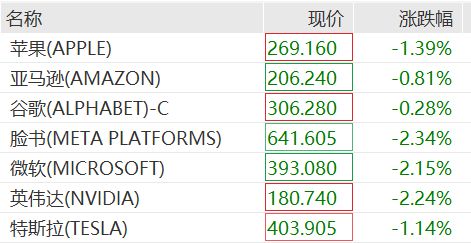
Market Overview - The U.S. stock market indices collectively declined, with all three major indices falling over 1% [1] - Major technology stocks mostly dropped, with Oracle and Salesforce down over 4%, and the "Big Seven" tech stocks, including Nvidia and Microsoft, down over 2% [1] Individual Stock Performance - Apple shares fell by 1.39%, Amazon by 0.81%, Google by 0.28%, Facebook by 2.34%, Microsoft by 2.15%, Nvidia by 2.24%, and Tesla by 1.14% [2] - Semiconductor stocks experienced a significant decline, with the Philadelphia Semiconductor Index leading the market drop, and companies like Bluefin Semiconductor down over 5% and Broadcom and GlobalFoundries down over 2% [2] - Bank stocks also saw a downturn, with Barclays and Citigroup down approximately 4%, and Bank of America and Wells Fargo down over 4% [2] Notable Stock Movements - CoreWeave's stock plummeted over 17%, marking its largest drop since August of the previous year due to concerns over massive capital expenditures [4] - Duolingo's stock fell by 22%, reaching its lowest level since February 2023, as the company's booking outlook for Q1 and the full year fell short of expectations [4] - Dell Technologies saw its stock surge by 18%, the largest intraday increase since April 9, as its revenue guidance for fiscal 2027 exceeded market expectations [4] - Netflix's stock rose by 12%, marking its largest increase since January 2025, following its exit from the Warner Bros. bidding war [4] - Block, the U.S. version of Alipay, increased nearly 20%, achieving its largest intraday gain since February 2024 [4] Commodity Market - Gold and silver prices surged due to escalating tensions in the Middle East, with silver rising approximately 5% and gold exceeding $5,230 [3][5] - International oil prices also spiked, with WTI and ICE Brent crude both increasing over 3% [3][5] - Year-to-date, international oil prices have risen nearly 20%, with potential for significant fluctuations depending on geopolitical developments involving the U.S. and Iran [5] Cryptocurrency Market - The cryptocurrency market experienced a widespread decline, with Bitcoin down 2.5% and Ethereum down over 5%, leading to over 100,000 liquidations globally in the past 24 hours [5]


黄金白银,集体重挫!美股全线下跌
Zhong Guo Zheng Quan Bao· 2025-12-29 23:06
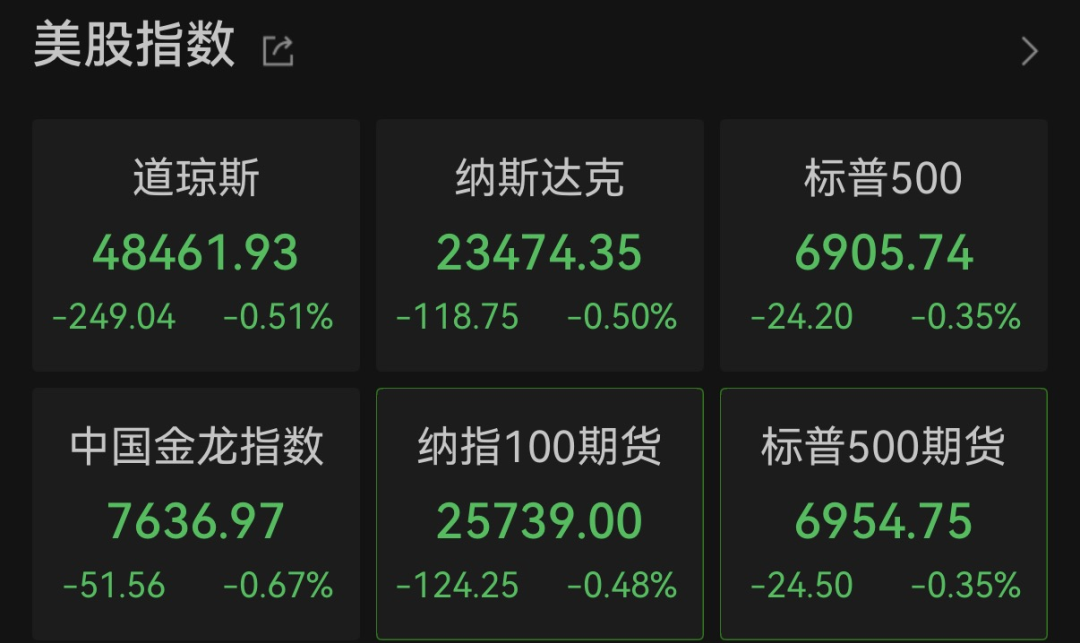
Group 1 - The US stock market indices closed lower on December 29, with the Dow Jones down 0.51%, S&P 500 down 0.35%, and Nasdaq down 0.5% [2][4] - The US Tech Giants Index fell by 0.60%, with notable declines in individual stocks such as Tesla down over 3% and Nvidia down over 1% [4] - Chinese concept stocks also experienced declines, with the Nasdaq Golden Dragon China Index down 0.66% and the Chinese Tech Leaders Index down 1.43% [4] Group 2 - Precious metals faced significant declines, with London silver down 8.99% and London gold down 4.33% as of December 30, 5:50 AM Beijing time [4] - The Chicago Mercantile Exchange announced an increase in margin requirements for metal futures, including a 10% increase for gold futures and approximately 13.6% for silver futures, which contributed to the drop in international metal futures prices [4][5]
国贸期货聚酯数据日报-20251229
Guo Mao Qi Huo· 2025-12-29 08:43
Report Summary 1) Report Industry Investment Rating No information provided. 2) Core Viewpoints - PTA: The PX market sentiment is supported by the expectation of tight supply in Q1 2026, with the PX - naphtha spread widening to $360 and the PX - mixed xylene spread rising to $244. PTA maintains high - level production, and the polyester load stays high due to new device launches. The PTA price is boosted by the overall commodity market sentiment [2]. - Ethylene Glycol (MEG): Overseas MEG device maintenance plans increase, but with coal prices falling and new devices coming into operation, the supply pressure is large. The price lacks effective support, though it may get support from domestic policies [2]. 3) Summary by Relevant Catalogs Market Data Changes - **INE Crude Oil**: The price dropped from 442.7 yuan/barrel on December 25, 2025, to 441.8 yuan/barrel on December 26, 2025, a decrease of 0.90 yuan/barrel [2]. - **PTA - SC**: The value increased from 1934.9 yuan/ton to 2069.4 yuan/ton, a rise of 134.54 yuan/ton [2]. - **PTA/SC Ratio**: Rose from 1.6014 to 1.6445, an increase of 0.0431 [2]. - **CFR China PX**: Increased from 901 to 919, a rise of 18 [2]. - **PX - Naphtha Spread**: Widened from 361 to 377, an increase of 16 [2]. - **PTA Main Futures Price**: Rose from 5152 yuan/ton to 5280 yuan/ton, an increase of 128 yuan/ton [2]. - **PTA Spot Price**: Increased from 5050 yuan/ton to 5175 yuan/ton, a rise of 125 yuan/ton [2]. - **PTA Spot Processing Fee**: Decreased from 281.8 yuan/ton to 278.5 yuan/ton, a decrease of 3.3 yuan/ton [2]. - **PTA Futures Processing Fee**: Rose from 363.8 yuan/ton to 398.5 yuan/ton, an increase of 34.7 yuan/ton [2]. - **PTA Main Basis**: Changed from (13) to (65), a decrease of 52 [2]. - **PTA Warehouse Receipt Quantity**: Decreased from 118,854 to 116,646, a decrease of 2,208 [2]. - **MEG Main Futures Price**: Rose from 3818 yuan/ton to 3846 yuan/ton, an increase of 28 yuan/ton [2]. - **MEG - Naphtha**: Changed from (147.79) to (141.98), an increase of 5.8 [2]. - **MEG Domestic Market**: Increased from 3653 to 3666, a rise of 13 [2]. - **MEG Main Basis**: Rose from 0 to 40, an increase of 40 [2]. Industry Chain Start - up Conditions - **PX Start - up Rate**: Remained at 86.28% [2]. - **PTA Start - up Rate**: Increased from 75.49% to 76.95%, a rise of 1.46% [2]. - **MEG Start - up Rate**: Remained at 61.50% [2]. - **Polyester Load**: Increased from 88.65% to 88.94%, a rise of 0.29% [2]. Product Price and Cash - Flow Changes - **POY150D/48F**: The price increased from 6440 to 6570, a rise of 130 [2]. - **POY Cash - Flow**: Improved from (352) to (333), an increase of 19 [2]. - **FDY150D/96F**: The price increased from 6730 to 6810, a rise of 80 [2]. - **FDY Cash - Flow**: Deteriorated from (562) to (593), a decrease of 31 [2]. - **DTY150D/48F**: The price increased from 7755 to 7760, a rise of 5 [2]. - **DTY Cash - Flow**: Deteriorated from (237) to (343), a decrease of 106 [2]. - **Long - Filament Production and Sales**: Increased from 41% to 48%, a rise of 7% [2]. - **1.4D Direct - Spun Polyester Staple Fiber**: The price increased from 6575 to 6690, a rise of 115 [2]. - **Polyester Staple Fiber Cash - Flow**: Improved from 133 to 137, an increase of 4 [2]. - **Staple Fiber Production and Sales**: Increased from 56% to 86%, a rise of 30% [2]. - **Semi - Bright Chip**: The price increased from 5720 to 5780, a rise of 60 [2]. - **Chip Cash - Flow**: Deteriorated from (172) to (223), a decrease of 51 [2]. - **Chip Production and Sales**: Increased from 49% to 55%, a rise of 6% [2]. Device Maintenance A 2.2 - million - ton PTA device in Ningbo, which stopped for maintenance in late November, is expected to resume operation on the 24th [2].
聚酯数据日报-20251218
Guo Mao Qi Huo· 2025-12-18 03:05
Report Summary Industry Investment Rating - Not provided in the given content Core Viewpoints - The PX price is strong, supporting the PX-naphtha spread. Despite no significant fundamental changes, PTA plants maintain high loads, and PX consumption remains stable. PX costs are high while PTA profits are under pressure, but integrated enterprises have improved economic benefits. The polyester load is high due to new plant startups, and PTA consumption remains high. The cancellation of India's BIS certification may boost exports. For ethylene glycol, port inventories are high, coal prices are falling, and new plant startups increase supply pressure, but polyester export inquiries may support downstream demand [2] Detailed Summaries by Category Market Data - **INE Crude Oil**: Price decreased from 430.5 yuan/barrel on 2025/12/16 to 426.7 yuan/barrel on 2025/12/17, a change of -3.80 yuan/barrel [2] - **PTA**: The主力期 price rose from 4668 yuan/ton to 4684 yuan/ton, the spot price increased from 4590 yuan/ton to 4605 yuan/ton. The spot processing fee dropped from 182.0 yuan/ton to 164.2 yuan/ton, and the disk processing fee decreased from 260.0 yuan/ton to 243.2 yuan/ton. The PTA-SC spread increased from 1539.5 yuan/ton to 1583.1 yuan/ton, and the PTA/SC ratio rose from 1.4921 to 1.5105. The PTA warehouse receipt quantity decreased from 136,697 to 134,143 [2] - **MEG**: The主力期 price increased from 3700 yuan/ton to 3758 yuan/ton. The MEG inner - market price rose from 3634 yuan/ton to 3667 yuan/ton. The MEG - naphtha spread changed from -142.86 yuan/ton to -143.05 yuan/ton [2] - **PX**: CFR China PX price increased from 827 to 834, and the PX - naphtha spread rose from 281 to 298 [2] - **Polyester Products**: POY150D/48F price decreased from 6300 to 6285, POY cash flow decreased from -92 to -131. FDY150D/96F price decreased from 6555 to 6525, FDY cash flow decreased from -337 to -391. DTY150D/48F price decreased from 7690 to 7685, DTY cash flow decreased from 98 to 69. 1.4D direct - spun polyester staple price increased from 6325 to 6340, and polyester staple cash flow decreased from 283 to 274. Semi - bright chip price decreased from 5475 to 5460, and chip cash flow decreased from -17 to -56. The long - filament sales rate decreased from 67% to 46%, and the short - fiber sales rate increased from 42% to 76%, and the chip sales rate increased from 67% to 116% [2] Industry Operating Rates - PX operating rate remained at 86.48%, PTA operating rate remained at 74.77%, MEG operating rate decreased from 60.66% to 60.43%, and polyester load remained at 88.41% [2] Device Maintenance - A 2.5 - million - ton PTA device in East China is restarting and is expected to produce products soon. The device was shut down for maintenance around November 17 [2]