Hua Er Jie Jian Wen

Search documents
静待关税裁决,美股指期货齐跌,日股续创新高,债汇承压,金属狂飙,现货白银首破90美元,锡铜新高
Hua Er Jie Jian Wen· 2026-01-14 08:44
Core Market Trends - US stock index futures collectively declined, with Dow Jones futures down 0.23%, S&P 500 futures down 0.2%, and Nasdaq 100 futures down 0.18% [2] - European stock indices showed mixed results, with the Euro Stoxx 50 up 0.16%, UK FTSE 100 down 0.03%, France's CAC40 up 0.31%, and Germany's DAX30 up 0.13% [2] - The Nikkei 225 index rose 1.5%, reaching a new high of 54,341.23 points, marking its second consecutive day of gains [2] Bond Market Movements - The yield on the 10-year US Treasury bond decreased by 2 basis points to 4.16%, while the yield on Japan's 30-year government bond increased by 3.5 basis points to 3.515% [3] Currency and Commodity Performance - The US dollar remained stable, while the Japanese yen fluctuated around 159 against the dollar [4] - Spot gold increased by 1% to $4,632.93 per ounce, and spot silver rose to over $91 per ounce, gaining 4.7% [4] - LME copper prices reached a historical high, indicating strong demand in the metals market [4] Cryptocurrency Trends - Bitcoin rose by 0.9% to $94,898.64, and Ethereum increased by 3.8% to $3,331.21 [5] Inflation and Interest Rate Expectations - Core inflation in the US showed signs of cooling, which briefly boosted market expectations for an earlier rate cut by the Federal Reserve, with the next cut anticipated in June [5] - The expectation of a rate cut is supporting industrial metal prices, with tin prices on the LME rising by 5% to $52,015 per ton, marking a new historical high [17]


从卖车到卖服务:特斯拉FSD彻底转向订阅制,每月99美元订阅成唯一选项
Hua Er Jie Jian Wen· 2026-01-14 08:44
Core Insights - Tesla is shifting from a one-time sale model for its Full Self-Driving (FSD) system to a subscription-based model, with a monthly fee of $99 starting February 14 [1][2] - This change aims to lower the entry barrier for potential users, eliminating the need for an upfront payment of approximately $8,000 in the U.S. market [2] - The transition comes as Tesla faces declining sales and aims to focus more on technology-driven projects like FSD, autonomous taxis, and robotics to create new revenue streams [1][2] Subscription Model Benefits - The subscription model allows users to experience the FSD system without the high initial cost, requiring about 6.7 years of continuous subscription to match the cost of the original one-time purchase [2] - Despite being labeled as "Full Self-Driving," the technology still requires human supervision and frequent intervention, indicating it remains a driver assistance feature rather than true autonomous driving [2]

美元兑日元一度回落至159下方,日本财务大臣片山皋月表示,不会排除对汇率采取任何措施,将就汇率做出适当回应
Hua Er Jie Jian Wen· 2026-01-14 08:44
Group 1 - The core viewpoint of the article indicates that the USD/JPY exchange rate has fallen below 159, prompting Japan's Finance Minister, Shunichi Suzuki, to state that no measures will be ruled out regarding the exchange rate, and appropriate responses will be made concerning it [1]
AI缺电逼急硅谷!大厂能源岗招聘激增34%,微软亚马逊狂招千人“找电”
Hua Er Jie Jian Wen· 2026-01-14 08:32
Core Insights - The tech giants in Silicon Valley are engaged in a fierce competition for energy talent, driven by the increasing demand for electricity as a bottleneck for AI expansion [1] - The hiring of energy-related positions in the tech sector is projected to surge by 34% year-on-year in 2024, continuing a trend from the previous year, with recruitment levels 30% higher than before the launch of ChatGPT in 2022 [1] - Major players like Microsoft and Amazon are leading this talent acquisition, with Microsoft adding over 570 energy-related employees and Amazon hiring 605 [2] Group 1: Hiring Trends - The tech industry is experiencing a significant increase in energy-related job recruitment, with a 34% rise expected in 2024 [1] - Microsoft and Amazon are the top recruiters, with Microsoft hiring 570 and Amazon 605 energy professionals, including roles from their subsidiaries [2] - Google has also increased its energy workforce by 340, indicating a competitive push in the AI sector [2] Group 2: Business Model Transformation - Tech companies are not only hiring but also transforming their business models to include energy trading, with Meta, Amazon, Google, and Microsoft seeking to sell excess power back to the grid [4] - The nature of energy roles is shifting towards operational positions in energy procurement and strategy, moving away from traditional sustainability roles [3] - Companies are increasingly willing to invest in and operate energy projects, although they may outsource construction and operations [3] Group 3: Market Dynamics - The surge in electricity demand is reshaping the business models of tech giants, with data centers projected to account for approximately 1.5% of global electricity consumption in 2024 [1] - The competition for energy talent is intensifying, as tech companies offer higher salaries, attracting seasoned professionals from the traditional energy sector [3] - The collaboration between tech companies and utility firms is expected to grow, as tech firms seek support for their energy needs rather than pursuing acquisitions [5]




“高市交易”引爆市场,植田和男未改口风:只要通胀达标,就会继续加息
Hua Er Jie Jian Wen· 2026-01-14 08:32
Group 1 - The Bank of Japan, led by Governor Kazuo Ueda, remains committed to raising interest rates when conditions allow, despite market volatility due to speculation of early elections [1][2] - Ueda emphasized that gradual adjustments to monetary easing will help achieve price stability and support long-term economic growth [2] - The current benchmark interest rate is at 0.75%, the highest level since 1995, with expectations of further rate hikes approximately every six months [2] Group 2 - Speculation around Prime Minister Fumio Kishida's potential dissolution of the House of Representatives for early elections has led to significant market fluctuations, with investors betting on expansionary fiscal measures [3] - The Japanese yen has depreciated to its weakest level since July 2024, prompting concerns over rising import costs and inflationary pressures [3][4] - Persistent inflation, with key price indicators remaining above the Bank of Japan's 2% target for over three and a half years, complicates the path to achieving stable price growth [4]
12月CPI数据疲软下的异常细节
Hua Er Jie Jian Wen· 2026-01-14 08:06
Core Insights - The December Core CPI increased by 0.24%, slightly below Citigroup's forecast of 0.27% and market consensus of 0.3%, indicating a potential slowdown in inflationary pressures by 2026 [1][2] - The overall weak trend in inflation data supports market expectations for a more accommodative monetary policy from the Federal Reserve, with Citigroup economists predicting rate cuts in March, July, and September [1][2] Inflation Data Analysis - Core goods prices remained flat in December, with used car prices dropping by 1.1%, offsetting modest increases in furniture (up 0.5%) and clothing (up 0.6%) [2] - Housing inflation showed slight increases, with primary rent and Owner's Equivalent Rent (OER) rising by 0.26% and 0.31%, respectively, while hotel accommodation prices surged by 2.9% [2] Data Collection Issues - The December data is described as "somewhat abnormal and difficult to interpret" due to data collection issues stemming from the government shutdown, which affected the accuracy of CPI data for October and November [3] - The use of carry-forward imputation in previous months led to downward bias in inflation, resulting in a mechanical rebound in December, particularly affecting prices of clothing and furniture [3] Service Prices Performance - Core service prices, excluding housing, exhibited mixed performance with significant volatility; medical services rose by 0.4%, entertainment services surged by 1.8%, and airfares increased by 5.2% [4] - These increases were countered by declines in education and communication prices, which fell by 0.8%, and personal services prices decreased by 0.2% [4]
报道:SK海力士停产消费级存储器 资源转向B2B与AI服务器市场
Hua Er Jie Jian Wen· 2026-01-14 08:03
Core Viewpoint - The semiconductor demand surge is prompting major companies to restructure their operations, with SK Hynix following Micron in halting production of consumer-grade DRAM and NAND Flash products to focus on the B2B and AI server markets [1] Group 1 - SK Hynix will cease production of consumer-grade DRAM and NAND Flash products [1] - The company aims to redirect resources towards the B2B and AI server markets [1] - This strategic shift reflects a broader trend among semiconductor companies responding to increased demand [1]
中国12月钢铁出口创新高、稀土同比大增32%,全年大豆、铁矿石、原油进口齐破纪录
Hua Er Jie Jian Wen· 2026-01-14 07:58
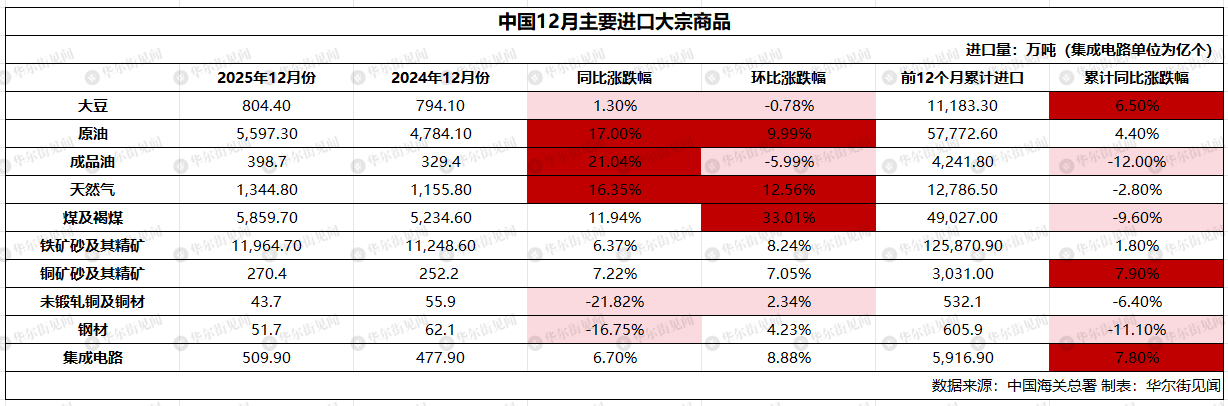
Core Insights - In 2025, China's soybean imports reached a record high of 111.8 million tons, marking the third consecutive year of growth, with a 6.5% increase from 2024 [1][3] - Iron ore imports also hit a historical peak, growing by 1.8% to 1.26 billion tons, continuing a three-year growth trend [6] - Coal imports saw the largest decline in a decade, dropping by 9.6% to 49 million tons [6][13] - December exports of rare earths surged by 32% year-on-year to 4,392 tons, while steel product exports exceeded the previous peak in 2015, reaching 11.3 million tons [2][1] Import and Export Data - December soybean imports were 8 million tons, a 1.3% increase year-on-year, while the total for the year was 111.83 million tons [3][13] - December iron ore imports were 11.96 million tons, a 6.37% increase from the previous year [9] - December crude oil imports reached 55.97 million tons, a 17% increase year-on-year, with an annual total of 57.77 million tons [4][12] - December natural gas imports rose by 16.35% to 1.34 million tons, but the total for the year fell by 2.8% to 12.79 million tons [7][13] Market Analysis - The increase in crude oil imports is attributed to stronger refining activity and robust stockpiling demand, with processing volumes expected to reach 15.38 million barrels per day in 2025 [5] - The decline in coal imports is linked to rising domestic production and the rapid adoption of clean energy, which is reducing coal demand [7] - The surge in rare earth exports indicates a solid demand foundation, despite a 20% month-on-month decline in December due to pre-holiday stockpiling by overseas buyers [2]
AI视频如何告别“抽卡”游戏
Hua Er Jie Jian Wen· 2026-01-14 07:43
Core Insights - The AI video generation sector is experiencing a commercial breakthrough, with companies like Kuaishou and MiniMax reporting significant revenue growth, while traditional large language models face challenges in monetization [1][7] - LuxReal, an AI video generation application by Qunhe Technology, aims to differentiate itself by targeting overseas e-commerce and short drama markets, leveraging a unique 3D modeling approach to enhance video consistency [1][4] Group 1: Revenue and Market Performance - Kuaishou's AI video application, Keling, generated over 250 million RMB in revenue in Q2 2025, prompting the company to raise its annual revenue forecast [7] - MiniMax's AI video application, Hailuo, generated $17 million (approximately 120 million RMB) in the first three quarters of 2025, accounting for 32.6% of its total revenue [7] - MiniMax's stock surged 109% on its listing day, with a market capitalization exceeding 100 billion HKD [8] Group 2: Technological Innovations - LuxReal's competitive advantage stems from Qunhe Technology's extensive dataset of 500 million 3D structured scenes and 440 million product models, which supports spatial consistency in video generation [2] - The current mainstream AI video generation models primarily utilize a combination of diffusion models and Transformers to enhance consistency, but they struggle with maintaining physical correctness in dynamic scenes [2][3] Group 3: Challenges and Market Dynamics - Despite the revenue growth, user retention remains a significant challenge, with Hailuo's user retention rates dropping drastically over time [9] - The industry is witnessing a shift towards B2B markets, as companies like Qunhe Technology focus on clients with higher payment willingness and stringent quality requirements [9]

今年A股增量资金有多少?华泰:净流入或达1.6万亿,居民存款、散户资金占四成
Hua Er Jie Jian Wen· 2026-01-14 07:39
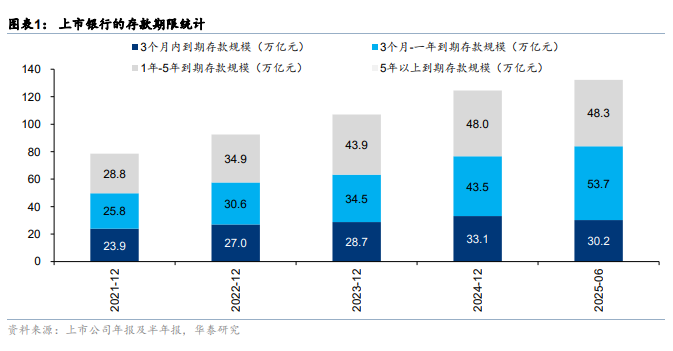
Core Viewpoint - The report from Huatai Securities predicts a net inflow of approximately 1.6 trillion yuan into the A-share market in 2026, driven by significant improvements in the funding supply side, with a total expected inflow of 2.6 trillion yuan after accounting for about 1 trillion yuan in funding needs [1][2]. Group 1: Funding Supply Side - The increase in funding supply is primarily attributed to the accelerated "migration" of household savings and the policy-driven entry of long-term funds [1]. - A historical high of 60 trillion yuan in one-year and above time deposits will mature in 2026, providing a substantial potential liquidity reservoir for the market [3]. - It is estimated that 8% of the maturing deposits will flow into non-monetary asset management products, with about 14% of that amount converting into stock market value, potentially contributing around 650 billion yuan to the A-share market [3]. Group 2: Risk Appetite Recovery - High-risk preference funds are expected to show strong inflow intentions, with an estimated net inflow of approximately 400 billion yuan from retail investors in 2026 [6]. - Leverage and private equity funds are anticipated to remain active, with net inflows of 200 billion yuan and 300 billion yuan respectively, contributing a total of 500 billion yuan [6][9]. - Insurance funds are projected to bring in about 800 billion yuan, as policies encourage leading insurance companies to increase their equity allocation [9]. Group 3: Funding Demand Side - The total funding demand for the A-share market in 2026 is expected to be around 1 trillion yuan, reflecting a relatively moderate growth trend [12]. - The IPO and private placement activities are gradually returning to normal, with an estimated IPO fundraising scale of about 200 billion yuan and private placements of around 500 billion yuan [12]. - Shareholder reduction behavior is expected to remain stable, with a projected net reduction scale of about 300 billion yuan, while the necessity for bottom-supporting buybacks is anticipated to decrease [12].