
Hua Er Jie Jian Wen

Search documents
财政部:自2026年4月1日起,取消光伏等产品增值税出口退税。自2026年4月1日起至2026年12月31日,将电池产品的增值税出口退税率由9%下调至6%;2027年1月1日起,取消电池产品增值税出口退税
Hua Er Jie Jian Wen· 2026-01-09 09:53
财政部:自2026年4月1日起,取消光伏等产品增值税出口退税。自2026年4月1日起至2026年12月31日, 将电池产品的增值税出口退税率由9%下调至6%;2027年1月1日起,取消电池产品增值税出口退税。 市场有风险,投资需谨慎。本文不构成个人投资建议,也未考虑到个别用户特殊的投资目标、财务状况或需要。用户应考虑本文中的任何 意见、观点或结论是否符合其特定状况。据此投资,责任自负。 风险提示及免责条款 ...
恒瑞医药:公司及子公司获批4个前列腺癌药物临床试验开展Ⅱ期研究
Hua Er Jie Jian Wen· 2026-01-09 09:42
Core Viewpoint - The company has received approval from the National Medical Products Administration for four drug clinical trials, focusing on prostate cancer-related multi-center, open-label Phase II clinical research [1] Drug Approval Summary - **SHR-4394 Injection**: - Indication: Prostate cancer - Cumulative R&D investment: 38.4 million yuan - No similar products approved domestically or internationally [1] - **HRS-5041 Tablets**: - A novel AR PROTAC small molecule for prostate cancer - Cumulative R&D investment: 92.66 million yuan - Potential to overcome drug resistance; no similar products available [1] - **Zemiglozole Tablets**: - EZH2 inhibitor, approved for market in 2025 - Cumulative R&D investment: 216.82 million yuan - Similar products expected to generate approximately 51 million USD in global sales by 2024 [1] - **Rivolumab Tablets**: - Second-generation AR inhibitor, approved in 2022 - Cumulative R&D investment: 696.72 million yuan - Similar products projected to achieve around 11.037 billion USD in global sales by 2024 [1]

Minimax登陆港股首日暴涨109%,阿里、米哈游们赚翻了!
Hua Er Jie Jian Wen· 2026-01-09 09:07
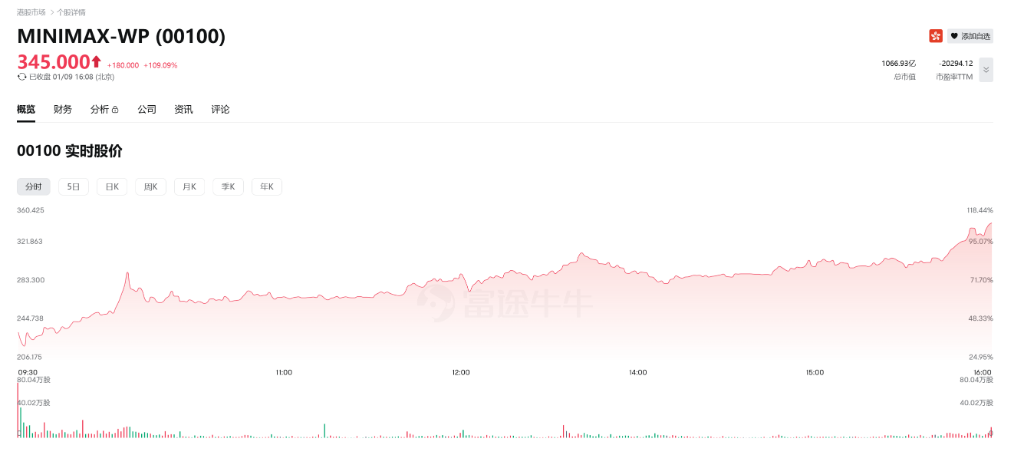
1月9日,中国AI大模型独角兽MiniMax正式在香港联合交易所挂牌上市,创下全球AI公司从成立到上市的最快纪录。 首日交易中,MiniMax股价 表现强劲,收盘较发行价暴涨109%,市值一举突破1000亿港元大关,显示出资本市场对中国头部生成式人工智能资产的狂热追捧。 由于国内科技巨头及顶级创投机构在早期便深度布局,MiniMax的暴涨为投资方带来了巨额账面回报。以盘中价格计算,阿里、米哈游、腾讯及 IDG等早期持股方的资产价值较此前一轮融资已实现翻倍,其中阿里的持股市值一度突破100亿港元。 此次上市标志着中国AI企业正式开启大规模二级市场募资潮。在OpenAI及其他美国同行仍主要依赖私募资金时,中国AI初创公司因更为紧迫的资 金需求,已率先奔向公开市场。Gavekal Dragonomics分析师Tilly Zhang指出,在缺乏美国巨型云服务商同等规模的资金支持下,IPO已成为中国AI 企业获取研发与基础设施投入资金的现实途径。 刷新全球上市速度 获国际长线资金增持 MiniMax此次IPO定价为每股165港元,属于招股区间的上限。然而,这一高定价并未阻挡市场的热情。1月9日开盘后,股价迅速冲高,盘中 ...

工业与消费需求共振,3D打印的“奇点”时刻到来?
Hua Er Jie Jian Wen· 2026-01-09 08:56
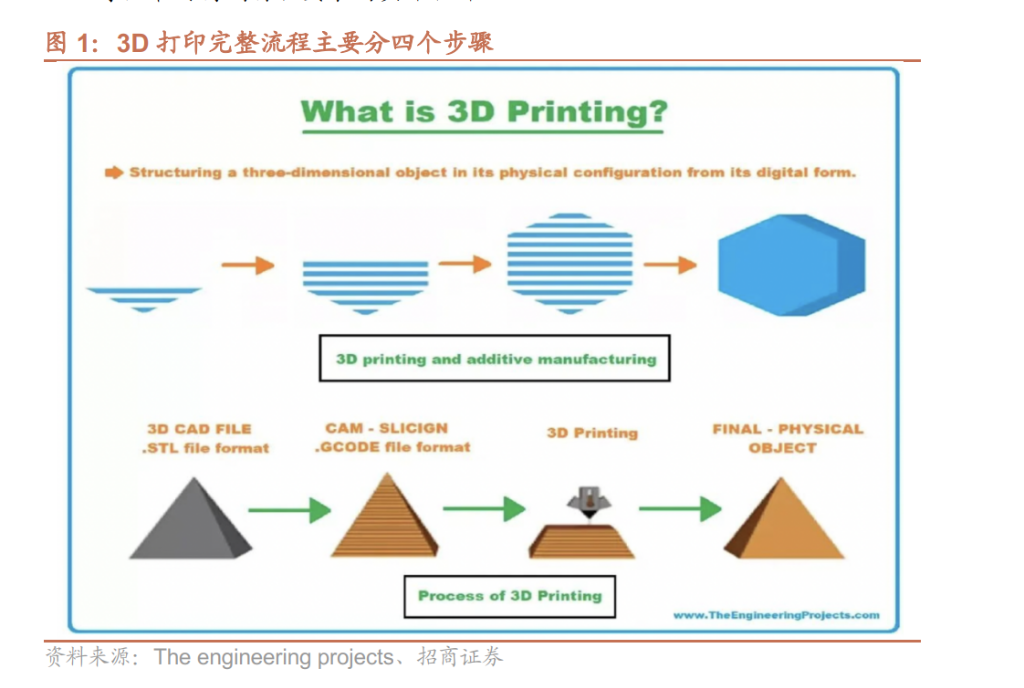
Core Insights - The additive manufacturing (3D printing) industry has transitioned from a technology hype cycle to a phase of technological maturity and cost reduction, marking a significant manufacturing revolution [1][3] Industry Overview - The global market size for additive manufacturing has reached $21.9 billion, with China experiencing a remarkable growth rate of 30%, projected to reach 70 billion yuan by 2025 [3] - The industry is moving from niche to mainstream, with industrial and consumer markets experiencing a rare resonance explosion [3] Technological Advantages - 3D printing offers core advantages over traditional subtractive and formative manufacturing, including "moldless" production and high material utilization rates exceeding 90%, leading to significant cost savings, especially for expensive materials like titanium alloys [4] Market Segmentation - The technology landscape is divided into two main camps: metal and non-metal. In the non-metal sector, FDM (Fused Deposition Modeling) dominates with a 61.6% global market share, while SLM (Selective Laser Melting) is the core technology in the metal sector, holding an 89.4% market share [7] Industrial Market Dynamics - The global industrial landscape is shifting towards a "Western dominance, Chinese rise" pattern, with China's market share increasing from 8.2% in 2009 to 11.5% in 2024. In the valuable metal 3D printing sector, Chinese company BLT has captured a 20% global market share, ranking second worldwide [9] Key Growth Drivers - Two core downstream sectors are driving industrial growth: 1. Commercial aerospace, where companies like SpaceX and domestic players are demonstrating significant reductions in engine component counts and manufacturing cycles [10] 2. Consumer electronics, with 2026 anticipated as a year of large-scale production for metal 3D printing, as major brands like Xiaomi and Apple enter the market [12] Consumer Market Landscape - The global consumer 3D printing market is projected to reach $4.1 billion by 2024, with the top four companies (CR4) in the market all being Chinese firms, holding a combined market share of 71.3% [13] - Companies like拓竹科技 are adopting a "3D printing farm" model, utilizing clusters of devices for flexible manufacturing, particularly in the trendy and cultural sectors [14] Technological Innovations - Innovations in algorithms and lidar technology are addressing printing speed and success rates, making devices more user-friendly. The establishment of a MakerWorld model community is creating a closed-loop ecosystem of "hardware + software + content" [16]
大摩:中国在AI竞赛中拥有独特优势,阿里是“最佳赋能者”,腾讯具“最高2C变现潜力”
Hua Er Jie Jian Wen· 2026-01-09 08:41
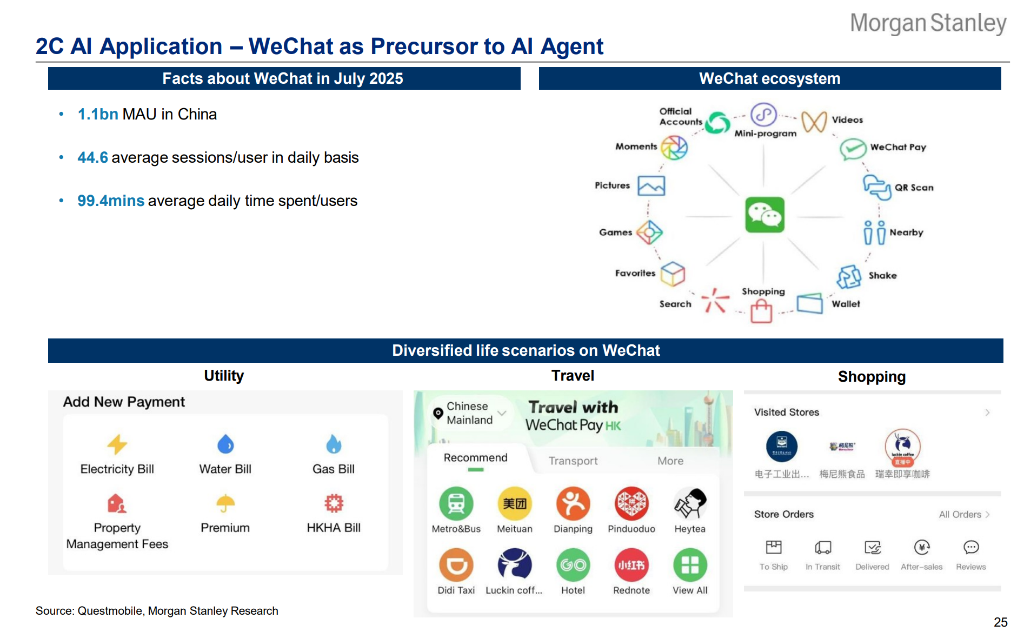
Core Insights - Morgan Stanley believes that the market is undergoing a structural transformation, with China adopting a unique "open" model strategy to counter the world's "closed" systems in the global AI race [1] - The report indicates that China has captured a significant share of the top SOTA models, with expectations that the total addressable market (TAM) for cloud AI in China will reach $50 billion by 2027 [1] - Investors should focus on the monetization capabilities and ecological barriers at the application layer rather than just the infrastructure arms race [1] Market Dynamics - China holds a comparative advantage in data volume, power supply, and engineering talent, which supports the growth of AI applications [1] - The dual-track evolution of "super apps" and "AI-native applications" is evident in the Chinese market, with WeChat emerging as a leading AI agent with 1.1 billion monthly active users and high user engagement [2][5] Application Landscape - AI-native applications from companies like ByteDance, Baidu, and Alibaba are rapidly evolving from simple chatbots to more complex emotional interactions and content creation tools [5] - The penetration of AI in enterprise sectors is reshaping industry dynamics, with strong deployment intentions for generative AI across various verticals such as advertising, healthcare, and finance [11] Competitive Positioning - Alibaba is positioned as the "best AI enabler" in China, leveraging its cloud infrastructure and integration with e-commerce and other business scenarios [14] - Tencent is recognized for its high consumer monetization potential through its WeChat ecosystem, which provides a natural barrier in content ecology [14] - ByteDance is defined as a "full-stack AI leader," with a comprehensive layout from underlying engines to various AI-native applications [14] Investment Focus - Investors are encouraged to monitor the speed at which these tech giants implement AI in their respective domains, particularly those that can translate AI technology into actual revenue and profits [15]

静待非农和关税裁决!美股期货持平,美元指数冲破99,基本金属铜铝继续攀升
Hua Er Jie Jian Wen· 2026-01-09 08:41
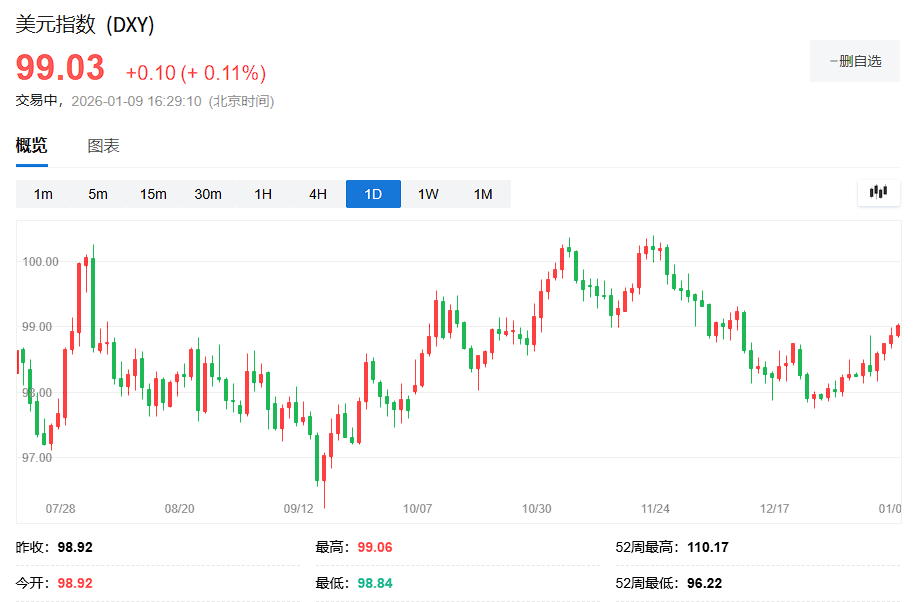
1月9日,亚太股市多数收涨,欧洲股市开盘小幅走高,美股三大股指期货基本持平,投资者静待非农就业数据和美国最高法院的 关税裁决。这将是全球股市自4月关税驱动的下跌后反弹以来面临的最大考验之一。 大宗商品方面,现货黄金徘徊于4470美元关口附近,白银小幅上涨。铜、铝等基本金属周五继续攀升,受到供应担忧与需求乐观 共同推动。 汇市方面,美元兑所有G10货币走强,有望录得自去年11月以来的最佳单周表现。 债市方面,10年期美债收益率上升1个基点至4.18%。美债市场已陷入长达一个月的窄幅震荡,10年期美债收益率在4.1%-4.2%区间 波动,创下2020年以来最窄月度波动区间。 比特币下跌0.2%,至90,994.85美元,以太坊上涨0.1%,至3,120.83美元。 据华尔街见闻文章提及,目前市场共识预期12月新增非农就业约7万人,失业率有望微降至4.5%。货币市场目前预计美联储2026年 将至少降息两次。此外,最高法院最快将于周五就特朗普的大部分关税政策作出裁决。 核心市场走势: 标普500期货、纳斯达克100期货、道琼斯工业平均指数期货几乎持平 MSCI亚太指数上涨0.2%,MSCI新兴市场指数几乎持平; 美元 ...
2026年,银行开始拒绝客户“无脑买金”
Hua Er Jie Jian Wen· 2026-01-09 08:36
Core Viewpoint - The banking sector is shifting its approach to gold investment products, aiming to discourage retail investors from participating in personal accumulation gold products due to increased risks associated with gold price volatility [1][3]. Group 1: Changes in Banking Policies - Industrial and Commercial Bank of China has updated its risk assessment for personal accumulation gold products, categorizing them as R3 (balanced), which excludes conservative investors who previously viewed these products as safe savings options [1]. - Other banks, such as Ningbo Bank and Citic Bank, have also restricted access to accumulation gold products for conservative and stable investors, limiting eligibility to those classified as C3 (balanced) and above [2]. Group 2: Market Dynamics and New Offerings - The gold market is experiencing significant volatility, with multiple instances of sharp price drops, prompting banks to reconsider their strategies for handling low-risk clients who may file complaints about misleading sales [3]. - In response, banks are introducing new products like gold-linked structured deposits, which offer higher potential returns while providing a safety net for investors wary of high gold prices [4]. - Examples of these new structured deposits include offerings from DBS Bank and HSBC, with varying terms and interest rates designed to attract different investor profiles [2][4]. Group 3: Strategic Implications for Banks - Structured deposits are seen as a tool for banks to secure low-cost funding while managing risk, as they provide a stable liability compared to accumulation gold products, which are more volatile [4]. - The restructuring of gold investment offerings indicates a shift in the banking sector's strategy, where aggressive investors are still catered to, while conservative investors are guided towards safer structured products [5].
独资后第四次“补血” 汇丰人寿拟增资5.56亿
Hua Er Jie Jian Wen· 2026-01-09 08:36
Group 1 - The core viewpoint of the news is that foreign insurance companies are demonstrating confidence in the Chinese market through substantial capital investments, as evidenced by HSBC Life's recent capital increase [1][2] - HSBC Life announced a capital increase of 556 million yuan, raising its registered capital from 2.676 billion yuan to 3.232 billion yuan, pending regulatory approval [1] - This capital increase marks the fourth time HSBC Life has supplemented its capital since becoming a wholly foreign-owned enterprise in 2022, with previous increases totaling 635 million yuan, 654 million yuan, and 362 million yuan [1][2] Group 2 - HSBC Life's business performance significantly improved in 2024, with insurance revenue reaching 13.089 billion yuan, a year-on-year increase of 79%, and a net profit of 195 million yuan [1] - The company's growth strategy emphasizes "bank-insurance synergy," targeting high-net-worth clients and integrating insurance products into wealth management [2] - The ongoing capital injections from foreign investors reflect a strong belief in the long-term growth potential of the Chinese insurance market, especially amid challenges like low interest rates and asset shortages [2]

英伟达扶持的云服务商Lambda融资3.5亿美元,拟今年IPO
Hua Er Jie Jian Wen· 2026-01-09 08:26
Core Insights - Lambda, a cloud service startup supported by Nvidia, is negotiating to raise at least $350 million to bolster its capital reserves ahead of an IPO planned for later this year, highlighting ongoing investor interest in AI infrastructure [1][2] - Mubadala Capital, a UAE sovereign wealth fund, is reportedly in talks to lead this funding round, which is structured as convertible notes offering new investors a 20% discount on shares at the IPO price [1][3] - The financing terms impose a clear timeline pressure on Lambda, as failure to go public within a year could result in significant compensation to investors, reflecting the capital market's focus on the timing of AI startups' public offerings [1][3] Financial Performance - Lambda has achieved over $520 million in revenue for the year ending September 2025, with a reported 80% year-over-year sales growth in the third quarter, despite incurring a net loss of approximately $175 million during this period [4] - The company is in a "burning cash" expansion phase, competing directly with major tech firms like Amazon Web Services, Microsoft, and Google [4] Strategic Relationships - Nvidia plays a dual role as both a major investor and customer for Lambda, having committed to lease 10,000 AI chips over four years for $1.3 billion, along with an additional $200 million lease for 8,000 chips [5] - Microsoft has also entered into a multi-billion dollar server leasing agreement with Lambda, indicating strong backing from key industry players [5] Market Comparisons - Lambda's valuation in the public market may be influenced by its competitor CoreWeave, which went public in March 2025 and has seen its stock price rise over 90% from its initial offering, although it has experienced significant volatility recently [6][7] - CoreWeave's valuation has halved since October due to investor concerns over its substantial debt and delays in data center projects, suggesting that Lambda's upcoming financing and IPO performance will largely depend on investor sentiment towards high-growth, asset-heavy AI infrastructure companies [7]

日均烧掉2800万美元!xAI财务文件流出:9个月“烧钱”78亿美元押注人形机器人
Hua Er Jie Jian Wen· 2026-01-09 08:16
周五,据彭博报道,获得的财务文件显示,xAI在2025年第三季度净亏损14.6亿美元,较第一季度的10 亿美元大幅增加。尽管该季度营收环比几乎翻倍至1.07亿美元,但公司仍处于大规模投资阶段,用于建 设数据中心、招募人才和开发软件。 马斯克旗下人工智能初创公司xAI正以惊人速度消耗现金,内部文件显示,该公司在2025年前九个月支 出78亿美元,平均每天烧掉约2800万美元,同时季度亏损持续扩大,最终目标是开发能够驱动特斯拉人 形机器人Optimus的自主人工智能系统。 在最近一次与投资者的电话会议上,xAI高管透露,公司核心重点是快速构建AI代理和其他软件产品, 这些产品将最终整合到名为"Macrohard"的纯AI软件公司,并为特斯拉的人形机器人Optimus提供动力 支持。 xAI刚刚完成200亿美元的股权融资,投资方包括英伟达、Valor Equity Partners和卡塔尔投资局,公司 估值达到2300亿美元。这笔资金预计将支撑公司未来一年或更长时间的运营,因为其月度投资支出仍控 制在10亿美元以内。 亏损扩大但营收增长 xAI的财务数据呈现出典型的高速增长型AI初创公司特征。第三季度营收达到1.0 ...

