Hua Xia Shi Bao

Search documents
赛诺医疗董秘黄凯:AI医疗商业化面临支付瓶颈,呼吁构建完善产业生态|聚焦2025华夏大健康
Hua Xia Shi Bao· 2025-11-22 14:41
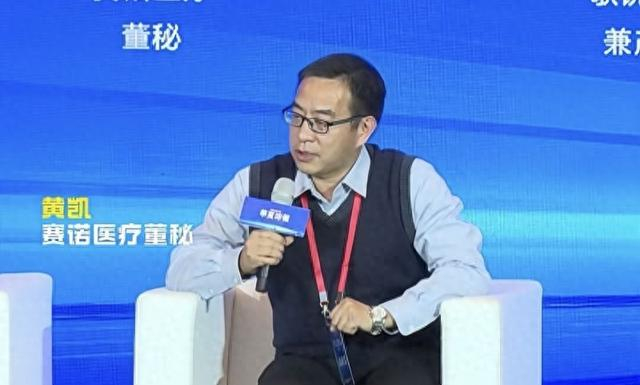
面对复杂的支付难题,黄凯提出了生态共建的解决方案。他强调,单靠企业自身无法突破这一瓶颈,需 要构建包括政府、医保、商保、企业、医院、患者在内的全方位生态系统。 数据资产化:机遇与挑战并存 从数据资产化的实践角度,黄凯分享了赛诺医疗的经验与思考。他透露,公司在支架产品上市后积累了 五六千例上市后临床实验数据,但这些数据的开发利用面临着诸多挑战。 他用创新药的发展历程类比AI医疗,指出重大技术创新都需要经过较长的培育周期,"这一波的结果实 际是2015、2016年甚至更早的资本、商业化的投入,我们最后看到的结果。像AI才刚刚开始,也需要 各个方面的投入。" 本报(chinatimes.net.cn)记者赵文娟 于娜 北京报道 "无论是医保还是药监,期待对于AI包括对于器械企业的创新有更多的包容和支持。"在11月21日举办的 2025华夏大健康产业发展暨康复服务大会上,赛诺医疗董秘黄凯在圆桌对话中发出了这样的呼吁。 本次大会以"智领健康未来"为主题,在《AI医疗的规模化破局:从技术爆发到医疗价值兑现》圆桌环 节,黄凯与迪安诊断、歌锐科技、医脉通等企业代表共同探讨了AI技术在医疗领域面临的商业化挑 战。 作为血管介入 ...


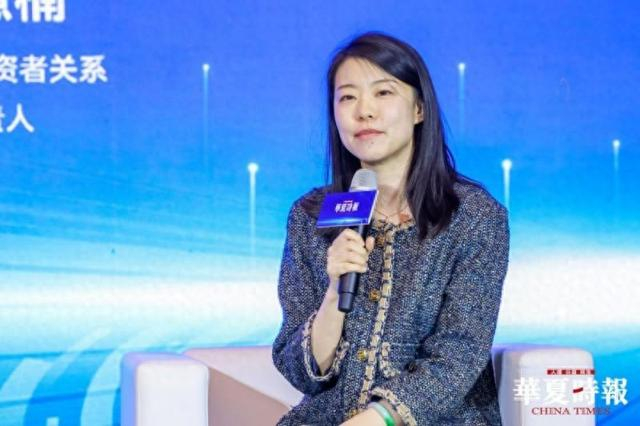
医脉通投资者关系负责人胡慧楠:深耕医生服务平台,以AI技术赋能医疗专业生态|聚焦2025华夏大健康
Hua Xia Shi Bao· 2025-11-22 14:39
Core Insights - The core viewpoint emphasizes that data is fundamental, AI technology is the driving force for development, and commercialization is the ultimate goal in AI healthcare [2][5]. Group 1: AI Technology in Healthcare - The company, as a leading online professional doctor platform, has over 7 million registered users, with more than 4 million being licensed physicians, covering 88% of the physician community in China [3]. - The company has developed a medical vertical large model through independent research and has received approval from the National Internet Information Office, enabling intelligent clinical decision support for doctors [3]. - AI products have demonstrated significant value, providing traceable answers to clinical questions, ensuring information accuracy and reliability for physicians [3]. Group 2: Business Model and Commercialization - The company focuses on the pharmaceutical and medical device sectors, particularly in prescription drug markets, to conduct targeted academic education for doctors [5]. - The core logic of the business model is to leverage strong physician resources to enhance the efficiency of academic marketing and provide professional academic support to doctors [5]. - The company has achieved over 30% annual revenue growth and maintains a strong net profit margin, supporting ongoing investments in AI technology [5]. Group 3: Future Development and Industry Impact - The company has established a virtuous cycle between AI technology and commercial applications, contributing to the digital transformation of the healthcare industry [5].
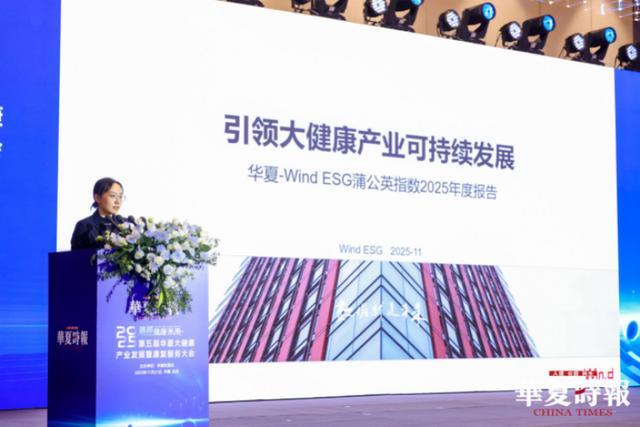
Wind ESG高级分析师翁钰宁:华夏—Wind ESG蒲公英指数引领医疗健康行业可持续发展|聚焦2025华夏大健康
Hua Xia Shi Bao· 2025-11-22 14:32
Core Viewpoint - The 2025 Huaxia Health Industry Development and Rehabilitation Service Conference emphasizes the importance of technology and innovation in the healthcare sector, alongside the growing focus on environmental, social, and governance (ESG) performance of healthcare companies [2][3]. Group 1: ESG Rating System - The Dandelion Index, developed by Huaxia Times Health Research Institute and Wind, selects the top 50 companies from 495 A-share healthcare companies and 30 from 262 Hong Kong healthcare companies, adjusting the components monthly based on ESG scores [3][4]. - The ESG rating system evaluates companies on long-term management practices across environmental, social, and governance dimensions, incorporating over 500 indicators and 28 topics, with a focus on industry-specific issues [4][7]. Group 2: Index Performance - The Dandelion Index shows superior performance, with the Dandelion 50 Index rising approximately 29% year-to-date, outperforming the CSI 300 and healthcare industry indices by about 35 percentage points, with an annualized return of around 10% [8][11]. - The Dandelion 30 Index has achieved a year-to-date increase of 104%, significantly surpassing the Hong Kong healthcare industry index and the Hang Seng Index, with a five-year cumulative return of 63% [11][12]. Group 3: Company Ratings - 80 companies with excellent ESG performance are included in the Dandelion Index, with Haier Biomedical and Yinkang Life receiving the highest AAA rating [7]. - In the Dandelion 50 Index, 62% of companies are rated AA, while 34% are rated A; the Dandelion 30 Index has 77% rated AA, with no low-rated companies, contrasting with over 69% of the healthcare industry having low ratings [7][8]. Group 4: Call to Action - The conference encourages more companies to engage in ESG practices and register on the Wind ESG issuer communication platform for rating feedback, aiming to promote sustainable development in the industry [14].





科兴生物再触退市红线,治理困局拖累美股上市地位
Hua Xia Shi Bao· 2025-11-22 14:31
Core Viewpoint - The company, Sinovac Biotech, is facing a delisting crisis from NASDAQ due to its failure to submit the 2024 annual report on time, which has raised concerns about its future as a publicly traded entity [2][3]. Group 1: Delisting Crisis - Sinovac received a delisting notice from NASDAQ on November 12, 2025, after failing to submit its annual report by the deadline [2]. - The company has been suspended from trading since 2019 due to governance issues and is now facing a second delisting threat [2][3]. - Sinovac has hired a new auditing firm, UHY LLP, and plans to apply for a hearing to delay the delisting process, asserting that its core business remains unaffected [2][3]. Group 2: Governance Issues - The company has a history of governance problems, stemming from a power struggle between its founders, Yin Weidong and Pan Aihua, which has led to significant internal conflicts [3][4]. - The governance issues peaked in 2018, resulting in chaotic management practices, including attempts to dilute each other's shares [4][5]. Group 3: Financial Performance - Sinovac experienced a significant financial boost during the COVID-19 pandemic, reporting a net profit of $8.46 billion in 2021 [5]. - However, the company has faced declining revenues from its COVID-19 vaccine, leading to a reported net loss of $258 million in 2023 [7][8]. - The company has a substantial cash reserve of $10.3 billion, which has become a focal point in the ongoing power struggle among shareholders [6][7]. Group 4: Dividend Controversy - Sinovac announced a controversial dividend plan totaling $7.448 billion, which raised concerns given its current market capitalization of only $389 million [6][7]. - The dividend plan is seen as a way to compensate shareholders for the lack of liquidity due to the stock suspension [7]. Group 5: Ongoing Internal Conflicts - The company is currently experiencing intense boardroom battles, with a recent special shareholder meeting resulting in the removal of the existing board and the return of founder Yin Weidong [8][9]. - The legitimacy of the special meeting has been challenged by the current chairman, Li Jiaqiang, citing a court injunction [9].

上市公司如何打破“中年危机”? 人工智能成为企业发展新动能
Hua Xia Shi Bao· 2025-11-22 14:13
Core Insights - The 20th Central Committee of the Communist Party of China emphasizes high-quality development as the main theme for the 14th Five-Year Plan period, highlighting the importance of enterprises as micro-subjects of economic and social development [2][3] - Chinese enterprises, particularly private ones, face a complex and uncertain development environment, necessitating a focus on cultivating new productive forces and enhancing survival capabilities [2] - The "mid-life crisis" phenomenon among listed companies indicates that after reaching maturity, companies may experience a decline in health, which requires attention from older listed firms [4][5] Group 1: High-Quality Development - The focus on industrial transformation and upgrading is essential for achieving high-quality development and creating world-class enterprises [6] - Traditional industries need optimization through equipment upgrades, technological advancements, and brand building to enhance high-end product supply [6] Group 2: AI as a New Growth Driver - The application and maturity of artificial intelligence (AI) in Chinese enterprises have significantly increased, with a strong expectation for further growth in AI application over the next 12 months [7][8] - The integration of AI into business models is becoming more mature, driving innovation across various sectors [7][8] Group 3: Corporate Health Index - The newly established Corporate Sustainable Development Health Index (CSHI) aims to provide a standard for evaluating high-quality sustainable development among enterprises [4] - The CSHI shows a non-linear relationship with company age, indicating that health levels improve initially but may decline as companies mature, signaling potential "mid-life crises" [5]

安序源科技再搏击港交所:两年半亏损超5000万美元,今年上半年仅有5家客户
Hua Xia Shi Bao· 2025-11-22 07:18
Core Viewpoint - Anxuyuan Technology is attempting to relist on the Hong Kong Stock Exchange after its previous application failed, despite facing significant financial losses and high debt levels [2][3]. Financial Performance - The company has incurred losses exceeding $50 million over the past two and a half years, with reported losses of $22.86 million in 2023, $23.47 million in 2024, and $5.16 million in the first half of 2025 [3][4]. - Revenue figures for 2023, 2024, and the first half of 2025 are $0, $47.9 thousand, and $53.2 thousand respectively, indicating a challenging revenue generation environment [3][4]. Debt and Liquidity - Anxuyuan Technology has a debt ratio of 229%, with current assets less than current liabilities, leading to a deteriorating current ratio from 0.6 in 2023 to 0.3 in 2025 [2][4]. Research and Development - The company’s R&D expenses were $15.29 million in 2023 and $11.41 million in 2024, with employee costs comprising over 56% of total R&D spending [5]. - The high concentration of clients is concerning, with the top five clients accounting for 98.1% of total revenue in 2024 and 100% in the first half of 2025 [5]. Market Position and Competition - The high-throughput gene sequencing instrument market is dominated by major players, with Illumina alone holding a 71.8% market share, making competition extremely challenging for smaller firms like Anxuyuan Technology [6][7]. - The company is attempting to differentiate itself through electrochemical technology, but its revenue remains significantly lower than industry giants [7]. Product Development - Anxuyuan Technology's core product, AxiLona EL-100, has received regulatory approval and is currently focused on nucleic acid testing, with plans to expand its capabilities [8]. - Other products in development have not yet reached clinical stages, posing a risk to future revenue generation [8]. Leadership and Investment - The founder and CEO, Tian Hui, has a strong academic background and experience in multinational pharmaceutical companies, which influences the company's innovative approach [9]. - The company has completed four rounds of financing, raising $70 million in its B round, with a post-money valuation of $347.5 million [9].
三季报亏损的大为股份,靠“存储+锂矿”一个月狂飙51%,是风口还是泡沫?|掘金百分百
Hua Xia Shi Bao· 2025-11-22 04:16
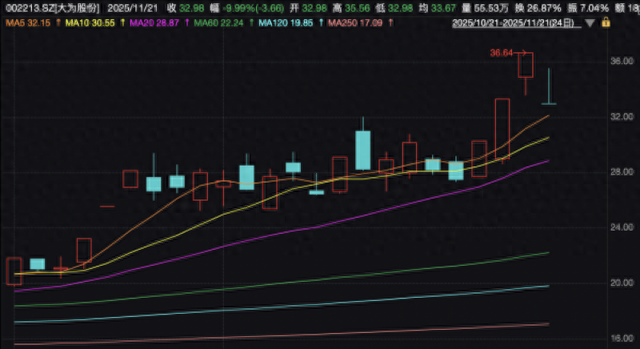
Core Viewpoint - Dawi Co., Ltd. has experienced a significant stock price increase of 51.01% from October 22 to November 21, 2025, driven by strong market sentiment and its dual business focus on semiconductor storage and lithium battery new energy [1][2]. Group 1: Company Performance - Dawi Co., Ltd. has seen its stock price rise sharply, with multiple instances of consecutive trading limits reached, indicating high market enthusiasm [1]. - The company reported a revenue of 879 million yuan for the first three quarters of 2025, marking a year-on-year growth of 9.9%, primarily due to the mass production of LPDDR5X products and the ongoing domestic substitution in the semiconductor supply chain [1][2]. - Despite the revenue growth, the company reported a net profit of -7.53 million yuan, although this represents a 71.58% year-on-year improvement, indicating challenges in achieving profitability [4][6]. Group 2: Industry Trends - The storage industry is experiencing a price increase, with major companies like Samsung and SK Hynix planning to raise DRAM and NAND flash prices by up to 30% in Q4 2025, driven by surging demand from AI and data centers [2][4]. - The lithium battery sector is also gaining momentum, with Dawi's project in Hunan province completing mineral resource registration and advancing from exploration rights to mining rights, highlighting the potential for resource value as lithium carbonate prices rise above 102,000 yuan per ton [2][4]. - The overall market sentiment is bolstered by the strong performance of the lithium mining concept and the semiconductor sector, with significant price movements in related stocks [4]. Group 3: Market Dynamics - Dawi Co., Ltd. has appeared on the trading leaderboard 27 times this year, reflecting active trading and interest from both institutional and retail investors [1][4]. - The stock has shown a high turnover rate of 43.55% on November 19, indicating significant market divergence and potential short-term volatility risks [4][6]. - Experts express cautious optimism regarding Dawi's dual business model, noting the potential for growth in both semiconductor storage and lithium battery sectors, while also highlighting concerns over high price-to-earnings ratios and the uncertain progress of lithium projects [6].

大悦城地产港股上市12年终落幕:私有化决议获通过,11月27日起撤销上市地位
Hua Xia Shi Bao· 2025-11-22 01:17
Core Points - Dalian Wanda Commercial Properties has announced the approval of its privatization plan, which is expected to lead to its delisting from the Hong Kong Stock Exchange on November 27 [2][5] - Dalian Wanda Holdings will increase its stake in Dalian Wanda Commercial Properties to 96.13% following the privatization [2][6] - The company aims to simplify its corporate structure and improve operational efficiency in response to market challenges [2][6] Company Overview - Dalian Wanda Commercial Properties, a subsidiary of COFCO Group, is engaged in the development, operation, sale, leasing, and management of mixed-use and commercial properties [4] - The company has established a presence in 24 cities across mainland China and Hong Kong, managing 32 commercial projects [4] - The company was listed in Hong Kong in 2013 and underwent significant restructuring in 2019, aiming to leverage both A-share and H-share markets for financing [4] Financial Performance - For the first half of 2025, Dalian Wanda Commercial Properties reported total revenue of 8.124 billion RMB, a decrease of 5.8% year-on-year, and a net profit of 105 million RMB, down 26.6% [5] - The company experienced a post-tax loss of approximately 140 million RMB due to changes in the fair value of investment properties and exchange rate fluctuations, while core net profit increased by 25.1% to 244 million RMB [5] - Rental income from investment properties totaled approximately 2.038 billion RMB, a decline of 2.5% year-on-year, with a gross margin of 78% [5] Market Context - The decision to privatize is attributed to the company's low stock price relative to net asset value and limited liquidity, which hindered its ability to raise capital [5][6] - The trend of privatization among listed real estate companies is increasing, with approximately 23 companies exiting the capital market in the past three years [9][10] - The ongoing trend of both passive and active delistings is expected to continue, driven by low stock prices and the need for strategic flexibility [10]

两度调整转型方案,津投城开1元甩卖地产业务遭问询,四大核心问题待解
Hua Xia Shi Bao· 2025-11-22 01:17
Core Viewpoint - Tianjin Jintou Urban Development Co., Ltd. plans to divest its real estate development business, which has an assessed value of -239 million yuan, for a nominal price of 1 yuan, marking a complete exit from the real estate sector [2][3][4] Transaction Details - The transaction involves transferring real estate-related assets and liabilities to Tianjin Urban Operation Development Co., Ltd., with the assessed value of the assets being approximately -239 million yuan as of December 31, 2024 [3][4] - The transfer price of 1 yuan was agreed upon after negotiations between the parties [3] - The Shanghai Stock Exchange raised four core questions regarding the transaction: the company's ongoing operational capability, the reasonableness of asset valuation, guarantee responsibilities, and the handling of debts and credits [3][6] Financial Impact - Post-transaction, the company's asset and revenue scales are expected to decline significantly, but net assets will turn positive, with projected revenues dropping from 517 million yuan to 38 million yuan and net profit turning positive at 1.576 million yuan for the first half of 2025 [3][4] - The company’s asset-liability ratio reached 100.36% by mid-2025, with net assets at -501 million yuan, indicating a risk of delisting if net assets remain negative by year-end [7] Asset Impairment Concerns - The asset impairment rate for the divested assets is reported at 106.99%, primarily due to long-term equity investments, which have a book value of 7.475 billion yuan but an assessed value of 3.579 billion yuan, resulting in a 52.12% impairment rate [4][5] - Regulatory scrutiny has been directed at the reasonableness and accuracy of the impairment assessments, particularly regarding potential delays in prior impairment provisions [5] Debt and Guarantee Issues - The company has provided guarantees totaling 6.613 billion yuan, mainly for its controlling shareholder and subsidiaries, and is in discussions to release these guarantees [5][6] - The transaction involves significant debt transfers, including 7.287 billion yuan in other receivables and 1.071 billion yuan in accounts receivable, which require creditor consent for the transfer [5][6] Industry Trends - The divestment by Tianjin Jintou is part of a broader trend in the real estate sector, where multiple companies are opting to shed or exit real estate development in favor of lighter asset operations [9][10] - The ongoing downturn in the real estate market has led to many firms facing operational pressures, prompting them to divest underperforming assets to improve financial metrics and reduce risk [10][11]


“赌对了”?绑定宁德时代钠电破局,股价创新高,容百科技却仍陷“卖多亏多”怪圈
Hua Xia Shi Bao· 2025-11-22 01:17
Core Viewpoint - The strategic partnership between Rongbai Technology and CATL is seen as a crucial move for survival and development amid industry reshuffling and operational challenges, with CATL designating Rongbai as the primary supplier of sodium battery cathode materials [2][3][4]. Company Summary - Rongbai Technology's stock surged by 20% on November 17, following the announcement of the partnership, reaching a closing price of 35.40 CNY per share, and further climbing to 38.78 CNY the next day, marking a nearly two-year high [2][3]. - The company's stock price increased by 25.1% over five trading days, from 28.48 CNY to 35.63 CNY, reflecting market optimism regarding the long-term contract [2][3]. - Despite the stock price rally, Rongbai's operational fundamentals remain under pressure, with its Q3 financial report indicating significant challenges in its ternary material business due to industry shifts and material price imbalances [2][8]. Partnership Details - The agreement with CATL is set to last until the end of 2029, with an automatic renewal clause, solidifying a long-term collaboration framework [4]. - Under the agreement, CATL will source at least 60% of its sodium battery cathode materials from Rongbai, with an annual procurement volume of 500,000 tons or more, allowing Rongbai to offer competitive pricing through cost reductions [3][4]. Industry Context - The sodium battery sector is currently facing challenges such as low yield rates for cathode materials and limited production capacity, making stable supply capabilities critical for scaling up production [4][5]. - The sodium battery developed by CATL has already received certification under the new national standard, facilitating its commercialization [4]. Financial Performance - Rongbai's Q3 2025 financial results showed a revenue decline of 20.64% year-on-year, totaling 8.986 billion CNY, with a net loss of 203 million CNY, a staggering drop of 274.96% [8][9]. - The company's gross margin fell to 7.28%, a decrease of over 20% compared to the previous year, while the net margin dropped to -1.94%, reflecting severe operational challenges [9][10]. - The company's debt levels have increased, with interest-bearing liabilities rising to 7.892 billion CNY, up 23% from the beginning of the year, contributing to profit erosion [10]. Market Dynamics - The price of ternary cathode materials has plummeted over 60% from its peak, with current prices around 140,000 to 150,000 CNY per ton, nearing the cash costs for smaller manufacturers [8]. - The ongoing industry adjustment cycle continues to exert pressure on Rongbai's performance, with the potential for further price declines in core raw materials like lithium carbonate [8][9].