Hua Xia Shi Bao

Search documents
复星医药现金流压力下创新药豪赌 12.56亿元出售资产难填96亿元窟窿?
Hua Xia Shi Bao· 2025-10-01 03:07
Core Viewpoint - Fosun Pharma is planning to transfer 100% equity of Shanghai Clone for a transaction price not exceeding 1.256 billion yuan, as part of its strategy to alleviate cash flow pressure and support its transformation into innovative drugs [2][3]. Group 1: Asset Transfer Details - The transaction involves a complex structure where a fund will be established first, followed by the asset transfer [3]. - Fosun Pharma Industry will contribute 54.6 million yuan as a limited partner in a special fund, holding 9.98% of the property share [3]. - The core asset of Shanghai Clone is a property located in Xuhui District, Shanghai, with a land area of 19,944 square meters and a building area of 45,238.55 square meters, classified as industrial land [3]. Group 2: Financial Pressure - Fosun Pharma is facing significant cash pressure, with short-term borrowings amounting to 17.862 billion yuan and total short-term debt reaching 22.646 billion yuan, exceeding cash reserves of 12.959 billion yuan, resulting in a short-term repayment gap of 9.687 billion yuan [5][7]. - The company's financial expenses for the first half of 2025 reached 640 million yuan, accounting for two-thirds of its net profit excluding non-recurring items, marking the highest semi-annual financial expense since its listing [5][7]. Group 3: Debt Structure and Risks - As of the first half of 2025, Fosun Pharma's interest-bearing liabilities totaled 36.994 billion yuan, with short-term debt comprising 61% of the total [7]. - The company's debt-to-asset ratio stands at 49.24%, which is higher than the average of 40% for A-share pharmaceutical companies [7][8]. - The cash flow from operating activities was 2.134 billion yuan, insufficient to cover short-term debts, resulting in a cash coverage ratio of approximately 0.12, indicating liquidity risk [8]. Group 4: Performance Metrics - For the first half of 2025, Fosun Pharma reported revenue of 19.514 billion yuan, a year-on-year decline of 4.63%, while net profit attributable to shareholders was 1.702 billion yuan, an increase of 38.96% [10]. - The profit growth is largely attributed to asset disposal gains of 9.491 billion yuan, which nearly doubled compared to the same period last year, while the net profit excluding non-recurring items fell by 23.39% [12][14]. - The revenue growth of key innovative drugs like "Hanshu" and "Yikaida" was lower than industry leaders, reflecting competitive weaknesses in the PD-1 market [13][14].

事关A股 吴清重磅发声!证监会会同财政部修订:大力鼓励“吹哨人” 最高奖励100万元!
Hua Xia Shi Bao· 2025-10-01 02:58
Group 1 - The China Securities Regulatory Commission (CSRC) emphasizes the importance of listed companies, industry institutions, and intermediaries in enhancing professional capabilities and market reputation to achieve high-quality development in the capital market [1] - CSRC Chairman Wu Qing advocates for deepening comprehensive reforms in investment and financing, focusing on the Sci-Tech Innovation Board and the Growth Enterprise Market to enhance market attractiveness, inclusiveness, and competitiveness [1] - A recent meeting was held to discuss the "14th Five-Year" capital market planning, where representatives provided specific suggestions for further deepening capital market reforms, including supporting high-quality securities firms and enhancing cross-border investment convenience [1] Group 2 - The CSRC is promoting a whistleblower culture to improve the reporting system and respond to market concerns, in line with the decisions of the central government [3] - New definitions and improved reward conditions for whistleblowers have been established, with significant cases that severely disrupt market order or harm investor rights now eligible for rewards [4] - The maximum reward for whistleblowers has been increased to 1 million yuan for cases with substantial national impact or involving large sums of money [4][5]
复星医药现金流压力下创新药豪赌,12.56亿元出售资产难填96亿元窟窿?
Hua Xia Shi Bao· 2025-10-01 01:00
Core Viewpoint - Fosun Pharma is facing significant cash flow pressure, prompting the company to dispose of assets to improve liquidity and support its transition to innovative drug development [3][4][10]. Group 1: Asset Disposal - Fosun Pharma's subsidiary plans to transfer 100% equity of Shanghai Clontech for a transaction price not exceeding 1.256 billion yuan [3]. - This transaction is part of a broader strategy, with over 2 billion yuan in asset disposals signed by mid-2025, aimed at supplementing cash flow for innovative drug transformation [3][4]. Group 2: Financial Pressure - As of mid-2025, Fosun Pharma's short-term borrowings reached 17.862 billion yuan, with total short-term debts amounting to 22.646 billion yuan, significantly exceeding cash reserves of 12.959 billion yuan, resulting in a short-term debt gap of 9.687 billion yuan [4][6]. - The company's financial expenses for the first half of 2025 were 640 million yuan, the highest since its listing, accounting for two-thirds of its net profit excluding non-recurring items [4][6]. Group 3: Debt Structure - Fosun Pharma's debt structure shows a total interest-bearing debt of 36.994 billion yuan, with short-term debt comprising 61% of the total [6][7]. - The company's asset-liability ratio stands at 49.24%, higher than the average of 40% for A-share pharmaceutical companies, indicating a high leverage and short-term debt profile [7][8]. Group 4: Performance Metrics - For the first half of 2025, Fosun Pharma reported revenue of 19.514 billion yuan, a year-on-year decline of 4.63%, while net profit attributable to shareholders was 1.702 billion yuan, an increase of 38.96% [11][10]. - The profit growth is largely attributed to asset disposal gains of 9.491 billion yuan, nearly doubling from the previous year, while the net profit excluding non-recurring items fell by 23.39% to 961 million yuan [13][14]. Group 5: Innovation and Market Position - The revenue from innovative drugs like "Hanshuozhuang" and "Yikaida" showed growth, but at rates lower than industry leaders, indicating potential competitive weaknesses [14][15]. - The proportion of revenue from innovative drugs is approximately 25%, below the 35% benchmark of peers like Heng Rui Pharma, raising concerns about long-term sustainability and growth potential [15].

胖东来的“学生们”水土不服:客流易涨盈利难求,商超转型未走出深水区
Hua Xia Shi Bao· 2025-09-30 14:01
Core Insights - The article highlights the exceptional performance of the Yuancheng-based retail company, Pang Donglai, which has achieved record sales amidst a struggling traditional supermarket industry [2][3] - The "Pang Reform" initiative, inspired by Pang Donglai's business model, is being adopted by various traditional supermarkets to enhance their operations and customer experience [4][5] Industry Performance - Traditional supermarkets are facing significant challenges due to the rise of e-commerce, with major players like Yonghui Supermarket and High Xin Retail reporting substantial losses [3][6] - In contrast, Pang Donglai's sales for the fiscal year 2025 reached 17.129 billion yuan, surpassing the previous year's total sales of nearly 17 billion yuan [3] Competitive Advantage - Pang Donglai's success is attributed to its deep-rooted market presence and a differentiated strategy that focuses on enhancing customer experience rather than competing directly with e-commerce [4][8] - The company has built a strong reputation over nearly three decades, which has contributed to its competitive edge in the local market [4] Adoption of Pang Reform - Several traditional supermarkets, including Bubu Gao and Wumart, have initiated the "Pang Reform" to improve their product offerings and customer service [5][6] - Bubu Gao reported a revenue increase of 24.45% and a net profit growth of 357.71% after implementing the Pang model [5] Challenges in Implementation - Despite some positive outcomes, the overall performance of supermarkets adopting the Pang model remains mixed, with many still struggling to achieve sustainable profitability [6][7] - The need for a balanced approach between employee welfare and business sustainability is emphasized, as excessive investment without profitability can lead to adverse outcomes [8]



千里科技“混血”重生:智驾智舱智行三线发力,AI+战略转型再提速
Hua Xia Shi Bao· 2025-09-30 13:56
Core Viewpoint - The company is confident in achieving over 10 billion yuan in output value this year, with next year being crucial for scaling AI-related innovative businesses [2] Business Transformation - The company has transitioned from a traditional automotive manufacturer to a technology company, having completed a comprehensive business layout in smart driving, smart cockpit, and smart mobility [3][4] - The new brand name "AFARI" was launched, reflecting the company's new identity [2] AI Integration - The core strategy is "AI + Automotive," with advancements in smart driving systems driven by AI large models, and the development of a new generation of smart cockpit with advanced features [3] - Plans for Robotaxi services include deploying over 1,000 vehicles in ten cities globally within 18 months [3][4] Capital Market Strategy - The company is planning to issue H-shares for overseas listing to enhance its global strategy and brand image [5] Strategic Partnerships - The company benefits from the backing of Geely Group, which became the largest shareholder in 2020, and the expertise of its chairman, who has a strong background in AI [6] - Recently, Mercedes-Benz acquired a 3% stake in the company, which is expected to enhance funding, technology, brand influence, and market expansion [7][8] Revenue Composition - Currently, 96% of the company's revenue comes from manufacturing, indicating a need for the new business segments to generate significant income in the future [8][9]


信托业年度“责任答卷”:去年受托资产首超29.56万亿元,员工队伍回暖,16.68万亿元赋能实体
Hua Xia Shi Bao· 2025-09-30 13:54
Core Insights - The Chinese trust industry is demonstrating practical actions in serving the real economy and fulfilling social responsibilities, as highlighted in the 2024-2025 Social Responsibility Report [2][3] Industry Overview - The total assets under management in the trust industry have surpassed 29.56 trillion yuan, marking a historical high with a year-on-year growth of 23.58% [4] - The core growth driver is the funds trust, which reached 22.25 trillion yuan, growing by 28.02% year-on-year [4] - Direct investments in the real economy account for 28.81%, while 46.17% indirectly support the real economy through capital markets, totaling 16.68 trillion yuan [4] - The funds trust directed towards the securities market has exceeded 10.27 trillion yuan, showing a significant increase of 55.61% year-on-year [4] Social Responsibility and Charitable Trusts - The trust industry provided 1.12 trillion yuan for the Belt and Road Initiative, 0.77 trillion yuan for the Beijing-Tianjin-Hebei coordinated development, and 2.67 trillion yuan for the Yangtze River Economic Belt [5] - In September 2024, the revised Charity Law came into effect, leading to a significant increase in charitable trusts, with 539 new registrations and a total scale of 16.61 billion yuan, reflecting a year-on-year growth of 30.07% [6] - The cumulative number of charitable trusts reached 2,244, with a total scale of 8.507 billion yuan by the end of 2024 [6] Workforce Development - The total number of employees in the trust industry increased by 321 to 17,884 by the end of 2024, indicating a recovery in the workforce [8][9] - The workforce is becoming younger and more professional, with over 60% of employees aged 40 and below, and an increasing proportion of employees holding master's degrees [9][10] - The industry is focusing on internal mobility and external recruitment to enhance talent integration and effectiveness [10]

四季度还能实施哪些稳增长举措
Hua Xia Shi Bao· 2025-09-30 13:30
Group 1: Economic Environment - The current international situation is characterized by "four certainties" and "three uncertainties" impacting global capital flows and China's economic structure [2] - Domestic demand remains weak, with structural overcapacity and deflationary pressures posing significant challenges [2] - Infrastructure investment growth has declined, with fixed asset investment from January to August showing a year-on-year increase of only 0.5% [2] Group 2: Real Estate Market - The real estate market continues to face declining sales, with August seeing a year-on-year drop in sales area of 11%, marking a 2.6 percentage point increase in the decline compared to July [3] - Real estate investment from January to August has decreased by 12.9% year-on-year, the second-largest decline since February 2020 [4] - The financial situation of real estate companies is weakening, with funding down by 8% year-on-year in the first eight months [4] Group 3: Credit and Financing - Credit growth is notably weak, with July seeing a reduction of 500 billion yuan, the first decline since July 2005 [4] - New credit in August was only 590 billion yuan, significantly lower than the previous year [4] - The total new credit from January to August was 1.34 trillion yuan, the lowest level in five years [4] Group 4: Inflation and Deflation - Current deflationary pressures are significant, with the CPI falling to -0.4% in August, and PPI at -2.9% [5] - Core CPI showed a slight recovery, but overall consumer price levels indicate weak consumer sentiment [5] Group 5: Policy Recommendations - Recommendations include early allocation of government investment quotas and accelerating the issuance of local government bonds to stimulate demand [5][6] - Monetary policy should continue to signal positivity, with suggestions for a 0.5% reserve requirement ratio cut and a 0.2% interest rate reduction [6] - Support for the capital market through lowering operational thresholds for monetary policy tools and enhancing liquidity for financial institutions is advised [7][8] Group 6: Housing Market Support - Recommendations for lowering mortgage rates and optimizing housing tax policies to stimulate demand in the real estate sector [9][10] - The "white list" credit arrangement has reached approximately 8.5 trillion yuan, aimed at stabilizing existing debt rather than directly funding new projects [10] Group 7: Consumer Spending and Trade - Proposals to increase subsidies for consumer goods and enhance support for service consumption and elderly care financing [11][12] - Recommendations for improving trade facilitation and supporting foreign trade enterprises affected by international market conditions [13][14]

将“中国制造”加速送往欧洲!新疆双口岸通行中欧班列数量占全国五成以上
Hua Xia Shi Bao· 2025-09-30 13:21
Core Insights - The article highlights the significant growth in the number of China-Europe (Central Asia) freight trains passing through the Horgos and Alashankou railway ports in Xinjiang, with a total of 11,722 trains recorded by August, marking a year-on-year increase of 10.4% [1][6] Group 1: Trade and Economic Impact - The Horgos railway port has seen a daily average of over 25 freight trains, with a total of more than 46,000 trains passing through since its inception, connecting 18 countries and 46 cities [2][6] - The freight trains serve as a vital link in international trade, facilitating the export of Chinese goods to Europe and the import of unique products from Eurasia [1][6] Group 2: Infrastructure and Efficiency Improvements - The implementation of a "smart port" system has led to a 99.9% detection rate for train status, reducing on-site operations by 20% and improving vehicle turnover efficiency by over 20% [4] - The customs clearance time for imported goods has been reduced from 2-3 days to under 16 hours, achieving a 70% decrease, while export processing times have improved by 80% [4] Group 3: Freight Volume Growth - The Urumqi Railway Bureau reported a 34.76% year-on-year increase in freight volume at the Zhundong station, reaching 1.0739 million tons by August [7] - The overall freight volume in Xinjiang has been on a continuous upward trend, with a projected completion of 2.37 billion tons in 2024, reflecting a 10.7% increase [7] Group 4: Logistics and Transportation Development - The Xinjiang railway sector is actively developing comprehensive logistics solutions and expanding multimodal transport networks, including rail-sea and rail-air services [8] - The establishment of a one-stop booking system for freight trains has enhanced operational efficiency, with the Urumqi to Xi'an e-commerce train becoming a national model [8]
企业在社会中的角色
Hua Xia Shi Bao· 2025-09-30 13:16
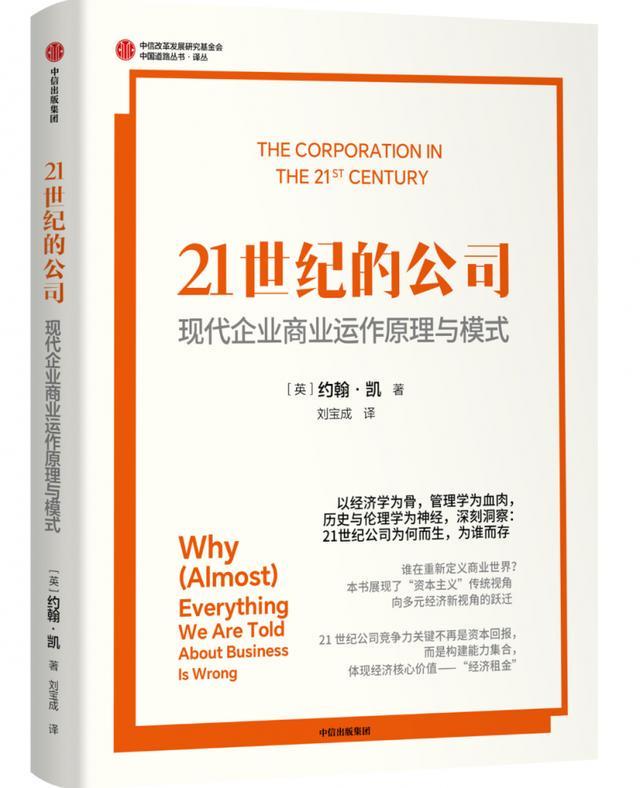
Core Insights - The article discusses the historical rise and fall of major corporations, emphasizing that even dominant companies can decline over time due to competition and market changes [3][5][12] - It highlights the shift from traditional manufacturing-based companies to modern tech-driven firms, which rely less on heavy capital investment and more on intellectual assets and collective knowledge [6][8][10] - The concept of "economic rent" is introduced, explaining how companies like Apple and Amazon generate excess profits through innovation and differentiation, contrasting with traditional views of profit [9][10][12] Historical Context - John Morgan established U.S. Steel in 1901, which was one of the largest companies globally, while John Rockefeller consolidated the oil industry, controlling about 90% of refined oil products in the U.S. [2] - The rise of management-oriented companies in the 20th century, such as General Motors and DuPont, marked a significant shift in business structure and global expansion [2][3] Decline of Major Corporations - Companies like General Motors and DuPont faced significant challenges, leading to bankruptcy and restructuring, while others like Sears have nearly disappeared [3][5] - The article suggests that the decline of these companies is not due to a decrease in demand for their products but rather their inability to adapt to changing market needs [3][5] Modern Business Dynamics - The emergence of "FAANG" companies (Facebook, Apple, Amazon, Netflix, Google) and the subsequent addition of Nvidia, Tesla, and Microsoft reflects a new era of tech-driven business models [4][5] - These companies operate with less reliance on physical assets and more on intellectual capital, allowing for greater flexibility and innovation [6][8] Economic Concepts - "Economic rent" is defined as the excess returns generated by companies due to their unique capabilities and market positions, contrasting with traditional profit definitions [9][10] - The article argues that this form of economic rent is beneficial for innovation and competition, as opposed to "rent-seeking" behaviors that exploit market inefficiencies [11][12] Future Implications - The text warns that the current leading companies may also face decline, similar to past industrial giants, emphasizing the cyclical nature of business success [5][13] - It calls for a reevaluation of how businesses are understood and managed in the context of modern economic realities, advocating for a focus on collective knowledge and innovation [7][12][14]
国企新赛道加速!国资委主任再强调发力“第二曲线”,经营拐点显现积极态势
Hua Xia Shi Bao· 2025-09-30 11:41
Core Insights - The operating conditions of state-owned enterprises (SOEs) in China have shown continuous improvement in the first eight months of this year, with total operating revenue turning positive year-on-year and a narrowing decline in total profits, indicating significant positive signals for the state-owned economy [2][8] - The emphasis on the "second curve" by the State-owned Assets Supervision and Administration Commission (SASAC) aims to encourage SOEs to seek new growth engines beyond traditional paths, ensuring the sustainability and competitiveness of state capital while achieving national strategic goals [2][4][7] Economic Performance - From January to August, SOEs achieved total operating revenue of 53.96 trillion yuan, a year-on-year increase of 0.2%, marking the first positive growth rate of the year [8] - The total profit for the same period was 2.79 trillion yuan, reflecting a year-on-year decline of 2.7%, but the decline has narrowed compared to previous periods [8] - Tax payments amounted to 3.90 trillion yuan, showing a slight year-on-year decrease of 0.3% [8] Strategic Focus - SASAC's focus on the "second curve" is a response to the need for SOEs to transition from traditional growth models to innovative and sustainable development strategies [4][7] - The "second curve" concept, introduced by British management scholar Charles Handy, emphasizes the necessity for companies to innovate and develop new business lines before reaching the peak of their first growth curve [3] Sectoral Developments - SOEs are actively engaging in new industries such as green economy, digital technology, and future industries to navigate global economic slowdowns and domestic challenges [4][6] - Specific examples include Southern Power Grid's initiatives to enhance energy security and digitalization, and China Southern Airlines' focus on expanding cargo operations and intelligent transformation [5][6] Regional Disparities - There is a notable divergence in performance among SOEs, with central enterprises showing robust growth in strategic emerging industries, while some local enterprises, particularly in resource-dependent provinces, face significant challenges [9] - For instance, the total profit of state-owned enterprises in Shanxi province saw a year-on-year decline exceeding 30% from January to May [9] Innovation and Upgrading - The need for innovation is underscored as essential for enhancing product value and market competitiveness, as well as for achieving sustainable development [10] - SOEs are encouraged to strengthen core technology development and optimize resource allocation to maintain systemic risk management [9]