Hua Xia Shi Bao

Search documents
“小资金”博“大转型”?凯撒旅业1584万元入股重整中的张旅集团,能否破解“增收不增利”
Hua Xia Shi Bao· 2026-01-04 09:53
Core Viewpoint - Caesar Travel Industry Co., Ltd. has officially acquired a 400 million A-share stake in Zhangjiajie Tourism Group Co., Ltd. for 15.84 million yuan, marking a strategic investment relationship between the two companies after eight months of collaboration [2][4]. Group 1: Investment Details - The investment of 15.84 million yuan represents a minor financial impact on both companies, but it is significant for strategic positioning rather than financial returns [2][3]. - The formal cooperation began with a strategic cooperation framework agreement signed on April 24, 2025, aimed at establishing a long-term partnership across various tourism sectors [2]. - The investment agreement signed on November 13, 2025, specified the investment amount, share price, and number of shares, transitioning the partnership from strategic intent to actual capital involvement [3]. Group 2: Financial Performance - In the first three quarters of 2025, Caesar Travel reported total revenue of 541 million yuan, a year-on-year increase of 6.52%, but incurred a net loss of 26.78 million yuan, indicating a "revenue without profit" situation [5]. - Zhangjiajie Tourism Group achieved total revenue of 337 million yuan in the same period, an 8.51% increase, and turned a profit in the third quarter with a net profit of 10.87 million yuan, reflecting a significant recovery [6]. Group 3: Strategic Implications - The partnership is seen as a strategic move for Caesar Travel to strengthen its position in the domestic tourism market, particularly as the recovery of domestic tourism outpaces outbound travel [6][7]. - The collaboration aims to enhance the product competitiveness of Caesar Travel by integrating core tourism resources, transitioning from a channel-based model to a resource + channel integrated operator [6]. - Future cooperation will focus on tourism resource integration, joint product development, and supply chain management, with the goal of establishing Zhangjiajie Tourism Group as a comprehensive tourism solution provider [7].


「新消费观察」餐饮元旦强势开局:假期“一桌难求”,等位长龙拉动行业“开门红”
Hua Xia Shi Bao· 2026-01-04 09:27
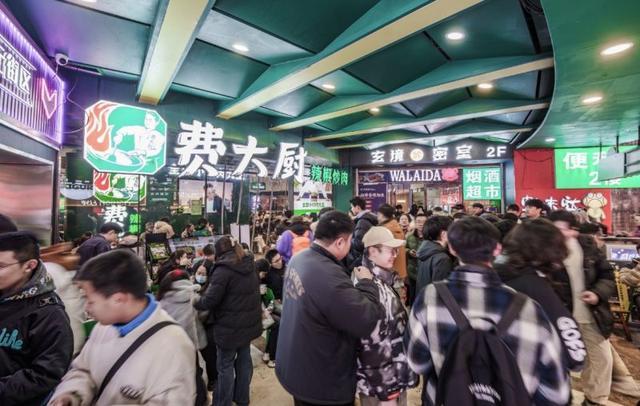
Core Insights - The restaurant industry experienced a significant surge in consumer traffic during the New Year's holiday, marking a hopeful recovery after a challenging year [2][6][8] - Major brands like Hai Di Lao, Xi Bei, and Fei Da Chu reported high demand, with some locations experiencing wait times of up to 1500 tables [2][5][6] Group 1: Market Performance - The New Year's holiday saw a 142% year-on-year increase in traffic for the "must-eat" list on Meituan [3] - Xi Bei reported approximately 500,000 customer visits across its national stores during the holiday period, with an average wait time of 40-50 minutes on January 1 [3][4] - Hai Di Lao's reservation data indicated over 400,000 tables booked for the New Year's period, reflecting strong consumer interest [3][5] Group 2: Brand Strategies - Hai Di Lao launched interactive activities to enhance customer engagement, including themed events and prize giveaways [7] - Xi Bei and other brands implemented pre-holiday promotional strategies to attract customers, such as themed collaborations and lottery events [7][8] - Fei Da Chu opened a new location in Changsha and extended operating hours to accommodate increased demand, with wait times reaching over 200 tables during peak hours [8] Group 3: Industry Outlook - The resurgence in consumer activity during the New Year's holiday is expected to set a positive tone for the restaurant industry in 2026, with overall consumption growth projected to exceed double digits [8] - Analysts suggest that restaurants should adapt to changing consumer preferences by enhancing experiential dining and integrating with tourism [8]

2025年四季度北京甲级写字楼空置率再回落,机构预警2026年末空置率攀升
Hua Xia Shi Bao· 2026-01-04 05:56
Core Insights - The real estate industry in 2025 is still undergoing a deep adjustment cycle, with low price fluctuations and weak effective demand remaining unresolved [2] - The Beijing Grade A office market shows signs of recovery, with the vacancy rate decreasing to 19.2% by the end of Q4, a year-on-year decline of 1.5 percentage points [3][4] - The market recovery is primarily driven by the concentration of new productive forces in the Zhongguancun area, which has become a core engine for the revival of the Beijing office market [4] Market Performance - The net absorption of Beijing Grade A office space reached approximately 83,000 square meters in Q4, contributing to an annual net absorption of 330,000 square meters, indicating a sustained demand [3] - The new supply of Grade A office space in Beijing for 2025 is limited to 188,000 square meters, which has helped stabilize the market [3] - The effective rental rate for Grade A offices decreased to 222 RMB/month/square meter, a year-on-year decline of 11.5%, but the rate of decline has narrowed compared to the previous year [3] Regional Highlights - The Zhongguancun area recorded a net absorption of over 176,000 square meters in 2025, accounting for 53% of the city's total, marking a peak in nearly 20 years [4] - High-tech manufacturing industries showed significant growth, with an increase of 9.2% in value-added output from January to November [4] Future Outlook - The Beijing office market is expected to face pressure again in 2026, with over 700,000 square meters of new supply anticipated, which may lead to an increase in the vacancy rate [9] - The market's effective demand remains insufficient, with many companies still facing operational challenges, leading to a cautious approach towards office expansion [7] - The competition in the office market is intensifying, particularly in non-core areas, while the core regions are experiencing a significant decline in rental prices [6]

「长镜头」靠“老片”撑场!元旦档票房破7亿元,2026年电影市场如何破局
Hua Xia Shi Bao· 2026-01-04 05:33
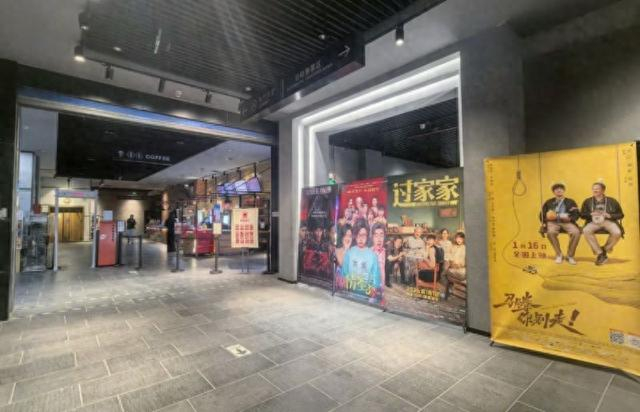
Core Insights - The New Year's box office for 2026 exceeded market expectations, reaching 6.99 billion yuan, driven primarily by the strong performance of "Zootopia 2" and "Avatar 3" [2][3] - The dominance of blockbuster films continues, with "Nezha 2" contributing nearly one-third of the total box office in 2025, highlighting an imbalance in market structure [2][5] Box Office Performance - The total box office for the 2026 New Year's period (January 1-3) reached 6.99 billion yuan, with four films surpassing 100 million yuan in revenue: "Zootopia 2," "Avatar 3," "Killing," and "The Legend of Qin" [2] - "Zootopia 2" achieved a single-day box office of over 1 billion yuan on New Year's Day, while "Avatar 3" exceeded 800 million yuan on the same day, showcasing their strong box office appeal [3] Market Trends - The 2025 film market saw a significant recovery, with total box office reaching 51.832 billion yuan and total audience numbers at 1.238 billion, both showing over 20% growth compared to the previous year [5] - The market is increasingly reliant on a few blockbuster films, with a notable concentration of box office revenue among top titles, while mid-tier films continue to struggle [5][6] Upcoming Releases - January 2026 will see the release of several films, including "96 Minutes: Train Explosion," "Just a Job," and "The Aviator," although none are expected to be major blockbusters [6][7] - The upcoming films are primarily mid-tier productions, with limited high-profile releases scheduled for the Spring Festival [7] Industry Outlook - The Chinese film market has a solid audience base and significant growth potential, but it faces challenges in consistently attracting viewer attention and producing high-quality content that meets diverse audience preferences [8] - The industry is expected to continue exploring new avenues for growth as content supply improves and audience demands evolve [8]
元旦实探胖东来,消费者:没人能空着手出来
Hua Xia Shi Bao· 2026-01-04 02:20
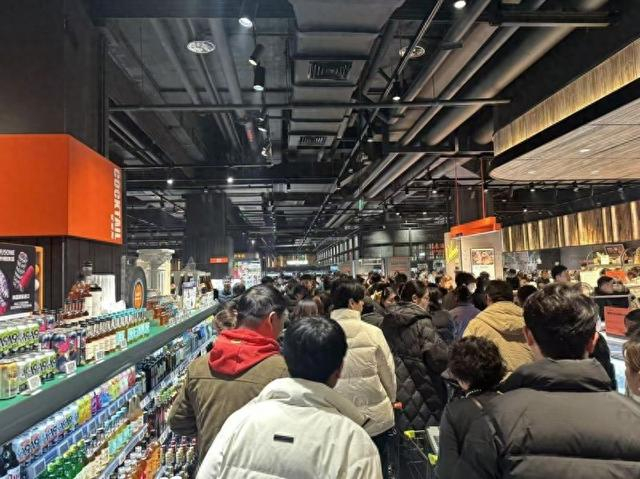
Core Viewpoint - The integration of retail and tourism at Pang Donglai supermarket in Xuchang, Henan, has become a national consumer hotspot, attracting visitors from various regions and enhancing local consumption resilience through a "retail + tourism" model [2][4]. Group 1: Consumer Behavior and Experience - Visitors from cities like Zhengzhou and Luoyang are traveling specifically to shop at Pang Donglai, often filling their vehicles with purchases [4]. - The supermarket has implemented free self-service luggage storage and other facilities to accommodate the influx of out-of-town shoppers [4]. - High foot traffic is observed, particularly in the bakery section, indicating strong consumer interest and engagement [4][6]. Group 2: Sales Performance and Pricing Strategy - Consumer feedback suggests that while spending can reach significant amounts (e.g., 1500 yuan), the perception of value remains high due to product quality and variety [7]. - The supermarket's pricing strategy is transparent, with marked-up prices on items like down jackets showing modest profit margins compared to brand stores [7]. - Pang Donglai's sales figures are impressive, with projected total sales exceeding 23.53 billion yuan by the end of 2025, highlighting the supermarket's dominant position in the retail sector [12]. Group 3: Tourism and Local Economy Impact - The synergy between shopping and local tourism is evident, with visitors extending their trips to explore nearby attractions like the Cao Wei Ancient City after shopping [9][10]. - Social media has become a platform for sharing travel itineraries that include both shopping and cultural experiences in Xuchang, indicating a growing trend of combining retail with tourism [10]. Group 4: Financial and Market Trends - The Ministry of Commerce emphasizes the importance of retail in strengthening domestic demand and encourages learning from successful models like Pang Donglai [12]. - Financial institutions are increasingly focusing on consumer finance to stimulate retail growth, with various initiatives aimed at enhancing consumer spending [12][13]. - The potential for innovative financial products that combine retail and tourism experiences is highlighted as a growth opportunity for the consumer finance sector [13].
“让美大型石油公司进入 为委内瑞拉赚钱”!特朗普宣布将“管理”委内瑞拉 直至实施“安全”过渡 多国表态
Hua Xia Shi Bao· 2026-01-04 01:57
Core Viewpoint - The article discusses the recent military action by the United States against Venezuela, resulting in the capture of President Nicolás Maduro, which has been characterized by President Trump as a significant display of U.S. military power and a necessary intervention to restore order in Venezuela [4][5][10]. Group 1: Military Action and Its Implications - President Trump described the military action as unprecedented since World War II, claiming it demonstrated the effectiveness of U.S. military capabilities [4]. - Trump stated that all military capabilities of Venezuela have been "completely paralyzed," and he emphasized the U.S. intention to govern Venezuela until a safe power transition can occur [4][5]. - The U.S. military operation was portrayed as complex and highly effective, with Trump claiming no U.S. casualties or losses during the operation [8][9]. Group 2: Economic Interests - Trump indicated that the U.S. would allow major American oil companies to invest billions in Venezuela to repair its oil infrastructure, which he described as a long-standing failure [5]. - He reiterated the U.S. commitment to maintaining a complete oil embargo against Venezuela until U.S. demands are fully met [5]. Group 3: International Reactions - The Venezuelan government condemned the U.S. actions as a violation of international law and called for the immediate release of Maduro and his wife [10][14]. - Various countries, including Russia and France, expressed strong opposition to the U.S. military intervention, emphasizing the need to respect Venezuela's sovereignty and international law [14][17][22]. - Protests against the U.S. military action erupted in multiple U.S. cities, with demonstrators calling for an end to military intervention in Venezuela [11][13].

7亿元“罗生门”,风电巨头大金重工陷合同纠纷
Hua Xia Shi Bao· 2026-01-02 11:36
Core Viewpoint - The ongoing legal disputes between Dajin Heavy Industry and China Gezhouba Group Electric Power Co., Ltd. involve significant financial claims, with Dajin Heavy Industry seeking compensation of approximately 129 million yuan due to alleged economic losses caused by Gezhouba Electric Power [1][4]. Group 1: Legal Disputes - Dajin Heavy Industry's subsidiary has filed a lawsuit against Gezhouba Electric Power for compensation of 129 million yuan and related litigation costs [1][4]. - Gezhouba Electric Power previously initiated a lawsuit against Dajin Heavy Industry's subsidiary, claiming approximately 573 million yuan for construction contract disputes [1][2]. - The court has frozen a total of 12.53 million yuan in bank deposits from both companies as part of the legal proceedings [3]. Group 2: Financial Impact - The financial implications of the lawsuits could affect Dajin Heavy Industry's performance, particularly if the company is required to pay damages, which would impact profits [3][4]. - Dajin Heavy Industry reported significant revenue growth in 2025, achieving 4.595 billion yuan in revenue, a 99.25% increase year-on-year, and a net profit of 888 million yuan, up 214.63% [5]. - The company has experienced a turnaround after two years of declining revenue, with the increase attributed to a surge in overseas business [5]. Group 3: Overseas Business Expansion - Dajin Heavy Industry has become the leading supplier of offshore wind foundation equipment in Europe, with market share increasing from 18.5% in 2024 to 29.1% in the first half of 2025 [6]. - The company's export business has seen a significant rise, with export revenue accounting for nearly 80% of total income, reflecting a 23 percentage point increase from the previous year [5][6]. - Plans for a Hong Kong IPO are underway, with funds intended for upgrading solutions, constructing a European assembly base, and expanding into new global markets [6].


2025年医药领域十位“失意者”的退场悲歌与行业之变
Hua Xia Shi Bao· 2026-01-02 10:13
Core Insights - The domestic pharmaceutical industry faced unprecedented challenges in 2025 due to policy adjustments, capital withdrawal, and intense competition, leading to a brutal industry reshuffle [2] - The shift in industry dynamics emphasizes clinical value as the core focus, with capital returning to rationality and competition shifting towards hard power [2] Group 1: Company Failures - *ST Changyao faced multiple crises, including a failed restructuring and financial fraud, resulting in a net asset of -643 million yuan and facing dual delisting risks [3] - Simi Biological, an early player in the mRNA field, entered bankruptcy liquidation due to a broken funding chain after raising over 1.3 billion yuan from 2020 to 2023 [5] - Green Valley Pharmaceutical's core product, "Jiuyi Yi," faced production halts due to expired registration and financial difficulties, leading to operational paralysis [6] - *ST Longjin was delisted due to reliance on a single product, with sales dropping significantly after price reductions and failed diversification attempts [7] - Shanghai Jinzhongnuomei, once a rising star, faced bankruptcy liquidation due to funding issues and high R&D costs [8] - Lizhu Group exited the PD-1 market after incurring significant losses, highlighting the challenges of entering saturated markets [9] - Ruike Biological's founder lost control of the company despite nearing commercialization of a core product, reflecting the struggles of innovation-driven firms [10] - Betta Pharmaceuticals faced a trust crisis due to overdue milestone payments, exposing cash flow issues in the innovative drug sector [11] - Keyuan Pharmaceutical's 3.58 billion yuan acquisition plan fell through, missing a critical transformation opportunity amid market changes [13] - Jikai Gene's founder faced legal issues due to an inability to repay 227 million yuan in debt, illustrating the pressures of capital constraints on companies [14]




大手笔买不停!江南化工花6.45亿元买民爆公司后,又溢价1665.14%出手收购
Hua Xia Shi Bao· 2026-01-02 09:13
Core Viewpoint - Jiangnan Chemical is actively consolidating its civil explosives business through multiple acquisitions, aiming to enhance its market position and resolve internal competition issues within the industry [2][4]. Group 1: Acquisitions and Consolidation - Jiangnan Chemical announced plans to acquire 98.4982% of Liaoning Huafeng Civil Chemical Development Co., Ltd. for 158 million yuan, reflecting a significant premium of 1665.14% over the company's net asset value [2][6]. - The company previously announced the acquisition of 100% of Xi'an Qinghua Civil Explosives Co., Ltd. for 645 million yuan, which is part of a strategy to integrate assets under the same control to address competition within the industry [4][5]. - Jiangnan Chemical is also participating in the acquisition of an emulsified explosive production line from Fushun Mining Group, with a base price of 146 million yuan, and successfully acquired 100% of Chongqing Shun'an Explosive Materials Co., Ltd. for 1 billion yuan [5][6]. Group 2: Valuation and Premiums - The valuation of Huafeng Civil Chemical was based on a future earnings potential approach, which significantly inflated its intangible asset value, leading to an extreme premium compared to traditional industry standards [6][7]. - The valuation for Qinghua Civil Explosives was 645 million yuan, with a 234.60% premium over its net asset value, while Shun'an Explosive was valued at 884 million yuan, reflecting a 66.59% premium [7]. Group 3: Financial Performance - Despite aggressive acquisition strategies, Jiangnan Chemical's financial performance has declined, with a reported revenue of 6.885 billion yuan for the first three quarters of 2025, a 2.78% increase year-on-year, but a net profit decrease of 11.40% to 664 million yuan [8][9]. - The overall civil explosives industry is facing challenges, with production and sales values declining by 4.60% and 3.38% respectively in the first three quarters of 2025, impacting Jiangnan Chemical's performance [9].


供应链瓶颈制约下全球商用飞机交付量回升,国际航协预测2034年之前供需矛盾难回正轨
Hua Xia Shi Bao· 2026-01-02 07:41
Core Insights - The global commercial aircraft manufacturing industry is experiencing a recovery in delivery volumes, but supply chain issues continue to hinder the resolution of demand-supply conflicts among manufacturers, suppliers, and airlines [2][7] - The International Air Transport Association (IATA) forecasts that demand will exceed the availability of aircraft and engines, with structural imbalances expected to persist until 2031-2034 [2][7] Group 1: Aircraft Deliveries - In 2025, China Commercial Aircraft Corporation (COMAC) delivered 15 C919 aircraft, surpassing the 12 delivered in 2024, despite facing production challenges [3] - COMAC's C909 model saw a decline in deliveries, with approximately 20-23 units delivered in 2025 compared to 35 in 2024 [4] - Boeing delivered 537 commercial aircraft by the end of November 2025, with expectations to reach around 590 for the year, a significant increase from 348 in 2024 [5] - Airbus aimed for 790 deliveries in 2025, down from an initial target of 820, having delivered 657 aircraft by the end of November [5] - Embraer set a target of 77-85 E-series jet deliveries for 2025, needing to deliver at least 31 in the last quarter to meet this goal [6] Group 2: Supply Chain Challenges - The aviation industry is facing significant supply chain bottlenecks, with a delivery gap of over 5,300 aircraft and backorders exceeding 17,000, representing nearly 60% of the active fleet [7][9] - The average age of the global fleet has risen to 15.1 years, with older aircraft being retained longer due to delays in new aircraft deliveries [8] - The production bottlenecks are exacerbated by engine supply issues and a shortage of skilled technicians, leading to delays in aircraft assembly [9] Group 3: Financial Implications - IATA estimates that supply chain bottlenecks will result in over $11 billion in additional costs for the global aviation industry in 2025, including $4.2 billion in extra fuel costs and $3.1 billion in increased maintenance costs [10] - The total net profit for global airlines is projected to be $39.5 billion in 2025, with a slight increase to $41 billion in 2026, indicating a low net profit margin due to various external factors [10]