
Zhong Guo Qi Che Bao Wang

Search documents
武汉“敢为人先”的新答卷:岚图梦想家山河上市,重构豪华MPV竞争格局
Zhong Guo Qi Che Bao Wang· 2025-11-27 01:41
Core Insights - During the "14th Five-Year Plan" period, Hubei's technological innovation capabilities have significantly improved, with major breakthroughs in key core technologies, and several indicators ranking among the top in the country, solidifying its position as the leader in Central China [1] - Lantu Motors, a high-end new energy brand from Hubei, is leveraging technological innovation to empower industrial upgrades, becoming a crucial player in the province's efforts to build a modern industrial system [1] - The launch of the Lantu Dreamer Mountain River, priced at 709,000 yuan, showcases Wuhan's strength in automotive manufacturing and marks Hubei's leadership in the development of high-end new energy brands [1] Product Launch and Features - The Lantu Dreamer Mountain River redefines luxury by integrating traditional Chinese cultural elements with modern industrial design, breaking away from Western luxury paradigms [3] - The vehicle is designed with top-tier safety standards, featuring a comprehensive safety system that includes 29 high-precision sensors and the Huawei QianKun intelligent driving ADS 4, which has successfully prevented over 40,000 potential collisions [5] - The Dreamer Mountain River also boasts an 800V intelligent hybrid system and 5C ultra-fast charging technology, allowing for a 200 km range in just 10 minutes of charging [5] Market Positioning and Strategy - Lantu Motors presented its "Three Flagships" at the auto show, including the Lantu Taishan, Lantu Dreamer, and Lantu Zhaiguang L, showcasing a comprehensive product range across MPV, SUV, and sedan categories [6] - The Lantu Taishan, positioned as a "new era flagship SUV," achieved over 10,000 pre-orders within 21 minutes of its launch, highlighting its market appeal [8] - The Taishan features advanced intelligent configurations, superior driving experience, and exceptional battery performance, addressing user concerns about range anxiety [10] Industry Collaboration and Future Outlook - The success of Lantu's flagship models reflects a broader transformation in the Chinese automotive industry, emphasizing collaboration over competition and fostering a shared ecosystem among brands [11][13] - The industry is moving towards a model of open cooperation, with companies like Huawei and Lantu working together to enhance technology sharing and standardization, positioning Chinese brands for global competitiveness [13] - The collective advancement of the industry signifies a shift from following to leading, with a focus on integrating intelligent technology and cultural aesthetics to elevate the "Made in China" brand on the global stage [13]


动力电池行业竞争的守正与升维
Zhong Guo Qi Che Bao Wang· 2025-11-27 01:25
Core Insights - The collaboration between JD.com, GAC, and CATL focuses on the launch of the Aion UT Super, a battery-swapping vehicle priced under 100,000 yuan, marking a significant step towards commercializing the "battery separation" model in the private car market [2][4] - CATL's role as a key supplier in this partnership highlights the shift in the battery industry from pure technology competition to service upgrades and innovative business models [2][4] - The industry is experiencing a deep restructuring, with companies redefining core competitiveness through diverse innovation models, including the establishment of new sales channels via e-commerce platforms [2][4][5] Industry Trends - The partnership between CATL and JD.com aims to create a "Chocolate Battery" official direct sales channel, promoting the battery separation model and enhancing user experience through seamless online and offline services [3][4] - The competition in the battery industry is intensifying, pushing companies to explore niche markets and provide customized solutions rather than relying solely on price competition [3][4] - Emerging applications such as low-altitude economy, AI computing centers, humanoid robots, and electronic consumer products are becoming focal points for battery manufacturers [3][4] Strategic Collaborations - GAC and CATL have signed a comprehensive strategic cooperation agreement for long-term collaboration, focusing on smart chassis and battery rental services, aiming to create a synergistic ecosystem [5][6] - The industry is witnessing a trend of deepening joint ventures between automakers and battery manufacturers, which not only secures capacity and market share but also fosters a new "partner" model [5][6] Global Expansion and New Markets - The battery industry is shifting its focus from traditional automotive applications to new markets such as energy storage and robotics, with significant growth potential in these areas [7][8] - CATL and other companies are accelerating their overseas production efforts, with over 13 countries hosting manufacturing bases, aiming to enhance competitiveness and mitigate trade risks [9][10] Technological Innovations - The industry is on the verge of a breakthrough with solid-state battery technology, with several companies preparing for product validation and mass production [14][15] - The focus on zero-carbon transformation is becoming crucial, with companies like CATL implementing comprehensive carbon management systems and aiming for carbon neutrality across their value chains by 2035 [11][12] Future Outlook - The next 3-5 years will see the battery industry driven by technological innovation and market expansion, with performance metrics such as safety, energy density, and charging efficiency being critical for competitive positioning [15]


观车 · 论势 || 技术循序渐进,液态电池不过时
Zhong Guo Qi Che Bao Wang· 2025-11-27 01:25
Core Viewpoint - The commercialization timeline for solid-state batteries is uncertain, with experts predicting a range from 2027 to 2035 for various stages of market entry, while half-solid batteries are currently the focus of commercialization efforts [1][2][3] Group 1: Solid-State Battery Commercialization - Solid-state batteries are expected to face significant technical and cost challenges before achieving mass production, with industry consensus suggesting a timeline of 2032 to 2033 for commercial application [2][3] - Current predictions for solid-state battery commercialization vary, with some experts suggesting small-scale production could begin as early as 2027, while others believe large-scale commercialization may not occur until 2030 or later [2][3] Group 2: Half-Solid and Liquid Batteries - Half-solid batteries, referred to as "solid-liquid batteries," are seen as a transitional solution before solid-state batteries become mainstream, with a projected large-scale deployment window between 2025 and 2030 [3] - Liquid batteries are expected to maintain a significant market share, with projections indicating they will account for over 70% of the global power battery market at least until 2030, highlighting their ongoing relevance and potential for improvement [3][4] Group 3: Industry Dynamics and Consumer Perception - The industry warns against the over-hyping of solid-state batteries, which may lead to unhealthy market expectations and consumer misconceptions about the obsolescence of liquid batteries [1][3] - A multi-technology approach is deemed essential for the future of power batteries, with liquid, half-solid, and solid-state batteries expected to coexist and cater to different market segments [4]
2025年Automechanika Shanghai以创纪录规模盛大开幕
Zhong Guo Qi Che Bao Wang· 2025-11-26 15:43
Core Insights - The 2025 Automechanika Shanghai exhibition opened on November 26, showcasing significant growth in participation and exhibition space, with 7,465 exhibitors from 44 countries, a 10% increase year-on-year, and a 9% expansion in exhibition area to 383,000 square meters [3][10]. Group 1: Exhibition Overview - The exhibition features a record number of exhibitors and has expanded its international participation, attracting 15 national and regional exhibition groups, enhancing its role as a global professional service platform [3][5]. - The event includes 94 concurrent activities, gathering over 450 industry leaders to explore market developments in China and globally, aiming to build resilient supply chains and efficient international cooperation networks [7][9]. Group 2: Industry Participation - Major automotive brands such as GAC Aion, Li Auto, Chery, and Tesla are participating, alongside key companies from the automotive supply chain, showcasing diverse products and solutions across fuel and new energy vehicles [10][11]. - The new energy and intelligent connected vehicle sector has expanded by 50%, featuring core components and systems, with nearly 30 new brands participating for the first time [13]. Group 3: International Influence - The exhibition's international appeal continues to grow, with a 20% increase in exhibition area from international groups, and a 25% rise in pre-registered attendees from nearly 160 countries [16]. - Over 24,000 professional buyers from 50 countries are expected to attend, marking a record high in both scale and international participation [16]. Group 4: Concurrent Activities - The flagship event, the 2025 Automechanika Shanghai International Development Conference, will feature high-quality forums and workshops covering various industry topics, including technology trends and talent development [18]. - Other key activities include forums on intelligent connected vehicles, automotive aftermarket, and electric vehicle innovation, aimed at fostering collaboration within the industry [19]. Group 5: Special Exhibits and Innovations - The exhibition will showcase a "Technology, Innovation, Trends" concept area with over 30 technical lectures, and a startup area to support emerging brands [21]. - The green repair area will focus on practical workshops to enhance professional service capabilities in the automotive aftermarket, promoting sustainable practices [21].

2025年上海法兰克福汽配展开幕,7465家参展商创历届之最
Zhong Guo Qi Che Bao Wang· 2025-11-26 09:44
Core Insights - The 2025 Automechanika Shanghai opened on November 26, featuring a record number of 7,465 exhibitors from 44 countries and regions, marking a 10% year-on-year increase in exhibitors and a 9% expansion in exhibition area to 383,000 square meters [1][4] - The event highlights the global automotive industry's focus on innovation and sustainable development, with significant participation from both domestic and international entities [3][7] Exhibition Scale and Participation - The exhibition has achieved unprecedented scale, utilizing all 15 halls of the National Exhibition and Convention Center (Shanghai) for the first time [1] - Domestic and international participation has notably increased, with 15 national and regional exhibition groups contributing to a comprehensive global professional service platform [3][7] Industry Representation - Major automotive brands such as GAC Aion, Li Auto, Chery, and Tesla showcased their products, emphasizing a diverse range of technologies and solutions for both fuel and new energy vehicles [4][5] - The new energy and intelligent connected vehicle sector expanded by 50%, featuring key components and systems, with over 40% of exhibitors focusing on related solutions [5][10] International Influence - The event attracted a global audience, with pre-registered attendees increasing by approximately 25% compared to the previous year, covering nearly 160 countries and regions [7] - More than 24,000 professional buyers from 50 countries and regions participated, marking a record high in international engagement [7] Concurrent Events and Forums - A total of 94 high-quality forums and technical seminars were organized, covering topics such as technology trends, market dynamics, and talent development [8][10] - Key events included the International Development Summit for Intelligent Connected Vehicles and the Automotive Aftermarket Summit, aimed at fostering collaboration and innovation within the industry [10][11] Focus on Innovation and Sustainability - The exhibition emphasized the importance of a complete industry chain and continued technological innovation, with over 90 supporting activities aimed at integrating various sectors of the automotive industry [15] - The introduction of a green repair area and a modification and technology zone highlighted the commitment to sustainable practices and the growing trend of vehicle customization [11][13]

权威鉴定!东风股份三项核心技术达“国际先进”
Zhong Guo Qi Che Bao Wang· 2025-11-26 09:33
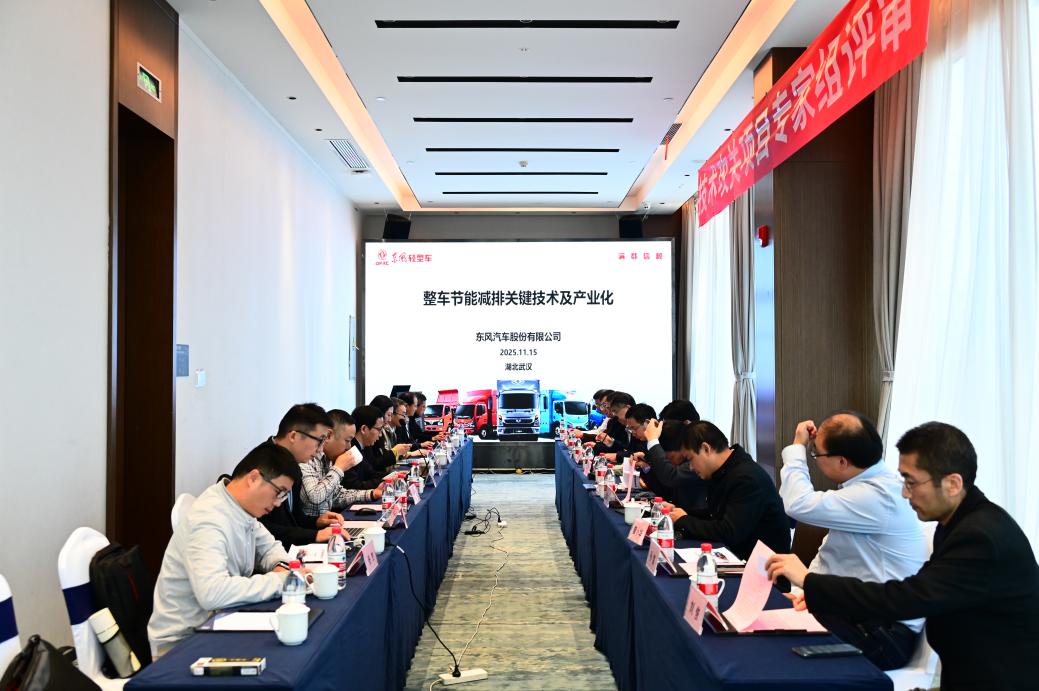
Core Insights - Dongfeng Motor Corporation's "Key Technologies for Energy Saving and Emission Reduction in Complete Vehicles" project has been recognized as "internationally advanced" by a panel of eight experts at a recent technical appraisal meeting in Wuhan [1][3]. Group 1: Engine Technology - The M9T hybrid engine, with a displacement of 2.3 liters, has improved its effective thermal efficiency from 41.3% to 46.2%, addressing a core challenge in the new diesel engine technology iteration [3]. - The M9T engine is designed to reduce fuel consumption by 20%-30% per 100 kilometers when integrated into vehicles [4]. Group 2: Transmission Efficiency - The planetary gear coupling assembly, developed independently by Dongfeng, achieves a transmission efficiency of 91.22%, significantly reducing transmission losses and placing it at an internationally advanced level [4]. - The integration of this assembly is expected to lower fuel consumption by 2% per 100 kilometers and enhance vehicle range by 1% [4]. Group 3: Vehicle Control Innovations - The 4.5T hybrid light truck features innovative fuel consumption simulation and real vehicle energy flow testing, achieving a fuel consumption rate as low as 6.8L/100km under CHTC-LT conditions [4]. - This development provides an efficient solution for the integration of hybrid systems in the light commercial vehicle sector [4]. Group 4: Production and Future Plans - The first hybrid light truck equipped with the M9T engine and planetary gear coupling assembly has successfully rolled off the production line at Dongfeng's Xiangyang factory, with plans to achieve mass production of 500 units by the end of 2025 [7]. - Dongfeng aims to enhance its R&D investment to support energy-saving and carbon reduction initiatives, contributing to the green transformation of the industry [7].


体验感越来越舒适!汽车座椅设计有哪些不为人知的奥秘?
Zhong Guo Qi Che Bao Wang· 2025-11-26 07:25
Core Viewpoint - The evolution of automotive seats has transitioned from basic functionality to a focus on comfort, safety, and smart technology, significantly enhancing the user experience [3][4][5]. Group 1: Historical Evolution of Automotive Seats - Automotive seats have evolved from simple wooden structures to luxurious, comfortable designs, with General Motors introducing the sofa-style seat in 1921, which set a new industry standard [3]. - The introduction of adjustable seats allowed users to customize their seating position, marking a significant shift in user experience [3]. Group 2: Safety Enhancements - The 1969 regulation mandating headrests in new vehicles marked a pivotal moment in seat design, emphasizing safety alongside comfort, with studies showing a 70% reduction in neck injury rates due to headrest use [4]. - Modern seat designs incorporate features like a "cage structure" that can withstand over 15g of acceleration, providing enhanced protection during collisions [9]. Group 3: Technological Advancements - The 21st century has seen rapid technological advancements, leading to the integration of smart features in automotive seats, such as voice-controlled adjustments and various comfort modes [5][6]. - Innovations in materials, including high-strength steel and carbon fiber composites, have improved seat durability and reduced weight, enhancing fuel efficiency and safety [7]. Group 4: User-Centric Features - Modern seats now offer personalized comfort through memory functions that adjust to individual body shapes, providing a tailored experience for each user [8]. - Features like massage functions can reduce fatigue by up to 60% during long drives, enhancing overall travel comfort [8]. Group 5: Future Trends - The automotive industry is moving towards seats that serve as intelligent interfaces, with developments in rotating seats, zero-gravity designs, and biometric recognition technology [10]. - The concept of seats evolving into a "third living space" reflects a shift in how automotive seating is perceived, focusing on user interaction and comfort [10].

东风本田:在转型中坚守,在创新中突破
Zhong Guo Qi Che Bao Wang· 2025-11-26 07:17
Core Viewpoint - Dongfeng Honda is focusing on localization and innovation to balance electric and performance vehicles, responding to market demands and competition from domestic brands [1][3][4] Group 1: Localization and Supply Chain - Dongfeng Honda emphasizes the importance of localized research and supply chain management to adapt to the changing automotive market in China [3] - The company is leveraging the strengths of both Dongfeng and Honda to develop future-oriented electric and intelligent products while integrating local suppliers into its supply chain [3] Group 2: Brand Philosophy and User Engagement - The brand philosophy of Dongfeng Honda includes "belief, breakthrough, and far-reaching vision," focusing on long-term commitment, continuous innovation in the new energy sector, and maintaining a leading position in environmental, comfort, and safety aspects [4] - The company is shifting from a product-centered approach to a customer-centered model, utilizing various channels for user engagement, including strategic partnerships with Tencent for digital capabilities [4][6] Group 3: Product Strategy and Market Position - Dongfeng Honda aims to maintain a dual strategy of developing both fuel and electric vehicles, emphasizing the importance of product quality, safety, and resale value as competition intensifies [6] - The company has sold over 3.2 million CR-Vs in China and has a total vehicle ownership exceeding 8.6 million, indicating a strong market presence [6] Group 4: Technological Integration and Marketing - Dongfeng Honda is collaborating with local tech companies to integrate advanced smart technologies into its vehicles, ensuring that traditional driving enjoyment is transformed into a competitive advantage [7] - The marketing strategy is evolving to facilitate two-way communication with customers, focusing on translating technical knowledge into accessible language and enhancing user experience through various initiatives [9]

全球第二!这一地为何迅速崛起成全球电动汽车重要生产基地?
Zhong Guo Qi Che Bao Wang· 2025-11-26 05:52
全球汽车电动化加速前行,创新奇迹也层出不穷。 如今,匈牙利街头,越来越多挂着当地牌照的来自世界众多品牌的电动汽车穿梭其间,这些车辆不 仅是匈牙利交通道路上的新风景,更是匈牙利电动汽车产业蓬勃发展的鲜活见证。 多方力量推动发展 在当前全球经济格局深刻调整、多种因素影响汽车业的大背景下,匈牙利电动汽车产业却凭借自身 独特的优势,成为连接东方技术与西方市场的关键纽带。中国车企作为全球电动汽车技术的领军者之 一,拥有先进的电池技术、高效的生产工艺以及丰富的创新经验;而欧洲则拥有成熟的汽车市场、完善 的基础设施以及高素质的消费群体。众多中国企业入驻匈牙利,不仅为匈牙利带来了先进的技术和大量 的资金,还促进了当地相关产业的协同发展,使得匈牙利迅速融入全球电动汽车产业链。 有舆论认为,匈牙利的成功逆袭,为一些国家参与全球电动汽车产业链提供了全新的思路和模式。 它证明了在全球化的浪潮中,即使是自然资源、市场规模有限的国家,只要能够找准自身定位,充分发 挥自身优势,积极参与国际合作,就有可能在全球产业分工中占据一席之地,实现经济的快速发展和产 业的转型升级。 日前,据报道,匈牙利方面表示,匈牙利已一举成为全球第二大电动汽车生产 ...

成为COP30官方合作伙伴,比亚迪以硬核创新引领全球低碳转型
Zhong Guo Qi Che Bao Wang· 2025-11-26 03:58
Core Viewpoint - BYD has positioned itself as a key player in the global low-carbon transition by participating in COP30 and showcasing its innovative technologies in electric vehicles and sustainable practices [1][3][13]. Group 1: Participation in COP30 - BYD became an official partner of COP30, providing 130 electric vehicles for transportation services during the conference, emphasizing the importance of electric vehicle adoption for carbon reduction in the transportation sector [1]. - The presence of BYD's Brazil General Manager, Li Tie, at the conference highlighted the company's commitment to promoting sustainable urban development through technological innovation [1][3]. Group 2: Local Market Expansion - During COP30, BYD opened a new store in Belem, Brazil, attended by local government officials, marking a significant step in its commitment to deepening its market presence in Brazil [4]. - Since entering the Brazilian market in 2014, BYD has established a strong foothold, including the launch of a new energy bus factory and a solar photovoltaic factory, contributing to a diverse range of green transportation solutions [6]. Group 3: Sales Performance and Market Recognition - In the first ten months of this year, BYD sold over 87,000 vehicles in Brazil, achieving an 80% market share in pure electric vehicles, making it one of the most recognized automotive brands in the region [8]. - BYD has surpassed major multinational brands in consumer satisfaction, receiving the highest RA1000 certification based on votes from 30 million users, and has won 26 awards since 2025 for its product quality and user service [8]. Group 4: Technological Innovations - BYD has introduced its fifth-generation DM Super Hybrid technology, significantly reducing fuel consumption to 2.6L/100km, and has developed the Megawatt Flash Charging technology, enabling rapid charging capabilities [11]. - The company has established a comprehensive green ecosystem that includes energy acquisition, storage, and application, aiming for a 50% reduction in carbon intensity by 2030 and achieving carbon neutrality across its value chain by 2045 [11][9]. Group 5: Global Strategy and Vision - BYD's global footprint includes sales in 117 countries and regions, with over 785,000 vehicles sold overseas in the first ten months of this year, showcasing its commitment to international expansion [8]. - The company aims to provide systematic solutions for global low-carbon development through its "three green dreams," contributing to climate change mitigation efforts and enhancing the voice of developing countries in climate discussions [13].

