
Zhong Guo Qi Che Bao Wang

Search documents
新兴的软体机器人,将如何赋能汽车业?
Zhong Guo Qi Che Bao Wang· 2025-11-27 07:44
Core Insights - Soft robots are emerging as a new favorite in the industry, showcasing flexibility and precision in tasks such as object manipulation and assembly [3][4] - The automotive industry is increasingly adopting soft robots to enhance production efficiency and adaptability, moving from rigid manufacturing to flexible intelligent production [4][6] Group 1: Advantages of Soft Robots - Soft robots exhibit superior environmental resilience, capable of operating in extreme conditions such as high temperatures, humidity, and electromagnetic interference [4][5] - They can perform complex operations in confined spaces and collaborate with humans, significantly improving production line efficiency [4][5] - The unique design of soft robots allows for gentle and precise handling of delicate components, such as battery packs, reducing the risk of damage [4][5] Group 2: Applications in Automotive Manufacturing - Soft robots facilitate multi-model mixed-line production, allowing for rapid switching between different vehicle models, thus enhancing production efficiency and reducing costs [6][8] - In logistics, soft robots can autonomously navigate and adapt to complex warehouse environments, improving the efficiency of parts sorting and transportation [6][9] Group 3: Future Prospects and Industry Transformation - The integration of soft robots is expected to reshape the automotive industry, transitioning from large-scale standardized production to flexible, small-batch manufacturing [8][10] - By 2030, it is projected that the adoption rate of soft robots in global automotive manufacturing will increase from 10% to 50% [8] - Soft robots will enable a fully automated operation system across the automotive supply chain, enhancing efficiency in production, sales, and after-sales services [9][10]


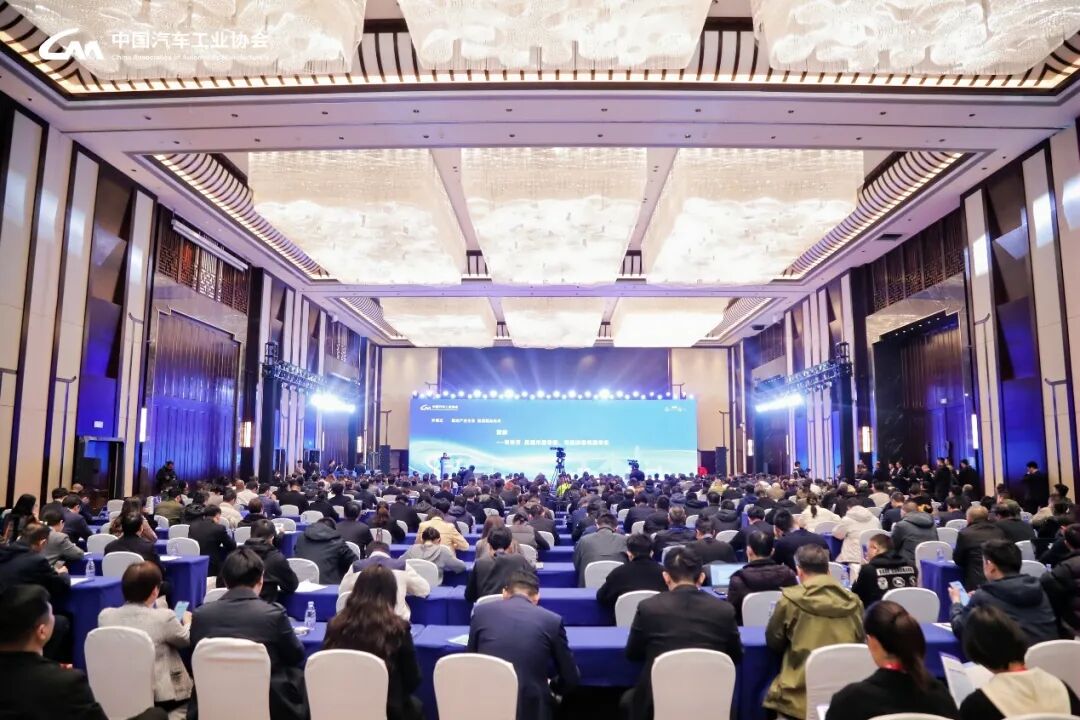
2025中国汽车供应链大会芜湖召开
Zhong Guo Qi Che Bao Wang· 2025-11-27 06:15
Core Viewpoint - The "2025 China Automotive Supply Chain Conference" emphasizes the transformation and innovation within the automotive supply chain, focusing on the integration of electric, intelligent, connected, and low-carbon technologies to enhance China's position in the global automotive industry [1][3]. Group 1: Industry Transformation - The "14th Five-Year Plan" period is a critical phase for China's automotive industry, aiming for peak carbon emissions and transitioning from a major automotive nation to a strong one, with a focus on maintaining leadership in smart and connected new energy vehicles [3]. - The automotive supply chain is undergoing profound adjustments, necessitating innovation-driven development and exploration of international expansion paths [4]. - The automotive supply chain's resilience and innovation are crucial for adapting to new market conditions and ensuring sustainable growth [5]. Group 2: Strategic Insights - Key strategies for enhancing the automotive supply chain include innovation leadership, collaboration among industry leaders, and fostering an open and cooperative ecosystem for mutual benefits [5]. - The importance of transforming China's supply chain advantages into localized stability within the global market is highlighted, with a focus on creating a sustainable and cooperative supply chain [5][6]. - The "361" supply chain development strategy aims to address core challenges faced by the automotive industry, including supply assurance, innovation, cost management, and sustainability [7]. Group 3: Research and Development - The "2025 China Automotive Supply Chain Development Report" outlines significant achievements in the automotive parts industry, including strengthened foundations, enhanced innovation capabilities, improved industry ecology, and progress towards green and low-carbon transitions [9]. - The globalization of China's automotive parts industry is now seen as a necessity, with the upcoming blue paper providing a comprehensive guide for companies looking to expand internationally [9][10]. - The blue paper introduces a "5C" globalization strategy framework, covering compliance, supply chain, capital, brand, and talent, serving as a practical tool for companies to formulate their international strategies [10].
汽车之家广州车展亮出内容生态“组合拳”,多元布局引领行业新阶段
Zhong Guo Qi Che Bao Wang· 2025-11-27 05:54
Core Insights - The Guangzhou International Auto Show serves as a "barometer" for the development of China's automotive industry, showcasing innovation and attracting user attention [2] - Autohome made a significant impact at the event by unveiling a new content ecosystem strategy and launching innovative services to enhance its automotive service platform [2][10] Group 1: Event Participation and Impact - Autohome showcased a record 400 square meters booth, designed as a "home space" that integrates car exhibition reporting, brand display, creator interaction, and user experience [2] - The company utilized an 80-meter advertising banner and organized multiple user interaction activities, enhancing its brand influence and establishing itself as a new landmark at the auto show [2] Group 2: Content Creation and Engagement - Autohome conducted two high-quality live broadcasts during the media day, focusing on new car releases and industry trends, with a total live broadcast duration of 14 hours [3] - The company's WeChat index saw a remarkable increase of 606.8% on media day, indicating a significant rise in user engagement [3] - Total views for the live broadcasts exceeded 18.03 million, with external media views reaching 15.97 million, showcasing Autohome's strong content resonance [3][5] Group 3: New Content Ecosystem Strategy - The "2025 Autohome Creator Conference" was held, where the CEO announced a strategy to build "China's largest content service platform" [6] - The strategy includes the establishment of a head brand in automotive content, "Zhijia Media MCN," and the launch of the "Zhijia Wanxiang" platform for efficient content connection [6] - The platform aims to provide a one-stop solution for IP, creators, and marketing resources, with plans to launch a "Content Square" in December [6] Group 4: External Expansion and Collaborations - Autohome plans to expand its presence on mainstream content platforms like Xiaohongshu, Bilibili, and Kuaishou, creating a "ubiquitous content service ecosystem" [9] - The company announced a "Content Going Global" initiative to assist Chinese automotive brands in expanding internationally and to facilitate global commercialization for domestic creators [9] - A strategic partnership was established with the Turin Automotive Design Award (TADA), making Autohome the official "invited automotive internet cooperation platform" for TADA [9] Group 5: Future Directions - Autohome aims to enhance its comprehensive capabilities as an automotive service platform and demonstrate its strategic commitment to driving industry innovation and connecting global resources [10] - The company plans to continue expanding content boundaries and empowering the creator ecosystem, collaborating with partners to shape a new automotive content ecosystem [10]

广汽领程获“年度新能源牵引车”,引领商用车绿色转型浪潮
Zhong Guo Qi Che Bao Wang· 2025-11-27 05:53
Core Insights - GAC Aion's 6x4 pure electric tractor truck has won the "Annual New Energy Tractor" award, highlighting its strong performance and energy efficiency in the new energy commercial vehicle market [2][3] Product Strengths - The GAC Aion 6x4 pure electric tractor truck features modular integration and lightweight design, catering to the needs of the short to medium-distance transportation market [3] - It is equipped with a high-density energy battery with a density of 167Wh/kg, maintaining over 70% capacity after 4500 fast charge cycles, and meets IP68 protection standards [3] - The dual motor system delivers a maximum continuous power of 330kW and peak power of 460kW, with a maximum climbing gradient of ≥25% [3] - The vehicle's energy consumption is further reduced by a dedicated new energy axle designed for high efficiency and low internal resistance [3] Safety Features - The truck includes a high-strength steel frame and a dual-circuit braking system, enhancing safety during operation [4] - It features an ESC system that monitors driving conditions and adjusts braking force to improve stability during sharp turns [4] - Additional safety measures include lane departure warning and front collision warning systems, contributing to overall driving safety [4] Industry Positioning - GAC Aion's success is attributed to its long-term commitment to the new energy commercial vehicle sector, with a diverse product matrix covering pure electric and hydrogen-powered vehicles [5] - The company leverages GAC Group's technological advancements in battery development, intelligent networking, and big data to offer customized solutions [6] - GAC Aion aims to provide comprehensive value services throughout the vehicle lifecycle, enhancing user experience through digital transformation [6] - The company is focused on promoting green transformation in various logistics scenarios, including port logistics and urban distribution, contributing to a sustainable future for the new energy commercial vehicle industry [6]


这一领域日益升温!为何被称为“朝阳产业”?
Zhong Guo Qi Che Bao Wang· 2025-11-27 03:27
Core Viewpoint - The automotive parts remanufacturing industry is emerging as a significant sector in developed economies, driven by environmental sustainability and economic efficiency, with a focus on remanufacturing key components like engines and transmissions [3][4][5]. Group 1: Industry Overview - Remanufacturing of automotive parts is becoming standard in developed countries, with a notable increase in the remanufacturing rate of components [2]. - Key components targeted for remanufacturing include engines, transmissions, steering systems, starters, and generators, among others [3]. - Remanufactured products must meet strict quality standards, ensuring they are comparable to new products in terms of performance and safety [3][4]. Group 2: Environmental and Economic Benefits - Remanufacturing can achieve cost savings of up to 50%, energy savings of 60%, and material savings of 70%, while reducing air pollutant emissions by over 80% [4]. - The remanufacturing process contributes to extending product lifecycles and offers significant environmental and economic benefits [4]. Group 3: Market Dynamics - The global remanufacturing industry is valued at over $200 billion, with the U.S. remanufacturing sector alone exceeding $100 billion [5]. - The industry is supported by a robust ecosystem, including over 12,000 vehicle dismantling companies and 20,000 remanufacturing firms in the U.S., achieving a 90% recovery rate of parts from scrapped vehicles [5]. Group 4: Technological Advancements - Advances in technology, such as 3D printing and nanocoating, are enhancing the remanufacturing process, allowing for the restoration of worn components and improving their durability [6]. - Companies are integrating remanufacturing into their supply chains, considering the remanufacturability of parts from the design phase [6]. Group 5: Competitive Landscape - Remanufacturing is reshaping the competitive dynamics of the automotive industry, pushing companies to adopt modular and standardized designs for easier disassembly and remanufacturing [7]. - The development of core repair technologies in remanufacturing is creating barriers to entry in high-end remanufacturing markets [7]. Group 6: Policy and Market Development - Industry experts suggest establishing clear policies and standards to promote remanufacturing, including insurance coverage for remanufactured parts [7][8]. - There is a call for creating remanufacturing industry clusters in regions with strong automotive foundations, alongside integrating remanufacturing into ESG assessments for companies [8].

汽车改装新规落地,2500亿元市场即将迎来解禁?
Zhong Guo Qi Che Bao Wang· 2025-11-27 02:19
Core Viewpoint - The Chinese automotive modification market is poised for significant growth, driven by supportive policies and regulations that are transitioning the market from a "grey area" to a compliant framework [2][5]. Group 1: Market Potential - The automotive modification market in China is expected to exceed 250 billion yuan, with a compound annual growth rate (CAGR) of 15.8% [2]. - As of September 2025, the total number of motor vehicles in China reached 460 million, with 360 million being cars, indicating a vast potential market for modifications [5]. Group 2: Regulatory Framework - New regulations outline specific compliance requirements for modifications, including permissible changes to appearance, interior, lighting, and performance, while also defining prohibited modifications [3][4]. - The modification registration process has been simplified, allowing vehicle owners to submit materials via the "Traffic Management 12123" app within 10 days post-modification [4]. Group 3: Market Dynamics - The modification market is characterized by a strong preference for aesthetic changes, with exterior modifications accounting for 45% of the market share [6]. - Younger consumers aged 24-35 are driving demand for personalized modifications, with a growing interest in "scene-based modifications" such as camping adaptations [6]. Group 4: Future Outlook - The automotive modification market is anticipated to become one of the fastest-growing segments in the automotive aftermarket, fueled by technological advancements and increasing consumer demand for personalization [7]. - The establishment of a "factory-certified modification" system is expected to enhance collaboration among automakers, parts suppliers, and modification companies, promoting resource sharing and competitive advantages [7][8]. Group 5: Cultural Impact - The rise of automotive modification culture is expected to accelerate, with events such as modification competitions and customization festivals providing platforms for consumer engagement and interest [7]. - Continuous improvement of policies and regulations will guide the standardized development of the automotive modification industry, enhancing overall quality and competitiveness [8].

红旗全面焕新,三大子品牌广州车展诠释多元价值
Zhong Guo Qi Che Bao Wang· 2025-11-27 02:18
Core Viewpoint - The Hongqi brand of China FAW has made a significant debut at the 2025 Guangzhou Auto Show after a comprehensive brand renewal, showcasing three sub-brands: "Hongqi," "Hongqi Tiangong," and "Hongqi Jinkuihua," signaling a strategic adjustment to meet diverse user needs in the high-end automotive market [1][3][17] Brand Structure Renewal - The core breakthrough of the brand renewal is the establishment of a new structure with three sub-brands that cater to different market segments, aligning with trends of electrification, youthfulness, and personalization in the automotive industry [3][17] - The "Hongqi" sub-brand serves as the main pillar, covering mainstream markets with a diverse product line that includes fuel, hybrid, and pure electric vehicles, aiming to meet the varied travel needs of mainstream users [5][15] Targeting Young Consumers - The "Hongqi Tiangong" sub-brand is designed to appeal to younger consumers, incorporating innovative design and a youthful concept to connect with trend-seeking users [7][15] - This sub-brand breaks traditional luxury brand stereotypes by integrating vitality and technology into product development and brand expression [7][15] Luxury Market Positioning - The "Hongqi Jinkuihua" sub-brand focuses on Eastern cultural narratives and exquisite craftsmanship, creating exclusive vehicles for discerning customers, thereby injecting new vitality into the luxury car market [9][14] - The three sub-brands complement each other, covering mainstream, youthful, and luxury markets, and allowing for natural upgrades within the brand system as consumer needs evolve [9][15] Comprehensive Upgrade at the Auto Show - The brand showcased a comprehensive upgrade across three dimensions: theme, visual presentation, and product matrix, effectively communicating its renewed identity [10][12] - The theme "New Flag, New Dynamics" resonates with the auto show’s focus on new technology and new lifestyles, highlighting the brand's confidence and commitment to innovation [10][12] Product Matrix and Technological Advancements - The product matrix reflects the collaborative development of the three sub-brands, with the Hongqi HS6 PHEV demonstrating advanced technology and features, including a dual-screen setup and a high-efficiency hybrid system [13][15] - The HS6 PHEV boasts impressive performance metrics, such as a pure electric range of 248 km and a comprehensive range of 1650 km, showcasing its technological leadership [13][15] User-Centric Value Proposition - The collaborative development of the three sub-brands aims to provide users with diverse product and technology experiences, ensuring that different consumer needs are met within the Hongqi brand ecosystem [15][17] - The unified service system enhances brand recognition and loyalty by breaking down barriers between sub-brands, ultimately supporting the brand's long-term development [17]


武汉“敢为人先”的新答卷:岚图梦想家山河上市,重构豪华MPV竞争格局
Zhong Guo Qi Che Bao Wang· 2025-11-27 01:41
Core Insights - During the "14th Five-Year Plan" period, Hubei's technological innovation capabilities have significantly improved, with major breakthroughs in key core technologies, and several indicators ranking among the top in the country, solidifying its position as the leader in Central China [1] - Lantu Motors, a high-end new energy brand from Hubei, is leveraging technological innovation to empower industrial upgrades, becoming a crucial player in the province's efforts to build a modern industrial system [1] - The launch of the Lantu Dreamer Mountain River, priced at 709,000 yuan, showcases Wuhan's strength in automotive manufacturing and marks Hubei's leadership in the development of high-end new energy brands [1] Product Launch and Features - The Lantu Dreamer Mountain River redefines luxury by integrating traditional Chinese cultural elements with modern industrial design, breaking away from Western luxury paradigms [3] - The vehicle is designed with top-tier safety standards, featuring a comprehensive safety system that includes 29 high-precision sensors and the Huawei QianKun intelligent driving ADS 4, which has successfully prevented over 40,000 potential collisions [5] - The Dreamer Mountain River also boasts an 800V intelligent hybrid system and 5C ultra-fast charging technology, allowing for a 200 km range in just 10 minutes of charging [5] Market Positioning and Strategy - Lantu Motors presented its "Three Flagships" at the auto show, including the Lantu Taishan, Lantu Dreamer, and Lantu Zhaiguang L, showcasing a comprehensive product range across MPV, SUV, and sedan categories [6] - The Lantu Taishan, positioned as a "new era flagship SUV," achieved over 10,000 pre-orders within 21 minutes of its launch, highlighting its market appeal [8] - The Taishan features advanced intelligent configurations, superior driving experience, and exceptional battery performance, addressing user concerns about range anxiety [10] Industry Collaboration and Future Outlook - The success of Lantu's flagship models reflects a broader transformation in the Chinese automotive industry, emphasizing collaboration over competition and fostering a shared ecosystem among brands [11][13] - The industry is moving towards a model of open cooperation, with companies like Huawei and Lantu working together to enhance technology sharing and standardization, positioning Chinese brands for global competitiveness [13] - The collective advancement of the industry signifies a shift from following to leading, with a focus on integrating intelligent technology and cultural aesthetics to elevate the "Made in China" brand on the global stage [13]

动力电池行业竞争的守正与升维
Zhong Guo Qi Che Bao Wang· 2025-11-27 01:25
Core Insights - The collaboration between JD.com, GAC, and CATL focuses on the launch of the Aion UT Super, a battery-swapping vehicle priced under 100,000 yuan, marking a significant step towards commercializing the "battery separation" model in the private car market [2][4] - CATL's role as a key supplier in this partnership highlights the shift in the battery industry from pure technology competition to service upgrades and innovative business models [2][4] - The industry is experiencing a deep restructuring, with companies redefining core competitiveness through diverse innovation models, including the establishment of new sales channels via e-commerce platforms [2][4][5] Industry Trends - The partnership between CATL and JD.com aims to create a "Chocolate Battery" official direct sales channel, promoting the battery separation model and enhancing user experience through seamless online and offline services [3][4] - The competition in the battery industry is intensifying, pushing companies to explore niche markets and provide customized solutions rather than relying solely on price competition [3][4] - Emerging applications such as low-altitude economy, AI computing centers, humanoid robots, and electronic consumer products are becoming focal points for battery manufacturers [3][4] Strategic Collaborations - GAC and CATL have signed a comprehensive strategic cooperation agreement for long-term collaboration, focusing on smart chassis and battery rental services, aiming to create a synergistic ecosystem [5][6] - The industry is witnessing a trend of deepening joint ventures between automakers and battery manufacturers, which not only secures capacity and market share but also fosters a new "partner" model [5][6] Global Expansion and New Markets - The battery industry is shifting its focus from traditional automotive applications to new markets such as energy storage and robotics, with significant growth potential in these areas [7][8] - CATL and other companies are accelerating their overseas production efforts, with over 13 countries hosting manufacturing bases, aiming to enhance competitiveness and mitigate trade risks [9][10] Technological Innovations - The industry is on the verge of a breakthrough with solid-state battery technology, with several companies preparing for product validation and mass production [14][15] - The focus on zero-carbon transformation is becoming crucial, with companies like CATL implementing comprehensive carbon management systems and aiming for carbon neutrality across their value chains by 2035 [11][12] Future Outlook - The next 3-5 years will see the battery industry driven by technological innovation and market expansion, with performance metrics such as safety, energy density, and charging efficiency being critical for competitive positioning [15]


观车 · 论势 || 技术循序渐进,液态电池不过时
Zhong Guo Qi Che Bao Wang· 2025-11-27 01:25
Core Viewpoint - The commercialization timeline for solid-state batteries is uncertain, with experts predicting a range from 2027 to 2035 for various stages of market entry, while half-solid batteries are currently the focus of commercialization efforts [1][2][3] Group 1: Solid-State Battery Commercialization - Solid-state batteries are expected to face significant technical and cost challenges before achieving mass production, with industry consensus suggesting a timeline of 2032 to 2033 for commercial application [2][3] - Current predictions for solid-state battery commercialization vary, with some experts suggesting small-scale production could begin as early as 2027, while others believe large-scale commercialization may not occur until 2030 or later [2][3] Group 2: Half-Solid and Liquid Batteries - Half-solid batteries, referred to as "solid-liquid batteries," are seen as a transitional solution before solid-state batteries become mainstream, with a projected large-scale deployment window between 2025 and 2030 [3] - Liquid batteries are expected to maintain a significant market share, with projections indicating they will account for over 70% of the global power battery market at least until 2030, highlighting their ongoing relevance and potential for improvement [3][4] Group 3: Industry Dynamics and Consumer Perception - The industry warns against the over-hyping of solid-state batteries, which may lead to unhealthy market expectations and consumer misconceptions about the obsolescence of liquid batteries [1][3] - A multi-technology approach is deemed essential for the future of power batteries, with liquid, half-solid, and solid-state batteries expected to coexist and cater to different market segments [4]