
Zhong Guo Qi Che Bao Wang

Search documents
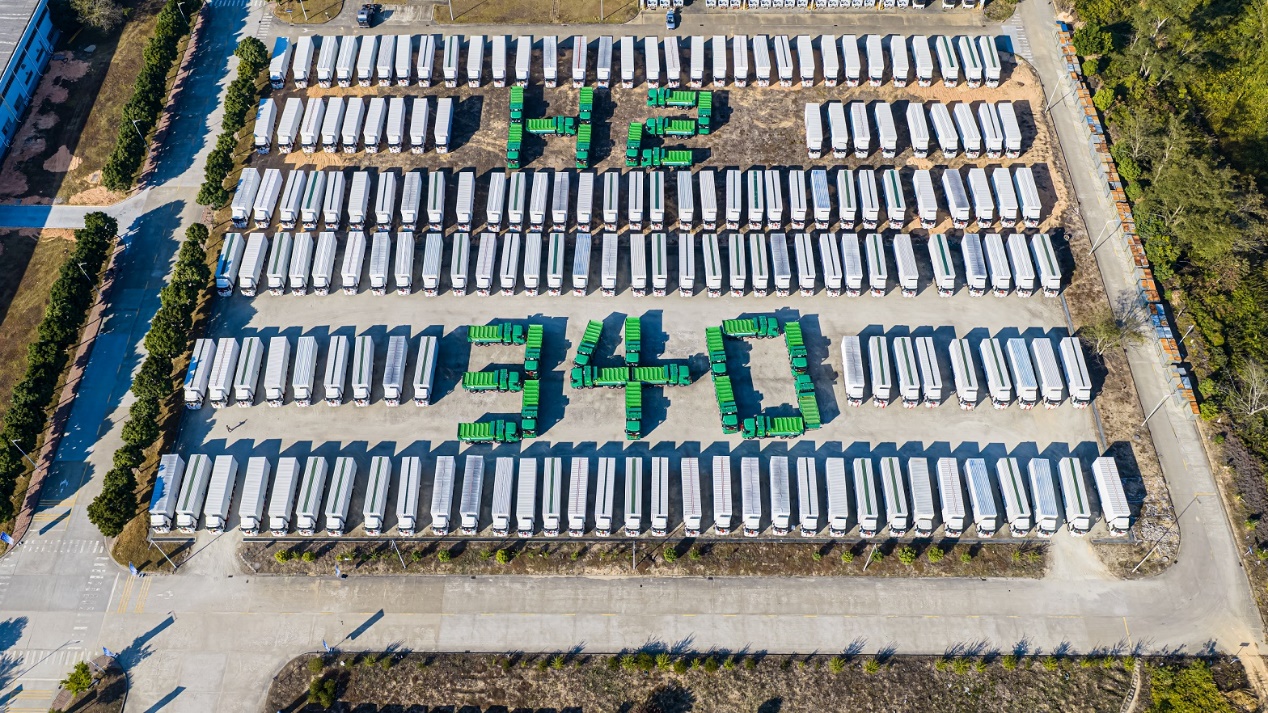
聚力湾区,氢创未来——广汽领程340台氢燃料电池汽车交付仪式成功举行
Zhong Guo Qi Che Bao Wang· 2026-01-11 05:39
Core Viewpoint - GAC Aion has made significant strides in the commercialization of hydrogen fuel cell vehicles, marking a milestone with the delivery of 340 units, which aligns with national carbon neutrality goals and the development of the hydrogen energy industry [1][3][5]. Group 1: Company Initiatives - GAC Aion is actively implementing national and local strategies for hydrogen energy development, focusing on the research, production, and commercialization of hydrogen fuel cell vehicles [3][5]. - The company has introduced a series of hydrogen fuel cell vehicles, including dump trucks, box trucks, refrigerated trucks, and sanitation vehicles, targeting high-frequency urban applications [3][5]. - GAC Aion aims to enhance its role as a core member of the hydrogen energy industry innovation consortium in Guangzhou, integrating resources across the supply chain to build a robust hydrogen energy ecosystem [5][9]. Group 2: Industry Impact - The mass delivery of hydrogen fuel cell vehicles is expected to accelerate the construction of a green and low-carbon transportation system in the Guangdong-Hong Kong-Macao Greater Bay Area [5][9]. - GAC Aion's initiatives are positioned to promote the large-scale implementation and commercialization of hydrogen fuel cell vehicles in logistics and municipal services, showcasing the company's commitment to industry leadership [5][9][10]. - The company is committed to innovation and collaboration within the hydrogen energy ecosystem, focusing on standard-setting, business model exploration, and demonstration operations to support the healthy and rapid development of the hydrogen fuel cell vehicle industry [10].

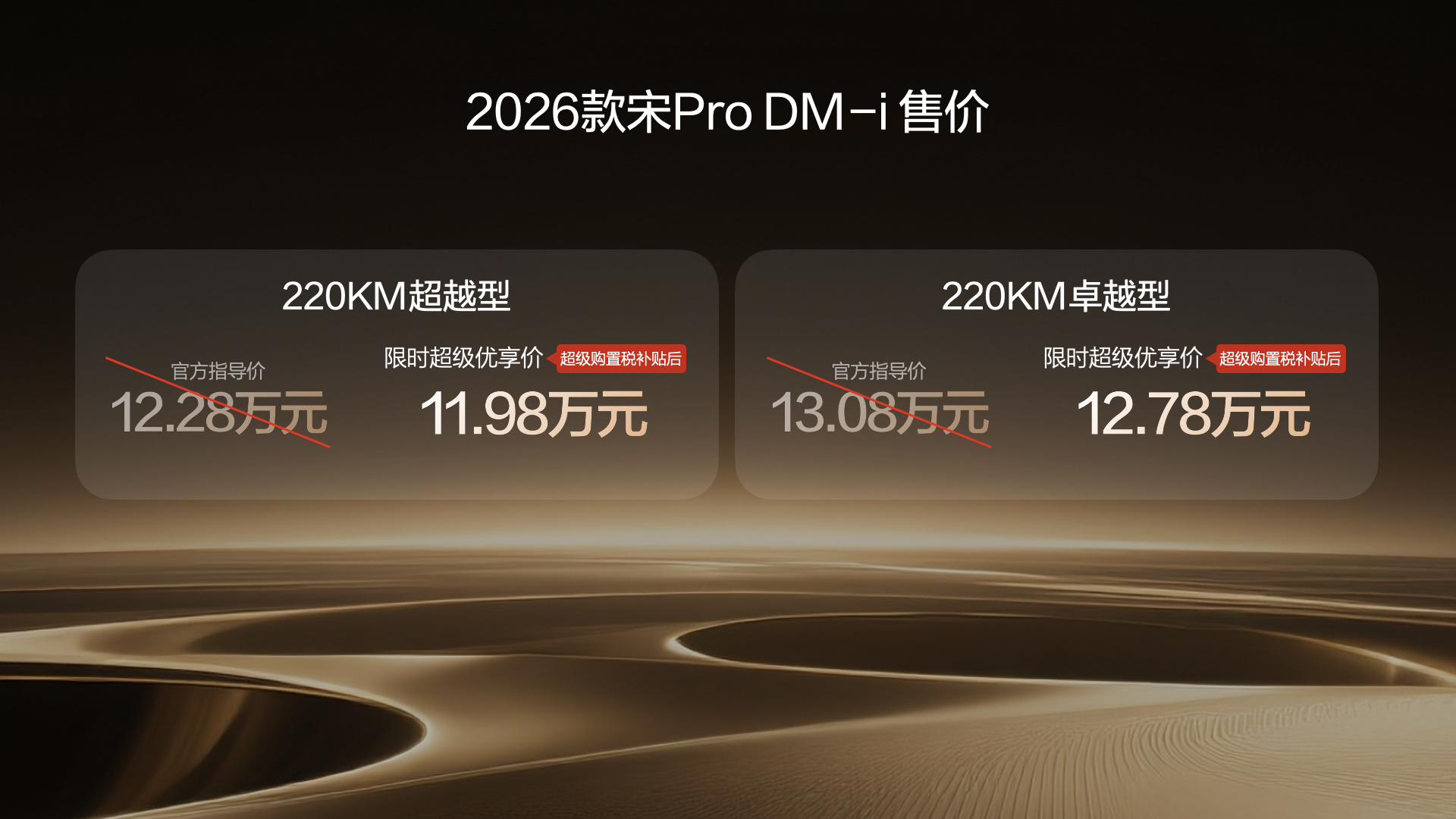
限时11.98万元起!2026款宋Pro DM-i 220km纵享“宋”驰人生
Zhong Guo Qi Che Bao Wang· 2026-01-11 03:20
Core Insights - The 2026 BYD Song Pro DM-i 220km version is designed to meet the evolving demands of family users, focusing on long-range capabilities, comfort, smart features, and safety [1][16] - The vehicle is priced competitively between 99,800 to 127,800 yuan, offering a high-quality experience without compromise [1][16] Group 1: Performance and Range - The new model features a significant improvement in electric range, achieving a CLTC pure electric range of 220km, making it one of the longest in its class [5] - The comprehensive range reaches 1600km, allowing for long-distance travel without the need for frequent refueling or recharging [7] - The vehicle boasts a low fuel consumption of 3.2L per 100km, establishing it as a leader in fuel efficiency within its segment [7] Group 2: Comfort and Smart Features - The vehicle includes a smart children's safety seat developed in collaboration with Goodbaby, enhancing safety and convenience for families [8] - Additional comfort features include a smart temperature-adjustable refrigerator, heated and ventilated front seats, and a panoramic sunroof, creating a luxurious cabin experience [12] - The vehicle supports OTA updates, ensuring that the smart systems remain current and continuously improve [12] Group 3: Safety and Driving Assistance - The 2026 model is equipped with the "Heavenly Eye C-Auxiliary Driving System," providing comprehensive smart assistance for various driving scenarios [13] - Features include automatic cruise control, lane changing, and parking assistance, addressing common driving challenges and enhancing safety [13] - The vehicle is designed to alleviate parking anxiety with features that assist in tight parking situations, making it user-friendly for all drivers [13] Group 4: Market Position and User Trust - Since its launch, the Song Pro series has gained the trust of over one million families, establishing itself as a leader in the hybrid SUV market [16] - The 2026 model is a response to user feedback, enhancing the product line with longer range, better fuel efficiency, and comprehensive features at a competitive price [16]

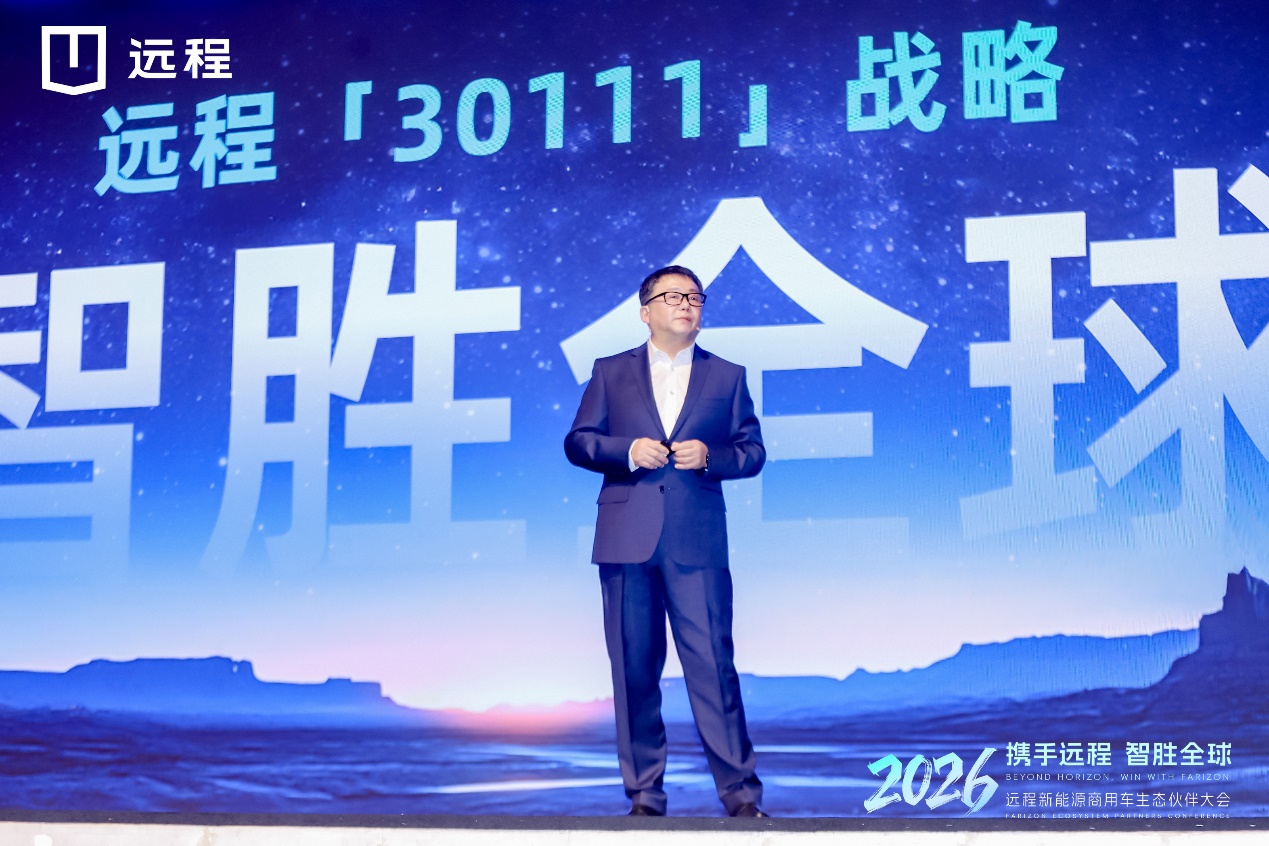
远程发布“30111”战略,剑指 2030 年百万销量,冲刺全球新能源商用车领军者
Zhong Guo Qi Che Bao Wang· 2026-01-10 05:40
Core Insights - The Chinese commercial vehicle industry is experiencing moderate growth and structural upgrades, with new energy commercial vehicles becoming the core engine of this growth, accounting for nearly 30% of total domestic commercial vehicle sales in 2025, marking a shift from policy-driven to market-driven growth [1] - The 2026 Long-Distance New Energy Commercial Vehicle Ecosystem Partner Conference highlighted significant achievements during the 14th Five-Year Plan and outlined a strategic blueprint for the 15th Five-Year Plan, aiming for high-quality development [3] Group 1: Company Performance - Long-Distance has maintained strong growth momentum during the 14th Five-Year Plan, solidifying its position as the industry leader, with sales increasing from 4,564 units annually to nearly 25,000 units monthly, achieving a compound annual growth rate of over 120% [4] - By 2025, Long-Distance's cumulative sales surpassed 500,000 units, maintaining a record of 44 consecutive months as the top seller in the new energy commercial vehicle segment and winning the annual sales championship for four consecutive years [4] Group 2: Product and Technology Development - Long-Distance's sustained leadership in the new energy commercial vehicle sector is attributed to its long-term focus on technology, product innovation, and ecosystem development [5] - The company has developed a comprehensive product lineup, focusing on "alcohol-hydrogen + electric" technologies, covering heavy trucks, light trucks, micro trucks, LCVs, and buses, with successful models like the Long-Distance Star Intelligent H light truck and the Long-Distance Super VAN [7] - Long-Distance has achieved significant breakthroughs in the commercialization of core technologies, with its alcohol-hydrogen light trucks having over 12,000 units insured and a market share of 48% in the hybrid market, while its alcohol-hydrogen heavy trucks hold a 76% market share [7] Group 3: Global Expansion - Long-Distance has deepened its global strategy, achieving significant export growth in key overseas markets such as the UK, Spain, Belgium, and Australia, with exports increasing nearly 500% year-on-year and covering 26 countries and regions [8] - The company emphasizes localized operations, establishing a comprehensive network for sales, service, and charging in countries like Australia, creating competitive advantages and transitioning from "product export" to "ecosystem establishment" [8] Group 4: Strategic Vision - Long-Distance has set an ambitious "30111" strategic blueprint, aiming to achieve 1 million annual sales by 2030, becoming the top seller in domestic commercial vehicles and globally in new energy commercial vehicles [9] - The company anticipates a significant increase in the penetration rate of new energy commercial vehicles, projecting it to reach around 40% by 2026 and over 70% by 2030, with competition shifting from product-based to brand and system-based [11] Group 5: Future Development - Long-Distance's 3.0 era will focus on user safety, comprehensive coverage of power solutions, leading smart technologies, and a robust hardware-software architecture, establishing a core technology system centered on "power + AI + architecture" [13] - The company plans to upgrade its product lines based on the 3.0 technology system, introducing innovative models like the global first 3.0 generation new energy light truck platform "X platform" and enhancing its heavy truck offerings [13] - Long-Distance aims to transform from a manufacturing enterprise to an ecosystem service provider, enhancing its three-tier ecological system to provide comprehensive lifecycle services for users [15] Group 6: Conclusion - With the guidance of the "30111" strategy, Long-Distance is set to strengthen its core barriers through technology, expand customer scenarios via product upgrades, deepen value creation through ecosystem development, and broaden growth opportunities through globalization, leading the new energy commercial vehicle sector into a new development phase [17]
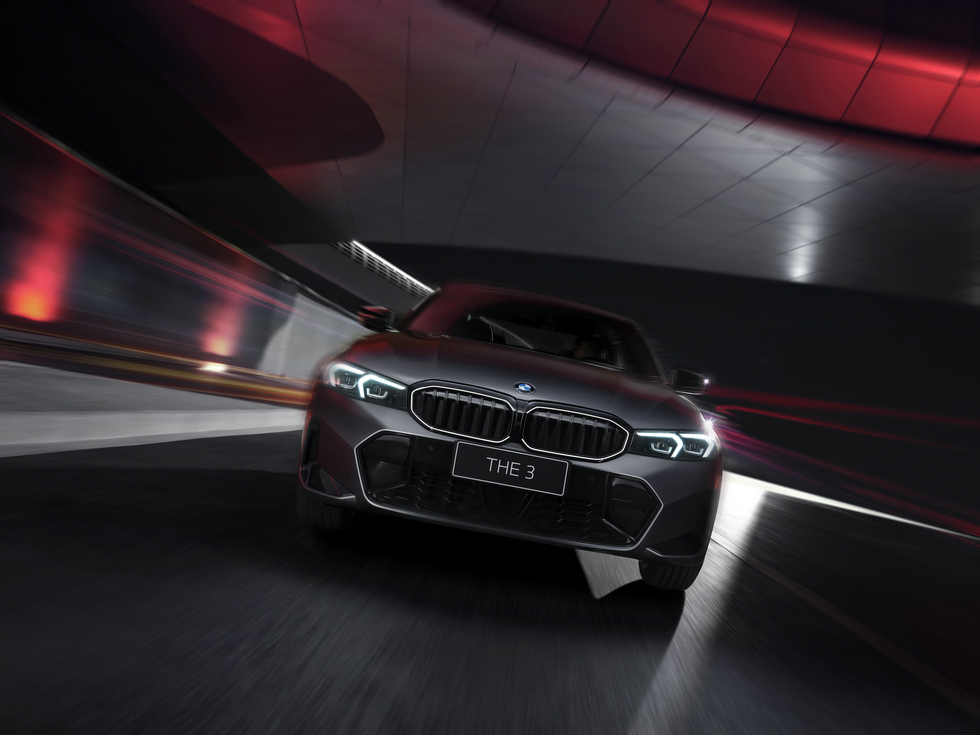
关键细分市场稳健增长 宝马集团2025年在华交付超62.5万辆
Zhong Guo Qi Che Bao Wang· 2026-01-09 13:05
Core Insights - BMW Group achieved global sales growth in 2025, delivering over 2.46 million BMW, MINI, and Rolls-Royce vehicles, with China remaining the largest market, accounting for over 625,000 units sold [1][5] - The company emphasizes resilience and adaptability in a challenging automotive market, planning to introduce more attractive products and deepen local partnerships in China [1][5] Sales Performance - The BMW 3 Series family maintained its position as the top seller in its segment for 15 consecutive months, with high-end models making up over 50% of its sales [3] - The BMW 5 Series averaged over 10,000 units sold per month, being the only luxury model to achieve "all excellent" ratings in global safety assessments [3] - The BMW M brand saw a strong performance in China, with a year-on-year sales increase of 27.9%, surpassing 10,000 units for the first time [3] R&D and Innovation - BMW has established the largest R&D network outside Germany in China, including four innovation hubs and three software companies, to better respond to local consumer needs [5] - The company is preparing its Shenyang production base for the mass production of new generation models, investing in AI, cylindrical batteries, and smart manufacturing [5] - BMW has deployed its self-developed AI platform "GAIA" extensively in China, enhancing its operational capabilities [5] Product Strategy - In 2026, BMW plans to launch approximately 20 new products, including the long-wheelbase version of the new generation BMW iX3, which will debut globally in the first half of the year [7] - The new generation models will feature innovative technologies such as panoramic iDrive and the unique "BMW Driving Control Super Brain" [7] - The technology cluster from the new generation models will be applied to all future BMW vehicles [7]
“人工智能+”赋能汽车业,为何要加速培养“复合型人才”?
Zhong Guo Qi Che Bao Wang· 2026-01-09 10:34
Core Viewpoint - The Chinese government has initiated a "Special Action Plan for AI + Manufacturing," emphasizing the need to cultivate composite talents who understand both artificial intelligence and manufacturing applications [2] Group 1: Industry Transformation - The global automotive industry is undergoing a profound transformation driven by AI technologies, reshaping the competitive landscape with advancements in autonomous driving, intelligent cockpits, and vehicle-road collaboration [4] - The automotive sector is evolving from a hardware-centric model to a complex ecosystem defined by software, where the value of software in vehicles is increasingly significant [4] - This shift necessitates talents who can integrate knowledge across different fields, possessing innovative thinking and problem-solving skills to bridge technology and business [4] Group 2: Talent Requirements - The application of technology is crucial for industry development, with composite talents needed to address challenges in the commercialization of technologies like autonomous driving [5] - Composite talents must possess a blend of technical understanding and business acumen, enabling them to translate technology into marketable products and services [5] - The ability to learn dynamically and collaborate across domains is essential for composite talents, as the rapid evolution of AI technologies requires continuous knowledge acquisition [7] Group 3: Talent Gap - There is a significant and growing demand for composite talents in the automotive industry, but the supply is insufficient, leading to a mismatch that hampers innovation and the industry's transition to intelligent systems [9] - Companies often struggle to find qualified composite talents, which can impede the progress of key projects [9] Group 4: Educational and Corporate Roles - Educational institutions must shift from traditional professional education to cross-disciplinary training to meet industry needs for composite talents [10] - Practical training is vital, allowing students to apply multidisciplinary knowledge to real-world problems in areas like autonomous driving [10] - Companies play a crucial role in talent development by creating comprehensive support systems, including mentorship and project-based training [11] Group 5: Policy Recommendations - Experts suggest promoting "industry-education integration" certifications for companies to encourage their involvement in talent cultivation [12] - A comprehensive skills evaluation system should be established to assess composite talents across various dimensions, ensuring fair and objective evaluations [12] - The cultivation of composite talents is seen as key to addressing the challenges of the automotive industry's transformation and enhancing global competitiveness [12]

通用汽车表示,已主动缩减电动汽车产能
Zhong Guo Qi Che Bao Wang· 2026-01-09 09:08
Group 1 - The core viewpoint of the article is that General Motors has proactively reduced its electric vehicle production capacity due to a slowdown in market demand [1] Group 2 - The decision to cut production capacity reflects the company's response to changing market conditions [1] - This move may indicate broader trends in the electric vehicle industry, where demand fluctuations are becoming more pronounced [1]

小米汽车:小米的法务部门并没有7000人
Zhong Guo Qi Che Bao Wang· 2026-01-09 09:07
Core Viewpoint - Xiaomi's legal department does not have 7,000 employees, which is a rumor. The company plans to strengthen its legal team in response to the complex environment, although it prefers to allocate resources to research and development instead [1] Group 1 - Xiaomi's legal department size is misrepresented in rumors [1] - The company acknowledges the necessity of enhancing its legal team as part of its development process [1] - Xiaomi expresses a preference for investing resources in research and development rather than legal matters [1]

新增隐私声盾 25款腾势D9 OTA升级
Zhong Guo Qi Che Bao Wang· 2026-01-09 07:56
25款腾势D9再次OTA升级,本次升级覆盖25款腾势D9、腾势D9尊航版及至尊版。带来隐私声盾、 智能防晕车、高快领航辅助收费站通行等功能。 ...
吉利控股2025年总销量超411.6万辆
Zhong Guo Qi Che Bao Wang· 2026-01-09 07:56
2025年,吉利控股集团全球总销量4,116,321辆,同比增长26%,实现连续五年快速增长,年销 首次突破400万大关,创历史新高;其中新能源销量2,293,099辆,同比增长58%,新能源渗透率 56%,成为集团市场增长的主要驱动力。 ...

机构称12月新能源汽车降幅14.7%
Zhong Guo Qi Che Bao Wang· 2026-01-09 07:56
Core Insights - The year 2025 is referred to as the "year of anti-involution," yet the automotive market is experiencing a price war by the end of the year [1] Group 1: Price Trends in the Automotive Market - In December 2025, the average price of discounted new energy vehicles was 136,000 yuan, with an average price reduction of 20,000 yuan, representing a decline of 14.7% [1] - The overall average price of discounted passenger cars in December was 124,000 yuan, with an average price reduction of 15,000 yuan, resulting in a decline of 12.4% [1] - For the entire year of 2025, the average price of discounted new energy vehicles was 195,000 yuan, with an average price reduction of 21,000 yuan, leading to a decline of 11% [1] Group 2: Historical Comparison - The price reduction for new energy vehicles in 2025 marked the highest decline in nearly three years, only surpassed by the 13.8% decline in 2022 [1]