Zhong Guo Qi Che Bao Wang

Search documents
辰致科技:iPCS项目域控平台获突破 智能网联汽车核心计算技术跻身国内领先
Zhong Guo Qi Che Bao Wang· 2026-01-08 01:19
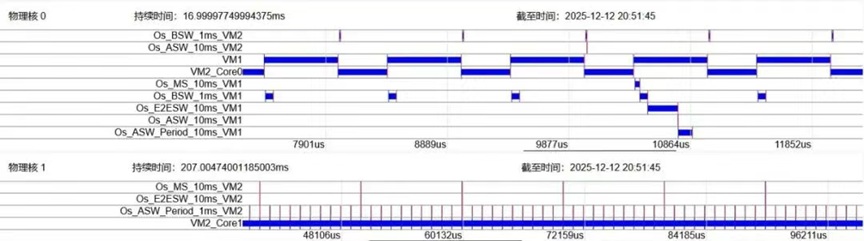
Core Insights - ChenZhi Technology has made significant breakthroughs in the development of a domain control general open computing platform through the iPCS project, positioning itself among the leading companies in the core computing field of intelligent connected vehicles [1][4] - The automotive industry's electronic and electrical architecture is rapidly evolving towards a "central computing + regional control" model, moving away from traditional distributed software architectures [1] Industry Challenges - The development model of "big chips + big software" has led to high communication costs, low integration efficiency, significant system debugging challenges, weak software IP protection, and insufficient business isolation, which are key obstacles to the large-scale implementation of domain controllers and the progress of "software-defined vehicles" [1] Technological Solutions - ChenZhi Technology has developed an integrated solution for the domain control general open computing platform, focusing on "virtualization" and "multi-level hardware isolation" as core technological pillars, enabling secure isolation of multiple business operations on a single hardware platform [3] - The solution supports independent development of functional modules, cross-entity secure integration, dynamic and flexible deployment of computing power, and lightweight firmware upgrades, facilitating efficient resource integration for OEMs [3] Collaborative Efforts - To strengthen the technical foundation of the project, ChenZhi Technology has formed a joint project team with the Innovation Research Institute, leveraging each party's technical expertise to overcome core technological challenges such as virtualization interrupt handling and virtual machine scheduling mechanisms [3] - The project team has also engaged in deep strategic collaborations with leading international companies like ETAS and NXP, enhancing the industrial adaptability of the solution with complete vehicle software platform solutions based on AUTOSAR standards [3] Innovation Highlights - During the project, over ten key technological topics were developed, with a notable highlight being the application of a self-developed time analysis tool that enables precise visualization of virtual machine scheduling and task scheduling timing [4] - The successful development of the domain control general open computing platform signifies a critical technological breakthrough for ChenZhi Technology in the "central computing + regional control" architecture, injecting new momentum into the technological upgrade of the intelligent connected vehicle industry [4] Future Directions - Looking ahead, ChenZhi Technology aims to continue promoting the open and standardized construction of the platform, with the goal of building a software ecosystem that spans across chips and vehicle models, thereby accelerating the pace of technological innovation for OEMs [4]

旗芯微: FC7300F4MDS 控制器完成测试 2026 年 2 月供样 筑牢汽车安全计算核心
Zhong Guo Qi Che Bao Wang· 2026-01-08 01:19
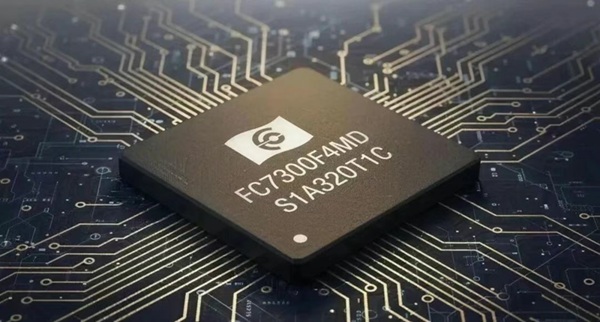
Core Insights - The new generation functional safety ASIL D level controller FC7300F4MDS from Qichip Micro has successfully completed full-process testing and is scheduled to provide samples to customers by February 2026, marking a breakthrough in the company's technology in the core computing field of intelligent connected vehicles [1] Group 1: Product Features - ASIL D certification is the highest level of automotive functional safety, applicable to safety-critical automotive electronic components, including Electronic Power Steering (EPS) and Automatic Emergency Braking (AEB) [3] - The FC7300F4MDS targets high-demand applications such as EPS, Battery Management Systems (BMS), Vehicle Control Units (VCU), onboard terminals (T-box), AEB, and suspension control, adapting to the evolution of vehicle architecture from "central computing + regional control" [3] Group 2: Hardware and Performance - The FC7300F4MDS features significant hardware upgrades, including a new SSI interface and an enhanced PWM module (eFTU), supporting various protocols for complex sensor data collection [4] - The product offers flexible SRAM allocation capabilities, allowing customization of TCM and public RAM capacity ratios based on different application scenarios, enhancing resource utilization [4] - The controller is equipped with a dual Cortex-M7 core, supporting two flexible configuration modes for ASIL D or ASIL B applications, with a maximum frequency of 300MHz, providing robust computational support for safety-critical tasks [5] - It integrates multiple CAN-FD interfaces to meet high bandwidth and low latency transmission requirements for in-vehicle networks, and includes an EVITA Full+ level hardware security module (HSM) to protect against network attacks [5] Group 3: Software Ecosystem - Qichip Micro has developed a comprehensive software support system for the FC7300F4MDS, including an open-source SDK and development samples compatible with major IDEs, enhancing customer development efficiency [7] - The product supports FULL AUTOSAR architecture and can adapt to standalone AUTOSAR CAN/LIN/Ethernet protocol stack applications, facilitating software-hardware decoupling and reducing integration costs for manufacturers [7]
观车 · 论势 || 本土化与生态“出海”将是破局关键
Zhong Guo Qi Che Bao Wang· 2026-01-08 01:19
Core Insights - In 2025, China's automobile exports reached 6.343 million units, a year-on-year increase of 18.7%, with new energy vehicle (NEV) exports at 2.315 million units, up 102.9% [1] - The growth momentum is expected to continue into 2026, with a transition to a "stable quantity and improved quality" phase, as the industry expands export scale and deepens localization efforts [1] - Multiple challenges such as rising trade barriers and stricter compliance requirements will test the global operational capabilities of Chinese automakers [1] Export Predictions - Various organizations predict optimistic growth for China's automobile exports in 2026, with estimates ranging from 6.8 million to 8 million units, and NEV exports expected to reach 3.5 million units [2] - The export growth rate is anticipated to slow down, with forecasts suggesting a 10% to 20% increase, driven primarily by NEVs [2] - Key markets for growth include emerging markets and developed markets, with Mexico, UAE, Brazil, Philippines, UK, and Belgium identified as significant contributors [2] Localization Efforts - The localization process for Chinese automakers is accelerating, with investments in overseas factories to create multi-regional production layouts [3] - Companies like BYD and Chery are establishing production facilities in Europe and Southeast Asia, aiming to enhance capacity and localization rates [3] - Core component supply chains are also being localized, with companies like CATL and Guoxuan High-Tech establishing overseas production bases to mitigate supply chain risks [3] Market Adaptation - Chinese automakers are optimizing product configurations to meet diverse market demands and are building comprehensive service ecosystems covering sales, after-sales, charging, and financing [4] - The establishment of overseas charging networks and new business models like used cars and car subscriptions is accelerating, contributing to a sustainable overseas operational ecosystem [4] - This ecological "going global" model is shifting the Chinese automotive industry from a "participant" to a "leader" in the global value chain [4] Challenges Ahead - The road to 2026 will not be smooth, as trade barriers and compliance requirements are expected to intensify, particularly in the EU, which is imposing stricter localization standards [4] - Mexico's new tariff policy, effective January 1, 2026, will significantly increase import duties on vehicles from non-free trade agreement countries, impacting the competitiveness of Chinese brands [4] - Supply chain risks, particularly in automotive-grade chips and geopolitical factors, pose significant challenges for Chinese automakers [5][6] - The varying technical standards and consumer habits across different markets will require higher operational standards from Chinese companies [6]
麦格纳:与英伟达扩大合作 共推自动驾驶系统规模化落地
Zhong Guo Qi Che Bao Wang· 2026-01-08 01:11
Core Insights - Magna has announced an expansion of its strategic partnership with NVIDIA to support automakers in implementing projects based on the NVIDIA DRIVE Hyperion platform, facilitating the automotive industry's transition towards intelligent and software-defined vehicles [1] - The collaboration focuses on providing a comprehensive service solution that includes system integration, functional validation, and mass production support for various levels of autonomous driving systems [1][3] Group 1: Partnership Details - The partnership combines NVIDIA's AI computing power with Magna's expertise in system engineering and integration validation, enhancing the capabilities of the DRIVE AV autonomous driving software stack [3] - Magna offers flexible service options for automakers, allowing them to select full or partial system-level services, which include system integration coordination, comprehensive performance testing, and global deployment support [3] Group 2: Technological Advancements - The NVIDIA DRIVE AV software stack covers essential functions such as emergency braking, lane keeping, and parking assistance, while also integrating advanced modules for urban road autonomous driving [3] - Magna's global manufacturing and engineering capabilities enable full-process support for system mass production, particularly focusing on high-performance computing control units and sensors that are critical to system functionality [3] Group 3: Executive Perspectives - Executives from both companies have praised the partnership, highlighting Magna's role in helping automakers scale integrated systems and accelerate the marketization of next-generation technologies [4] - The collaboration is seen as a testament to the expanding ecosystem of AI-defined vehicles, with Magna's hardware compatibility and integration validation capabilities aiding automakers in the development of multi-level autonomous driving systems [4]


宝马开年即官降:豪华车溢价神话的终场哨
Zhong Guo Qi Che Bao Wang· 2026-01-07 10:05
Core Viewpoint - BMW's significant price cuts in the Chinese luxury car market signal a shift in the competitive landscape, indicating the collapse of the premium pricing strategy that has long defined luxury brands in China [1][2][3] Group 1: Price Adjustments and Market Dynamics - BMW announced price reductions for 31 models, with 24 models seeing cuts exceeding 10% and 5 models over 20%, with entry-level models dropping to 208,000 yuan [1] - The price cuts are a response to declining sales and inventory pressures, marking a retreat from previous attempts to maintain high pricing strategies [1][2] - Other luxury brands like Mercedes-Benz and Audi are also offering significant discounts, indicating a broader trend among luxury brands to lower prices in response to competitive pressures from Chinese brands [2][3] Group 2: Competitive Landscape and Consumer Preferences - Chinese brands have gained a foothold in the 300,000 to 500,000 yuan price range, offering advanced features that challenge traditional luxury brands [3][4] - The shift in consumer preferences towards technology and experience over brand prestige is reshaping the luxury car market, with younger consumers prioritizing features like intelligent driving and user experience [3][5] - The luxury car market is experiencing a structural shift, with traditional luxury brands losing market share to Chinese competitors who are innovating rapidly in electric and smart vehicle technologies [4][5] Group 3: Industry Transformation Signals - The price cuts by BMW represent a breakdown of the price barrier between luxury and regular brands, fundamentally altering consumer perceptions of luxury pricing [4][6] - The traditional rules of the luxury car market, previously dictated by brands like BMW, are being redefined by Chinese brands that focus on rapid product iteration and customer-centric service models [4][5] - The ongoing transformation in the luxury car market is not merely a price war but a comprehensive restructuring of value systems, emphasizing the need for luxury brands to adapt to changing market dynamics [6][7] Group 4: Strategic Recommendations for Luxury Brands - Luxury brands must embrace electric and smart technologies, moving away from a "technology neutrality" stance to remain competitive in the evolving market [5][6] - A shift from brand-centric to user-centric product development is essential, focusing on local market needs and preferences rather than global models [5][6] - Establishing a new value system that prioritizes transparency in pricing and configuration will be crucial for rebuilding consumer trust and avoiding the pitfalls of price wars [6][7]
禾赛科技:成为英伟达 DRIVE AGX Hyperion 10 平台激光雷达合作伙伴 共推 L4 级自动驾驶规模化落地
Zhong Guo Qi Che Bao Wang· 2026-01-07 09:38
Group 1 - Hesai Technology has been selected by NVIDIA as a laser radar partner for the "NVIDIA DRIVE AGX Hyperion 10 platform," aimed at supporting L4-level autonomous driving [1][3] - The DRIVE Hyperion architecture is expanding its sensor ecosystem, covering cameras, millimeter-wave radar, laser radar, and ultrasonic technology, providing full-stack support for L4-level autonomous driving perception systems [3] - The DRIVE AGX Hyperion 10 platform features two NVIDIA DRIVE AGX Thor system-on-chip units, delivering over 2000 FP4 TFLOPS of computing power, sufficient for real-time data fusion from 360-degree sensors [3] Group 2 - NVIDIA's automotive VP emphasized that the DRIVE Hyperion platform is crucial for the transition to autonomous driving, integrating computing, sensors, and safety features into a unified open platform [4] - Hesai Technology will use its ETX laser radar as the core product for this collaboration, designed for L3 and L4 autonomous driving scenarios, featuring high resolution and long-range detection capabilities [4] - This partnership marks a significant milestone in the long-term collaboration between Hesai Technology and NVIDIA, reinforcing Hesai's position as a trusted core partner within NVIDIA's ecosystem [4] Group 3 - Looking ahead, Hesai Technology aims to collaborate with global automotive manufacturers to accelerate the marketization of next-generation autonomous driving technology, contributing to the upgrade of the global smart mobility industry [5]


智智小课堂 | 狭路相逢“智”者胜,看AEB能否正确预判前车危机?
Zhong Guo Qi Che Bao Wang· 2026-01-07 07:49
日常开车,你是否也为这些瞬间捏过汗——前车毫无征兆急刹、夜间视线模糊发现停车太晚、路口突然"闪"出其他车辆……好在,随着技术发展,一位 名为 AEB(自动紧急制动系统) 的"隐形护航员"已悄然上车,它能在关键时刻帮你预判风险,主动刹车。 AEB全称"自动紧急制动系统"(Automatic Emergency Braking),就像一位专注的"预判大师"。它通过车上的雷达、摄像头等传感器,持续扫描前方路 况。一旦系统判定碰撞即将发生而驾驶员未采取行动,便会立即介入:先发出警告,必要时自动紧急制动,从而避免或减轻碰撞。 AEB是什么?你的"防撞先知" 为了验证AEB是否真的"眼明脚快",IVISTA中国智能汽车指数在主动安全测评维度中,专门设置了自动紧急制动系统试验,通过模拟一系列高频危险 场景,来检验它的真实实力。本期,就跟随智智的脚步,先聚焦于最核心的"车对车"情况,看看这位"预判大师"的实际表现究竟如何? 生活中这些场景,AEB能否Hold住? 场景一:左转遭遇对向来车 这是高阶动态场景。当你左转时,与对向直行车辆存在碰撞风险。AEB能否在车辆自身转弯状态下,正确识别冲突并响应?这对系统的综合感知与决策 能 ...

佛瑞亚海拉为沃尔沃XC70打造极具未来感的雷神之锤前照灯
Zhong Guo Qi Che Bao Wang· 2026-01-07 07:01
Core Viewpoint - The collaboration between Faurecia Hella and Volvo has resulted in the development of a futuristic "Thor's Hammer" headlight for the new XC70 model, emphasizing safety, technology, and design as part of Volvo's electrification strategy [2][5]. Group 1: Product Features - The new headlight features a matrix adaptive lighting system composed of multiple independently controllable LED sources, providing broader illumination, better brightness, and precise light distribution adjustments based on speed, steering angle, traffic conditions, and road curvature [3]. - The headlights can dynamically adjust to focus on distant objects during high-speed driving and expand coverage for near-field visibility at low speeds, ensuring optimal driver visibility [3]. - The system can automatically adjust the headlight height to maintain focus on the road, preventing glare for oncoming vehicles and adapting to different driving regulations based on the vehicle's delivery region [4]. Group 2: Recognition and Collaboration - Faurecia Hella's successful mass production of the XC70 headlight system highlights its expertise in advanced lighting technology and the strong partnership with Volvo [5]. - Volvo awarded Faurecia Hella the Outstanding Supplier Award, recognizing the contributions of the Jiaxing headlight factory and the Nanjing R&D center team in developing and producing the innovative headlight [5]. - This recognition underscores Faurecia Hella's commitment to quality and innovation, aiming to shape safer and smarter mobility solutions [5].
冰博会硬核亮相!吉利醇氢解锁寒区绿色发展新范式
Zhong Guo Qi Che Bao Wang· 2026-01-07 06:29
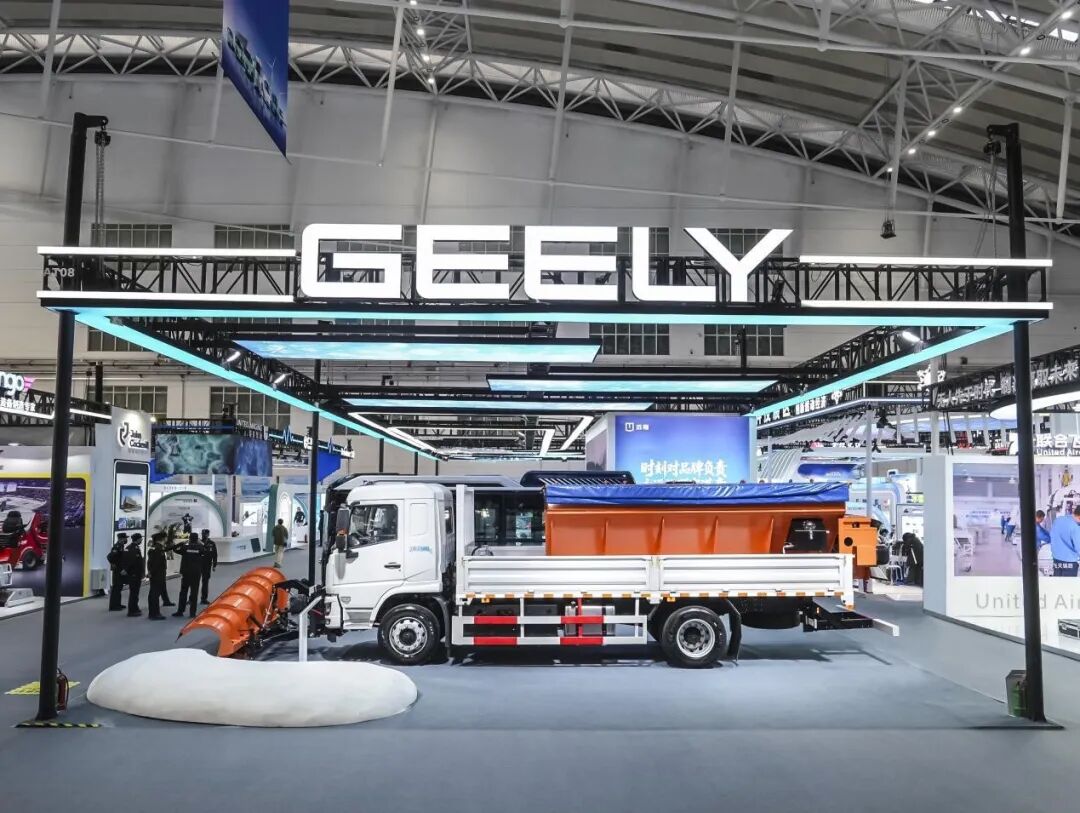
Group 1 - The Harbin International Ice and Snow Economic Expo, themed "Ice Chain World, Snow Dance Future," showcases global ice and snow industry resources, with Geely Holding Group presenting its full-scenario methanol-hydrogen electric product matrix and industry chain ecological solutions [2] - Geely has invested over 20 years in the methanol economy, becoming a core driver of industry development, with over 50,000 methanol-hydrogen electric vehicles in operation and a total mileage exceeding 23 billion kilometers [7] - The methanol economy is entering a golden period, supported by over 70 policy documents from national and local governments, promoting methanol vehicle applications and establishing a comprehensive policy support system [4][5] Group 2 - Methanol's unique advantages in energy security and carbon neutrality position it as a trillion-level emerging industry, with the potential to produce approximately 6 million tons of green fuel from 10% of China's annual CO2 emissions [5] - Geely's methanol-hydrogen electric technology has achieved a thermal efficiency of 50.3%, making it economically viable and reliable for commercial operation [7] - The methanol fuel's freezing point of -97.6°C allows it to operate effectively in extreme cold environments, making it a preferred solution for green transportation in northern regions [9] Group 3 - Geely's methanol-hydrogen electric buses and snow removal vehicles are designed for urban public and ice and snow industry operations, with the buses achieving over 600 kilometers of range in low temperatures and significant cost savings compared to pure electric models [11] - The company has established over 900 methanol refueling stations nationwide, with plans to increase this number to 4,000 by the end of 2027, facilitating convenient methanol refueling [15] - The collaboration between Geely and Heilongjiang province is expected to boost the development of the methanol-hydrogen electric industry, leveraging the region's renewable energy resources and the growing demand from the ice and snow economy [16]

安波福安波福亮相CES 2026:智能边缘解决方案赋能智能驾驶等多领域智能升级
Zhong Guo Qi Che Bao Wang· 2026-01-07 03:46
Core Insights - The article highlights the significant presence of Aptiv at CES 2026, showcasing its core capabilities in smart edge solutions that leverage advanced computing and AI technologies for real-time perception, decision-making, and execution across various critical sectors such as transportation, robotics, and aerospace [1][3]. Automotive Innovations - Aptiv introduced a next-generation end-to-end AI-powered Advanced Driver Assistance Systems (ADAS) platform aimed at enhancing L2++ level hands-free driving performance in both highway and urban scenarios, utilizing AI for comprehensive optimization of perception, fusion, and behavior planning [3][4]. - The platform is supported by Aptiv's eighth-generation radar series, which offers industry-leading detection range, resolution, and target recognition accuracy, combined with advanced machine learning algorithms to provide reliable technical support for diverse driving scenarios [4][5]. Digital Cockpit Enhancements - Aptiv unveiled its latest digital cockpit technology solutions focused on improving safety and user experience in both passenger and commercial vehicles, ensuring efficient collaboration between drivers and vehicles during hands-free driving scenarios [6]. - The Driver Monitoring System (DMS) and Cabin Monitoring System (CMS) utilize advanced visual and radar sensing technologies to accurately assess the status of cabin occupants, providing reliable data for critical safety decisions [6][7]. Connectivity and Ecosystem Development - The collaboration between Aptiv and Verizon to explore the potential of Cellular Vehicle-to-Everything (C-V2X) technology is a key highlight, aiming to enhance road safety through the integration of 5G connectivity, edge computing, and automotive innovations [8]. - The LINC™ platform, designed for complex real-time embedded functions, serves as a modular solution that supports software-defined vehicles, offering diverse functionalities such as communication middleware and edge intelligence [8]. Cross-Industry Applications - Aptiv's showcase included diverse hardware and software solutions for robotics and aerospace, demonstrating its strategic expansion from the automotive sector to multi-terminal markets [9][10]. - Key exhibits featured AI collaborative robots and next-generation autonomous mobile robots, leveraging Aptiv's expertise in real-time perception and decision control to provide high-reliability and high-performance support for critical applications across various industries [10].