
Qi Huo Ri Bao Wang

Search documents
我国开展要素市场化配置综合改革试点 10个地区获批试点 2个地区试点方案支持期货交易所建设
Qi Huo Ri Bao Wang· 2025-09-11 18:37
Core Viewpoint - The State Council has approved a two-year pilot program for market-oriented allocation of factors in ten key regions, aiming to enhance innovation and efficiency in resource allocation, with a completion target set for 2027 [1][2]. Group 1: Pilot Program Overview - The pilot program includes ten regions: Beijing's sub-center, key cities in southern Jiangsu, Hangzhou-Ningbo-Wenzhou, Hefei metropolitan area, Fuzhou-Xiamen-Quanzhou, Zhengzhou, Chang-Zhu-Tan, Guangdong-Hong Kong-Macao Greater Bay Area, Chongqing, and Chengdu [1]. - The overall structure of the pilot schemes is consistent, focusing on stimulating technological innovation, efficient land allocation, rational flow of human resources, and enhancing capital service capabilities for the real economy [1][2]. Group 2: Financial Support and Measures - The People's Bank of China will enhance financial support for the pilot regions, focusing on improving financial service supply, promoting higher-level financial openness, and leveraging digital finance [2]. - Eight out of the ten pilot regions' plans emphasize increasing effective financial services to support the real economy [2]. Group 3: Specific Regional Initiatives - Zhengzhou's plan encourages the development of futures products that meet the needs of the real economy, while the Greater Bay Area aims to establish a high-standard futures exchange [3]. - The Chang-Zhu-Tan plan includes exploring new markets for electricity capacity and financial derivatives [3]. Group 4: Impact of Futures Market Development - The development of the futures market is expected to enhance factor flow efficiency, increase industry resilience, attract high-end resources, and promote unified standards [4]. - The futures market's role as a pricing benchmark will facilitate cross-regional factor flow and reduce transaction costs [4]. Group 5: Future Prospects - The pilot program is anticipated to accelerate innovation in futures products, such as electricity and carbon emission futures, and deepen the opening process of the futures market [5]. - The pilot regions may serve as experimental grounds for cross-border delivery and integration with international standards, enhancing China's price influence globally [5].
国家发改委副主任李春临:要素市场化配置综合改革试点有四大亮点
Qi Huo Ri Bao Wang· 2025-09-11 10:42
Group 1 - The core viewpoint of the news is that the State Council has approved a pilot program for comprehensive reform of factor market allocation in 10 regions, aiming to address key issues in factor market construction and promote efficient allocation of resources [1][2] - The pilot regions are representative, with a combined economic output exceeding one-quarter of the national total in 2024, which supports the exploration of efficient allocation paths for various resource factors [2] - The scope of factors covered in the pilot is broad, including traditional factors like land, labor, and capital, as well as new factors such as data, computing power, airspace, and spectrum, promoting the cultivation of new productive forces [2] - The reform emphasizes systematic integration and collaborative efficiency, moving beyond simple factor addition to drive high-quality economic and social development [2] - The pilot programs are tailored to local conditions, allowing for a combination of national needs and local strengths, which can generate replicable experiences for nationwide factor market reform [3]
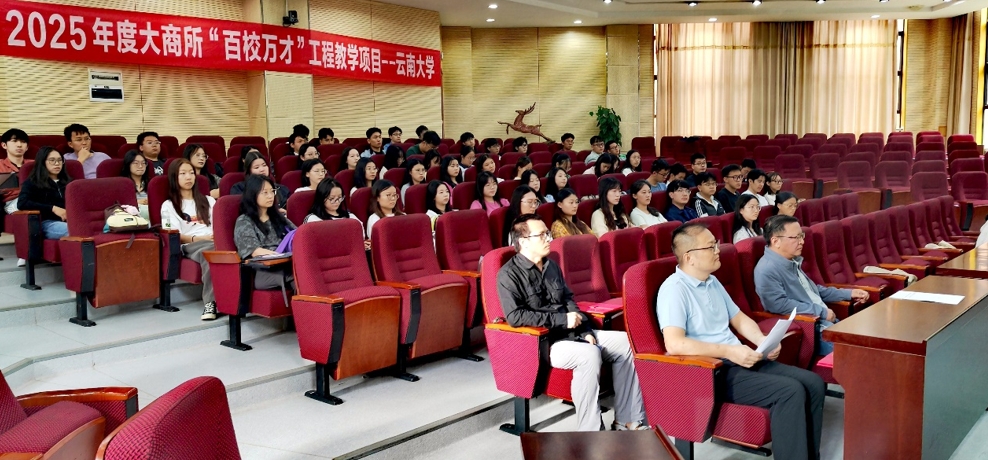
云南大学2025年度大商所“百校万才”工程教学项目正式启动
Qi Huo Ri Bao Wang· 2025-09-11 07:26
Group 1 - The "Hundred Schools and Ten Thousand Talents" project is an important platform for teaching innovation, with the course on "Futures and Derivatives" aimed at finance master's students, integrating theory, strategy, and risk control with practical case studies [2][3] - The collaboration between Yunnan University and Zhongtian Futures aims to cultivate professionals with both theoretical knowledge and practical skills, responding to the growing demand for talent in the futures and derivatives market [5][7] - The course is part of a broader initiative to enhance the integration of industry and education, providing a platform for school-enterprise cooperation that benefits the industry by supplying a large number of skilled professionals [6][7] Group 2 - The futures and derivatives market plays a crucial role in serving the real economy and enterprise risk management, leading to an increasing demand for specialized talent in the industry [7] - Zhongtian Futures has committed to continuing its collaboration with universities to foster talent that possesses both theoretical and practical capabilities, contributing to the healthy development of the industry [5][7]

资金利率全面回升
Qi Huo Ri Bao Wang· 2025-09-11 00:19
Core Viewpoint - The domestic funding market interest rates are experiencing a comprehensive rebound due to government bond issuance, concentrated tax payments, and increased funding demand at the end of the month [1] Group 1: Interest Rate Trends - As of September 10, the Shanghai Interbank Offered Rate (Shibor) for various terms has increased, with overnight, 1-week, 2-week, 1-month, 3-month, 6-month, 9-month, and 1-year rates reported at 1.425%, 1.449%, 1.501%, 1.528%, 1.553%, 1.621%, 1.653%, and 1.663% respectively, showing increases of 10.9, 1.6, 1.5, 1.1, 0.3, 1.1, 0.8, and 0.7 basis points compared to September 3 [1] Group 2: Central Bank Operations - The central bank has 10,684 billion yuan in reverse repos maturing this week and has conducted 7,425 billion yuan in reverse repo operations in the first three working days of the week, indicating a likely increase in reverse repo injections to stabilize funding rates [1] Group 3: Future Expectations - In the short term, funding market interest rates are expected to maintain a strong trend due to the convergence of seasonal funding demands from the end of the quarter and upcoming holidays, with short-term rates likely to continue rising [1] - Overall financing demand is recovering, and mid-to-long-term rates are expected to remain stable with a slight upward trend [1]
聚焦有色产业 共探期货服务实体新路径
Qi Huo Ri Bao Wang· 2025-09-11 00:04
Group 1 - The online seminar on the integration of production and finance in the non-ferrous metal futures and spot market was launched to promote deep integration in the industry [1] - The seminar series will cover 11 sessions focusing on various non-ferrous metal futures products, including copper, aluminum, zinc, lead, nickel, tin, and lithium carbonate [1] - The first session on copper discussed the global copper industry status and how to leverage futures market functions for high-quality development [1][2] Group 2 - Zhang Nan, Deputy Secretary-General of the Copper Industry Association, highlighted key aspects for copper enterprises, including industry structure, consumption growth, and regulatory requirements [2] - Mo Xinda, Deputy Secretary-General of the Aluminum Industry Association, discussed the global aluminum industry and emphasized the importance of green low-carbon development [2] - The copper market has seen a price increase and higher volatility since 2020, impacting downstream enterprises' cost management [3] Group 3 - The Shanghai Futures Exchange (SHFE) reported significant trading activity in copper futures, with 22.7 million contracts traded in the first half of 2025, amounting to 879 million yuan [4] - The total trading volume of non-ferrous metal futures on SHFE reached 197 million contracts in the first half of 2025, with a transaction value of 27.8 trillion yuan [5] - The introduction of aluminum alloy futures has filled a gap in the processing sector, enhancing risk management across the aluminum industry [4] Group 4 - The SHFE shared strategies for hedging in non-ferrous metal enterprises, including setting target prices and dynamically adjusting hedging ratios [6] - Companies are encouraged to utilize both futures and spot markets for hedging to stabilize their operations and manage risks effectively [6] - The focus on risk management through futures markets is seen as essential for the sustainable profitability of enterprises in the non-ferrous metal sector [3][6]
加快推进成熟期货品种期权全覆盖
Qi Huo Ri Bao Wang· 2025-09-11 00:04
Group 1 - The launch of futures and options for coated printing paper, fuel oil, asphalt, and pulp options on the Shanghai Futures Exchange (SHFE) marks a significant development in the financial tools available for the paper industry [1][2] - The paper and board production in China is projected to reach 136 million tons in 2024, maintaining its position as the world's largest producer and consumer for 16 consecutive years [2] - The introduction of these financial instruments is expected to enhance the risk management capabilities of upstream and downstream enterprises in the cultural paper sector, supporting the sustainable development of the paper industry [2][3] Group 2 - Coated printing paper is a crucial segment of the paper industry, widely used in cultural dissemination, writing, and printing, with a market size exceeding 100 billion yuan [3] - The pulp futures market, established in 2018, has become an essential tool for pricing and risk management in the industry, and the addition of new futures and options will further strengthen the hedging framework for enterprises [3][4] - The SHFE aims to enhance the risk management level of the pulp and paper industry chain and support the green and low-carbon transformation of the sector through these new financial products [4]
国内核心CPI同比涨幅连续第4个月扩大
Qi Huo Ri Bao Wang· 2025-09-11 00:04
Group 1 - The Consumer Price Index (CPI) remained flat month-on-month in August, with a year-on-year decline of 0.4%, while the core CPI, excluding food and energy, rose by 0.9%, marking the fourth consecutive month of expansion [1] - The Producer Price Index (PPI) showed a month-on-month stabilization after a 0.2% decline last month, with a year-on-year decrease of 2.9% [1] - The decline in food, tobacco, and alcohol prices by 2.5% year-on-year contributed approximately 0.72 percentage points to the CPI decrease, indicating weak food consumption and sufficient supply of agricultural products [1] Group 2 - The narrowing of the PPI year-on-year decline by 0.7 percentage points compared to the previous month is attributed to effective domestic demand expansion and consumption promotion policies [2] - The optimization of market competition order has led to a reduction in the year-on-year price decline in related industries, with ongoing efforts in capacity governance and the establishment of a unified national market [2] - The growth of new economic drivers and increased demand for upgraded consumption have positively impacted the prices in certain industries [2] Group 3 - The expectation for the future PPI indicates that the low base effect will continue to influence short-term trends, but external uncertainties may affect the sustainability of PPI recovery [2] - The overall focus of future policies may be on achieving stable price increases, improving corporate profitability, and enhancing economic momentum through effective domestic price transmission mechanisms [2]
上期所5个期货、期权品种挂牌交易 加快推进成熟期货品种期权全覆盖
Qi Huo Ri Bao Wang· 2025-09-10 19:40
Core Viewpoint - The launch of futures and options for newsprint paper, fuel oil, asphalt, and pulp options on the Shanghai Futures Exchange marks a significant development in China's futures market, providing essential financial tools for the paper industry and enhancing risk management capabilities [1][2][4]. Industry Summary - The paper industry is a crucial sector in China's light industry, with a production capacity of 136 million tons in 2024, maintaining its position as the world's largest producer and consumer of paper and paperboard for 16 consecutive years [2]. - The introduction of newsprint paper futures and options, along with pulp options, is timely and significant for the industry's high-quality development and transition towards a stronger paper manufacturing nation [2][3]. - The new financial instruments will provide important risk management tools for upstream and downstream enterprises in the cultural paper sector, supporting the sustainable development of the paper industry [2][3]. - The market's liquidity and contract continuity for previously listed products like fuel oil and asphalt have demonstrated effective risk management capabilities during price volatility [2]. - The addition of these new products signifies a new phase of collaborative development between futures and options, enhancing the multi-layered derivative system in the industry [2][4]. Company Summary - Newsprint paper is a vital segment of the paper industry, widely used in cultural dissemination, writing, and printing, with China's market exceeding 100 billion yuan [3]. - The pulp futures market, established in 2018, has become an essential tool for pricing and risk management in the industry, and the new products will further strengthen the hedging system for the paper supply chain [3]. - The introduction of these financial instruments will help companies manage raw material costs and price fluctuations, thereby improving operational stability and resource allocation efficiency [3]. - The Shanghai Futures Exchange aims to enhance product offerings and promote high-level openness in the futures market, supporting the green and low-carbon transformation of the paper industry [4].
胶版印刷纸期货上市首日运行平稳 产业企业积极参与
Qi Huo Ri Bao Wang· 2025-09-10 19:40
Core Viewpoint - The launch of the newsprint futures on September 10 has attracted significant market participation, indicating a potential shift in the dynamics of the printing paper industry, particularly in terms of risk management and pricing stability [1][2][3]. Group 1: Market Dynamics - The main contract for newsprint futures closed at 4208 yuan/ton on its first trading day, a slight decrease of 10 yuan/ton from the listing price, reflecting a 0.24% drop [1]. - The secondary contract showed a stronger performance, closing at 4218 yuan/ton, indicating expectations of improved demand during peak consumption seasons [1]. - Trading volume reached 21,900 contracts with a total transaction value of 3.703 billion yuan, highlighting active market engagement [1]. Group 2: Industry Challenges - The newsprint industry is facing overcapacity, with an operating rate around 55%, and a slowdown in downstream consumption growth [3]. - Factors affecting long-term demand include the digitalization trend replacing printed materials and a decline in birth rates impacting educational material needs [3]. - The overall profit margins in the industry are under pressure, with many companies operating at minimal profit or even losses due to the inability to pass on costs effectively [3][4]. Group 3: Risk Management and Future Outlook - The introduction of newsprint futures and options is expected to provide production companies with tools to stabilize their pricing and improve competitiveness [2][4]. - Companies are encouraged to engage in risk management strategies, such as using options to hedge against price fluctuations, which could enhance profitability [4]. - The development of a comprehensive risk management framework combining futures and options is seen as crucial for improving the resilience and competitiveness of the industry, especially in international markets [4].
国内核心CPI同比涨幅连续第4个月扩大 市场竞争秩序持续优化 部分行业供需关系改善
Qi Huo Ri Bao Wang· 2025-09-10 19:37
王鹏认为,PPI同比跌幅收窄,既有政策调整、需求韧性等的支撑,也有2024年同期低基数的影响。随 着扩内需、"反内卷"等政策持续落地,相关行业供需格局出现改善,部分行业原材料采购和产品销售价 格有所上涨。 银河期货首席宏观分析师王鹏在接受期货日报记者采访时表示,8月,食品烟酒类价格同比下降2.5%, 影响CPI下降约0.72个百分点。农副产品价格走弱,一方面与近期食品消费较弱、农产品供给技术提升 和居民饮食结构变化有关;另一方面也与农产品基本面有关,从库存消费比看,农副产品整体供应充 足,这是价格上行动力有限的原因之一。 对此,格林大华期货首席专家王骏认为,农产品贸易商和供应企业后期需要加大卖出保值力度,对冲企 业风险敞口。另外,部分生鲜商品正处在收获季节,可根据产量预估情况和新季商品质量进行相应保值 操作。 国家统计局城市司首席统计师董莉娟分析称,随着扩内需、促消费政策持续显效,8月PPI同比下降 2.9%,降幅比上月收窄0.7个百分点,为今年3月以来首次收窄。我国加紧实施更加积极有为的宏观政 策,一些行业价格呈现积极变化。一是国内市场竞争秩序持续优化,带动相关行业价格同比降幅收窄。 全国统一大市场建设纵深 ...