Qi Huo Ri Bao Wang

Search documents
全球资本配置境内股市的意愿增强
Qi Huo Ri Bao Wang· 2025-07-22 16:10
Core Viewpoint - The foreign exchange market in China has shown resilience and vitality in 2025, with stable foreign exchange reserves and a balanced supply-demand situation, indicating a positive outlook for foreign investment in RMB assets [1][2][3] Group 1: Foreign Exchange Market Performance - The foreign exchange market has exhibited five key characteristics: steady increase in foreign-related income and expenditure, continued net inflow of cross-border funds, basic balance in supply and demand, active trading, and stable foreign exchange reserves [1] - The RMB appreciated by 1.9% against the USD in the first half of the year, with fluctuations between 7.15 and 7.35, maintaining stability while acting as an automatic stabilizer for the macro economy and international balance of payments [1][3] Group 2: Foreign Investment in RMB Assets - Foreign investment in RMB assets has remained stable, with foreign holdings of domestic RMB bonds exceeding $600 billion, a historically high level [2] - In the first half of 2025, foreign investors net increased their holdings of domestic stocks and funds by $10.1 billion, reversing a two-year trend of net reductions, with significant increases in May and June [2] Group 3: Future Outlook - The outlook for foreign investment in RMB assets is positive, with expectations of stable and sustainable growth due to a robust economic foundation, high-quality financial market development, and global asset diversification needs [2] - The foreign exchange market is expected to maintain stability in the second half of the year, supported by high-quality economic development, steady progress in opening up, and enhanced market resilience [2][3]
淘汰落后产能预期增强 尿素期现价格齐涨
Qi Huo Ri Bao Wang· 2025-07-22 01:08
Group 1 - The core viewpoint of the articles indicates that the urea market is experiencing price increases due to policy expectations aimed at eliminating outdated production capacity and optimizing supply structure [1][2][4] - Urea futures for the main contract closed at 1812 yuan/ton, with a daily increase of 3.07%, while spot prices in Shandong and Henan regions also saw increases of 20 yuan/ton and 30 yuan/ton respectively [1] - The proportion of outdated production capacity in the urea industry, particularly those using fixed bed gasification processes, has significantly decreased from about 40% in 2022 to 10% as of July 2023 [2][3] Group 2 - The policy impact on the urea industry is primarily focused on phasing out outdated production capacity and optimizing supply structures, with the economic inefficiency of older technologies driving their exit from the market [2][3] - Despite being in a traditional maintenance season, overall urea supply remains at historically high levels, and agricultural demand is expected to decline after the summer fertilization period [3][4] - The adjustment of export policies has led to a weakened expectation of domestic supply being overly relaxed, with an anticipated export volume of over 3.5 million tons for the year [4][5] Group 3 - Analysts suggest that the actual impact of policies on urea production capacity is limited in the short term, with approximately 2.6 million tons of new capacity expected to enter the market [4] - The market sentiment is showing signs of recovery, with potential price rebound driven by the high proportion of production capacity over 20 years old [5] - Price support is expected to be in the range of 1680 to 1700 yuan/ton, while resistance is seen between 1850 and 1870 yuan/ton [5]
石化贸易商的风险管理实战
Qi Huo Ri Bao Wang· 2025-07-22 01:03
Core Insights - The energy and chemical industry is facing significant challenges due to frequent market price fluctuations and increased operational pressures on companies [2] - Zhejiang X Trading Co., Ltd. (X Trading), a wholly-owned subsidiary of A Petrochemical Co., Ltd. (A Petrochemical), plays a crucial role in raw material procurement and product sales, engaging deeply in futures trading to hedge risks and enhance value [2][3] Group 1: Challenges Faced by the Company - Raw material cost control is a major challenge due to the complex and lengthy PTA industry chain, making it difficult for the company to predict and manage procurement costs of raw materials like crude oil and PX, which directly impacts profit stability [3] - The company needs to balance cost control and effective risk management, as traditional methods may be costly and ineffective [3] - In a volatile market, the company must adapt its operational strategies flexibly to enhance competitiveness, with effective risk management being key to achieving this goal [3] - Efficient hedging tools are necessary for the company to respond quickly to market price changes and reduce risk exposure [3] Group 2: Risk Management Strategies - A tailored comprehensive risk management plan was developed, including hedging strategies, basis trading strategies, and options insurance strategies [3] - The company utilized futures contracts for crude oil and PX to lock in raw material procurement costs and employed sell hedging on polyester product sales to mitigate price decline risks [3] - A professional team was established to provide full-service support, including advanced technical support and system integration for seamless trading and risk management [4] Group 3: Case Studies - In a case study, X Trading locked in production profits by buying crude oil and PX futures while selling PTA futures, establishing positions to secure PTA production profits amid fluctuating market conditions [5][6] - Another case involved using sell hedging and reverse hedging operations to mitigate the risk of inventory devaluation and basis risk due to excess PTA raw material inventory [8][9] - The effectiveness of these strategies was highlighted, demonstrating the importance of utilizing futures markets for hedging and risk management [10] Group 4: Evaluation of Strategies - The risk management plan allowed A Petrochemical to successfully lock in procurement costs and sales prices, effectively avoiding risks from market price volatility [12] - The company maintained stable profits despite significant price fluctuations in crude oil, PX, PTA, and polyester futures [12] - The implementation of risk management not only improved financial efficiency but also enabled the company to adapt its operational strategies in response to market changes, enhancing competitiveness [12]


套期保值助力金属材料加工企业节省采购成本
Qi Huo Ri Bao Wang· 2025-07-22 01:03
Group 1 - The core viewpoint of the article highlights the importance of using futures for hedging against price volatility in the aluminum market, particularly for companies like the zinc processing enterprise that have significant monthly aluminum procurement needs [2][8]. - The zinc processing enterprise primarily engages in the research and development of non-ferrous metal alloys, utilizing aluminum, zinc, and nickel, and faces challenges related to the quality of aluminum ingots sourced from the market [2][8]. - The enterprise has established a hedging strategy involving the purchase of futures contracts to stabilize operations and mitigate risks associated with fluctuating aluminum prices [8][11]. Group 2 - The aluminum market experienced significant price fluctuations, with prices rising sharply in early 2024 due to macroeconomic factors, followed by a decline in the third quarter, indicating a volatile trading environment [5][7]. - The enterprise's hedging operations involved buying futures contracts when the basis was positive, allowing them to manage procurement costs effectively while ensuring the quality of raw materials through the use of registered delivery brands [8][9]. - The case study illustrates that the zinc processing enterprise successfully utilized futures contracts for five consecutive months, achieving their objectives of price risk mitigation and quality assurance in raw materials [10][11].

丙烯期货及期权今日在郑商所上市
Qi Huo Ri Bao Wang· 2025-07-21 16:18
Core Viewpoint - The listing of propylene futures and options on the Zhengzhou Commodity Exchange marks a significant development in China's futures market, enhancing the risk management framework for the olefin industry and providing diverse hedging tools for enterprises [1][2]. Industry Summary - The trading code for propylene futures is PL, with the initial contracts priced at 6350 yuan/ton, closely aligning with current spot prices in East China, reflecting market expectations for future prices [1]. - The rapid increase in domestic propylene production capacity, driven by large-scale refining and PDH projects, creates a strong demand for effective risk management tools, which propylene futures will provide [1][2]. - The propylene futures and options are expected to improve the chemical derivatives market ecosystem, offering more risk management tools for upstream and downstream enterprises [2]. - Propylene, being the largest olefin product in China, has a substantial trading scale and market demand, which supports the listing of futures and options contracts [2][3]. - The introduction of propylene futures will enhance pricing efficiency and market liquidity, providing a transparent pricing benchmark for enterprises to lock in profits [3][4]. - The design of the futures and options rules is tailored to industry needs, particularly in the delivery process, which will benefit a wide range of market participants [3]. - The futures market is anticipated to shift the pricing model from decentralized negotiations to a "futures price + basis" model, improving market transparency and trading efficiency [4].
发挥期市“稳定器”作用 提升全球供应链韧性
Qi Huo Ri Bao Wang· 2025-07-21 16:18
Core Insights - The third China International Supply Chain Promotion Expo highlighted China's commitment to deepening cooperation in global supply chains amidst the restructuring of global industrial chains [1] - The "Global Supply Chain Promotion Report" presented at the expo emphasized that enhancing global supply chain resilience relies on the synergy of development environment, connectivity, and innovation capabilities [1] - The report introduced a new paradigm for supply chain management, suggesting that resilience is achieved through dynamic balance across the entire supply chain rather than strengthening individual segments [1] Group 1: Supply Chain Resilience - Supply chain vulnerabilities often stem from price fluctuations and supply disruptions, with the futures market emerging as a key tool for risk management [1] - Futures markets provide hedging and basis trading models that help companies build risk management systems to cope with price volatility, thereby enhancing supply chain resilience and promoting international cooperation [2] Group 2: Futures Market Impact - The introduction of lumber futures in November 2024 is expected to provide a fair and authoritative price benchmark for trade and processing enterprises, improving pricing transparency and standardization across the industry [2] - The plastic industry has seen significant changes, with domestic companies increasingly participating in international supply chains, and plastic futures becoming an important pricing benchmark for domestic spot trading [3] - The comprehensive layout of futures for crude oil, fuel oil, and other energy products provides a buffer against price fluctuations, while the launch of carbon lithium futures supports the development of the new energy industry [4] Group 3: Future Outlook - As the international influence of China's futures market grows, domestic companies can leverage price signals from the futures market to secure better conditions in international trade, enhancing competitiveness and promoting deeper integration of global supply chains [5]
探讨金融监管前沿问题 服务金融强国建设
Qi Huo Ri Bao Wang· 2025-07-21 16:05
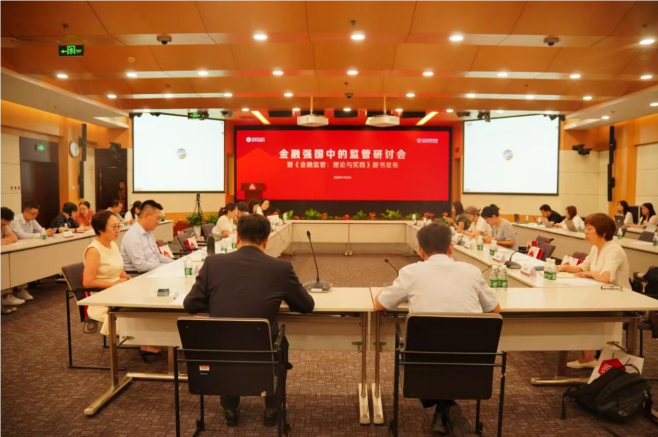
Core Viewpoint - The seminar on financial regulation highlighted the importance of robust financial regulation as a foundational element for building a strong financial nation, emphasizing the need for a well-trained regulatory workforce and the integration of theoretical and practical insights in financial regulation [1][2]. Group 1: Financial Regulation Importance - Financial regulation is considered the foundation of the "six strengths" necessary for building a strong financial nation, serving as the basis for strong financial institutions and international financial centers [2][4]. - The publication of the book "Financial Regulation: Theory and Practice" provides valuable reference material for education and supports the cultivation of regulatory talent needed for a strong financial nation [1][2]. Group 2: Educational Initiatives - The "Financial Regulation" graduate course aims to help students understand the core functions of finance from multiple perspectives, addressing key issues such as financial system vulnerabilities and the dual nature of financial innovation [2]. - The course integrates professional ethics and financial ethics education, reflecting the university's motto "厚德载物" (Virtue carries things), emphasizing the importance of integrity in the financial sector [2]. Group 3: Expert Insights - Experts at the seminar discussed the need for a comprehensive understanding of financial regulation, considering political and technological factors that influence regulatory frameworks [3]. - The book is praised for its interdisciplinary approach, analyzing financial regulation through economic, political, and legal lenses, which helps readers grasp the complexities of China's financial regulatory system [3]. - The importance of balancing principle-based and rule-based regulation was highlighted, with a call for ongoing collaboration between academia, industry, and regulatory bodies to produce high-quality academic works reflecting China's modernization and financial strength [3][4].
徽商期货产业服务案例入选中期协“服务实体经济优秀案例库”
Qi Huo Ri Bao Wang· 2025-07-21 07:44
精准定制:徽丰实业创新期权方案,助力生猪养殖保价增收 山东某具有区域影响力的生猪养殖一体化服务企业,在向集团核心客户及同业提供生猪保价服务过程 中,寻求更精细化的风险管理方案。徽商期货风险管理子公司——徽丰实业(上海)有限公司深度对接 客户需求,创新性地为分批投保的养殖户设计了增强亚式看跌期权保价方案。该方案核心在于缩短采价 期至客户集中出栏时段,并优化结算方式,从而精准对冲出栏期生猪价格下跌风险,显著提升保价效 果。其亮点在于:一是推动企业客户服务升级,依托该保价方案助力集团客户构建"保价合同+订单+融 资"的新模式,有效降低企业融资成本及银行资金风险;二是打造可复制推广模式,方案充分契合养殖 户按批次投保锁定目标价格、在集中出栏期采价锁定利润的现实需求,成功为全国农业企业、规模化种 养殖场及合作社提供了极具参考价值的农产品场外期权保价服务范本。 润物则广,向心而聚。公司将持续秉承徽商精神,坚持"感恩、合作、共赢、使命"的价值观,以更加完 备的服务体系、更加专业的服务水平、更加饱满的服务热情,竭力为广大产业客户提供更全面更优质的 服务,做品牌突出、行业领先的期货与衍生品服务商。 近日,徽商期货选送的《全方位 ...
金融强国战略下的监管:金融强国中的监管研讨会暨新书发布会成功举办
Qi Huo Ri Bao Wang· 2025-07-21 05:12
Core Insights - The seminar on financial regulation and the release of the book "Financial Regulation: Theory and Practice" highlights the importance of strong financial regulation and talent in building a financial powerhouse as emphasized by President Xi Jinping [1][3][4] Group 1: Financial Regulation Importance - Strong financial regulation is a foundational element for building robust financial institutions and maintaining monetary stability [4][7] - The book discusses the relationship between financial regulation and market dynamics, addressing contemporary challenges in the field [5][10] - Experts emphasize the need for a balanced approach in financial regulation, considering both innovation and investor protection [6][8] Group 2: Educational Initiatives - Tsinghua University is addressing the shortage of qualified instructors in financial regulation by offering a graduate course that fills a gap in the curriculum [3][4] - The course aims to provide students with a comprehensive understanding of financial systems, including their vulnerabilities and ethical considerations [4][5] - The publication of the book serves as a valuable resource for teaching and research in financial regulation [3][10] Group 3: Global Perspectives and Challenges - The seminar highlighted that there is no one-size-fits-all model for financial regulation globally, and copying another country's system may not be effective [6][8] - The discussion included the impact of recent banking failures in the U.S. and the implications for global financial stability [8] - Experts called for a reevaluation of regulatory principles to enhance effectiveness in addressing current challenges [8][10]
ETF期权合成标的在期指多头策略中的应用
Qi Huo Ri Bao Wang· 2025-07-21 00:53
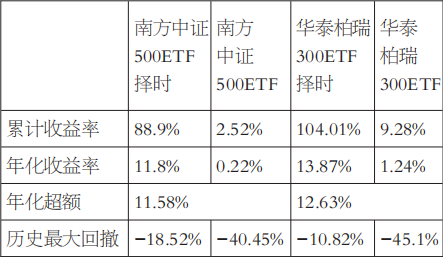
Core Viewpoint - The article discusses the significant discount in the futures market compared to previous years and the higher implied volatility of put options compared to call options, suggesting a potential pessimistic outlook among investors. It proposes a quantitative timing strategy based on the synthetic underlying price of ETF options to address these issues [1]. Group 1: Concepts of Premium and Discount - The premium and discount of stock index futures is defined as the difference between futures prices and spot prices, with a positive value indicating a premium and a negative value indicating a discount. The annualized premium rate is often used for better comparison [2]. - The seasonal discount phenomenon in stock index futures is attributed to dividend payouts from constituent stocks, which can lead to a natural decline in the index and is particularly evident from May to September [2]. Group 2: Synthetic Underlying of ETF Options - The price of the synthetic underlying for ETF options can be expressed using the call option price, strike price, and put option price. The premium or discount rate is calculated as the difference between the synthetic price and the underlying ETF price [3]. - There is a strong positive correlation (over 0.97) between the annualized premium rate of the synthetic underlying of ETF options and the annualized premium rate of stock index futures after excluding dividends, indicating that the synthetic underlying may provide a more accurate reflection of market expectations [3]. Group 3: Quantitative Timing Strategy Backtest Results - The strategy suggests that when the valuation of put options is significantly higher than that of call options, it does not necessarily indicate a market downturn. Instead, it may present a buying opportunity [4]. - The strategy is based on the premise that when the ETF synthetic underlying futures premium is at a historical low, it indicates excessive pessimism, and a potential rebound may occur, prompting a buy signal for the next trading day [4]. Group 4: Historical Backtest Performance - The strategy has shown significant outperformance compared to the underlying ETFs since 2018, with an annualized return of 19.05% and a maximum drawdown of -17.83% when trading the Huatai-PineBridge 300 ETF [6]. - The cumulative return of the timing strategy reached 142.9%, significantly higher than the 51.8% return of the IC monthly contract and 2.52% of the 500 ETF [6]. Group 5: Summary - The article highlights the relationship between the synthetic underlying of ETF options and stock index futures, emphasizing the effectiveness of a quantitative timing strategy based on the synthetic premium. The results indicate that significant discounts in the futures market do not necessarily signal a sell-off but rather present opportunities for long positions [12].