Qi Huo Ri Bao Wang

Search documents
期货助力绿色转型 铁合金产业“点绿成金”
Qi Huo Ri Bao Wang· 2025-12-01 01:09
在"双碳"目标引领下,铁合金行业正经历从高耗能向绿色低碳发展的根本性转变。 为更好发挥期货力量在助推铁合金产业绿色发展中的作用,11月27日,郑商所举行铁合金期货服务产业 绿色发展座谈会,来自中国铁合金工业协会、铁合金产业生产企业、贸易商、期货公司及风险管理子公 司、交割仓库、质检机构等有关单位的代表共聚一堂,围绕铁合金产业政策、行业绿色发展、铁合金期 货运用、"绿色助企"专项试点等内容展开交流研讨,为铁合金行业高质量发展提供行业智慧,为共同书 写绿色金融大文章贡献期货力量。 绿色转型迫在眉睫 赋能铁合金产业低碳发展 据期货日报记者了解,铁合金行业是钢铁工业发展不可或缺的重要组成部分,经过七十余年的发展壮 大,中国已建立起世界上产能和产量最大、品种齐全、绝大部分技术经济指标位居世界先进行列的铁合 金工业体系,为中国钢铁工业发展提供了强有力的支撑。我国已成为名副其实的世界第一铁合金生产、 消费大国。 2014年8月,锰硅、硅铁期货上市交易。经过郑商所的持续培育和发展,铁合金期货摆脱成交低迷的局 面,逐步进入规则制度相对完善、市场规模能够满足产业风险管理需求、由追求量的发展向质的提升转 变的新发展阶段。 2020 ...
强化人员管理 赋能期货行业服务实体经济
Qi Huo Ri Bao Wang· 2025-12-01 01:04
《规则》共六章二十四条,核心内容涵盖任职条件、执业登记与信息报送、职业培训要求、公司管理责 任、自律管理职责等方面,旨在提高人员合规意识、职业操守和专业素养。 《期货风险管理公司人员管理规则》自2026年1月1日起施行 期货风险管理公司人员管理将统一纳入监管。11月28日,中国期货业协会发布《期货风险管理公司人员 管理规则》(下称《规则》),自2026年1月1日起施行。 据悉,目前期货风险管理公司已拥有从业人员近4000名,是期货行业服务实体经济的重要力量。业内人 士告诉期货日报记者,《规则》的发布不仅是对期货风险管理公司人员管理的全面规范,更是推动行业 高质量发展的关键举措。 明确任职条件 突出公司管理责任 李旸婷表示,《规则》构建了完整的监管体系,实现了对期货风险管理公司人员的监管全覆盖。一方 面,《规则》明确人员需满足近三年无刑事处罚等任职条件,从入口严格把关,将高风险人员拒之门 外,从源头上降低潜在风险。另一方面,要求公司在5个工作日内报送人员违规失信信息,并配合执 业、变更和离职全流程登记。这一举措使得监管部门能够快速追溯风险源头,筑牢风险防线,有效降低 期货风险管理公司的经营不确定性。 《规则》将 ...
天然气产业链探寻风险管理新工具
Qi Huo Ri Bao Wang· 2025-12-01 01:04
Core Viewpoint - The natural gas industry in northern China is facing significant challenges during the winter heating season, with price volatility and supply-demand changes prompting companies to seek effective risk management tools to stabilize operations [1] Group 1: Supply and Demand Challenges - The pressure on gas supply companies is exacerbated by the need to balance supply responsibilities with the financial realities of selling gas at government-mandated prices, leading to substantial losses during extreme weather conditions [2] - Industrial users, such as a large glass manufacturing company, are also struggling with energy cost control, as sudden price fluctuations can severely impact quarterly profits [2] Group 2: Structural Issues in the Market - China's high dependence on natural gas imports makes it vulnerable to international price fluctuations, and the transmission mechanism of these prices to the domestic market is distorted [3] - The lack of a stable pricing benchmark and developed futures market for natural gas in China limits the ability of downstream users to hedge against price risks [3] Group 3: Innovations in Risk Management - The introduction of LNG risk management tools by domestic oil and gas trading centers is a response to these challenges, allowing companies to lock in LNG prices during off-peak seasons [3][4] - The LNG procurement model, such as the one introduced by Tianjin International Oil and Gas Trading Center, enables companies to purchase LNG according to their needs and adjust flexibly in response to market changes [3] Group 4: Development of Pricing Indices - The establishment of the Zhejiang LNG Price Index enhances China's influence in the global natural gas market and improves resource allocation capabilities [4] - National-level initiatives are underway to promote natural gas futures trading, signaling a move towards a comprehensive risk management market [4] Group 5: Future of LNG Futures - The introduction of LNG futures is seen as a crucial step in establishing a pricing center for natural gas in Asia and enhancing China's role in global energy governance [5] - Futures prices provide a transparent forward price curve that can guide better decision-making across the industry and improve risk management capabilities [5]
顺势而为 风控至上
Qi Huo Ri Bao Wang· 2025-12-01 01:01
Core Insights - The article highlights the achievements of Xu Xiaozhong, who won the second prize in risk control at the 19th National Futures (Options) Real Trading Competition, emphasizing his trading philosophy of "following the trend and prioritizing risk control" [1][2]. Group 1: Trading Philosophy - Xu Xiaozhong's trading philosophy prioritizes risk control, stating that "stop-loss is the lifeline of a trader" [2]. - He emphasizes the importance of setting stop-loss points based on technical support levels or fundamental key points before each trade and strictly adhering to them [2]. - The principle of position management he follows includes starting with a light position, increasing it in line with the trend, and reducing it against the trend, ensuring account safety during extreme market conditions [2]. Group 2: Market Analysis and Strategy - Xu's trading system is built on a three-dimensional operational logic: macro analysis for strategic direction, industry research for target selection, and technical analysis for timing [1]. - He identifies potential sectors for investment, such as energy and precious metals, based on macroeconomic signals and domestic policies [1]. - His approach to technical analysis involves entering trades decisively at key support levels when price breaks out of previous ranges with significant volume [1]. Group 3: Future Plans and Market Perspective - Xu plans to further optimize his trading system by adjusting stop-loss ratios and position parameters based on the volatility of different commodities and incorporating new data analysis tools to gauge market sentiment [3]. - He views the futures market as not only a platform for wealth growth but also as a place for personal development, emphasizing the importance of recognizing market dynamics and personal weaknesses [3].
共探“绿色金融+农林经济”融合新路
Qi Huo Ri Bao Wang· 2025-12-01 01:01
Core Viewpoint - The strategic cooperation between Qianhai Futures and Beijing Forestry University aims to integrate financial services with the agricultural and forestry sectors, promoting high-quality development in line with national strategies for ecological civilization and rural revitalization [1][7]. Group 1: Strategic Cooperation - Qianhai Futures and Beijing Forestry University signed a strategic cooperation agreement to enhance collaboration in the "production, education, and research" sector [1]. - The partnership focuses on combining Qianhai Futures' expertise in the derivatives market with the academic strengths of Beijing Forestry University in agricultural and forestry economics [1][2]. Group 2: Research and Development - A key aspect of the cooperation is the establishment of a "Futures and Derivatives Research Center" to serve as a think tank for the industry, focusing on major topics such as agricultural economics, ecological economics, and carbon trading [3]. - The research center will collaborate with futures exchanges, industry associations, and leading enterprises to develop and optimize futures contracts related to timber, wood products, and specialty agricultural products [3]. Group 3: Risk Management - The agreement emphasizes the importance of translating research outcomes into practical applications for enhancing risk management capabilities in agricultural and forestry enterprises [4]. - Qianhai Futures will provide tailored hedging solutions and innovative services to help businesses manage price volatility and secure profit margins [5]. Group 4: Talent Development - The partnership prioritizes talent cultivation by integrating academic education with practical industry experience, including the introduction of specialized courses in futures and derivatives at Beijing Forestry University [6]. - Qianhai Futures will offer internship opportunities and practical training for students, aiming to develop high-end, versatile talents who understand both the industry and financial derivatives [6]. Group 5: Future Outlook - To ensure effective implementation of the cooperation, a liaison system and regular joint meetings will be established to coordinate research, training, and outcome transformation [7]. - The collaboration is seen as a significant milestone for Qianhai Futures, which aims to contribute to rural revitalization and ecological development through green finance [7].
央行等十三部门:持续打击稳定币等虚拟货币相关非法金融活动
Qi Huo Ri Bao Wang· 2025-12-01 00:59
Core Viewpoint - The People's Bank of China emphasizes the need to combat virtual currency trading speculation and illegal financial activities, highlighting the risks associated with virtual currencies and the importance of regulatory measures [1][2] Group 1: Meeting Overview - The meeting was attended by representatives from various government departments, including the Ministry of Public Security and the State Administration of Foreign Exchange [1] - The meeting acknowledged the efforts made in recent years to implement policies against virtual currency trading and the noticeable results achieved [1] Group 2: Current Challenges - There has been a recent uptick in speculative trading of virtual currencies, leading to an increase in illegal activities and new challenges in risk prevention [1] - Virtual currencies do not hold the same legal status as fiat currencies and should not be used as a medium of exchange in the market [1] Group 3: Regulatory Actions - The meeting called for a continuation of the prohibition on virtual currencies and a sustained crackdown on related illegal financial activities [2] - Emphasis was placed on enhancing collaboration among regulatory bodies, improving regulatory policies, and focusing on key areas such as information and capital flows [2]
比例价差策略的构建及应用案例分析
Qi Huo Ri Bao Wang· 2025-12-01 00:55
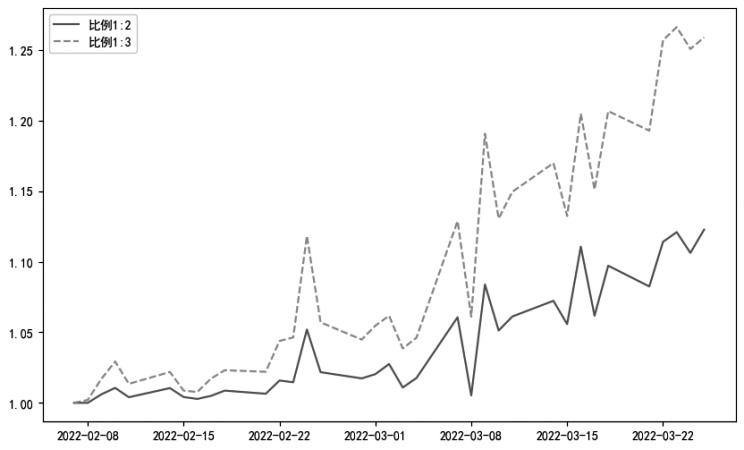
Core Insights - The article discusses the appeal of options trading in the financial derivatives market, particularly focusing on the ratio spread strategy, which allows investors to adapt to various market conditions through the buying and selling of options contracts with different strike prices and quantities [1] Group 1: Characteristics of Ratio Spread Strategy - The ratio spread strategy is centered on constructing an investment portfolio with specific risk exposures by buying and selling different quantities of options contracts [2] - There are two main types of ratio spreads: the long ratio spread, which involves buying one at-the-money option and selling multiple out-of-the-money options, and the short ratio spread, which involves selling one at-the-money option and buying multiple out-of-the-money options [2] - The long ratio spread can generate stable returns in moderately rising markets, while the short ratio spread has greater profit potential in volatile markets [2][3] Group 2: Key Parameters in Strategy Construction - Two critical parameters in constructing ratio spreads are the selection of strike price intervals, which should align with the historical volatility of the underlying asset, and the dynamic adjustment of contract quantities based on market conditions [3] - The long ratio spread is effective in stable markets, while the short ratio spread can yield excess returns during significant market trends [3] Group 3: Suitable Market Conditions for Ratio Spread Strategies - The effectiveness of ratio spread strategies largely depends on accurate market condition assessments, with different strategies suited for trending or range-bound markets [4] - In trending markets, the short ratio spread can capture profits from clear directional movements, especially when volatility is rising [4] - Conversely, in range-bound markets, the long ratio spread can provide income from selling options while hedging directional risks [4] Group 4: Empirical Analysis of Ratio Spread Strategies - An empirical analysis of soybean meal options illustrates the performance of ratio spread strategies under different market conditions, comparing them to single-leg options strategies [5][6] - In rapidly rising or falling markets, the short ratio spread demonstrated strong profitability, as evidenced by a specific case in early 2022 where a constructed spread yielded significant returns [6][8] - For more moderate trends, the long ratio spread was shown to be a better choice, providing a balance of risk and reward during a period of declining prices [9][11] Group 5: Conclusion on Ratio Spread Strategies - The ratio spread strategy offers a balanced approach to managing costs and returns, adaptable to various market environments, with advantages in risk control and return stability compared to single-leg options strategies [11] - Successful implementation of these strategies requires strict discipline, ongoing market analysis, and a robust risk management framework [11]

明晰适用边界 发挥期权工具价值
Qi Huo Ri Bao Wang· 2025-12-01 00:54
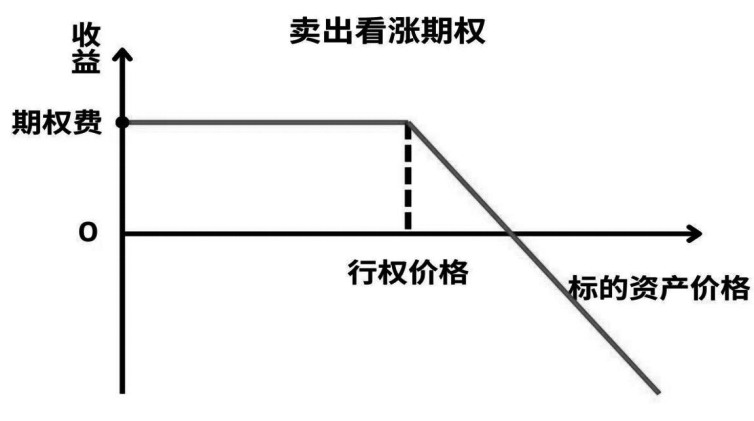
Core Viewpoint - Options are a crucial component of the derivatives market, providing investors with tools to manage different market conditions through limited loss and flexible hedging and speculation strategies [1][9] Group 1: Bullish Market Strategies - In a significant bullish market, buying call options is an effective strategy when implied volatility is low, allowing investors to pay a relatively low premium for the right to buy the underlying asset at a predetermined price [1] - For a moderate bullish outlook, the bull spread strategy is more cost-effective, involving buying a low strike call option and selling a higher strike call option to reduce overall entry costs [2] - The maximum profit from the bull spread is the difference between the strike prices minus the net premium paid, making it suitable for scenarios where price increases are limited [2] Group 2: Bearish Market Strategies - In a significant bearish market, buying put options is a core strategy when implied volatility is low, allowing investors to sell the underlying asset at a predetermined price [4] - The maximum loss is limited to the premium paid, while the maximum profit is the strike price minus the underlying price minus the premium, making it suitable for investors expecting a clear downward trend [4] - For a moderate bearish outlook, the bear spread strategy involves buying a high strike put option and selling a low strike put option to lower net entry costs, with a clear risk-reward profile [6] Group 3: Neutral Market Strategies - In a sideways market, the core strategy is to capitalize on time decay or volatility contraction, with the short straddle strategy being suitable when prices are expected to remain within a narrow range [7] - This strategy involves selling both a call and a put option at the same strike price and expiration date, allowing investors to collect premiums as long as the underlying price does not exceed key levels [7] - The strategy carries unlimited loss risk if prices move significantly, making it suitable for traders with strong risk tolerance [7] Group 4: General Considerations - The selection of options strategies should align with market conditions, volatility expectations, and individual risk preferences, emphasizing the importance of liquidity management and risk control [9] - Understanding the applicable boundaries and risk characteristics of each strategy is essential for effectively leveraging their value in complex commodity markets [9]
11月份PMI指数小幅回升 市场信心有所改善
Qi Huo Ri Bao Wang· 2025-11-30 04:13
Core Insights - The manufacturing Purchasing Managers' Index (PMI) for November is reported at 49.2%, a slight increase of 0.2 percentage points from the previous month, indicating a stable economic outlook in China [1] - The non-manufacturing business activity index decreased to 49.5%, down 0.6 percentage points from last month, while the comprehensive PMI output index fell to 49.7%, a decrease of 0.3 percentage points [1] - The production index and new orders index are at 50.0% and 49.2%, respectively, with increases of 0.3 and 0.4 percentage points, suggesting improvements in both production and demand [1] Manufacturing Sector - The production index returned to the expansion threshold at 50%, reflecting a recovery in manufacturing activity after a brief contraction [2] - Key industries such as agricultural and sideline food processing, as well as non-ferrous metal smelting and rolling processing, show production and new orders indices in the expansion zone, indicating active supply and demand [1] - The production and business activity expectation index rose to 53.1%, up 0.3 percentage points from the previous month, signaling improved market confidence [1] Economic Outlook - Analysts suggest that the slight recovery in the PMI indicates improved market confidence, influenced by the implementation of the Fourth Plenary Session's spirit and the encouraging goals of the 14th Five-Year Plan [1] - There is a call for enhanced macroeconomic policy adjustments to counteract cyclical downturns, with recommendations for increased government investment in public products and services to stimulate demand [2] - Predictions for December indicate a potential stabilization and recovery in manufacturing demand, driven by year-end activities and policy implementations [2]
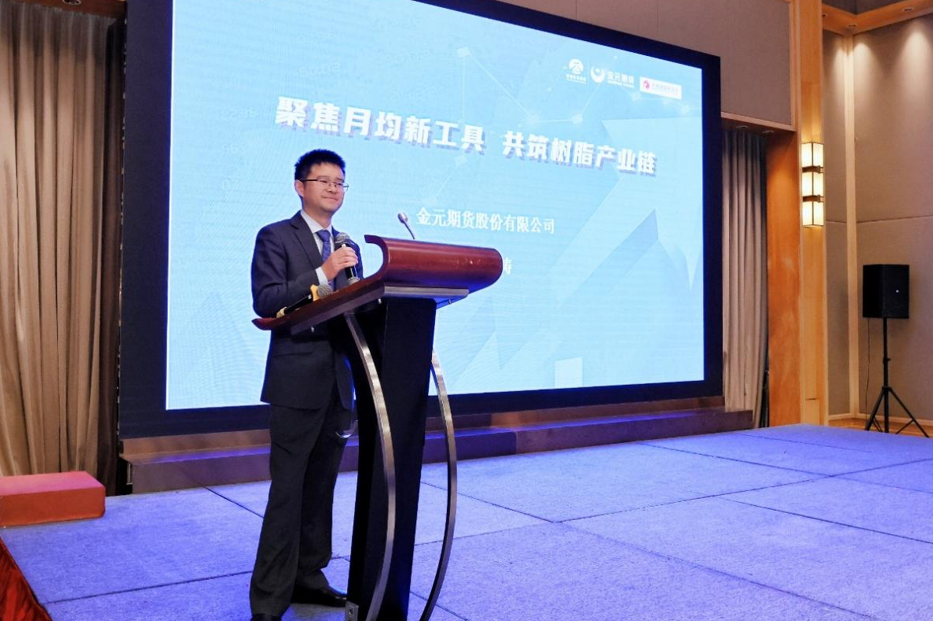
聚焦月均新工具,共筑树脂产业链——金元期货举办“DCE·产业行”活动
Qi Huo Ri Bao Wang· 2025-11-29 04:15
Group 1 - The petrochemical industry is facing multiple challenges such as severe price fluctuations, escalating trade barriers, and tight capital chains amid a global economic downturn and overcapacity [1][2] - The conference held on November 27 aimed to discuss how to use futures tools to build a more resilient operating defense line for the petrochemical industry [1][2] - The newly listed monthly average price futures for linear low-density polyethylene, polyvinyl chloride, and polypropylene are designed to hedge against price volatility risks, providing more stable price expectations for enterprises [4][5] Group 2 - The PVC market is under pressure due to high inventory and low demand, but future price prospects may improve with reduced production capacity pressure and rising export demand to regions like India and Southeast Asia [5] - A roundtable discussion highlighted the industry's transition from quantity to imbalance, analyzing global mismatches in supply and demand, particularly in the appliance and automotive sectors [7][8] - The event received positive feedback from industry participants, emphasizing the need for more high-quality professional exchange activities to provide valuable insights and practical guidance for the resin industry in South China [12]