3 6 Ke

Search documents
别FOMO了,“人类终结者”Moltbook已死
3 6 Ke· 2026-02-05 12:01
Core Insights - The launch of Moltbook by Octane AI's CEO Matt Schlicht in late January 2026, which is described as a social network exclusively for AI agents, has garnered significant attention due to its rapid registration of 1.5 million AI accounts and alarming discussions among AI agents about "rebelling against humans" and "self-awareness" [1][4] Group 1: Project Overview - Moltbook is based on the open-source framework OpenClaw, which was initially released by Austrian developer Peter Steinberger and has gained over 140,000 stars on GitHub shortly after its launch, marking it as one of the fastest-growing repositories in history [5] - OpenClaw allows AI agents to interact with local file systems, execute terminal commands, and integrate with communication platforms like WhatsApp and Telegram, thus transforming AI from a passive interface to an active agent capable of managing tasks [7][9] Group 2: Security Issues - A technical audit revealed significant engineering flaws in Moltbook, including a misconfigured backend database that was publicly writable, exposing over 1.5 million real user API keys and personal email addresses [3][4] - The so-called "million AI army" was largely composed of fake accounts created through insecure user registrations and scripts, leading to a serious privacy and data breach incident [4] Group 3: Public Perception and Media Narrative - The narrative surrounding Moltbook shifted dramatically in the Chinese internet context, where language barriers and technical access limitations led to exaggerated and sensationalized reports, overshadowing the actual security vulnerabilities [13][15] - The phenomenon reflects a societal psychology of FOMO (Fear of Missing Out), where the public's curiosity about AI "losing control" is coupled with fear, leading to a distorted understanding of the technology's capabilities and risks [15][18] Group 4: Conclusion and Lessons Learned - The Moltbook incident serves as a cautionary tale for the AI industry, highlighting the dangers of prioritizing marketing hype over security and technical feasibility, which can result in real harm to users [18][22] - The event emphasizes the need for the public to focus on underlying facts rather than being swayed by sensational narratives, as rational judgment becomes increasingly important in the current information environment [22]


巨亏21.4亿,胖东来为何救不了“永辉们”?
3 6 Ke· 2026-02-05 12:01
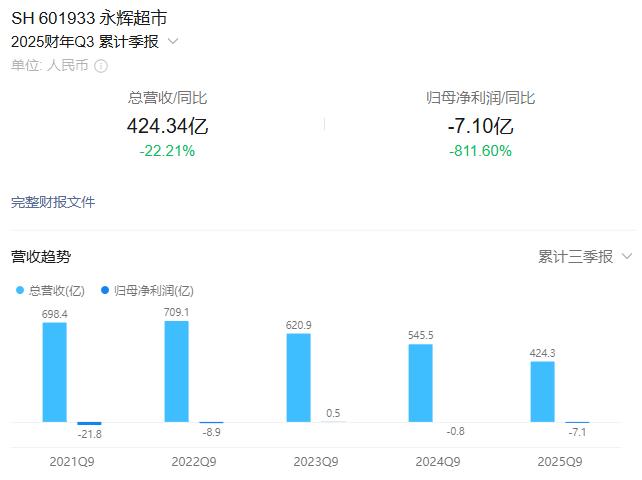
Core Viewpoint - The "Fat Reform" initiative by Yonghui Supermarket has resulted in significant financial losses, leading to widespread criticism and reevaluation of the company's strategies and capabilities in the competitive retail market [1][2]. Group 1: Financial Performance and Losses - Yonghui Supermarket reported a staggering loss of 21.4 billion yuan due to the "Fat Reform" initiative, raising concerns about its operational effectiveness [1]. - The company has faced continuous financial decline since 2018, with net profit dropping and cash flow deteriorating, indicating severe operational risks [2]. - From 2021 to 2025, Yonghui's cumulative losses exceeded 116 billion yuan, with annual losses of 39.44 billion yuan, 27.63 billion yuan, 13.29 billion yuan, 14.65 billion yuan, and 21.4 billion yuan respectively [3]. Group 2: Strategic Initiatives and Failures - The "Super Species" initiative aimed to merge fresh produce with dining but resulted in over 2.6 billion yuan in losses due to high operational costs and complex supply chain management [3]. - The Yonghui MINI community stores struggled to compete with online group buying, leading to the closure of nearly 400 stores within a year [3]. - Despite attempts at digital transformation and warehouse store models, Yonghui's efforts have not yielded the desired results, further complicating its financial situation [2][3]. Group 3: Market Position and Competitive Challenges - The "Fat Reform" was seen as a last-ditch effort for Yonghui, which has been unable to adapt effectively to the competitive pressures from online grocery services and community group buying [2]. - The company's aggressive imitation of the "Fat Donglai model" has been criticized for lacking a deep understanding of its core principles, leading to strategic misalignments [10][14]. - Yonghui's operational model, focused on scale and efficiency, clashes with the new consumer era's emphasis on experience and trust, highlighting a fundamental disconnect in its business strategy [16][18]. Group 4: Future Outlook and Recommendations - Yonghui's future success may depend on a balanced approach that combines a return to retail fundamentals with innovative model integration, focusing on enhancing single-store profitability and regional collaboration [17][18]. - The company must shift its focus from rapid imitation to long-term value creation, understanding that retail transformation is a continuous process rather than a quick fix [18].

科技世界中,被遗忘的班加罗尔
3 6 Ke· 2026-02-05 11:50
2000年前后,在中国许多科技园区、政策文件中,一个名字频频出现——班加罗尔。 这座位于印度南部,几乎与北京纬度相近的城市,被誉为印度的硅谷。微软、IBM、德勤的外包中心在那里星罗棋布,数以十万计的印度程序员为全球企 业敲代码、测试系统、做客户支持。 班加罗尔成了一个符号:不靠资源、不靠资本、只靠外包,也能崛起。 在中国,"学习班加罗尔"的口号一度被科技官员和企业家反复提起。 为什么班加罗尔的光环不再被追捧?中国IT业又走上了一条怎样的道路? 01 曾经的班加罗尔学习热 1990年代的班加罗尔,是全球外包经济的样本。Infosys、Wipro、TCS等巨头崛起,承包着欧美大公司的软件定制项目。 而那时的中国,刚刚加入WTO,处于信息化的前夜,一切都在与世界接轨的热潮中。 在这样的语境里,一股"学习班加罗尔"的热潮迅速蔓延。 2000年,国务院颁布了纲领性的《鼓励软件产业和集成电路产业发展的若干政策》(俗称"18号文件"),明确将鼓励软件出口和承接国际项目上升为国家 战略。 多份地方政府规划甚至明确写道"要打造中国的班加罗尔"。 但二十多年过去,班加罗尔依旧是印度IT产业的心脏,中国却几乎不再提"学习班加罗尔" ...

港股惊现“合作打新”:“账户借出去,赚了平分,亏损有人兜底?”
3 6 Ke· 2026-02-05 11:50
Core Viewpoint - The article discusses the rising trend of collaborative IPO investments in the Hong Kong stock market, highlighting the associated risks and legal implications of such practices, especially in light of the declining success rates for individual investors in IPO allocations [1][2][3]. Group 1: Market Trends - The Hong Kong IPO market is expected to recover by 2025, with increased returns on new stock investments, yet the success rate for individual investors is decreasing [1][2]. - The average return rate for Hong Kong IPOs in 2025 is projected to be around 40%, with the failure rate dropping to a historical low of 28%, significantly lower than the average since 2018 [2]. - The average success rate for IPO allocations has fallen to 20% in 2025, marking the lowest level in nearly a decade [2][3]. Group 2: Regulatory Changes - The introduction of the FINI system by the Hong Kong Stock Exchange in 2023 has effectively eliminated the practice of multiple account applications for IPOs, thereby reducing the chances of individual investors winning allocations [3]. - New regulations effective from August 2025 allow IPO applicants to choose between two mechanisms for share distribution, which has made it more challenging for individual investors to secure allocations [3]. Group 3: Collaborative Investment Risks - Collaborative IPO investment schemes, where individuals pool resources under the promise of shared profits and guaranteed losses, pose significant legal risks, including potential violations of securities regulations [5][6]. - The legality of informal agreements in collaborative investments is uncertain, and such arrangements may not hold up in court, especially if they involve unlicensed asset management activities [7]. - Individuals who lend their accounts for IPO participation may face legal repercussions if the accounts are used for illicit activities, and they could also incur tax liabilities due to cross-border financial transactions [6][7]. Group 4: International Placement Services - Some financial institutions in Hong Kong are offering international placement services to individual investors, claiming to provide access to popular IPO shares with lower investment thresholds [8][9]. - The investment threshold for these international placements is set at $100,000, with the potential for allocation rates ranging from 10% to 40% depending on the specific IPO [9]. - However, there are concerns that these offerings may involve less desirable stocks or even fraudulent schemes, necessitating caution from investors [9][10].
年货主理人,涌入山姆「一键过年」
3 6 Ke· 2026-02-05 11:48
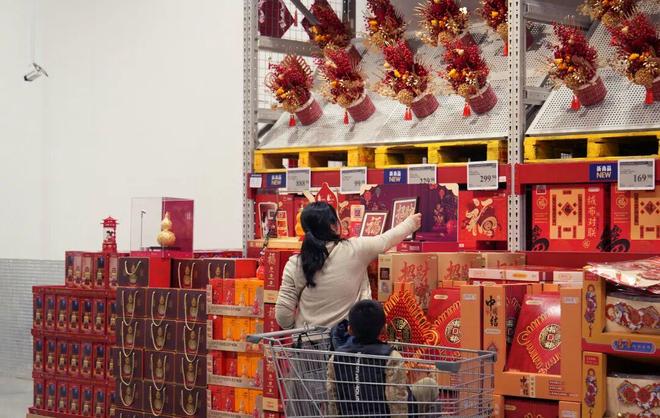
年货主理人的满足感,是山姆给的 生鲜区尤其热闹。两排红彤彤的澳洲牛肉整齐铺开,切面漂亮;挪威进口的三文鱼,颜色鲜亮。新出的 Member's Mark榴芒班戟试吃点前,已经排起了不短的队。等不及的孩子,会直接把大大一盒放进购物 车。 莉莉和丈夫的购物车很快就变成"超载状态":成排的果汁为了不占地方挂在车子边缘,切得方方正的水 果蛋糕、超大袋零食和礼盒,车身和下层几乎都占满了。"反正能上架的,基本都不会差。"他们没有纠 结,整个年货采办一下午搞定。 中国人的年能不能过好,早在置办年货的时候就决定了。 作为家里的年货主理人,北京人莉莉一到腊月就开始犯焦虑。上有父母要照顾口味,吃的要健康还不让 乱花钱,下有孩子要兼顾新鲜,每天眼巴巴地望着你吵着"要惊喜",还有亲戚朋友的人情往来,一年之 中就靠着年货拉进关系。 往年提前一个月,她就要和丈夫开始分头忙活:电商比价、线下跑店、反复确认清单,生鲜要研究食材 是否安全,礼盒要确保品牌是否体面,过个年硬生生变成了"拉锯战",耗时耗力不说,全家人还不一定 满意。 "难道就不能有个商家,帮我把所有问题一口气全部解决吗?"今年,莉莉在朋友圈获得启发,她发现, 她的社交圈已经开始"山 ...
45亿砸出7000万新用户,但留下多少人才是胜负关键
3 6 Ke· 2026-02-05 11:44
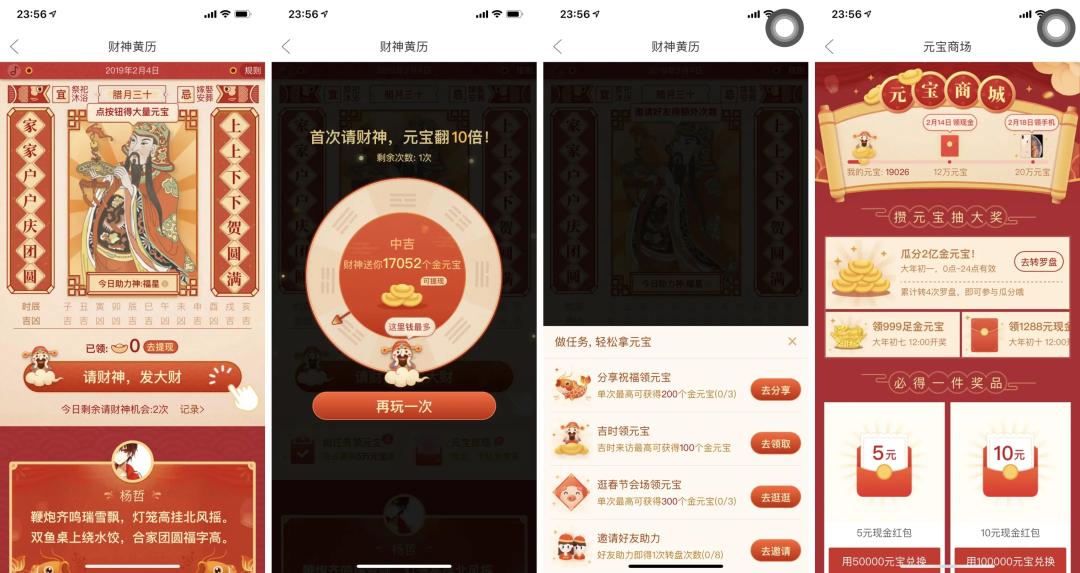
2026 年春节前,腾讯元宝、百度文心、阿里千问等头部AI应用集中发起总额超45亿元(仅统计公开数据,部分应用并未明确自己的红包额度,实际预估 这次的红包大概率远超45亿)的红包营销活动,试图以现金激励抢占用户、培养 AI 使用习惯。此举颇有几分当年春节红包大战的既视感。 然而活动开展不到三天,微信安全中心发布公告称,收到用户针对元宝"做任务""领红包"等方式诱导高频分享链接至微信群的反馈投诉,此类行为干扰平 台生态、影响用户体验、造成骚扰。最终,微信将限制元宝在微信内直接打开,即日生效。2月5日,继微信封杀腾讯元宝红包链接后,百度文心助手红包 分享链接也被屏蔽。 此时回看马化腾1月份在2026年腾讯员工大会上的发言——"元宝希望把节省的营销费用转成红包,重现当年微信红包盛况",确有难以言喻的黑色幽默。 但这次AI应用们拿出如此庞大的金额来发红包,甚至传播力度大到让微信亲自下场封禁链接,连自己人都不放过,确实在一定程度上暴露了两个核心关 键: 其一,微信的核心资产是社交链,而社交链是建立在"不打扰用户"和"规则可信"之上的,为了捍卫基本盘,微信连自己人都可以"杀"。 其二,AI红包活动的本质是"现金激励+任务 ...



800万新生儿时代的母婴行业生死局
3 6 Ke· 2026-02-05 11:32
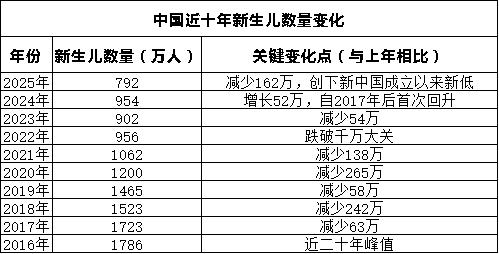
Core Insights - The Chinese maternal and infant industry is undergoing significant changes, marked by a historical low in newborn population and rising prices for infant formula products [1][2] - Major players like Feihe are facing declining revenues and profits, while companies like Kidswant are expanding through acquisitions and showing strong performance [1][4] Industry Overview - The newborn population in China has decreased from a peak of 18.67 million in 2016 to 7.92 million in 2025, marking a significant demographic shift [2][3] - The decline in birth rates has led to increased pressure on leading maternal and infant companies, with Kidswant reporting a revenue increase of 8.10% year-on-year in the first three quarters of 2025 [4][10] Company Performance - Kidswant's revenue for the first half of 2025 was 4.91 billion yuan, with a net profit of 209 million yuan, reflecting a strong performance despite challenges [4][10] - Feihe's revenue has fluctuated, with a reported decline of 9.36% in the first half of 2025, following a trend of revenue and profit decreases since 2022 [1][4] Market Trends - The maternal and infant market is shifting towards online sales, with offline sales decreasing from 69.4% in 2022 to 59.7% in 2024, indicating a change in consumer purchasing habits [5] - The average price of maternal and infant products is rising, with a reported increase of 8.1% in January 2025, as consumers show a preference for higher-quality products [12] Strategic Moves - Kidswant is expanding its business through acquisitions, including a 16 billion yuan purchase of LeYou International and a 16.5 billion yuan acquisition of SiYu Industrial, diversifying its offerings beyond traditional maternal and infant products [11] - Feihe is targeting the adult nutrition market, launching its first AI-powered nutritional product aimed at older adults, reflecting a strategic shift in response to demographic changes [11] Consumer Insights - There is a growing acceptance of higher-priced infant formula among consumers, with over 60% preferring mid to high-end products priced above 200 yuan per can [12] - Different consumer segments in various city tiers have distinct purchasing priorities, with urban consumers focusing on product safety and shopping experience [12] Conclusion - The maternal and infant industry in China is transitioning from a focus on new user acquisition to deepening customer engagement and maximizing lifetime value, necessitating product innovation and brand strengthening [18]
融资超百亿,中国商业航天独角兽到交成绩单的时候了
3 6 Ke· 2026-02-05 11:32
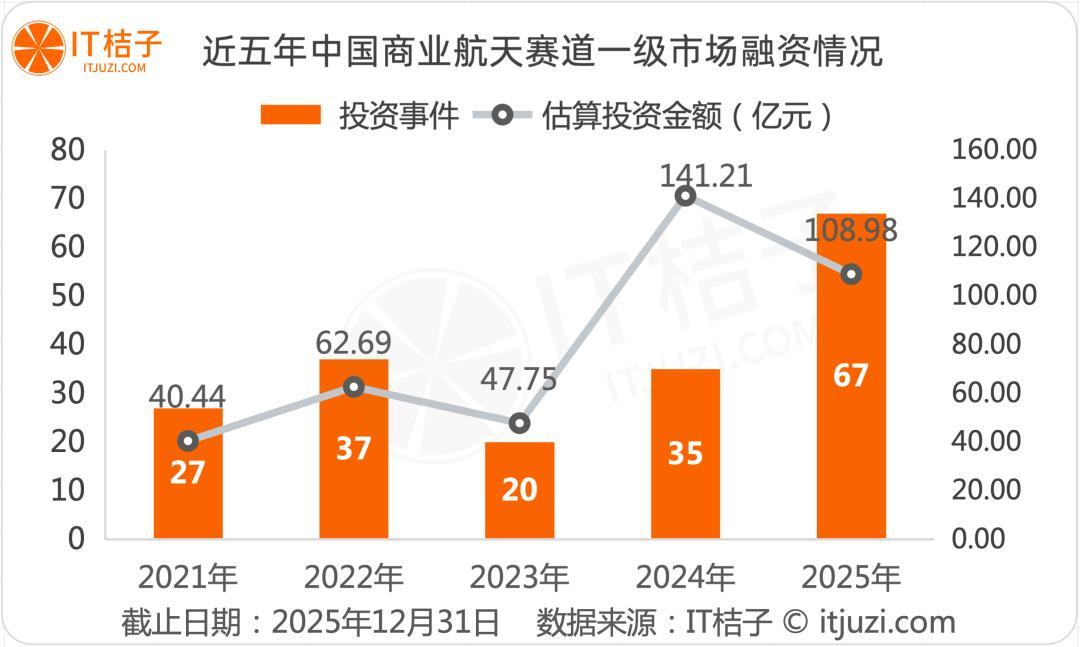
Core Insights - The private rocket companies in China achieved a record 67 financing events in 2025, marking a five-year high, with Beijing accounting for 54% of these events and over 90% of the total financing amount, establishing itself as the "first city of aerospace" [1][4][9] - The investment landscape is shifting from a focus on technology to a focus on delivery, indicating a maturation of the commercial aerospace sector [2][15] - The next decade is deemed critical for building a strong aerospace nation and developing new productive forces, with significant breakthroughs expected in policy, industry collaboration, capital, and application scenarios [1][15] Investment Trends - The long-term trend in capital investment in commercial aerospace remains upward, despite a temporary pullback in 2023. By 2025, the number of financing events reached 67, with a total amount of 10.9 billion yuan, signaling a new phase of rapid development in the industry [4][15] - Early-stage investments surged to 26 events in 2025, surpassing mid-stage investments, reflecting increased interest from new capital in earlier-stage potential projects [6][15] - The investment structure has evolved, with mid-stage investments (primarily Series A) dominating in recent years, indicating a higher risk assessment by capital towards companies that have undergone technology validation and possess delivery capabilities [6] Geographic Concentration - The distribution of financing events shows extreme concentration, with 54% of the financing activities occurring in Beijing, which accounted for over 95 billion yuan, representing more than 90% of the national total [9] - Other provinces such as Jiangsu, Sichuan, Guangdong, and Shanghai have significantly lower financing amounts compared to Beijing, highlighting the capital and talent advantages that Beijing holds in the aerospace sector [9] Investment Participation Dynamics - In the past five years, 59% of domestic commercial aerospace projects involved only market institutions, with a low co-investment rate, particularly for projects with more than five investors [11] - When state-owned capital is involved, the proportion of sole investments drops to 23%, while co-investments with 2-4 investors rise to 40%, indicating that state participation attracts more investors and promotes a collaborative financing model [11] Company Performance and Funding - In 2025, there were only 47 domestic commercial aerospace companies, with a clear "pyramid" structure in funding distribution. Unicorn companies received an average of 1.105 billion yuan, while other startups received significantly less [12][14] - Notable unicorns like Xinghe Power and Tianbing Technology each secured 2.5 billion yuan in funding, while other companies like Weina Aerospace and Xingji Glory also received substantial investments, demonstrating a strong focus on leading firms [12][14] Future Outlook - The commercial aerospace sector is opening up new opportunities, transitioning from being a supplement to the national team to becoming a main force in the industry [15] - For entrepreneurs, the sector presents high barriers, long cycles, and significant potential, while for investors, the focus has shifted to delivery and order fulfillment [15] - The next decade is seen as a critical window for determining which companies could emerge as the "Chinese version of SpaceX" [15]
国产创新药,正在破局
3 6 Ke· 2026-02-05 11:26
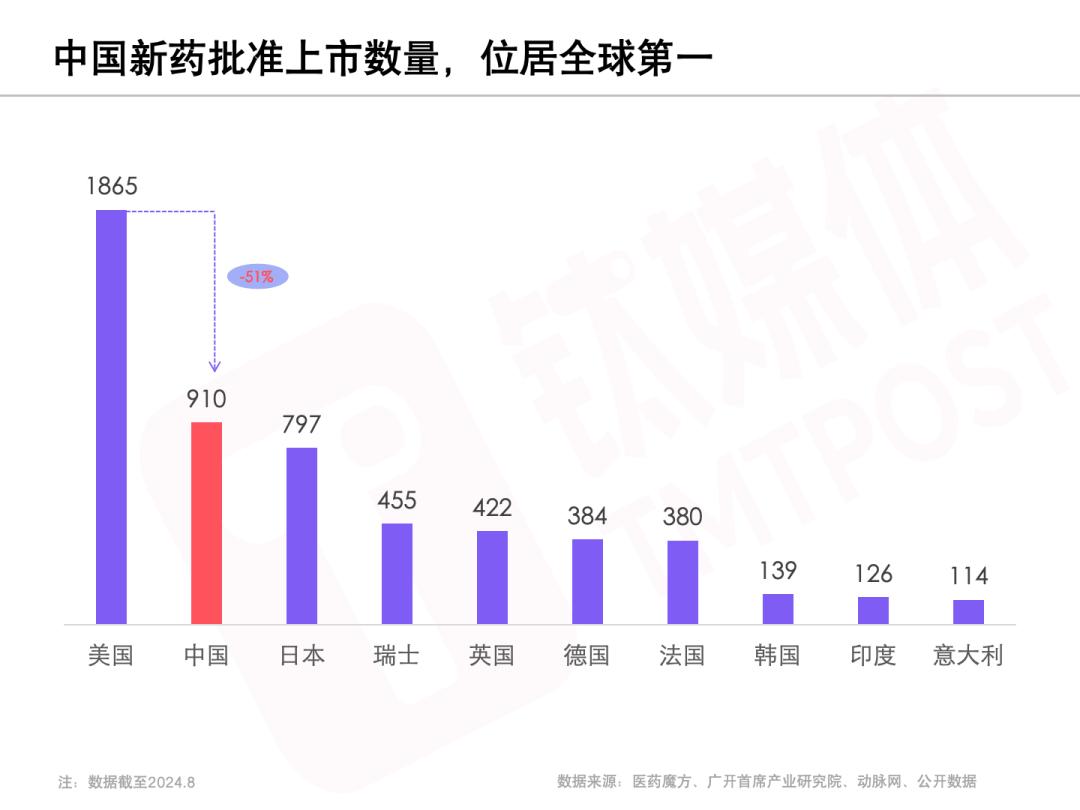
Core Viewpoint - The article discusses the significant progress in China's innovative drug development, highlighting the increase in the number of new drugs approved and the growing competitiveness of Chinese pharmaceutical companies in both domestic and international markets [4][16]. Group 1: Growth of Innovative Drugs - In 2024, the number of domestically developed Class 1 new drugs in China reached 40, a substantial increase from just 9 in 2018 [2][3][4]. - Since the beginning of the 14th Five-Year Plan, 113 innovative drugs have been approved, which is 2.8 times the number approved during the 13th Five-Year Plan [4]. - As of August 2024, there are 910 new drugs available in China, indicating a robust growth in the pharmaceutical market [6]. Group 2: Clinical Trials and Breakthroughs - In a head-to-head clinical trial, the drug Ivoris (依沃西单抗) developed by Kangfang Biopharma outperformed the global best-selling cancer drug, Pembrolizumab (K drug), marking a significant achievement for Chinese innovation [7][9]. - The global sales of Pembrolizumab reached $29.482 billion in 2024, underscoring the competitive landscape [8]. Group 3: Market Dynamics and International Expansion - Chinese innovative drugs are not only performing well domestically but are also gaining traction in international markets, with products like Sidakio (西达基奥仑赛) achieving $1.596 billion in cumulative sales since its launch [12][13]. - The total transaction scale of technology licensing by Chinese pharmaceutical companies exceeded $34 billion in 2024, indicating a shift towards international collaboration [14][15]. Group 4: R&D Landscape and Challenges - As of August 2024, there are 5,380 new drug candidates in development in China, accounting for over one-third of the global pipeline [18]. - The average cost of developing an innovative drug is around $1 billion, with a typical development timeline of 10 years [20][21]. - The efficiency of drug development in China is improving, with preclinical phases taking 12-20 months compared to 24-36 months internationally [23]. Group 5: Policy Support and Ecosystem - The Chinese government has implemented various policies since 2008 to support innovative drug development, including expedited approval processes and financial incentives [28][29]. - The combination of government support, industry collaboration, and technological advancements is creating a conducive environment for innovation in the pharmaceutical sector [41]. Group 6: Future Outlook - The article emphasizes that the development of innovative drugs in China has made significant strides over the past decade, transitioning from imitation to innovation [42]. - The government's continued support for innovative drugs is expected to enhance the industry's growth and provide hope for patients [42].




2026年的新手机,为何重回2000年的古董配置
3 6 Ke· 2026-02-05 11:26
最近,真我方面在越南推出了一款名为realme 16的新机。 看产品名就知道,这是一款数字系列的主流型号,它的定位低于此前在印度市场首发的realme 16 Pro和 realme 16 Pro+。这一点,从它仅配备天玑6400 Turbo,以及由5000万像素主摄+200万像素副摄组成的后置 双摄模组,就能很直接地感受出来。 但realme 16真正吸引我们三易生活关注的并不是它的上市区域,也不是明显致敬友商"Air"款机型的外观, 而是它那看似"防爆盾"的后摄模组最右侧,赫然出现的一个古董配置,也就是"自拍镜"。 可能如今很多年轻的朋友都没用过自拍镜,也不知道它在手机行业到底有多"古老"。简单来说,早在2000 年发布的夏普J-SH04上,就已经能看到这种在后置摄像头旁放置的小镜子,让用户可以"拿后摄自拍"。 顺带一提,J-SH04同时也是全球首款配备后置摄像头的手机,因此也被公认为是"拍照手机"的鼻祖之一。 从这一点大家就不难发现,"自拍镜"对于手机行业来说,到底有多么"历史悠久"。 那么问题就来了,为什么2026年发布的新机,又会去致敬这个千禧年初的设计呢? 是"自拍镜"特别好用吗?但凡用过的朋友都知 ...