
Hu Xiu

Search documents
OpenAI再造一个“抖音”
Hu Xiu· 2025-10-01 00:11
Core Insights - OpenAI has launched a new iOS application named Sora, designed as a social platform exclusively for AI-generated content, contrasting with existing platforms like TikTok and Douyin [2][22] - Sora features a user-friendly interface similar to Douyin, but its core functionality revolves around AI-generated videos, allowing users to create and share content without real-world footage [4][10] Features of Sora - The app includes a revolutionary feature called "Cameos," enabling users to create a digital avatar by recording a short video, which can then be used in various AI-generated scenarios [6][8] - Sora also offers a "Remix" tool that allows users to generate new content by inputting prompts, facilitating creative reinterpretation of existing videos [9] Sora 2 Model - The Sora 2 video model, described as a significant advancement in video technology, provides a deep understanding of the physical world, enabling realistic simulations of complex actions [11][12] - This model can accurately simulate physical interactions, such as a basketball bouncing off a rim, enhancing the realism of generated content [15] User Safety and Responsibility - OpenAI has implemented strict rules to protect users' digital likenesses, ensuring that no one can create videos using a person's image without their explicit consent [10] - The platform is designed with user well-being in mind, incorporating features to prevent addiction and promote healthy usage, including content recommendations based on user input rather than time spent [17][19] Launch and Accessibility - Currently, Sora is available only to users in the United States and Canada through an invitation system, with plans for broader access in the future [20] - The app will initially be free, with premium features available for ChatGPT Pro users, and OpenAI plans to release the Sora 2 model via API [21] Strategic Shift - The launch of Sora signifies OpenAI's transition from being a technology provider to actively building a comprehensive ecosystem that integrates AI models with user applications and community engagement [22] - The introduction of an AI-only content platform raises questions about user acceptance and the future of traditional content platforms [23][24]


小红书开始到处“抢食”了
Hu Xiu· 2025-09-30 22:02
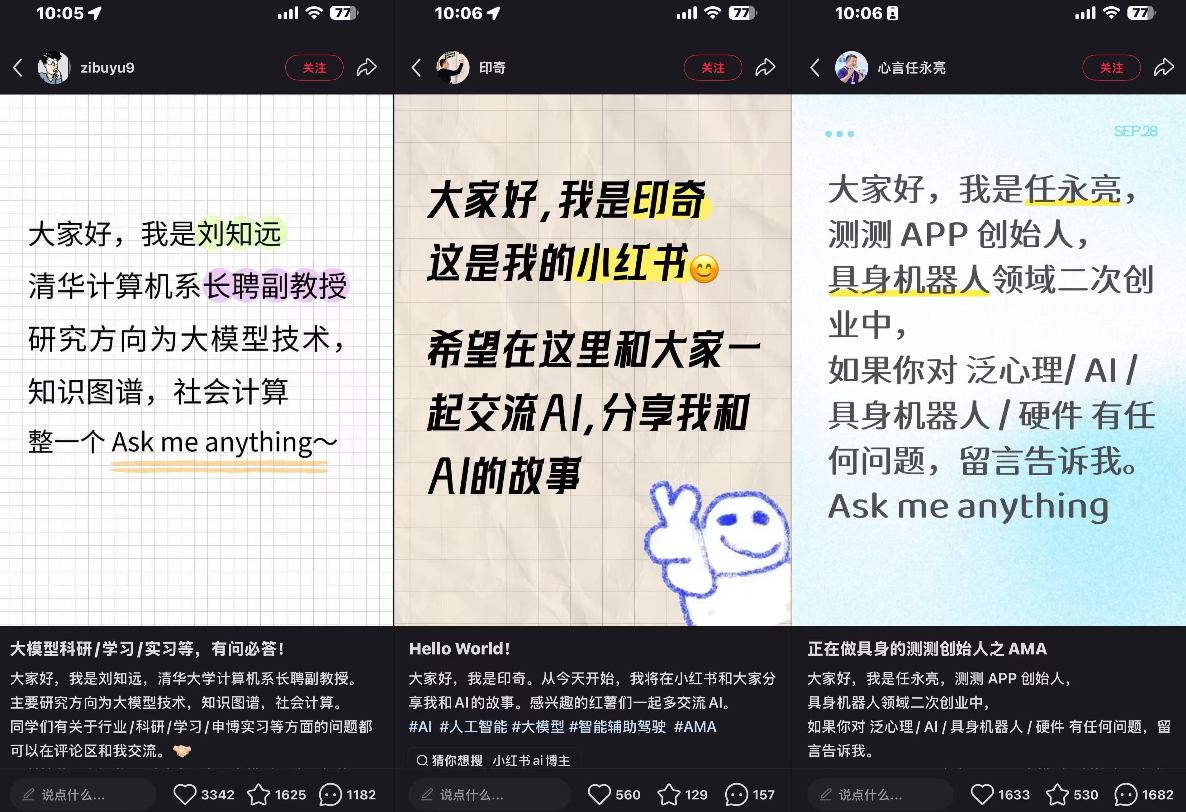
Core Insights - A new trend of "Ask Me Anything" (AMA) is gaining popularity on Xiaohongshu, with many AI experts and entrepreneurs engaging with users through this format [2][5][9] - The trend began in September during the school season, positioning Xiaohongshu as a hub for discussions on cutting-edge AI technology [4][11] - The platform has seen a significant increase in AMA-related content, with a 100% month-on-month growth in posts and over 120 million views on related topics [9][13] Group 1: Trend Development - Influential figures in the AI field, including founders and researchers, have joined Xiaohongshu, actively participating in AMAs and engaging with users [5][6][20] - The AMA trend has evolved from a niche discussion among experts to a broader engagement involving various participants, including students and industry professionals [21][30] - Xiaohongshu's ability to capture and leverage trends has positioned it ahead of other platforms, enhancing its community engagement [10][39] Group 2: Community Engagement - The AMA format allows for a more casual and interactive dialogue compared to traditional platforms like Zhihu, making it accessible for non-experts [30][31] - The community's response has been positive, with users enjoying the informal and engaging nature of the discussions, leading to increased participation [32][36] - Xiaohongshu's strategy of focusing on high-profile AI figures has successfully driven engagement and discussion across the platform [35][39] Group 3: Competitive Landscape - Xiaohongshu's expansion into the AI discussion space is seen as a direct challenge to platforms like Bilibili and Zhihu, which have traditionally dominated these topics [27][40] - The platform's diverse content strategy, which includes various interest areas, has attracted a younger audience and increased its relevance in the tech community [11][26] - The AMA trend reflects Xiaohongshu's capability to break community boundaries and adapt to emerging consumer interests [39][40]
小红书“卡”出一场奇袭?
Hu Xiu· 2025-09-30 21:43
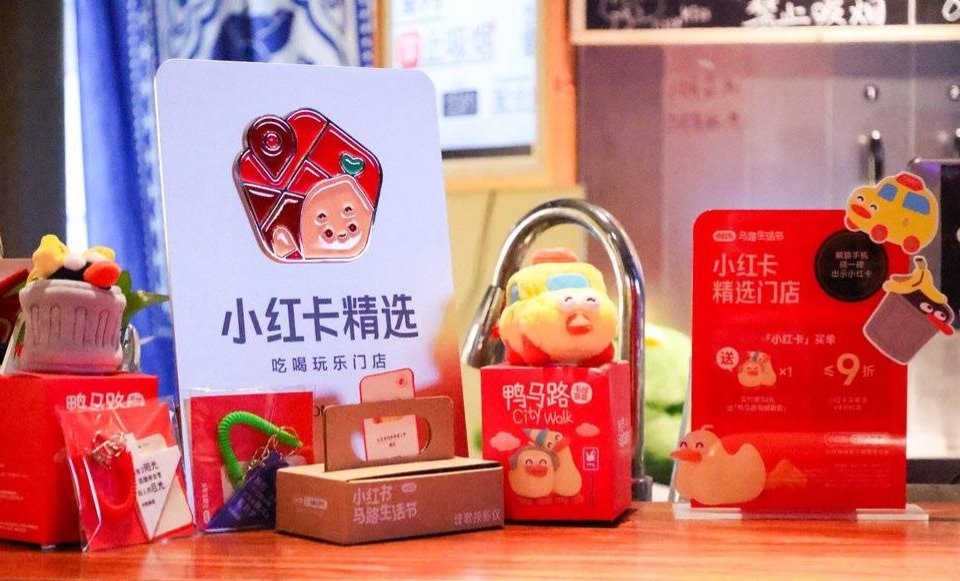
Core Insights - Xiaohongshu has launched a new membership product called "Xiaohong Card" aimed at enhancing local consumption experiences in major cities like Shanghai, Hangzhou, and Guangzhou [2][8][9] - The card offers users a 10% discount at selected local stores, leveraging the platform's community-driven recommendations to curate a list of quality merchants [4][17][35] - The initiative reflects Xiaohongshu's strategy to transition from an information-sharing platform to a transactional model, focusing on enhancing user engagement and driving offline consumption [25][39] Group 1: Product Launch and Strategy - The "Xiaohong Card" was introduced during the "Street Life Festival" and is priced at 168 yuan per year, providing access to discounts at thousands of selected local stores [2][11] - The selection of cities for the initial rollout was based on high consumer activity and a strong match with the platform's user base [3][8] - Xiaohongshu aims to create a seamless connection between online recommendations and offline experiences, enhancing the user journey from discovery to consumption [26][39] Group 2: Market Positioning and Competitive Landscape - Xiaohongshu's entry into the local lifestyle market comes at a time when competitors like Meituan and Douyin dominate, making it crucial for Xiaohongshu to carve out a unique niche [41] - The platform's focus on quality over quantity in merchant selection aims to differentiate it from other discount-driven platforms [35][41] - The company is leveraging its community-driven content to build trust and credibility around the selected merchants, which is essential for user retention and satisfaction [27][28] Group 3: Challenges and Considerations - The success of the "Xiaohong Card" hinges on overcoming significant challenges, including intense competition from established players and the need for operational efficiency [41][43] - Maintaining the authenticity of user-generated content while commercializing the platform poses a risk to community trust [42][43] - The operational demands of local lifestyle services require careful management of costs and resources, which could impact the scalability of the "Xiaohong Card" initiative [43][44]
雷军的演讲失去了“魔力”
Hu Xiu· 2025-09-30 14:03
Core Viewpoint - Lei Jun's sixth annual personal speech, themed "Change," received a significant amount of negative feedback, contrasting with the positive reception of his previous speeches [1][2][5] Group 1: Audience Reaction - The comments on the speech were largely negative, focusing on product quality issues, excessive marketing, and a general fatigue with Lei Jun's narrative of hard work and struggle [7][8] - Many viewers expressed confusion over Lei Jun's sudden decline in popularity, especially after a successful year with the launch of the Xiaomi Su7 and the fulfillment of the car manufacturing promise [9][19] - The audience's sentiment reflects a shift from admiration to skepticism regarding Lei Jun's storytelling and the company's direction [21][35] Group 2: Narrative Challenges - Xiaomi's corporate narrative faces significant challenges, as effective storytelling is crucial for organizational cohesion and customer engagement [22][23] - Lei Jun's previous "weakness" narrative, which resonated with audiences during difficult times, is becoming less effective as the company grows and faces new challenges [30][34] - The current technological landscape has shifted towards a demand for more robust and innovative products, leading to criticism of Xiaomi's technological capabilities [39][42] Group 3: Market Context - The automotive industry is becoming increasingly competitive, with higher consumer expectations for safety, design, and experience in electric vehicles [41][42] - As new hard-tech companies emerge, there is a growing public expectation for Xiaomi to demonstrate stronger technological advancements [39][40] - Xiaomi is perceived as needing a significant breakthrough in its product offerings to meet these evolving market demands [43]


国产电影,为何总是撤档?
Hu Xiu· 2025-09-30 13:06
为啥中国电影总爱撤档?有的片子上映扑街,片方怕丢人赶紧撤,有的趁机炒热度,更多是为了稳住排 片和投资人信心......观众只是想看场好电影,别再把撤档当遮羞布了。 ...
iPhone Air港版评测:瘸腿是真瘸腿,好看也是真好看
Hu Xiu· 2025-09-30 12:59
Group 1 - The iPhone 17 standard and Pro series have significant upgrades, but the aluminum alloy used lacks the premium feel of polished titanium metal previously tested in Apple Watch [1] - The only model in the iPhone lineup featuring titanium this year is the iPhone Air [2] - The iPhone Air shares similarities with the iPhone X, being on the verge of a major hardware transformation, appealing to adventurous users [4][5] Group 2 - The iPhone Air's polished titanium frame offers a warmer feel compared to the aluminum frame of the iPhone 17 Pro series, although it is less thermally conductive [11] - The polished titanium appears more refined and luxurious than the matte aluminum, resembling a concept car in its visual appeal [12] - The iPhone Air's frame, while aesthetically pleasing, is prone to smudging and dirt, similar to the stainless steel used in previous Pro models [13] Group 3 - The iPhone Air features a 6.5-inch display and weighs 165g, making it a rare "large and light" smartphone in recent years [15] - The trend is shifting towards "light and thin large screens," as smaller screens are becoming less suitable for current content consumption needs [16][17] Group 4 - The iPhone Air has a 3149mAh battery, which performs comparably to older models like the iPhone 16 Pro in terms of battery drain during regular use [20][24] - The A19 Pro processor in the iPhone Air shows significant improvements in energy efficiency, allowing users to benefit from high SoC efficiency and LTPO variable refresh rate [25] Group 5 - The iPhone Air faces challenges with app compatibility due to its new design, leading to interface bugs that affect user experience [28] - The single speaker design of the iPhone Air limits audio output quality, making it more suitable for users who have external audio solutions [29][33] Group 6 - The iPhone Air's thermal management is a concern, as it tends to run hot due to its compact design and titanium material, although it cools down quickly [39][40] - The device's layout minimizes the heat felt during normal use, making it less noticeable compared to other models [42] Group 7 - The iPhone Air's eSIM functionality presents challenges, particularly for users in mainland China, as it does not support local eSIM services [47][50] - Users must have international eSIM plans to utilize the iPhone Air effectively, which may involve additional costs and complications [54][56] Group 8 - The iPhone Air is characterized as a device with more symbolic than practical significance, appealing to a niche market rather than the general consumer base [59][62] - It represents a significant design exploration for Apple, moving beyond basic smartphone functionality to offer a unique experience [63][64]


今年十一,年轻人扎堆去东北
Hu Xiu· 2025-09-30 12:47
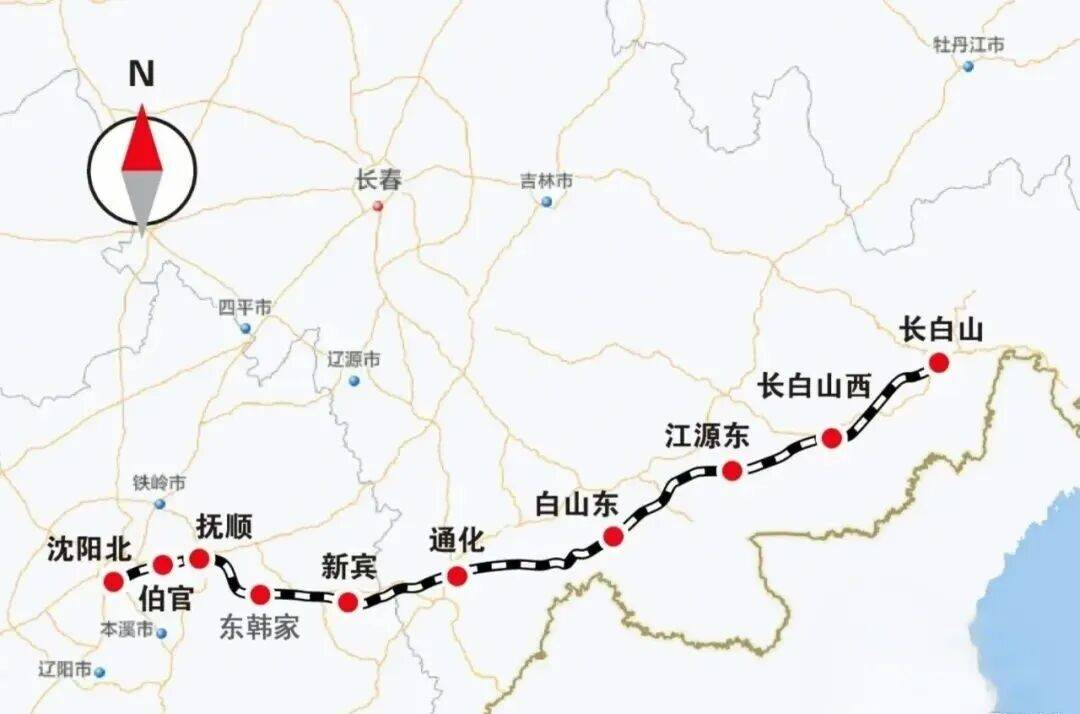
Core Insights - The opening of the Shenyang-Baihe high-speed railway is a significant development for the Northeast tourism industry, expected to boost travel and tourism in the region over the next 5 to 10 years [5][6][10] Group 1: Impact of Shenyang-Baihe High-Speed Railway - The travel time from Beijing to Changbai Mountain has been reduced from 6 hours to 4.5 hours, and from Shenyang to Changbai Mountain from 3.5 hours to 2 hours, making it a more accessible destination for residents of these areas [6][10] - The high-speed railway has ended the history of small cities like Fushun, Tonghua, and Baishan being without high-speed rail, providing a significant opportunity for local tourism [7] - The primary beneficiaries of the railway are young travelers from Shenyang, who can now easily visit Changbai Mountain for weekend getaways, increasing the frequency of their trips from once a year to multiple times a year [11][12] Group 2: Tourist Demographics and Growth - Young travelers from the Beijing-Tianjin-Hebei region are expected to be attracted to Changbai Mountain due to the reduced travel time, which is within their psychological limit for short trips [13][14] - The railway will also attract more young travelers from southern regions, who previously relied on flights to reach Changbai Mountain, thus expanding the potential tourist base [16] - The opening of the railway is anticipated to shift the tourist demographic from primarily sightseeing to more vacation-oriented visitors, which could lead to higher spending and longer stays [17] Group 3: Development of Local Tourism Cities - The railway is expected to bring attention to lesser-known tourist cities in Northeast China, such as Tonghua, which has developed into a significant skiing destination [20][21] - Bai Mountain is another city poised for growth, with its proximity to the Changbai Mountain scenic area and ongoing development of tourism projects [23][25] - Local tourism businesses are preparing for increased demand, particularly in essential services like hotels and transportation, to capitalize on the influx of visitors [27] Group 4: G331 Highway and Broader Tourism Strategy - The simultaneous opening of the G331 highway enhances the connectivity of the region, promoting a new travel pattern that combines rail and road travel [30][36] - The G331 highway offers a scenic route through various landscapes and cultural sites, appealing to young travelers seeking unique experiences [30][32] - The combination of the high-speed railway and G331 is expected to significantly stimulate the Northeast tourism economy, with early data showing a substantial increase in travel bookings [37][39] Group 5: Economic Goals and Future Outlook - The Northeast provinces, particularly Jilin, are aiming for a "trillion-yuan tourism revenue" target by 2030, with the railway and highway developments seen as crucial to achieving this goal [40]
消费贷的发票“生意”
Hu Xiu· 2025-09-30 12:34
Core Insights - The article discusses the challenges faced by consumers in providing proof of expenditure for consumer loans, leading to a rise in a gray market for invoice services [1][2][41] - Banks are tightening their requirements for proof of spending to ensure that loan funds are used for legitimate purposes, which has created anxiety among borrowers [6][17][41] Group 1: Consumer Loan Challenges - Many consumers, like Xia, are confused about the need to provide invoices for small purchases, leading to a sense of urgency and anxiety regarding their loans [1][3][10] - The requirement to upload invoices within a short timeframe has led to concerns about potential loan recalls or freezes if proof is not provided [6][9][10] - Users are expressing their frustrations on social media, with discussions about the difficulty of obtaining invoices for everyday purchases [3][9] Group 2: Rise of Gray Market - A gray market for invoice services has emerged, with intermediaries offering to create invoices for a fee, indicating a growing demand for such services [5][11][13] - These intermediaries claim to guarantee approval from banks for the invoices they provide, exploiting loopholes in the verification process [16][13][41] - The existence of this gray market highlights the gap between consumer needs and the current regulatory framework for consumer loans [27][42] Group 3: Bank's Regulatory Response - Banks are increasing scrutiny on loan usage to prevent funds from being misused, which has led to stricter requirements for proof of expenditure [16][17][41] - The regulatory environment has shifted, with banks now required to monitor loan usage more closely to ensure compliance with legal and contractual obligations [16][17] - Different banks have varying requirements for the type of proof needed, adding to consumer confusion [19][22][23] Group 4: Technological Solutions and Future Directions - The article discusses the potential of blockchain technology to improve invoice tracking and verification, although widespread implementation is still pending [29][30][33] - Suggestions for regulatory improvements include tiered verification processes based on loan amounts and user credit ratings to ease the burden on consumers [36][37][40] - The need for better education on financial literacy and invoice management is emphasized to help consumers navigate the complexities of consumer loans [38][42]

贵州酸汤火锅,到底还有没有搞头?
Hu Xiu· 2025-09-30 12:01
Core Insights - The article discusses the rise and potential rationalization of Guizhou sour soup hotpot, highlighting its rapid popularity and market dynamics [1][2][4]. Market Overview - In 2023, Guizhou sour soup hotpot emerged as a new trend, quickly gaining popularity and becoming a significant player in the hotpot market, second only to beef oil broth [5][6]. - The market size for Guizhou sour soup hotpot is estimated to reach 70-80 billion yuan in 2023 and is projected to exceed 100 billion yuan in 2024, with a further increase to 150 billion yuan by 2025 [7][5]. Regional Penetration - Guizhou serves as the origin of this hotpot style, with a significant concentration of stores (approximately 40%) in the province, while the brand is expanding into other regions, particularly in southern markets like Guangdong and Sichuan [10][11]. - The majority of stores are located in new first-tier and first-tier cities, accounting for about 78% of the total [10]. Consumer Demographics - The target demographic for Guizhou sour soup hotpot is primarily young consumers aged 18-35, who make up about 56% of the customer base, emphasizing value for money and unique flavors [12][14]. - The average dining cost in most chain restaurants is around 80 yuan, with prices ranging from 30 yuan to over 100 yuan [13]. Brand Development - Local brands are beginning to establish themselves in major cities, with some brands like Guizhou Kitchen and Qian Dadu expanding beyond their home province [20][24]. - The majority of hotpot outlets are medium to large-sized, with 80% of stores ranging from 50 to 300 square meters, catering to social dining experiences [21][22]. Challenges and Future Outlook - Despite its popularity, Guizhou sour soup hotpot faces challenges such as consumer awareness and brand recognition, with many consumers still unfamiliar with the specific flavor profiles [26][28]. - The market is expected to shift towards rational development, focusing on differentiation and brand establishment, as the industry moves away from rapid growth to a more mature phase [29][30].
AI股上涨的“永动机”,还能继续吗?
Hu Xiu· 2025-09-30 12:01
Group 1 - The core viewpoint of the article highlights the optimism surrounding the AI wave, with significant gains in market capitalization for major tech companies, particularly in the U.S. and China, since the launch of ChatGPT, amounting to approximately $14 trillion in value growth for the seven largest U.S. tech firms [1][2] - NVIDIA's CEO Jensen Huang predicts that global annual capital expenditure on AI infrastructure will reach $5 trillion, and OpenAI may become the next trillion-dollar company [2][3] - Huang's analysis suggests that 55% to 65% of future global GDP will be AI-driven, with AI infrastructure potentially enhancing $50 trillion in value [3][4] Group 2 - NVIDIA has established a partnership with OpenAI to deploy AI data center infrastructure, becoming OpenAI's preferred strategic computing and networking partner [8][12] - The collaboration aims to address the exponential demand for computing power, with OpenAI's CEO Sam Altman emphasizing the industry's constraints due to computing bottlenecks [8][11] - NVIDIA's market capitalization stands at $4.42 trillion, making it a major beneficiary of the AI boom [4][11] Group 3 - The article discusses the "ONO" triangle alliance between OpenAI, NVIDIA, and Oracle, where each company plays a role in providing AI infrastructure services, leading to a cycle of investment and revenue generation [17][18] - Concerns arise regarding the sustainability of this cycle, with Huang denying that revenue and investment are linked, asserting that investments are based on confidence in OpenAI's future growth [20][21] - OpenAI is projected to incur significant losses in the coming years, raising questions about its ability to sustain its ambitious infrastructure plans without new funding [25][26] Group 4 - Despite the optimism, there are doubts about the actual demand for AI services, with only 3% of ChatGPT users being paid subscribers, indicating low dependency on the service [28] - The AI industry faces a projected revenue gap of $800 billion by 2030, highlighting the challenges in meeting the anticipated demand for computing power [29][31] - The article concludes that while major tech companies are heavily invested in AI, the market's perception of a potential bubble is growing, leading to increased scrutiny from investors [31][32]
