
Tai Mei Ti A P P

Search documents
中国汽配出海40年后,2026年的增长动能会在哪? | 出海参考
Tai Mei Ti A P P· 2026-01-06 00:35
Core Insights - The Chinese auto parts industry is transitioning from "product export" to "brand export" and from "traffic dividends" to "efficiency dividends" as it seeks new growth drivers after 40 years of overseas development [1] - The global e-commerce infrastructure and the shift in consumer behavior towards online shopping are creating significant opportunities in the auto parts cross-border market, particularly in Europe and the U.S. [1] - Despite challenges such as tariff fluctuations and policy adjustments, Chinese auto parts sellers are leveraging supply chain efficiency and new product categories to drive growth [1] Supply Chain and Inventory Management - Inventory management is critical for cross-border sellers, especially in the auto parts sector where there is a high variety of SKUs and long-tail attributes [2] - Efficient local inventory turnover and supply chain optimization are essential for enhancing business efficiency and profitability [2] - Digital tools are being utilized to improve supply chain efficiency, with companies achieving significant reductions in delivery cycles through real-time data integration [3] Market Opportunities - The commercial vehicle and new energy vehicle parts markets are emerging as new growth engines for auto parts exports, with significant growth rates reported [5][7] - The demand for commercial vehicle parts is increasing due to rising prices in the U.S. market, prompting consumers to turn to e-commerce channels [6] - The U.S. market for new energy vehicle parts is expected to grow significantly, driven by a shortage of skilled technicians and a lack of repair facilities [7] Long-term Outlook - The auto parts export sector is viewed as a long-term opportunity, with the potential for sustained and steady growth in the global market [8] - Companies are encouraged to focus on supply chain efficiency and emerging market opportunities to maintain competitive advantages in the next 40 years of overseas expansion [8]
赵何娟对话王晓刚:什么将是机器人的ChatGPT时刻|2025 T-EDGE全球对话
Tai Mei Ti A P P· 2026-01-05 18:12
Core Insights - The humanoid robotics sector is experiencing rapid growth, with global investment reaching approximately $7 billion in the first nine months of 2025, driven particularly by the Chinese market, marking a 250% increase year-over-year [1] - Despite the investment surge, most humanoid robots remain limited to basic functionalities like dancing and boxing, indicating that technological advancements are still in their infancy [1] - A global dialogue event, the 2025 T-EDGE Global Conversations, is set to take place, focusing on innovative ideas in the AI era, featuring discussions on new research paradigms in embodied intelligence [1] Investment Trends - The humanoid robotics investment reached about $7 billion in the first nine months of 2025, a 250% increase compared to the same period last year [1] - The growth is largely attributed to the Chinese market, highlighting its significant role in the global robotics landscape [1] Technological Developments - Current humanoid robots are primarily engaged in simple tasks, indicating that the technology is still developing and has not yet reached its full potential [1] - The ACE research paradigm introduced by Daxiao Robotics focuses on human-physical world interactions, utilizing environmental data collection to build a comprehensive world model [3][4] - The ACE paradigm aims to create a unified understanding of the world by integrating physical laws, human behavior, and real machine actions, enabling robots to understand and generate complex interactions [3] Research Paradigms - The shift from machine-centric to human-centric research paradigms is emphasized, suggesting that understanding human interactions with the physical world is crucial for advancing embodied intelligence [20] - The new paradigm aims to collect data through human activities using wearable devices and sensors, which can provide insights into physical interactions and behaviors [20][21] - The need for theoretical breakthroughs in understanding physical laws and human-machine interactions is highlighted as essential for the development of effective embodied intelligence [18][19] Future Opportunities - The integration of AI with sensor technology is seen as a significant opportunity, with the potential for a new market in intelligent sensors that can enhance robotic capabilities [32] - The development of a robust ecosystem for AI and sensor integration is crucial for advancing the field, with a focus on creating adaptable models that can work with various hardware [35] - The potential for a large-scale wearable market is anticipated, driven by advancements in AI and sensor technology [30] Industry Insights - The conversation around embodied intelligence reflects a broader trend in AI development, moving towards more complex interactions with the physical world [4][28] - The importance of interdisciplinary talent development is emphasized, as the future of robotics will require expertise in both AI and physical sciences [41] - The company aims to leverage its understanding of human behavior and physical interactions to design robots that can effectively operate in real-world environments [28][47]



兴齐眼药“近视神药”独有规格获批,“唯一性”护城河能扛住竞品围猎吗?
Tai Mei Ti A P P· 2026-01-05 14:17
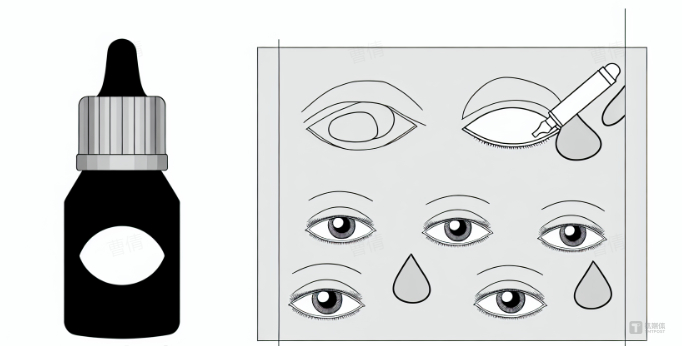
Core Viewpoint - Xingqi Eye Medicine has become the first company globally to obtain approval for multiple concentrations of atropine sulfate eye drops, providing personalized treatment options for children aged 6-12 with myopia, filling a clinical gap in mid-concentration applications [2][3]. Product Approval and Market Position - The newly approved concentrations of 0.02% and 0.04% will complement the existing 0.01% formulation, allowing for a gradient approach to myopia control [2][4]. - The company is currently the only one to have completed Phase III clinical trials for these mid-concentration products, while similar products in overseas markets are limited to lower concentrations [3][4]. Clinical Data and Efficacy - Clinical studies have shown that higher concentrations of atropine can provide better control of myopia progression, although they come with increased side effects [3][4]. - The company’s clinical trials adhered to strict regulatory guidelines, demonstrating both efficacy and safety for the new concentrations, thus establishing a technical barrier for competitors [4]. Market Potential and Sales Performance - The target market for atropine eye drops is approximately 94 million people, with current market penetration below 0.3%, indicating significant growth potential [5][6]. - Forecasts suggest that revenue from atropine eye drops could reach approximately 15 billion yuan in 2024 and grow to 68 billion yuan by 2030, with a peak sales estimate of 101.8 billion yuan by 2027 [5][6]. Competitive Landscape - The approval of higher concentration products positions Xingqi Eye Medicine advantageously, but competition is intensifying as major players like Zhaoke Ophthalmology and Heng Rui Medicine are nearing approval for similar products [9][10]. - The market for low-concentration products is becoming increasingly crowded, with over ten companies already developing 0.01% formulations [9][10]. Challenges and Strategic Considerations - Despite the initial advantage, the company faces challenges from competitors entering the market and potential pricing pressures if products are included in national insurance schemes [10][11]. - The lack of a clear policy on market exclusivity for pediatric drugs may hinder the company's ability to maintain its competitive edge [11]. - The company’s focus remains primarily domestic, with no current international market presence, which could limit long-term growth opportunities [11].

低空经济梦碎,木林森的下一个增长点在哪?
Tai Mei Ti A P P· 2026-01-05 11:09
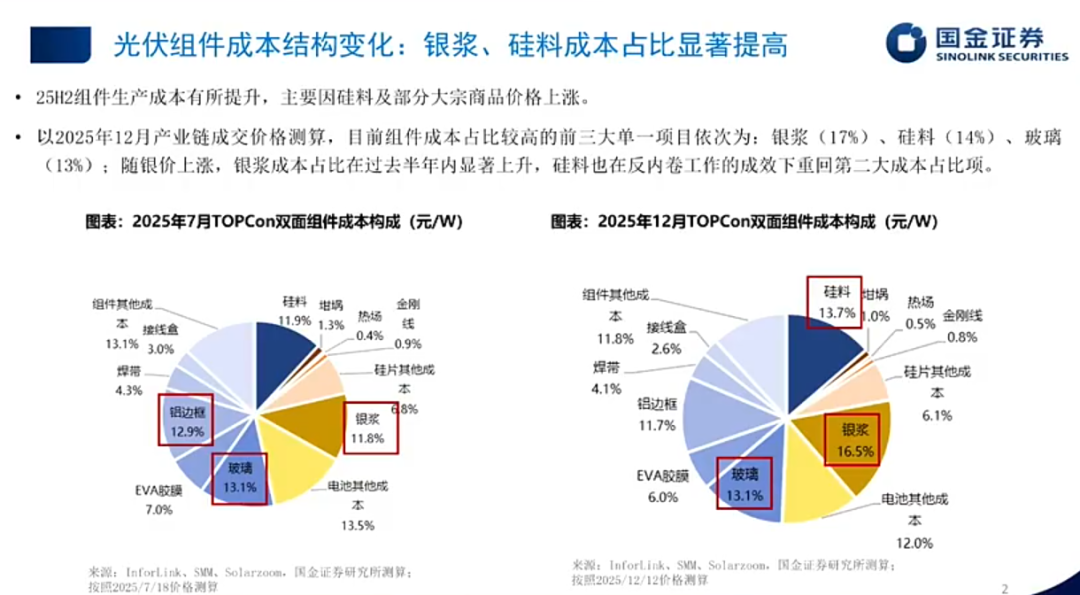
Core Insights - The company Mulinson Co., Ltd. attempted to enter the low-altitude lighting market to create a second growth curve but ultimately failed in its plans after a year of efforts [1][3]. Group 1: Low-altitude Economic Landscape - The low-altitude economy was officially recognized as a national strategic emerging industry in 2024, with a projected market size of 1.5 trillion yuan by 2025 and expected to exceed 3.5 trillion yuan by 2035 [2]. - Nearly 30 provinces in China have included the development of the low-altitude economy in their government work reports or related policies, leading to significant stock performance in related companies [2]. Group 2: Mulinson's Strategic Moves - In January 2025, Mulinson signed a cooperation agreement with New Aviation Technology Co., Ltd. to acquire 51% of its shares, aiming to gain resources and capabilities in low-altitude lighting [2]. - The agreement included profit commitments from New Aviation Technology, with net profits promised to be no less than 50 million yuan, 60 million yuan, and 70 million yuan from 2025 to 2027 [2]. Group 3: Termination of Cooperation - In January 2026, Mulinson announced the termination of the cooperation agreement due to a lack of consensus on core arrangements, marking the failure of its initial attempt to enter the low-altitude economy [3]. Group 4: Financial Performance Challenges - Mulinson has faced ongoing performance pressure, with net profits dropping from 1.05 billion yuan in 2021 to 155 million yuan in 2022, followed by a recovery in 2023 and another decline to 311 million yuan in 2024 [4]. - For the first three quarters of 2025, Mulinson reported a slight revenue decline of 0.10% year-on-year, with net profits plummeting by 42.36% to approximately 209 million yuan [6]. - The company attributed the significant drop in profits to increased expenses, particularly in sales and R&D, as it continues to invest in overseas sales channels and new product development [7].

烧钱、互搏与淘汰赛:地平线和Momenta走到决赛圈了吗?
Tai Mei Ti A P P· 2026-01-05 10:19
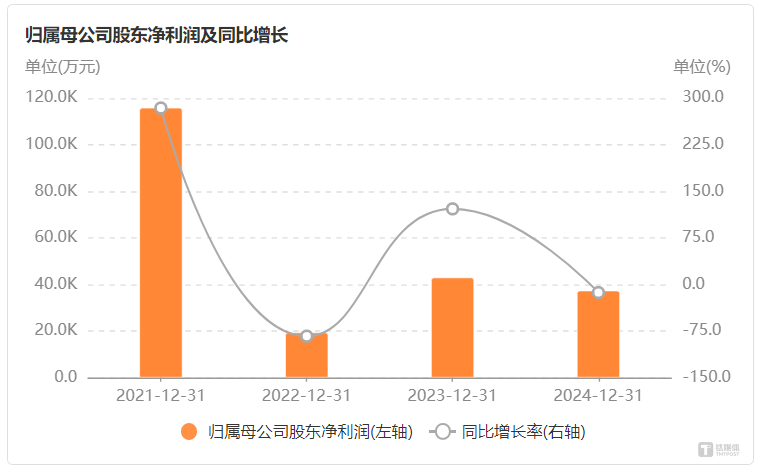
Core Insights - The smart driving industry is at a pivotal point, shifting focus from high-end models to mainstream adoption, with affordability and usability becoming key competitive factors [1][2] - Companies like Horizon and Momenta are leading the charge in making advanced driving assistance systems (ADAS) accessible to the mass market, targeting vehicles priced around 100,000 RMB [1][20] Group 1: Industry Dynamics - The transition from high-end to mass-market smart driving solutions is driven by technological advancements and cost reductions, aiming for broader market penetration [2][4] - The competitive landscape is evolving from a focus on capabilities to one centered on cost, reliability, and delivery capabilities, with supply chain stability becoming crucial for widespread adoption [4][11] Group 2: Supply Chain Evolution - The supply chain for smart driving technology is complex, involving multiple players including OEMs, Tier 1 suppliers, algorithm companies, and chip manufacturers, with a shift towards more collaborative models [5][7] - As competition intensifies, the relationship between suppliers and OEMs is changing, with suppliers becoming co-developers rather than just vendors, emphasizing the need for integrated solutions [9][17] Group 3: Competitive Landscape - Horizon and Momenta are positioned as key players in the smart driving ecosystem, with Horizon focusing on hardware-software integration and Momenta emphasizing data-driven algorithm improvements [15][16] - Both companies are targeting the same market segment, aiming to provide cost-effective solutions for urban navigation assistance (NOA) in vehicles priced around 100,000 RMB [20][21] Group 4: Financial Pressures - The financial realities of the smart driving industry are challenging, with high R&D and operational costs leading to significant losses for companies like Horizon [27][29] - The need for sustained investment in technology and infrastructure is critical, as both Horizon and Momenta face pressures to scale their operations while managing costs effectively [30][31] Group 5: Future Outlook - The industry is expected to undergo a consolidation phase, with a few key players emerging as leaders while others may struggle to survive due to increasing competition and market pressures [25][30] - The competition is shifting from technological capabilities to scale and ecosystem stability, indicating a potential future where only a few companies dominate the market [30][31]
从拥硅为王到去银为王,谁将成为新一轮光伏周期的王者?
Tai Mei Ti A P P· 2026-01-05 10:18
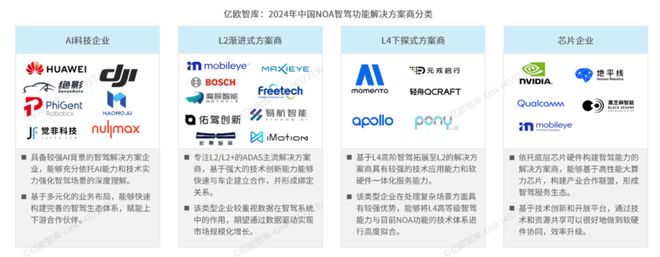
Core Viewpoint - The photovoltaic (PV) industry is undergoing a structural change in its cost dynamics, with silver paste replacing silicon material as the primary cost variable from 2024 to 2026, significantly impacting the competitive landscape and survival of companies in the sector [1][2]. Cost Structure Changes - In January 2024, silicon material's cost share decreased to approximately 10%-12%, while silver paste's share rose to 10.5%, marking a shift in cost dominance [2]. - By January 2025, silver paste's cost share surged to 14.2%, surpassing silicon material at 11.3%, indicating a reversal in cost structure [3]. - In January 2026, silver paste's share increased to 16%-17%, while silicon material's share fell to 9.9%, solidifying silver paste's dominance in cost structure [4][7]. Supply and Demand Dynamics - The global supply of silicon material is projected to exceed demand significantly in 2026, leading to a price drop to around 46,000-53,000 yuan per ton, which is below the cost line for many second and third-tier companies [8]. - The technological maturity in silicon material and wafer production has reached a plateau, limiting further cost reductions [9][10]. Silver's Unique Position - Silver's cost dynamics are driven by industrial demand rather than its traditional roles, with the industrial sector accounting for nearly 60% of silver demand in 2024 [15]. - The photovoltaic sector represents only 25%-30% of global industrial silver demand, indicating that it cannot dictate silver prices [18]. - The supply of silver is largely dependent on the production of other metals, making it less responsive to price changes [19]. Technological Innovations - The industry is witnessing a shift towards silver reduction technologies, with three main approaches emerging: gradual silver reduction, silver-coated copper paste, and copper plating [25][31][36]. - Silver-coated copper paste is expected to become the mainstream solution by 2026, offering significant cost advantages [31]. - Copper plating technology is anticipated to lead the industry by 2027, providing a complete alternative to silver and significantly reducing costs [36][47]. Future Outlook - The silver price is expected to remain high and volatile through 2026-2027, driven by supply-demand imbalances and industrial demand growth [50]. - Companies that can effectively implement silver reduction technologies will gain a competitive edge, as the ability to manage silver costs becomes a critical survival factor [52][53].




亚马逊大意失AI:昔日位面之子,沦为版本弃子?
Tai Mei Ti A P P· 2026-01-05 07:14
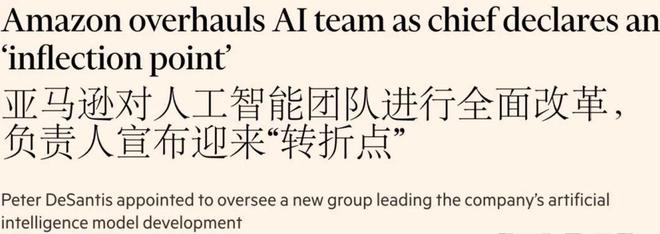
Core Viewpoint - Amazon is restructuring its AI strategy by creating a new "AGI organization" to integrate its language model team, chip development unit, and quantum computing team, as a response to its lagging position in the AI race compared to competitors like Google, Meta, and Nvidia [1][3]. Group 1: Amazon's AI Strategy and Challenges - Since 2025, Amazon's stock performance has been poor, with no significant annual gains, indicating that investors do not view Amazon as a key player in the AI sector [3]. - Despite having strong assets like AWS, self-developed chips, and a global e-commerce platform, Amazon's AI initiatives have been perceived as reactive rather than proactive, leading to a strategic need for urgent correction [3][4]. - Amazon's AI models, such as the Nova series, have not gained significant traction in the market, with OpenAI and Google dominating token usage [4]. Group 2: Competitive Landscape - Amazon's AWS, once a leader in cloud services, is facing increasing competition from Microsoft Azure and Google Cloud, which are integrating AI capabilities more effectively [7][10]. - Microsoft Azure's market share is growing, driven by strong demand for AI services, while AWS's positioning as a "model supermarket" dilutes its competitive edge [10][11]. Group 3: Internal Challenges and Organizational Structure - Amazon's AI team has been fragmented across various business lines, focusing on incremental improvements rather than developing a cohesive AGI strategy, leading to missed opportunities in the consumer AI space [15][16]. - The company's historical focus on customer-centric improvements has resulted in a reluctance to invest in long-term, high-risk AI innovations, causing it to fall behind competitors who are more agile in adapting to new trends [16][17].

特斯拉跌落神坛,比亚迪夺走纯电王冠
Tai Mei Ti A P P· 2026-01-05 06:48
一个简单的事实足以说明剧变的剧烈程度:2025年全年,比亚迪卖出了近226万辆纯电动车,而特斯拉 的交付量停留在164万辆。 这不是一次偶然的超车。特斯拉交付量连续两年下滑,同比减少8.6%;比亚迪却保持着近28%的高速增 长。更重要的是,比亚迪的超越发生在特斯拉曾经占据绝对优势的欧美市场。 文 | 财能圈 当特斯拉2025年四季度的交付量同比下滑16%时,全球电动车行业的一个时代正式落幕。曾经不可一世 的领跑者,被中国对手比亚迪从销量榜首的位置拉了下来。 从产品老化到政策红利消退,从品牌争议到战略转向,特斯拉正面临前所未有的复杂挑战。而比亚迪凭 借全产业链优势和精准的市场策略,正在改写全球电动车市场的游戏规则。 特斯拉踩下刹车, 神话光环褪色 特斯拉四季度的成绩单,让很多投资者感到寒意。41.8万辆的交付量,同比下滑16%,不仅远低于华尔 街的预期,也未能达到公司自己设定的目标。 全年164万辆的交付数据,意味着特斯拉连续第二年销量下滑。官方的解释集中在"全球工厂升级"和"资 源向高附加值业务倾斜"上。但市场看到的是更直接的现实:主力车型Model 3和Model Y已经老了,而 市场期待的新车型还没大规模 ...


1070亿、930家公司:2025中国AI应用的野蛮共识
Tai Mei Ti A P P· 2026-01-05 05:30
Core Insights - The year 2025 is identified as the "Year of AI Applications," with significant investments and developments expected in the AI sector [2] - Major tech leaders and investors have reached a consensus that AI applications will see large-scale implementation in 2025, driven by decreasing costs of large model inference and increasing API call volumes [2][3] - A total of 930 AI application companies secured new financing amounting to 107.07 billion RMB in 2025, indicating a high level of investment activity [2][3] Investment Landscape - The top 10 application scenarios account for 73% of the total number of financing companies, indicating a high concentration of capital in these validated or promising areas [3] - Among the 930 companies, 194 focus on embodied intelligence, representing 20.9% of the total, as it aligns with capital's vision of "AI + physical world" [4] - The top three scenarios (embodied intelligence, autonomous driving, and general AI) account for over 51.6% of total financing, highlighting a trend of capital concentration [12][14] Financing Trends - The average financing amount for autonomous driving projects is 45.29 million RMB, significantly higher than other sectors, indicating a strong investment preference [18][19] - 36% of AI application companies are in early-stage financing, while 46% are in growth stages, suggesting that most companies are still proving their business models [20][21] - The majority of financing is directed towards B2B projects, with 62.17% of the top 10 scenarios being purely B2B, reflecting a shift in capital preferences [11] Geographic Distribution - Beijing leads with 226 AI application companies, accounting for 24.3% of the total, followed by Guangdong and Shanghai, indicating a concentration of talent and resources in these regions [23][24] - The geographic distribution of AI application companies reflects a competitive landscape driven by capital, talent, and supply chain dynamics [24] Industry Dynamics - The financing landscape reveals a merging of software and hardware boundaries, with top companies in embodied intelligence and autonomous driving demonstrating this trend [29] - The rapid growth in AI applications is accompanied by potential risks, as many companies may face challenges in achieving sustainable profitability [30] - The acquisition of Manus by Meta for $2 billion signals a global competition for AI talent and resources, reshaping the industry landscape [30]

AI赋能低空经济:三大高潜力赛道即将引爆万亿市场
Tai Mei Ti A P P· 2026-01-05 04:05
Core Insights - The article discusses the evolution of China's low-altitude economy, highlighting a shift from traditional real estate to a new digital asset paradigm involving airspace below 1000 meters, which is expected to become a high-frequency trading asset by 2025 [1][2] Group 1: Low-altitude Economy Development - The low-altitude economy has transitioned from policy relaxation to industrial infrastructure development, marking a significant turning point in 2025 where applications are moving from single-point tests to large-scale clusters [2] - The explosion of the low-altitude economy relies on system-level scheduling capabilities rather than individual operators [3] Group 2: Core Drivers of Low-altitude Market - The core driver of the trillion-level low-altitude market is not merely the extension of the aviation manufacturing industry but rather an AI-driven "air operating system" that manages airspace operations [4] - Key technologies supporting this system include digital twins for airspace management, edge intelligence for autonomous decision-making, and swarm intelligence algorithms for coordinated operations [5] Group 3: Market Dynamics and Future Trends - As the industry matures, strict commercial rules will re-emerge in the low-altitude sector, leading to diminishing profits in hardware manufacturing, similar to the early smartphone market [6] - The future competitive landscape is likely to exhibit a "dumbbell structure," with one end focusing on core algorithms and platforms, while the other end specializes in vertical applications, leaving traditional aircraft manufacturers in a precarious position [7] Group 4: Strategic Focus for Businesses - Companies are advised to shift focus from hardware manufacturing to leveraging AI across traditional industries, including the low-altitude economy [8] - Understanding the data and algorithmic frameworks that underpin operations is more critical than merely achieving higher flight altitudes [9][10] Group 5: Infrastructure and Service Opportunities - The low-altitude economy requires invisible infrastructure, emphasizing the need for computational and communication capabilities, including low-altitude sensing networks and high-precision mapping services [12] - High-frequency vertical service providers that offer comprehensive solutions in high-risk and efficiency-demanding sectors will command premium pricing [12] - The post-operation market surrounding drones is expected to explode, with services like maintenance, AI pilot training, and automated positioning becoming vital segments [12]