Tai Mei Ti A P P

Search documents
榜单公布|2025 EDGE AWARDS年度AI创新榜正式揭晓
Tai Mei Ti A P P· 2025-12-24 08:29
Group 1 - The core narrative of artificial intelligence (AI) has evolved beyond mere parameter competition to focus on practical applications and economic value, showcasing the industry's potential to reshape productivity and workflows [2] - 2025 is marked as a pivotal year for AI, characterized by the emergence of innovative applications and the establishment of AI in various industries, indicating a significant shift towards value realization [2] - The EDGE AWARDS AI Innovation list highlights a blend of innovation and practicality, recognizing both tech giants and startups that bridge technology with human needs, thereby enhancing the real-world impact of AI [3] Group 2 - The AIGC Technology Pioneer award recognizes companies that have achieved key technological breakthroughs in AIGC and successfully commercialized these innovations, significantly expanding the capabilities of AIGC [4] - Alibaba Cloud has built a robust intelligent computing platform centered around "cloud + large models," promoting scalable deployment and sustainable evolution of productivity tools [6] - iFlytek has made significant advancements in AI, particularly in speech and cognitive intelligence, with the launch of the Xunfei Spark X1.5 model, which boasts enhanced efficiency and multilingual capabilities [7] - DeepSeek has achieved top-tier performance in various AI applications, driving the practical implementation of AIGC technology through innovative model architecture [8] - Amazon Web Services provides a solid foundation for AIGC technology development, lowering application barriers and costs while fostering a comprehensive AI service ecosystem [9] Group 3 - Baidu has made notable strides in AI, launching the 24 trillion parameter Wenxin model 5.0 and various applications, including the commercial super-intelligent agent "Famu" and real-time interactive digital human "Huibo Star" [12] - Kuang-Chi Technology focuses on AI-driven solutions for the textile and apparel industry, leveraging new technologies to enhance digitalization and intelligent upgrades across the supply chain [21] - The AI Super Teacher from Zuoyebang replicates the logic and feedback of a real teacher, marking a transition in educational AI towards a more intelligent and proactive learning model [32] - The AI Office Notebook from Sibeichi integrates large models with office products, enhancing work efficiency through features like AI note-taking and task management [40]


王传福背后的男人:投资250万狂赚1000亿,锂矿帝国大掌门
Tai Mei Ti A P P· 2025-12-24 08:28
Group 1 - The lithium carbonate market has experienced a significant surge, with prices reaching 111,400 yuan per ton, marking a 14% increase in a single week and the highest level in 18 months [1][2] - The recent price increase is attributed to the delayed resumption of lithium mining in Jiangxi, which has led to heightened market activity [1] - Rongjie Co., Ltd. (002192.SZ), under the leadership of entrepreneur Lv Xiangyang, is positioned to benefit from this price surge due to its ownership of the largest spodumene mine in Asia [4][5] Group 2 - Rongjie Co., Ltd. reported a revenue of 510 million yuan for the first three quarters of 2025, a 26% year-on-year increase, but a 21% decline in net profit attributable to shareholders [6] - However, the third quarter alone showed a remarkable recovery with a revenue of 210 million yuan, a 35% increase year-on-year, and a net profit of 58.58 million yuan, a staggering 249% increase [7] - The company is expanding its operations by increasing mining capacity and investing in lithium-ion battery material production, aiming to create a complete industry chain from mining to battery production [7][8] Group 3 - Lv Xiangyang has built a vast business empire, controlling or holding stakes in 236 companies with a total market value exceeding 900 billion yuan as of 2022 [10] - His investments span the lithium battery supply chain, including companies like Rongda Lithium Industry and Dongguan Derui, which have been crucial in supporting Rongjie Co., Ltd. during challenging times [10][11] - Lv's investment strategy involves leveraging real estate profits to fund industrial ventures and financial investments, showcasing a diversified approach to wealth accumulation [12] Group 4 - The investment in BYD by Lv Xiangyang in 1995, amounting to 2.5 million yuan, has yielded returns exceeding 100 billion yuan, demonstrating a remarkable investment acumen [13][14] - This investment is highlighted as a significant success story in Chinese business history, showcasing the importance of recognizing potential in emerging industries [13][15] - The narrative emphasizes the value of investing in people and relationships, as the initial investment not only provided financial returns but also fostered a long-term partnership between Lv and his cousin Wang Chuanfu [16]



AI战场缺一个腾讯系
Tai Mei Ti A P P· 2025-12-24 08:02
Core Insights - Tencent is shifting its strategy in the AI market from a defensive to an offensive approach, particularly in the large model sector, following the hiring of former OpenAI scientist Yao Shunyu [1][2] - The company is restructuring its AI departments to enhance its capabilities and attract top talent, indicating a strong focus on improving its AI infrastructure and applications [1][2][11] Group 1: Talent Acquisition and Organizational Changes - Yao Shunyu's appointment as the head of AI Infra and chief AI scientist is notable for his youth and the high-level reporting structure, which is uncommon in Tencent's technical hierarchy [1] - Tencent has accelerated its talent acquisition efforts in AI, with notable hires such as Feng Jia, who previously led the visual team at ByteDance [2] - The restructuring includes the establishment of new departments like AI Infra and Data Computing Platform, aiming to consolidate AI efforts under a unified management [11] Group 2: Competitive Landscape and Market Position - Tencent's competitors, including ByteDance and Alibaba, are rapidly advancing in AI applications, while Tencent's progress appears slower, particularly in user-facing applications [2][3] - The company acknowledges that it does not currently have a leading model in the market, with various models excelling in different scenarios, indicating a competitive but fragmented landscape [8][9] - Despite a significant advertising push for its AI product "Yuanbao," Tencent has struggled to maintain a leading position in user engagement compared to competitors like ByteDance's "Doubao" [10][12] Group 3: Strategic Focus and Future Directions - Tencent's strategy appears to be one of cautious optimism, focusing on gradual improvements in model capabilities and user engagement rather than aggressive market capture [8][11] - The company is exploring partnerships to enhance its AI ecosystem, leveraging WeChat as a strategic entry point to integrate various services and applications [5][6] - There is a pressing need for Tencent to integrate its models, applications, and use cases effectively to remain competitive in the evolving AI landscape [7][16]

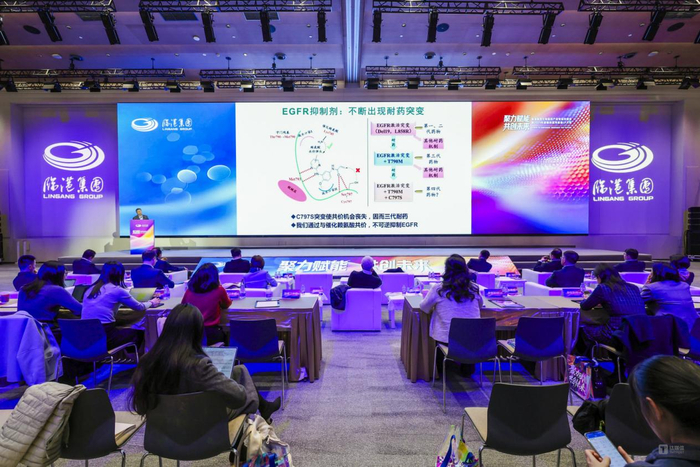
聚力赋能 共创未来,临港集团举行生物医药产业专场对接会
Tai Mei Ti A P P· 2025-12-24 07:43
Core Insights - The conference focused on the biopharmaceutical industry, aiming to create a high-end ecological platform for industry and capital integration to support Shanghai's goal of becoming a global biopharmaceutical innovation hub [1] Group 1: Company Strategy and Development - Lingang Group has established 28 parks across 16 districts in Shanghai, housing over 24,000 enterprises, and is positioning itself as a leading service provider for innovative ecological integration in biopharmaceuticals [2] - The group emphasizes biopharmaceuticals as one of Shanghai's three strategic industries, with a focus on creating a "Life Blue Bay" in the Lingang New Area, fostering research and high-end manufacturing [2] - The company is transitioning from a "space provider" to an "ecosystem builder," leveraging a fund and base model to mobilize a fund scale of 170 billion yuan [2] Group 2: Industry Collaboration and Innovation - The "招投联动" (Investment and Recruitment Linkage) model is a key driver for empowering the biopharmaceutical ecosystem, integrating capital with industry innovation [4] - The establishment of the "Nucleic Acid Drug Clinical Transformation Concept Verification Center" aims to address bottlenecks in the development of nucleic acid drugs, providing comprehensive support from early research to clinical application [12] - The conference featured discussions on the internationalization of the biopharmaceutical industry, with insights from multinational companies and domestic innovators on building a comprehensive service system for global development [14] Group 3: Investment and Partnerships - Lingang Group's investment platform, including the Lingchuang Blue Bay Fund, has signed agreements with innovative companies like Tianchen Biotech and Orange Sail Medicine, focusing on dual-directional linkage between capital investment and industrial bases [8] - The partnership with Meifengli aims to integrate core advantages and resources in the medical device industry, enhancing the innovation service ecosystem in Shanghai [6] - The conference highlighted the importance of collaboration among industry experts to support investment decision-making and project incubation [10]
长安拿下L3首牌,自动驾驶商用化开启蝴蝶效应
Tai Mei Ti A P P· 2025-12-24 06:25
文 | 花生说科技,作者 | 李皙寅·花生,编辑 | 黑松 大变局往往从一个小事件开始。 2025年12月20日,重庆内环快速路的车流如梭,有一辆车却格外醒目。 一辆长安汽车旗下深蓝SL03,它挂着的"渝AD0001Z"号牌,是全国首块L3级自动驾驶专用正式号牌。 在指定路段,系统将接管全部动态驾驶任务,事故责任首次从驾驶员转向车企。中国自动驾驶加速走向 合规商用。 为啥花落长安家? 还是那句老话,机会留给有准备的人。长安汽车的L3之路探索早已有之。 回溯其技术脉络,时间线非常清晰:2014年启动驾驶辅助研发,2017年专攻L3级技术,2021年在深蓝 品牌首次应用,2024年成为首批试点车企,2025年完成产品测试与安全评估。 从技术积累到场景验证,再到合规落地,这是长安汽车一步一步走出来的。 更关键的是,其L3系统已在8D般的重庆,基于复杂路况中完成百万公里测试,经过远超国标的场景测 试后,给出了零事故、零违规的结果。 这样的数据,给了政策放行的底气。 重庆不仅开放核心道路作为试点路段,还创新推出智能网联汽车专用号段,更是组建专班为长安提供全 流程服务。 花生说科技调研地方汽车产业多年,这种车企技术攻坚+ ...

HarmonyOS的2025:从“可用”到“好用”,鸿蒙生态从突破走向成熟
Tai Mei Ti A P P· 2025-12-24 05:41
Core Insights - The article highlights the rise of the HarmonyOS ecosystem, emphasizing its transition from a survival phase to a mature, collaborative environment involving developers, users, and ecosystem partners [2][18] - Huawei's latest data shows that the number of devices running HarmonyOS 5 and HarmonyOS 6 has surpassed 32 million, with over 150,000 new devices added daily [2][13] - The ecosystem has achieved over 350,000 applications and services, with an adaptation rate exceeding 95% [5][8] Group 1: Ecosystem Development - The HarmonyOS ecosystem has expanded to cover 18 core verticals, including daily life convenience, travel, finance, news, entertainment, and enterprise applications [7] - Major applications, including over 60 Tencent products, have been fully integrated into HarmonyOS, enhancing user experience and performance [7][8] - The focus of the ecosystem has shifted from ensuring the availability of major applications to enhancing the overall user experience [8] Group 2: Technological Advancements - HarmonyOS supports a wide range of devices, from lightweight devices like remote controls to smartphones, PCs, and even satellites, enabling a seamless multi-device experience [9][10] - The distributed technology of HarmonyOS allows devices to share hardware capabilities, creating a "super terminal" experience for users [10][12] - Features like "air transmission" simplify the sharing process, enhancing user interaction with devices [11] Group 3: Market Position and Growth - The growth rate of HarmonyOS devices is unprecedented in the global operating system history, with over 23,000 applications participating in the ecosystem's development [13][14] - In the domestic market, HarmonyOS has maintained a market share exceeding iOS for six consecutive quarters, securing the second position [17] - The Huawei Mate 80 series achieved sales of over 1 million units within 18 days, significantly impacting the high-end smartphone market [17] Group 4: Future Directions - The next focus for HarmonyOS is to deepen the adaptation and functionality of mid-tail applications, enhancing user experience at a granular level [18] - The ecosystem's success relies on collaboration among users, developers, and partners, aiming for a comprehensive "Harmony Complete Body" [18]

帕西尼CTO张恒第:人类生活方式将由我们改写
Tai Mei Ti A P P· 2025-12-24 05:15
文|产联社,作者 | 明丽 初一 "对人类而言困难的任务,对机器反而容易;对人类轻松的事,对机器却异常艰难。"这是20世纪80年代 由汉斯·莫拉维克等人提出的"莫拉维克悖论",这一点在机器人触觉感知领域得到了尤为鲜明的印证。 具身智能触觉感知及行业解决方案供应商——帕西尼感知科技,其CTO张恒第对我们解释,触觉感知技 术出现得最早,但被人理解并使用却是最晚,原因是触觉信号复制难度极大,很多机器人企业,原本想 做触觉,但却没能实现。 "没有触觉,机器人能唱歌跳舞,能跑马拉松,但无法进厂打工,无法操作精细工种,真正地为人类所 用。"张恒第说。 触觉传感器广泛应用后,机器人进厂打工将成为现实,尤其是在高危特种环境中,机器人将发挥其独特 价值。 但帕西尼的目标不止于此。"以触觉为始,后续要配套触觉算法、触觉模型,最后生成控制策略,利用 触觉感知技术服务千行百业,人类生活方式也将开启一个全新篇章。"张恒第说,未来他们一定会改变 世界。 张恒第从AI算法、技术前景展望,数据处理等方面向我们分享了经验。 我们的终极目标是改变人类的生活习惯 产联社:有人把帕西尼称为深圳机器人六小龙之一,你如何看待这个评价? 张恒第:帕西尼在 ...
快手被黑客攻击“涉黄”,谁才是个巨大“草台班子”?
Tai Mei Ti A P P· 2025-12-24 05:15
Core Viewpoint - Kuaishou experienced a significant content safety crisis due to a large-scale attack that led to the proliferation of inappropriate content on its platform, raising concerns about its technical security and governance capabilities [1][2][4][5]. Group 1: Incident Overview - On December 22, Kuaishou's platform was flooded with live streams containing pornographic, violent, and terror-related content, resulting in a breakdown of its content review system [1][4]. - The company reported a surge of 4 million returning users and a rise in daily active users (DAU) despite the crisis, indicating a temporary spike in interest driven by curiosity [1][6]. - Kuaishou's official response labeled the incident as a "black and gray industry attack," and the company initiated an emergency plan to restore normal operations [2][5]. Group 2: Technical and Governance Issues - The incident highlighted potential deep-seated issues within Kuaishou's technical risk control, emergency response, and corporate governance, questioning the effectiveness of its content safety measures [4][8]. - Experts suggested that the attack exploited a vulnerability in Kuaishou's live streaming interface, allowing attackers to bypass traditional content review processes [7][8]. - The incident raised alarms about Kuaishou's overall security architecture and its ability to handle automated attacks, indicating a need for improved technical defenses [7][8]. Group 3: Financial Implications - Kuaishou's live streaming business, a significant revenue source, reported nearly 10 billion RMB in revenue for Q3 2025, highlighting its importance to the company's financial health [9][10]. - Despite the crisis, Kuaishou's revenue growth remained strong, with a 14.2% year-on-year increase in total revenue, but the incident raised questions about the adequacy of its investment in security measures [11][12]. - The company's stock price fell significantly following the incident, reflecting investor concerns about the impact on its reputation and future earnings [12][19]. Group 4: Industry Context - The incident at Kuaishou is part of a broader trend where many tech companies face increasing threats from black market activities and cyber attacks, indicating a growing need for robust security measures across the industry [16][17]. - Other platforms, such as Tencent and ByteDance, have also experienced similar security challenges, emphasizing the need for enhanced defenses against sophisticated attacks [16][17].


【钛晨报】北京发放首批L3级高速公路自动驾驶车辆专用号牌,三个路段可开启;字节跳动据称拟豪掷千亿加码AI布局,预留850亿狂囤芯片;《行政执法监督条例》...
Tai Mei Ti A P P· 2025-12-23 23:28
Group 1: Autonomous Driving - Beijing has issued the first L3-level highway autonomous driving vehicle license plates, marking a significant milestone in China's autonomous driving industry [2] - Three vehicles received the special license plates, which can operate under specific conditions at speeds up to 80 km/h on designated highways [2] - The autonomous driving function is currently limited to certain routes in Beijing, with a requirement for a driver to be present to take control in emergencies [2] Group 2: AI Investment - ByteDance plans to invest 160 billion RMB (approximately 23 billion USD) in AI by 2026, increasing its investment from 150 billion RMB this year [4] - About half of this budget is allocated for advanced semiconductor procurement necessary for AI model development [4] Group 3: Automotive Industry - Mercedes-Benz has agreed to pay approximately 1.5 billion USD (around 10.56 billion RMB) to settle a diesel emissions dispute with a coalition of attorneys general from nearly 50 U.S. states [6] - The settlement will cover 39,565 vehicles that have not been repaired or scrapped as of August 2023 [6] Group 4: Market Trends - The bond ETF market has seen significant growth, with a total scale of 731.29 billion RMB, reflecting a 320.20% increase from the beginning of the year [15] - The net inflow of funds into bond ETFs reached 455.91 billion RMB, a 455.33% increase compared to the previous year's total [15] Group 5: Food Safety Regulations - The State Administration for Market Regulation has introduced new regulations to enforce food safety responsibilities for food sales chain enterprises [9] - The regulations require headquarters to establish comprehensive food safety risk prevention mechanisms across all levels of the organization [9] Group 6: Real Estate Market - The National Housing and Urban-Rural Development Conference emphasized stabilizing the real estate market in 2026, focusing on controlling supply, reducing inventory, and optimizing supply [11] - The conference highlighted the importance of supporting residents' housing needs and promoting the construction of quality housing [11]

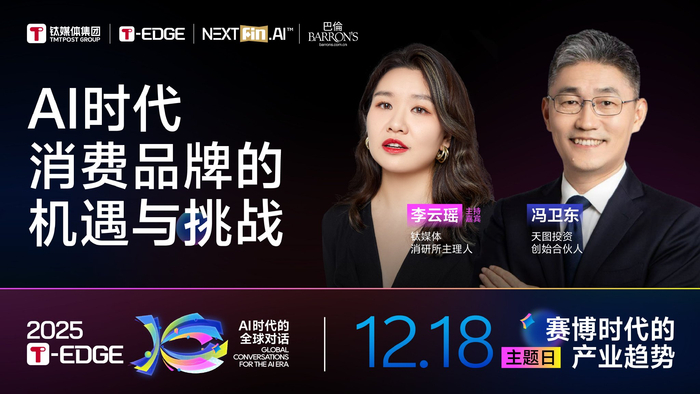
天图投资冯卫东:质价比、小确幸、自我完善消费将成主流趋势丨2025T-EDGE
Tai Mei Ti A P P· 2025-12-23 13:22
Core Insights - The 2025 T-EDGE Annual Conference and AI Global Dialogue will take place from December 15 to 21, featuring top leaders in innovation and business discussing various topics, including the opportunities and challenges for consumer brands in the AI era [2][3]. Group 1: Market Trends - The current market is described as being in a "consumption mini ice age," driven by structural economic changes, leading consumers to prioritize cost-effectiveness and quality-price ratios [3][5][19]. - There is a notable shift towards "small happiness consumption," where consumers seek emotional value through experiences rather than large purchases [19]. - The trend of self-improvement consumption is emerging, with consumers investing in health and personal development, indicating a shift in spending priorities [19][20]. Group 2: Brand Strategies - Brands are increasingly adopting local capital strategies, selling their China operations while retaining long-term brand licensing to benefit from ongoing brand value appreciation [4][8]. - Effective differentiation and value innovation are crucial for brands to maintain competitive advantages, especially in an AI-driven market [3][14]. - The integration of AI into products and services is seen as a revolutionary opportunity for brands to enhance communication and consumer engagement [3][11][15]. Group 3: Investment Insights - The investment strategy is shifting towards growth and mature stage investments rather than relying on IPOs, reflecting a broader trend in the investment landscape [9][22]. - The focus on consumer sectors is evolving, with an emphasis on sustainable and innovative brands that can adapt to changing consumer preferences and market conditions [19][22]. - The AI revolution is expected to create significant opportunities across various consumer categories, particularly in health and technology sectors [20][21].