晚点LatePost

Search documents
任少卿的智驾非共识:世界模型、长时序智能体与 “变态” 工程主义
晚点LatePost· 2025-10-09 10:14
Core Viewpoint - The article emphasizes the challenging yet necessary path that NIO is taking in the field of intelligent driving, focusing on the development of world models and reinforcement learning to achieve advanced capabilities in autonomous driving [2][4][6]. Group 1: Company Background and Leadership - Ren Shaoqing, a prominent figure in NIO, has a strong academic background and significant contributions to deep learning, including the development of Faster R-CNN and ResNet [3][4]. - He co-founded the autonomous driving company Momenta before joining NIO, where he took on the challenge of building the second-generation platform from scratch [4][6]. Group 2: Technological Approach - NIO's approach to intelligent driving involves a combination of high computing power, multiple sensors, and a new architecture based on world models and reinforcement learning [5][6]. - The company aims to move beyond traditional end-to-end models, which are limited in their ability to handle long-term decision-making, by focusing on world models that integrate spatial and temporal understanding [8][11]. Group 3: World Model Concept - The world model is defined as a system that builds high-bandwidth cognitive capabilities based on video and images, addressing the limitations of language models in understanding complex real-world scenarios [11][14]. - NIO is the first company in China to propose the concept of world models, which includes understanding physical laws and the ability to predict movements in three-dimensional space over time [12][24]. Group 4: Reinforcement Learning Importance - The article highlights that the intelligent driving industry has yet to fully embrace the significance of reinforcement learning, which is crucial for developing long-term planning capabilities in autonomous systems [5][24]. - NIO recognizes that traditional imitation learning is insufficient for handling complex driving scenarios that require extended memory and decision-making [30][31]. Group 5: Data Systems and Training - NIO has developed a three-tier data system to ensure the quality and relevance of training data, emphasizing the importance of real-world data over expert data for training models [34][36]. - The company utilizes a combination of game data and real-world driving data to enhance the model's understanding of temporal dynamics and decision-making [25][26]. Group 6: Future Directions and Innovations - NIO plans to implement open-set instruction interaction, allowing users to communicate with the vehicle in a more natural and flexible manner, moving beyond limited command sets [16][18]. - The company is focused on continuous improvement and innovation, with plans to release new versions of their systems that enhance user interaction and safety features [19][20].



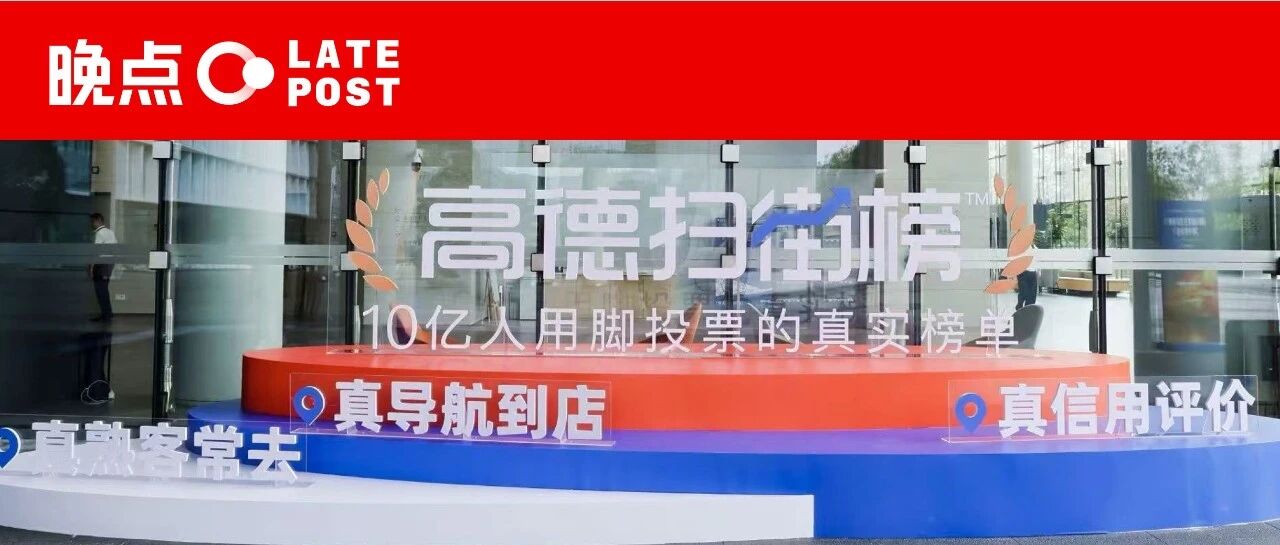
高德扫街榜的加速 30 天
晚点LatePost· 2025-10-08 15:38
Core Viewpoint - The article highlights the significant growth and user engagement of Gaode's new feature, "Street Ranking," which has rapidly gained popularity and contributed to the overall increase in active users on the platform, reaching 400 million users within a short period [2][11][16]. User Engagement and Growth - Gaode celebrated reaching 300 million active users during the National Day holiday, surpassing last year's record by 60 million [3][11]. - The "Street Ranking" feature has attracted over 400 million users, with half of Gaode's monthly active users engaging with it [3][16]. - The feature's launch coincided with the National Day holiday, a peak travel period, which provided a substantial test of its capabilities [10][11]. Product Development and Feedback - The "Street Ranking" was developed under high secrecy and aimed to create an AI-driven list to enhance consumer trust and stimulate spending [4][6]. - The team received extensive feedback post-launch, leading to rapid iterations and improvements, such as adding features like "Nearby Good Stores" and administrative region switching [6][8]. - The ranking system incorporates various data points, including navigation behavior and user interactions, to ensure a comprehensive and objective representation of local businesses [7][8]. Market Impact and Business Opportunities - The launch of "Street Ranking" has transformed Gaode's positioning from a navigation app to a broader lifestyle service platform, enhancing its strategic importance within Alibaba [18]. - Local businesses have reported increased visibility and customer engagement due to their inclusion in the rankings, with some experiencing record-breaking customer turnout during the holiday [12][14]. - Gaode's user base is projected to grow significantly, with the "Street Ranking" feature achieving a nearly 50% penetration rate among its monthly active users within a month of launch [16]. Future Directions - The company plans to enhance the "Street Ranking" experience by integrating more user-generated content and reliable reviews, aiming to create a comprehensive decision-making tool for users [18][19]. - There is a focus on expanding the service offerings beyond dining to include various lifestyle categories, thereby increasing user engagement and satisfaction [18][19].
半年 8 款新车,大六座 SUV 的 “最卷之战” 即将上演
晚点LatePost· 2025-10-01 10:04
Core Viewpoint - The demand for large six-seat SUVs in the Chinese market is significantly driven by multi-child families and urban immigrants, leading to a rapid increase in product offerings and market growth [4][12][13]. Group 1: Market Dynamics - The launch of multiple large six-seat SUVs, including the Tengshi N9 and Galaxy M9, indicates a booming market with significant consumer interest, as evidenced by pre-order numbers exceeding 23,000 within 24 hours for Galaxy M9 [5][12]. - The market for large six-seat SUVs is projected to grow from approximately 300,000 units in 2023 to over 1 million units by 2027, highlighting a strong upward trend [13][14]. Group 2: Consumer Segmentation - The demand for large six-seat SUVs can be categorized based on life stages, with significant needs arising from families with multiple children and three-generation households [6][9]. - Urban immigrants, often with multi-child families, are increasingly opting for large six-seat SUVs due to their practicality for family travel and commuting needs [12][13]. Group 3: Product Offerings and Trends - The large six-seat SUV market is characterized by three energy types: pure electric, range-extended, and plug-in hybrid, with range-extended vehicles currently dominating sales [15][18]. - The range-extended SUV segment has seen substantial sales, with models like the Ideal L9 and Wanjie M9 leading the market, indicating a preference for vehicles that alleviate range anxiety while providing a family-friendly experience [18][19]. Group 4: Competitive Landscape - The competitive landscape is intensifying, with various brands entering the market, including new entrants like Xiaomi and Xiaopeng, which are expected to introduce innovative products [29][30]. - The market is becoming increasingly competitive, with companies racing to capture market share before segments become saturated, particularly in the mid-range and luxury categories [30].


新势力不再只是 “蔚小理”,“BIG 6+1” 挑战比亚迪
晚点LatePost· 2025-10-01 10:04
Core Viewpoint - The article discusses the emergence of a new market structure in the Chinese electric vehicle (EV) sector, highlighting the shift from the previously dominant "Wei Xiaoli" (Weilai, Xiaopeng, Li Auto) to a new group termed "BIG 6+1," which includes Tesla, Li Auto, Hongmeng Zhixing, Xiaomi, Xiaopeng, NIO, and Zero Run. This shift indicates a significant change in market dynamics as these companies collectively approach or surpass the sales of leading brand BYD, marking the beginning of a new competitive phase in the EV market [4][18]. Market Dynamics - By August 2025, the total insurance registrations of the seven new force car companies approached or briefly exceeded that of BYD, indicating a potential shift in market leadership [4][6]. - The "BIG 6+1" collectively accounted for a market share of approximately 15.25% in August 2025, with BYD holding a share of 13.97% [17]. Definition of New Forces - The term "new forces" in the automotive industry lacks a precise definition, but a simple distinction can be made based on whether a company has the qualification to produce fuel vehicles. Companies without this qualification can only produce pure electric or extended-range products [5][6]. Sales Rankings - In the August 2025 sales rankings, the top seven new force companies were Tesla (57,152 units, 2.81%), Zero Run (51,162 units, 2.52%), Hongmeng Zhixing (40,012 units, 1.97%), Xiaomi (36,396 units, 1.79%), Xiaopeng (34,691 units, 1.71%), NIO (16,434 units, 0.81%), and Li Auto (28,529 units, 1.40%) [6][7]. Product Offerings - The "BIG 6+1" companies have a limited number of main models, with most brands offering around seven models. Tesla, while having many variants, primarily sells three main models [9][8]. - The average selling prices of the brands vary, with Tesla at 29.67 million yuan, Li Auto at 34.90 million yuan, and Zero Run at 12.98 million yuan, indicating a diverse pricing strategy among the new forces [13][15]. Distribution Channels - The distribution network of "BIG 6+1" varies, with Zero Run and Hongmeng Zhixing having the most stores (around 942 and approximately 1,000 respectively), while Tesla and Xiaomi have around 300-400 stores [11][12]. Future Outlook - The article predicts that as the "BIG 6+1" solidifies its market position, it will significantly impact the overall EV market, potentially leading to a new phase of competition and market consolidation [18].



贝壳再次选择了 “难”
晚点LatePost· 2025-09-30 00:30
Core Viewpoint - The article emphasizes Beike's proactive approach to building a trust infrastructure during a challenging period in the real estate market, focusing on the launch of the "True Guarantee" service system to enhance transaction security and consumer confidence [2][4]. Summary by Sections Market Context - The Chinese real estate market has entered an adjustment phase over the past four years, with transaction volumes shrinking by nearly 10 trillion yuan, while the number of industry professionals remains stable at around 1.8 million [3]. - Current practitioners face increased anxiety and competition, as the market has not previously experienced a true cycle, leading to a lack of respect for market dynamics [3]. True Guarantee System - Beike has upgraded its service from "True Source" to "True Guarantee," addressing transaction uncertainties and providing comprehensive service guarantees throughout the real estate transaction process [4][5]. - The "True Guarantee" system includes a set of standards, technical capabilities, and a 100 million yuan risk fund to ensure transaction safety [5][7]. Service Commitments - The system encompasses 35 service commitments, with key promises including "True Source, false claims compensated by 100 yuan," "No reason for commission refund if the transaction fails," and "Advance payment for property arrears" [8]. - These commitments aim to cover major risk points in second-hand property transactions, significantly reducing uncertainty costs for buyers [8]. Risk Management and Technology - Beike has invested substantial resources to enhance its transaction systems, involving over 300 engineers to redesign processes covering 12 transaction steps and 80 potential risk points [9]. - The platform has successfully blocked 16,000 risky transactions from July 2024 to July 2025, with actual loss incidents being only 96, maintaining a loss probability of 0.006% [11]. Market Performance - In the first half of the year, Beike's platform saw a 26% year-on-year increase in second-hand property transactions, outperforming the market [12]. - The company's commitment to consumer protection and transaction security has positioned it favorably against smaller competitors struggling during the market downturn [12][13]. Strategic Philosophy - Beike's founder, Zuo Hui, believes in making difficult yet correct decisions, which has historically led to long-term benefits despite short-term challenges [4][15]. - The company aims to build a trust-based ecosystem that not only benefits consumers but also protects agents and brands on its platform [14][21]. Historical Context - Beike's evolution from Lianjia reflects a consistent strategy of prioritizing transparency and consumer trust, even at the cost of short-term revenue [17][18]. - The establishment of Beike as a platform for multiple brands has created a robust network effect, enhancing its market position [18]. Trust Infrastructure - The "True Guarantee" initiative is likened to the Kula Ring, emphasizing the importance of long-term trust relationships in uncertain environments [19][20]. - By investing in trust infrastructure, Beike aims to strengthen its competitive edge and facilitate the transition from a transaction platform to a comprehensive living service provider [20][21].


四维图新 2.5 亿入股鉴智,后者管理层暂不调整
晚点LatePost· 2025-09-30 00:30
Core Viewpoint - The article discusses the strategic investment by Siwei Tuxin in Jianzhihui, aiming to enhance their capabilities in intelligent driving solutions through a merger that will create "New Jianzhihui" [5][9]. Group 1: Investment and Merger Details - Siwei Tuxin announced a cash investment of 250 million yuan and the transfer of 100% equity of Siwei Tuxin Zhijia (Beijing) Technology Co., Ltd. to Jianzhihui, resulting in Siwei Tuxin holding 39.14% of Jianzhihui's shares, making it the largest shareholder but not the controlling shareholder [5]. - The merger will integrate the intelligent driving teams and business of both companies, with the combined workforce expected to reach around 1,000 employees [5][8]. - The product offerings of "New Jianzhihui" will be expanded to include intelligent driving solutions based on Horizon J6 series and Qualcomm series chips [5][6]. Group 2: Business Transformation and Market Position - Siwei Tuxin, established in the early 2000s, has transitioned from being a leading automotive map supplier to focusing on intelligent driving, high-precision maps, and vehicle networking, forming four business segments: Zhiyun, Zhichuang, Zhixin, and Zhijia [7][8]. - The company has faced challenges in its transformation, with its revenue heavily reliant on the map products segment, which accounted for 70% of total revenue, while the intelligent driving and cockpit segments combined only contributed 11% [8]. - The competitive landscape for intelligent driving suppliers is becoming increasingly concentrated, with established players rapidly capturing market share, leaving limited opportunities for new entrants like Siwei Tuxin [8][9]. Group 3: Strategic Collaboration and Future Outlook - The collaboration with Jianzhihui is seen as a way to leverage existing resources and accelerate transformation, as Jianzhihui has developed mid-tier intelligent driving solutions based on Horizon J6E chips [9]. - The intelligent driving industry is evolving towards cost optimization and standardized technology routes, with Siwei Tuxin's long-standing customer relationships and investments being crucial for its continued presence in the market [9].


纺织代工龙头的又一次周期下注,申洲国际在赌什么?
晚点LatePost· 2025-09-29 03:55
Core Viewpoint - The article focuses on the growth logic and investment value of Shenzhou International, emphasizing its unique profit structure and competitive advantages in the textile industry [4][6][28]. Group 1: Growth Logic - Shenzhou International has demonstrated a strong growth trajectory, supported by its ability to manage cost pressures across the textile supply chain, rather than solely relying on profit margins [4][6]. - The company has maintained a profit structure of approximately 30% gross margin and 20% net margin, significantly higher than industry peers, which typically operate at around 20% gross margin and 10% net margin [6][11]. - The vertical integration of its business model and a high proportion of sportswear clients have been key factors in sustaining its superior profit structure [11][12]. Group 2: Competitive Advantages - Shenzhou's early entry into upstream fabric production and its strategic focus on sportswear have created significant barriers to entry for competitors, such as Crystal International, which has struggled to replicate these advantages despite its long-standing presence in the industry [12][13]. - The company has effectively leveraged its relationships with major clients like Nike and Adidas, which account for a substantial portion of its revenue, to enhance its market position [24][25]. - Shenzhou's ability to internalize cost pressures and improve operational efficiency has allowed it to maintain competitive pricing, which is attractive to brand clients [25][26]. Group 3: Market Dynamics - The global textile industry has experienced significant shifts, with sportswear's market share increasing from approximately 5%-7% in the late 1980s to around 21% by 2024, indicating a growing trend that Shenzhou is well-positioned to capitalize on [17][18]. - The company has faced challenges in maintaining profit margins due to rising raw material costs and market fluctuations, but it has shown resilience by adapting its operational strategies [26][32]. - As the industry evolves, Shenzhou's focus on diversifying its client base and expanding its product offerings will be crucial for sustaining growth and mitigating risks associated with client concentration [27][29].

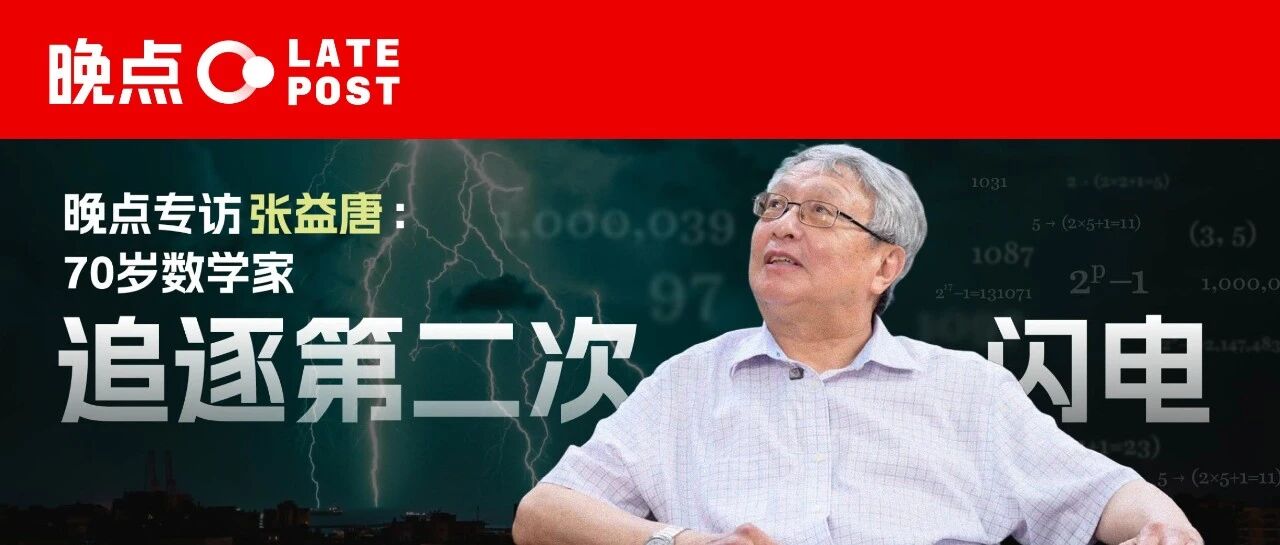
晚点专访张益唐:70 岁数学家,追逐第二次闪电
晚点LatePost· 2025-09-29 01:29
Core Viewpoint - The article discusses the life and achievements of Zhang Yitang, a mathematician known for solving the twin prime conjecture, emphasizing his unique approach to mathematics and the importance of pursuing significant problems over conventional academic success [6][12][40]. Group 1: Zhang Yitang's Journey - Zhang Yitang faced numerous challenges in his early career, including job rejections and living in a trailer, before achieving fame at the age of 58 by solving a century-old mathematical problem [3][6]. - His return to China in June 2023 to join Sun Yat-sen University reflects a growing emphasis on basic scientific research in the country [3][36]. Group 2: Approach to Mathematics - Zhang's methodology involves focusing on a few significant problems for many years without seeking interim results, which is atypical in modern academia [6][14][22]. - He believes that the most important problems are those that have remained unsolved for decades, and he emphasizes the need for unique perspectives to achieve breakthroughs [7][23]. Group 3: Twin Prime Conjecture and Future Work - The twin prime conjecture posits that there are infinitely many pairs of prime numbers that differ by two, and Zhang proved that there are infinitely many pairs with a difference of less than 70 million [8][12]. - Following his proof, mathematicians collaborated to reduce the gap from 70 million to 246, showcasing the collaborative nature of modern mathematical research [8][12]. Group 4: Current Research Focus - Zhang is currently working on the Langlands-Siegel zero conjecture, which is considered a foundational problem in number theory, with potential implications for the Riemann hypothesis [8][30]. - He has expressed confidence in having made significant progress on this conjecture, although he finds the process of simplifying his findings challenging [9][30]. Group 5: Views on AI and Mathematics - Zhang is skeptical about AI's ability to solve complex mathematical problems like the Riemann hypothesis, emphasizing that human intuition and creativity are irreplaceable [12][33]. - He acknowledges that while AI can assist in mathematical research, it cannot fully replace human thought processes [33][35]. Group 6: Personal Philosophy and Motivation - Zhang's motivation stems from a deep curiosity and a desire to push the boundaries of knowledge rather than material success [12][40]. - He believes that the ability to focus intensely on mathematical problems is a crucial trait for success in the field [38].
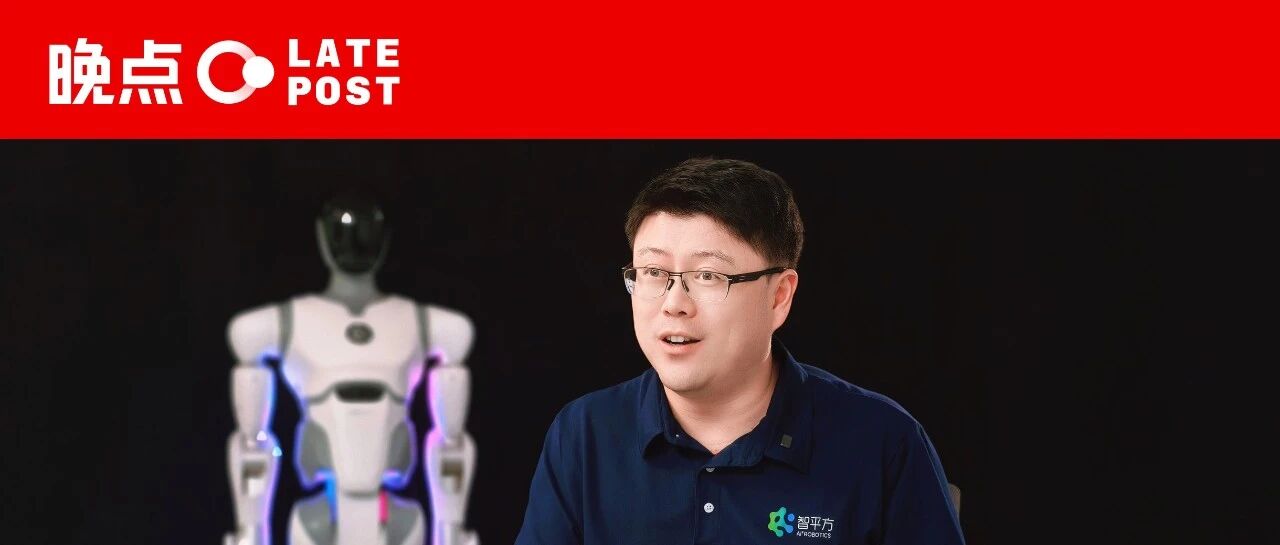
智平方创始人郭彦东:没有技术自信,中国机器人就没有创新突破
晚点LatePost· 2025-09-28 15:25
Core Viewpoint - The article emphasizes the importance of developing versatile robots that can be integrated into various real-world applications, rather than creating specialized machines that serve limited functions. The focus is on achieving general-purpose robotics that can learn and adapt in diverse environments [2][4][55]. Group 1: Company Background - Guo Yandong, a prominent figure in the robotics industry, has a strong academic and professional background, including a PhD in artificial intelligence from Purdue University and experience at Microsoft and companies like Xiaopeng Motors and OPPO [2][3][19]. - In 2023, Guo founded Zhi Ping Fang, focusing on the Visual Language Action (VLA) model for robotics, positioning the company as a leader in this niche within the industry [3][4]. Group 2: Business Strategy - Zhi Ping Fang has adopted a pragmatic approach to business, generating significant revenue through model services while many competitors focus on flashy demonstrations [4]. - The company has secured over a thousand commercial orders across high-end manufacturing sectors, including automotive and semiconductor industries, indicating strong market demand [4][28]. Group 3: Product Development - The second-generation robot, Aibao, features a wheeled chassis for stability and efficiency, contrasting with the bipedal designs pursued by competitors like Tesla [4][33]. - The robots are designed to learn tasks quickly, adapting to new roles within hours to days, which enhances their utility in manufacturing environments [30]. Group 4: Market Position and Future Plans - The robotics industry is experiencing rapid growth, with over 400 companies currently operating in China, surpassing the early days of the electric vehicle sector [47]. - Zhi Ping Fang aims to deliver tens of thousands of robots by 2028, focusing on practical applications in various sectors, including retail and logistics [51]. Group 5: Industry Insights - The article highlights the need for robots to be versatile and capable of learning from real-world interactions, which is essential for their integration into everyday environments [36][49]. - Guo advocates for a balanced approach to pricing and performance, stressing that the focus should be on creating high-quality, functional robots rather than competing solely on cost [55].

无人配送车半年吸金 35 亿,智驾内卷的受益者
晚点LatePost· 2025-09-28 15:25
Core Viewpoint - The article discusses the rapid growth and commercialization of the unmanned delivery vehicle industry, highlighting the increasing demand, technological advancements, and competitive landscape that are shaping this sector [4][5][6]. Group 1: Market Demand and Growth - The unmanned delivery vehicle industry is becoming one of the most lucrative segments within autonomous driving, driven by real user needs, as evidenced by significant financing of over 3.5 billion yuan for leading companies this year [4][6]. - As of mid-2023, the total number of unmanned delivery vehicles in China exceeded 6,000, with companies like New Stone and Nine Senses targeting the delivery of 10,000 vehicles this year [6][7]. - The market is expected to see an increase of nearly 100,000 units in the unmanned delivery vehicle sector next year [6]. Group 2: Product Development and Standardization - The product forms of unmanned delivery vehicles are stabilizing, with a shift towards larger vehicles capable of carrying over 5 cubic meters, as companies focus on fixed routes between delivery points [7][8]. - The industry is moving towards standardization, with companies like Desay SV and Youjia Innovation entering the market, offering vehicles with capacities of 5 to 8.5 cubic meters [8][10]. Group 3: Cost Reduction and Technology - Continuous cost reduction is essential for large-scale commercialization, with companies adopting automotive-grade quality standards to extend product lifespans and reduce costs [10][11]. - The competition in the passenger vehicle market has driven down the costs of advanced driving technologies, benefiting unmanned delivery vehicles by making components like LiDAR more affordable [11][12]. - Companies are innovating to reduce the number of sensors and computing power required for unmanned vehicles, which helps in lowering overall costs [12]. Group 4: Operational Efficiency and Business Models - The profitability of unmanned delivery vehicle companies hinges on operational efficiency, with a focus on scaling operations and reducing costs through city-specific deployments [15][16]. - Companies are exploring various business models, including vehicle sales, leasing, and subscription services, to lower the entry barrier for customers [13][14]. - The industry is currently engaged in a price war to cultivate the market, with some vehicles priced below 200,000 yuan, including maintenance for five years [14]. Group 5: Regulatory Environment and Future Challenges - The regulatory environment is becoming more favorable, with national policies encouraging the testing and commercial use of unmanned delivery vehicles [17]. - Despite the optimistic policy landscape, the industry faces challenges related to road rights and the need for further legal recognition of unmanned vehicles [17][18]. - The transition from technology trials to real-world applications presents complexities in supply chain management, operations, and regulatory compliance that companies must navigate to achieve scalability [18].