半导体芯闻

Search documents
2025全年净利96亿欧元,ASML新增订单破纪录
半导体芯闻· 2026-01-28 10:31
数据显示,2025年第四季度,ASML实现净销售额97亿欧元,毛利率为52.2%,净利润达28亿欧 元;第四季度的新增订单金额为132亿欧元,其中74亿欧元为EUV光刻机订单。2025年第四季度 ASML的净销售额为97亿欧元,其中包括确认两台高数值孔径(High NA)系统的收入。 如果您希望可以时常见面,欢迎标星收藏哦~ 今天,荷兰光刻机巨头ASML发布了最新季度的财报。 统计2025年的数据,ASML 全年净销售额达327亿欧元,毛利率为52.8%,净利润为96亿欧元。 2025 第 四 季 度 的 新 增 订 单 金 额 达 到 132 亿 欧 元 , 其 中 74 亿 欧 元 为 EUV 订 单 。 截 至 2025 年 末 , ASML未交付订单总额为388亿欧元,其中255亿欧元为EUV订单。 ASML进一步指出,"这一趋势正转化为先进制程客户对产能的需求,涵盖逻辑芯片和存储芯片领 域,并带动对我们最先进技术(尤其是 EUV)的需求增长。近几个月来,DRAM和逻辑芯片客 户均在加速其产能规划,并与ASML展开相关合作。" "整体来看,市场呈现积极态势,对人工智能带来的需求持肯定态度,并为短期内的 ...



地产公司,跨界芯片
半导体芯闻· 2026-01-28 10:31
Core Viewpoint - The company plans to acquire 60% of Guangdong Changxing Semiconductor Technology Co., Ltd. for 520 million yuan, aiming to enhance its presence in the semiconductor industry and improve its business structure and asset portfolio [1]. Group 1: Acquisition Details - The acquisition will make Changxing Semiconductor a subsidiary of the company, included in the consolidated financial statements [1]. - Changxing Semiconductor, established in 2012, specializes in memory chip packaging and testing, with advanced packaging technologies such as 8-layer stacked die packaging and BGA, SiP, CSP techniques [1]. Group 2: Financial Projections - For the fiscal year 2025, Changxing Semiconductor is projected to generate revenue of 646 million yuan and a net profit of 74.57 million yuan [1]. - The company has performance commitments, including a minimum net profit of 75 million yuan for 2026 and cumulative net profits of at least 155 million yuan from 2026 to 2027, and 240 million yuan from 2026 to 2028 [1]. Group 3: Strategic Implications - The acquisition is intended to allow the company to quickly enter the storage chip industry, diversify its operational risks, and enhance its overall competitiveness and risk resistance [1]. - This move aligns with the company's strategic expansion into the technology sector and its "cultural tourism + technology" strategy [1].
存储芯片,狂飙300%
半导体芯闻· 2026-01-28 10:31
Core Viewpoint - The memory industry, once considered a "cyclical disaster," has experienced a remarkable turnaround driven by production cuts from major manufacturers, price rebounds, and increased demand for HBM (High Bandwidth Memory) due to the AI wave, leading to significant stock price increases for related companies [2][3]. Group 1: Industry Recovery Stages - **Stage One: From Despair to Frenzy** The memory industry faced its toughest winter from 2022 to mid-2023, with major manufacturers like Samsung, SK Hynix, and Micron accumulating excess inventory due to frozen consumer demand. In response, these companies implemented unprecedented large-scale production cuts, leading to a recovery in DRAM and NAND Flash prices, which began to rise by 10% to 15% each quarter [3][4]. - **Stage Two: Calm During Disposal Period** Stocks placed under disposal status indicate excessive market heat, with regulatory measures aimed at cooling speculation. During this period, liquidity is restricted, leading to price stabilization. The memory sector continued to perform strongly, as investors recognized that stocks under disposal were often strong concept stocks with high consensus [4]. - **Stage Three: Four New Drivers for Continued Growth** The memory industry's positive outlook is supported by a super cycle driven by AI, with four key new drivers expected to fuel stock price increases over the next 6 to 12 months. The first driver is the HBM's displacement effect, as major manufacturers shift capital expenditures to HBM production, tightening supply for standard DRAM [5][6]. Group 2: Key Market Dynamics - **AI PC and AI Mobile Demand** The demand for memory in AI PCs and mobile devices is surging, with AI PCs now starting at 16GB and expected to move towards 32GB or even 64GB. This demand is critical for running large language models effectively [6][7]. - **Transition from DDR4 to DDR5** The price gap between DDR4 and DDR5 has narrowed to 15% to 20%, facilitating a transition to DDR5 as the mainstream memory type. DDR5 offers higher average selling prices (ASP) and gross margins compared to DDR4 due to its technical complexity [7]. - **NAND Flash Market Recovery** The NAND Flash market is witnessing a turnaround, with enterprise SSDs rapidly replacing traditional HDDs in data centers due to the high-speed data requirements of AI servers. This shift is driving increased demand for high-capacity, high-density enterprise SSDs [7][8].

都怪台积电?
半导体芯闻· 2026-01-28 10:31
如果您希望可以时常见面,欢迎标星收藏哦~ 随着人工智能(AI)浪潮席卷全球,半导体产业链成为科技角力的核心战场。然而,根据知名科 技分析网站《Stratechery》的最新报告指出,作为全球晶圆代工龙头的台积电(TSMC),目前 已成为AI 供应链中最大的「风险」来源。这项风险并非源自广受讨论的地缘政治因素,而是源 于台积电早前对市场需求的预判失准,导致未能及早扩充产能,进而造成如今严重的供应瓶颈。 分析师认为,台积电过去几年的投资不足,实际上已成为AI 建设与扩张速度的「实质煞车(de facto brake)」。 报告指出,观察当前的AI 供应链,台积电无疑占据了至关重要的地位。凭借其广泛的代工服务 以及对超大规模云端服务商基础建设的支援,台积电是这波AI 革命不可或缺的推手。由于高效 能运算订单的增长极为强劲,辉达(NVIDIA)甚至已经超越苹果(Apple),成为台积电最大 的客户,这标志着半导体市场结构的重大转变。 只是,面对台积电的供应瓶颈,业界是否会转向其他代工厂?分析师对此持保留态度,并解释了 为何在代工领域进行「多角化」对高效能运算客户而言是一步险棋。尤其是尽管英特尔晶圆代工 (Intel ...


巨头加速抛弃英伟达
半导体芯闻· 2026-01-27 10:19
Core Viewpoint - Major tech companies, including Microsoft, are accelerating efforts to reduce dependence on NVIDIA's GPUs, which dominate 90% of the AI chip market. Companies are developing custom chips to enhance efficiency and lower costs, while NVIDIA is transforming into a "full-stack AI" infrastructure provider to maintain its market leadership [2][4][7]. Group 1: Microsoft's AI Chip Development - Microsoft has launched its commercial AI chip "Maia 200," which is designed for high-performance AI inference, claiming it is three times more efficient than AWS's latest AI chip and offers 30% better performance within the same budget [5][6]. - The Maia 200 chip utilizes TSMC's 3nm process and integrates SK Hynix's HBM3E memory, with plans to support OpenAI's latest models [5][6]. - Microsoft aims to shorten the production to deployment timeline for its chips, indicating a potential reduction in reliance on NVIDIA [5][6]. Group 2: Other Companies' Custom Chip Initiatives - Google is using its custom Tensor Processing Units (TPUs) for training and running its Gemini AI models, which outperform GPUs in certain tasks while reducing operational costs [6]. - AWS has released its Trainium3 AI chip, boasting a fourfold increase in computing performance and a 40% reduction in energy consumption compared to its predecessor [6]. - Meta is exploring the use of Google's TPU in its upcoming data centers, while OpenAI is collaborating with Broadcom to develop a custom chip set for release later this year [6]. Group 3: NVIDIA's Market Position and Strategy - Despite the rise of custom chips from competitors, NVIDIA continues to expand its business into AI models and robotics, aiming to maintain competitiveness in a diversifying market [7]. - NVIDIA is also venturing into CPU supply, recently announcing a $2 billion investment in CoreWeave to deploy its CPUs, challenging Intel and AMD [7]. - The company is actively developing AI models and platforms, including an open-source weather forecasting AI model and the Omniverse platform for robotic simulations [7]. Group 4: NVIDIA's Growth Projections - NVIDIA is expected to surpass Apple as TSMC's largest customer this year, with projections indicating that 22% of TSMC's revenue in 2025 will come from NVIDIA, compared to Apple's 18% [8].

中国半导体,预计增长31.26%
半导体芯闻· 2026-01-27 10:19
以下文章来源于Omdia ,作者Omdia Omdia . Omdia隶属于Informa TechTarget,是一家专注于技术研究与咨询的机构。通过深刻的科技市场洞察力和 可操作的建议,Omdia帮助组织做出明智的增长决策。 如果您希望可以时常见面,欢迎标星收藏哦~ 根据Omdia发布的半导体产业观察,AI应用模型正在中国各垂直行业广泛落地,标志着边缘AI时 代的到来。众多大语言模型(LLM)正在各行业积极部署垂直应用模型。具备边缘推理能力的数字终 端将快速增长,成为中国半导体产业扩张的重要驱动力——尤其是成熟工艺技术领域。2025年四 季度最新数据显示,2026年中国半导体市场预计增长31.26%,市场规模将达到5465亿美元。 《半导体应用领域市场预测工具(AMFT)- 中国地区(2Q25)》预计中国半导体市场在2025年增长 16.17%,2026年增长13.63%。在《半导体应用领域市场预测工具(AMFT)- 中国地区(4Q25)》报 告中,2025年四季度的更新将预测上调为2025年增长21.63%、2026年增长31.26%。 2025年第四季度预测中,存储市场规模显著上调。与二季度版本相比, ...

HBM,独家供应
半导体芯闻· 2026-01-27 10:19
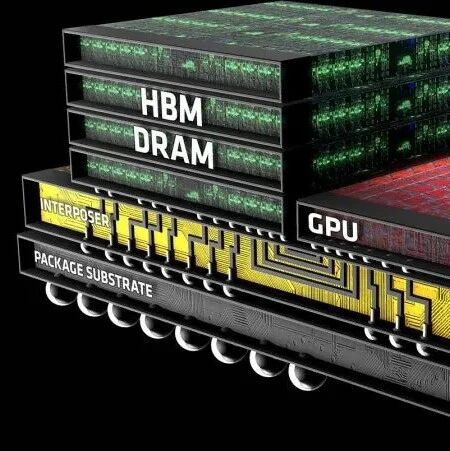
如果您希望可以时常见面,欢迎标星收藏哦~ 今年,三星电子发出反击信号,进军 HBM 市场,而 HBM 的需求也扩展到使用专有 AI 半导体的 公司,例如谷歌和亚马逊网络服务 (AWS),预计这两家公司将展开激烈的竞争,以争取客户。 据业内人士1月27日透露,SK海力士将为其最新产品HBM3E(第五代)芯片供应微软于1月26日 (当地时间)发布的Maia 200 AI加速器。此外,SK海力士似乎还将作为该产品的独家供应商参与 其中。 Maia 200 采用台湾台积电 (TSMC) 的 3 纳米 (nm;1nm = 十亿分之一米) 工艺制造,其特点是人 工 智 能 推 理 任 务 效 率 更 高 。 它 使 用 216 GB HBM3E 显 存 , 其 中 安 装 了 6 个 SK 海 力 士 (SK Hynix) 的 12 层 HBM3E 芯片。 微软已在美国爱荷华州的数据中心安装了该芯片,并正在将其添加到亚利桑那州的数据中心,以扩 展其应用范围。 半导体行业内部人士认为,随着各公司自主研发的旨在减少对英伟达依赖的人工智能芯片的出现, HBM 市场除了英伟达的需求之外,又获得了新的增长动力,这些芯片不仅包括微软 ...
存储芯片巨头,斥巨资扩产
半导体芯闻· 2026-01-27 10:19
如果您希望可以时常见面,欢迎标星收藏哦~ 随 着 全 球 人 工 智 能 浪 潮 推 动 资 料 中 心 硬 体 需 求 激 增 , 美 国 记 忆 体 芯 片 巨 头 美 光 科 技 ( Micron Technology)正式宣布了一项历史性的投资计画,该公司将在新加坡投入高达240 亿美元(约人 民币1670亿元),用于建设一座全新的先进半导体制造工厂,以扩大其NAND 快闪记忆体的生产 能力,从而缓解当前市场面临的「史无前例」的硬体短缺问题。 根据新加坡海峡时报的报导,美光科技此次宣布的新工厂建设项目,代表着其在新加坡发展历程中 的又一重要里程碑。根据规划,这笔高达240 亿元的投资将在未来10 年内分阶段完成。新工厂选 址 位 于 美 光 在 兀 兰 ( Woodlands ) 现 有 的 制 造 园 区 内 , 预 计 将 新 增 70 万 平 方 英 尺 的 无 尘 室 (cleanroom) 空间。 该计画首阶段预计将于2028 年下半年正式投入运营。随着这项新投资的注入,使得美光科技自 1998 年进驻新加坡以来的总投资额已超过600 亿美元(约新台币1.88兆元)。这一数字不仅彰显 了美光 ...

这类芯片,出货量飙升300%
半导体芯闻· 2026-01-27 10:19
就 AI服务器运算 ASIC的出货与部署量来说,Google TPU将持续扮演产业「量能基石」的角色, 主要来自 Gemini模型自云端延伸至边缘端的采用与使用快速成长,所带动的庞大运算需求。 如果您希望可以时常见面,欢迎标星收藏哦~ 研调机构Counterpoint Research调查,全球前十大业者的 AI服务器运算 ASIC服务器出货量,预 计将于 2024至 2027年间成长三倍。其中,AI服务器运算 ASIC市场从 2024年高度集中的双寡占 结构,即Google 64%、AWS 36%,逐步演进为更为多元的格局;此外,随着 Meta与微软扩大内 部芯片规模,预期至2027年将出现具规模的出货量成长。 Jim Keller:RISC-V一定会胜出 全球市值最高的10家芯片公司 Counterpoint Research研究副总裁Neil Shah表示,企业内部 AI服务器运算 ASIC的设计成长,正 验证「内部客制化 XPU时代」的来临。AI加速器正针对特定训练或推论工作负载量身打造,市场 结构也逐步从单一仰赖通用 GPU,走向多元化。 Counterpoint Research认为,即使Goog ...



电源芯片,也要涨价了?
半导体芯闻· 2026-01-27 10:19
Group 1 - The semiconductor industry is expected to experience a new wave of price increases, with IC design firms like MediaTek indicating plans to adjust prices in response to rising costs [1] - The price increase trend in the IC design sector is anticipated to become clearer after the Lunar New Year, with power management ICs likely being the first to see successful price hikes [1] - MediaTek's CEO has expressed optimism for the company's growth this year, stating that they will strategically adjust prices and allocate production capacity to reflect rising manufacturing costs [1] Group 2 - The rising prices of metals and the increased costs from packaging and testing firms are driving the need for IC design companies to raise prices to maintain profit margins [1] - Major packaging and testing companies, such as ASE and ChipMOS, have already raised their prices by up to 20% due to severe supply shortages in semiconductor packaging and testing capacity [1] - In the wafer foundry sector, companies like SMIC have raised some capacity prices by approximately 10%, while other Taiwanese firms are also adjusting their prices in both advanced and mature processes [2]