半导体芯闻

Search documents
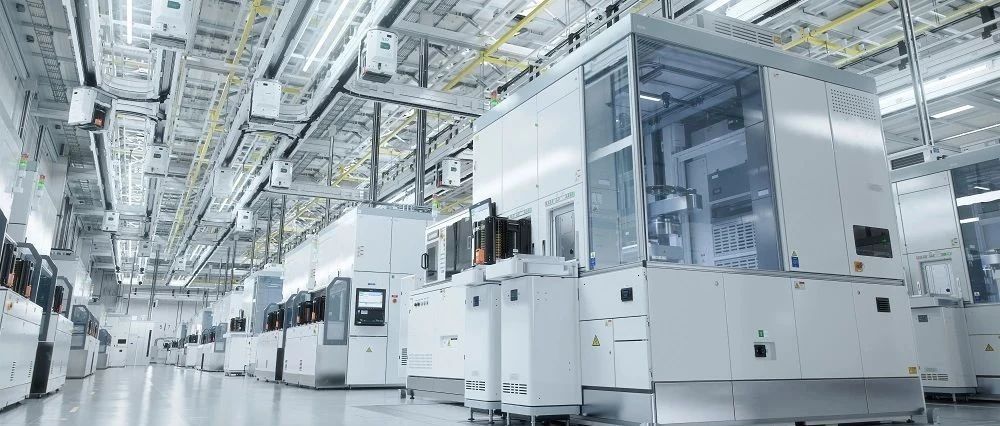
中国晶圆厂,直逼三星
半导体芯闻· 2025-06-11 10:08
Core Viewpoint - The global semiconductor foundry market is undergoing significant shifts, with Samsung Electronics facing increasing pressure from China's SMIC, leading to a narrowing market share gap. TSMC remains the dominant player, while Samsung's position as the second-largest foundry is at risk due to various geopolitical and technological factors [1][2]. Group 1: Market Overview - According to TrendForce, the total revenue of the top ten foundries in Q1 2025 is projected to be $36.43 billion, a decrease of 5.4% from the previous quarter's $38.48 billion, attributed to seasonal market slowdowns [1][3]. - Despite the overall revenue decline, TSMC's revenue in Q1 2025 is $25.52 billion, down 5% from Q4 2024, yet its market share increased by 0.5 percentage points to 67.6%, further widening the gap with Samsung [2][3]. Group 2: Company Performance - Samsung's revenue in Q1 2025 fell significantly by 11.3% to $2.89 billion, resulting in a market share drop from 8.1% to 7.7%, primarily due to limited benefits from Chinese consumer subsidies and U.S. restrictions on advanced process nodes [4]. - In contrast, SMIC's revenue grew by 1.8% to $2.25 billion in Q1 2025, making it the only top-three foundry to achieve revenue growth, with its market share rising from 5.5% to 6%, closing the gap with Samsung to just 1.7 percentage points [5]. Group 3: Future Outlook - TrendForce forecasts a general slowdown in the global foundry market in Q2 2025, mainly due to reduced demand from tariffs. However, specific applications and policy support, such as demand driven by Chinese subsidies and high-performance computing, are expected to sustain capacity utilization among the top foundries [6].



美光DRAM的逆袭
半导体芯闻· 2025-06-11 10:08
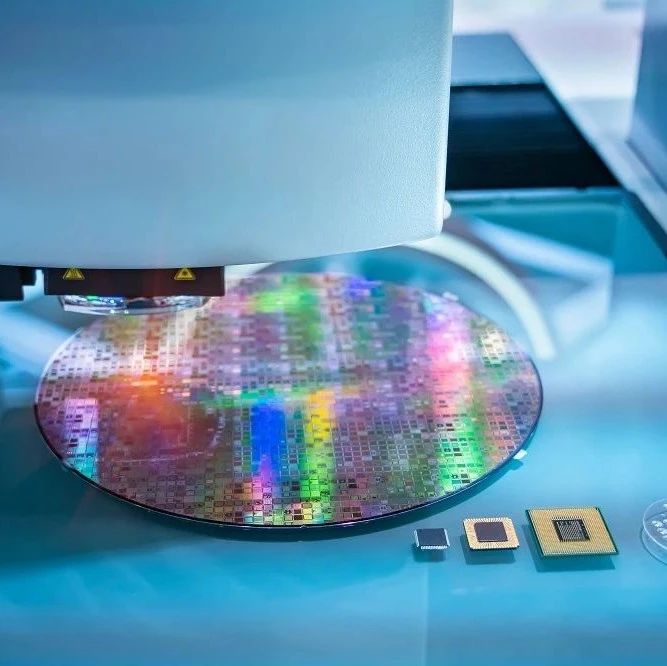
Core Viewpoint - NVIDIA has commissioned Micron, Samsung, and SK Hynix to develop SOCAMM memory modules, with Micron surprisingly being the first to receive mass production approval, outpacing its competitors [1][2]. Group 1: SOCAMM Technology - SOCAMM is a memory module designed by NVIDIA, consisting of 16 stacked LPDDR5X chips in four groups, primarily aimed at supporting AI accelerators by ensuring peak performance [1]. - Unlike HBM, which connects DRAM through vertical drilling, SOCAMM uses wire bonding with copper wires, which helps reduce heat generation due to copper's high thermal conductivity [1]. - Micron claims its latest low-power DRAM has a power efficiency that is 20% higher than its competitors [1]. Group 2: Market Position and Innovations - NVIDIA's next-generation AI servers will feature four SOCAMM modules, equating to 256 LPDDR5X chips, indicating a significant technological advancement [2]. - Micron's later adoption of EUV exposure equipment has allowed it to supply products earlier than Samsung and SK Hynix, focusing on structural design innovations to enhance memory efficiency while minimizing heat [2]. - Micron is expected to expand its HBM market share due to its low heat generation technology, as the number of stacked DRAM chips continues to increase [3]. Group 3: Competitive Landscape - Despite entering the HBM market later, Micron's thermal management technology and geographical advantages as a U.S. company position it to catch up with competitors [3]. - Micron's capital expenditure for this year is projected to reach $14 billion, indicating potential stable orders from major clients [3].


韩国芯片,要成为世界第一
半导体芯闻· 2025-06-11 10:08
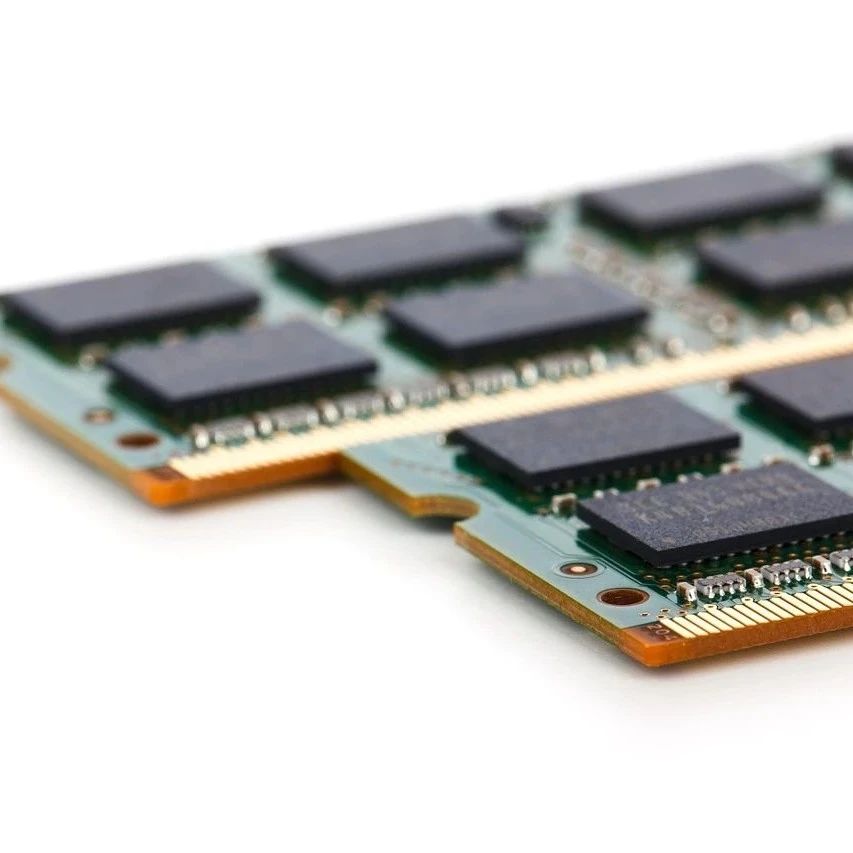
Group 1 - The core ambition of the new South Korean president is to establish the country as the world's leading semiconductor power through overwhelming technological superiority and support for the semiconductor industry [2] - The Semiconductor Special Act is expected to be passed by mid-October, which includes provisions for talent development, up to 10% production tax credits, and R&D support [2][3] - There is uncertainty regarding the inclusion of the "52-hour workweek exception" in the Semiconductor Special Act, which has raised concerns among industry insiders about the potential impact on the semiconductor sector [3] Group 2 - The government plans to create a "K-Fabless Valley" to foster the fabless semiconductor industry, aiming to replicate the success of companies like Nvidia [4] - The focus on renewable energy policies is seen as a critical task for nurturing the AI and semiconductor industries, although there are concerns about the reliability of renewable energy sources for continuous factory operations [5][6] - Speculation exists that the government will provide renewable energy for residential use while ensuring stable power supply for semiconductor manufacturing facilities [7]
干货分享 | AOS 6.6kW OBC Demo系统高效能解析
半导体芯闻· 2025-06-11 10:08
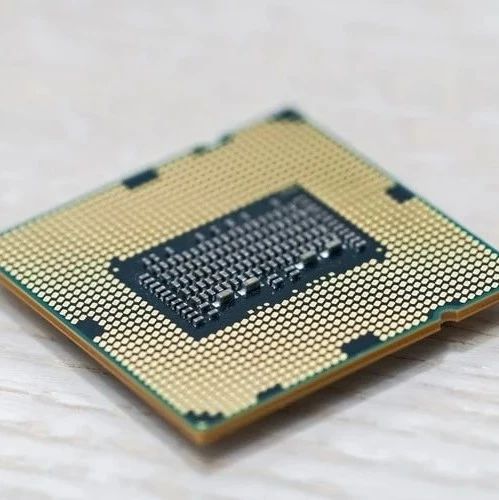
Core Viewpoint - AOSemi is a comprehensive power semiconductor supplier that integrates design, development, production, and global sales, focusing on the electric vehicle (EV) onboard charger (OBC) market [1]. Group 1: Product Overview - The AOS 6.6KW bidirectional EV onboard charger (OBC) is designed for universal single-phase input with an output voltage range of 250 VDC to 450 VDC [3]. - The OBC features a front-end composed of a totem pole bidirectional Power Factor Correction (PFC) and a bidirectional isolated DC/DC stage using a symmetrical CLLC converter [3]. - The input and output of the bidirectional isolated DC/DC stage utilize H-bridge topology, with isolation provided by a high-frequency transformer [3]. Group 2: Technical Specifications - The OBC demonstration board uses AOM040V75X2Q and AOK060V75X2Q SiC MOSFETs, rated at 750V, with on-resistances of 40mΩ and 60mΩ respectively [6]. - The input voltage range is 90 VAC to 265 VAC, providing an isolated output voltage of 250 VDC to 450 VDC [6]. - The system includes protections for input and output, such as under-voltage, over-voltage, and over-current protections [10][16]. Group 3: Performance Metrics - The OBC operates with a peak efficiency of 96% [15]. - The PFC operates at a fixed frequency of 65 kHz, while the DC/DC CLLC stage operates at approximately 200 kHz [15]. - The maximum power output is limited to 6.6 kW in AC/DC mode and 3.3 kW in DC/AC mode [16]. Group 4: Features and Functionality - The OBC supports a wide input voltage range of 85-265 VAC and a wide output voltage range of 250-450 VDC [16]. - It includes multiple fault LED displays and allows for switching between AC/DC and DC/AC modes [19].

拒绝跟风!ICDIA 2025 带你洞见AI落地现实,预见未来蓝海
半导体芯闻· 2025-06-11 10:08
人工智能的浪潮不再仅仅是实验室里的惊鸿一瞥,它正以前所未有的深度和广度,重塑着产业肌理,定义着未来图景。 ICDIA 2025 创芯展同期 AI开发者大会专题 扫码报名 带你洞见AI落地现实,预见未来AI蓝海。 在半导体产业,人工智能的到来正驱动芯片架构、制造、封测及材料的多维度变革 :专用处理器在边缘端快速普及,比起通用算力芯片GPU,专用处理 器在能效方面更有优势,能更好地支持边缘端的推理应用;摩尔定律不断逼近物理上的极限,在当下算力与数据爆炸的时代,不少芯片企业开始关注异构集成 及Chiplet技术,意图从封装技术端延续算力增长;制造与封装技术的突破也催生新材料的需求,比如新的金属材料替代原来的铜金属互连体系。 人工智能的强大之处正是在于其能够赋能各行各业,它是一个增量市场,它能够重塑行业,打造新的生态 。例如AI终端的渗透率激增,市场调研机构 Canalys 最新预测, 2025 年 AI 手机渗透率将达到 34%,端侧模型的精简以及芯片算力的升级将进一步助推 AI 手机向中端价位段渗透;2024是AI PC概念后 第一个完整销售年,其销量占据全球笔记本电脑市场27%的份额,Counterpoint预 ...

中科院发布全球首个AI设计芯片系统
半导体芯闻· 2025-06-11 10:08
Core Viewpoint - The article highlights the launch of "Qimeng," the world's first fully automated design system for processor chips based on artificial intelligence technology, marking a significant advancement in China's chip design capabilities [1][2]. Group 1: AI-Driven Chip Design - "Qimeng" system can automate the entire design process from hardware to basic software, achieving performance levels comparable to human experts [1]. - The traditional chip design process is complex, requiring hundreds of experts and taking months or years, which is costly and time-consuming [1]. - The demand for specialized processor chip design is increasing due to emerging technologies like AI, cloud computing, and edge computing, while the workforce in China is insufficient to meet this demand [1]. Group 2: Achievements of "Qimeng" - The first fully automated designed CPU chip, "Qimeng 1," completed the front-end design of a 32-bit RISC-V CPU in 5 hours, achieving performance equivalent to Intel 486 with over 4 million logic gates [2]. - The upgraded version, "Qimeng 2," is the first fully automated design of a superscalar processor core, reaching ARM Cortex A53 performance with 17 million logic gates [2]. - The system can automatically generate optimized operating system kernel configurations, improving performance by 25.6% compared to manual optimization by experts [2]. Group 3: Impact on Chip Design Paradigm - The research is expected to transform the design paradigm of processor chip hardware and software, reducing human involvement, enhancing design efficiency, and shortening design cycles [2]. - It allows for rapid customization of designs to meet specific application needs, addressing the increasingly diverse requirements in chip design [2].

显卡厂商,慌了
半导体芯闻· 2025-06-10 09:52
Core Viewpoint - The article discusses the urgency faced by Taiwanese gaming companies MSI and Gigabyte to ship products to the U.S. before the implementation of higher tariffs by the Trump administration, particularly focusing on NVIDIA's latest RTX 5090 graphics cards [1][2]. Group 1: Tariff Impact and Company Responses - MSI and Gigabyte are racing against time to maximize shipments to the U.S. market due to impending tariff increases, with both companies deriving about 20% of their overall revenue from this market [1]. - MSI's chairman indicated that the company began preparing for the U.S. market before the trade war escalated in April, but the limited time for inventory buildup has made it challenging to meet demand [1]. - A temporary "tariff truce" has been established, reducing tariffs on Chinese exports to the U.S. from 145% to 30% and on U.S. exports to China from 125% to 10%, but this agreement is set to expire on July 9 [2]. Group 2: Supply Chain Diversification - In response to tariff uncertainties, MSI is accelerating its supply chain diversification strategy, including the construction of a new production base in Taoyuan, Taiwan, expected to be operational by 2027 [2]. - MSI is also renovating a facility in California to serve as an assembly and storage center for AI servers, desktops, and graphics cards, anticipated to be operational in the next quarter [2]. - Gigabyte is similarly advancing its plans for a new AI server factory in California, which is expected to enhance supply chain resilience [3]. Group 3: Financial Performance and Market Concerns - Gigabyte reported record revenue in May, attributed to urgent orders driven by tariff concerns, highlighting the financial impact of the trade situation on tech companies [3]. - Both companies express concerns that currency fluctuations, such as a rapid appreciation of the New Taiwan Dollar, could pose significant risks to technology suppliers [3].
SK海力士最新路线图,公布!
半导体芯闻· 2025-06-10 09:52
Core Insights - SK Hynix has unveiled its next-generation DRAM technology roadmap at the IEEE VLSI Symposium 2025, aiming to lead the company for the next 30 years [1][2] - The CTO emphasized the limitations of traditional technology platforms and the need for innovation in structure, materials, and components to overcome performance and capacity bottlenecks [1][2] Group 1: Next-Generation DRAM Technology - The 4F² VG platform minimizes DRAM cell area, achieving high density, speed, and low power consumption compared to traditional DRAM, which has a cell area of 6F [2] - The VG structure features a vertical gate, enhancing integration compared to the traditional horizontal gate structure [2] - 3D DRAM, which stacks memory cells vertically, is also a core direction for next-generation DRAM technology, with plans to overcome cost challenges through innovation [2] Group 2: Future Development and Collaboration - The CTO highlighted the importance of providing a mid- to long-term innovation roadmap for young engineers involved in future DRAM development [3] - SK Hynix aims to collaborate with the industry to realize the future of DRAM technology [3] - The company is also upgrading key materials and components to secure new growth momentum for the continuous evolution of DRAM technology over the next 30 years [2]

英伟达InfiniBand,迎来新对手
半导体芯闻· 2025-06-10 09:52
Core Viewpoint - Cornelis Networks is reintroducing its Omni-Path interconnect technology with the CN5000 series switches and NICs, aiming to compete with Nvidia's InfiniBand technology, particularly in the AI market, by offering higher performance at a lower cost [1][2][7]. Summary by Sections Overview of Omni-Path - Omni-Path was developed by Intel in 2015 as a lossless interconnect technology, primarily for high-performance computing (HPC) applications, and was initially deployed in several supercomputing platforms [1][2]. CN5000 Series Details - The CN5000 series includes switches and NICs that support 400Gbps bandwidth, with the ability to support over 500,000 endpoints in a cluster, and performance that scales almost linearly [2][4]. - The CN5000 switch options include a 1U high, 48-port switch with a total switching capacity of 19.2Tbps and a Director switch with up to 576 ports and a total bandwidth of 230.4Tbps [4][5]. Performance Comparison with InfiniBand - Cornelis claims its system offers up to 2x message transmission rates, 35% lower latency, and 30% faster simulation times compared to Nvidia's 400Gbps Quantum-2 InfiniBand [7]. - However, the CN5000 switch has fewer ports (48) compared to Nvidia's Quantum-2 (64), which may impact scalability in large deployments [7][9]. Scalability and Network Design - To connect 128,000 GPUs at 400Gbps, approximately 13,334 CN5000 switches would be needed, compared to about 10,000 Nvidia switches [9][10]. - The CN5000 Director switch can reduce the number of switches required for large deployments to 733, thus simplifying wiring [10]. Future Developments - Cornelis plans to launch the CN6000 series with 800Gbps support next year, which will be compatible with Ethernet, allowing for interoperability with other Ethernet devices [13][16]. - The company is also a supporter of the Ultra Ethernet initiative, which aims to modernize Ethernet protocols for HPC and AI applications [15][16]. Market Positioning - Cornelis aims to position its products as cost-effective alternatives to Nvidia's offerings, with a focus on performance and efficiency in AI and HPC environments [7][12].

ASML:如何应对贸易战
半导体芯闻· 2025-06-10 09:52
Core Viewpoint - ASML is facing significant challenges due to geopolitical tensions and trade policies, which could impact its market position and the global semiconductor supply chain [1][4][6]. Group 1: Geopolitical Challenges - The CEO of ASML, Christophe Fouquet, has expressed concerns about the uncertainty brought by U.S. trade policies, including tariffs that could increase the cost of ASML's essential lithography machines [1][2]. - The Dutch government has been involved in discussions regarding the export restrictions on ASML's equipment to China, which complicates trade negotiations [1][4]. - ASML's unique position as the sole manufacturer of complex lithography machines makes it a target in the ongoing tech trade war between the U.S. and China [1][4]. Group 2: Business Performance and Projections - ASML reported a record revenue of €28.3 billion (approximately $32.3 billion) last year and anticipates sales could reach between €44 billion to €60 billion by 2030 [6]. - Despite the growth in demand for AI chips, concerns remain about the sustainability of this demand and the high costs associated with ASML's machines, which are priced at around $400 million each [6][8]. - The company's stock has seen a decline of about 25% over the past year, reflecting market uncertainties [6]. Group 3: Supply Chain and Innovation - ASML's advanced lithography machines utilize extreme ultraviolet (EUV) technology, which is critical for manufacturing microchips, and require components from hundreds of international suppliers [5][8]. - The company is actively lobbying for more support from the EU and Dutch government to mitigate the impacts of U.S.-China trade tensions on the semiconductor industry [4][8]. - There are concerns that U.S. export bans could inadvertently strengthen China's domestic semiconductor capabilities, as Chinese companies are investing heavily in developing their own lithography technology [9][11].