半导体芯闻

Search documents
三星发奖金,最高获发基本工资的100%
半导体芯闻· 2025-12-23 10:35
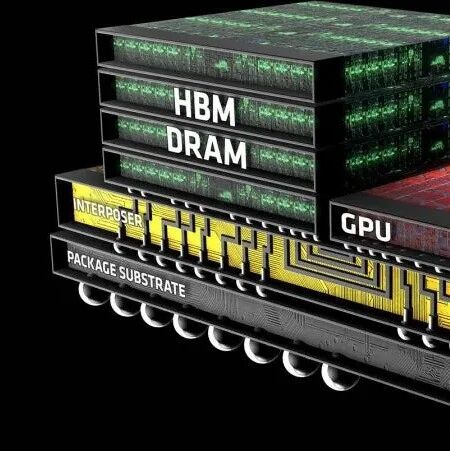
据报道,在专注于家电和智能手机的设备体验(DX)部门,视觉显示(VD)和家电部门的员工将 获得基本工资的37.5%作为绩效奖金。这主要是由于包括电视在内的家电市场低迷导致业绩下滑。 如果您希望可以时常见面,欢迎标星收藏哦~ 三星电子负责半导体业务的器件解决方案(DS)事业部将发放最高达基本工资100%的绩效奖金。 这一变化反映了绩效体系的调整,其主要驱动力是半导体技术竞争力的复苏,包括今年高带宽内存 (HBM)供应的扩大。 三星电子于22日通过内部公告栏公布了下半年"目标达成激励"(TAI)的支付比例。TAI是三星电 子的绩效奖金体系之一。每个事业部的绩效每年评估一次,分别在上半年和下半年进行,并根据评 估结果发放最高达月基本工资100%的差额奖金。下半年TAI的发放日期为24日。 DS事业部的存储器事业部获得了100%的TAI,较上半年的25%大幅提升。这主要得益于其强劲的 业绩表现,而强劲的业绩表现又源于向英伟达供应12层第五代HBM(HBM3E)芯片以及近期内存 价格的上涨。半导体研究所和人工智能(AI)中心也将获得100%的绩效奖金。DS 事业部下属的另一个业务单元——系统LSI和代工(半导体合同制造 ...


台积电2nm,苹果拿下过半订单
半导体芯闻· 2025-12-23 10:35
Core Viewpoint - Samsung Electronics is positioned to leverage opportunities in the semiconductor foundry sector through collaborations with major North American tech companies like AMD and Google, especially amid ongoing geopolitical tensions between the US and Taiwan [1]. Group 1: Collaborations and Contracts - Samsung Electronics' chairman Lee Jae-Yong recently met with executives from major tech companies, including Tesla's Elon Musk and AMD's Lisa Su, to discuss foundry business opportunities [1]. - In July, Samsung signed a contract worth 23 trillion KRW with Tesla to produce the next-generation AI chip, AI6, at its Texas facility [1]. - Samsung is expected to secure more large orders, including its Exynos 2600 processor and image sensors for Apple, as well as ASICs from Chinese companies Bitmain and Canaan [1]. Group 2: Geopolitical Context and Market Dynamics - Geopolitical risks and limited capacity at TSMC are driving major tech companies like Tesla, AMD, and Google to engage with Samsung Electronics [2]. - The US government has designated advanced semiconductors as a national security resource, pushing for domestic production, while Taiwan's government restricts technology exports and foreign investment [2]. - TSMC's plans to build a second factory in Arizona and produce 3nm chips by 2027 may fall short as the 2nm process is currently the most advanced, creating an opportunity for Samsung to lead in 2nm production [3]. Group 3: Market Share and Demand - TSMC holds a 71% share of the global foundry market, with its market share increasing from 61.2% in Q4 2023 to over 70% due to high demand for AI semiconductors [3]. - Despite TSMC's growing market share, its capacity shortages are creating a ripple effect that benefits Samsung's foundry operations [3]. - Apple faces a capacity shortage for the next-generation 2nm process, having secured nearly half of the total capacity, prompting competitors like Qualcomm, AMD, and Google to turn to Samsung [5].

英特尔前董事:拆分晶圆厂才是正道
半导体芯闻· 2025-12-23 10:35
在芯片大厂英特尔(Intel) 目前正处于晶圆代工(Foundry) 业务转型的关键时刻之际,根据最新 的市场观察与Intel 前内部高层的观点,Intel 在争取顶尖代工客户的过程中,正面临一个巨大的结 构性障碍,那就是该公司同时身兼「竞争对手」与「合作伙伴」的双重身份。尽管Intel 正积极推 动intel 18A 与intel 14A 制程的量产,但如何赢得英伟达(NVIDIA)、超微(AMD) 及高通 (Qualcomm) 等竞争对手的信任,已成为其代工事业能否成功的核心议题。 而针对市场与内部的质疑,Intel 也并非毫无作为。 intel 副总裁John Pitzer 日前在瑞银(UBS) 会议上透露,Intel 晶圆代工正朝着建立独立法律实体的方向迈进。目前,Intel 已为代工部门设立 了专门的咨询委员会,并正逐步将其转变为独立实体,以确保各部门之间不会相互影响,这些动作 也正是为了回应外部客户对于业务分离的需求。他强调,如果执行长陈立武与董事会认为拆分能带 来更多价值,公司将会毫不犹豫地朝那个方向行动。目前的一系列行政与法律隔离措施,正是为了 创造这种选项。 有趣的是,Intel 本身多年来 ...

SiC和GaN,最新进展
半导体芯闻· 2025-12-23 10:35
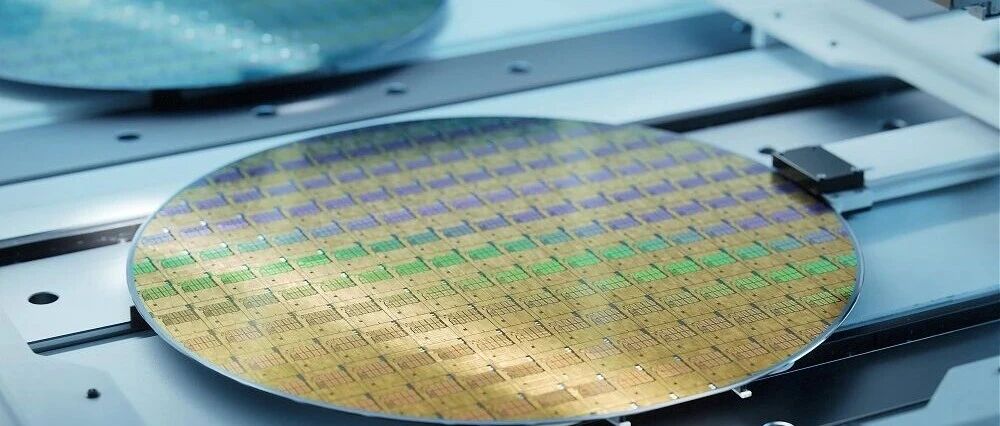
Group 1: Core Insights - The article discusses the growing importance of wide bandgap semiconductors, specifically Silicon Carbide (SiC) and Gallium Nitride (GaN), in the automotive electrification and AI data center sectors [1] - The SiC market is primarily driven by automotive applications, particularly in battery electric vehicle (BEV) inverters, with a projected market size of $10 billion within the next five years [3][4] - Recent trends include the emergence of 800V fast charging technology for electric vehicles, which is expected to enhance competitive advantages for automakers [3] Group 2: SiC Market Developments - The transition from 150mm (6-inch) to 200mm (8-inch) wafers is currently underway in the global SiC industry, with companies like Wolfspeed and Infineon leading the charge [4][5] - New entrants in the SiC market include Indian companies like LTSCT and SiCSem, as well as initiatives in Singapore and South Korea to develop SiC manufacturing capabilities [6][19] - Geopolitical concerns and supply chain disruptions are prompting countries to invest in SiC technology, with India being particularly active in this space [6][19] Group 3: GaN Market Developments - The GaN market is driven by consumer applications such as mobile chargers, with a projected market size exceeding $2.5 billion by 2030 [10][12] - Major players in the GaN market include Innoscience, Navitas, and Infineon, with Innoscience expected to lead with a 29.9% market share [12] - The GaN industry is shifting towards an Integrated Device Manufacturer (IDM) model, contrasting with the previous dominance of fabless companies [12][13] Group 4: Technological Advancements - Both SiC and GaN technologies are evolving, with advancements in device architecture such as Bosch's dual-channel trench gate technology and Navitas's trench-assisted planar SiC MOSFET technology [8][22] - The GaN market is also seeing a shift towards larger wafer sizes, with 300mm (12-inch) wafers being developed, which is expected to enhance manufacturing efficiency [15][16] - Vertical GaN architectures are emerging, offering advantages over traditional planar structures, with companies like Onsemi leading this innovation [22]

闻泰科技董事长:安世半导体纠纷恐引发全球芯片行业动荡
半导体芯闻· 2025-12-23 10:35
如果您希望可以时常见面,欢迎标星收藏哦~ 欧洲芯片制造商安世半导体(Nexperia)的中国母公司闻泰科技董事长杨沐警告称,除非闻泰恢 复对安世半导体的掌控权,否则全球芯片供应仍面临风险。 杨沐今年7月接任闻泰科技董事长职务,仅两个月后安世半导体纠纷爆发。彭博社星期一(12月22 日)刊发杨沐的访问,这是她在安世半导体事件以来,首次接受国际媒体访问。 杨沐在访问中指责,荷兰政府违反与中国签署的双边投资条约,并称荷兰当地管理层试图从这场危 机中谋取私利。 杨沐表示,必须明确指出,当前供应中断的直接且唯一原因,是安世半导体荷兰实体单方面、出乎 意料地停止了晶圆供应。 她说:"纠纷每持续一天,对全球产业链、国际投资信心以及股东造成的损害都在加深。" 杨沐在访谈中否认了有关向中国不当转移技术的指控,并重申要求恢复安世半导体股东权利。 她称,荷兰政府与当地高管意图将2019年把安世收归麾下的闻泰科技赶走,荷方强行接管安世的 做法,是一种有预谋且缺乏正当理由的干涉行为。 这些言论凸显了安世内部的深刻裂痕,也引发外界对汽车和消费电子行业关键零部件供应稳定性的 担忧。安世半导体将晶圆从欧洲运往亚洲进行最终组装,其最大的生产基 ...


英伟达H200,将卖给中国
半导体芯闻· 2025-12-23 10:35
Core Insights - Nvidia has informed Chinese companies about plans to deliver the first batch of H200 GPUs by mid-February, with an expected shipment of 5,000 to 10,000 chip modules, totaling approximately 40,000 to 80,000 H200 chips [1] - The shipment is contingent upon approval from the Chinese government, which has yet to authorize purchases despite interest from major tech firms like Alibaba and ByteDance [1] - This marks the first delivery of the H200 series to the Chinese market since the Trump administration approved exports, with the U.S. government set to receive a 25% share from these sales [1] Group 1 - The Biden administration previously prohibited the sale of all chips to China under national security concerns, but the recent policy shift by Trump aims to support U.S. jobs and manufacturing [3] - Economic factors may take precedence over national security in the semiconductor trade tensions between the U.S. and China [3] - In response to U.S. restrictions, China has implemented export limits on rare earth materials, crucial for processors and electronic products [3] Group 2 - Analysts suggest a potential "chip for rare earth materials" deal between the U.S. and China, which could lead to China easing its restrictions on rare earth exports [3] - Any export of H200 chips to China will face strict scrutiny, with U.S. lawmakers requesting detailed information on licenses for sales to Chinese entities [4] - Lawmakers are also seeking to review any agreements made by the Trump administration regarding the H200 and assessments of China's advanced chip production capabilities [4] Group 3 - The H200 GPU, although an older generation, is widely used in artificial intelligence applications, and Nvidia is focusing on increasing its production to meet demand from Chinese clients [4] - Chinese officials are deliberating on whether to allow imports of the H200 chips, concerned that it may hinder the development of China's own semiconductor industry [4] - A potential solution could involve requiring Chinese companies to purchase a certain number of domestic chips for every H200 chip acquired [4] Group 4 - Nvidia has stated that selling H200 GPUs to authorized customers in China will not affect its ability to supply U.S. customers [5]

采埃孚出售ADAS业务
半导体芯闻· 2025-12-23 10:35
Core Viewpoint - Samsung Electronics is accelerating its automotive electronics business, viewing it as a future growth engine, and has acquired ZF's Advanced Driver Assistance Systems (ADAS) business through its subsidiary Harman, marking a significant expansion into core autonomous driving technology [2][3]. Group 1: Acquisition Details - The acquisition of ZF's ADAS business is valued at €1.5 billion (approximately 2.6 trillion KRW), representing Samsung's first automotive electronics acquisition in eight years since acquiring Harman in 2017 [2]. - The acquisition process for the ADAS business is expected to be completed by 2026 [5]. Group 2: Market Potential and Growth - The ADAS and centralized controller market is projected to grow from 62.6 trillion KRW in 2025 to 97.4 trillion KRW by 2030, reaching 189.3 trillion KRW by 2035, indicating a compound annual growth rate (CAGR) of 12% [4]. - Harman's CEO emphasized the strategic importance of the acquisition, stating it adds ADAS to Harman's product portfolio and provides a strategic foothold for supplying centralized integrated controllers to the automotive market [4]. Group 3: Technological Integration - The acquisition will enable Harman to integrate ADAS technologies, such as front cameras and ADAS controllers, into its flagship digital cockpit product, ensuring leadership in the rapidly evolving automotive landscape [3]. - The centralized controller architecture supports over-the-air (OTA) software updates, enhancing customer experience and streamlining maintenance and development cycles [3].

刚刚,商务部回应安世问题
半导体芯闻· 2025-12-22 14:41
Core Viewpoint - The Chinese government is taking responsible measures to stabilize the global semiconductor supply chain, including exemptions for compliant chip exports for civilian use, while urging companies to resolve internal disputes through negotiation [1] Group 1 - The current low inventory levels of wafers at Anshi's Dongguan factory are leading to chip shortages for both domestic and foreign automotive manufacturers in China [1] - The first round of negotiations between Wentai Technology and Anshi Netherlands has taken place, focusing on clarifications of mutual concerns, with an agreement to maintain communication [1] - The root cause of the issues surrounding Anshi Semiconductor is attributed to improper administrative intervention by the Dutch government, which needs to be addressed to alleviate global concerns over chip shortages [1] Group 2 - The Chinese side calls for relevant companies to negotiate on control issues and restore the supply chain, emphasizing the need for the Dutch government to withdraw administrative orders to facilitate favorable conditions for corporate negotiations [1] - The Chinese government stresses the importance of restoring chip supply for both domestic and foreign automotive manufacturers in China to ensure the safety and stability of the global semiconductor supply chain [1]

HBM设备,韩企遥遥领先
半导体芯闻· 2025-12-22 10:17
Group 1 - South Korean companies hold approximately 90% of the global market share for TC bonding machines, which are essential for manufacturing High Bandwidth Memory (HBM) [2] - SK Hynix and Samsung Electronics are leading the global HBM market, with South Korean firms solidifying their dominance in HBM manufacturing equipment [2] - Hanmi Semiconductor achieved a cumulative sales figure of $247.7 million (approximately 366 billion KRW) in Q3 this year, capturing a market share of 71.2%, ranking first in the TC bonding machine market [2] Group 2 - Hanmi Semiconductor entered the HBM equipment market in 2017 with the world's first TSV dual-layer stacked TC bonding machine and holds 150 patents related to HBM equipment [3] - The TC bonding machine market is expected to grow at an annual rate of approximately 13% until 2030, driven by increasing demand for HBM [3] - South Korean companies are actively developing next-generation hybrid bonding machines, which are considered crucial as the number of HBM layers increases [3]
全球首款量产RISC-V车规芯片发布:紫荆M100开启开放架构新纪元
半导体芯闻· 2025-12-22 10:17
如果您希望可以时常见面,欢迎标星收藏哦~ 2025 年 12 月 18 日,中国汽车芯片产业迎来一个重要节点。 在中国汽车芯片产业创新战略联盟 2025 全体成员大会上,全球首款实现量产并装车的 RISC-V 架 构车规级芯片——紫荆 M100 正式发布。该产品实现了 RISC-V 架构芯片在车载量产应用中的首 次落地,标志着中国汽车芯片产业在开放架构方向上的自主研发和工程化能力迈出实质性一步。 作为联盟年度重要活动之一,本次发布会吸引了多家整车企业、Tier 1 供应商、芯片设计企业及科 研机构代表参与。工业和信息化部相关领导、联盟理事长单位代表以及来自整车和零部件企业的技 术负责人出席活动,共同见证了紫荆 M100 的量产发布,并围绕其在车载应用、产业协同及国产 化进程中的意义进行了交流与讨论。 技术突破:从零到一的征程 紫荆M100作为全球首款实现量产上车的RISC-V汽车芯片,充分发挥了RISC-V开放、模块化的架 构优势,紧密契合智能汽车电子电气架构的演进趋势,具备高算力、低功耗、高安全性与高扩展性 四大核心特征。 回顾这款芯片的诞生历程,紫荆半导体走出了一条独特的"快速突破"之路。从2023年启动 ...