半导体行业观察

Search documents
疯狂内卷,客户砍单,成熟制程太难了
半导体行业观察· 2025-07-28 01:32
Core Viewpoint - The semiconductor industry is facing significant challenges due to a combination of factors including the end of the tariff-induced inventory buildup, weaker-than-expected recovery in end-user applications such as mobile, networking, and automotive, and continued pressure from the appreciation of the New Taiwan Dollar [2][3]. Group 1: Market Conditions - Major IC design companies are reportedly cutting wafer foundry orders for mature processes by 20% to 30% in Q3 compared to Q2, indicating a significant correction in demand [2][3]. - The automotive market is particularly weak, impacting demand for mature processes, with major chip manufacturers warning of poor market conditions [3][4]. Group 2: Financial Impact - The capacity utilization rate for mature process foundries is expected to drop from around 70% in the first half of the year to approximately 60% or lower in the second half [4]. - UMC and World Advanced are projected to see their gross margins decline, with UMC's gross margin potentially falling to 25% in the second half of the year [3][4]. - Powerchip has reported a net loss of NT$0.8 per share for Q2, marking its seventh consecutive quarter of losses, with continued pressure expected in the second half [3][4]. Group 3: Industry Outlook - The semiconductor industry is primarily supported by AI demand, with TSMC performing well, while other mature process foundries are struggling due to weak consumer and automotive sector demand [4].


台媒:DRAM巨头,HBM有变
半导体行业观察· 2025-07-28 01:32
Core Viewpoint - Samsung Electronics has delayed the mass production of its next-generation High Bandwidth Memory (HBM) chips to 2026, indicating a more cautious approach in the ongoing redesign of DRAM technology [3][5]. Group 1: Samsung Electronics - Samsung initially planned to start mass production of the 12-inch HBM4 modules based on 10nm-class sixth-generation 1c DRAM in the second half of 2025, but now aims to deliver early samples to major customers in Q3 2025 and full-scale production in Q4 2025 [3][5]. - The company is focusing on improving the performance and yield of its redesigned 1c DRAM chips, with internal tests showing a yield of approximately 65% as of early July [3][5]. - Samsung is pursuing two strategies to enhance 1c DRAM: modifying previous 1a and 1b designs and completely redesigning to create a new generation of chips, which could increase chip size and yield but also raise costs [5]. Group 2: SK Hynix - SK Hynix reported record quarterly earnings, with operating profit increasing by 68% year-on-year to 9.21 trillion KRW (approximately 6.7 billion USD) and sales rising by 35% to 22.23 trillion KRW (approximately 16.1 billion USD) [7]. - HBM and AI-related memory products accounted for 77% of SK Hynix's total revenue, contributing to the strongest performance in its memory division to date [7]. - The company plans to double its HBM sales by 2025, driven by strong demand for its HBM3E chips, and is preparing for the commercial launch of HBM4 in 2026 after distributing early samples [8][9].
分析师:陈立武有望变救世主
半导体行业观察· 2025-07-28 01:32
Core Viewpoint - Intel's recent earnings report exceeded market expectations for Q2, but the announcement of a 15% workforce reduction (approximately 15,000 employees) and a slowdown in expansion plans led to a significant stock price drop of over 9% on the following trading day [2]. Group 1: Operational Strategy - Intel is focusing on consolidating production resources, halting expansion plans in Germany and Poland, and slowing down the Ohio facility expansion, with a goal to align capacity with customer orders [3]. - The company plans to reduce capital expenditures below the current year's $18 billion (approximately NT$530.93 billion) and control depreciation expenses and free cash flow [3]. Group 2: Technology Development - Intel is not abandoning the 18A process node but acknowledges that the production scale and timeline for the 18A Panther Lake SKU are significantly behind previous expectations [3]. - The investment in 18A is less than that in 14A, relying on internal customers for reasonable profitability, while 14A development includes special requirements from external customers [3]. Group 3: Market Competition - Intel faces significant challenges in competing with TSMC regarding chip speed, cost, yield, and time to market, but the new CEO appears to have a clearer understanding of TSMC's strengths [4]. - The company may choose not to invest in 14A if there are insufficient products to support acceptable revenue and profitability [4]. Group 4: Product Development Issues - The production of the 3 EUV Granite Rapids server CPUs has been delayed, with the company stating that gaining market share will take time and that there are issues with the multi-threading P-cores design that need correction [4]. - Intel's AI GPU development faces significant challenges, including a lack of system software stack and strategy, indicating that understanding AI systems is crucial before designing software and chips [4].

下一代芯片,电子束发挥重要作用
半导体行业观察· 2025-07-28 01:32
通过调整溶液中的氨含量,研究人员能够控制光束是蚀刻掉材料还是沉积材料,从而有效地实现原子水平的 3D 雕刻。 公众号记得加星标⭐️,第一时间看推送不会错过。 来源:内容 编译自phy 。 在极小的尺度上创建复杂结构一直是工程师们面临的挑战。但佐治亚理工学院的一项新研究表明,已广泛应用于成像和制 造的电子束,也可以作为超精密工具,用于雕刻和构建铜等材料的结构。 乔治·W·伍德拉夫机械工程学院安德烈·费奥多罗夫教授的研究小组发现了一种技术,该技术利用液体环境中的聚焦电子束 去除或沉积铜,完全取决于周围的化学性质。 通过精心调节氨浓度和电子束照射,研究团队能够以纳米级精度微调铜表面的形状和结构。他们还开发了模型并进行了模 拟,以更好地理解这些化学变化如何影响铜的行为。 双向道路 电子束方法通常用于去除材料或添加材料,但不能同时进行。在本研究中,研究人员开发了一种工艺,可以使用相同的设 置依次完成其中一项或两项操作。 在实验中,他们将电子束聚焦在浸没在水氨溶液中的铜上。在低氨浓度下,电子束蚀刻出的沟槽仅深 50 纳米,大约比一 张纸薄 2000 倍。 随着时间的推移,蚀刻过程中去除的铜原子开始重新沉积在沟槽内,形成微 ...
AI算力狂飙,能源成最大瓶颈
半导体行业观察· 2025-07-27 03:17
Core Viewpoint - The article discusses the increasing energy demands of AI supercomputers and the urgent need for technological and policy solutions to address this issue, highlighting the emergence of new chip manufacturers aiming to improve energy efficiency in AI tasks [3][4][10]. Group 1: Energy Demand and AI - Andrew Wee, a hardware leader at Cloudflare, expresses concern over the projected 50% annual increase in energy consumption for AI by 2030, which he believes is unsustainable [3][4]. - The article emphasizes that the energy consumption of AI systems is becoming a critical issue, with companies exploring various solutions, including new chip designs and alternative energy sources [10]. Group 2: Emergence of New Chip Manufacturers - Positron, a startup that recently raised $51.6 million, is developing a new chip that is more energy-efficient than Nvidia's for AI inference tasks, potentially saving companies billions in costs [4][8]. - Several chip startups are competing to sell AI inference-optimized chips to cloud service providers, with major tech companies like Google, Amazon, and Microsoft investing heavily in their own inference chips [4][5]. Group 3: Competitive Landscape - The term "Nvidia tax" refers to the high hardware margins of Nvidia, which is around 60%, prompting other companies to seek alternatives to avoid this premium [5]. - Nvidia's latest Blackwell system reportedly offers 25 to 30 times the energy efficiency for inference tasks compared to previous generations, indicating the competitive pressure in the market [5][9]. Group 4: Future of AI Hardware - New chip manufacturers like Groq and Positron are adopting innovative designs specifically tailored for AI tasks, with Groq claiming its chips can operate at one-sixth the power consumption of Nvidia's top products [7][8]. - Despite advancements in chip technology, the overall demand for AI continues to grow, leading to concerns that energy consumption will still rise, as noted by industry experts [10].

9月上海,一场关于“工业芯”的深度对话即将展开
半导体行业观察· 2025-07-27 03:17
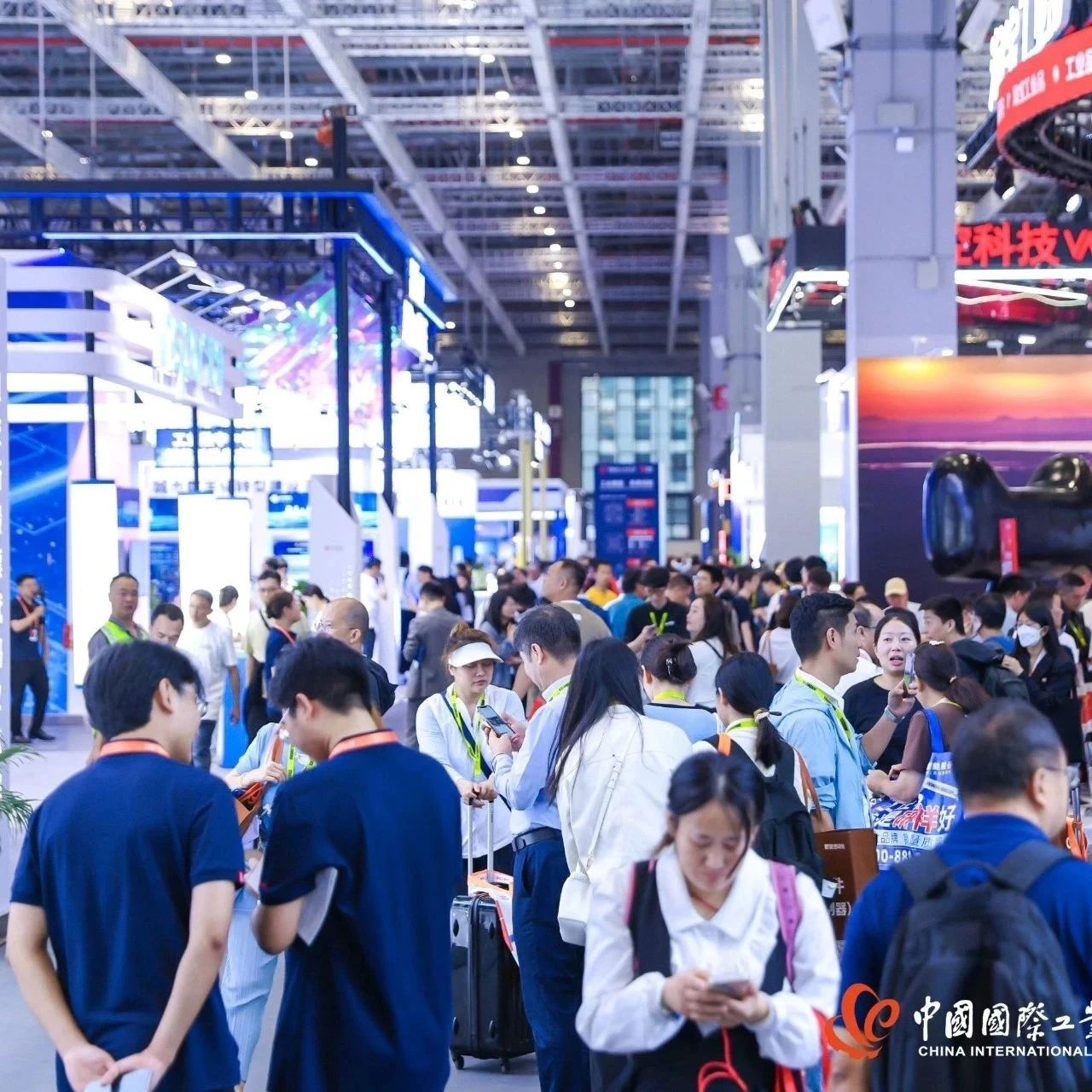
Core Viewpoint - The article emphasizes the significance of the China International Industry Fair as a platform for showcasing advancements in manufacturing and technology, particularly focusing on the integration of computing power and industrial applications [1][10]. Group 1: Event Overview - The "Industrial Computing Power 'Chip' Engine Technology Seminar" will be held at the China International Industry Fair, focusing on the potential applications of chips in industrial scenarios and the evolution of computing power [1][3]. - The seminar aims to connect technological innovation, industry demand, and market opportunities, reflecting the growing importance of specialized computing power in the industrial sector [1][3]. Group 2: Industry Context - The global shift towards industrial internet is driving a transformation in production methods and organizational models, with computing power becoming a core productivity driver in the digital age [3]. - Traditional computing architectures are struggling to meet the stringent requirements of real-time, reliability, and security in industrial settings, highlighting the need for dedicated computing power chip systems [3]. Group 3: Seminar Agenda - The seminar will cover various topics, including: - Storage root technology for data storage in Chinese manufacturing [4]. - Industrial big data from governance to value realization [5]. - Predictive maintenance 2.0 focusing on fault prediction and lifespan calculations [5]. - The role of FPGA chips in the "Robot+" era [5]. - Accelerating IIOT solution implementation [5]. - A roundtable forum for discussion [5]. Group 4: Participant Composition - The seminar will feature prominent companies such as Huawei, ZTE, and BYD, alongside international industrial giants like Siemens and Bosch, indicating a high level of expertise and international collaboration [7]. - The diverse participation from various industry organizations and enterprises underscores the strategic importance of industrial computing power across different sectors [7]. Group 5: Fair Significance - The China International Industry Fair, established in 1999, is the only national industrial exhibition in China and has become a significant platform for showcasing advanced manufacturing and emerging industries [10]. - The upcoming 2024 fair will feature over 28,000 square meters of exhibition space, attracting more than 200,000 professional visitors and over 2,600 leading companies, reaffirming its status as a global industrial exhibition leader [10]. Group 6: Future Outlook - The integration of computing power is reshaping the foundational logic of the industrial sector, with chips being the driving force behind this technological wave [13]. - The seminar represents a pivotal moment for stakeholders in the Chinese manufacturing sector to engage in discussions that will shape the future of industrial intelligence [13].





事关台积电,美国财长警告
半导体行业观察· 2025-07-27 03:17
Core Viewpoint - The article highlights the challenges faced by TSMC in establishing a semiconductor manufacturing facility in Arizona, emphasizing regulatory hurdles that may limit its production capacity to only 7% of the U.S. semiconductor needs [3]. Group 1: TSMC's Arizona Facility - U.S. Treasury Secretary warned that TSMC's $40 billion facility in Arizona may only produce 7% of the U.S. semiconductor requirements due to local regulatory challenges [3]. - The construction of the facility is reportedly slowed down by regulatory obstacles, which complicate the building process [3]. - TSMC plans to have its second factory operational by 2027, with 30% of its advanced 2nm capacity expected to come from this Arizona facility [3]. Group 2: TSMC's Advanced Process Technology - TSMC is set to begin mass production of its 2nm process technology in the second half of this year, with expectations that the design tape-outs will exceed those of the 3nm and 5nm processes in the first two years [4]. - The 2nm process technology offers a 10% to 15% speed increase at the same power consumption or a 25% to 30% reduction in power consumption at the same speed, with a chip density increase of over 15% [4]. - Future plans include the introduction of the N2P process technology, which will provide better performance and power efficiency, scheduled for mass production in the second half of 2026 [4]. Group 3: Upcoming Process Developments - TSMC's roadmap includes the A16 process, which will enhance speed by 8% to 10% at the same power consumption or reduce power consumption by 15% to 20% at the same speed, with a chip density increase of 7% to 10% [5]. - The A16 process is designed for high-performance computing (HPC) products and is expected to enter mass production in the second half of 2026 [5].


英特尔代工,终于找到大客户
半导体行业观察· 2025-07-27 03:17
Core Viewpoint - Intel is experiencing a potential turnaround with new developments in its 14A process technology, which may involve collaboration with Apple and interest from Nvidia [3][4]. Group 1: Intel's 14A Process Technology - Intel's upcoming 14A process will introduce the second generation of RibbonFET and PowerDirect power delivery architecture, building on the PowerVia technology from its 18A process [3]. - The 14A process is targeted at applications in AI and edge computing, with early versions of the 14A Process Development Kit (PDK) provided to key customers, including Nvidia and Apple, for testing [3]. Group 2: Market Dynamics and Competition - Intel's future in the advanced process competition is uncertain, as the company has stated it will exit if it cannot attract significant external customer orders for its 18A and 14A processes [3]. - The semiconductor supply chain is currently dominated by TSMC, leaving major tech companies with limited options regarding node pricing and capacity allocation [4]. - Apple's consideration of Intel's 14A process is significant, as it may diversify its supply chain, especially with TSMC expected to launch its A14 process around the same time [4]. Group 3: Nvidia's Interest - Nvidia has shown interest in collaborating with Intel for its foundry business, driven by the strong demand in the AI sector, indicating that Nvidia cannot rely solely on one foundry [4].


为何都盯上了12nm
半导体行业观察· 2025-07-27 03:17
Core Viewpoint - The 12nm process node, previously considered mature, is now gaining attention in the semiconductor industry due to its balance of performance, power consumption, and cost, making it a strategic choice for various applications, especially in edge AI and IoT devices [1][3][23] Group 1: Expansion of 12nm Applications - Numerous domestic and international companies are adopting 12nm technology across various sectors, including wearable devices, servers, smartphones, AI, and automotive applications [5][11] - Notable products include Unisoc's W527 platform for wearables, Loongson's 3C6000 server CPU, and various chips for AR/VR and industrial IoT [6][10][11] Group 2: Drivers Behind the Resurgence of 12nm - The shift towards edge computing and AI applications is driving demand for cost-effective solutions that 12nm can provide, as it strikes a balance between performance and cost [12][13] - Geopolitical factors are prompting companies to reassess their manufacturing processes, with 12nm being a safer choice that supports mainstream applications without being at the cutting edge [13][14] - The compatibility of 12nm with advanced packaging technologies allows for efficient system-level integration, making it attractive for modern chip designs [13][14] Group 3: Foundry Focus on 12nm - Major foundries like TSMC, UMC, and Intel are increasingly focusing on 12nm, with TSMC's 12nm FinFET Compact technology being a key offering [16][17] - UMC and Intel's collaboration on 12nm aims to address the growing demand in mobile communications and network infrastructure, highlighting the strategic importance of this node [18][19] - The partnership allows both companies to leverage their strengths, with Intel focusing on manufacturing and UMC on process development, catering to market needs while navigating geopolitical challenges [20][21][22] Group 4: Future Outlook for 12nm - The 12nm node is expected to play a crucial role in the evolution of edge AI, IoT, and automotive electronics, serving as a bridge between chip design and system solutions [23] - As advanced packaging and system-level optimizations continue to develop, 12nm may become increasingly central to the semiconductor ecosystem, supporting a wide range of applications [23]



下一代数据中心,不拼芯片?
半导体行业观察· 2025-07-27 03:17
Core Viewpoint - The article discusses how artificial intelligence (AI) is reshaping data center architecture due to its immense computational power requirements, leading to a transformation from isolated servers to interconnected computing clusters that operate as unified systems [2][3]. Group 1: AI Interconnect Architecture - The AI interconnect architecture is structured in layers, similar to memory systems, categorized by connection distance, bandwidth, latency, and power consumption [2]. - The Scale-up interconnect focuses on connecting GPUs and AI accelerators (XPUs) with high-performance, ultra-low latency links, transitioning from traditional copper solutions to optical technologies like Linear Pluggable Optics (LPO) [3]. - Scale-out interconnects act as the "optical loom" that weaves together multiple racks and units, relying on PAM4 modulation for high bandwidth and low latency over distances of tens to hundreds of meters [4]. Group 2: Data Center Interconnect (DCI) - Data Center Interconnect (DCI) technology connects computing clusters across cities and continents, utilizing coherent ZR optical technology for high-capacity connections over long distances, such as 800G ZR/ZR+ modules achieving up to 2500 kilometers [6]. Group 3: Future of AI Interconnect - The future of AI interconnect will not rely on a single technology but will integrate various solutions like copper, LPO, CPO, PAM4, coherent-lite, and coherent ZR to create a scalable, energy-efficient, and high-performance AI infrastructure [8]. - Collaboration among chip manufacturers, developers, and cloud service operators is essential to elevate interconnects from auxiliary components to core pillars of system architecture, emphasizing the importance of connectivity in the AI landscape [9].