经济观察报

Search documents
专访钱江:百时美施贵宝对中国市场的“看好”始终不变
经济观察报· 2025-12-12 03:02
Core Viewpoint - Bristol-Myers Squibb (BMS) has shifted its perspective on the Chinese market from merely a sales opportunity to a collaborative innovation ecosystem, emphasizing mutual empowerment and innovation as key goals [2][3]. Group 1: Strategic Focus - The year 2025 is identified as a pivotal year for BMS in China, marking a transition from market expansion to ecosystem co-creation [2]. - BMS's "China 2030 Strategy," initiated in 2020, aims to maintain robust performance, integrate and lead innovation ecosystems, and enhance talent development [3]. - The three strategic focuses of performance, innovation, and talent are interrelated, forming a cohesive framework for BMS's operations in China [4]. Group 2: Performance as a Foundation - Performance encompasses not only commercial success but also the synchronization of Phase III clinical trials and new drug registrations with global standards [6]. - BMS has accelerated the introduction of innovative drugs in China, focusing on areas with unmet medical needs, including several first-in-class and best-in-class therapies [6]. - The company has successfully integrated five innovative products into the national medical insurance directory within a year of their launch, showcasing a new speed in market access [6][8]. Group 3: Innovation as an Engine - BMS aims to transition from being an innovator's "importer" to a leader within China's innovation ecosystem, emphasizing the importance of collaboration with local partners [11]. - The selection of partnerships is guided by strategic alignment with BMS's core disease areas and the potential for long-term value creation [12]. Group 4: Talent as a Bridge - BMS is building a talent pool that understands both the Chinese market and global dynamics, essential for executing its "China 2030 Strategy" [14]. - The company encourages cross-regional and cross-functional experiences to enhance employees' global perspectives while being rooted in local market needs [14]. Group 5: Long-term Vision - BMS remains committed to a patient-centered approach and innovation as its core competitive advantage, with a strong belief in the resilience and potential of the Chinese market [15].


“背靠”比亚迪,尚水智能冲刺创业板IPO
经济观察报· 2025-12-12 02:00
Core Viewpoint - Shenzhen Shangshui Intelligent Co., Ltd. (Shangshui Intelligent) is heavily reliant on BYD, which is both a major shareholder and the largest customer, contributing 65.78% of its revenue in 2024, indicating a significant business risk due to this dependency [2][4][8]. Group 1: Company Overview - Shangshui Intelligent was founded in 2012, focusing on micro-nano powder processing, precision measurement, mixing and dispersion, and functional film preparation, with applications in the new energy battery sector [4]. - The company has established partnerships with major players in the new energy battery industry, including BYD, Yiwei Lithium Energy, and CATL, as well as international manufacturers like Samsung SDI and LGES [4]. Group 2: Financial Performance - Shangshui Intelligent's revenue has shown strong growth over the past three years, with annual revenue of 397 million, 601 million, 637 million, and 398 million yuan, and a compound annual growth rate of 26.70% from 2022 to 2024 [4][5]. - Despite revenue growth, net profit has shown signs of decline, with a significant drop of 34.90% in 2024 compared to 2023, attributed to factors such as changes in VAT policies and fluctuations in gross profit [5][6]. Group 3: Dependency on BYD - The company has a significant dependency on BYD, with sales to the top five customers accounting for over 89% of total revenue, and sales to BYD alone representing 36.29% in the first half of 2025 [8][9]. - A strategic cooperation agreement was signed with BYD, extending the lock-up period for BYD's shares in Shangshui Intelligent to 36 months, indicating a long-term commitment [8]. Group 4: Risks and Challenges - Shangshui Intelligent faces risks related to its heavy reliance on BYD, as any changes in BYD's procurement strategy or market conditions could adversely affect its business [9]. - The company has reported a significant increase in inventory levels, which poses a risk of capital inefficiency and potential financial strain if not managed effectively [9]. - The gross profit margin has fluctuated, with rates of 48.10%, 57.08%, 48.72%, and 53.65% over the reporting periods, indicating potential pressure from cost control demands from clients and market competition [10][11].


中央经济工作会议解读:如何理解“增加普通高中学位供给和优质本科招生”
经济观察报· 2025-12-11 14:26
Core Viewpoint - The article discusses the marginalization of rural education in China, highlighting the need for structural adjustments in educational resource distribution to address the imbalance between urban and rural areas [1][4]. Group 1: Education Resource Distribution - The central economic work conference emphasized the need for adjustments in the educational resource layout, covering all levels from kindergarten to university [2]. - Population migration and urbanization have exacerbated the uneven distribution of educational resources, leading many families to move to cities for better schooling options [2][3]. - The marginalization of county-level education is linked to the overall weakness of rural education, with a significant concentration of high school students in county schools [3][4]. Group 2: Policy Initiatives - The Ministry of Education has launched the "National County High School Revitalization Action Plan" to improve county-level education by enhancing school layouts, optimizing teacher structures, and attracting quality educators [3][4]. - The policy aims to address the systemic issues in educational resource distribution, which are closely tied to regional economic development [4]. Group 3: High School Enrollment and Quality - In 2024, there are 15,800 ordinary high schools in China, with enrollment reaching 10.36 million, marking a significant increase but highlighting structural imbalances in education [5]. - The current educational landscape shows an oversupply of elementary education, a balance in middle school, and a shortage in ordinary high schools, leading to increased parental anxiety over school choice [5]. - The government plans to diversify high school offerings and increase enrollment to ensure fair access to quality education [5]. Group 4: Higher Education Enrollment Adjustments - The expansion of quality undergraduate admissions is not merely about increasing numbers but involves structural adjustments to meet industry and technological demands [6][7]. - In 2024, the target is to increase quality undergraduate admissions by 16,000, with a focus on emerging fields such as artificial intelligence and integrated circuits [6][7]. - The adjustments in admissions are intended to align educational outcomes with national strategic needs, emphasizing the importance of quality over quantity in higher education [7].

今年中央经济工作会议,提出重视解决地方财政困难
经济观察报· 2025-12-11 14:20
Fiscal Policy - The Central Economic Work Conference emphasized the continuation of a more proactive fiscal policy, maintaining necessary spending intensity and scale for the upcoming year [2][3] - The fiscal deficit rate is expected to remain at or above 4% in 2026, with an increase in new debt scale to around 15 trillion yuan [5][6] - The focus will be on optimizing fiscal expenditure structure and addressing local government financial difficulties, ensuring the "three guarantees" (guaranteeing salaries, operations, and livelihoods) [2][9] Monetary Policy - The conference proposed to continue an appropriately loose monetary policy, with a potential interest rate cut of 0.2 to 0.3 percentage points and a reserve requirement ratio cut of 1 percentage point [6][7] - The monetary policy will aim to stabilize economic growth and promote reasonable price recovery, addressing the downward pressure on PPI and CPI [6][7] Local Government Finance - There is a strong emphasis on addressing local fiscal difficulties, with a focus on ensuring the operational capacity of local governments amid revenue shortfalls and debt pressures [9][10] - The central government plans to enhance the efficiency of transfer payments to local governments, which have exceeded 10 trillion yuan, to support necessary public services [9][10] - The conference highlighted the need for a multi-faceted approach to resolve local government debt risks, shifting focus from hidden debts to operational debts of financing platforms [11]
院长贪腐上亿元落马,大药厂老板涉嫌行贿被抓
经济观察报· 2025-12-11 13:37
安怀略行贿罪和科开医药单位行贿罪的公开,与近两年贵州省 医药领域的反腐风暴有关。 作者:张铃 封图:图虫创意 12月10日晚间,贵州医药流通龙头企业信邦制药(002390.SZ)发布公告,其因涉嫌单位行贿,近 期或将被起诉。 2024年3月,原贵阳医学院附属医院(下称"贵医附院")党委副书记、院长王小林涉嫌严重违纪 违法被查,后被查明其涉案金额高达1.6亿元,受贿数额特别巨大。王小林曾是科开医药的法定代 表人和董事长,而安怀略则是王小林昔年的下属。 经济观察报注意到,2025年1月,贵州省纪委监委在反腐专题片中详细披露了王小林贪腐细节, 其中涉及安怀略和科开医药。 2001年至2014年,王小林任贵阳医学院党委委员、副院长,贵医附院党委副书记、院长。2002 年,王小林将贵阳医学院科技开发公司药品销售部改制为科开医药。 改制后,王小林任法定代表人兼董事长,并安排当时在贵医附院担任急门诊主任的安怀略任总经 理。此后,在王小林大力支持下,科开医药成为贵医附院最大的药品供应平台。 此次信邦制药被起诉,或源于其控股子公司科开医药。2025年2月26日,科开医药单位行贿罪及 实控人安怀略行贿罪一案被贵州省开阳县人民法院 ...


激战欧洲 锂电巨头大迁徙
经济观察报· 2025-12-11 13:30
Core Viewpoint - Chinese lithium battery giants are expanding globally to seek new growth opportunities and navigate through market cycles, with a focus on establishing manufacturing capabilities in Europe and Southeast Asia [2][4][12]. Group 1: Global Expansion Initiatives - CATL and Stellantis have initiated a joint battery factory in Zaragoza, Spain, with a planned capacity of 50 GWh, aiming for production by the end of 2026 [6]. - EVE Energy is advancing its factory construction in Debrecen, Hungary, with a planned capacity of 28 GWh, while Guoxuan High-Tech is establishing a 20 GWh battery factory in Slovakia [9]. - Aiming for a localized supply chain, companies like Xinwanda are also expanding in Thailand, with over 17.4 GWh of planned battery capacity [10]. Group 2: Market Dynamics and Challenges - Domestic battery utilization rates are declining, leading to price wars that erode profits, while overseas markets, particularly in Europe and North America, show increasing demand for electric vehicles and energy storage [3][12]. - The Inflation Reduction Act (IRA) in the U.S. and the EU's new battery regulations impose significant barriers, necessitating local production to meet supply chain localization requirements [3][14]. Group 3: Profitability and Strategic Shifts - Despite domestic pressures, overseas operations for companies like CATL and EVE Energy show profit margins 5 to 10 percentage points higher than domestic margins [4][13]. - The shift from being "Chinese suppliers" to "global manufacturers" is crucial for survival, as companies aim to establish a competitive edge in international markets [4][12][15]. Group 4: Operational Challenges in Foreign Markets - Chinese companies face significant operational challenges in adapting to local conditions, including supply chain issues and regulatory compliance in Europe and the U.S. [18][20]. - The EU's stringent environmental regulations require companies to trace the carbon footprint of all battery components, adding complexity to operations [20]. Group 5: Future Outlook - The strategic focus for many Chinese lithium battery companies is to increase overseas production capacity to over 40% by 2030, aiming to become recognized as reliable high-tech solution providers in global markets [15][21]. - Despite the challenges, companies are committed to overcoming obstacles to establish themselves as global players in the lithium battery industry [21][22].





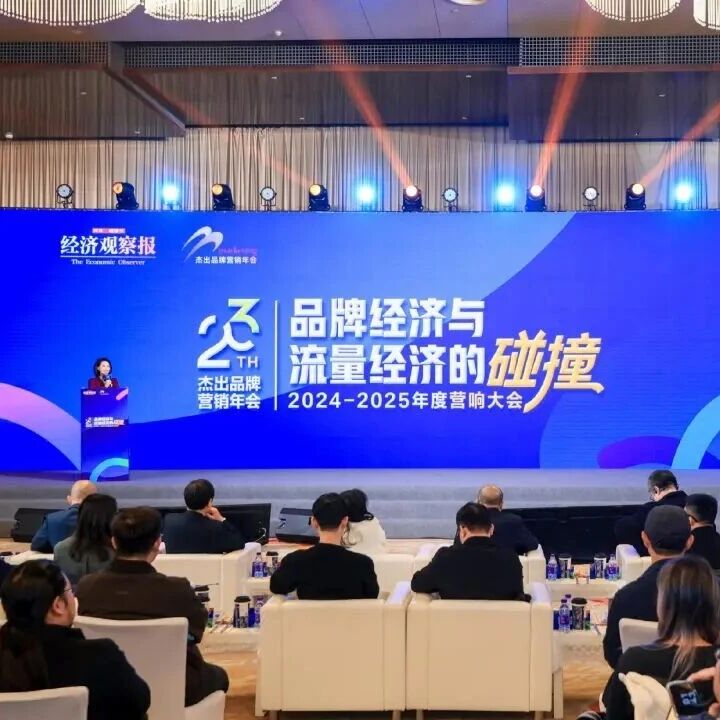
品牌经济与流量经济的碰撞——2024-2025年度营响大会暨(第二十三届)杰出品牌营销年会圆满举行
经济观察报· 2025-12-11 11:57
Core Insights - The brand marketing industry is at a new crossroads, balancing the maturity of the traffic system and the awakening of brand assets, with a focus on long-termism [1] - The 2024-2025 Annual Brand Marketing Conference aims to explore new growth methodologies amidst these changes [2] Group 1: Brand Value and Long-term Strategy - The traditional approach of relying on short-term gains to create hit products is becoming ineffective as media channels diversify and traffic costs rise [4] - Brands are recognized as the core competitive asset of a company, embodying emotional connections and trust with consumers, which cannot be achieved through fragmented communication [6][7] - The shift from "traffic" to "retention" is essential, emphasizing the need for deep connections between brands and users [13] Group 2: Evolving Consumer Engagement - The focus of brand competition is shifting from understanding users to understanding contexts, with multi-touchpoint collaboration becoming a new growth engine [15] - Brands like LILY are leveraging functional value, aesthetic expression, and emotional storytelling to build new brand premium systems [17] - The sports sector is highlighted as a key emotional engagement area, with brands like Jitu leveraging events for natural consumer interaction [19] Group 3: Cultural Integration and Emotional Connection - Brands are redefining their long-term assets by integrating cultural elements into their core values and product offerings [22][23] - Natural堂 emphasizes creating emotional connections through traditional culture and new consumer interactions, positioning itself as a bridge for emotional expression [25] - 恒洁 is establishing lasting recognition by extending its brand narrative into various consumer scenarios, enhancing its market presence [27] Group 4: Industry Perspectives and Future Directions - A roundtable discussion highlighted the importance of vertical brand asset anchoring and horizontal traffic sourcing for sustainable growth [29] - The core values of companies like 鲁南制药 and 华侨城 emphasize a commitment to quality and cultural integration as essential for brand longevity [29] - The 2025 brand competition landscape will focus on user relationships, cultural connections, and long-term trust rather than mere attention [40]
技术跨界+场景革新跳出零和博弈,鸿蒙智行领航生态合力与全球豪华突围
经济观察报· 2025-12-11 11:57
Core Viewpoint - Huawei's HarmonyOS Smart Mobility is breaking the zero-sum game in the automotive industry through an "ecological symbiosis" model, leading to collaborative development rather than individual competition [1][5]. Group 1: Business Model and Achievements - HarmonyOS Smart Mobility has achieved over 1 million vehicle deliveries in just 43 months, with predictions for the next million deliveries in about 13 months [5]. - The brands under HarmonyOS Smart Mobility, such as AITO and Zhijie, have seen significant sales success, with AITO's M9 being the top-selling luxury SUV for ten consecutive months [5][18]. - The collaboration among five major automotive brands has resulted in a unique business model where Huawei leads in product definition and technology, while partners focus on manufacturing, creating an efficient division of labor [6][7]. Group 2: Technological Innovation - HarmonyOS Smart Mobility leverages over 30 years of ICT experience to innovate product design based on user scenarios, creating a technological moat [9]. - The integration of advanced technologies, such as 4D millimeter-wave radar and seamless device connectivity, enhances user experience and product appeal [9][11]. - The company maintains a leading position in core technologies across electric, intelligent, and safety systems, ensuring a comprehensive advantage in the automotive value chain [11][12]. Group 3: Market Positioning and Strategy - HarmonyOS Smart Mobility's pricing strategy covers a wide range of market segments while maintaining clear brand differentiation [7]. - The company aims to shift the focus from low-cost competition to high-value products, enhancing quality and emotional value to gain pricing power in the luxury segment [18][19]. - The collaborative approach allows for shared resources and unified standards across brands, improving service quality and customer experience [14][15]. Group 4: Future Outlook - Plans for 2026 include significant advancements in product matrix, technology reserves, and AI capabilities, with new models set to launch across various brands [14]. - The company is focused on building a nationwide charging network and a standardized service system to enhance customer satisfaction and operational efficiency [15][20]. - The overarching goal is to transform the Chinese automotive industry from a large-scale producer to a strong global competitor, leveraging the collaborative model to achieve this transition [21].

吊扇也能“飞”上天
经济观察报· 2025-12-11 11:57
Core Insights - The article emphasizes the importance of focusing on core technologies and allowing innovation to grow naturally, rather than chasing short-term speculative trends [1][20] - It advocates for a strategic approach of gradual value creation instead of aggressive expansion in the manufacturing sector, which is referred to as "returning to the essence and opening up new paths" [1][21] Group 1: Transformation and Innovation - Many small and medium-sized enterprises in Guangdong are embarking on a journey of transformation and innovation, returning to the essence of manufacturing and achieving breakthroughs in technology and application scenarios [2] - New Shengshi's chairman, Lu Qirong, has focused on lean manufacturing, smart transformation, and technology research and development, leading the company to become a champion in the ceiling fan industry [7] - The transition from ceiling fans to drones illustrates a significant technological migration, combining existing motor technology and manufacturing processes with new applications in three-dimensional space [7][8] Group 2: Strategic Philosophy - The article discusses the dual wisdom of "returning" in the context of strategic philosophy, emphasizing the need to maintain independent judgment amidst mainstream trends and to return to the essence of technology for new growth points [5][19] - The concept of "creating a new demand" through innovative breakthroughs, rather than incremental improvements, is highlighted as a key to achieving significant market differentiation [14] Group 3: Brand and Market Positioning - The article points out that even high-quality products may struggle to gain market recognition if their brand positioning lags behind, indicating a common shortcoming in Chinese manufacturing [17] - New Shengshi's architectural design reflects a systematic approach to brand image construction, integrating philosophical thought and aesthetic pursuit into the manufacturing process [17] Group 4: Open Innovation and Collaboration - The article stresses that true innovation efficiency comes from resource integration rather than isolated research and development, citing Apple's model of global resource integration as a successful example [11] - The promotion of mutual cooperation among small and medium-sized enterprises is seen as a way to optimize costs and accelerate innovation cycles, allowing more companies to participate in high-tech product development [12]

纳芯微赴港股上市,打响中国汽车芯片“10亿美元”突围战
经济观察报· 2025-12-11 11:57
Core Viewpoint - Naxin Micro aims to surpass the $1 billion revenue mark by 2029, a significant challenge given that leading domestic companies in China's analog chip industry typically struggle to exceed $4-5 billion in revenue [1][11]. Group 1: Company Overview and Market Position - Naxin Micro officially listed on the Hong Kong Stock Exchange on December 8, 2023, becoming one of the few companies in the analog chip industry to establish an "A+H" dual capital platform [2]. - The company ranks first among Chinese manufacturers in the automotive analog chip market, positioning itself as a representative enterprise in China's analog chip sector [2]. - Naxin Micro's founder, Wang Shengyang, emphasizes the necessity of a global strategy, stating that relying solely on the Chinese market is insufficient for becoming a global leader [2]. Group 2: Globalization Strategy - Naxin Micro's COO, Wang Yifeng, outlines a "three-step" strategy for international expansion: Local for Local, Local for Global, and Global for Global [4]. - The current phase, "Local for Global," focuses on leveraging domestic market relationships to extend projects to international clients [4]. - The company has already achieved mass production with 15 global top clients in Europe and 8 clients in East Asia, including major suppliers in various sectors [4]. Group 3: Challenges and Competitive Landscape - Wang Shengyang acknowledges the challenges of entering overseas markets, including geopolitical risks and cultural differences, and outlines strategies to build a compliance system and adapt to local business cultures [5]. - Despite achieving breakthroughs in several niche markets, Naxin Micro recognizes the gap between itself and established international giants like Texas Instruments and Infineon, particularly in product range and manufacturing capabilities [6]. - The company operates under a Fabless model, relying on foundries, which presents challenges in achieving the same level of manufacturing expertise as integrated device manufacturers (IDMs) [6]. Group 4: Financial Performance and Growth Strategy - Naxin Micro's revenue grew from approximately 250 million yuan to about 840 million yuan from Q2 2023 to Q3 2025, despite the overall industry facing challenges due to inventory excess and market downturns [9]. - The company strategically chose to enter high-barrier industries such as automotive electronics and energy, avoiding competition in low-barrier consumer electronics [9]. - As of now, Naxin Micro has shipped over 980 million automotive chips, with an average of over 20 chips per vehicle produced in China, and 40-50 chips per electric vehicle [10]. Group 5: Future Outlook and Organizational Development - Naxin Micro is currently operating at a loss, attributed to increased market competition and ongoing investments in new products and directions [10][11]. - The company aims to maintain market share in the short term while enhancing core product competitiveness for long-term growth [11]. - Wang Shengyang believes that overcoming growth bottlenecks relies more on organizational capabilities than on product development, emphasizing the need for a systematic organizational structure [12].