傅里叶的猫

Search documents
英伟达 200G一卡难求,国产替代方案推荐
傅里叶的猫· 2025-07-30 09:28
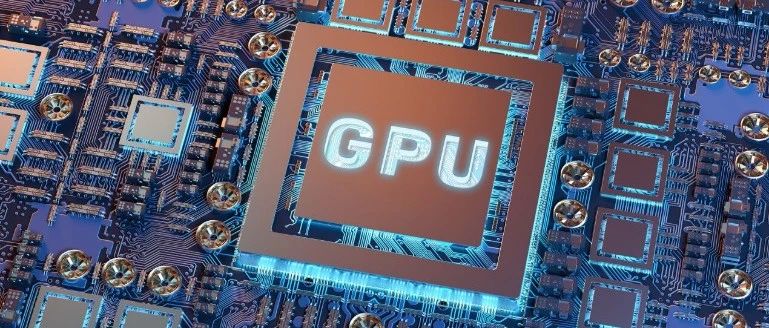
Core Viewpoint - The article introduces the XPU-316 network card as a cost-effective domestic alternative to the ConnectX-7, highlighting its comparable features and ease of procurement in China. Group 1: XPU-316 Specifications - The XPU-316 standard network card supports 2x200G network interfaces, providing a maximum throughput of 400Gbps with a latency of less than 10 microseconds [2]. - It supports IPSEC/TLS, AES/SM4 algorithms, and national cryptography algorithms, significantly enhancing data center security [2]. - The card is compatible with various operating systems including Linux, CGSL, Euler, and Longxin, and supports both X86 and ARM CPUs [2]. Group 2: Performance Features - The XPU-316 card offers high-performance RDMA capabilities and an open programmable congestion control algorithm platform, allowing customers to design suitable congestion control algorithms based on their business needs [2]. - It is designed for general-purpose and intelligent computing servers, making it suitable for public cloud, private cloud, edge cloud, and intelligent computing centers [2]. Group 3: Technical Specifications - The card has a half-height, half-length form factor and utilizes PCIe Gen 5 with a maximum of 16 lanes [3]. - It features 2 x 200GE (QSFP56) network interfaces and supports a maximum bandwidth of 400G with a latency of less than 10 microseconds [11]. - The card supports various advanced features such as QoS, SRIOV, and dynamic queue configuration [12][13].

随便聊聊 | 我为什么坚定看好未来半导体市场发展趋势
傅里叶的猫· 2025-07-30 09:28
Core Viewpoint - The semiconductor industry has experienced significant growth, with global semiconductor device sales projected to reach $617.9 billion by 2024, a 162-fold increase since 1977, outpacing global GDP growth [1][3]. Summary by Sections Industry Phases - Phase 1 (1977-1994): The semiconductor industry experienced explosive growth as it filled market demand gaps [5]. - Phase 2 (1995-2009): The market reached saturation, with semiconductor sales growth aligning closely with GDP growth, stabilizing around 0.45% of GDP [5]. - Phase 3 (2010 onwards): The emergence of smartphones and mobile internet led to renewed growth, with an average annual growth rate of approximately 6% [6]. Characteristics Driving Growth - The semiconductor industry serves as the foundation for the information sector, with increasing data generation driving demand for chips [6]. - The existence of Moore's Law ensures continuous performance improvements in chips, fostering rapid technological advancements that benefit the entire semiconductor supply chain [6]. Current Market Dynamics - The semiconductor industry is currently in a phase driven by artificial intelligence (AI), marking the beginning of a fourth growth stage [10]. - The demand for high-performance computing chips has surged due to AI advancements, leading to increased average prices despite stable wafer output [10][14]. Future Outlook - The AI sector is expected to provide long-term growth opportunities for the semiconductor industry, similar to the mobile communications boom [14]. - The anticipated explosion in data generation from AI applications will significantly increase the demand for various types of chips [16].


CoWoS的下一代是CoPoS还是CoWoP?
傅里叶的猫· 2025-07-28 15:18
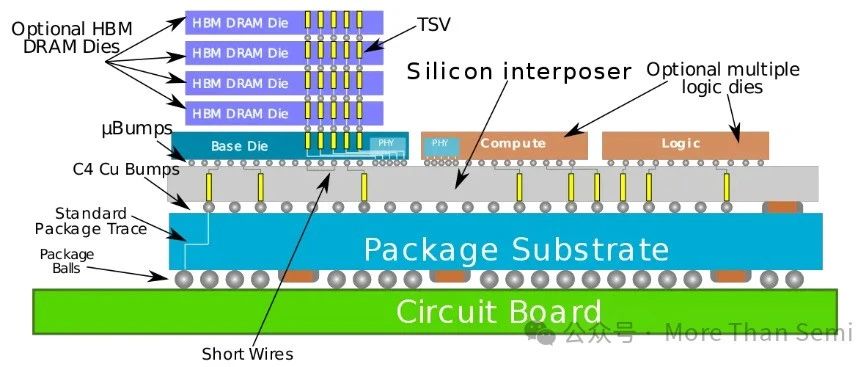
Core Viewpoint - The article discusses the emergence of CoWoP (Chip-on-Wafer-on-PCB) technology as a potential alternative to CoWoS (Chip-on-Wafer-on-Substrate) and CoPoS (Chip-on-Panel-on-Substrate), highlighting its advantages and disadvantages in semiconductor packaging [1][12][14]. Summary by Sections CoWoS Overview - CoWoS involves a three-stage packaging process where dies are connected to an interposer, which is then connected to a packaging substrate, followed by cutting the wafer to form chips [7]. CoPoS Technology - CoPoS replaces the wafer with a panel, allowing for a higher number of chips to be accommodated, thus improving area utilization and production capacity [11]. Introduction of CoWoP - CoWoP eliminates the packaging substrate, allowing chips to be directly soldered onto the PCB, which simplifies the design and reduces costs [12][14]. Advantages of CoWoP - CoWoP reduces packaging costs by eliminating the expensive packaging substrate, leading to lower material costs and reduced complexity [14]. - It offers shorter signal paths, enhancing bandwidth utilization and reducing latency for high-speed interfaces like PCIe 6.0 and HBM3 [15]. - The absence of a packaging cover allows for better thermal management options, which is beneficial for high-power AI chips [15]. Disadvantages of CoWoP - The direct attachment to the PCB increases the requirements for PCB reliability and precision, as the tolerance for errors is significantly reduced [16]. - The lack of protective packaging raises concerns about reliability under thermal cycling, mechanical stress, and transport vibrations [16]. - Successful implementation requires close collaboration between chip packaging and PCB manufacturing from the design stage, increasing supply chain management complexity [16]. Conclusion - CoWoP technology is considered aggressive and presents significant challenges, indicating that it may not have an immediate impact on all PCB companies in the short term [17].
Google Token使用量是ChatGPT的6倍?
傅里叶的猫· 2025-07-27 15:20
Core Insights - Google Gemini's daily active users (DAU) are significantly lower than ChatGPT, yet its token consumption is six times higher than that of Microsoft, primarily driven by search products rather than the Gemini chat feature [3][7][8]. User Metrics - As of March 2025, ChatGPT has over 800 million monthly active users (MAU) and 80 million DAU, while Gemini has approximately 400 million MAU and 40 million DAU [6][8]. - The DAU/MAU ratio for both ChatGPT and Gemini stands at 0.1, indicating similar user engagement levels [6]. Token Consumption - In Q1 2025, Google’s total token usage reached 634 trillion, compared to Microsoft’s 100 trillion [8]. - Google’s token consumption for Gemini in March 2025 was about 23 trillion, accounting for only 5% of its overall token usage [7][8]. - Each MAU for both ChatGPT and Gemini consumes approximately 56,000 tokens monthly, suggesting comparable user activity levels [8]. Financial Impact - Google’s cost for processing these tokens in Q1 2025 was approximately $749 million, representing 1.63% of its operating expenses, which is manageable compared to traditional search costs [8]. - Barclays predicts that Google will require around 270,000 TPU v6 chips to support current token processing demands, with quarterly chip spending expected to rise from $600 million to $1.6 billion [8].



聊一聊CPO(二)--CPO产业链的主要参与者
傅里叶的猫· 2025-07-25 08:24
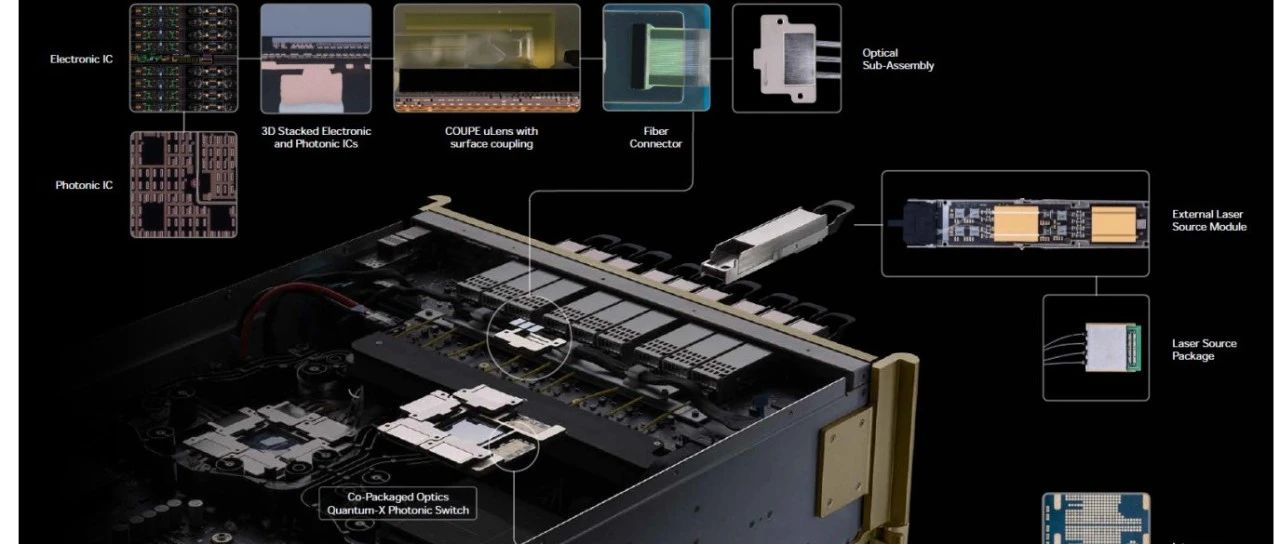
Core Viewpoint - The article discusses the CPO (Co-Packaged Optics) industry chain participants, highlighting the differences between the traditional optical transceiver supply chain and the emerging CPO ecosystem, which integrates silicon semiconductor supply chains and requires upgrades to key components and manufacturing equipment [1][2]. Traditional Optical Transceivers - The traditional optical transceiver supply chain consists of epitaxial wafers, optical components, DSP suppliers, and module manufacturers, dominated by companies like Coherent, Lumentum, and Broadcom [2][3]. CPO Value Chain - The CPO value chain includes various components such as epitaxial wafers, fibers, optical engines, and assembly/testing services, with notable suppliers like TSMC, ASE/SPIL, and Broadcom playing critical roles [4]. Wafer Foundries - Wafer foundries are expected to be foundational for CPO development, with TSMC's COUPE platform likely becoming a key entry point for potential customers seeking CPO solutions [5][8]. - TSMC is collaborating with companies like Broadcom and Nvidia on CPO transceivers, while other foundries like Intel and GlobalFoundries are also targeting the silicon photonics market [8][9]. FAU (Fiber Array Unit) - FAUs are critical components in the CPO supply chain, with TSMC planning to integrate them directly into optical engines [10]. - FOCI is positioned to partner with TSMC due to its high-temperature resistant FAU technology, which is essential for integration into the COUPE platform [10]. Assembly, Packaging, and Testing - Companies like ASE and SPIL are expected to play significant roles in the CPO supply chain due to their expertise in packaging and assembly processes [11]. - Testing is crucial for CPO components, requiring stricter quality control compared to traditional optical transceivers [11]. Equipment Manufacturers - Equipment manufacturers like BESI and ASMPT are poised to benefit from the demand for hybrid bonding equipment driven by CPO developments [14][15]. - GPTC is expected to provide cleaning tools for EIC and PIC stacking, with unique equipment tailored for CPO production [15]. Industry Information Exchange - The article mentions the availability of industry information and analysis reports through platforms like Knowledge Planet, which aims to keep stakeholders updated on market developments [17].

聊一聊CPO(一)
傅里叶的猫· 2025-07-24 15:13
Core Viewpoint - The article discusses the transition from copper cables to optical fibers in data center networks, emphasizing the advantages of optical technology, particularly CPO (Co-Packaged Optics), in supporting next-generation AI servers and addressing the challenges of mass production [2][11]. Group 1: Advantages of Optical Fiber over Copper - Optical fibers offer significantly higher bandwidth, capable of supporting 800G, 1.6T, and above, making them suitable for high-speed interconnect scenarios [3][5]. - The transmission speed of optical fibers is approximately two-thirds the speed of light, which reduces latency and enhances response times in data centers [3]. - Optical fibers can transmit data over much longer distances, with single-mode fibers reaching up to 100 kilometers, compared to copper cables, which typically support less than 10 meters for high-speed transmission [3][4]. - Optical fibers are more reliable, less affected by environmental factors and electromagnetic interference, ensuring stable data transmission in high-power environments like AI data centers [3][4]. - The space efficiency of optical fibers is superior, being thinner, lighter, and more robust, allowing for greater bandwidth in a smaller footprint [3]. Group 2: CPO Technology and Its Importance - CPO technology is identified as a key advancement for next-generation AI servers, integrating optical components directly into the packaging of ASIC/xPU chips, which enhances energy efficiency and bandwidth density [11][15]. - The CPO roadmap indicates a trend towards reducing the distance between optical engines and ASICs, with the industry currently in the commercialization phase of on-board optics [12]. - CPO significantly reduces signal loss and latency by shortening the transmission path between ASICs and optical devices from several centimeters to just a few millimeters [15]. - CPO can lower power consumption by up to 70% compared to traditional optical modules, as it minimizes the need for high-power digital signal processors [15]. Group 3: Challenges in CPO Mass Production - The complexity of packaging technology, including advanced techniques like hybrid bonding and 2.5D/3D packaging, poses challenges for ensuring system reliability and yield management [28]. - There are concerns regarding the performance of silicon-based photonic integrated circuits (PICs) compared to traditional modules using indium phosphide (InP) [28]. - Durability and thermal management are critical, as all optical components are tightly packaged within the ASIC/xPU system, requiring them to withstand high temperatures [28]. - Reliability issues arise from the close integration of optical engines with ASICs, where a single failure could jeopardize the entire high-cost system [28]. Group 4: Future Adoption and Market Trends - The adoption of CPO technology in switches is expected to occur around 2027-2028, particularly as the demand for higher bandwidth solutions increases [30]. - Major companies like Broadcom and NVIDIA are already developing their CPO solutions, indicating a competitive landscape for this technology [31][35]. - The transition of xPU systems to CPO is anticipated to be slower due to higher integration complexity and thermal management challenges, but it could lead to significant market growth in the long term [40].


国内AI芯片的出货量、供需关系
傅里叶的猫· 2025-07-21 15:42
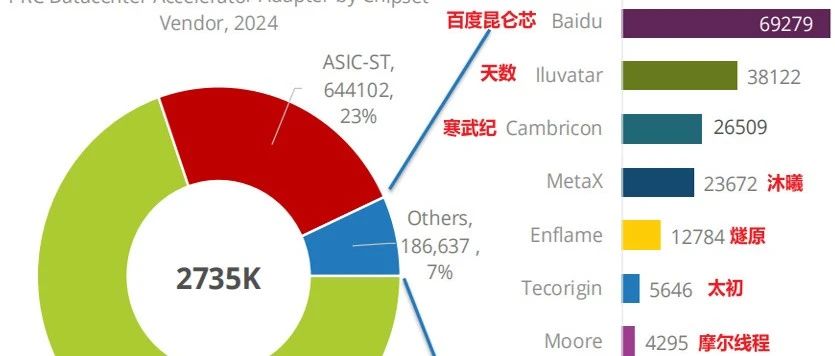
Core Viewpoint - The article discusses the impact of recent restrictions on AI chip sales in China, particularly focusing on the market dynamics for Nvidia and local manufacturers, and the projected growth of the AI accelerator market in the coming years [2][3]. Group 1: Market Projections - Bernstein estimates that the Chinese AI accelerator market will reach $39.5 billion by 2025, primarily driven by Nvidia H20 ($22.9 billion), AMD MI308 ($2 billion), and local manufacturers ($14.6 billion) [2]. - Following the sales ban, Nvidia is expected to lose $1.68 billion in H20 sales, while AMD may lose $150 million, with some orders shifting to local manufacturers, potentially increasing their revenue by about 10% [2]. - Despite local manufacturers' growth, Bernstein believes they cannot fully cover the $18.3 billion gap due to production bottlenecks in 7nm wafers and CoWoS technology [2]. Group 2: Nvidia's Strategy - Nvidia plans to apply for the resumption of H20 sales and introduce a compliant NVIDIA RTX PRO GPU, with initial demand projected at $10.5 billion, although it will not meet the initial demand of $16.8 billion [2][3]. - The anticipated shipment of B30 chips to China is expected to reach 400,000 units, generating $2.8 billion in revenue, while local manufacturers may only gain an additional $1.5 billion due to new restrictions [3]. Group 3: Competitive Landscape - Major cloud service providers in China, including ByteDance, Alibaba, Tencent, and Baidu, are the primary buyers of H20, accounting for 87% of total sales [5]. - By 2027, local manufacturers are projected to capture 55% of the market share, while global competitors may face technological stagnation and lose their competitive edge [3]. Group 4: Supply and Demand Dynamics - The article highlights discrepancies between GPU shipment data from Bernstein and IDC, noting that Huawei holds a 23% market share, while Nvidia's share is overstated by IDC by 7 percentage points [16][20]. - The supply-demand relationship indicates that aside from Alibaba and Baidu, other major companies are purchasing Huawei's AI chips, raising questions about the accuracy of reported data [23]. Group 5: Local Manufacturers - The report identifies local GPU manufacturers, with Huawei leading the market, followed by Cambricon, Haiguang, and Tianshu [20][21]. - The revenue of local manufacturers is expected to increase significantly, with Moore Threads projected to boost its revenue through substantial AI computing GPU shipments in 2024 [36][38].
NPU还是GPGPU?
傅里叶的猫· 2025-07-20 14:40
Core Viewpoint - The article discusses the transition of a major company from NPU to GPGPU, emphasizing the evolution of NVIDIA's GPU architecture and the strategic decisions made by domestic companies in response to industry challenges [1][2]. Group 1: GPU and NPU Architecture - NVIDIA's GPU development has shown a clear cycle, evolving from fixed pipeline DSA architecture to unified Shader architecture, and now to Tensor Core for AI, maintaining its industry position through continuous optimization of the CUDA ecosystem [1]. - NPU is designed specifically for AI computations, offering advantages in energy efficiency and speed compared to traditional CPUs and GPUs, making it suitable for mobile, edge computing, and embedded AI scenarios [3]. - The complexity of general-purpose CPUs is significantly higher than that of GPUs and NPUs, with NPU design being simpler, focusing mainly on matrix multiplication and convolution operations [4]. Group 2: Software and Ecosystem Challenges - The software complexity of NPU exceeds that of its hardware, making it crucial to evaluate software usability rather than just comparing computational power [5]. - NPU's multi-level memory architecture presents challenges, such as limited L1 cache size and storage conflicts, requiring precise data segmentation to maximize performance [5]. - The fragmented ecosystem of NPU poses a barrier to optimization, as software developed for one NPU may not be easily transferable to another, increasing application deployment costs [5]. Group 3: Evolution and Future Directions - The evolution of GPUs from simple dedicated calculators to complex systems with independent control units highlights the need for NPUs to develop similar capabilities to handle the increasing complexity of AI tasks [6][7]. - The shift in AI tasks from inference to a combination of training and inference necessitates a move towards architectures that support efficient computation and flexible control [7]. - The rise of NPU is seen as a natural progression in AI computing, with a trend towards integrating SIMT front-end capabilities to enhance control units, aligning more closely with GPU architectures [7].

被抛弃的NVL72光互联方案
傅里叶的猫· 2025-07-17 15:41
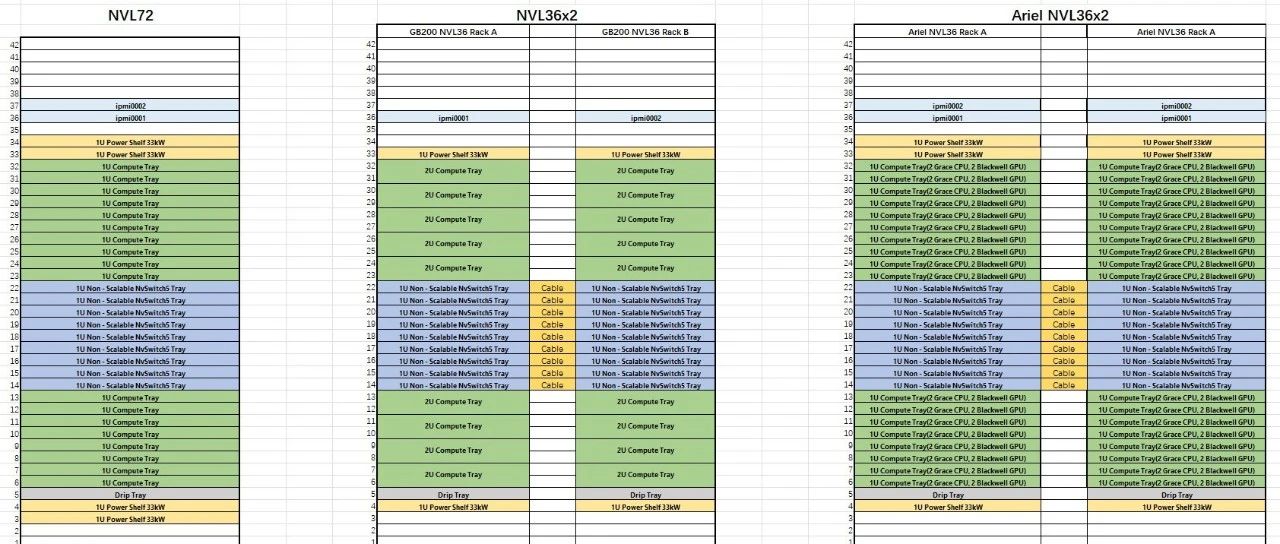
Core Viewpoint - The article discusses the architecture and networking components of the GB200 server, focusing on the use of copper and optical connections, and highlights the flexibility and cost considerations in the design choices made by different customers [1][2]. Frontend Networking - The frontend networking in the GB200 architecture serves as the main channel for external data exchange, connecting to the internet and cluster management tools [1]. - Each GPU typically receives a bandwidth of 25-50Gb/s, with total frontend network bandwidth for the HGX H100 server ranging from 200-400Gb/s, while GB200 can reach 200-800Gb/s depending on configuration [2]. - Nvidia's reference design for frontend networking may be over-provisioned, leading to higher costs for customers who may not need such high bandwidth [2][4]. Backend Networking - The backend networking supports GPU-to-GPU communication across large-scale clusters, focusing on internal computational collaboration [5]. - Various switch options are available for the backend network, with initial shipments using ConnectX-7 cards and future upgrades planned for ConnectX-8 [6][10]. - Long-distance interconnections primarily utilize optical cables due to the limitations of copper cables over longer distances [6]. Accelerator Interconnect - The accelerator interconnect is designed for high-speed communication between GPUs, significantly impacting communication efficiency and system scalability [13]. - The GB200's NVLink interconnect has evolved from the HGX H100, requiring external connections due to the separation of NVSwitches and GPUs across different trays [14]. - Different configurations (NVL72, NVL36x2, NVL576) balance communication efficiency and scalability, with NVL72 being optimal for low-latency scenarios [15]. Out of Band Networking - The out-of-band networking is dedicated to device management and monitoring, focusing on system maintenance rather than data transmission [20]. - It connects various IT devices through baseboard management controllers (BMC), allowing for remote management and monitoring of system health [21]. Cost Analysis of MPO Connectors - The article estimates the value of MPO connectors in the GB200 server, indicating that the cost per GPU can vary significantly based on network architecture and optical module usage [22][23]. - In a two-layer network architecture, the MPO value per GPU is approximately $128, while in a three-layer architecture, it can rise to $192 [24]. - As data center transmission rates increase, the demand for high-speed optical modules and corresponding MPO connectors is expected to grow, impacting overall costs [25].
各方关于H20的观点
傅里叶的猫· 2025-07-16 15:04
Core Viewpoint - The article discusses the varying perspectives of major investment banks regarding the H20 chip supply and demand, highlighting uncertainties in production and inventory calculations [1][7]. Group 1: Investment Bank Perspectives - Morgan Stanley estimates a potential production of 1 million H20 chips, but has not observed TSMC restarting H20 wafer production [1]. - JP Morgan anticipates initial quarterly demand for H20 could reach 1 million units, driven by strong AI inference demand in China and a lack of substitutes [3]. - UBS projects that H20 sales could reach $13 billion, with an average selling price of $12,000 per unit, suggesting potential sales of over 1 million units [5][6]. - Jefferies notes that Nvidia may be allowed to sell its existing H20 inventory, estimating around 550,000 to 600,000 units remaining, and mentions the possibility of a downgraded version of the chip being released [7]. Group 2: Inventory Calculations - The current finished chip inventory is approximately 700,000 units, with additional potential from suppliers like KYEC, which could yield an extra 200,000 to 300,000 chips, leading to a total estimated inventory of 1 million H20 chips [2]. - The article indicates that the calculations of inventory and production by different banks vary significantly, suggesting a lack of consensus and potential inaccuracies in the data [7].