美股IPO

Search documents
股价重挫近8%!Palantir CEO怒怼“大空头”:做空英伟达和Palantir “简直是疯了”!
美股IPO· 2025-11-04 23:44
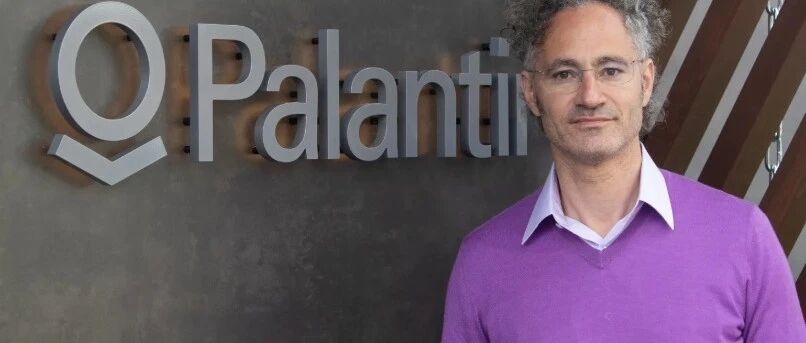
Palantir首席执行官Alex Karp猛烈抨击《大空头》原型Michael Burry大规模做空其公司与英伟达的行为,称 此举"完全疯狂",并质疑存在市场操纵。Burry旗下基金Scion集中持有逾10亿美元名义价值看跌期权,押注AI 领军企业股价下跌。尽管Palantir三季度业绩创纪录且年内股价涨超157%,远期市盈率高达228倍仍引发市场对 AI股估值泡沫的担忧。 高管直指市场操纵 Karp在批评做空者时言辞激烈,他表示: "他竟然选择做空业绩如此出色的两家公司,这本身就非常奇怪。试图做空芯片和本体论(指代AI核心领域),简直是 疯了。" Burry上周在社交媒体上暗示对市场的担忧,发文称"有时我们看到泡沫,有时可以采取行动,有时唯一的制胜之 举就是不参与"。他因在2008年金融危机前成功做空抵押贷款支持证券而声名鹊起,这一交易被改编成获奥斯卡 奖的电影《大空头》。Burry本人拒绝就Karp的言论发表评论。 Palantir首席执行官Alex Karp公开抨击《大空头》原型投资者Michael Burry做空其公司及英伟达的行为,称其反 对AI领域的领军企业"完全疯狂"。 他认为Burry实际上 ...

币圈再度血流成河!比特币6月以来首次跌破10万大关,以太币暴跌10%
美股IPO· 2025-11-04 23:44
Core Viewpoint - Bitcoin has experienced a significant decline, breaking below the $100,000 psychological barrier for the first time since June, reaching around $99,932, and marking the second-largest single-day drop of the year [2][3]. Market Performance - In the past 24 hours, over 342,000 traders were liquidated, with total liquidation exceeding $1.32 billion, of which 85% were long positions [6][7]. - Ethereum, the second-largest cryptocurrency by market capitalization, also fell over 10%, dropping to around $3,225 [3]. Technical Analysis - The breach of the $100,000 level is not only a psychological barrier but also a critical technical support level [10]. - Analysts warn that if Bitcoin cannot hold this level, a deeper correction may occur, with the next target being around $74,000, indicating a potential downside of approximately 30% from current levels [10]. Market Sentiment - The cryptocurrency fear and greed index has slipped into the "extreme fear" zone, reflecting widespread pessimism in the market [11][12]. - The shift in market sentiment is attributed to hawkish comments from Federal Reserve Chairman Jerome Powell, which have diminished expectations for interest rate cuts in December and strengthened the dollar, putting direct pressure on non-yielding assets like Bitcoin [8][17]. Fund Flows and Liquidity - Investors have withdrawn over $1.8 billion from Bitcoin and Ethereum-related ETF products in the past four trading days, exacerbating market liquidity issues [8]. - The open interest in Bitcoin perpetual futures has decreased by about 30% from its peak in October, indicating that traders are actively reducing leveraged positions and that speculative interest in the market is rapidly declining [19]. Contrarian Views - Despite the prevailing negative sentiment, some investors are taking a contrarian stance. Strategy Company has recently increased its Bitcoin holdings by 397 BTC, spending approximately $45.6 million at an average price of $114,771 per BTC [21]. - Notable Wall Street bulls, such as Fundstrat's Tom Lee, maintain an optimistic outlook, predicting Bitcoin could rise to between $150,000 and $200,000 by the end of 2025 [22]. Potential Market Recovery Signals - On-chain indicators suggest potential signs of recovery, with the stablecoin supply ratio (SSR) dropping to the 13-14 range, historically marking liquidity turning points [23]. - The current low SSR indicates that stablecoin liquidity may be quietly rebuilding, which could pave the way for a rebound or the final phase of a bull market [25].
AI狂热不敌冷峻现实:企业下调AI代理预期,实现全自动化仍需数年时间
美股IPO· 2025-11-04 23:44
Core Viewpoint - Companies are scaling back their expectations for AI agents, recognizing that while AI tools have improved efficiency, fully automated AI agents face significant challenges in deployment, cost, and reliability [1][4][8] Group 1: AI Agent Deployment Challenges - Many enterprises are encountering difficulties with complex AI agents, which often fail to perform adequately, necessitating direct intervention from AI providers to troubleshoot issues [4][5] - For instance, Fnac, a European retailer with annual revenue of $10 billion, struggled with AI customer service agents until they collaborated with AI21 Labs for support, leading to improved performance [4][6] - Companies are realizing that AI models perform well in benchmark tests but require substantial customization to function effectively in real-world environments [5][8] Group 2: Financial Implications and Revenue Growth - The adoption of general-purpose chatbots and AI programming tools has led to revenue growth for companies like OpenAI and Microsoft, with AI-native startups generating an annualized revenue of $23 billion, up from nearly zero three years ago [10][11] - However, calculating the revenue specifically attributed to AI agents remains challenging, as much of the growth for major cloud companies comes from server rentals rather than enterprise AI applications [11][12] - Salesforce reported over $100 million in annual revenue from its Agentforce product, while ServiceNow anticipates reaching $1 billion in revenue by the end of 2026 from its AI software [11][12] Group 3: Realistic Expectations for AI Automation - Executives from various companies emphasize the need for realistic expectations regarding the automation capabilities of AI agents, particularly in critical areas like cybersecurity, which may take years to fully automate [14][15] - Companies are increasingly viewing AI tools as experimental projects rather than immediate revenue-generating investments, with Microsoft suggesting that AI agents should be considered as part of R&D budgets for long-term benefits [17] - Despite the challenges, companies like Cirque du Soleil have successfully implemented AI agents to improve efficiency, demonstrating that while AI may not fully replace human roles, it can enhance productivity [16]





股价再次暴涨20.5%!商战升级!诺和诺德冷怂辉瑞,收购减肥药公司收购Metsera报价提升至近百亿美元
美股IPO· 2025-11-04 23:44
Core Viewpoint - The acquisition battle between pharmaceutical giants Novo Nordisk and Pfizer over the weight-loss drug developer Metsera has intensified, with both companies raising their offers significantly, highlighting the competitive landscape in the obesity treatment market [1][3][14]. Group 1: Acquisition Offers - Novo Nordisk has raised its bid for Metsera to nearly $10 billion, while Pfizer has increased its offer to $8.1 billion, reflecting the high stakes involved in acquiring Metsera [1][3]. - Metsera's stock price surged by 20.5% following the news of the increased bids, indicating strong market interest and investor confidence in the company's potential [3]. - The board of Metsera has stated that Pfizer has two working days to negotiate a better offer, or they may terminate the existing merger agreement if they find Novo Nordisk's proposal more favorable [3][16]. Group 2: Metsera's Product Pipeline - Metsera, which went public in January, has a pipeline of experimental weight-loss drugs, including the GLP-1 injection MET-097i and the amylin analog MET-233i, both designed for monthly administration, which is a significant improvement over the current weekly injection options [5][14]. - The stock price of Metsera has quadrupled since its IPO price of $18, reflecting the market's optimism about its innovative drug pipeline [6]. Group 3: Legal and Competitive Dynamics - Following Novo Nordisk's bid, Pfizer filed a lawsuit in Delaware seeking to block Metsera from terminating the existing merger agreement, claiming that Novo Nordisk's proposal poses significant risks and should not be considered superior [7][9]. - Pfizer has characterized Novo Nordisk's acquisition attempt as "reckless and unprecedented," suggesting potential antitrust implications and calling for regulatory scrutiny [7][10]. - Novo Nordisk has responded by asserting that its acquisition proposal complies with all applicable laws and is in the best interest of Metsera's patients and shareholders [10][11]. Group 4: Strategic Motivations - Novo Nordisk aims to solidify its leading position in the obesity treatment market, especially in light of competition from Eli Lilly's Zepbound, while also addressing internal challenges such as stock price declines and management changes [15]. - Pfizer views the acquisition of Metsera as a strategic move to re-enter the weight-loss treatment sector after setbacks in its own drug development efforts, seeking to enhance its portfolio in metabolic disease [15].


盘后股价重挫9%!超微电脑Q1财季营收大幅下滑15%,毛利率暴跌至9%
美股IPO· 2025-11-04 23:44
Core Viewpoint - The disappointing Q1 financial results of Supermicro raise concerns about its ability to capitalize on the AI server market despite being in a favorable position [2][4]. Financial Performance - Q1 FY2026 revenue was $5 billion, a 15% year-over-year decline and a 14% quarter-over-quarter decline [5]. - Gross margin plummeted to 9.3%, down from 13.1% year-over-year and 9.5% quarter-over-quarter [5]. - Net profit fell to $168 million, a 60% year-over-year drop, with non-GAAP EPS at $0.35 compared to $0.73 in the same period last year [5]. - Operating cash flow was negative $918 million, with cash reserves at $4.2 billion and liabilities at $4.8 billion [5]. Business Progress - The company secured over $13 billion in Blackwell Ultra orders, indicating rapid expansion of its order backlog [5]. - Transitioning towards AI and data center infrastructure through DCBBS (Data Center Building Block Solutions) [5]. - Advancing leadership in direct liquid cooling (DLC) and AI technology sectors [5]. Performance Guidance - The company maintains its full-year revenue target of at least $36 billion [4]. - Q2 FY2026 revenue is expected to be between $10 billion and $11 billion, indicating a potential doubling of revenue quarter-over-quarter [8]. - Q2 projected GAAP EPS is between $0.37 and $0.45, while non-GAAP EPS is expected to be between $0.46 and $0.54 [8].
高盛、大摩CEO齐发预警:美股估值太高了,可能出现至少10%回调!
美股IPO· 2025-11-04 12:42
Core Viewpoint - Despite strong corporate earnings, current valuation levels are concerning, particularly for technology stocks, with expectations of a potential market correction of 10% to 20% in the next 12 to 24 months, viewed as a healthy adjustment rather than a crisis [1][3][7] Valuation Concerns - Goldman Sachs and Morgan Stanley executives express worries about high valuation levels in the U.S. stock market, indicating that most investors perceive valuations to be between reasonable and full, with few considering stocks to be cheap [3][6] - Solomon from Goldman Sachs notes that technology stock valuations are particularly full, although this does not apply to the entire market [5][6] Market Correction as a Healthy Adjustment - Wall Street executives unanimously agree that market corrections should be seen as normal and healthy developments rather than signals of a crisis, with Solomon emphasizing that 10% to 15% corrections often occur even in positive market cycles [7][9] - Pick from Morgan Stanley encourages investors to welcome the possibility of cyclical corrections, stating that such adjustments are not driven by macroeconomic cliff effects [9] Positive Outlook for Asian Markets - Both Goldman Sachs and Morgan Stanley maintain an optimistic outlook for Asian markets, particularly China, Japan, and India, citing unique growth narratives in these regions [4][10] - Goldman Sachs expects continued interest in China from global capital allocators due to recent positive developments, while Morgan Stanley highlights investment opportunities in China's AI, electric vehicles, and biotechnology sectors, as well as Japan's corporate governance reforms and India's infrastructure development [11][12]



存储芯片“严重短缺”,DRAM和DDR涨价“势不可挡”,瑞银上调三星和SK海力士目标价
美股IPO· 2025-11-04 12:42
Core Viewpoint - The storage chip industry is facing a "severe shortage," with UBS predicting a quarter-on-quarter increase of 21% or more in DDR memory contract prices by Q4 2025, and this supply shortage is expected to last at least until the end of 2026, with price increases likely extending into Q1 2027 [1][3]. Group 1: Market Dynamics - The storage chip industry is entering a period of "severe shortage," driven by strong demand and limited capacity expansion, pushing DRAM prices into a robust upward cycle [3][4]. - UBS's latest industry survey indicates that negotiations for DDR memory contracts in Q4 2025 are showing positive momentum, with significant price increases expected across major categories [4][6]. - The report highlights that suppliers currently hold pricing power, with contract negotiations for server DDR5 showing a potential increase of 20% or more [4][10]. Group 2: Factors Driving Demand - The core factors driving the current price surge in storage chips include a structural supply-demand imbalance, with AI being a key variable [6][9]. - Strong demand for high-bandwidth memory (HBM) driven by AI is a primary factor contributing to the shortage [6][9]. - The robust upgrade cycle of traditional servers is also contributing to increased demand for DRAM [7][9]. - Additional demand for enterprise SSDs due to shortages in AI and traditional HDDs is further exacerbating the situation [8][9]. Group 3: Supply Chain Implications - Limited wafer capacity is being prioritized for HBM production, leading to a squeeze in the supply of traditional DDR memory [9][10]. - UBS estimates that by the end of 2025, 20% of the industry's front-end DRAM capacity will be allocated to HBM production, increasing to 25% by the end of 2026 [9][10]. Group 4: Company Outlook - UBS has raised its financial forecasts and valuations for major memory chip manufacturers, Samsung Electronics and SK Hynix, in light of the industry's price uptrend [11]. - For SK Hynix, revenue and operating profit forecasts for 2026 have been increased by 3% and 5%, respectively, with 2027 forecasts raised by 9% and 16% [11]. - Samsung Electronics' revenue and operating profit forecasts for 2026 have been adjusted upward by 2% and 7%, respectively, with 2027 forecasts increased by 5% and 23% [11].

辉瑞Q3营收同比下降6%超预期,非新冠业务成亮点,公司上调全年盈利预期
美股IPO· 2025-11-04 12:42
Core Viewpoint - Pfizer's Q3 revenue decreased by 6% year-over-year to $16.65 billion, primarily due to a decline in demand for COVID-19 products, but the company raised its full-year earnings guidance due to growth in non-COVID business segments [1][3][5]. Financial Performance - Q3 revenue was $16.65 billion, down from $17.7 billion in the same quarter last year, with an operational decline of 7% [5][6]. - Net income for Q3 was $3.54 billion, a 21% decrease year-over-year, while adjusted net income was $4.95 billion, down 18% [5][6]. - Adjusted diluted EPS was $0.87, an 18% increase compared to the previous year, exceeding market expectations [5][6]. Business Segmentation - Global Biopharmaceuticals (Biopharma) revenue for Q3 was $16.31 billion, a 6% decline year-over-year [7]. - Pfizer CentreOne (PC1) revenue grew by 21% to $344 million [7]. - Pfizer Ignite revenue nearly vanished, dropping 99% year-over-year [7]. Guidance and Cost Management - The company maintained its full-year revenue guidance at $61 billion to $64 billion, while raising the adjusted diluted EPS forecast to $3.00-$3.15 from $2.90-$3.10 [8]. - Pfizer aims to achieve approximately $7.2 billion in net cost savings by the end of 2027 through previously announced cost improvement plans [9]. Market Dynamics - The decline in performance was mainly attributed to a significant drop in sales of COVID-related products, with Paxlovid's revenue down 55% and Comirnaty's down 20% [11]. - Non-COVID product revenue showed resilience, with a 4% operational growth driven by key products [12]. Strategic Developments - Pfizer announced a historic agreement with the Trump administration to ensure U.S. patients receive drug prices comparable to other developed countries, in exchange for tariff exemptions [12]. - The company faces challenges in the lucrative weight-loss drug market, having filed lawsuits against competitors regarding a key acquisition [12]. Product Performance - Sales of the anticoagulant drug Eliquis grew by 22% due to increased global demand and net pricing advantages in the U.S. [13]. - Rare disease drug Vyndaqel series saw a 7% operational growth, benefiting from ongoing promotion in the U.S. and other developed markets [13]. - Migraine medication Nurtec ODT/Vydura experienced a 22% operational growth, driven by strong demand in the U.S. and recent international market entries [13].
美国正走向“流动性危机”,“政府关门”相当于加息?下一步对市场至关重要
美股IPO· 2025-11-04 07:24
Core Viewpoint - The U.S. government shutdown has withdrawn $700 billion in liquidity from the market, creating pressure comparable to multiple interest rate hikes, but it also presents an opportunity for a significant rebound in risk assets once the government reopens [1][3][15]. Group 1: Liquidity Crisis - The U.S. is facing a severe liquidity crisis, exacerbated by the government shutdown, which has drained market liquidity, with key financing indicators reaching critical levels [3][6]. - The use of the Federal Reserve's Standing Repo Facility (SRF) reached $14.75 billion, marking the second-highest usage since its establishment, with a record high of $50.35 billion the previous week [3][6]. - The Secured Overnight Financing Rate (SOFR) surged by 22 basis points to 4.22%, significantly above the Federal Reserve's excess reserve rate of 3.9%, widening the spread to 32 basis points, the highest since March 2020 [4][6]. Group 2: Government Shutdown Impact - The government shutdown has forced the Treasury to increase its cash balance from $300 billion to $1 trillion over the past three months, severely draining market liquidity [6][15]. - The Treasury General Account (TGA) balance exceeded $1 trillion for the first time since April 2021, indicating that over $700 billion has been siphoned from the market [15]. - The reduction in bank reserves to $2.85 trillion is the lowest since early 2021, with foreign commercial banks' cash assets dropping by over $300 billion in four months [6][12]. Group 3: Potential for Market Rebound - Analysts suggest that once the government reopens, the Treasury will release several hundred billion dollars back into the market, potentially triggering a massive buying spree in risk assets [8][17]. - This liquidity release could lead to significant rebounds in sensitive assets like Bitcoin and small-cap stocks, reminiscent of the early 2021 scenario [17][20]. - Goldman Sachs predicts the government shutdown may end around the second week of November, with a 50% probability of reopening before mid-November [20].

高盛:尽管鲍威尔放鹰,仍将12月降息作为基准预测
美股IPO· 2025-11-04 07:24
Core Viewpoint - Goldman Sachs believes that excluding tariff impacts, inflation is close to the 2% policy target, and the trend of a cooling labor market remains unchanged, supporting the logic for interest rate cuts [1][4][5]. Group 1: Interest Rate Predictions - Goldman Sachs maintains its baseline prediction for a 25 basis point rate cut in December, driven by the ongoing cooling of the labor market [3][11]. - The September dot plot indicates that most committee members view rate cuts as the default option, with no signs of improvement in the labor market [5]. - Despite Fed Chair Powell's hawkish signals, the consensus reflected in the dot plot still points towards rate cuts, as there is no evidence of labor market improvement [5][11]. Group 2: Impact of Government Shutdown - Even if the government shutdown ends next week, the incremental data available to the Fed before the December meeting is likely to be weak, affecting employment reports for October and November [6][7]. - The reliability of data as a signal will be diminished due to the government shutdown, complicating the Fed's decision-making process [7]. Group 3: Future Economic Outlook - Looking beyond 2025, Goldman Sachs emphasizes that the policy path will be more dispersed with numerous intersecting factors influencing it [9]. - The recent announcement by Amazon regarding layoffs due to AI highlights the potential for a weakening labor market despite improved productivity, suggesting lower neutral interest rates [9]. - The market's pricing around terminal rates has been fluctuating around 3%, but significant uncertainty exists around this level [9].